Behavioral Intention to Use MSWaMS Artificial Intelligence (AI) Robot for Students: Blackbox Test and TAM Analysis
DOI:
https://doi.org/10.12928/biste.v8i5.16261Keywords:
Educational Robot, IoT, MSWaMS, Technological Innovation, Waste ManagementAbstract
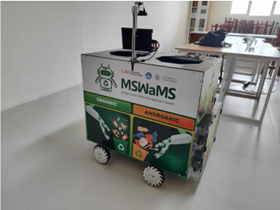
The integration of artificial intelligence (AI) and robotics technologies in education has increasingly expanded in response to the demand for interactive, adaptive, and technology-enhanced learning environments. However, previous studies have predominantly focused on either the technical performance of educational robots or users’ behavioral acceptance independently, with limited studies integrating both perspectives within a unified evaluation framework. This study aims to evaluate the technical functionality and student acceptance of the AI-based MSWaMS (Mobile Smart Waste Management System) robot developed to support waste-sorting education through visual detection, object recognition, and an integrated control system. The research contribution of this study lies in combining robot functional validation through Black-box Testing and behavioral analysis using the Technology Acceptance Model (TAM). Functional evaluation was conducted on several key components, including the motion system, proximity sensors, waste classification mechanisms, automatic lid systems, and information displays. The results demonstrated a high functional success rate ranging from 95% to 100%, with only minor limitations identified in waste classification accuracy and side-lid mechanisms. SmartPLS analysis revealed that usability significantly influences perceived ease of use and perceived usefulness, which subsequently affect students’ attitudes and behavioral intentions toward using the robot. These findings suggest that technical reliability contributes to positive user perceptions and supports the adoption of AI-based educational robots in creating more interactive and sustainable learning environments.
References
E. W. Solikhah, H. M. Asih, F. H. Astuti, I. Ghazali, and E. B. Mohammad, “Industry 4.0 readiness trends: A bibliometric and visualization analysis,” Int. J. Robot. Control Syst., vol. 4, no. 1, pp. 105–124, 2024, https://doi.org/10.31763/ijrcs.v4i1.1247.
T. Ali, M. Irfan, A. S. Alwadie, and A. Glowacz, “IoT-based smart waste bin monitoring and municipal solid waste management system for smart cities,” Arab. J. Sci. Eng., vol. 45, no. 12, pp. 10185–10198, 2020, https://doi.org/10.1007/s13369-020-04637-w.
M. Z. M. Z. Harith, M. A. Hossain, I. Ahmedy, M. Y. I. Idris, T. K. Soon, and R. M. Noor, “Prototype development of IoT based smart waste management system for smart city,” IOP Conf. Ser. Mater. Sci. Eng., vol. 884, no. 1, p. 012051, 2020, https://doi.org/10.1088/1757-899X/884/1/012051.
E. Longo, F. A. Sahin, A. E. C. Redondi, P. Bolzan, M. Bianchini, and S. Maffei, “A 5G-enabled smart waste management system for university campus,” Sensors, vol. 21, no. 24, p. 8278, 2021, https://doi.org/10.3390/s21248278.
B. Fang et al., “Artificial intelligence for waste management in smart cities: A review,” Environ. Chem. Lett., vol. 21, no. 4, pp. 1959–1989, 2023, https://doi.org/10.1007/s10311-023-01604-3.
A. Henaien, H. Ben Elhadj, and L. Chaari Fourati, “A sustainable smart IoT-based solid waste management system,” Future Gener. Comput. Syst., vol. 157, pp. 587–602, 2024, https://doi.org/10.1016/j.future.2024.03.056.
Z. Aghababaeyan, M. Abdellatif, L. Briand, R. S, and M. Bagherzadeh, “Black-box testing of deep neural networks through test case diversity,” IEEE Trans. Softw. Eng., vol. 49, no. 5, pp. 3182–3204, 2023, https://doi.org/10.1109/TSE.2023.3243522.
M. A. Bakar, N. Razali, M. Wook, M. N. Ismail, and T. Sembok, “Exploring and developing an industrial automation acceptance model in the manufacturing sector towards adoption of Industry 4.0,” Manuf. Technol., vol. 21, no. 4, pp. 434–446, 2021, https://doi.org/10.21062/mft.2021.055.
N. Marangunić and A. Granić, “Technology acceptance model: A literature review from 1986 to 2013,” Univers. Access Inf. Soc., vol. 14, no. 1, pp. 81–95, 2015, https://doi.org/10.1007/s10209-014-0348-1.
A. Granić and N. Marangunić, “Technology acceptance model in educational context: A systematic literature review,” Br. J. Educ. Technol., vol. 50, no. 5, pp. 2572–2593, 2019, https://doi.org/10.1111/bjet.12864.
I. Sosunova and J. Porras, “IoT-enabled smart waste management systems for smart cities: A systematic review,” IEEE Access, vol. 10, pp. 73326–73363, 2022, https://doi.org/10.1109/ACCESS.2022.3188308.
K. Ahmed, M. K. Dubey, A. Kumar, and S. Dubey, “Artificial intelligence and IoT driven system architecture for municipality waste management in smart cities: A review,” Measurement: Sensors, vol. 36, p. 101395, 2024, https://doi.org/10.1016/j.measen.2024.101395.
A. Chauhan, S. K. Jakhar, and C. Chauhan, “The interplay of circular economy with industry 4.0 enabled smart city drivers of healthcare waste disposal,” J. Clean. Prod., vol. 279, p. 123854, 2021, https://doi.org/10.1016/j.jclepro.2020.123854.
A. Hamdan and E. S. Aldhaen, Eds., Artificial Intelligence and Transforming Digital Marketing, vol. 487. Cham: Springer Nature Switzerland, 2024, https://doi.org/10.1007/978-3-031-35828-9.
T. M. Adila, W. S. Bintang, R. B. Ikhsan, and M. Fahlevi, “Instagram as information in developing purchase intentions: The role of social e-WOM and brand attitude,” in 2020 Int. Conf. Inf. Manage. Technol. (ICIMTech), pp. 427–431, 2020, https://doi.org/10.1109/ICIMTech50083.2020.9211151.
Z. Wang, H. Li, and X. Zhang, “Construction waste recycling robot for nails and screws: Computer vision technology and neural network approach,” Autom. Constr., vol. 97, pp. 220–228, 2019, https://doi.org/10.1016/j.autcon.2018.11.009.
Y. Hasanah, “Eco enzyme and its benefits for organic rice production and disinfectant,” J. Saintech Transf., vol. 3, no. 2, pp. 119–128, 2021, https://doi.org/10.32734/jst.v3i2.4519.
Z. Liu, T. S. P. De Souza, B. Holland, F. Dunshea, C. Barrow, and H. A. R. Suleria, “Valorization of food waste to produce value-added products based on its bioactive compounds,” Processes, vol. 11, no. 3, p. 840, 2023, https://doi.org/10.3390/pr11030840.
Kavya, M. Vashisht, B. Jain, and S. Shrivastava, “Transforming waste into wealth: A review on microbial conversion of organic municipal wastes to value-added products,” Discov. Environ., vol. 2, no. 1, p. 112, 2024, https://doi.org/10.1007/s44274-024-00144-z.
T. Ali, M. Irfan, A. S. Alwadie, and A. Glowacz, “IoT-based smart waste bin monitoring and municipal solid waste management system for smart cities,” Arab. J. Sci. Eng., vol. 45, no. 12, pp. 10185–10198, 2020, https://doi.org/10.1007/s13369-020-04637-w.
R. D. Puriyanto, H. I. K. Fathurrahman, F. F. Rahani, E. W. Solikhah, and Z. B. Musa, “Implementation of fuzzy Kalman filter in indoor localization using ultra-wideband sensor,” Int. J. Robot. Control Syst., vol. 5, no. 6, pp. 3047–3063, 2025, https://doi.org/10.31763/ijrcs.v5i6.2028.
H. G. Musa, I. Fatmawati, N. Nuryakin, and M. Suyanto, “Marketing research trends using technology acceptance model (TAM): A comprehensive review of researches (2002–2022),” Cogent Bus. Manag., vol. 11, no. 1, p. 2329375, 2024, https://doi.org/10.1080/23311975.2024.2329375.
F. D. Davis, “Perceived usefulness, perceived ease of use, and user acceptance of information technology,” MIS Q., vol. 13, no. 3, pp. 319–340, 1989, https://doi.org/10.2307/249008.
N. Al-Qaysi, N. Mohamad-Nordin, and M. Al-Emran, “Employing the technology acceptance model in social media: A systematic review,” Educ. Inf. Technol., vol. 25, no. 6, pp. 4961–5002, 2020, https://doi.org/10.1007/s10639-020-10197-1.
P. Weichbroth, “Usability of mobile applications: A systematic literature study,” IEEE Access, vol. 8, pp. 55563–55577, 2020, https://doi.org/10.1109/ACCESS.2020.2981892.
J. Lu, M. Schmidt, M. Lee, and R. Huang, “Usability research in educational technology: A state-of-the-art systematic review,” Educ. Technol. Res. Dev., vol. 70, no. 6, pp. 1951–1992, 2022, https://doi.org/10.1007/s11423-022-10152-6.
A. Lakhouit, “Revolutionizing urban solid waste management with AI and IoT: A review of smart solutions for waste collection, sorting, and recycling,” Results Eng., vol. 25, p. 104018, 2025, https://doi.org/10.1016/j.rineng.2025.104018.
F. Caffaro, M. Micheletti Cremasco, M. Roccato, and E. Cavallo, “Drivers of farmers’ intention to adopt technological innovations in Italy: The role of information sources, perceived usefulness, and perceived ease of use,” J. Rural Stud., vol. 76, pp. 264–271, 2020, https://doi.org/10.1016/j.jrurstud.2020.04.028.
V. Thangavel, “Sustainable development of effective smart waste management practices by AI & ML techniques in higher educational institutions,” Int. J. Adv. Eng. Manag., vol. 6, no. 11, pp. 563–581, 2024, https://doi.org/10.2139/ssrn.4940193.
L. Chen and A. K. Aklikokou, “Determinants of E-government adoption: Testing the mediating effects of perceived usefulness and perceived ease of use,” Int. J. Public Adm., vol. 43, no. 10, pp. 850–865, 2020, https://doi.org/10.1080/01900692.2019.1660989.
M. Liesa-Orús, C. Latorre-Cosculluela, V. Sierra-Sánchez, and S. Vázquez-Toledo, “Links between ease of use, perceived usefulness and attitudes towards technology in older people in university: A structural equation modelling approach,” Educ. Inf. Technol., vol. 28, no. 3, pp. 2419–2436, 2023, https://doi.org/10.1007/s10639-022-11292-1.
M. A. Algerafi, Y. Zhou, H. Alfadda, and T. T. Wijaya, “Understanding the factors influencing higher education students’ intention to adopt artificial intelligence-based robots,” IEEE Access, vol. 11, pp. 99752–99764, 2023, https://doi.org/10.1109/ACCESS.2023.3314499.
W. M. Al-Rahmi, N. Yahaya, M. M. Alamri, I. Y. Alyoussef, A. M. Al-Rahmi, and Y. B. Kamin, “Integrating innovation diffusion theory with technology acceptance model: Supporting students’ attitude towards using a massive open online courses (MOOCs) systems,” Interact. Learn. Environ., vol. 29, no. 8, pp. 1380–1392, 2021, https://doi.org/10.1080/10494820.2019.1629599.
O. Loyola-Gonzalez, “Black-box vs. white-box: Understanding their advantages and weaknesses from a practical point of view,” IEEE Access, vol. 7, pp. 154096–154113, 2019, https://doi.org/10.1109/ACCESS.2019.2949286.
S. J. Oh, B. Schiele, and M. Fritz, “Towards reverse-engineering black-box neural networks,” in Explainable AI: Interpreting, Explaining and Visualizing Deep Learning, pp. 121–144, 2019, https://doi.org/10.1007/978-3-030-28954-6_7.
T. Byun, S. Rayadurgam, and M. P. E. Heimdahl, “Black-box testing of deep neural networks,” in 2021 IEEE 32nd Int. Symp. Softw. Rel. Eng. (ISSRE), pp. 309–320, 2021, https://doi.org/10.1109/ISSRE52982.2021.00041.
J. F. Molina-Azorin, “Mixed methods research: An opportunity to improve our studies and our research skills,” Eur. J. Manag. Bus. Econ., vol. 25, no. 2, pp. 37–38, 2016, https://doi.org/10.1016/j.redeen.2016.05.001.
J. Hair and A. Alamer, “Partial Least Squares Structural Equation Modeling (PLS-SEM) in second language and education research: Guidelines using an applied example,” Res. Methods Appl. Linguist., vol. 1, no. 3, p. 100027, 2022, https://doi.org/10.1016/j.rmal.2022.100027.
R. B. Bouncken, W. Czakon, and F. Schmitt, “Purposeful sampling and saturation in qualitative research methodologies: Recommendations and review,” Rev. Manag. Sci., vol. 20, no. 2, pp. 579–615, 2026, https://doi.org/10.1007/s11846-025-00881-2.
N. AL-Fadhali, “An AMOS-SEM approach to evaluating stakeholders' influence on construction project delivery performance,” Eng. Constr. Archit. Manag., vol. 31, no. 2, pp. 638–661, 2024, https://doi.org/10.1108/ECAM-09-2021-0780.
L. Sunarya, F. Hidayat, R. Hidayanti, A. Khanza, M. Z. Firli, and M. F. Kamil, “Assessing the impact of skills involvement, and development on graduate marketability,” in 2024 3rd Int. Conf. Creative Communication and Innovative Technology (ICCIT), pp. 1–6, 2024, https://doi.org/10.1109/ICCIT62134.2024.10701163.
A. I. Gunesekera, Y. Bao, and M. Kibelloh, “The role of usability on e-learning user interactions and satisfaction: A literature review,” J. Syst. Inf. Technol., vol. 21, no. 3, pp. 368–394, 2019, https://doi.org/10.1108/JSIT-02-2019-0024.
Z. Chi and Z. Liu, “User experience and usability design centered smart application design to waste sorting for citizens living in smart city in China,” in Int. Conf. Human-Computer Interaction, Springer, pp. 62–81, 2020, https://doi.org/10.1007/978-3-030-49757-6_5.
P. Vlachogianni and N. Tselios, “Perceived usability evaluation of educational technology using the System Usability Scale (SUS): A systematic review,” J. Res. Technol. Educ., vol. 54, no. 3, pp. 392–409, 2022, https://doi.org/10.1080/15391523.2020.1867938.
A. Tahar, H. A. Riyadh, H. Sofyani, and W. E. Purnomo, “Perceived ease of use, perceived usefulness, perceived security and intention to use e-filing: The role of technology readiness,” J. Asian Finance Econ. Bus., vol. 7, no. 9, pp. 537–547, 2020, https://doi.org/10.13106/jafeb.2020.vol7.no9.537.
X. Chen, L. Jiang, Z. Zhou, and D. Li, “Impact of perceived ease of use and perceived usefulness of humanoid robots on students’ intention to use,” Acta Psychol., vol. 258, p. 105217, 2025, https://doi.org/10.1016/j.actpsy.2025.105217.
N. Nuryakin, N. L. P. Rakotoarizaka, and H. G. Musa, “The effect of perceived usefulness and perceived easy to use on student satisfaction the mediating role of attitude to use online learning,” APMBA Asia Pac. Manag. Bus. Appl., vol. 11, no. 3, pp. 323–336, 2023, https://doi.org/10.21776/ub.apmba.2023.011.03.5.
H. Tennakoon, J. M. Hansen, G. Saridakis, M. Samaratunga, and J. W. Hansen, “Drivers and barriers of social sustainable development and growth of online higher education: The roles of perceived ease of use and perceived usefulness,” Sustainability, vol. 15, no. 10, p. 8319, 2023, https://doi.org/10.3390/su15108319.
D. I. Prastiawan, S. Aisjah, and R. Rofiaty, “The effect of perceived usefulness, perceived ease of use, and social influence on the use of mobile banking through the mediation of attitude toward use,” APMBA Asia Pac. Manag. Bus. Appl., vol. 9, no. 3, pp. 243–260, 2021, https://doi.org/10.21776/ub.apmba.2021.009.03.4.
P. Wiprayoga, S. Gede, and G. Suasana, “The role of attitude toward using mediates the influence of perceived usefulness and perceived ease of use on behavioral intention to use,” Russ. J. Agric. Socio-Econ. Sci., vol. 140, no. 8, pp. 53–68, 2023, https://doi.org/10.18551/rjoas.2023-08.06.
Y. Kwak, J.-W. Ahn, and Y. H. Seo, “Influence of AI ethics awareness, attitude, anxiety, and self-efficacy on nursing students’ behavioral intentions,” BMC Nurs., vol. 21, no. 1, p. 267, 2022, https://doi.org/10.1186/s12912-022-01048-0.
A. A. Panergayo, “Students’ behavioral intention to use learning management system: The mediating role of perceived usefulness and ease of use,” Int. J. Inf. Educ. Technol., vol. 11, no. 11, pp. 538–545, 2021, https://doi.org/10.18178/ijiet.2021.11.11.1562.
E. Unal and A. M. Uzun, “Understanding university students’ behavioral intention to use Edmodo through the lens of an extended technology acceptance model,” Br. J. Educ. Technol., vol. 52, no. 2, pp. 619–637, 2021, https://doi.org/10.1111/bjet.13046.
Published
How to Cite
Issue
Section
License
Copyright (c) 2026 M Muchlas, Efa Wakhidatus Solikhah, Afrizal Mayub, Riky Dwi Puriyanto, Nuryono Satya Widodo, Faisal Fajri Rahani, Haris Imam Karim Fathurrahman, F Fahmizal, Atikah Surriani

This work is licensed under a Creative Commons Attribution-ShareAlike 4.0 International License.
Authors who publish with this journal agree to the following terms:
- Authors retain copyright and grant the journal right of first publication with the work simultaneously licensed under a Creative Commons Attribution License that allows others to share the work with an acknowledgment of the work's authorship and initial publication in this journal.
- Authors are able to enter into separate, additional contractual arrangements for the non-exclusive distribution of the journal's published version of the work (e.g., post it to an institutional repository or publish it in a book), with an acknowledgment of its initial publication in this journal.
- Authors are permitted and encouraged to post their work online (e.g., in institutional repositories or on their website) prior to and during the submission process, as it can lead to productive exchanges, as well as earlier and greater citation of published work (See The Effect of Open Access).

This journal is licensed under a Creative Commons Attribution-ShareAlike 4.0 International License.