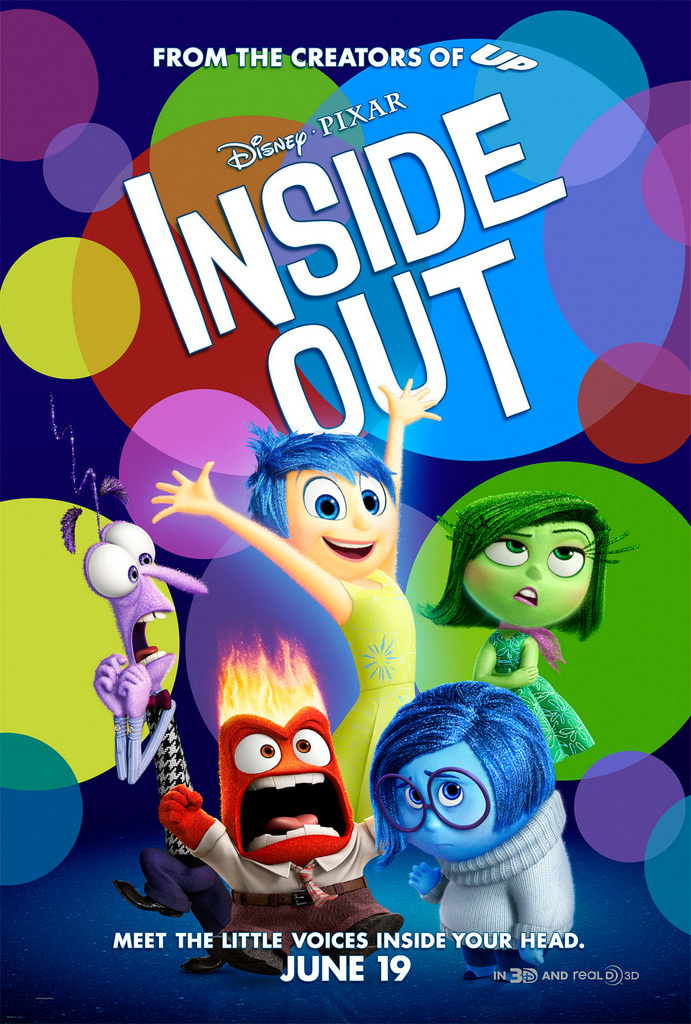
Teaching pronounciation skills for seventh-grade students using “Inside Out” movie
DOI:
https://doi.org/10.12928/ijei.v5i1.9290Keywords:
inside out movie, pronounciation, speaking skillsAbstract
Pronunciation plays a vital role in English as it directly impacts comprehension during communication. Watching movies can indeed be an alternative medium for improving pronunciation skills. Movies often feature numerous conversations between actors or characters, making it easier to comprehend spoken pronunciation. Moreover, movies can contribute to the practice of proper intonation in real-life contexts by observing how actors or characters pronounce words in different situations, enabling learners to enhance their pronunciation skills and refine their articulation of sounds and vowels. This research aims to find out whether ‘Inside Out’ movie is effective to teach students pronunciation. This type of research is quantitative research with a quasi-experimental research approach. The instruments used for this study were pre-test and post-test with a sample of 60 seventh-grade students at SMP Negeri 1 Imogiri Bantul. The pre-test and post-test were carried out to measure whether there was an effect before and after being given treatment. To analyze the data, the researcher used IBM SPSS 22. The study showed that watching ‘Inside Out’ movie is considered effective for teaching pronunciation because the significance value of the paired sample test experimental class showed 0.006, where if the result < 0.05 Ha is accepted while H0 is rejected.
References
Adipramono, R. (2016). The possibility of English as a second language in Indonesia. Journal of English and Education, 5(2), 56–66. https://doi.org/10.20885/jee.vol5.iss2.art4
Cazalet, W. W. (2010). The history of the royal academy of music (Chapter III, pp. 24-44). Cambridge University Press. https://doi.org/10.1017/cbo9780511693250.005
Dimitrios, B., Labros, S., Nikolaos, K., Maria, K., & Athanasios, K. (2013). Traditional teaching methods vs teaching through the application of information and communication technologies in the accounting field: quo vadis? European Scientific Journal, 9(28), 73–101.
Donal, A. (2016). Indonesian students’ difficulties in pronouncing English diphthongs. Journal of English Education, 2(2), 55–62.
Ekeanyanwu, S. (2021). Effects of conventional and cooperative learning methods on academic achievement of students in biology based on school location. International Journal on Integrated Education, 4(12), 269-281.
Fraser, H. (2001). Teaching pronunciation: A handbook for teachers and trainers. Three frameworks for an integrated approach. New South Wales.
Gilakjani, A. P. (2012). The significance of pronunciation in English language teaching. English Language Teaching, 5(4), 96–107. https://doi.org/10.5539/elt.v5n4p96
Gunantar, D. A., Rosaria, S. D., & Ellyawati, H. C. (2020). Kesalahan pengucapan bahasa inggris pada mahasiswa (error pronunciation). Jurnal Dinamika Sosial Budaya, 22(2), 272.
Jariyah, N. (2020). The English pronunciation problems of EFL students’ speaking: A case study at the fourth semester of teaching speaking and listening class. Dissertation. UIN Walisongo.
Mahardhika, F. F. A. (2019). The effect of frequency in watching English-movie towards the pronunciation of EFL learners at IAIN Palangka Raya. Dissertation. IAIN Palangka Raya.
Marwito, R. (2014). Improving students’ self-confidence in speaking English through narrative texts using Jigsaw for XI-IS.1 students of SMAN Semarang in the academic year 2013/2014. Dissertation. Universitas Diponegoro.
Miller, L. (2015). Inside the 11-year-old mind. New York, 48(13), 89-92.
Muhammad, A., Lebar, O., & Mokshein, S. E. (2018). Rubrics as assessment, evaluation and scoring. International Journal of Academic Research in Business and Social Sciences, 8(10), 1417–1431. https://doi.org/10.6007/IJARBSS/v8-i10/5309
Nufus, H., Erlina, E., Koderi, K., Ramadhan, M. U. C., & Nopiyanti, N. (2022). Development of tarkib teaching materials based on motion graphic in Islamic junior high school. Jurnal Al Bayan: Jurnal Jurusan Pendidikan Bahasa Arab, 14(1), 40–57.
Nurdin, J. (2021). Students’ speaking ability awareness: A qualitative study at Zawiyah English Club IAIN Langsa. JADEs Journal of Academia in English Education, 2(1), 44–70. https://doi.org/10.32505/jades.v2i1.3220
Pamula, A. R. N. (2020). The influence of movies to improve speaking ability at the 11th grade of SMAN 1 Purwokerto. Thesis. UIN Prof. Dr. KH. Syaifudin Zuhri. http://repository.uinsaizu.ac.id/id/eprint/7493
Prashant, P. D. (2018). Importance of pronunciation in English language communication. Research Papers in Economics, 7(2), 15–20.
Rahmania, A. H., & Mandasari, B. (2021). Students’ perception towards the use of Joox application to improve students’ pronunciation. Journal of English Language Teaching and Learning (JELTL), 2(1), 39–44.
Rasati, R. R. D. (2020). Teaching pronunciation through movie: Case study of English class at Mahad Al Jamiah IAIN Jember. Dissertation. IAIN Jember.
Sari, A., & Sugandi, B. (2015). Teaching English through English movie: Advantages and disadvantages. The Journal of English Literacy Education: The Teaching and Learning of English as a Foreign Language, 2(2), 10–15.
Sau, F. (2020). Penerapan media film pendek untuk meningkatkan kemampuan menulis teks esai pada peserta didik kelas XII MIPA 6 SMA Negeri 1 Pontianak. Jambura Journal of Linguistics and Literature, 1(1), 1–13. https://doi.org/10.37905/jjll.v1i1.6917
Singh, A. (2021). An introduction to experimental and exploratory research. SSRN. https://doi.org/10.2139/ssrn.3789360
Suprayuni, D., & Juwariyah, A. (2019). Humor dan satire kartun media massa sebagai komunikasi visual di era disrupsi. Avant Garde, 7(2), 187-202.
Suroko, A. P., & Muktiyo, W. (2018). Film as a communication strategy in the learning process. Proceeding of International Conference on Child-Friendly Education, 122–127.
Titianto, P. I. (2022). Pengaruh pemanfaatan media audio visual (film pendek) terhadap motivasi belajar PAI siswa kelas IX SMP IT Baitul Qurro. Thesis. UIN Syarif Hidayatullah.
Toçi, A. (2020). Problems with pronunciation among students of english language and literature-seeu. SEEU Review, 15(2), 113–125. https://doi.org/10.2478/seeur-2020-0020
Tversky, B., Morrison, J. B., & Betrancourt, M. (2002). Animation: can it facilitate?. International journal of human-computer studies, 57(4), 247-262.
Yuliastuti, D. A., Purnama, Y. I., & Tirtanawati, M. R. (2021). The use of English movies in teaching vocabulary mastery. EDUTAMA, 9, 3.
Downloads
Published
How to Cite
Issue
Section
License
Copyright (c) 2025 Adinda Prabantari, Ratri Nur Hidayati

This work is licensed under a Creative Commons Attribution-ShareAlike 4.0 International License.
Authors who publish with this journal agree to the following terms:
- Authors retain copyright with the work simultaneously licensed under a Creative Commons Attribution License that allows others to share the work with an acknowledgement of the work's authorship and initial publication in this journal.
- Authors are able to enter into separate, additional contractual arrangements for the non-exclusive distribution of the journal's published version of the work (e.g., post it to an institutional repository or publish it in a book), with an acknowledgement of its initial publication in this journal.
- Authors are permitted and encouraged to post their work online (e.g., in institutional repositories or on their website) prior to and during the submission process, as it can lead to productive exchanges, as well as earlier and greater citation of published work (See The Effect of Open Access).