Strategies of Islamic education teachers in developing students’ basic life skills at SD IT Al Hijrah 2
DOI:
https://doi.org/10.12928/ijei.v7i2.16929Keywords:
basic life skills, elementary school, teaching strategy, Islamic educationAbstract
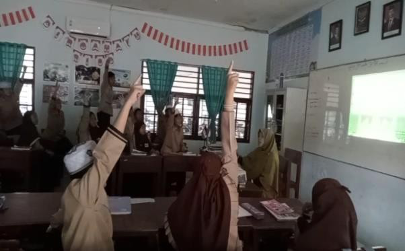
This study aims to analyze students' basic life skills, identify the aspects of basic life skills developed at school, and describe the strategies used by Islamic education teachers to improve students' basic life skills at SD IT Al Hijrah 2, a private Islamic integrated elementary school in Deli Serdang, North Sumatra, Indonesia. This research employed a qualitative field research approach. Data were collected through observation, interviews, and documentation, then analyzed using data reduction, data display, and conclusion drawing techniques. The findings revealed that students' basic life skills developed in four aspects: personal skills, thinking skills, social skills, and vocational skills. These skills were developed through classroom learning, habituation programs, school culture, and extracurricular activities. The strategies implemented by Islamic education teachers included lectures, Problem-Based Learning (PBL), Discovery Learning, Inquiry Learning, Project-Based Learning (PJBL), Cooperative Learning, discussions, role play, direct practice, modeling, and habituation. These strategies effectively supported the holistic development of students' life skills. Beyond describing classroom practice, this study contributes to the field of Islamic education by showing how Islamic education instruction can be deliberately designed to build students' basic life skills, offering a contextual model for integrating character formation, Islamic values, and 21st-century life competencies at the elementary level.
References
Al-Baihaqi, Z. I., Haironi, A., & Hilalludin, H. (2024). Strategi guru pendidikan agama Islam dalam membentuk karakter religius. Al-Ihda’: Jurnal Pendidikan dan Pemikiran, 19(1), 1290–1296. https://doi.org/10.55558/alihda.v19i1.122
Al-Qari, A. M. (2002). Irqat al-Mafatih Syarh Misykat al-Masabih (vol. 1, no. 1–9). Dar Al-Fikr.
Bloom, B. S. (1956). Taxonomy of educational objectives: The classification of educational goals. Handbook I: Cognitive Domain. David McKay Company.
Delors, J. (1996). Learning the Treasure Within: Report to UNESCO of the International Commission on Education for the Twenty-first Century. UNESCO Publishing.
Ibnu Katsir. (2004). Tafsir Ibnu Katsir Jilid 1. Pustaka Imam Asy-Syafii.
Ifriqia, F., Mahanani, P. A. R., Saidah, R., & Said, I. B. (2016). Pendidikan kecakapan hidup (life skill) pada ODHA (orang dengan HIV/AIDS) di Kota Kediri. Proceeding of the International Conference on University Community Engagement. ICON UCE.
Kementerian Agama RI. (2019). Al-Qur’an dan Terjemahannya Edisi Penyempurnaan. Lajnah Pentashihan Mushaf Al-Qur’an Balitbang Diklat Kemenang RI.
Marwiyah, S. (2012). Konsep pendidikan berbasis kecakapan hidup. Jurnal Falasifa, 3(1), 75–97.
Miles, M. B., & Huberman, A. M. (2014). Qualitatif data analysis: A methods sourcebook (Third Edition). Sage Publications.
Mislaini, M. (2017). Pendidikan dan bimbingan kecakapan hidup (life skill) peserta didik. Tarbawiyah: Jurnal Ilmiah Pendidikan, 1(2), 147–163. https://doi.org/10.32332/tarbawiyah.v1i02.974
Mulyasa, E. (2022). Menjadi Guru Profesional: Menciptakan Pembelajaran Kreatif dan Menyenangkan. Remaja Rosdakarya.
Muslim. (n.d.). Hadits 1017. https://www.hadits.id/hadits/muslim/1017
Neliwati, N., Siregar, F. T., Siregar, A. A., & Batubara, H. (2023). Upaya guru pendidikan agama Islam dalam meningkatkan minat belajar siswa Madrasah Tsanawiyah. Munaddhomah: Jurnal Manajemen Pendidikan Islam, 4(2), 297–306. https://doi.org/10.31538/munaddhomah.v4i2.351
Pasaribu, M. S., Pohan, S., & Zailani. (2024). Analisis dan strategi upaya guru PAI dalam meningkatkan kepatuhan peserta didik pada nilai-nilai agama Islam. Didaktika: Jurnal Kependidikan, 13(4), 4471–4483. https://doi.org/10.58230/27454312.102m3
Pebrianti, R., & Ritonga, A. A. (2023). Strategi guru sejarah kebudayaan Islam dalam penanaman gemar membaca pada siswa. Munaddhomah: Jurnal Manajemen Pendidikan Islam, 4(3), 706–718. https://doi.org/10.31538/munaddhomah.v4i3.597
Piaget, J. (1976). Psychology and Education. Hodder and Stoughton.
Puslapdik. (2025). Mendikdasmen Ungkap Capaian dan Tantangan dalam Pendidikan. https://puslapdik.kemendikdasmen.go.id/mendikdasmen-ungkap-capaian-dan-tantangan-dalam-pendidikan/
Riyanto, Y. (2010). Paradigma Baru Pembelajaran. Kencana.
Sa’diyah, H. (2018). Internalisasi nilai-nilai pendidikan berbasis kecakapan hidup (life skills) dalam pembelajaran PAI di SMP Ma`arif 4 Pamekasan. Islamuna: Jurnal Studi Islam, 5(2), 168–176. https://doi.org/10.19105/islamuna.v5i2.2101
Setiawan, F., & Khakim, M. (2026). Pillars of transformative leadership in the regulation of teacher assignment as school principal: A case from Indonesia. International Journal on Education Insight, 7(1), 109–122. https://doi.org/10.12928/ijei.v7i1.14841
Silberman, M. L. (2007). Active Learning: 101 Strategi Pembelajaran Aktif. Nuansa Cendekia.
Zuhairini. (2004). Metodologi Pendidikan Agama Islam (2nd ed). Darul Ulum Press.
Downloads
Published
How to Cite
Issue
Section
License
Copyright (c) 2026 Nur Uswatun Hasanah, Rustam Rustam

This work is licensed under a Creative Commons Attribution-ShareAlike 4.0 International License.
Authors who publish with this journal agree to the following terms:
- Authors retain copyright with the work simultaneously licensed under a Creative Commons Attribution License that allows others to share the work with an acknowledgement of the work's authorship and initial publication in this journal.
- Authors are able to enter into separate, additional contractual arrangements for the non-exclusive distribution of the journal's published version of the work (e.g., post it to an institutional repository or publish it in a book), with an acknowledgement of its initial publication in this journal.
- Authors are permitted and encouraged to post their work online (e.g., in institutional repositories or on their website) prior to and during the submission process, as it can lead to productive exchanges, as well as earlier and greater citation of published work (See The Effect of Open Access).