Reducing English speaking anxiety through voice-based AI chatbots: Evidence from classroom implementation
DOI:
https://doi.org/10.12928/ijei.v7i2.16021Keywords:
anxiety reduction, English language learning, foreign language classroom anxiety, voice-based AI chatbotAbstract
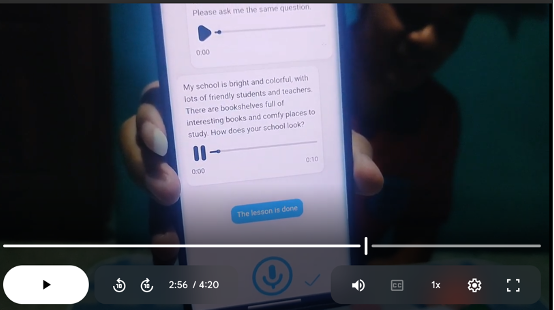
This study investigates the effectiveness of voice-based AI chatbots, such as C-AI, Parlalingo, and Copilot in reducing foreign language classroom anxiety among English Language Education students. Speaking anxiety remains a major barrier to students’ willingness to communicate, particularly in EFL contexts where opportunities for authentic interaction are limited and fear of negative evaluation is high. Hence, this research aims to examine whether incorporating voice-based AI chatbots over a ten-week period can significantly reduce students’ anxiety levels. A quantitative pre-experimental design was employed involving 33 students. Before conducting pre-test and post-test, data were collected using an adapted version of the Foreign Language Classroom Anxiety Scale (FLCAS). Descriptive statistics, Shapiro–Wilk normality test, and paired-samples t-test were used to analyse the data. The results showed that the mean anxiety score declined from 3.31 (SD = 0.37) in the pre-test to 3.03 (SD = 0.38) in the post-test. The paired-samples t-test showed that this decrease was statistically significant (p < .001) with a moderate-to-large effect size (Cohen’s d = 0.74). However, challenges such as occasional technical problems and the need to verify AI-generated responses were also described. Overall, the findings suggest that voice-based AI chatbots have the potential to reduce speaking anxiety and foster positive learning experiences. This study highlights the promising role of voice-based AI chatbots in supporting both affective and pedagogical aspects of language learning. Further study employing more rigorous experimental designs is recommended to establish their effectiveness more conclusively.
References
Adamopoulou, E., & Moussiades, L. (2020). An overview of chatbot technology. In I. Maglogiannis, L. Iliadis, & E. Pimenidis (eds). Artificial Intelligence Applications and Innovations (vol. 584, pp. 373–383). Springer. https://doi.org/10.1007/978-3-030-49186-4_31
Behforouz, B., & Al Ghaithi, A. (2024). Investigating the effect of an interactive educational chatbot on reading comprehension skills. International Journal of Engineering Pedagogy (IJEP), 14(4), 139–154. https://doi.org/10.3991/ijep.v14i4.48461
Bo, L., Ding, X., & Wang, S. (2022). A comparative analysis of traditional teaching and PBL model. Proceedings of the 2022 8th International Conference on Humanities and Social Science Research (ICHSSR 2022). Atlantis Press. https://doi.org/10.2991/assehr.k.220504.306
Braun, V., & Clarke, V. (2006). Using thematic analysis in psychology. Qualitative Research in Psychology, 3(2), 77–101. https://doi.org/10.1191/1478088706qp063oa
Çakmak, F. (2022). Chatbot-human interaction and its effects on EFL students' L2 speaking performance and anxiety. Novitas-ROYAL (Research on Youth and Language), 16(2), 113-131. https://files.eric.ed.gov/fulltext/EJ1365002.pdf
Creswell, J. W. (2013). Steps in Conducting a Scholarly Mixed Methods Study. Digital Commons, University of Nebraska-Lincoln. https://digitalcommons.unl.edu/dberspeakers/48
Daflizar, D. (2024). Out-of-class speaking anxiety among Indonesian EFL students and its relationship with self-perceived speaking skills, vocabulary proficiency, and gender. Journal of Languages and Language Teaching, 12(1), 240. https://doi.org/10.33394/jollt.v12i1.9342
Dewaele, J.-M., & MacIntyre, P. D. (2014). The two faces of Janus? Anxiety and enjoyment in the foreign language classroom. Studies in Second Language Learning and Teaching, 4(2), 237–274. https://doi.org/10.14746/ssllt.2014.4.2.5
Ding, D., & Yusof, M. B. (2025). Investigating the role of AI-powered conversation bots in enhancing L2 speaking skills and reducing speaking anxiety: a mixed methods study. Humanities and Social Sciences Communications, 12(1), 1-16. https://doi.org/10.1057/s41599-025-05550-z
Dinh, C.-T., Trinh, V. K. V., Duong, L. T., Vo, H. B. T., & Nguyen, T. P. D. (2025). Acceptance of AI tools and its impact on communication strategies and vocabulary adaptation: Evidence from Vietnamese English majors. Acta Psychologica, 261, 105911. https://doi.org/10.1016/j.actpsy.2025.105911
Fathi, J., Rahimi, M., & Derakhshan, A. (2024). Improving EFL learners’ speaking skills and willingness to communicate via artificial intelligence-mediated interactions. System, 121, 103254. https://doi.org/10.1016/j.system.2024.103254
Fryer, L., Coniam, D., Carpenter, R., & Lăpușneanu, D. (2020). Bots for language learning now: Current and future directions. Language Learning & Technology, 24(2), 8–22. https://doi.org/10.64152/10125/44719
Halimah, A. N., Budianto, A., Hoesny, M. U., Cabuquin, J. C., & Ulfa, S. (2026). Improving English speaking skills through AI-based voice chatbots: A systematic review of vocational education studies. Studies in Learning and Teaching, 6(3), 785–797. https://doi.org/10.46627/silet.v7i1.684
Herusatoto, H., & Nurtia, S. (2025). Indonesian EFL college students’ anxiety in English oral presentations: Factors of anxiety and strategies to cope with anxiety. Conscientia-Journal on Language, Literature, and Culture, 21(1), 23-34. https://doi.org/10.58364/conscientia.v21i1.103
Hockly, N. (2015). Developments in online language learning. ELT Journal, 69(3), 308–313. https://doi.org/10.1093/elt/ccv020
Horwitz, E. K., Horwitz, M. B., & Cope, J. (1986). Foreign language classroom anxiety. The Modern Language Journal, 70(2), 125. https://doi.org/10.2307/327317
Krahnke, K. J., & Krashen, S. D. (1983). Principles and practice in second language acquisition. TESOL Quarterly, 17(2), 300. https://doi.org/10.2307/3586656
Kukulska‐Hulme, A. (2020). Mobile‐assisted language learning. In The Encyclopedia of Applied Linguistics (pp. 1–9). Wiley. https://doi.org/10.1002/9781405198431.wbeal0768.pub2
Leong, L.-M., & Ahmadi, S. M. (2017). An analysis of factors influencing learners’ English speaking skill. International Journal of Research in English Education, 2(1), 34–41. https://doi.org/10.18869/acadpub.ijree.2.1.34
MacIntyre, P. D. (2017). 2. An overview of language anxiety research and trends in its development. In New Insights into Language Anxiety (pp. 11–30). Multilingual Matters. https://doi.org/10.21832/9781783097722-003
MacIntyre, P. D., Clément, R., Dörnyei, Z., & Noels, K. A. (1998). Conceptualizing willingness to communicate in a L2: A situational model of L2 confidence and affiliation. The Modern Language Journal, 82(4), 545–562. https://doi.org/10.1111/j.1540-4781.1998.tb05543.x
MacIntyre, P., & Gregersen, T. (2012). Emotions that facilitate language learning: The positive-broadening power of the imagination. Studies in Second Language Learning and Teaching, 2(2), 193. https://doi.org/10.14746/ssllt.2012.2.2.4
Mali, Y. C. G. (2025). Factors hindering the integration and potential of technology in EFL classrooms. IJIET (International Journal of Indonesian Education and Teaching), 9(1), 171–185. https://doi.org/10.24071/ijiet.v9i1.9553
Muniandy, J., & Selvanathan, M. (2025). ChatGPT, a partnering tool to improve ESL learners’ speaking skills: Case study in a public university, Malaysia. Teaching Public Administration, 43(1), 4–20. https://doi.org/10.1177/01447394241230152
Puspadnyani, D. G. W., Santosa, M. H., & Indrayani, L. (2026). Students’ perceptions of ChatGPT: Usability and enjoyment in English language education. The Art of Teaching English as a Foreign Language (TATEFL), 7(1), 1–14. https://doi.org/10.36663/tatefl.v7i1.1124
Renandya, W. A., & Nguyen, M. T. T. (2022). Teaching speaking in L2 contexts. In Handbook of Practical Second Language Teaching and Learning (pp. 269–280). Routledge. https://doi.org/10.4324/9781003106609-22
Rose, H., & Galloway, N. (2019). Global Englishes for Language Teaching. Cambridge University Press. https://doi.org/10.1017/9781316678343
Saito, K., & Akiyama, Y. (2017). Video‐based interaction, negotiation for comprehensibility, and second language speech learning: A longitudinal study. Language Learning, 67(1), 43–74. https://doi.org/10.1111/lang.12184
Schacter, J., & Fagnano, C. (1999). Does computer technology improve student learning and achievement? How, when, and under what conditions? Journal of Educational Computing Research, 20(4), 329–343. https://doi.org/10.2190/VQ8V-8VYB-RKFB-Y5RU
Shawar, B. A., & Atwell, E. (2007). Fostering language learner autonomy through adaptive conversation tutors. In Proceedings of the Fourth Corpus Linguistics Conference (vol. 3, pp. 186-193). https://www.birmingham.ac.uk/documents/college-artslaw/corpus/conference-archives/2007/51paper.pdf
Stockwell, G., & Reinders, H. (2019). Technology, motivation and autonomy, and teacher psychology in language learning: Exploring the myths and possibilities. Annual Review of Applied Linguistics, 39, 40–51. https://doi.org/10.1017/S0267190519000084
Tai, T.-Y., & Chen, H. H.-J. (2023). The impact of Google Assistant on adolescent EFL learners’ willingness to communicate. Interactive Learning Environments, 31(3), 1485–1502. https://doi.org/10.1080/10494820.2020.1841801
Venkatesh, V., Thong, J. Y. L., & Xu, X. (2012). Consumer acceptance and use of information technology: Extending the unified theory of acceptance and use of technology. MIS Quarterly, 36(1), 157–178. https://doi.org/10.2307/41410412
Wang, C., Zou, B., Du, Y., & Wang, Z. (2024). The impact of different conversational generative AI chatbots on EFL learners: An analysis of willingness to communicate, foreign language speaking anxiety, and self-perceived communicative competence. System, 127, 103533. https://doi.org/10.1016/j.system.2024.103533
Wei, L. (2023). Artificial intelligence in language instruction: Impact on English learning achievement, L2 motivation, and self-regulated learning. Frontiers in Psychology, 14. https://doi.org/10.3389/fpsyg.2023.1261955
Widhiatama, D. A., & Brameswari, C. (2026). Nurturing young minds: Raising environmental awareness through digital media and education. Jurnal Ar Ro’is Mandalika (Armada), 6(3), 1295–1306. https://doi.org/10.59613/armada.v6i3.6225
Xin, Z., & Derakhshan, A. (2025). From excitement to anxiety: Exploring English as a foreign language learners’ emotional experiences in the artificial intelligence‐powered classrooms. European Journal of Education, 60(1). https://doi.org/10.1111/ejed.12845
Zhang, Z., & Huang, X. (2024). The impact of chatbots based on large language models on second language vocabulary acquisition. Heliyon, 10(3), e25370. https://doi.org/10.1016/j.heliyon.2024.e25370
Downloads
Published
How to Cite
Issue
Section
License
Copyright (c) 2026 Daniel Ari Widhiatama, Elysa Hartati, Luluil Maknun

This work is licensed under a Creative Commons Attribution-ShareAlike 4.0 International License.
Authors who publish with this journal agree to the following terms:
- Authors retain copyright with the work simultaneously licensed under a Creative Commons Attribution License that allows others to share the work with an acknowledgement of the work's authorship and initial publication in this journal.
- Authors are able to enter into separate, additional contractual arrangements for the non-exclusive distribution of the journal's published version of the work (e.g., post it to an institutional repository or publish it in a book), with an acknowledgement of its initial publication in this journal.
- Authors are permitted and encouraged to post their work online (e.g., in institutional repositories or on their website) prior to and during the submission process, as it can lead to productive exchanges, as well as earlier and greater citation of published work (See The Effect of Open Access).