Developing manual transmission system video for vocational high school students using ADDIE model
DOI:
https://doi.org/10.12928/ijei.v7i2.15967Keywords:
ADDIE, automotive chassis, digital pedagogy, manual transmission, vocational educationAbstract
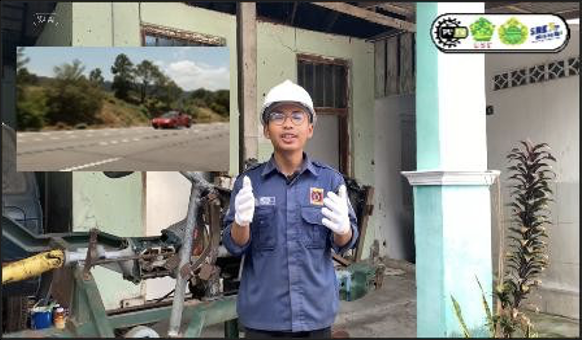
The pedagogical challenge in vocational education is to bridge abstract mechanical concepts with practical technical skills. This study addresses the low learning outcomes in manual transmission materials by developing instructional video media for the Manual Transmission System topic in the Automotive Chassis subject for Grade XI Light Vehicle Engineering students at Tamansiswa Jetis Vocational High School, Yogyakarta. The learning video was developed using the ADDIE instructional design model to provide contextual and visual learning experiences that facilitate students' understanding of complex mechanical concepts and procedures. The feasibility evaluation showed that the developed media achieved a score of 91.5% from material experts and 78% from media experts, indicating that it is suitable for instructional use. Student responses reached 85%, demonstrating that the learning videos effectively enhanced students' understanding and engagement. These findings indicate that contextual digital learning media can significantly reduce the cognitive gap between theoretical concepts and practical applications, making it a valuable instructional resource for improving learning outcomes in vocational automotive education.
References
Abuhassna, H., Alnawajha, S., Awae, F., Mohamed Adnan, M. A. Bin, & Edwards, B. I. (2024). Synthesizing technology integration within the Addie model for instructional design: A comprehensive systematic literature review. Journal of Autonomous Intelligence, 7(5). https://doi.org/10.32629/jai.v7i5.1546
Ajjawi, R., Tai, J., Huu Nghia, T. Le, Boud, D., Johnson, L., & Patrick, C. J. (2020). Aligning assessment with the needs of work-integrated learning: the challenges of authentic assessment in a complex context. Assessment and Evaluation in Higher Education, 45(2). https://doi.org/10.1080/02602938.2019.1639613
Alimam, H., Mazzuto, G., Tozzi, N., Emanuele Ciarapica, F., & Bevilacqua, M. (2023). The resurrection of digital triplet: A cognitive pillar of human-machine integration at the dawn of industry 5.0. Journal of King Saud University-Computer and Information Sciences, 35(10). https://doi.org/10.1016/j.jksuci.2023.101846
Alruthaya, A., Nguyen, T. T., & Lokuge, S. (2021). The Application of digital technology and the learning characteristics of generation Z in higher education. ACIS 2021-Australasian Conference on Information Systems, Proceedings.
Alvianto, A., & Handoyono, N. A. (2024). The effect of problem-based learning using simulators on CPS skills and learning outcomes of lighting systems. Journal of Vocational Education Studies, 7(2). https://doi.org/10.12928/joves.v7i2.10325
Alvianto, N., Handoyono, N. A., & Ratnawati, D. (2022). Pengembangan video tutorial pada pembelajaran sistem starter di SMK Ma’arif 1 Nanggulan. Dinamika Teknik Mesin, 7(2), 89–98. https://journal.uny.ac.id/index.php/dynamika/article/view/52544
Anbiya, R., Sudarno Putra, D., Purwanto, W., Dani Saputra, H., Hamka, J., Tawar, A., & Sumatera Barat, P. (2025). Pengembangan media digital interaktif untuk pembelajaran penggunaan osiloskop pada mahasiswa teknik otomotif development of interactive digital media for teaching oscilloscope operation to automotive engineering students. JTPVI: Jurnal Teknologi dan Pendidikan Vokasi Indonesia, 03.
Anwar, C., & Sudira, P. (2022). Literacy of vocational high school teachers majoring in automotive light vehicle engineering the need for essential skills in the industrial revolution 4.0. Journal of Education Technology, 6(4). https://doi.org/10.23887/jet.v6i4.46580
Arikunto, S. (2021). Dasar-dasar Evaluasi Pendidikan Edisi 3. Bumi Akskara.
Brame, C. J. (2016). Effective educational videos: Principles and guidelines for maximizing student learning from video content. CBE Life Sciences Education, 15(4). https://doi.org/10.1187/cbe.16-03-0125
Branson, R. K., Rayner, G. T., Cox, L. J., Furman, J. P., King, F. J., & Hannum, W. H. (1975). Interservice Procedures for instructional systems development: executive summary and model. TRADOC Pam 350-30, Ft. Monroe, VA: U.S. Army Training and Doctrine Command., 1–5.
Ferdaus, S. A., & Novita, D. (2023). The Implementation of the merdeka curriculum in english subject at a vocational high school in Indonesia. Briliant: Jurnal Riset dan Konseptual, 8(2). https://doi.org/10.28926/briliant.v8i2.1201
Ginanjar, R. (2025). Analysis of the Influence and Impact of social media on Gen-Z literacy activities. JALILA: Journal of Applied Linguistics and Literary Analysis, 1(1).
Handoyono, N. A., Suparmin, Samidjo, Johan, A. B., & Suyitno. (2020). Project-based learning model with real object in vocational school learning. Journal of Physics: Conference Series, 1700(1). https://doi.org/10.1088/1742-6596/1700/1/012045
Hidayatullah, R. S., Supardji, S., & Susila, I. W. (2024). Development of digital learning simulators to increase vocational students’ prior knowledge. TEM Journal, 13(3). https://doi.org/10.18421/TEM133-26
Ineme, M. E., Imbur, M. T., Innocent, I. S. (2025). From skill to skills: a framework for adaptive workforce development in an embattled economy. Global Journal of Modern Research and Emergung Trends, 6(1), 55-73. https://doi.org/10.5281/zenodo.17448557
Kamaruzaman, F. M., Othman, N. N. J. N., Omar, M., & Zaid, M. F. A. M. (2025). Future generic skills for technical vocational education graduates. International Journal of Learning, Teaching and Educational Research, 24(3). https://doi.org/10.26803/ijlter.24.3.15
Kurt, S. (2019). An introduction to the addie model: Instructional design: The ADDIE approach. In Independently Published.
Li, J., Schmees, J. K., Tang, H., & Frommberger, D. (2024). Tertiarization and academization of vocational education and training in China and Germany. International Journal of Training Research, 22(1). https://doi.org/10.1080/14480220.2024.2330459
Liao, C. W., Liao, H. K., Chen, B. S., Tseng, Y. J., Liao, Y. H., Wang, I. C., Ho, W. S., & Ko, Y. Y. (2023). inquiry practice capability and students’ learning effectiveness evaluation in strategies of integrating virtual reality into vehicle body electrical system comprehensive maintenance and repair services practice: a case study. Electronics (Switzerland), 12(12). https://doi.org/10.3390/electronics12122576
Mogaji, E. (2025). Diaspora theoretical contributors: bridging transnational knowledge and transforming global academia. Globalisation, Societies and Education. https://doi.org/10.1080/14767724.2025.2531977
Nugraheni, D. P., Basyirun, B., Supraptono, E., Raya, J., & Kaligondang, K. (2022). Development of job Instruction on tudent readiness in carrying out internship in the automotive engineering skill competency. Journal of Vocational and Career Education, 7(1).
Nurhatmi, J. (2025). Teori Multimedia pembelajaran: landasan kognitif dan implikasi desain instruksional. Al Habib: Jurnal Pendidikan Islam Dan Keguruan, 1(2).
Presiden. (2022). Peraturan Presiden Nomor 68 Tahun 2022 Tentang Revitalisasi Pendidikan Vokasi dan Pelatihan Vokasi. Sekretariat Negara.
Rap, S., & Blonder, R. (2025). Technology acceptance when teaching climate change. Journal of Science Education and Technology, 34(3). https://doi.org/10.1007/s10956-024-10125-9
Roemintoyo, & Budiarto, M. K. (2025). Smartphone-based interactive media improves communication skills in vocational school students. Jurnal Pendidikan dan Pengajaran, 58(1). https://doi.org/10.23887/jpp.v58i1.83191
Salihin, S., & Nursaid, N. (2025). Developing canva-based video tutorials to enhance poetry writing skills in vocational high school students. AL-Ishlah: Jurnal Pendidikan, 17(3). https://doi.org/10.35445/alishlah.v17i3.7888
Selamat, S. M., Ali, A., Baharuddin, F. N., Musa, A. H., Mohd Nasir, H., & Mohd Beta, R. M. D. (2025). Aligning Academic curriculum with industry demands: dilemma of graduates. International Journal of Academic Research in Progressive Education and Development, 14(3). https://doi.org/10.6007/ijarped/v14-i3/25926
Skulmowski, A., & Xu, K. M. (2022). Understanding cognitive load in digital and online learning: a new perspective on extraneous cognitive load. In Educational Psychology Review (Vol. 34, Issue 1). https://doi.org/10.1007/s10648-021-09624-7
Sugiyono. (2019). Metode Penelitian Pendidikan (Kuantitatif, Kualitatif, Kombinasi, R&D dan Penelitian Pendidikan). In Metode Penelitian Pendidikan. Alfabeta.
Trenholm, S., & Marmolejo-Ramos, F. (2024). When video improves learning in higher education. In Education Sciences (Vol. 14, Issue 3). https://doi.org/10.3390/educsci14030311
Triyono, M. B. (2019). Preparing TVET education facing industrial era challenge 4.0. International Conference of Teacher Training and Education in Conjunction with Annual Education and Vocational Education Conference.
Wati, W. R., Sariyatun, & Sudiyanto. (2024). Advancing fashion design education: evaluating the eligibility of video tutorial media for basic pattern content in vocational high school. Journal of Education Research and Evaluation, 8(3). https://doi.org/10.23887/jere.v8i3.76069
Downloads
Published
How to Cite
Issue
Section
License
Copyright (c) 2026 Yuli Saputro, Setuju Setuju, Nurcholish Arifin Handoyono

This work is licensed under a Creative Commons Attribution-ShareAlike 4.0 International License.
Authors who publish with this journal agree to the following terms:
- Authors retain copyright with the work simultaneously licensed under a Creative Commons Attribution License that allows others to share the work with an acknowledgement of the work's authorship and initial publication in this journal.
- Authors are able to enter into separate, additional contractual arrangements for the non-exclusive distribution of the journal's published version of the work (e.g., post it to an institutional repository or publish it in a book), with an acknowledgement of its initial publication in this journal.
- Authors are permitted and encouraged to post their work online (e.g., in institutional repositories or on their website) prior to and during the submission process, as it can lead to productive exchanges, as well as earlier and greater citation of published work (See The Effect of Open Access).