Enhancing students' cognitive ability on Newton laws through the integrated SSCS-TPACK learning model
DOI:
https://doi.org/10.12928/ijei.v7i2.15960Keywords:
cognitive ability, Newton law, SSCS, TPACKAbstract
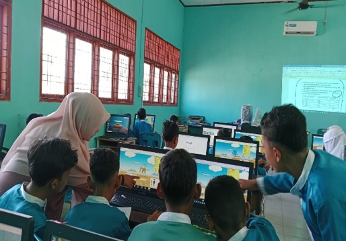
This study aims to determine the effectiveness of the integrated SSCS-TPACK model, a model which integrates search-solve-create-share framework and technological-pedagogical content knowledge, in improving students’ cognitive abilities regarding Newton’s laws. In this study, effectiveness is operationally defined as a statistically significant increase in students’ cognitive ability scores following the implementation of this learning model. This study employed a one-group pretest–posttest design involving 30 eighth-grade students from SMP Negeri 3 Peusangan, a public junior high school in Peusangan, Aceh, Indonesia. Participants were selected using a random sampling technique. Data were analyzed using a paired t-test. The results showed a statistically significant difference between pretest and posttest scores (t = 29.08, p < 0.001), indicating that students’ cognitive abilities improved after learning with the integrated SSCS-TPACK model. These findings suggest that the integrated SSCS-TPACK model is effective in improving students’ cognitive abilities in learning Newton’s laws and therefore can serve as an alternative technology-integrated teaching approach to enhance the physics learning process.
References
Andhini, J., Kadir, A., & Suhardiman. (2024). Efektivitas penggunaan bahan ajar IPA berbasis media amplop bergambar terhadap kemampuan kognitif pada siswa sekolah dasar di Kabupaten Polewali Mandar. Pinisi Journal of Education, 4(1), 50-54.
Anggraini, S. P., Jufri, A. W., Syukur, A., & Setiadi, D. (2022). Pengembangan materi ajar berbasis video kreatif biologi pada materi sistem ekskresi untuk siswa kelas XI SMA. Jurnal Ilmiah Profesi Pendidikan, 7(1), 123-129. https://doi.org/10.29303/jipp.v7i1.430
Aprilia, A. A., Aripin, & Mamudah, I. R. (2022). Pengaruh model pembelajaran visual, auditori, kinestetik (VAK) terhadap kemampuan kognitif siswa pada materi hukum Newton. Jurnal Ilmiah Pendidikan Fisika, 6(3), 518-529. https://doi.org/10.20527/jipf.v6i3.5651
Delar, A. D., Reinita, Arwin, & Mansurdin. (2022). Analisis kemampuan kognitif, afektif, dan psikomotor peserta didik pada pembelajaran tematik terpadu mealui mode cooperative tipe make a match di SDN 05 Sawahan Padang. Jurnal Pendidikan Tambusai, 6(1), 8390–8400. https://doi.org/10.31004/jptam.v6i1.3563
Fatma, A. F., Jufriadi, A., Hudha, M. N., & Sholikhan. (2023). Analisis pemahaman konsep pada materi hukum Newton. Jurnal Terapan Sains & Teknologi, 5(2), 172-178. https://doi.org/10.21067/jtst.v5i2.8556
Fraenkel, J. R., Wallen, N. E., & Hyun, H. H. (2019). How to Design and Evaluate Research in Education (10th ed.). New York, NY: McGraw-Hill Education.
Izzuddin, A. (2021). Upaya mengembangkan kemampuan kognitif anak usia dini melalui media pembelajaran sains. Jurnal Edukasi dan Sains, 3(3), 542-557. https://doi.org/10.36088/edisi.v3i3.1614
Janah, E. F. (2022). Konsep dan implementasi TPACK pada pembelajaran di sekolah dasar. Jurnal Ilmiah Kependidikan, 10(2), 248-355.
Jibril, M., & Adedokun-Shittu, N. A. (2024). Enhancing education: A comprehensive framework for integrating technological pedagogical content knowledge (TPACK) into teaching and learning, Indonesian Journal of Multidisciplinary Research, 4(1), 181-188. https://doi.org/10.17509/ijomr.v4i1.72044
Joshi, S. (2023). TPACK and teachers' self-efficacy: A systematic review. Canadian Journal of Learning and Technology, 49(2), 1–23. https://doi.org/10.21432/cjlt28280
Meltzer, & David, E. (2002). The relationship between mathematics preparation and conceptual learning gains in physics: a possible hidden variable in diagnostic pretest scores. American Journal of Physics, 1259-1268. https://doi.org/10.1119/1.1514215
Naufal, H. (2021). Model pembelajaran konstruktivisme pada matematika untuk meningkatkan kemampuan kognitif siswa di era merdeka belajar. Seminar Nasional Pendidikan Matematika, 2(1), 143-151.
OECD. (2023). PISA 2022 Results (Volume I): The State of Learning and Equity in Education. OECD Publishing.
Saksana, J. C. (2024). Analisis pengaruh motivasi belajar, kemampuan kognitif dan manajemen waktu terhadap prestasi belajar mahasiswa. Jurnal Pendidikan dan Kebudayaan Nusantara, 2(4), 172-181. https://doi.org/10.38035/jpkn.v2i4
Sari, R. A., Gumilar, G., & Sartika, S.H. (2025). Penerapan model pembelajaran problem solving tipe search, solve, create and share (SSCS) berbantuan media spinning wheel sebagai upaya untuk meningkatkan kemampuan berpikir kritis siswa. Jurnal Kajian Pendidikan Ekonomi dan Ilmu Ekonomi, 10(1), 720-730.
Sarwanto, O.V., Faldira, K., Lolita, N. H., & Hadi, M.N. (2025). Penerapan hukum Newton untuk menentukan hubungan antara gaya, massa, dan percepatan pada bola kasti. Jurnal Media Akademik, 3(12), 1-10. https://doi.org/10.62281/jsdbbv61
Shofiyah, A., Suprianto, Vajari, R., & Robiz, M. N. Z. (2024). Meta-analisis kemampuan kognitif siswa dalam pembelajaran fisika dengan model problem based learning (PBL). Jurnal Ilmiah Multidisiplin Indonesia, 2(3), 204-216.
Sihanita, Y. K., Priambodo, A., & Tuasikal, A. R. S. (2024). TPCK (Technological Pedagogical and Content Knowledge) competence for educator: A literature review. Edukasia: Jurnal Pendidikan dan Pembelajaran, 5(2), 77–92. https://doi.org/10.62775/edukasia.v5i2.851
Thohir, M. A., Jumadi, J., & Warsono, W. (2022). Technological pedagogical content knowledge (TPACK) of pre-service science teachers: A Delphi study. Journal of Research on Technology in Education, 54(1), 127-142. https://doi.org/10.1080/15391523.2020.1814908
Tiyaswati, I., Sarwanto., & Sukarmin. (2021). Students’ creative and innovation skill on chapter of Newton's law using SSCS learning model. Journal of Physics: Conference Series, 1806, 012120. https://doi.org./10.1088/1742-6596/1806/1/012120
Utama, A. H., & Salim A. (2021). Program pelatihan pengembangan bahan ajar berbasis video pembelajaran. Journal of Innovation and Knowledge, 1(1), 73–82.
Yasin, M., Fakhri, J., & Siswadi. (2020). The effect of SSCS learning model on reflective thinking skills and problem solving ability. European Journal of Educational Research, 9(2), 743-752. https://doi.org/10.12973/eu-jer.9.2.743
Yuliana, Y., Zuhdi, M., & Gunada, I. W. (2024). Pengaruh model pembelajaran SSCS (search, solve, create, and share) berbantuan e-LKPD terhadap penguasaan konsep fisika peserta didik. Jurnal Penelitian dan Pembelajaran Fisika Indonesia, 6(1), 10-14.
Zahroh, S. H., Parno, P., & Mufti, N. (2018). Keterampilan pemecahan masalah dengan model search, solve, create, and share (SSCS) problem solving disertai conceptual problem solving (CPS) pada materi hukum Newton. Jurnal Pendidikan: Teori, Penelitian, dan Pengembangan, 3(7), 968-973. https://doi.org/10.17977/jptpp.v3i7.11371
Zikriana, L., & Nuri, B. (2023). Development of SSCS-based teaching materials integrated with TPACK in cultivating students' scientific attitudes. Jurnal Penelitian Pendidikan IPA, 9(11), 9992-10000. https://doi.org/10.29303/jppipa.v9i11.5467
Downloads
Published
How to Cite
Issue
Section
License
Copyright (c) 2026 Lissa Zikriana, Sharfina Sharfina, Khairunnisak Khairunnisak, Nanda Safarati

This work is licensed under a Creative Commons Attribution-ShareAlike 4.0 International License.
Authors who publish with this journal agree to the following terms:
- Authors retain copyright with the work simultaneously licensed under a Creative Commons Attribution License that allows others to share the work with an acknowledgement of the work's authorship and initial publication in this journal.
- Authors are able to enter into separate, additional contractual arrangements for the non-exclusive distribution of the journal's published version of the work (e.g., post it to an institutional repository or publish it in a book), with an acknowledgement of its initial publication in this journal.
- Authors are permitted and encouraged to post their work online (e.g., in institutional repositories or on their website) prior to and during the submission process, as it can lead to productive exchanges, as well as earlier and greater citation of published work (See The Effect of Open Access).