Looking at the effect of TaRL-integrated CBL on students' scientific literacy skills: What we can learn?
DOI:
https://doi.org/10.12928/ijei.v6i2.13916Keywords:
case-based learning model, science literacy skills, teaching at the right levelAbstract
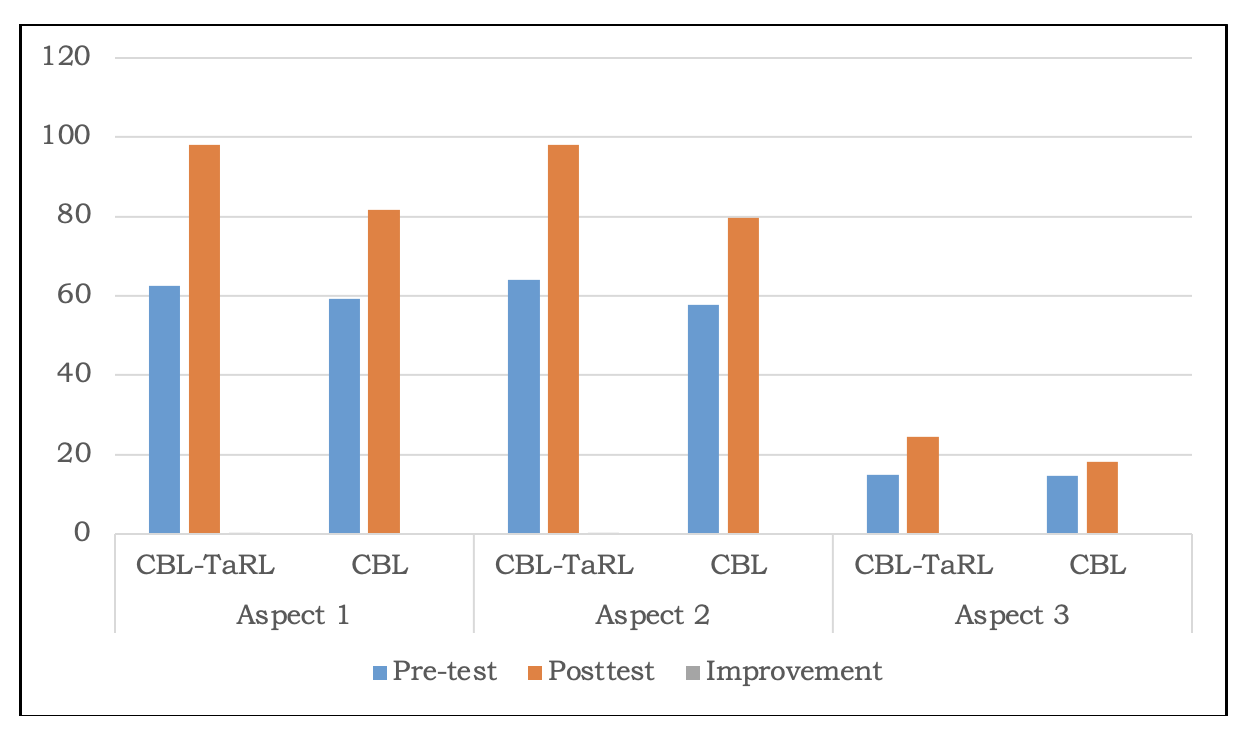
In the 21st century, scientific literacy is essential for students to face the complexity of global problems that require scientific understanding in decision-making. PISA data shows Indonesia's low scientific literacy. In 2018, it ranked 74th out of 79 countries with a score of 396 (40% of students only reached level 1), and in 2022, it dropped to 69th out of 81 countries with a score of 383 (34% of students at the elementary level). Less than 1% of Indonesian students reached levels 5-6 in both periods. Efforts to optimize scientific literacy were carried out by implementing a case-based learning (CBL) model integrated with the teaching at the right level (TaRL) approach. A quasi-experimental study was conducted at SMAN 1 Kota Jambi with the topic of the immune system using a non-randomized pretest-posttest control group design. The sample was selected using purposive sampling in grade XI, consisting of an experimental class (CBL-TaRL, n=36) and a control class (CBL, n=36). The results showed that the average score of the experimental class increased from 54.17 to 85.28, while the control class increased from 50.69 to 68.61. The one-way ANCOVA test showed a significant difference [F(1,69)=27.560, p<0.001, ηp²=0.28] with a large effect size. Students taught using CBL-TaRL had a higher increase in scientific literacy, especially in the aspects of analyzing scientific phenomena (36%) and designing scientific investigations (34%).
References
Abdullah, F., Rakhmawati, D., & Indiati, I. Penerapan pendekatan TARL (teaching at the right level) dalam pembelajaran IPAS terhadap kemampuan literasi sains. Didaktika, 5(1), 91-108.
Adi, N. N. S., Oka, D. N., & Surata, I. K. (2024). Implementasi pendekatan teaching at the right level (TaRL) terintegrasi konsep understanding by design (UBD) untuk meningkatkan motivasi belajar siswa SMA pada pembelajaran Biologi. Widyadari, 25(1), 157–172.
Arasti, I., Yulinda, R., & Khairunnisa, Y. (2024). Pengaruh implementasi strategi case based learning terhadap kemampuan literasi sains. Eduproxima (Jurnal Ilmiah Pendidikan IPA), 6(4), 1513-1523.
Banerji, R., & Chavan, M. (2016). Improving literacy and math instruction at scale in India’s primary schools: The case of Pratham’s Read India program. Journal of Educational Change, 17(4), 453–475.
Erlinkha, S., Komarayanti, S., & Ervina, Y. V. (2023). Peningkatan hasil belajar biologi melalui metode pembelajaran TaRL (teaching at the right level) pada siswa kelas X.5 SMA Negeri 1 Jember. Jurnal Biologi, 1(4), 1–11. https://doi.org/10.47134/biology.v1i4.1990
Faiza, L., & Wulandari, F. (2023). Pengaruh model pembelajaran case based learnıng (CBL) terhadap kemampuan lıterası saıns IPA sıswa Kelas V. Jurnal Elementaria Edukasia, 6(3), 1311–1324. https://doi.org/10.31949/jee.v6i3.6081
Harahap, T. K., Indra, I. M., Issabella, C. M., Yusriani, Hasibuan, S., Hasan, M., Musyaffa, A. ., Surur, M., & Ariawan, S. (2021). Metodologi Penelitian Pendidikan. Pustaka Ramadhan.
Huryah, F., Sumarmin, R., & Effendi, J. (2017). Analisis capaian literasi sains biologi siswa SMA Kelas X Sekota Padang. Jurnal Eksakta Pendidikan (JEP), 1(2), 72. https://doi.org/10.24036/jep.v1i2.70
Kementerian Pendidikan Kebudayaan Riset dan Teknologi. (2023). Panduan Implementasi Pembelajaran Berpusat pada Mahasiswa. https://repositori.kemdikbud.go.id/29168/1/Panduan Implementasi Pembelajaran Berpusat Pada Mahasiswa.pdf
Leedy, P. D., & Ormrod, J. E. (2021). Practical research: Planning and Design (Twelfth Edition). Pearson. https://eric.ed.gov/?id=ED594592
Minasari, U., & Susanti, R. (2023). Penerapan model problem based leaning berbasis berdiferensiasi berdasarkan gaya belajar peserta didik pada pelajaran biologi. Ideguru: Jurnal Karya Ilmiah Guru, 8(2), 282–287. https://doi.org/10.51169/ideguru.v8i2.543
Mushlich, M. A., & Sunarmi, S. (2025). Pengaruh model socio-biological case based learning berbasis literasi sains terhadap keterampilan pemecahan masalah pada materi sistem sirkulasi manusia di SMA Islam Al-Maarif Singosari, Malang. Jurnal Pendidikan Biologi, 15(1), 31. https://doi.org/10.17977/um052v15i1p31-47
OECD. (2019). PISA 2018 Assessment and Analytical Framework. OECD Publishing.
OECD. (2023). PISA 2025 Science Framework. OECD Publishing.
Padli, M. S., Muis, A., & Baso, S. T. A. (2024). Penerapan model problem based learning (PBL) berbasis TaRL untuk meningkatkan kemampuan literasi sains pada topik bumi dan sistem tata surya. Jurnal Pemikiran dan Pengembangan Pembelajaran, 6(2), 157–161.
Paiticen, M., Mujiastuti, R., & Rusilowati, A. (2024). Peningkatan Literasi sains siswa menggunakan pendekatan TaRL berbantukan e-LKPD di SMPN 24 Semarang. Prosiding Seminar Nasional Pendidikan dan Penelitian Tindakan Kelas (pp. 1073-1082).
Sugiyono. (2020). Metodologi Penelitian Kuantitatif, Kualitatif dan R & D. Alfabeta.
Sutrisna, N. (2021). Analisis kemampuan literasi sains peserta didik SMA di Kota Sungai Penuh. Jurnal Inovasi Penelitian, 1(12), 2683-2694.
Wardani, I. U., Arnyana, I. B. P., & Dantes, N. (2023). Analysis of science learning problems in elementary schools. Jurnal Penelitian Pendidikan IPA, 9(7), 5645-5652.
Widyasari, S. R., Martini, M., & Mahdiannur, M. A. (2023). Analisis keterlaksanaan dan aktivitas belajar siswa menggunakan model case based learning pada materi pencemaran lingkungan. Jurnal Ilmiah Profesi Pendidikan, 8(4), 2735–2741. https://doi.org/10.29303/jipp.v8i4.1604
Yennita, Astriawati, F., & Jumiarni, D. (2024). Process oriented guided inquiry learning (POGIL): Its effectiveness in increasing students’ scientific literacy skills in plant physiology course. Bioeduscience, 8(1), 104–115. https://doi.org/10.22236/jbes/13008
Yuli, R. R., Utomo, A. P., & Sukoco, S. (2023). Pendekatan teaching at the right level (TaRL) dengan model PBL berbantuan gallery walk untuk meningkatkan minat belajar biologi siswa kelas XI MIPA 2 di SMAN 1 Muncar. Education Journal : Journal Educational Research and Development, 7(2), 239–254. https://doi.org/10.31537/ej.v7i2.1285
Downloads
Published
How to Cite
Issue
Section
License
Copyright (c) 2025 Annisa Ibrahim, Ervan Johan Wicaksana, Fitri Astriawati

This work is licensed under a Creative Commons Attribution-ShareAlike 4.0 International License.
Authors who publish with this journal agree to the following terms:
- Authors retain copyright with the work simultaneously licensed under a Creative Commons Attribution License that allows others to share the work with an acknowledgement of the work's authorship and initial publication in this journal.
- Authors are able to enter into separate, additional contractual arrangements for the non-exclusive distribution of the journal's published version of the work (e.g., post it to an institutional repository or publish it in a book), with an acknowledgement of its initial publication in this journal.
- Authors are permitted and encouraged to post their work online (e.g., in institutional repositories or on their website) prior to and during the submission process, as it can lead to productive exchanges, as well as earlier and greater citation of published work (See The Effect of Open Access).