Investigating the use of Mondrian Art Puzzles to develop students’ problem-solving and mindset
DOI:
https://doi.org/10.12928/ijei.v5i2.13680Keywords:
Mondrian Art Puzzle, problem-solving ability, student mindsetAbstract
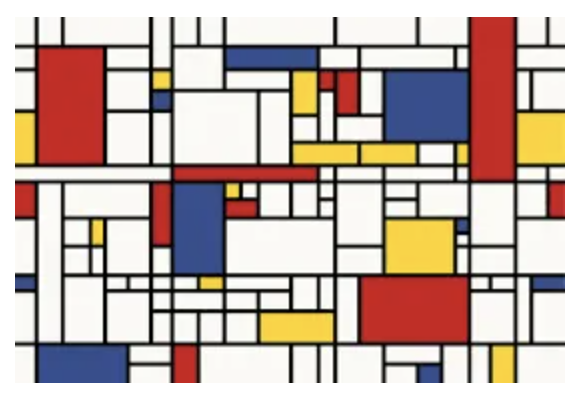
Indonesia is currently undergoing changes towards the era of society 5.0 after passing through the 4.0 revolution. In the face of such changes in a short time, it is important for human resources to have 21st century skills or 4Cs such as critical thinking and problem solving, creativity and innovation, communication, and collaboration. Therefore, along with the development of education that is increasingly complex, problem-solving skills and students' mindset are crucial aspects that need to be developed in the learning process of Mathematics. Therefore, this study investigates the effectiveness of Mondrian Art Puzzle as an innovative learning stimulus with the aim of influencing problem-solving ability and mindset development. In this quantitative research study, data were collected through tests and questionnaires in both experimental classes. The first class used Mondrian Cube (apps) and Mondrian Paintings (handout), while the second class only used Mondrian Cube. The findings show that the combination of Mondrian Cube and Mondrian Paintings is more effective in improving mathematical problem-solving skills than Mondrian Cube alone. Although not statistically significant, Mondrian Art Puzzles has the potential to encourage the development of mindset by reducing fixed mindset students and increasing growth mindset students, thus having a positive impact on learning mathematics.
References
Adelia, I., Musaddat, S., & Hasnawati. (2024). Pengaruh media puzzle terhadap kemampuan pemecahan masalah matematika siswa Kelas III SDN 3 Ampenan. Pendas: Jurnal Ilmiah Pendidikan Dasar, 9(2), 3058–3069. https://doi.org/10.23969/jp.v9i2.13959
Ageng Pambudi, G., Widada, W., & Herawaty, D. (2020). Pengaruh model pembelajaran everyday mathematics dan gaya kognitif terhadap kemampuan komunikasi matematika. Jurnal Pendidikan Matematika Raflesia, 5(1).
Aminah, S., & Masniladevi, M. (2019). Pengaruh media pembelajaran matematika berbasis android terhadap berpikir kritis siswa di Kelas IV SD Al-Azhar Bukittinggi. E-Jurnal Inovasi Pembelajaran Sekolah Dasar (e-JIPSD), 7(11). https://doi.org/10.24036/e-jipsd.v7i11.7287
Ariani, S., Hartono, Y., & Hiltrimartin, C. (2017). Kemampuan pemecahan masalah matematika siswa pada pembelajaran matematika menggunakan strategi abduktif-deduktif di SMA Negeri 1 Indralaya Utara. Jurnal Elemen, 3(1), 25. https://doi.org/10.29408/jel.v3i1.304
Arikunto. (2015). Prosedur Penelitian Suatu Pendekatan Praktik. Rineka Cipta.
Astutiani, R., Isnarto, & Hidayah, I. (2019). Kemampuan pemecahan masalah matematika dalam menyelesaikan soal cerita berdasarkan langkah Polya. Prosiding Seminar Nasional Pascasarjana UNNES, 298–303.
Budiyono. (2017). Pengantar Metodologi Penelitian Pendidikan. UNS Press.
Carol, D. (2015). Revisits the “Growth Mindset.” Education Week, 35(5), 20–24.
Dari’, K., Yunus, M., & Nasiruddin, F. A.-Z. (2022). Pengaruh growth mindset terhadap kemampuan pemecahan masalah matematika siswa SMA Negeri 18 Makassar. Embrio Pendidikan: Jurnal Pendidikan Dasar, 7(2), 268–279. https://doi.org/10.52208/embrio.v7i2.430
Dweck, C. S., & Yeager, D. S. (2019). Mindsets: A view from two eras. Perspectives on Psychological Science, 14(3), 481–496. https://doi.org/10.1177/1745691618804166
Enlisia, A. P., & Rahardjo, S. (2020). Kesulitan siswa dalam menyelesaikan masalah matematika berdasarkan langkah Polya. JPTPP, 5(12). https://doi.org/10.17977/jptpp.v5i12.14347
Harahap, E. R., & Surya, E. (2017). Kemampuan pemecahan masalah matematis siswa Kelas VII dalam menyelesaikan persamaan linear satu variabel. Edumatica, 7(1), 44–54. https://doi.org/10.22437/edumatica.v7i01.3874
Herawaty, D., & Widada, W. (2018). The influence of contextual learning models and the cognitive conflict to understand mathematical concepts and problems solving abilities. Atlantis Press, 218, 96–102. https://doi.org/10.2991/icomse-17.2018.17
Hidayah, N., Budiman, M. A., & Cahyadi, F. (2020). Analisis kesulitan siswa Kelas V dalam memecahkan masalah matematika pada materi operasi hitung pecahan. Thinking Skills and Creativity Journal, 3(1), 46–51. https://doi.org/10.23887/tscj.v3i1.29252
Hidayat, A., & Irawan, I. (2017). Pengembangan LKS berbasis rme dengan pendekatan problem solving untuk memfasilitasi kemampuan pemecahan masalah matematis siswa. Jurnal Cendekia: Jurnal Pendidikan Matematika, 1(2), 51–63. https://doi.org/10.31004/cendekia.v1i2.20
Layali, K. N., & Masri. (2020). Kemampuan pemecahan masalah matematis melalui model treffinger di SMA. Jurnal Pendidikan Matematika Raflesia, 5(2), 137–144. https://doi.org/10.33369/jpmr.v5i2.11448
Melyaningsih, N. W., Sugiarta, I. M., & Ardana, I. M. (2021). Efektivitas model problem based instruction berbantuan Jigsaw Puzzle terhadap kemampuan pemecahan masalah siswa Kelas VII SMP N 2 Banjarangkan. Jurnal Pendidikan dan Pembelajaran Matematika Indonesia, 10(2). https://doi.org/10.23887/jppmi.v10i2.1033
Morrar, R., & Arman, H. (2017). The fourth industrial revolution (Industry 4.0): A social innovation perspective. Technology Innovation Management Review, 7(11), 12–20. https://doi.org/10.22215/timreview/1117
Muniri, & Yulistiyah, E. (2022). Representasi matematis siswa dalam menyelesaikan masalah sistem persamaan linear ditinjau dari gaya kognitif reflektif-implusif. Plusminus: Jurnal Pendidikan Matematika, 2(2), 201–210. https://doi.org/10.31980/plusminus.v2i2.1097
Nahar, N. I. (2016). Penerapan teori belajar behavioristik dalam proses pembelajaran. Jurnal Ilmu Pengetahuan Sosial, 1, 6474. https://doi.org/10.31604/jips.v1i1.2016
Nurmuslimah H. (2019). Peningkatan prestasi belajar siswa pada mata pelajaran matematika menggunakan pendekatan soal berbasis kebudayaan Islam dan computational thinking. Prosiding Seminar Nasional Integrasi Matematika dan Nilai Islami, 3(1), 78–84. https://api.semanticscholar.org/CorpusID:214135508
O’Keefe, P. A., Dweck, C. S., & Walton, G. M. (2018). Implicit theories of interest: Finding your passion or developing it? Psychological Science, 29(10), 1653–1664. https://doi.org/10.1177/0956797618780643
Permata, R. D. (2020). Pengaruh permainan puzzle terhadap kemampuan pemecahan masalah anak usia 4-5 tahun. Jurnal PINUS: Jurnal Penelitian Inovasi Pembelajaran, 5(2), 1–10. https://doi.org/10.29407/pn.v5i2.14230
Putra, M. R. A. L., Mahardhika, G. P., & Putro, H. P. (2019). Penerapan kemampuan problem solving pada siswa SMP menggunakan pendekatan computational thinking (CT) berbasis role playing game (RPG). Format: Jurnal Ilmiah Teknik Informatika, 8(2), 158. https://doi.org/10.22441/format.2019.v8.i2.009
Sugiyono. (2017). Metode Penelitian, Kuantitatif, Kualitatif, dan R&D. Alfabeta.
Suryani, M., Jufri, L. H., & Putri, T. A. (2020). Analisis kemampuan pemecahan masalah siswa berdasarkan kemampuan awal matematika. Mosharafa: Jurnal Pendidikan Matematika, 9(1). https://doi.org/10.31980/mosharafa.v9i1.597
Tambunan, R. D. O., Siahaan, S. A., Apriantika, L., Karo, B., Mailani, E., & Ketaren, M. A. (2024). Analisis penerapan permainan puzzle dalam pembelajaran matematika materi operasi hitung untuk meningkatkan kemampuan pemecahan masalah pada siswa sekolah dasar. Jurnal Pendidikan Tambusai, 8(3), 46649–46654. http://jptam.org/index.php/jptam/article/view/22799
Widada, W., Herawaty, D., Falaq Dwi Anggoro, A., Yudha, A., & Kurnia Hayati, M. (2019). Ethnomathematics and outdoor learning to improve problem solving ability. Advances in Social Science, Education and Humanities Research, 295, 13–16. https://doi.org/10.2991/icetep-18.2019.4
Widyastuti, R., & Puspita, L. S. (2020). Pengembangan media pembelajaran berbasis game edukasi pada matpel IPA tematik kebersihan lingkungan. Paradigma - Jurnal Komputer dan Informatika, 22(1), 95–100. https://doi.org/10.31294/p.v22i1.7084
Yeager, D. S., Hanselman, P., Walton, G. M., Murray, J. S., Crosnoe, R., Muller, C., Tipton, E., Schneider, B., Hulleman, C. S., Hinojosa, C. P., Paunesku, D., Romero, C., Flint, K., Roberts, A., Trott, J., Iachan, R., Buontempo, J., Yang, S. M., Carvalho, C. M., … Dweck, C. S. (2019). A national experiment reveals where a growth mindset improves achievement. Nature, 573(7774), 364–369. https://doi.org/10.1038/s41586-019-1466-y
Zakiyah, S., Imania, S. H., Rahayu, G., & Hidayat, W. (2018). Analisis kemampuan pemecahan masalah dan penalaran matematik serta self-efficacy siswa SMA. JPMI (Jurnal Pembelajaran Matematika Inovatif), 1(4), 647. https://doi.org/10.22460/jpmi.v1i4.p647-656
Downloads
Published
How to Cite
Issue
Section
License
Copyright (c) 2024 Alfiyana Damayanti, Farida Nurhasanah

This work is licensed under a Creative Commons Attribution-ShareAlike 4.0 International License.
Authors who publish with this journal agree to the following terms:
- Authors retain copyright with the work simultaneously licensed under a Creative Commons Attribution License that allows others to share the work with an acknowledgement of the work's authorship and initial publication in this journal.
- Authors are able to enter into separate, additional contractual arrangements for the non-exclusive distribution of the journal's published version of the work (e.g., post it to an institutional repository or publish it in a book), with an acknowledgement of its initial publication in this journal.
- Authors are permitted and encouraged to post their work online (e.g., in institutional repositories or on their website) prior to and during the submission process, as it can lead to productive exchanges, as well as earlier and greater citation of published work (See The Effect of Open Access).