Transfer Learning Models for Precision Medicine: A Review of Current Applications
DOI:
https://doi.org/10.12928/biste.v7i3.14286Keywords:
Transfer Learning, Precision Medicine, Medical Imaging, Deep Learning, Personalized HealthcareAbstract
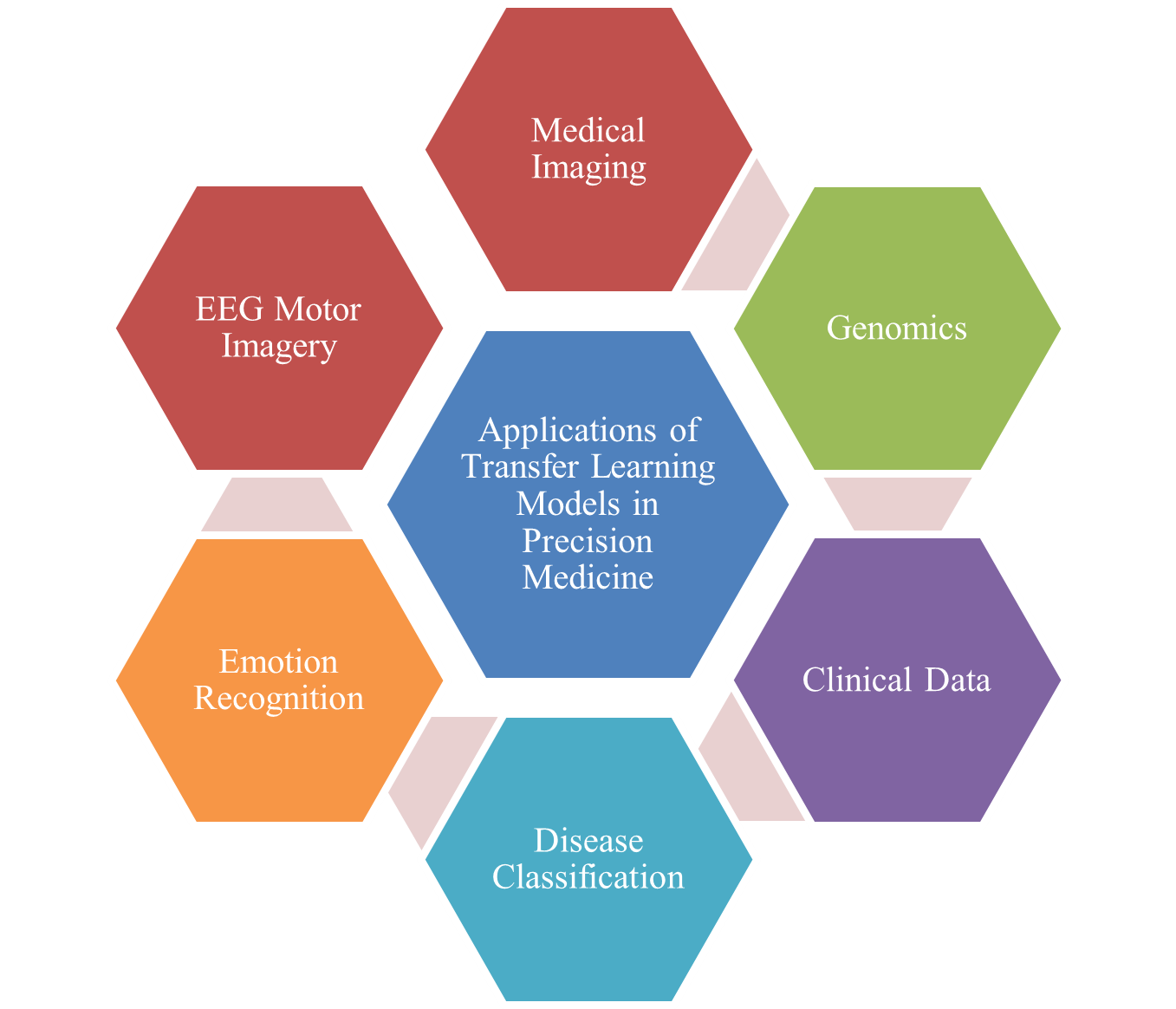
In recent years, Transfer Learning (TL) models have demonstrated significant promise in advancing precision medicine by enabling the application of machine learning techniques to medical data with limited labeled information. TL overcomes the challenge of acquiring large, labeled datasets, which is often a limitation in medical fields. By leveraging knowledge from pre-trained models, TL offers a solution to improve diagnostic accuracy and decision-making processes in various healthcare domains, including medical imaging, disease classification, and genomics. The research contribution of this review is to systematically examine the current applications of TL models in precision medicine, providing insights into how these models have been successfully implemented to improve patient outcomes across different medical specialties. In this review, studies sourced from the Scopus database, all published in 2024 and selected for their "open access" availability, were analyzed. The research methods involved using TL techniques like fine-tuning, feature-based learning, and model-based transfer learning on diverse datasets. The results of the studies demonstrated that TL models significantly enhanced the accuracy of medical diagnoses, particularly in areas such as brain tumor detection, diabetic retinopathy, and COVID-19 detection. Furthermore, these models facilitated the classification of rare diseases, offering valuable contributions to personalized medicine. In conclusion, Transfer Learning has the potential to revolutionize precision medicine by providing cost-effective and scalable solutions for improving diagnostic capabilities and treatment personalization. The continued development and integration of TL models in clinical practice promise to further enhance the quality of patient care.
References
M. Edvardsson and M. K. Heenkenda, “Precision Medicine: Personalizing Healthcare by Bridging Aging, Genetics, and Global Diversity,” Healthcare, vol. 13, no. 13, pp. 1529–1529, 2025, https://doi.org/10.3390/healthcare13131529.
L. R. Moffitt, N. Karimnia, A. L. Wilson, A. N. Stephens, G.-Y. Ho, and M. Bilandzic, “Challenges in Implementing Comprehensive Precision Medicine Screening for Ovarian Cancer,” Current Oncology, vol. 31, no. 12, pp. 8023–8038, 2024, https://doi.org/10.3390/curroncol31120592.
M. Hassan, F. M. Awan, A. Naz, E. J. d. A.-Galiana, O. Alvarez, A. Cernea, L. F.-Brillet, J. L. F.-Martínez, and A. Kloczkowski, “Innovations in Genomics and Big Data Analytics for Personalized Medicine and Health Care: A Review,” International Journal of Molecular Sciences, vol. 23, no. 9, p. 4645, 2022, https://doi.org/10.3390/ijms23094645.
S. M. Varnosfaderani and M. Forouzanfar, “The Role of AI in Hospitals and Clinics: Transforming Healthcare in the 21st Century,” Bioengineering, vol. 11, no. 4, pp. 1–38, 2024, https://doi.org/10.3390/bioengineering11040337
A. Farmanesh, R. G. Sanchis, and J. Ordieres-Meré, “Comparison of Deep Transfer Learning Against Contrastive Learning in Industrial Quality Applications for Heavily Unbalanced Data Scenarios When Data Augmentation Is Limited,” Sensors, vol. 25, no. 10, p. 3048, 2025, https://doi.org/10.3390/s25103048.
Y. Qiu, F. Lin, W. Chen, and M. Xu, “Pre-training in Medical Data: A Survey,” Machine Intelligence Research, vol. 20, no. 2, pp. 147-179 2023, https://doi.org/10.1007/s11633-022-1382-8.
M.-S. Șerbănescu, L. Streba, A. D. Demetrian, A.-G. Gheorghe, M. Mămuleanu, D.-N. Pirici, and C.-T. Streba, “Transfer Learning-Based Integration of Dual Imaging Modalities for Enhanced Classification Accuracy in Confocal Laser Endomicroscopy of Lung Cancer,” Cancers, vol. 17, no. 4, pp. 611–611, 2025, https://doi.org/10.3390/cancers17040611.
D. Du, F. Zhong, and L. Liu, “Enhancing recognition and interpretation of functional phenotypic sequences through fine-tuning pre-trained genomic models,” Journal of Translational Medicine, vol. 22, no. 1, 2024, https://doi.org/10.1186/s12967-024-05567-z.
S. K. Zhou, H. Greenspan, C. Davatzikos, J. S. Duncan, B. v. Ginneken, A. Madabhushi, J. L. Prince, D. Rueckert, and R. M. Summers, “A Review of Deep Learning in Medical Imaging: Imaging Traits, Technology Trends, Case Studies With Progress Highlights, and Future Promises,” Proceedings of the IEEE, vol. 109, no. 5, pp. 1–19, 2021, https://doi.org/10.1109/jproc.2021.3054390.
S. Mohamedikbal, H. A. Al-Mamun, M. S. Bestry, J. Batley, and D. Edwards, “Integrating multi-omics and machine learning for disease resistance prediction in legumes,” Theoretical and Applied Genetics, vol. 138, no. 7, 2025, https://doi.org/10.1007/s00122-025-04948-2.
Z. Zhao, L. Alzubaidi, J. Zhang, Y. Duan, and Y. Gu, “A comparison review of transfer learning and self-supervised learning: Definitions, applications, advantages and limitations,” Expert Systems with Applications, vol. 242, p. 122807, 2024, https://doi.org/10.1016/j.eswa.2023.122807.
T. Islam, M. S. Hafiz, J. R. Jim, M. M. Kabir, and M. F. Mridha, “A systematic review of deep learning data augmentation in medical imaging: Recent advances and future research directions,” Healthcare Analytics, vol. 5, pp. 100340–100340, 2024, https://doi.org/10.1016/j.health.2024.100340.
A. Rahujo, D. Atif, S. A. Inam, A. A. Khan, and S. Ullah, “A survey on the applications of transfer learning to enhance the performance of large language models in healthcare systems,” Discover Artificial Intelligence, vol. 5, no. 1, 2025, https://doi.org/10.1007/s44163-025-00339-0.
G. Ayana, K. Dese, A. M. Abagaro, K. C. Jeong, S.-D. Yoon, and S. Choe, “Multistage transfer learning for medical images,” Artificial Intelligence Review, vol. 57, no. 9, 2024, https://doi.org/10.1007/s10462-024-10855-7.
S. Rajendran, W. Pan, M. R. Sabuncu, Y. Chen, J. Zhou, and F. Wang, “Learning across diverse biomedical data modalities and cohorts: Challenges and opportunities for innovation,” Patterns, vol. 5, no. 2, pp. 100913–100913, 2024, https://doi.org/10.1016/j.patter.2023.100913.
K. A.-Moura, L. Souza, T. A. d. Oliveira, M. S. Rocha, A. C. F. D. Moraes, and A. C. Filho, “Prediction of Hypertension in the Pediatric Population Using Machine Learning and Transfer Learning: A Multicentric Analysis of the SAYCARE Study,” International Journal of Public Health, vol. 70, 2025, https://doi.org/10.3389/ijph.2025.1607944.
V. Mehan, “Advanced artificial intelligence driven framework for lung cancer diagnosis leveraging SqueezeNet with machine learning algorithms using transfer learning,” Medicine in Novel Technology and Devices, vol. 27, p. 100383, 2025, https://doi.org/10.1016/j.medntd.2025.100383.
S. Bashath, N. Perera, S. Tripathi, K. Manjang, M. Dehmer, and F. E. Streib, “A data-centric review of deep transfer learning with applications to text data,” Information Sciences, vol. 585, pp. 498–528, 2022, https://doi.org/10.1016/j.ins.2021.11.061.
M. Jafari, X. Tao, P. Barua, R.-S. Tan, and U. R. Acharya, “Application of Transfer Learning for Biomedical Signals: A Comprehensive Review of the Last Decade (2014-2024),” Information Fusion, vol. 118, pp. 102982–102982, 2025, https://doi.org/10.1016/j.inffus.2025.102982.
X. Zhang, J. Wang, J. Wei, X. Yuan, and M. Wu, “A Review of Non-Fully Supervised Deep Learning for Medical Image Segmentation,” Information, vol. 16, no. 6, pp. 433–433, 2025, https://doi.org/10.3390/info16060433.
N. Erfanian, A. A. Heydari, A. M. Feriz, P. Iañez, A. Derakhshani, M. Ghasemigol, M. Farahpour, S. M. Razavi, S. Nasseri, H. Safarpour, and A. Sahebkar, “Deep learning applications in single-cell genomics and transcriptomics data analysis,” Biomedicine & Pharmacotherapy, vol. 165, p. 115077, 2023, https://doi.org/10.1016/j.biopha.2023.115077.
L. Chato and E. Regentova, “Survey of Transfer Learning Approaches in the Machine Learning of Digital Health Sensing Data,” Journal of Personalized Medicine, vol. 13, no. 12, pp. 1703–1703, 2023, https://doi.org/10.3390/jpm13121703.
P. Li, “A Multi-scale Attention-Based Transfer Model for Cross-bearing Fault Diagnosis,” International Journal of Computational Intelligence Systems, vol. 17, no. 1, 2024, https://doi.org/10.1007/s44196-024-00414-x.
J. Meng, H. Lin, and Y. Li, “Knowledge transfer based on feature representation mapping for text classification,” Expert Systems with Applications, vol. 38, no. 8, pp. 10562–10567, 2011, https://doi.org/10.1016/j.eswa.2011.02.085.
M. Wang, Q. Song, and W. Lai, “On Model-Based Transfer Learning Method for the Detection of Inter-Turn Short Circuit Faults in PMSM,” Sensors, vol. 23, no. 22, pp. 9145–9145, 2023, https://doi.org/10.3390/s23229145.
K. A. A. Mahmoud, M. M. Badr, N. A. Elmalhy, R. A. Hamdy, S. Ahmed, and A. A. Mordi, “Transfer learning by fine-tuning pre-trained convolutional neural network architectures for switchgear fault detection using thermal imaging,” Alexandria Engineering Journal, vol. 103, pp. 327–342, 2024, https://doi.org/10.1016/j.aej.2024.05.102.
H. E. Kim, A. C.-Linan, N. Santhanam, M. Jannesari, M. E. Maros, and T. Ganslandt, “Transfer learning for medical image classification: a literature review,” BMC Medical Imaging, vol. 22, no. 1, 2022, https://doi.org/10.1186/s12880-022-00793-7.
A. W. Salehi, S. Khan, G. Gupta, B. I. Alabduallah, A. Almjally, H. Alsolai, T. Siddiqui, and A. Mellit, “A Study of CNN and Transfer Learning in Medical Imaging: Advantages, Challenges, Future Scope,” Sustainability, vol. 15, no. 7, p. 5930, 2023, https://doi.org/10.3390/su15075930.
Y.-M. Chen, T.-H. Hsiao, C.-H. Lin, and Y. C. Fann, “Unlocking precision medicine: clinical applications of integrating health records, genetics, and immunology through artificial intelligence,” Journal of Biomedical Science, vol. 32, no. 1, 2025, https://doi.org/10.1186/s12929-024-01110-w.
R. Aswini, R. Angelin Rajan, B. Saranya, and K. Elumalai, “AI‐Enhanced Predictive Imaging in Precision Medicine: Advancing Diagnostic Accuracy and Personalized Treatment,” iRADIOLOGY, vol. 3, no. 4, pp. 261-278 2025, https://doi.org/10.1002/ird3.70027.
A. S. Amiri, A. Babaei, V. Simic, and E. B. Tirkolaee, “A variant-informed decision support system for tackling COVID-19: a transfer learning and multi-attribute decision-making approach,” PeerJ Computer Science, vol. 10, p. e2321, 2024, https://doi.org/10.7717/peerj-cs.2321.
R. Haque et al., “Advancing Early Leukemia Diagnostics: A Comprehensive Study Incorporating Image Processing and Transfer Learning,” BioMedInformatics, vol. 4, no. 2, pp. 966–991, 2024, https://doi.org/10.3390/biomedinformatics4020054.
G. Mohan, M. M. Subashini, S. Balan, and S. Singh, “A multiclass deep learning algorithm for healthy lung, Covid-19 and pneumonia disease detection from chest X-ray images,” Discover Artificial Intelligence, vol. 4, no. 1, 2024, https://doi.org/10.1007/s44163-024-00110-x.
E. H. Houssein, D. A. Abdelkareem, G. Hu, M. A. Hameed, I. A. Ibrahim, and M. Younan, “An effective multiclass skin cancer classification approach based on deep convolutional neural network,” Cluster computing, vol. 27, no. 9, pp. 12799-12819 2024, https://doi.org/10.1007/s10586-024-04540-1.
C. Duan, D. Hao, J. Cui, G. Wang, W. Xu, N. Li, and X. Liu, “An MRI-Based Deep Transfer Learning Radiomics Nomogram to Predict Ki-67 Proliferation Index of Meningioma,” Journal of Imaging Informatics in Medicine, vol. 37, no. 2, pp. 510–519, 2024, https://doi.org/10.1007/s10278-023-00937-3.
R. Ma, R. Xie, Y. Wang, J. Meng, Y. Wei, Y. Cai, W. Xi, and Y. Pan, “Autism Spectrum Disorder Classification with Interpretability in Children Based on Structural MRI Features Extracted Using Contrastive Variational Autoencoder,” Big Data Mining and Analytics, vol. 7, no. 3, pp. 781–793, 2024, https://doi.org/10.26599/bdma.2024.9020004.
S. Natha, U. Laila, I. A. Gashim, K. Mahboob, M. N. Saeed, and K. M. Noaman, “Automated Brain Tumor Identification in Biomedical Radiology Images: A Multi-Model Ensemble Deep Learning Approach,” Applied Sciences, vol. 14, no. 5, p. 2210, 2024, https://doi.org/10.3390/app14052210.
S. M. Rasa, M. M. Islam, M. A. Talukder, M. A. Uddin, M. Khalid, M. Kazi, and M. Z. Kazi, “Brain tumor classification using fine-tuned transfer learning models on magnetic resonance imaging (MRI) images,” Digital Health, vol. 10, 2024, https://doi.org/10.1177/20552076241286140.
S. A.-Otaibi, A. Rehman, A. Raza, J. Alyami, and T. Saba, “CVG-Net: novel transfer learning based deep features for diagnosis of brain tumors using MRI scans,” PeerJ Computer Science, vol. 10, p. e2008, 2024, https://doi.org/10.7717/peerj-cs.2008.
I. Moran, D. T. Altılar, M. K. Uçar, C. Bilgin, and M. R. Bozkurt, “Deep Transfer Learning for Chronic Obstructive Pulmonary Disease Detection Utilizing Electrocardiogram Signals,” IEEE Access, vol. 11, pp. 40629–40644, 2023, https://doi.org/10.1109/access.2023.3269397.
P. N. Kumar and L. P. Maguluri, “Deep Learning-based Classification of MRI Images for Early Detection and Staging of Alzheimer’s Disease,” International Journal of Advanced Computer Science and Applications, vol. 15, no. 5, 2024, https://doi.org/10.14569/ijacsa.2024.0150545.
S. Azizian and J. Cui, “DeepMiRBP: a hybrid model for predicting microRNA-protein interactions based on transfer learning and cosine similarity,” BMC Bioinformatics, vol. 25, no. 1, 2024, https://doi.org/10.1186/s12859-024-05985-2.
V. K. Madduri and B. S. Rao, “Detection and diagnosis of diabetic eye diseases using two phase transfer learning approach,” PeerJ Computer Science, vol. 10, pp. e2135–e2135, 2024, https://doi.org/10.7717/peerj-cs.2135.
S. Gore, B. Meche, D. Shao, B. Ginnett, K. Zhou, and R. K. Azad, “DiseaseNet: a transfer learning approach to noncommunicable disease classification,” BMC Bioinformatics, vol. 25, no. 1, 2024, https://doi.org/10.1186/s12859-024-05734-5.
M. Taghizadeh, F. Vaez, and M. Faezipour, “EEG Motor Imagery Classification by Feature Extracted Deep 1D-CNN and Semi-Deep Fine-Tuning,” IEEE Access, vol. 12, pp. 111265–111279, 2024, https://doi.org/10.1109/access.2024.3430838.
A. Raza, S. Musa, A. Shahrafidz, M. M. Alam, M. M. Su’ud, and D. F. Noor, “Enhancing Medical Image Classification through PSO-Optimized Dual Deterministic Approach and Robust Transfer Learning,” IEEE Access, pp. 1–1, 2024, https://doi.org/10.1109/access.2024.3504266.
M. M. Ansari, S. Kumar, U. Tariq, M. B. Heyat, F. Akhtar, M. A. Hayat, E. Sayeed, S. Parveen, and D. Pomary, “Evaluating CNN Architectures and Hyperparameter Tuning for Enhanced Lung Cancer Detection Using Transfer Learning,” Journal of Electrical and Computer Engineering, vol. 2024, no. 1, 2024, https://doi.org/10.1155/2024/3790617.
N. Alturki, A. Altamimi, M. Umer, O. Saidani, A. Alshardan, S. Alsubai, M. Omar, and I. Ashraf, “Improving Prediction of Chronic Kidney Disease Using KNN Imputed SMOTE Features and TrioNet Model,” Computer Modeling in Engineering & Sciences, vol. 0, no. 0, pp. 1–10, 2023, https://doi.org/10.32604/cmes.2023.045868.
S. P. Jakkaladiki and F. Maly, “Integrating hybrid transfer learning with attention-enhanced deep learning models to improve breast cancer diagnosis,” PeerJ Computer Science, vol. 10, p. e1850, 2024, https://doi.org/10.7717/peerj-cs.1850.
M. Ragab, M. W. A.-Rabia, S. S. Binyamin, and A. A. Aldarmahi, “Intelligent Firefly Algorithm Deep Transfer Learning Based COVID-19 Monitoring System,” Computers, materials & continua/Computers, materials & continua (Print), vol. 74, no. 2, pp. 2889–2903, 2022, https://doi.org/10.32604/cmc.2023.032192.
S. S. Koshy and L. J. Anbarasi, “LMHistNet: Levenberg–Marquardt Based Deep Neural Network for Classification of Breast Cancer Histopathological Images,” IEEE access, pp. 1–1, 2024, https://doi.org/10.1109/access.2024.3385011.
C. H. E.-Salinas, H. L.-García, J. M. C.-Padilla, C. B.-Huidobro, N. K. G. Rosales, D. Rondon, and K. O. V.-Condori, “Multimodal driver emotion recognition using motor activity and facial expressions,” Frontiers in Artificial Intelligence, vol. 7, 2024, https://doi.org/10.3389/frai.2024.1467051.
M. Li, X. Li, K. Pan, A. Geva, D. Yang, S. M. Sweet, C.-L. Bonzel, V. A. Panickan, X. Xiong, K. Mandl, and T. Cai, “Multisource representation learning for pediatric knowledge extraction from electronic health records,” npj Digital Medicine, vol. 7, no. 1, 2024, https://doi.org/10.1038/s41746-024-01320-4.
J. Wang, B. Li, C. Qiu, X. Zhang, Y. Cheng, P. Wang, T. Zhou, H. Ge, Y. Zhang, and J. Cai, “Multi-View & Transfer Learning for Epilepsy Recognition Based on EEG Signals,” Computers, Materials & Continua, vol. 75, no. 3, pp. 4843–4866, 2023, https://doi.org/10.32604/cmc.2023.037457.
D. M.-Enguita, S. K. Dwivedi, R. Jörnsten, and M. Gustafsson, “NCAE: data-driven representations using a deep network-coherent DNA methylation autoencoder identify robust disease and risk factor signatures,” Briefings in Bioinformatics, vol. 24, no. 5, p. bbad293, 2023, https://doi.org/10.1093/bib/bbad293.
A. Roy, H. Dutta, A. K. Bhuyan, and S. Biswas, “On-Device Semi-Supervised Activity Detection: A New Privacy-Aware Personalized Health Monitoring Approach,” Sensors, vol. 24, no. 14, p. 4444, 2024, https://doi.org/10.3390/s24144444.
M. Ragab, M. M. Mahmoud, A. H. Asseri, H. Choudhry, and H. A. Yacoub, “Optimal Deep Transfer Learning Based Colorectal Cancer Detection and Classification Model,” Computers, Materials & Continua, vol. 74, no. 2, pp. 3279–3295, 2023, https://doi.org/10.32604/cmc.2023.031037.
H. M. E.-Hoseny, H. F. Elsepae, W. A. Mohamed, and A. S. Selmy, “Optimized Deep Learning Approach for Efficient Diabetic Retinopathy Classification Combining VGG16-CNN,” Computers, materials & continua/Computers, materials & continua (Print), vol. 77, no. 2, pp. 1855–1872, 2023, https://doi.org/10.32604/cmc.2023.042107.
A. A. Siddique, A. Raza, M. S. Alshehri, N. Alasbali, and S. F. Abbasi, “Optimizing Tumor Classification Through Transfer Learning and Particle Swarm Optimization-Driven Feature Extraction,” IEEE Access, vol. 12, pp. 85929–85939, 2024, https://doi.org/10.1109/access.2024.3412412.
Z. Xue, H. Lu, T. Zhang, and M. A. Little, “Patient-specific game-based transfer method for Parkinson’s disease severity prediction,” Artificial Intelligence in Medicine, pp. 102810–102810, 2024, https://doi.org/10.1016/j.artmed.2024.102810.
S. P. Kunjumon and S. F. Stephen, “Revolutionizing Esophageal Cancer Diagnosis: A Deep Learning-Based Method in Endoscopic Images,” International Journal of Advanced Computer Science and Applications, vol. 15, no. 7, 2024, https://doi.org/10.14569/ijacsa.2024.0150728.
O. S. Ajani, H. Obasekore, B.-Y. Kang, and M. Rammohan, “Robotic Assistance in Radiology: A Covid-19 Scenario,” IEEE Access, vol. 11, pp. 49785–49793, 2023, https://doi.org/10.1109/access.2023.3277526.
K. Djaroudib, P. Lorenz, R. B. Bouzida, and H. Merzougui, “Skin Cancer Diagnosis Using VGG16 and Transfer Learning: Analyzing the Effects of Data Quality over Quantity on Model Efficiency,” Applied Sciences, vol. 14, no. 17, pp. 7447–7447, 2024, https://doi.org/10.3390/app14177447.
L. Alzubaidi, M. A. Fadhel, F. Hollman, A. Salhi, J. Santamaria, Y. Duan, A. Gupta, K. Cutbush, A. Abbosh, and Y. Gu, “SSP: self-supervised pertaining technique for classification of shoulder implants in x-ray medical images: a broad experimental study,” Artificial Intelligence Review, vol. 57, no. 10, 2024, https://doi.org/10.1007/s10462-024-10878-0.
C. Hong, M. Liu, D. M. Wojdyla, J. Hickey, M. Pencina, and R. Henao, “Trans-Balance: Reducing demographic disparity for prediction models in the presence of class imbalance,” Journal of biomedical informatics, vol. 149, p. 104532, 2024, https://doi.org/10.1016/j.jbi.2023.104532.
M. N. Alnuaimi et la., “Transfer Learning Empowered Skin Diseases Detection in Children,” Computer Modeling in Engineering & Sciences, vol. 0, no. 0, pp. 1–10, 2024, https://doi.org/10.32604/cmes.2024.055303.
P. Xiang, L. Zhou, and L. Tang, “Transfer learning via random forests: A one-shot federated approach,” Computational Statistics & Data Analysis, vol. 197, p. 107975, 2024, https://doi.org/10.1016/j.csda.2024.107975.
O. Khouadja, M. S. Naceur, S. Mhamedi, and A. Baffoun, “Tunisian Lung Cancer Dataset: Collection, Annotation and Validation with Transfer Learning,” International Journal of Advanced Computer Science and Applications, vol. 15, no. 7, 2024, https://doi.org/10.14569/ijacsa.2024.01507121.
A. S. Sambyal, U. Niyaz, N. C. Krishnan, and D. R. Bathula, “Understanding calibration of deep neural networks for medical image classification,” Computer Methods and Programs in Biomedicine, vol. 242, p. 107816, 2023, https://doi.org/10.1016/j.cmpb.2023.107816.
S. Benbakreti, S. Benbakreti, K. Benyahia, and M. Benouis, “Using Resnet18 in A Deep-Learning Framework and Assessing the Effects of Adaptive Learning Rates in the Identification of Malignant Breast Masses in Mammograms,” Jordanian Journal of Computers and Information Technology, no. 0, pp. 1–1, 2024, https://doi.org/10.5455/jjcit.71-1699818406.
S. K. Mathivanan, S. Sonaimuthu, S. Murugesan, H. Rajadurai, B. D. Shivahare, and M. A. Shah, “Employing deep learning and transfer learning for accurate brain tumor detection,” Scientific reports, vol. 14, no. 1, 2024, https://doi.org/10.1038/s41598-024-57970-7.
Z. Alammar, L. Alzubaidi, J. Zhang, Y. Li, W. Lafta, and Y. Gu, “Deep Transfer Learning with Enhanced Feature Fusion for Detection of Abnormalities in X-ray Images,” Cancers, vol. 15, no. 15, pp. 4007–4007, 2023, https://doi.org/10.3390/cancers15154007.
R. Salakapuri, P. V. Terlapu, K. R. Kalidindi, R. N. Balaka, D. Jayaram, and T. Ravikumar, “Intelligent brain tumor detection using hybrid finetuned deep transfer features and ensemble machine learning algorithms,” Scientific Reports, vol. 15, no. 1, 2025, https://doi.org/10.1038/s41598-025-08689-6.
P. K. Mall, P. K. Singh, S. Srivastav, V. Narayan, M. Paprzycki, T. Jaworska, and M. Ganzha, “A comprehensive review of deep neural networks for medical image processing: Recent developments and future opportunities,” Healthcare Analytics, vol. 4, p. 100216, 2023, https://doi.org/10.1016/j.health.2023.100216.
H. Sadr, et al., “Unveiling the potential of artificial intelligence in revolutionizing disease diagnosis and prediction: a comprehensive review of machine learning and deep learning approaches,” European journal of medical research, vol. 30, no. 1, 2025, https://doi.org/10.1186/s40001-025-02680-7.
Y. Pamungkas and U. W. Astuti, "Comparison of Human Emotion Classification on Single-Channel and Multi-Channel EEG using Gate Recurrent Unit Algorithm," 2023 International Conference on Computer Science, Information Technology and Engineering (ICCoSITE), pp. 1-6, 2023, https://doi.org/10.1109/iccosite57641.2023.10127686.
Y. Bian, J. Li, C. Ye, X. Jia, and Q. Yang, “Artificial intelligence in medical imaging: From task-specific models to large-scale foundation models,” Chinese Medical Journal, vol. 138, no. 06, pp. 651-663 2025, https://doi.org/10.1097/cm9.0000000000003489.
J. G. d. Almeida, L. C. Alberich, G. Tsakou, K. Marias, M. Tsiknakis, K. Lekadir, L. M.-Bonmati, and N. Papanikolaou, “Foundation models for radiology—the position of the AI for Health Imaging (AI4HI) network,” Insights into Imaging, vol. 16, no. 1, 2025, https://doi.org/10.1186/s13244-025-02056-9.
S. E. Abhadiomhen, E. O. Nzeakor, and K. Oyibo, “Health Risk Assessment Using Machine Learning: Systematic Review,” Electronics, vol. 13, no. 22, p. 4405, 2024, https://doi.org/10.3390/electronics13224405.
J. Han, H. Zhang, and K. Ning, “Techniques for learning and transferring knowledge for microbiome-based classification and prediction: review and assessment,” Briefings in Bioinformatics, vol. 26, no. 1, 2024, https://doi.org/10.1093/bib/bbaf015.
D. M. Anisuzzaman, J. G. Malins, P. A. Friedman, and Z. I. Attia, “Fine-Tuning LLMs for Specialized Use Cases,” Mayo Clinic Proceedings: Digital Health, vol. 3, no. 1, 2024, https://doi.org/10.1016/j.mcpdig.2024.11.005.
Published
How to Cite
Issue
Section
License
Copyright (c) 2025 Yuri Pamungkas, Myo Min Aung, Gao Yulan, Muhammad Nur Afnan Uda, Uda Hashim

This work is licensed under a Creative Commons Attribution-ShareAlike 4.0 International License.
Authors who publish with this journal agree to the following terms:
- Authors retain copyright and grant the journal right of first publication with the work simultaneously licensed under a Creative Commons Attribution License that allows others to share the work with an acknowledgment of the work's authorship and initial publication in this journal.
- Authors are able to enter into separate, additional contractual arrangements for the non-exclusive distribution of the journal's published version of the work (e.g., post it to an institutional repository or publish it in a book), with an acknowledgment of its initial publication in this journal.
- Authors are permitted and encouraged to post their work online (e.g., in institutional repositories or on their website) prior to and during the submission process, as it can lead to productive exchanges, as well as earlier and greater citation of published work (See The Effect of Open Access).

This journal is licensed under a Creative Commons Attribution-ShareAlike 4.0 International License.