Transforming EEG into Scalable Neurotechnology: Advances, Frontiers, and Future Directions
DOI:
https://doi.org/10.12928/biste.v7i3.13824Keywords:
Electroencephalography, Neurotechnology, Machine Learning in EEG, Explainable AI, Brain-Computer InterfaceAbstract
Electroencephalography (EEG) is a key neurotechnology that enables non-invasive, high-temporal resolution monitoring of brain activity. This review examines recent advancements in EEG-based neuroscience from 2021 to 2025, with a focus on applications in neurodegenerative disease diagnosis, cognitive assessment, emotion recognition, and brain-computer interface (BCI) development. Twenty peer-reviewed studies were selected using predefined inclusion criteria, emphasizing the use of machine learning on EEG data. Each study was assessed based on EEG settings, feature extraction, classification models, and outcomes. Emerging trends show increased adoption of advanced computational techniques such as deep learning, capsule networks, and explainable AI for tasks like seizure prediction and psychiatric classification. Applications have expanded to real-world domains including neuromarketing, emotion-aware architecture, and driver alertness systems. However, methodological inconsistencies (ranging from varied preprocessing protocols to inconsistent performance metrics) pose significant challenges to reproducibility and real-world deployment. Technical limitations such as inter-subject variability, low spatial resolution, and artifact contamination were found to negatively impact model accuracy and generalizability. Moreover, most studies lacked transparency regarding bias mitigation, dataset diversity, and ethical safeguards such as data privacy and model interpretability. Future EEG research must integrate multimodal data (e.g., EEG-fNIRS), embrace real-time edge processing, adopt federated learning frameworks, and prioritize personalized, explainable models. Greater emphasis on reproducibility and ethical standards is essential for the clinical translation of EEG-based technologies. This review highlights EEG’s expanding role in neuroscience and emphasizes the need for rigorous, ethically grounded innovation.
References
A. Arjoonsingh, B. C. Jamal, and L. Ganti, “History and Evolution of the Electroencephalogram,” Cureus, vol. 16, no. 8, 2024, https://doi.org/10.7759/cureus.66385.
H. Zhang et al., “The applied principles of EEG analysis methods in neuroscience and clinical neurology,” Military Medical Research, vol. 10, no. 1, p. 67, 2023, https://doi.org/10.1186/s40779-023-00502-7.
C. M. Michel and M. M. Murray, “Towards the utilization of EEG as a brain imaging tool,” NeuroImage, vol. 61, no. 2, pp. 371–385, 2012, https://doi.org/10.1016/j.neuroimage.2011.12.039.
J. R. McLaren, D. Yuan, S. Beniczky, M. B. Westover, and F. A. Nascimento, “The future of EEG education in the era of artificial intelligence,” Epilepsia, 2025, doi: https://doi.org/10.1111/epi.18326.
M. Mohamed, N. Mohamed, and J. G. Kim, “Advancements in Wearable EEG Technology for Improved Home-Based Sleep Monitoring and Assessment: A Review,” Biosensors, vol. 13, no. 12, pp. 1019–1019, 2023, https://doi.org/10.3390/bios13121019.
L. Qiu, Y. Zhong, Q. Xie, Z. He, X. Wang, Y. Chen, C. A. Zhan, and J. Pan, “Multi-Modal Integration of EEG-fNIRS for Characterization of Brain Activity Evoked by Preferred Music,” Frontiers in Neurorobotics, vol. 16, 2022, doi: https://doi.org/10.3389/fnbot.2022.823435.
Z. Liu, J. Shore, M. Wang, F. Yuan, A. Buss, and X. Zhao, “A systematic review on hybrid EEG/fNIRS in brain-computer interface,” Biomedical Signal Processing and Control, vol. 68, p. 102595, 2021, https://doi.org/10.1016/j.bspc.2021.102595.
S. Yun, “Advances, challenges, and prospects of electroencephalography-based biomarkers for psychiatric disorders: a narrative review,” Journal of Yeungnam Medical Science, vol. 41, no. 4, pp. 261–268, 2024, https://doi.org/10.12701/jyms.2024.00668.
I. Rakhmatulin, M.-S. Dao, A. Nassibi, and D. Mandic, “Exploring Convolutional Neural Network Architectures for EEG Feature Extraction,” Sensors, vol. 24, no. 3, pp. 877–877, 2024, https://doi.org/10.3390/s24030877.
C. Halkiopoulos, E. Gkintoni, A. Aroutzidis, and H. Antonopoulou, “Advances in Neuroimaging and Deep Learning for Emotion Detection: A Systematic Review of Cognitive Neuroscience and Algorithmic Innovations,” Diagnostics, vol. 15, no. 4, p. 456, 2025, https://doi.org/10.3390/diagnostics15040456.
A. S. Fahandari, S. Moshiryan, and A. Goshvarpour, “Diagnosis of Cognitive and Mental Disorders: A New Approach Based on Spectral–Spatiotemporal Analysis and Local Graph Structures of Electroencephalogram Signals,” Brain Sciences, vol. 15, no. 1, pp. 68–68, 2025, https://doi.org/10.3390/brainsci15010068.
E. T. Attar, “Review of electroencephalography signals approaches for mental stress assessment,” Neurosciences, vol. 27, no. 4, pp. 209–215, 2022, https://doi.org/10.17712/nsj.2022.4.20220025.
E. Gkintoni, A. Aroutzidis, H. Antonopoulou, and C. Halkiopoulos, “From Neural Networks to Emotional Networks: A Systematic Review of EEG-Based Emotion Recognition in Cognitive Neuroscience and Real-World Applications,” Brain Sciences, vol. 15, no. 3, p. 220, 2025, https://doi.org/10.3390/brainsci15030220.
Y. Sun, X. Chen, B. Liu, L. Liang, Y. Wang, S. Gao, and X. Gao, “Signal acquisition of brain-computer interfaces: A medical-engineering crossover perspective review,” Fundamental research, vol. 5, no. 1, pp. 3-16, 2024, https://doi.org/10.1016/j.fmre.2024.04.011.
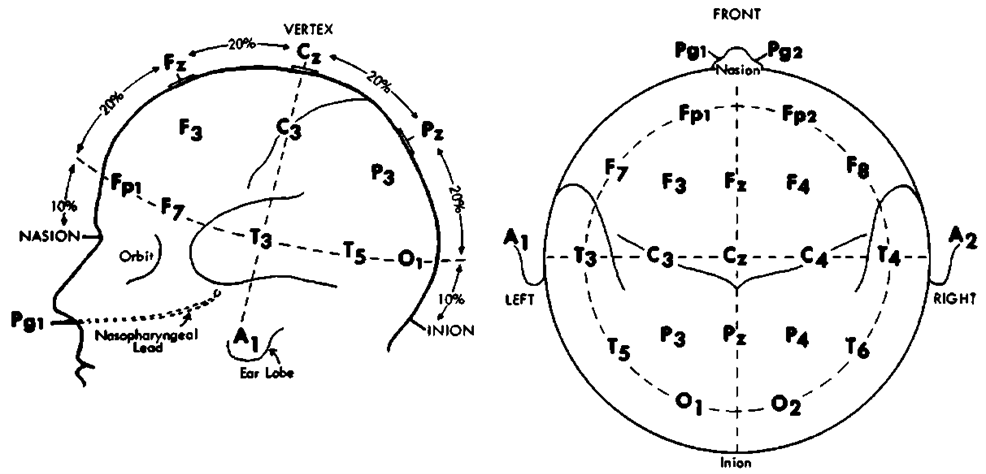
Engineers Community, “Electrode 10-20 system,” Engineers Community, 2018. https://engineerscommunity.com/t/electrode-10-20-system/5486.
H. Kim, E. Kim, C. Choi, and W.-H. Yeo, “Advances in Soft and Dry Electrodes for Wearable Health Monitoring Devices,” Micromachines, vol. 13, no. 4, p. 629, 2022, https://doi.org/10.3390/mi13040629.
“EEG Electrodes Manufacturer - FDA, CE, ISO Certified Supplier,” BESDATA, 2024. https://besdatatech.com/eeg-electrodes/.
“Hot Sale EEG Electrode Reusabe Dry Comb Electrodes AgCl EEG Electrode,” www.alibaba.com, 2021. https://www.alibaba.com/product-detail/Hot-Sale-EEG-Electrode-Reusabe-Dry_1600620280344.html.
H. Luo, H. Li, W. Tao, Y. Yang, C.-I. Ieong, and F. Wan, “A Portable and Affordable Four-Channel EEG System for Emotion Recognition with Self-Supervised Feature Learning,” Mathematics, vol. 13, no. 10, p. 1608, 2025, https://doi.org/10.3390/math13101608.
“EEG Headset,” EMOTIV. https://www.emotiv.com/blogs/glossary/eeg-headset
“MUSE Data Collection,” Krigolson Lab, 2016. https://www.krigolsonlab.com/muse-data-collection.html
“The Complete Ultracortex,” OpenBCI Online Store, 2015. https://shop.openbci.com/products/the-complete-headset-eeg
C. Orovas, T. Sapounidis, C. Volioti, and E. Keramopoulos, “EEG in Education: A Scoping Review of Hardware, Software, and Methodological Aspects,” Sensors, vol. 25, no. 1, pp. 182–182, 2024, https://doi.org/10.3390/s25010182.
Z. Wang and P. Mengoni, “Seizure classification with selected frequency bands and EEG montages: a Natural Language Processing approach,” Brain Informatics, vol. 9, no. 1, 2022, https://doi.org/10.1186/s40708-022-00159-3.
M. T. Knierim, M. G. Bleichner, and P. Reali, “A Systematic Comparison of High-End and Low-Cost EEG Amplifiers for Concealed, Around-the-Ear EEG Recordings,” Sensors, vol. 23, no. 9, p. 4559, 2023, https://doi.org/10.3390/s23094559.
A. Chaddad, Y. Wu, Reem Kateb, and A. Bouridane, “Electroencephalography Signal Processing: A Comprehensive Review and Analysis of Methods and Techniques,” Sensors, vol. 23, no. 14, pp. 6434–6434, 2023, https://doi.org/10.3390/s23146434.
M. Saeidi, W. Karwowski, F. V. Farahani, K. Fiok, R. Taiar, P. A. Hancock, and A. A.-Juaid, “Neural Decoding of EEG Signals with Machine Learning: A Systematic Review,” Brain Sciences, vol. 11, no. 11, p. 1525, 2021, https://doi.org/10.3390/brainsci11111525.
S. Acharya, A. Khosravi, D. Creighton, R. Alizadehsani, and U. R. Acharya, “Neurostressology: A systematic review of EEG-based automated mental stress perspectives,” Information Fusion, vol. 124, p. 103368, 2025, https://doi.org/10.1016/j.inffus.2025.103368.
F. B. Ardecani, A. Kumar, S. Sabeti, and O. Shoghli, “Neural correlates of augmented reality safety warnings: EEG analysis of situational awareness and cognitive performance in roadway work zones,” Safety Science, vol. 185, pp. 106802–106802, 2025, https://doi.org/10.1016/j.ssci.2025.106802.
P.-P. Yuan, J. Zhang, J.-Q. Feng, H.-H. Wang, W.-X. Ren, and C. Wang, “An improved time-frequency analysis method for structural instantaneous frequency identification based on generalized S-transform and synchroextracting transform,” Engineering Structures, vol. 252, p. 113657, 2022, https://doi.org/10.1016/j.engstruct.2021.113657.
N. Koirala et al., “Assistive Artificial Intelligence in Epilepsy and Its Impact on Epilepsy Care in Low- and Middle-Income Countries,” Brain Sciences, vol. 15, no. 5, p. 481, 2025, https://doi.org/10.3390/brainsci15050481.
M. T. Khosroshahi et al., “Explainable Artificial Intelligence in Neuroimaging of Alzheimer’s Disease,” Diagnostics, vol. 15, no. 5, pp. 612–612, 2025, https://doi.org/10.3390/diagnostics15050612.
A. Farizal, A. D. Wibawa, D. P. Wulandari and Y. Pamungkas, "Investigation of Human Brain Waves (EEG) to Recognize Familiar and Unfamiliar Objects Based on Power Spectral Density Features," 2023 International Seminar on Intelligent Technology and Its Applications (ISITIA), pp. 77-82, , 2023, https://doi.org/10.1109/isitia59021.2023.10221052.
A. Miladinović, M. Ajčević, P. Busan, J. Jarmolowska, M. Deodato, S. Mezzarobba, P. P. Battaglini, and A. Accardo, “EEG changes and motor deficits in Parkinson’s disease patients: Correlation of motor scales and EEG power bands,” Procedia Computer Science, vol. 192, pp. 2616–2623, 2021, https://doi.org/10.1016/j.procs.2021.09.031.
M. S. Safi and S. M. M. Safi, “Early detection of Alzheimer’s disease from EEG signals using Hjorth parameters,” Biomedical Signal Processing and Control, vol. 65, p. 102338, 2021, https://doi.org/10.1016/j.bspc.2020.102338.
N. J. G.-Molina, A. Ortiz, F. J. M.-Murcia, M. A. Formoso, and A. Giménez, “Complex network modeling of EEG band coupling in dyslexia: An exploratory analysis of auditory processing and diagnosis,” Knowledge-Based Systems, vol. 240, p. 108098, 2022, https://doi.org/10.1016/j.knosys.2021.108098.
R. Gunawardena, P. G. Sarrigiannis, D. J. Blackburn, and F. He, “Kernel-based Nonlinear Manifold Learning for EEG-based Functional Connectivity Analysis and Channel Selection with Application to Alzheimer’s Disease,” Neuroscience, vol. 523, pp. 140–156, 2023, https://doi.org/10.1016/j.neuroscience.2023.05.033.
D. Jung, D. I. Kim, and N. Kim, “Bringing nature into hospital architecture: Machine learning-based EEG analysis of the biophilia effect in virtual reality,” Journal of Environmental Psychology, vol. 89, pp. 102033–102033, 2023, https://doi.org/10.1016/j.jenvp.2023.102033.
B. Wąsikowska, “The use of electroencephalography (EEG) in a study into the effectiveness of advertising communication,” Procedia computer science, vol. 225, pp. 2477–2486, 2023, https://doi.org/10.1016/j.procs.2023.10.239.
N. Khalid and M. S. Ehsan, “Critical analysis of Parkinson’s disease detection using EEG sub-bands and gated recurrent unit,” Engineering Science and Technology, an International Journal, vol. 59, p. 101855, 2024, https://doi.org/10.1016/j.jestch.2024.101855.
Z. Ahmed, A. Wali, S. Shahid, S. Zikria, J. Rasheed, and T. Asuroglu, “Psychiatric disorders from EEG signals through deep learning models,” IBRO Neuroscience Reports, vol. 17, pp. 300–310, 2024, https://doi.org/10.1016/j.ibneur.2024.09.003.
S. B. Shafiei, S. Shadpour, and A. Shafqat, “Mental Workload evaluation using weighted phase lag index and coherence features extracted from EEG data,” Brain Research Bulletin, vol. 214, pp. 110992–110992, 2024, https://doi.org/10.1016/j.brainresbull.2024.110992.
M. Khayretdinova, I. Zakharov, P. Pshonkovskaya, T. Adamovich, A. Kiryasov, A. Zhdanov, and A. Shovkun, “Prediction of brain sex from EEG: using large-scale heterogeneous dataset for developing a highly accurate and interpretable ML model,” NeuroImage, vol. 285, pp. 120495–120495, 2023, https://doi.org/10.1016/j.neuroimage.2023.120495.
Y. Grootjans et al., “Getting closer to social interactions using electroencephalography in developmental cognitive neuroscience,” Developmental Cognitive Neuroscience, vol. 67, pp. 101391–101391, May 2024, https://doi.org/10.1016/j.dcn.2024.101391.
M. Yousaf, M. Farhan, Y. Saeed, M. J. Iqbal, F. Ullah, and G. Srivastava, “Enhancing driver attention and road safety through EEG-informed deep reinforcement learning and soft computing,” Applied Soft Computing, vol. 167, p. 112320, 2024, https://doi.org/10.1016/j.asoc.2024.112320.
A. Cataldo, S. Criscuolo, E. D. Benedetto, A. Masciullo, M. Pesola, J. Picone, and R. Schiavoni, “EEG complexity-based algorithm using Multiscale Fuzzy Entropy: Towards a detection of Alzheimer’s disease,” Measurement, vol. 225, pp. 114040–114040, 2023, https://doi.org/10.1016/j.measurement.2023.114040.
A. Sheoran and C. E. Valderrama, “Impact of sex differences on subject-independent EEG-based emotion recognition models,” Computers in Biology and Medicine, vol. 190, p. 110036, 2025, https://doi.org/10.1016/j.compbiomed.2025.110036.
S. Wong, A. Simmons, J. R.-Villicana, S. Barnett, S. Sivathamboo, P. Perucca, Z. Ge, P. Kwan, L. Kuhlmann, and T. J. O’Brien, “Channel-annotated deep learning for enhanced interpretability in EEG-based seizure detection,” Biomedical Signal Processing and Control, vol. 103, pp. 107484–107484, 2025, https://doi.org/10.1016/j.bspc.2024.107484.
C. Catania et al., “EEG microstates during resting-state and dissociative events in patients with psychogenic non-epileptic seizures,” Clinical Neurophysiology, vol. 173, pp. 124–131, 2025, https://doi.org/10.1016/j.clinph.2025.03.002.
R. Dahiya, G. Mamatha, S. S. Jawale, S. Das, S. Choudhary, V. M. Rathod, and B. J. Rajput, “Deep learning-based multi-brain capsule network for Next-Gen Clinical Emotion recognition using EEG signals,” Neuroscience Informatics, vol. 5, no. 2, p. 100203, 2025, https://doi.org/10.1016/j.neuri.2025.100203.
S. Morales and G. A. Buzzell, “EEG time-frequency dynamics of early cognitive control development,” Developmental Cognitive Neuroscience, vol. 73, p. 101548, 2025, https://doi.org/10.1016/j.dcn.2025.101548.
H. Byeon, U. Mahajan, A. Kumar, V. R. Krishna, M. Soni, and M. Bansal, “EEG signal based brain stimulation model to detect epileptic neurological disorders,” Neuroscience Informatics, pp. 100186–100186, 2025, https://doi.org/10.1016/j.neuri.2025.100186.
T. Colafiglio, A. Lombardi, T. D. Noia, M. Luigia, F. Narducci, and A. M. Proverbio, “Machine learning classification of motivational states: Insights from eeg analysis of perception and imagery,” Expert Systems with Applications, pp. 127076–127076, 2025, https://doi.org/10.1016/j.eswa.2025.127076.
Published
How to Cite
Issue
Section
License
Copyright (c) 2025 Yuri Pamungkas, Evi Triandini, Adrian Jaleco Forca, Thosporn Sangsawang, Abdul Karim

This work is licensed under a Creative Commons Attribution-ShareAlike 4.0 International License.
Authors who publish with this journal agree to the following terms:
- Authors retain copyright and grant the journal right of first publication with the work simultaneously licensed under a Creative Commons Attribution License that allows others to share the work with an acknowledgment of the work's authorship and initial publication in this journal.
- Authors are able to enter into separate, additional contractual arrangements for the non-exclusive distribution of the journal's published version of the work (e.g., post it to an institutional repository or publish it in a book), with an acknowledgment of its initial publication in this journal.
- Authors are permitted and encouraged to post their work online (e.g., in institutional repositories or on their website) prior to and during the submission process, as it can lead to productive exchanges, as well as earlier and greater citation of published work (See The Effect of Open Access).

This journal is licensed under a Creative Commons Attribution-ShareAlike 4.0 International License.