Digitizing Waste Management Using the Internet of Things: Research Opportunities
DOI:
https://doi.org/10.12928/biste.v8i2.15696Keywords:
Environmental Management, Industrial Waste, IoTAbstract
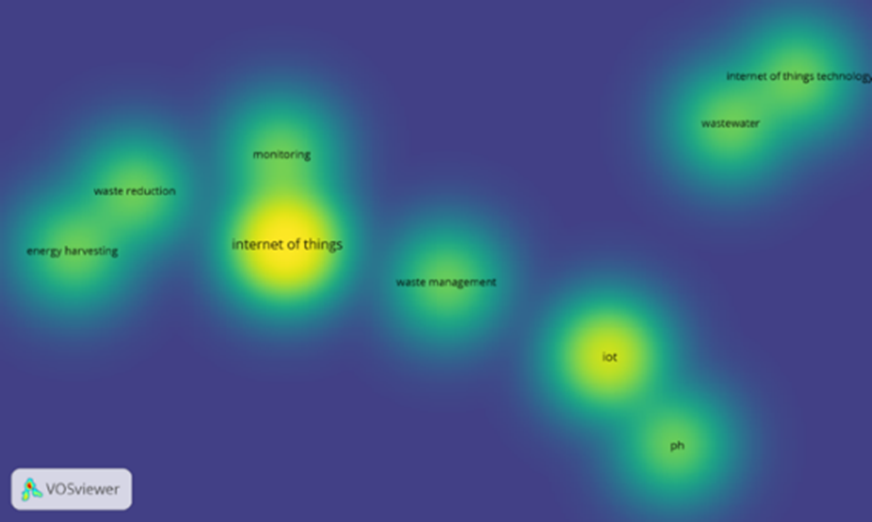
This study proposes an integrative multi-layered framework to address fragmentation in industrial waste management. The increasing volume of industrial waste creates an urgent need for a more precise, adaptive, and sustainable control system, as current practices often lack sufficient integration to ensure full environmental accountability. A critical gap exists in the lack of integration between real-time technical data and strategic governance, which hinders "intelligent compliance" in industrial settings. This research aims to identify trends, thematic scope, and research opportunities in IoT-based production waste control. The specific contribution of this study is the proposal of an integrative multi-layered framework that synchronizes monitoring, intelligent analytics, and blockchain-based accountability. The method was a PRISMA-based systematic review, search queries including 'IoT', 'Industrial Waste', and 'Blockchain' were applied to the Scopus database. 37 high-impact articles were selected based on three criteria: (1) industrial waste focus, (2) integration of Industry 4.0 pillars (AI, Blockchain, or 5G), and (3) publication within 2020–2025. Focusing on current system maturity over historical protocol evolution, this period reflects the state-of-the-art technological convergence. A rigorous Scopus screening narrowed 147 publications to 37 articles, enabling targeted qualitative synthesis. The results categorize IoT roles into thematic clusters: monitoring, process optimization, and circular economy integration. While promising, challenges such as data interoperability and security costs remain significant. This framework provides a blueprint for automated compliance. Future research should validate this model through cross-industry case studies. Study limitations include the reliance on a single database and the rapidly evolving nature of IoT technologies.
References
J. Prata, C. L. Simões, and R. Simoes, “Improvements to Municipal Solid Waste Collection Systems Using Real-Time Monitoring,” Sustainability, vol. 17, no. 4, p. 1405, 2025, https://doi.org/10.3390/su17041405.
P. Campana, R. Censi, A. M. Tarola, and R. Ruggieri, “Artificial Intelligence and Digital Twins for Sustainable Waste Management: A Bibliometric and Thematic Review,” Applied Sciences, vol. 15, no. 11, p. 6337, 2025, https://doi.org/10.3390/app15116337.
S. Nurgaliyeva, M. Amangali, Z. Basheyeva, N. Kashkimbayeva, and D. Amantayev, “Design and evaluation of an intelligent waste monitoring system based on RGIS integration for smart cities,” Eastern-European Journal of Enterprise Technologies, vol. 4, no. 9 (136), pp. 70–78, Aug. 2025, https://doi.org/10.15587/1729-4061.2025.337033.
I. Papamichael et al., “Mobilisation of textile waste to recover high added value products and energy for the transition to circular economy,” Environ. Res., vol. 242, p. 117716, 2024, https://doi.org/10.1016/j.envres.2023.117716.
K. S. Al Yarubi, S. O. F. Khairy, S. M. E. Hossain, and G. Hayder, “Internet of Things-Driven Waste Management: Paving the Way for Sustainable Smart Cities,” Processes, vol. 13, no. 4, p. 1140, 2025, https://doi.org/10.3390/pr13041140.
K. Kang, S. Besklubova, Y. Dai, and R. Y. Zhong, “Building demolition waste management through smart BIM: A case study in Hong Kong,” Waste Management, vol. 143, pp. 69–83, 2022, https://doi.org/10.1016/j.wasman.2022.02.027.
A. R. Dhruba et al., “IoT-Based Water Quality Assessment System for Industrial Waste WaterHealthcare Perspective,” J. Healthc. Eng., vol. 2022, pp. 1–13, 2022, https://doi.org/10.1155/2022/3769965.
R. M. M. Salem, M. S. Saraya, and A. M. T. Ali-Eldin, “An Industrial Cloud-Based IoT System for Real-Time Monitoring and Controlling of Wastewater,” IEEE Access, vol. 10, pp. 6528–6540, 2022, https://doi.org/10.1109/ACCESS.2022.3141977.
A. Martikkala, B. Mayanti, P. Helo, A. Lobov, and I. F. Ituarte, “Smart textile waste collection system – Dynamic route optimization with IoT,” J. Environ. Manage., vol. 335, p. 117548, 2023, https://doi.org/10.1016/j.jenvman.2023.117548.
P. G. C. Nayanathara Thathsarani Pilapitiya and A. S. Ratnayake, “The world of plastic waste: A review,” Cleaner Materials, vol. 11, p. 100220, 2024, https://doi.org/10.1016/j.clema.2024.100220.
R. R. Srivastava, D. K. Rajak, S. Ilyas, H. Kim, and P. Pathak, “Challenges, Regulations, and Case Studies on Sustainable Management of Industrial Waste,” Minerals, vol. 13, no. 1, p. 51, 2022, https://doi.org/10.3390/min13010051.
R. Ponni, R. Sharmila, T. Jayasankar, and C. Perumal, “Enhancing Environmental Sustainability: Extreme Learning Machine Approach to Industrial Waste Management,” Journal of Environmental Nanotechnology, vol. 13, no. 2, pp. 220–228, 2024, https://doi.org/10.13074/jent.2024.06.242595.
A. D. Artha, H. Nurasa, and C. Candradewini, “Recognizing and Detecting the Effectiveness of Policy Implementation Waste Management in Indonesia,” Jurnal Public Policy, vol. 9, no. 3, p. 201, 2023, https://doi.org/10.35308/jpp.v9i3.7656.
F. Solano, S. Krause, and C. Wollgens, “An Internet-of-Things Enabled Smart System for Wastewater Monitoring,” IEEE Access, vol. 10, pp. 4666–4685, 2022, https://doi.org/10.1109/ACCESS.2022.3140391.
R. Aragones, R. N. Alegret, J. Oliver, and C. Ferrer, “Autonomous Battery-Less Vibration IIoT Powered by Waste Heat for Chemical Plants Using NB-IoT,” IEEE Sens. J., vol. 22, no. 15, pp. 15448–15456, 2022, https://doi.org/10.1109/JSEN.2022.3184267.
L. Guezouli, L. Guezouli, M. B. E. Djeghaba, and A. Bentahrour, “IoT and AI for Real-time Water Monitoring and Leak Detection,” Journal of Renewable Energies, vol. 27, no. 2, 2024, https://doi.org/10.54966/jreen.v27i2.1210.
S. Khan, B. Ali, A. A. K. Alharbi, S. Alotaibi, and M. Alkhathami, “Efficient IoT-Assisted Waste Collection for Urban Smart Cities,” Sensors, vol. 24, no. 10, p. 3167, 2024, https://doi.org/10.3390/s24103167.
L. E. Brown et al., “Integrating sensor data and machine learning to advance the science and management of river carbon emissions,” Crit. Rev. Environ. Sci. Technol., vol. 55, no. 9, pp. 600–623, 2025, https://doi.org/10.1080/10643389.2024.2429912.
N. H. Mohamed, S. Khan, and S. Jagtap, “Waste 4.0: transforming medical waste management through digitalization and automated segregation,” Discover Sustainability, vol. 5, no. 1, p. 353, 2024, https://doi.org/10.1007/s43621-024-00593-9.
N. Dhariwal and V. Kumar, “Cr3+doped α-Fe2O3 nanoparticles for photodegradation of organic pollutants with their disinfection efficacy,” Surfaces and Interfaces, vol. 55, p. 105357, 2024, https://doi.org/10.1016/j.surfin.2024.105357.
A. Addas, M. N. Khan, and F. Naseer, “Waste management 2.0 leveraging internet of things for an efficient and eco-friendly smart city solution,” PLoS One, vol. 19, no. 7, p. e0307608, 2024, https://doi.org/10.1371/journal.pone.0307608.
A. Rai and K. Kundu, “Agro-industrial waste management employing benefits of artificial intelligence,” Environmental Science and Pollution Research, vol. 31, no. 22, pp. 33148–33154, 2024, https://doi.org/10.1007/s11356-024-33526-0.
F. Khan and Y. Ali, “A Facilitating Framework for A Developing Country to Adopt Smart Waste Management in the Context of Circular Economy,” Environmental Science and Pollution Research, vol. 29, no. 18, pp. 26336–26351, 2022, https://doi.org/10.1007/s11356-021-17573-5.
X. Guo, L. Wang, Z. Jin, and C. Lee, “A Multifunctional Hydrogel with Multimodal Self-Powered Sensing Capability and Stable Direct Current Output for Outdoor Plant Monitoring Systems,” Nanomicro Lett., vol. 17, no. 1, p. 76, 2025, https://doi.org/10.1007/s40820-024-01587-y.
A. Lakhouit, “Revolutionizing urban solid waste management with AI and IoT: A review of smart solutions for waste collection, sorting, and recycling,” Results in Engineering, vol. 25, p. 104018, 2025, https://doi.org/10.1016/j.rineng.2025.104018.
M. M. Ali and M. Jabeen, “IoT Based Monitoring and Control of Water Parameters,” International Journal of Electrical and Electronics Engineering, vol. 7, no. 8, pp. 1–3, 2020, https://doi.org/10.14445/23488379/IJEEE-V7I8P101.
X. Sun, “Optimizing Industrial Water Pollution Warning Mechanism Using Narrowband IoT Technology,” International Journal of Agricultural and Environmental Information Systems, vol. 16, no. 1, pp. 1–17, 2025, https://doi.org/10.4018/IJAEIS.389739.
M. Mejia-Herrera, J. Botero-Valencia, J. Ortega, and R. Hernández-García, “Development of a Solar-Powered Edge Processing Perimeter Alert System with AI and LoRa/LoRaWAN Integration for Drone Detection and Enhanced Security,” Drones, vol. 9, no. 1, p. 43, 2025, https://doi.org/10.3390/drones9010043.
A. S. Giwa et al., “Advancing resource recovery from sewage sludge with IoT-based bioleaching and anaerobic digestion techniques,” J. Environ. Chem. Eng., vol. 13, no. 3, p. 116293, 2025, https://doi.org/10.1016/j.jece.2025.116293.
A. K. Kumar, Y. Ali, R. R. Kumar, M. H. Assaf, and S. Ilyas, “Artificial Intelligent and Internet of Things framework for sustainable hazardous waste management in hospitals,” Waste Management, vol. 203, p. 114816, 2025, https://doi.org/10.1016/j.wasman.2025.114816.
I. Papamichael et al., “Mobilisation of textile waste to recover high added value products and energy for the transition to circular economy,” Environ. Res., vol. 242, p. 117716, 2024, https://doi.org/10.1016/j.envres.2023.117716.
S.-P. Zhang, Y.-L. Wang, P. Huang, W.-J. Tang, T.-X. Gong, and X.-S. Zhang, “Mechanical-thermal hybrid rotational nanogenerator applied for self-powered sensing node,” Nano Energy, vol. 136, p. 110756, 2025, https://doi.org/10.1016/j.nanoen.2025.110756.
Z. Yu, C. Zhu, T. Lu, T. Meng, Y. Liu, and L. Mo, “Impact of high-magnesium limestone combined with ion doping on the mineralogical characteristics and properties of cement clinker,” Constr. Build. Mater., vol. 482, p. 141606, 2025, https://doi.org/10.1016/j.conbuildmat.2025.141606.
V. R. Botelho, M. L. Monte, R. D. Pereira Filho, and L. A. de A. Pinto, “Internet of Things (IoT): Operational automation in experimental and computational analyses of hop residues drying,” J. Food Eng., vol. 401, p. 112662, 2025, https://doi.org/10.1016/j.jfoodeng.2025.112662.
Md. J. H. Mridha et al., “A Real-Time ETP Outlet Monitoring Framework Leveraging Environmental IoT, Colorimetry, and Learning Theory,” IEEE Access, vol. 13, pp. 98729–98746, 2025, https://doi.org/10.1109/ACCESS.2025.3576826.
G. Wang, C. Yang, J. Yan, J. Guo, Y. Wang, and T. B. Alsaedi, “An IoT-Enabled Secured Approach for Industrial Supply Chain Systems With Variational Autoencoders,” IEEE Internet Things J., vol. 12, no. 19, pp. 39447–39456, 2025, https://doi.org/10.1109/JIOT.2025.3576257.
M. Zarid, “The Green HACCP Approach: Advancing Food Safety and Sustainability,” Sustainability, vol. 17, no. 17, p. 7834, 2025, https://doi.org/10.3390/su17177834.
A. Siddique, Z. Tan, W. Rashid, and H. Ahmad, “Sustainable Water-Related Hazards Assessment in Open Pit-to-Underground Mining Transitions: An IDRR and MCDM Approach at Sijiaying Iron Mine, China,” Water (Basel)., vol. 17, no. 9, p. 1354, 2025, https://doi.org/10.3390/w17091354.
W. Zhang, F. Ma, M. Ren, and F. Yang, “Application with Internet of things technology in the municipal industrial wastewater treatment based on membrane bioreactor process,” Appl. Water Sci., vol. 11, no. 3, p. 52, 2021, https://doi.org/10.1007/s13201-021-01375-8.
N. Dhariwal et al., “Synergistic photocatalytic breakdown of azo dyes coupled with H2 generation via Cr-doped α-Fe2O3 nanoparticles,” Sci. Rep., vol. 14, no. 1, p. 19916, 2024, https://doi.org/10.1038/s41598-024-65672-3.
P. M. Pujar, H. H. Kenchannavar, R. M. Kulkarni, and U. P. Kulkarni, “Real-time water quality monitoring through Internet of Things and ANOVA-based analysis: a case study on river Krishna,” Appl. Water Sci., vol. 10, no. 1, p. 22, 2020, https://doi.org/10.1007/s13201-019-1111-9.
A. Sreenivasan, S. Ma, P. Nedungadi, V. R. Sreedharan, and R. R. Raman, “Interpretive Structural Modeling: Research Trends, Linkages to Sustainable Development Goals, and Impact of COVID-19,” Sustainability, vol. 15, no. 5, p. 4195, 2023, https://doi.org/10.3390/su15054195.
C. Clegg, J. Mei, A. U. Fuensanta, T. Ibn-Mohammed, and V. Pecunia, “Evaluating lead-based vs. lead-free perovskites for environmentally sustainable indoor photovoltaics,” Materials Science and Engineering: R: Reports, vol. 166, p. 101037, 2025, https://doi.org/10.1016/j.mser.2025.101037.
Y. A. Fatimah, K. Govindan, R. Murniningsih, and A. Setiawan, “Industry 4.0 based sustainable circular economy approach for smart waste management system to achieve sustainable development goals: A case study of Indonesia,” J. Clean. Prod., vol. 269, p. 122263, 2020, https://doi.org/10.1016/j.jclepro.2020.122263.
J. K. Kampilong, W. Karauwan, M. Suatan, T. C. Merentek, and S. R. N. Korua, “Sustainable leadership innovation capability (SLIC): Enhancing organizational sustainability performance in the construction industry,” Sustainable Futures, vol. 10, p. 101016, 2025, https://doi.org/10.1016/j.sftr.2025.101016.
M. Sira, “Potential of Advanced Technologies for Environmental Management Systems,” Management Systems in Production Engineering, vol. 32, no. 1, pp. 33–44, 2024, https://doi.org/10.2478/mspe-2024-0004.
V. H. Phan, D. P. H. Pham, T. V. Pham, K. N. Qureshi, and C. Pham-Quoc, “An IoT System and MODIS Images Enable Smart Environmental Management for Mekong Delta,” Future Internet, vol. 15, no. 7, p. 245, 2023, https://doi.org/10.3390/fi15070245.
P. Vafaei et al., “Graphene/TiO2 Heterostructure Integrated with a Micro-Lightplate for Low-Power NO2 Gas Detection,” Sensors, vol. 25, no. 2, p. 382, 2025, https://doi.org/10.3390/s25020382.
E. O. Atofarati, V. O. Adogbeji, and C. C. Enweremadu, “Sustainable smart waste management solutions for rapidly urbanizing African Cities,” Util. Policy, vol. 95, p. 101961, 2025, https://doi.org/10.1016/j.jup.2025.101961.
N. Atanasov, B. Atanasov, and G. Atanasova, “Flexible Rectenna on an Eco-Friendly Substrate for Application in Next-Generation IoT Devices,” Applied Sciences, vol. 15, no. 11, p. 6303, 2025, https://doi.org/10.3390/app15116303.
Published
How to Cite
Issue
Section
License
Copyright (c) 2026 Windi Auliana, Q. Qurtubi, H. Haswika, Kongkidakhon Worasan, Mohammad A. Shbool

This work is licensed under a Creative Commons Attribution-ShareAlike 4.0 International License.
Authors who publish with this journal agree to the following terms:
- Authors retain copyright and grant the journal right of first publication with the work simultaneously licensed under a Creative Commons Attribution License that allows others to share the work with an acknowledgment of the work's authorship and initial publication in this journal.
- Authors are able to enter into separate, additional contractual arrangements for the non-exclusive distribution of the journal's published version of the work (e.g., post it to an institutional repository or publish it in a book), with an acknowledgment of its initial publication in this journal.
- Authors are permitted and encouraged to post their work online (e.g., in institutional repositories or on their website) prior to and during the submission process, as it can lead to productive exchanges, as well as earlier and greater citation of published work (See The Effect of Open Access).

This journal is licensed under a Creative Commons Attribution-ShareAlike 4.0 International License.