Exploring RRT and BiRRT Algorithms: A Review and Simulation-Based Comparison for Fixed-Wing UAV Path Planning
DOI:
https://doi.org/10.12928/biste.v8i2.14511Keywords:
RRT, BiRRT, Path Planning, Fixed-Wing, UAVAbstract
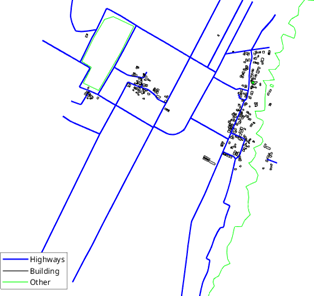
Path planning plays a vital role in ensuring the safe and efficient navigation of fixed-wing unmanned aerial vehicles (UAVs), particularly in cluttered and complex environments. The increasing demand for autonomous UAV operations highlights the need for reliable algorithms capable of generating optimal and collision-free trajectories. This study addresses the challenge by reviewing recent uses of the Rapidly-exploring Random Tree (RRT) algorithm in various robotic platforms and navigation tasks. The research contribution of this paper is a comparative analysis of RRT and BiRRT for fixed-wing UAV path planning, quantifying trade-offs between path length, computation time, and obstacle clearance using a real-world 2D urban map. This addresses a gap in the literature, as few studies have directly compared these algorithms specifically for fixed-wing UAV surveillance missions. The methods involve implementing both RRT and BiRRT in a simulated environment where each algorithm is evaluated over 100 runs to measure performance metrics such as path length, computation time, and obstacle clearance. A realistic urban map is used to test the algorithms under consistent starting and goal positions. The results show that both RRT and BiRRT achieve a 100% success rate in finding collision-free paths. BiRRT consistently generates shorter paths and requires less computation time, making it more suitable for time-sensitive missions. However, RRT produces safer trajectories with greater average clearance from obstacles, which is advantageous in environments with high collision risk. The findings demonstrate a clear trade-off between safety and efficiency. In conclusion, BiRRT is recommended for missions where speed and efficiency are prioritized, while RRT is better suited for operations emphasizing safety and obstacle avoidance.
References
A. Cahyadi, A. P. Sandiwan, and S. Herdjunanto, “An extended kalman filter for nonsmooth attitude control design of quadrotors using quaternion representation,” Indonesian Journal of Electrical Engineering and Informatics, vol. 10, no. 2, pp. 480–488, 2022, https://doi.org/10.52549/ijeei.v10i2.3532.
N. P. Santos, V. B. Rodrigues, A. B. Pinto, and B. Damas, “Automatic detection of civilian and military personnel in reconnaissance missions using a uav,” in 2023 IEEE International Conference on Autonomous Robot Systems and Competitions (ICARSC), pp. 157–162, 2023, https://doi.org/10.1109/ICARSC58346.2023.10129575.
G. N. P. Pratama, A. Maarif, I. Iswanto, and E. W. Pratiwi, “Addressing model errors in uav altitude control using compensator,” Franklin Open, vol. 11, 2025, https://doi.org/10.1016/j.fraope.2025.100279.
S. Herdjunanto, “Actuator fault signal isolation of an unmanned aerial vehicle (uav) quadrotor based on detection filter,” in 2016 8th International Conference on Information Technology and Electrical Engi- neering (ICITEE), pp. 1–6, 2016, https://doi.org/10.1109/ICITEED.2016.7863232.
L. Lasmadi, A. I. Cahyadi, S. Herdjunanto, and R. Hidayat, “Inertial navigation for quadrotor using kalman filter with drift compensation,” International Journal of Electrical and Computer Engineering (IJECE), vol. 7, no. 5, pp. 2596–2604, 2017, https://doi.org/10.11591/ijece.v7i5.pp2596-2604.
S. Herdjunanto, A. Cahyadi, and B. R. Dewangga, “Actuator fault decoupled residual generation on lateral moving aircraft,” Telkomnika (Telecommunication Computing Electronics and Control), vol. 16, no. 4, pp. 1886–1893, 2018, https://doi.org/10.12928/TELKOMNIKA.v16i4.9055.
K. Yamaguchi and S. Hara, “On structural parameter optimization method for quad tilt-wing uav based on indirect size estimation of domain of attraction,” IEEE Access, vol. 10, pp. 1678–1687, 2022, https://doi.org/10.1109/ACCESS.2021.3139156.
D. Wada, S. Araujo-Estrada, and S. Windsor, “Sim-to-real transfer for fixed-wing uncrewed aerial vehicle: Pitch control by high-fidelity modelling and domain randomization,” IEEE Robotics and Automation Letters, vol. 7, no. 4, pp. 11 735–11 742, 2022, https://doi.org/10.1109/LRA.2022.3205442.
C. Kikumoto, T. Urakubo, K. Sabe, and Y. Hazama, “Back-transition control with large deceleration for a dual propulsion vtol uav based on its maneuverability,” IEEE Robotics and Automation Letters, vol. 7, no. 4, pp. 11 697–11 704, 2022, https://doi.org/10.1109/LRA.2022.3205450.
T. K. Priyambodo, A. Majid, and Z. S. S. Shouran, “Validation of quad tail-sitter vtol uav model in fixed wing mode,” Journal of Robotics and Control (JRC), vol. 4, no. 2, pp. 179–191, 2023, https://doi.org/10.18196/jrc.v4i2.17253.
K. A. Tsintotas, L. Bampis, A. Taitzoglou, I. Kansizoglou, P. Kaparos, C. Bliamis, K. Yakinthos, and A. Gasteratos, “The mpu rx-4 project: Design, electronics, and software development of a geofence protection system for a fixed-wing vtol uav,” IEEE Transactions on Instrumentation and Measurement, vol. 72, pp. 1–13, 2023, https://doi.org/10.1109/TIM.2022.3225020.
A. S. Prasetia, R.-J. Wai, Y.-L. Wen, and Y.-K. Wang, “Mission-based energy consumption prediction of multirotor uav,” IEEE Access, vol. 7, pp. 33 055–33 063, 2019, https://doi.org/10.1109/ACCESS.2019.2903644.
B. Talbot, F. Dayoub, P. Corke, and G. Wyeth, “Robot navigation in unseen spaces using an abstract map,” IEEE Transactions on Cognitive and Developmental Systems, vol. 13, no. 4, pp. 791–805, 2021, https://doi.org/10.1109/TCDS.2020.2993855.
P. Corke, W. Jachimczyk, and R. Pillat, “Navigation,” Springer Tracts in Advanced Robotics, vol. 147, pp. 161–212, 2023, https://doi.org/10.1007/978-3-031-07262-85.
G. Airlangga, J. Bata, O. Nugroho, L. Sugianto, P. Saputro, S. Makin, and A. Alamsyah, “Enhanced advanced multi-objective path planning (eamopp) for uav navigation in complex dynamic 3d environments,” International Journal of Robotics and Control Systems, vol. 5, no. 2, pp. 713–729, 2025, https://doi.org/10.31763/ijrcs.v5i2.1759.
S. LaValle and J. Kuffner Jr., “Randomized kinodynamic planning,” International Journal of Robotics Research, vol. 20, no. 5, pp. 378–400, 2001, https://doi.org/10.1177/02783640122067453.
S. M. LaValle, “Motion planning,” IEEE Robotics & Automation Magazine, vol. 18, no. 1, pp. 79–89, 2011, https://doi.org/10.1109/MRA.2011.940276.
M. A. R. Pohan, B. R. Trilaksono, S. P. Santosa, and A. S. Rohman, “Path planning algorithm using the hybridization of the rapidly-exploring random tree and ant colony systems,” IEEE Access, vol. 9, pp. 153 599–153 615, 2021, https://doi.org/10.1109/ACCESS.2021.3127635.
A. R. Pedram, R. Funada, and T. Tanaka, “Gaussian belief space path planning for minimum sensing navigation,” IEEE Transactions on Robotics, vol. 39, no. 3, pp. 2040–2059, 2023, https://doi.org/10.1109/TRO.2022.3228128.
Y. Satake and H. Ishii, “Path planning method with constant bending angle constraint for soft growing robot using heat welding mechanism,” IEEE Robotics and Automation Letters, vol. 8, no. 5, pp. 2836– 2843, 2023, https://doi.org/10.1109/LRA.2023.3260705.
K. Halder and M. F. Orlando, “Path planning for robot assisted steerable bevel-tip needle in 3d dynamic environment,” IEEE Robotics and Automation Letters, vol. 10, no. 6, pp. 5887–5894, 2025, https://doi.org/10.1109/LRA.2025.3562010.
X. Qian and Y. Wang, “Path planning for coal mining masonry robots combined with trajectory optimization,” IEEE Access, vol. 13, pp. 24 197–24 206, 2025, https://doi.org/10.1109/ACCESS.2025.3539023.
J. Chang, N. Dong, D. Li, W. H. Ip, and K. L. Yung, “Skeleton extraction and greedy-algorithm-based path planning and its application in uav trajectory tracking,” IEEE Transactions on Aerospace and Electronic Systems, vol. 58, no. 6, pp. 4953–4964, 2022, https://doi.org/10.1109/TAES.2022.3198925.
B. A. William, D. Udayachandran, S. Gowripriya, and S. H. Shivakumar, “Path planning and safe navigation strategy for urban air mobility,” vol. 3259, no. 1, 2025, https://doi.org/10.1063/5.0263842.
M. M. Umer, H. Venter, O. Muhammad, T. Shafique, F. A. Awwad, and E. A. Ismail, “Cognitive strategies for uav trajectory optimization: Ensuring safety and energy efficiency in real-world scenarios,” Ain Shams Engineering Journal, vol. 16, no. 3, 2025, https://doi.org/10.1016/j.asej.2025.103301.
Y. Iwashina, M. Kunibe, S. Kato, and H. Shigeno, “Uav path planning in urban environments with dynamic risk-map generation by vehicle and pedestrian perception,” in 2022 IEEE 96th Vehicular Technology Conference (VTC2022-Fall), pp. 1–5, 2022, https://doi.org/10.1109/VTC2022-Fall57202.2022.10012880.
M. A. R. Pohan, B. R. Trilaksono, S. P. Santosa, and A. S. Rohman, “Path planning using combined informed rapidly-exploring random tree star and particle swarm optimization algorithms,” IEEE Access, vol. 12, pp. 56582-56608, 2024, https://doi.org/10.1109/ACCESS.2024.3389152.
J. M. Kelner, W. Burzynski, and W. Stecz, “Modeling uav swarm flight trajectories using rapidly-exploring random tree algorithm,” Journal of King Saud University - Computer and Information Sciences, vol. 36, no. 1, 2024, https://doi.org/10.1016/j.jksuci.2023.101909.
B. Lindqvist, A. Patel, K. Lo¨fgren, and G. Nikolakopoulos, “A tree-based next-best-trajectory method for 3-d uav exploration,” IEEE Transactions on Robotics, vol. 40, pp. 3496–3513, 2024, https://doi.org/10.1109/TRO.2024.3422052.
S. LaValle and J. Kuffner, “Randomized kinodynamic planning,” in Proceedings 1999 IEEE International Conference on Robotics and Automation (Cat. No.99CH36288C), vol. 1, 1999, pp. 473–479, https://doi.org/10.1109/ROBOT.1999.770022.
J. Kuffner and S. LaValle, “Rrt-connect: An efficient approach to single-query path planning,” in Proceedings 2000 ICRA. Millennium Conference. IEEE International Conference on Robotics and Automation. Symposia Proceedings (Cat. No.00CH37065), vol. 2, pp. 995–1001, 2000, https://doi.org/10.1109/ROBOT.2000.844730.
S. M. LaValle. Planning algorithms. Cambridge University Press. 2006. https://doi.org/10.1017/CBO9780511546877.
H. Mawatari, T. Uchiya, and I. Takumi, “An exploration algorithm suitable for indoor mapping based on rrt-exploration,” in 2023 IEEE 12th Global Conference on Consumer Electronics (GCCE), pp. 316–317, 2023, https://doi.org/10.1109/GCCE59613.2023.10315525.
H. Suwoyo, A. Adriansyah, J. Andika, A. U. Shamsudin, and Y. Tian, “An effective way for repositioning the beacon nodes of fast rrt results utilizing grey wolf optimization,” Journal of Robotics and Control (JRC), vol. 6, no. 1, pp. 272–284, 2025, https://doi.org/10.18196/jrc.v6i1.22062.
A. H. Qureshi and Y. Ayaz, “Intelligent bidirectional rapidly-exploring random trees for optimal motion planning in complex cluttered environments,” Robotics and Autonomous Systems, vol. 68, pp. 1–11, 2015, https://doi.org/10.1016/j.robot.2015.02.007.
E. Dönmez, A. F. Kocamaz and M. Dirik, “Bi-rrt path extraction and curve fitting smooth with visual based configuration space mapping,” in 2017 International Artificial Intelligence and Data Processing Symposium (IDAP), pp. 1–5, 2017, https://doi.org/10.1109/IDAP.2017.8090214.
T. Rybus, J. Prokopczuk, M. Wojtunik, K. Aleksiejuk, and J. Musiał, “Application of bidirectional rapidly exploring random trees (birrt) algorithm for collision-free trajectory planning of free-floating space manipulator,” Robotica, vol. 40, no. 12, pp. 4326–4357, 2022, https://doi.org/10.1017/S0263574722000935.
I. A. Hassan, I. A. Abed, and W. A. Al-Hussaibi, “Path planning and trajectory tracking control for two- wheel mobile robot,” Journal of Robotics and Control (JRC), vol. 5, no. 1, pp. 1–15, 2024, https://doi.org/10.18196/jrc.v5i1.20489.
J.-H. Jhang and F.-L. Lian, “An autonomous parking system of optimally integrating bidirectional rapidly- exploring random trees and parking-oriented model predictive control,” IEEE Access, vol. 8, pp. 163 502– 163 523, 2020, https://doi.org/10.1109/ACCESS.2020.3020859.
A. T. Khan, S. Li, S. Kadry, and Y. Nam, “Control framework for trajectory planning of soft manipulator using optimized rrt algorithm,” IEEE Access, vol. 8, pp. 171 730–171 743, 2020, https://doi.org/10.1109/ACCESS.2020.3024630.
C. Mthabela, D. Withey and C. Kuchwa-Dube, "Ground Robot Path Planning on 3D Mesh Surfaces Using Bi-directional RRT based on Local Regions," in 2021 Rapid Product Development Association of South Africa - Robotics and Mechatronics - Pattern Recognition Association of South Africa (RAPDASA-RobMech-PRASA), pp. 01-06, 2021, https://doi/10.1109/RAPDASA-RobMech-PRAS53819.2021.9829138.
R. Wang, X. Zhang, Y. Fang, and B. Li, “Virtual-goal-guided rrt for visual servoing of mobile robots with fov constraint,” IEEE Transactions on Systems, Man, and Cybernetics: Systems, vol. 52, no. 4, pp. 2073–2083, 2022, https://doi.org/10.1109/TSMC.2020.3044347.
P. Lathrop, B. Boardman and S. Martínez, “Distributionally safe path planning: Wasserstein safe rrt,” IEEE Robotics and Automation Letters, vol. 7, no. 1, pp. 430–437, 2022, https://doi.org/10.1109/LRA.2021.3128696.
H. Ma, F. Meng, C. Ye, J. Wang, and M. Q.-H. Meng, “Bi-risk-rrt based efficient motion planning for autonomous ground vehicles,” IEEE Transactions on Intelligent Vehicles, vol. 7, no. 3, pp. 722–733, 2022, https://doi.org/10.1109/TIV.2022.3152740.
B. Li and B. Chen, “An adaptive rapidly-exploring random tree,” IEEE/CAA Journal of Automatica Sinica, vol. 9, no. 2, pp. 283–294, 2022, https://doi.org/10.1109/JAS.2021.1004252.
J. Zhang, Y. An, J. Cao, S. Ouyang, and L. Wang, “Uav trajectory planning for complex open storage environments based on an improved rrt algorithm,” IEEE Access, vol. 11, pp. 23 189–23 204, 2023, https://doi.org/10.1109/ACCESS.2023.3252018.
R. Gai, X. Wang, and K. Wang, “Efficient-low memory path planning algorithm based on adaptive thresholding,” IEEE Access, vol. 11, pp. 81 378–81 388, 2023, https://doi.org/10.1109/ACCESS.2023.3300244.
S. Al-Ansarry, S. Al-Darraji, A. Shareef, D. G. Honi, and F. Fallucchi, “Bi-directional adaptive proba- bilistic method with a triangular segmented interpolation for robot path planning in complex dynamic- environments,” IEEE Access, vol. 11, pp. 87 747–87 759, 2023, https://doi.org/10.1109/ACCESS.2023.3290897.
M. A. Rajasa Pohan and J. Utama, “Efficient path planning algorithm for unmanned aerial vehicle in dynamic environment,” in 2023 International Conference on Informatics Engineering, Science & Technology (INCITEST), pp. 1–7, 2023, https://doi.org/10.1109/INCITEST59455.2023.10397062.
J. Liu, Y. Yan, Y. Yang, and J. Li, “An improved artificial potential field uav path planning algorithm guided by rrt under environment-aware modeling: Theory and simulation,” IEEE Access, vol. 12, pp. 12 080–12 097, 2024, https://doi.org/10.1109/ACCESS.2024.3355275.
Z. Sun, B. Lei, P. Xie, F. Liu, J. Gao, Y. Zhang, and J. Wang, “Multi-risk-rrt: An efficient motion planning algorithm for robotic autonomous luggage trolley collection at airports,” IEEE Transactions on Intelligent Vehicles, vol. 9, no. 2, pp. 3450–3463, 2024, https://doi.org/10.1109/TIV.2023.3349171.
Z. Yao, Z. Liu, and C. Han, “The improved rrt integrated with the artificial potential field path planning algorithm,” IEEE Access, vol. 13, pp. 68 398–68 409, 2025, https://doi.org/10.1109/ACCESS.2025.3561348.
Q. Fu, J. Li, and W. Zhao, “Motion primitives and sample-based trajectory planning for fixed-wing un- manned aircraft,” Transactions of the Institute of Measurement and Control, vol. 47, no. 9, pp. 1873–1882, 2025, https://doi.org/10.1177/01423312241264873.
N. Li and S. I. Han, “Adaptive bi-directional rrt algorithm for three-dimensional path planning of un- manned aerial vehicles in complex environments,” IEEE Access, vol. 13, pp. 23 748–23 767, 2025, https://doi.org/10.1109/ACCESS.2025.3537697.
L. Zhao, W. Wang, Q. He, L. Yan, and X. Li, “Visual–inertial autonomous uav navigation in complex illumination and highly cluttered under-canopy environments,” Drones, vol. 9, no. 1, 2025, https://doi.org/10.3390/drones9010027.
Y. Wang, W. Zeng, Y. Peng, Q. Yang, and J. Zhou, “Differential flatness-based trajectory planning for small fixed-wing uavs,” Lecture Notes in Electrical Engineering, vol. 1377 LNEE, pp. 360–369, 2025, https://doi.org/10.1007/978-981-96-3568-9 34.
J. Zhang, Y. Xian, X. Zhu, and H. Deng, “A hybrid deep learning model for uav path planning in dynamic environments,” IEEE Access, vol. 13, pp. 67 459–67 475, 2025, https://doi.org/10.1109/ACCESS.2025.3557394.
Z. Yu, H. Sun, Q. Sun, P. Tan, Z. Chen, and J. Qu, “Dynamic path planning for parafoil homing in surface wind disturbance environment,” IEEE Transactions on Automation Science and Engineering, vol. 22, pp. 15 045–15 059, 2025, https://doi.org/10.1109/TASE.2025.3563071.
K. A. Asimakopoulos and K. I. Chatzilygeroudis, “Integrating trajectory optimization in quality-diversity for kinodynamic motion planning,” in 2025 11th International Conference on Automation, Robotics, and Applications (ICARA), 2025, pp. 388–393, https://doi.org/10.1109/ICARA64554.2025.10977687.
M. Elbanhawi and M. Simic, “Sampling-based robot motion planning: A review,” IEEE Access, vol. 2, pp. 56–77, 2014, https://doi.org/10.1109/ACCESS.2014.2302442.
D. Belter, “Efficient modeling and evaluation of constraints in path planning for multi-legged walking robots,” IEEE Access, vol. 7, pp. 107 845–107 862, 2019, https://doi.org/10.1109/ACCESS.2019.2933178.
M. Liu, J. Liu, Q. Lan, Z. Lu, W. Zhang, and G. Zou, “Matlab simulation of uav 3d path planning research based on aco algorithm, astar algorithm and rrt algorithm,” in 2024 3rd International Symposium on Semiconductor and Electronic Technology (ISSET), pp. 634–637, 2024, https://doi.org/10.1109/ISSET62871.2024.10779618.
Published
How to Cite
Issue
Section
License
Copyright (c) 2026 Gilang Nugraha Putu Pratama, Oktaf Agni Dhewa, Mentari Putri Jati, Indra Hidayatulloh, Teddy Surya Gunawan, Syaiful Ardy Gunawan

This work is licensed under a Creative Commons Attribution-ShareAlike 4.0 International License.
Authors who publish with this journal agree to the following terms:
- Authors retain copyright and grant the journal right of first publication with the work simultaneously licensed under a Creative Commons Attribution License that allows others to share the work with an acknowledgment of the work's authorship and initial publication in this journal.
- Authors are able to enter into separate, additional contractual arrangements for the non-exclusive distribution of the journal's published version of the work (e.g., post it to an institutional repository or publish it in a book), with an acknowledgment of its initial publication in this journal.
- Authors are permitted and encouraged to post their work online (e.g., in institutional repositories or on their website) prior to and during the submission process, as it can lead to productive exchanges, as well as earlier and greater citation of published work (See The Effect of Open Access).

This journal is licensed under a Creative Commons Attribution-ShareAlike 4.0 International License.