Technology Integration in Community Service: Empowering IDX Employees with Data Visualization Skills
DOI:
https://doi.org/10.12928/spekta.v7i1.15922Keywords:
Community service program, Covariance-based structural equation modelling, Normality test, Paired t test, Reliability and validity testAbstract
Background: The rapid growth of digitalization in the capital market requires the Indonesia Stock Exchange (IDX) to deliver transparent, accurate, and understandable information through data visualization. However, employees at the IDX West Kalimantan Representative Office rarely process and visualize data, even though it is essential for carrying out daily tasks.
Contribution: This study fills the gap in technology-based community service programs that rarely integrate infographic training with information literacy enhancement in capital market education. The novelty of this study lies in the evaluation of the community service program, which not only measures the effectiveness of the training but also employs CB-SEM to identify the factors influencing participants’ learning outcomes.
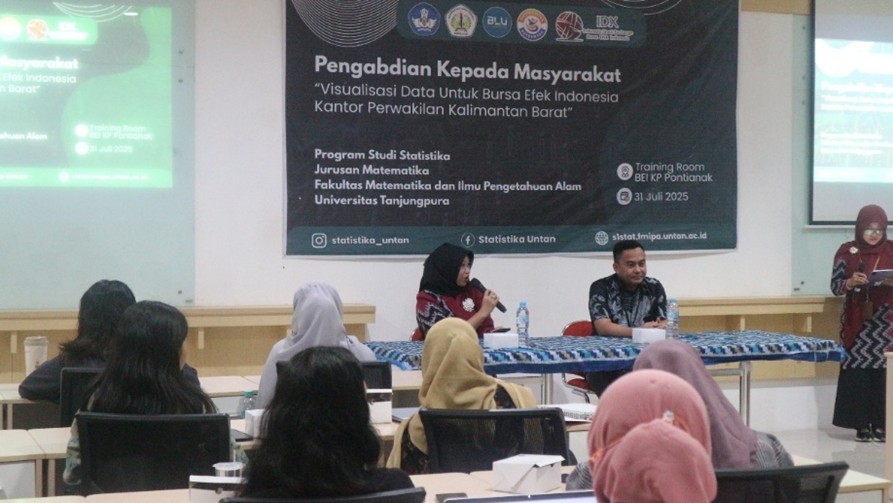
Method: The Statistics Study Program, Untan, conducted a training workshop combining theory and practice with real data. A situational analysis with IDX representatives was first carried out to identify needs and design the program. Effectiveness was evaluated using pre-tests, post-tests, and satisfaction surveys.
Results: The paired t-test results at the 5% significance level demonstrating the effectiveness of infographic training in enhancing data visualization skills. In addition, CB-SEM analysis revealed that the module variable was the dominant factor, highlighting the importance of structured and relevant training materials in supporting participants’ learning outcomes.
Conclusion: The training effectively enhanced the knowledge and skills of IDX West Kalimantan Representative employees in data processing and visualization.
References
J. Hua, M. Huang, G. Wang, and M. Zreika, “Applying data visualization techniques for stock relationship analysis,” Filomat, vol. 32, no. 5, pp. 1931–1936, 2018, https://doi.org/10.2298/FIL1805931H
J. Joseph and I. Indratmo, “Visualizing stock market data with self‐organizing map.” roam.macewan.ca, 2013.
A. I. Fikri and D. A. putra, “Efektivitas dan Efisiensi Visualisasi Data Laporan Keuangan Terhadap Keputusan Investasi: Studi kasus pada mahasiswa S1 Akuntansi Universitas Bengkulu,” Al-Kharaj J. Ekon. Keuang. Bisnis Syariah, vol. 6, no. 5, pp. 4592–4603, Apr. 2024, https://doi.org/10.47467/alkharaj.v6i5.1953
O. I. Nasiru and E. O. Uyanne, “Usage and Impact of Teachers Self-Assessment Practices on Teaching of Upper Basic Social Studies in Kwara State,” SPEKTA (Jurnal Pengabdi. Kpd. Masy. Teknol. dan Apl., vol. 3, no. 2, pp. 137–146, 2022, https://doi.org/10.12928/spekta.v3i2.4016
M. Mi’ah, “Peran Bursa Efek dalam Mendorong Pertumbuhan Ekonomi Nasional,” Prospeks Pros. Pengabdi. Ekon. dan Keuang. Syariah, vol. 3, no. 1, pp. 590–600, Oct. 2024, https://doi.org/10.32806/pps.v3i1.317
C. Ware, “Information visualization: perception for design, Fourth.” Elsevier, Inc, Philadelphia, 2020.
A. Cairo, The art of insight: How great visualization designers think. books.google.com, 2023.
S. Bateman, R. L. Mandryk, C. Gutwin, A. Genest, D. McDine, and C. Brooks, “Useful junk?,” in Proceedings of the SIGCHI Conference on Human Factors in Computing Systems, Apr. 2010, pp. 2573–2582, https://doi.org/10.1145/1753326.1753716
J. Fadika and Yetti Afrida Indra, “Peran Pasar Modal dalam Meningkatkan Minat Investasi pada Generasi Muda di Era Digital,” J. Manag. Innov. Entrep., vol. 2, no. 1, pp. 1700–1712, Oct. 2024, https://doi.org/10.70248/jmie.v2i1.1430
A. Kirk, Data visualisation: A handbook for data driven design. torrossa.com, 2019.
N. Gibran and D. Ramadani, “The effect of training and career development on employee performance,” Almana J. Manaj. dan Bisnis, 2021, https://doi.org/10.36555/almana.v5i3.1680
B. H. S. Dwidjosumarno, Y. Atmajawati, and S. Agustin, “Pkm Literasi Pasar Modal bagi Mahasiswa di Surabaya,” SHARE “SHaring - Action - REflection,” vol. 8, no. 1, pp. 96–100, Mar. 2022, https://doi.org/10.9744/share.8.1.96-100
M. E. Porter and M. R. Kramer, “Creating shared value: How to reinvent capitalism, and unleash a wave of innovation and growth,” Managing Sustainable Bus. An Exec. Educ. case, 2018, https://doi.org/10.1007/978-94-024-1144-7_16
W. Agwil, I. Sriliana, D. S. Rini, F. Supianti, and C. R. Oktarina, “Desa Cantik, Desa Cakap Statistik,” J. Hum. and Educ., 2024, https://doi.org/10.31004/jh.v4i1.708
N. Puspitasari and J. Hemelia, “Pembuatan Poster Infografis Data Kependudukan Kelurahan Jahab dengan Microsoft Excel,” Inov. Teknol. Masy., vol. 1, no. 2, pp. 52–56, Jan. 2024, https://doi.org/10.53622/intekmas.v1i2.230
B. Bhattacharjee, B. B. Sikder, and T. C. Fahim, “Vulnerability of climate-stressed communities in coastal Bangladesh: a multi-dimensional index-based assessment,” Theor. Appl. Climatology, 2025, https://doi.org/10.1007/s00704-025-05826-z
V. J. Owan, C. O. Chukwu, V. U. Agama, T. J. Owan, J. O. Ogar, and I. J. Etorti, “Acceptance and use of artificial intelligence for self-directed research learning among postgraduate students in Nigerian public universities,” Discover Education, 2025, https://doi.org/10.1007/s44217-025-00770-6
G. Kotronoulas, S. Miguel, M. Dowling, and C. Papadopoulou, “An overview of the fundamentals of data management, analysis, and interpretation in quantitative research,” Seminars in oncology Nursing, 2023, https://doi.org/10.1016/j.soncn.2023.151398
T. Park, M. Hong, and D. Kondrat, “Undergraduate students’ attitudes toward statistics: How Excel makes a student’s life easier,” J. Evidence-Based Soc. Work, 2022, https://doi.org/10.1080/26408066.2022.2025968
K. Ferawati, “Pemanfaatan Excel untuk Analisis dan Visualisasi Data Kesehatan Masyarakat Kabupaten Sukoharjo,” Pros. Konf. Nas. Pengabdi. Kpd. Masy. dan Corp. Soc. Responsib., vol. 4, pp. 528–535, Nov. 2021, https://doi.org/10.37695/pkmcsr.v4i0.1133
F. R. Fadmi and L. D. Buton, “Pelatihan Analisis Data Bivariat Menggunakan SPSS Bagi Dosen STIKES Mandala Waluya Kendari,” J. Mandala Pengabdi. Masy., vol. 1, no. 1, pp. 9–15, Jun. 2020, https://doi.org/10.35311/jmpm.v1i1.4
S. Martha, “Peningkatan Keterampilan Analisis Data Bagi Fungsional BPS di Kalimantan Barat Melalui Pelatihan SEM dengan AMOS,” Sarwahita, vol. 22, no. 01, pp. 99–108, Apr. 2025, https://doi.org/10.21009/sarwahita.221.9
M. A. Putri, F. V. Kuhon, and H. M. F. Palandeng, “Uji validitas dan reliabilitas instrumen penelitian,” J. Kedokt. Komunitas dan Trop., vol. 12, no. 2, pp. 635–640, Dec. 2024, https://doi.org/10.35790/jkkt.v12i2.59634
J. Hair and M. A. Sabol, “Overview of Multivariate Data Analysis, An,” Int. Encycl. Stat. Sci., 2025, https://doi.org/10.1007/978-3-662-69359-9_20
R. Sianturi, “Uji Normalitas sebagai syarat Pengujian Hipotesis,” J. Pembelajaran dan Mat. SIGMA, vol. 11, no. 1, pp. 1–14, May 2025, https://doi.org/10.36987/jpms.v11i1.7091
C. Montolalu and Y. Langi, “Pengaruh Pelatihan Dasar Komputer dan Teknologi Informasi bagi Guru-Guru dengan Uji-T Berpasangan (Paired Sample T-Test),” d’CARTESIAN, vol. 7, no. 1, p. 44, May 2018, https://doi.org/10.35799/dc.7.1.2018.20113
S. Sodikin, S. W. Rizki, and H. Perdana, “Penerapan Covariance Based Structural Equation Modeling (CB-SEM) pada Kepuasan Masyarakat terhadap Pelayanan Kepolisian,” BIMASTER: Buletin Ilmiah Matematika, Statistika. 2020. https://doi.org/10.26418/bbimst.v9i3.41047
I. Ghozali, “Multivariate analysis application with IBM SPSS 25 program.” Diponegoro University Publishing, 2018.
A. M. Passarelli and D. A. Kolb, “Using experiential learning theory to promote student learning and development in programs of education abroad,” Student Learn. abroad, 2023, https://doi.org/10.4324/9781003447184-8
S. Turkay, D. Hoffman, C. K. Kinzer, and P. Chantes, “Toward understanding the potential of games for learning: Learning theory, game design characteristics, and situating video games in classrooms,” Computers in the Sch., 2014, https://doi.org/10.1080/07380569.2014.890879
S. I. Harianja and W. S. Utami, “Pengaruh modul terhadap hasil belajar mahasiswa pada mata kuliah pengembangan kecerdasan majemuk,” J. Tunas Siliwangi, 2023, https://doi.org/10.22460/ts.v9i1.3536
Tukiyo, Triyono, P. Haryono, Tasari, and S. Suwartini, “Teaching Materials Using the Project Based Learning Model on Learning Outcomes of Elementary School Students,” J. Lesson Learn. Stud., vol. 7, no. 2, pp. 316–324, Aug. 2024, https://doi.org/10.23887/jlls.v7i2.83497
R. Ramadhani and N. Izzati, “Keefektifan dan Kepraktisan Modul Dasar Pemrograman,” J. Math. Educ. Sci., vol. 6, no. 1, pp. 47–53, Apr. 2023, https://doi.org/10.32665/james.v6i1.1142
R. A. H. Cahyadi, “Pengembangan Bahan Ajar Berbasis Addie Model,” Halaqa Islam. Educ. J., vol. 3, no. 1, pp. 35–42, Jun. 2019, https://doi.org/10.21070/halaqa.v3i1.2124
C. A. Lestari, A. D. Lestari, I. Magfirah, and S. Susilawati, “Peran Bahan Ajar, Media dan Sumber Belajar: Kunci Sukses dalam Pembelajaran Pendidikan Agama Islam,” At-Thullab J. Mhs. Stud. Islam, vol. 7, no. 1, pp. 1–21, Jan. 2025, https://doi.org/10.20885/tullab.vol7.iss1.art1
Downloads
Published
How to Cite
Issue
Section
License
Copyright (c) 2026 Wirda Andani, Hendra Perdana, Nurfitri Imro'ah, Evy Sulistianingsih, Neva Satyahadewi, Ray Tamtama, Shantika Martha, Yuyun Eka Pratiwi, Pitriani Pitriani, Annisa Auliarahmi, Muhammad Fikri

This work is licensed under a Creative Commons Attribution-ShareAlike 4.0 International License.
Authors who publish with SPEKTA (Jurnal Pengabdian Kepada Masyarakat: Teknologi dan Aplikasi) agree to the following terms:
- Authors retain copyright and grant the journal the right of first publication with the work simultaneously licensed under a Creative Commons Attribution License (CC BY-SA 4.0) that allows others to share the work with an acknowledgment of the work's authorship and initial publication in this journal.
- Authors are able to enter into separate, additional contractual arrangements for the non-exclusive distribution of the journal's published version of the work (e.g., post it to an institutional repository or publish it in a book), with an acknowledgment of its initial publication in this journal.
- Authors are permitted and encouraged to post their work online (e.g., in institutional repositories or on their website) prior to and during the submission process, as it can lead to productive exchanges, as well as earlier and greater citation of published work.

This work is licensed under a Creative Commons Attribution-ShareAlike 4.0 International License.