From Research to Community Impact: Training for the Operation and Maintenance of Patented Electric Pedicabs (E-Becak)
DOI:
https://doi.org/10.12928/spekta.v7i1.14461Keywords:
Community-based training, Cultural heritage preservation, Driver empowerment, Electric becak (e-becak), Sustainable transportationAbstract
Background: The transition toward sustainable transportation requires solutions that balance technological innovation with cultural preservation and community empowerment. In Indonesia, the becak (pedicab) remains both a cultural icon and a livelihood for many low-income families. However, conventional and motorized becaks pose challenges related to driver fatigue, environmental pollution, and operational inefficiencies. To address these issues, researchers developed the electric becak (e-becak), a patented innovation (Patent No. IDS000011210).
Contribution: The program contributes to the community by equipping drivers with practical skills. It also empowers participants by fostering ownership of sustainable technology.
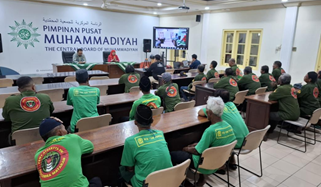
Method: The program attended by 25 participants was implemented in four stages: (1) socialization to introduce drivers to the concept and benefits of e-becak; (2) training on operational use, including driving, battery charging, and safety practices; (3) training on preventive and corrective maintenance; and (4) evaluation and monitoring through pre- and post-tests, observations, and feedback sessions.
Results: Findings showed significant improvements in drivers’ knowledge and skills, with post-training assessments indicating a 70–80% increase in competency levels.
Conclusion: The training program effectively bridged innovation and community practice by ensuring that drivers were capable of sustaining e-becak adoption. This initiative demonstrates how research-based innovations can be integrated into community livelihoods, contributing to sustainable transportation and community empowerment.
References
P. J. G. Ribeiro and F. Fonseca, “Students’ home-university commuting patterns: A shift towards more sustainable modes of transport,” Case Stud. Transp. Policy, vol. 10, no. 2, pp. 954–964, Jun. 2022, https://doi.org/10.1016/j.cstp.2022.03.009
V. J. Reddy, N. P. Hariram, R. Maity, M. F. Ghazali, and S. Kumarasamy, “Sustainable Vehicles for Decarbonizing the Transport Sector: A Comparison of Biofuel, Electric, Fuel Cell and Solar-Powered Vehicles,” World Electr. Veh. J., vol. 15, no. 3, p. 93, Mar. 2024, https://doi.org/10.3390/wevj15030093
S. Chakraborty, N. M. Kumar, A. Jayakumar, S. K. Dash, and D. Elangovan, “Selected Aspects of Sustainable Mobility Reveals Implementable Approaches and Conceivable Actions,” Sustainability, vol. 13, no. 22, p. 12918, Nov. 2021, https://doi.org/10.3390/su132212918
K. J. Shah, “Green transportation for sustainability: Review of current barriers, strategies, and innovative technologies,” J. Clean. Prod., vol. 326, p. 129392, Dec. 2021, https://doi.org/10.1016/j.jclepro.2021.129392
K. Mouratidis, J. De Vos, A. Yiannakou, and I. Politis, “Sustainable transport modes, travel satisfaction, and emotions: Evidence from car-dependent compact cities,” Travel Behav. Soc., vol. 33, p. 100613, Oct. 2023, https://doi.org/10.1016/j.tbs.2023.100613
F. Jelti, A. Allouhi, and K. A. Tabet Aoul, “Transition Paths towards a Sustainable Transportation System: A Literature Review,” Sustainability, vol. 15, no. 21, p. 15457, Oct. 2023, https://doi.org/10.3390/su152115457
U. Azhar, S. Yaseen, M. Arif, M. Babar, and M. Sagir, “Emission of greenhouse gases from transportation,” Greenh. gases Emiss. and Climate Change, 2024, https://doi.org/10.1016/B978-0-443-19231-9.00016-8
S. C. Dogruparmak, K. O. Demirarslan, and S. V. Cavusoglu, “Evaluation of Turkey’s road-based greenhouse gas inventory and future projections,” Applied Sciences. 2025, https://doi.org/10.3390/app15137007
Y. Bian, J. Lin, H. Han, S. Lin, H. Li, and X. Chen, “Mitigation synergy and policy implications in urban transport sector: a case study of Xiamen, China,” Environ. Res. Lett., vol. 18, no. 8, p. 084030, Aug. 2023, https://doi.org/10.1088/1748-9326/ace91e
L. Duan, “Impacts of reducing air pollutants and CO2 emissions in urban road transport through 2035 in Chongqing, China,” Environ. Sci. Ecotechnology, vol. 8, p. 100125, Oct. 2021, https://doi.org/10.1016/j.ese.2021.100125
B. C. Stearns and A. G. Bornemann, “Solar panel coupling stabilization system,” US Pat. 11,012,023, 2021.
R. M. Ramli and W. A. Jabbar, “Design and implementation of solar-powered with IoT-Enabled portable irrigation system,” Internet of Things and Cyber-Physical Systems. 2022, https://doi.org/10.1016/j.iotcps.2022.12.002
S. Ghosh, S. K. Sarkar, and P. Roy, “Application of automation and artificial intelligence (AI) in green transportation system,” Driv. Green Transp. Syst. Through Artificial Intelligence and Automation, 2025, https://doi.org/10.1007/978-3-031-72617-0_2
Z. Zhang, Q. Yu, K. Gao, H. D. He, Y. Liu, and H. Huang, “Carbon emission reduction benefits of ride-hailing vehicle electrification considering energy structure,” Applied Energy. 2025, https://doi.org/10.1016/j.apenergy.2024.124548
W. Sheng, “A Multi Scenario Simulation Study on the Systemic Benefits of Fleet Electrification for Urban Sustainability in Shanghai,” Sustainability, 2026, https://doi.org/10.3390/su18084077
T. R. Bagul, R. Kumar, and R. Kumar, “Real-world emission and impact of three wheeler electric auto-rickshaw in India,” Environ. Sci. Pollut. Res., vol. 28, no. 48, pp. 68188–68211, Dec. 2021, https://doi.org/10.1007/s11356-021-14805-6
X. Yan and S. Sun, “Impact of electric vehicle development on China’s energy consumption and greenhouse gas emissions,” Clean Technol. Environ. Policy, vol. 23, no. 10, pp. 2909–2925, Dec. 2021, https://doi.org/10.1007/s10098-021-02209-6
I. Hasanuddin, “Implementasi Desain Baru Becak Listrik Pengangkut Sampah Untuk Transportasi Ramah Lingkungan Dengan Energi Terbarukan,” J. Vokasi, vol. 7, no. 3, p. 323, Nov. 2023, https://doi.org/10.30811/vokasi.v7i3.4660
M. Faishal, O. Adiyanto, and and H. M. Asih, “Becak Listrik Ergonomis,” IDS000011210, 2025.
V. Moreau and F. Vuille, “Decoupling energy use and economic growth: Counter evidence from structural effects and embodied energy in trade,” Applied energy. Elsevier, 2018, https://doi.org/10.1016/j.apenergy.2018.01.044
H. Huang and G. Huang, “Extraction, separation, modification, structural characterization, and antioxidant activity of plant polysaccharides,” Chem. Biol. &drug Des., 2020, https://doi.org/10.1111/cbdd.13794
A. Morilla-Luchena, T. Gómez-Rasco, and O. Vazques-Aguado, “Design of strategies for the process of digitalisation and technological modernisation in social services organisations.,” Cuadernos de trabajo Social, 2025, https://doi.org/10.5209/cuts.96376
M. Billi, C. Zurbriggen, A. Urquiza, and A. Allendes, “Transition in action: toward a social theory of the governance of transitions,” Frontiers in Sociology. frontiersin.org, 2024, https://doi.org/10.3389/fsoc.2024.1206050
S. Gopalakrishnan, M. Matta, and H. Cavusoglu, “The dark side of technological modularity: opportunistic information hiding during interorganizational system adoption,” Inf. Syst. Research, 2022, https://doi.org/10.1287/isre.2022.1100
D. Marikyan, S. Papagiannidis, and G. B. Stewart, “Technology acceptance research: Meta-analysis,” J. Inf. Science, 2023, https://doi.org/10.1177/01655515231191177
A. M. Koziel, C. W. Shen, I. Djailani, and Y. L. Chang, “Beyond social norms: Psychological and hedonic drivers of metaverse adoption among generation Y,” IEEE Access, 2025, https://doi.org/10.1109/ACCESS.2025.3563758
Downloads
Published
How to Cite
Issue
Section
License
Copyright (c) 2026 Muhammad Faishal, Tri Budiyanto, Sudarmini, Okka Adiyanto, Hayati Mukti Asih, Effendi Mohamad

This work is licensed under a Creative Commons Attribution-ShareAlike 4.0 International License.
Authors who publish with SPEKTA (Jurnal Pengabdian Kepada Masyarakat: Teknologi dan Aplikasi) agree to the following terms:
- Authors retain copyright and grant the journal the right of first publication with the work simultaneously licensed under a Creative Commons Attribution License (CC BY-SA 4.0) that allows others to share the work with an acknowledgment of the work's authorship and initial publication in this journal.
- Authors are able to enter into separate, additional contractual arrangements for the non-exclusive distribution of the journal's published version of the work (e.g., post it to an institutional repository or publish it in a book), with an acknowledgment of its initial publication in this journal.
- Authors are permitted and encouraged to post their work online (e.g., in institutional repositories or on their website) prior to and during the submission process, as it can lead to productive exchanges, as well as earlier and greater citation of published work.

This work is licensed under a Creative Commons Attribution-ShareAlike 4.0 International License.