Exploring the Monosodium Glutamate (MSG) and Its Role to Consumption Behaviors Regarding Food Safety
DOI:
https://doi.org/10.12928/jafost.v6i2.13115Keywords:
Consumption, Flavor enhancer, Food safety, monosodium glutamate, Regulatory perspectiveAbstract
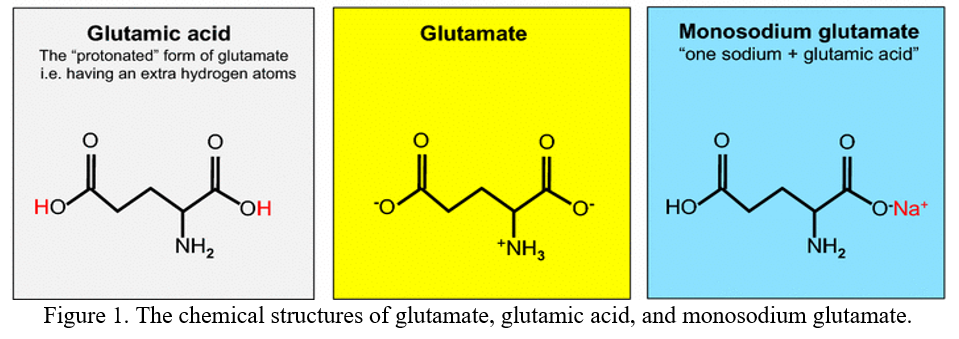
This article explores the role of monosodium glutamate (MSG) in food safety by examining recent research findings and regulatory perspectives. MSG, a commonly used flavor enhancer in processed foods, has been the subject of controversy regarding its safety for consumption. The research encompasses studies on MSG consumption and its potential health effects, metabolism in the body, safety for different population groups, and regulatory assessments by agencies like the U.S. Food and Drug Administration (FDA) and the European Food Safety Authority (EFSA). Despite conflicting findings and public perceptions, scientific evidence suggests that MSG is safe for consumption at current levels found in food products. This article emphasizes the importance of consumer education and regulatory measures in ensuring the safe use of MSG. Further research is needed to address lingering concerns and enhance understanding of MSG's role in food safety.
References
X. Yang, D. Li, J. Wu, L. Mao, Y. Sun, and J. Hong, “A review of the adverse effects of monosodium glutamate on human health,” Crit. Rev. Food Sci. Nutr., pp. 1–17, 2022, doi: https://doi.org/10.1080/10408398.2021.2027852.
A. Banerjee, S. Mukherjee, and B. K. Maji, “Worldwide flavor enhancer monosodium glutamate combined with high lipid diet provokes metabolic alterations and systemic anomalies: An overview,” Toxicol. Reports, vol. 8, pp. 938–961, 2021, https://doi.org/10.1016/j.toxrep.2021.04.009.
A. Zanfirescu, A. Ungurianu, A. M. Tsatsakis, G. M. Nițulescu, D. Kouretas, A. Veskoukis, D. Tsoukalas, A. B. Engin, M. Aschner, and D. Margină, “A review of the alleged health hazards of monosodium glutamate,” Compr. Rev. Food Sci. Food Saf., vol. 18, no. 4, pp. 1111–1134, 2019, https://doi.org/10.1111/1541-4337.12448.
I. Kim, S. Yang, C. Y. Kim, S. Kim, Y.-S. Jung, H. Y. Chung, and J. Lee, “Assessment of the neurotoxicity of monosodium glutamate on neural stem cells and hippocampal neurogenesis in a rodent model,” Food Chem. Toxicol., vol. 195, p. 115136, 2025, https://doi.org/10.1016/j.fct.2024.115136.
C. Loï and L. Cynober, “Glutamate: A safe nutrient, not just a simple additive,” Ann. Nutr. Metab., vol. 78, no. 3, pp. 133–146, 2022, https://doi.org/10.1159/000522482.
S. P. Chakraborty, “Patho-physiological and toxicological aspects of monosodium glutamate,” Toxicol. Mech. Methods, vol. 29, no. 6, pp. 389–396, 2019, https://doi.org/10.1080/15376516.2018.1528649.
O. T. Kayode, J. A. Bello, J. A. Oguntola, A. A. A. Kayode, and D. K. Olukoya, “The interplay between monosodium glutamate (MSG) consumption and metabolic disorders,” Heliyon, vol. 9, no. 9, p. e19675, 2023, https://doi.org/10.1016/j.heliyon.2023.e19675.
O.-L. Moldovan, A. Rusu, C. Tanase, and C.-E. Vari, “Glutamate - A multifaceted molecule: Endogenous neurotransmitter, controversial food additive, design compound for anti-cancer drugs. A critical appraisal,” Food Chem. Toxicol., vol. 153, p. 112290, 2021, https://doi.org/10.1016/j.fct.2021.112290.
A. E. Ogunmokunwa and B. O. Ibitoye, “Monosodium glutamate (MSG) exposure induced oxidative stress and disrupted testicular hormonal regulation, exacerbating reproductive dysfunction in male wistar rats,” Endocr. Metab. Sci., vol. 17, p. 100226, 2025, https://doi.org/10.1016/j.endmts.2025.100226.
W. Wang, X. Zhou, and Y. Liu, “Characterization and evaluation of umami taste: A review,” TrAC Trends Anal. Chem., vol. 127, p. 115876, 2020, https://doi.org/10.1016/j.trac.2020.115876.
K. N. Wijayasekara and J. Wansapala, “Comparison of a flavor enhancer made with locally available ingredients against commercially available Mono Sodium Glutamate,” Int. J. Gastron. Food Sci., vol. 23, p. 100286, 2021, https://doi.org/10.1016/j.ijgfs.2020.100286.
L. Yang, Y. Gao, J. Gong, L. Peng, H. R. El-Seedi, M. A. Farag, Y. Zhao, and J. Xiao, “A multifaceted review of monosodium glutamate effects on human health and its natural remedies,” Food Mater. Res., vol. 3, no. 1, pp. 0–0, 2023, https://doi.org/10.48130/FMR-2023-0016.
K.-I. Kusumoto, Y. Yamagata, R. Tazawa, M. Kitagawa, T. Kato, K. Isobe, and Y. Kashiwagi, “Japanese traditional miso and koji making,” J. Fungi, vol. 7, no. 7, p. 579, 2021, https://doi.org/10.3390/jof7070579.
A. Z. Mercadante, Carotenoid Esters in Foods. in Food Chemistry, Function and Analysis. Cambridge: Royal Society of Chemistry, 2019, https://doi.org/10.1039/9781788015851.
M. J. Hossain, A. N. Alam, E.-Y. Lee, Y.-H. Hwang, and S.-T. Joo, “Umami characteristics and taste improvement mechanism of meat,” Food Sci. Anim. Resour., vol. 44, no. 3, pp. 515–532, 2024, https://doi.org/10.5851/kosfa.2024.e29.
K. Takegami, M. Maeda, J. Yoshikawa, and K. Maehashi, “Shiitake mushroom (Lentinula edodes) extract has chloride-activated glutaminase activity that efficiently increases glutamic acid in foods with sodium chloride,” Int. J. Gastron. Food Sci., vol. 38, p. 101054, 2024, https://doi.org/10.1016/j.ijgfs.2024.101054.
A. Al-Otaibi, N. Mansour, H. Elabd, and N. Esmail, “Toxicity of monosodium glutamate intake on different tissues induced oxidative stress: A Review,” J. Med. Life Sci., vol. 4, no. 4, pp. 68–81, 2022, https://doi.org/10.21608/jmals.2022.264345.
B. Kononov, S. Bilash, I. Tretiak, M. Kononova, O. Pronina, M. Koptev, A. Pirog-Zakaznikova, S. Donchenko, Y. Oliinichenko, and V. Oleksiienko, “Structural changes in the ganglionic layer of the rat cerebellar cortex due to the use of monosodium glutamate and sodium nitrite in combination,” Tissue Cell, vol. 93, p. 102760, 2025, https://doi.org/10.1016/j.tice.2025.102760.
A. M. García Juárez, N. J. Carrillo González, T. Campos-Ordoñez, Y. Gasca Martínez, and G. Gudiño-Cabrera, “Neuronal splicing regulator RBFOX3 (NeuN) distribution and organization are modified in response to monosodium glutamate in rat brain at postnatal day 14,” Acta Histochem., vol. 126, no. 8, p. 152207, 2024, https://doi.org/10.1016/j.acthis.2024.152207.
Z. Soltani, M. Shariatpanahi, M. Aghsami, H. Owliaey, and A. Kheradmand, “Investigating the effect of exposure to monosodium glutamate during pregnancy on development of autism in male rat offspring,” Food Chem. Toxicol., vol. 185, p. 114464, 2024, https://doi.org/10.1016/j.fct.2024.114464.
T. S. Kyaw, M. Sukmak, K. Nahok, A. Sharma, A. Silsirivanit, W. Lert-itthiporn, N. Sansurin, V. Senthong, S. Anutrakulchai, S. Sangkhamanon, S. Pinlaor, C. Selmi, B. D. Hammock, and U. Cha’on, “Monosodium glutamate consumption reduces the renal excretion of trimethylamine N-oxide and the abundance of Akkermansia muciniphila in the gut,” Biochem. Biophys. Res. Commun., vol. 630, pp. 158–166, 2022, https://doi.org/10.1016/j.bbrc.2022.09.038.
H. Ahangari, B. Bahramian, A. Khezerlou, M. Tavassoli, N. Kiani‐Salmi, V. Tarhriz, and A. Ehsani, “Association between monosodium glutamate consumption with changes in gut microbiota and related metabolic dysbiosis—A systematic review,” Food Sci. Nutr., vol. 12, no. 8, pp. 5285–5295, 2024, https://doi.org/10.1002/fsn3.4198.
J. Xu, M. Tang, Y. Liu, J. Xu, and X. Xu, “Safety assessment of monosodium glutamate based on intestinal function and flora in mice,” Food Sci. Hum. Wellness, vol. 11, no. 1, pp. 155–164, 2022, https://doi.org/10.1016/j.fshw.2021.07.016.
U. S. Food and D. Administration, “Questions and Answers on Monosodium Glutamate (MSG.” [Online]. Available: https://www.fda.gov/food/food-additives-petitions/questions-and-answers-monosodium-glutamate-msg.
Y. Zhou, H. Sui, Y. Wang, L. Yong, L. Zhang, J. Liang, J. Zhou, L. Xu, Y. Zhong, J. Chen, and Y. Song, “Dietary exposure to glutamates of 2- to 5-year-old toddlers in China using the duplicate diet method,” Foods, vol. 12, no. 9, p. 1898, 2023, https://doi.org/10.3390/foods12091898.
H. Yu, R. Wang, Y. Zhao, Y. Song, H. Sui, Y. Wu, H. Miao, and B. Lyu, “Monosodium glutamate intake and risk assessment in China nationwide, and a comparative analysis worldwide,” Nutrients, vol. 15, no. 11, p. 2444, 2023, https://doi.org/10.3390/nu15112444.
M. M. Sheriff, H. H. Abusabah, H. B. Sindi, A. O. Alaidrous, A. H. Moemen, S. F. Alshalawi, B. F. Alshalawi, N. Y. Aljaoser, L. K. Alghamdi, R. M. Badri, L. A. Gadi, S. D. Alotaibi, G. H. Alharbi, and N. M. Aljadani, “A study on the awareness and perceptions regarding monosodium glutamate and its potential health effects amongst the urban population of Saudi Arabia,” Cureus, vol. 15, no. 12, 2023, https://doi.org/10.7759/cureus.51094.
B. E. S. Bandara, D. A. M. De Silva, B. C. H. Maduwanthi, and W. A. A. I. Warunasinghe, “Impact of food labeling information on consumer purchasing decision: With special reference to faculty of agricultural sciences,” Procedia Food Sci., vol. 6, pp. 309–313, 2016, https://doi.org/10.1016/j.profoo.2016.02.061.
N. Acar, B. Çizmeci & A. Turan, A research on consumer perceptions of food and beverage marketing on social media. OPUS International Journal of Society Researches, 17(34), 813-830, 2021, https://doi.org/20.500.11787/7403.
J. J. DiNicolantonio and J. H. O’Keefe, “Added Fructose: A Principal Driver of Type 2 Diabetes Mellitus and Its Consequences,” Mayo Clin. Proc., vol. 93, no. 3, pp. 371–381, 2018, https://doi.org/10.1016/j.mayocp.2014.12.019.
S. M. Hazzaa, E. S. El-Roghy, M. A. Abd Eldaim, and G. E. Elgarawany, “Monosodium glutamate induces cardiac toxicity via oxidative stress, fibrosis, and P53 proapoptotic protein expression in rats,” Environ. Sci. Pollut. Res., vol. 27, no. 16, pp. 20014–20024, 2020, https://doi.org/10.1007/s11356-020-08436-6.
Downloads
Published
Issue
Section
License
Copyright (c) 2025 Ali Jebreen, Amalya Nurul Khairi

This work is licensed under a Creative Commons Attribution-ShareAlike 4.0 International License.
Authors who publish with the Journal of Agri-food Science and Technology (JAFOST) agree to the following terms:
- Authors retain copyright and grant the journal right of first publication with the work simultaneously licensed under a Creative Commons Attribution License (CC BY-SA 4.0) that allows others to share the work with an acknowledgment of the work's authorship and initial publication in this journal.
- Authors are able to enter into separate, additional contractual arrangements for the non-exclusive distribution of the journal's published version of the work (e.g., post it to an institutional repository or publish it in a book), with an acknowledgment of its initial publication in this journal.
- Authors are permitted and encouraged to post their work online (e.g., in institutional repositories or on their website) prior to and during the submission process, as it can lead to productive exchanges, as well as earlier and greater citation of published work.