Analysis of Improve Performance and Dynamics of an Induction Motor using an Artificial Neural Network Controller and a Conventional Proportional Integral Derivative Controller
DOI:
https://doi.org/10.12928/biste.v7i3.13820Keywords:
Induction Motor, Artificial Neural Networks, Traditional PID Controllers, Controller Tuning, Step Response, Performance Evaluation, Motor Speed Control, Control Systems, Feedback ControlAbstract
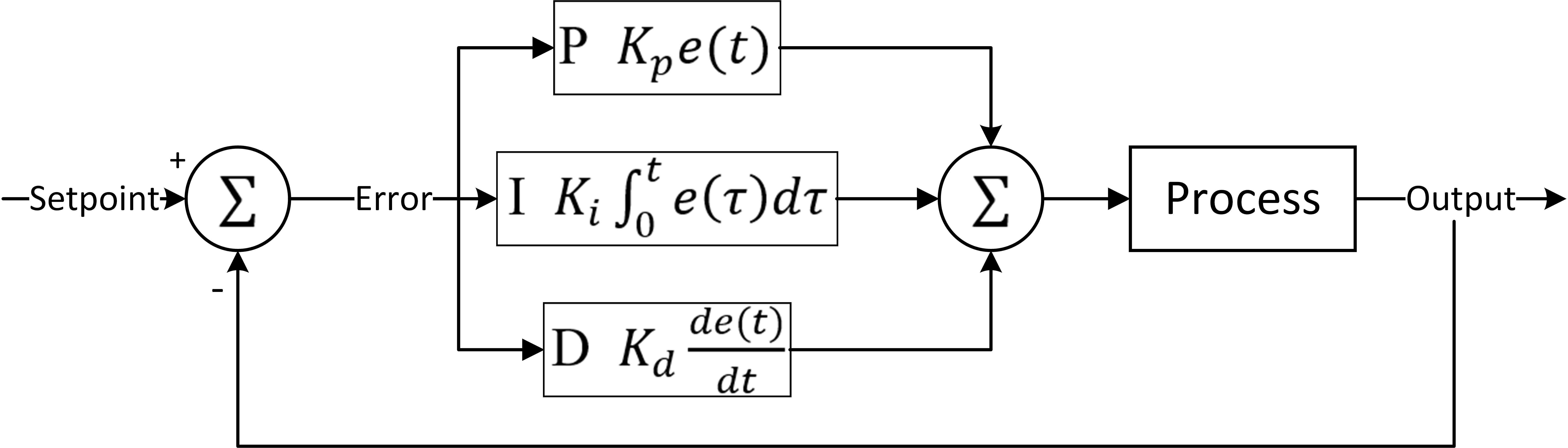
Systems vary depending on the changing operating conditions. Some include linear systems, which previous studies have proven can be controlled using conventional systems, while non-linear systems require expert and intelligent controllers. To verify this, the current study compares expert artificial neural networks (ANNs) with traditional PID controllers for controlling the rotational speed of an induction motor. Traditional PID controllers are simple and easy to implement, but they lack the ability to handle changing operating conditions and do not have the capacity to adapt to load fluctuations as expert systems such as neural networks do. They also have the ability to handle load disturbances and are considered more effective, efficient, and robust compared to traditional PID controllers. PID controllers are easy to adjust and simple in structure, and are widely used with linear industrial systems. PID controllers have degraded performance when the load changes, i.e., when the system is non-linear, their performance deteriorates. ANN, on the other hand, are characterized by their ability to adapt to varying conditions and changing loads. In non-linear systems, they have the ability to adapt and handle system disturbances. ANNs are expensive and require precise design, data for network architecture, and training. The feasibility of tracking induction motor speed is investigated using motor simulation models, conventional PID controllers, and expert neural networks, and the simulation results are analyzed and compared. The simulation results demonstrate that ANNs outperform PIDs in response speed and lower overshoot and undershoot limits under various operating conditions. From the above, it can be concluded that expert neural networks can effectively control and improve dynamic response of induction motors due to their adaptive and learning capabilities, and they can handle nonlinear systems such as changing load conditions. It is proposed to conduct simulation tests of an electric motor using MATLAB engineering software, by mathematically representing it using a transfer function according to characteristics suitable for applications similar to the proposed characteristics. Simulation tests are conducted for an open circuit system, a closed circuit system without control, and a closed circuit system with control. The second method involves self-tuning the conventional controller to achieve the best design by optimizing performance, response speed, overshoot rate, and rise time, according to the proposed operating algorithm. The results demonstrate the superiority of the neural network over conventional controllers.
References
H. Maghfiroh, A. Ma’arif, F. Adriyanto, I. Suwarsno, and W. Caesarendra, “Adaptive linear quadratic gaussian speed control of induction motor using fuzzy logic,” Journal Européen des Systèmes Automatisés, vol. 56, no. 4, p. 703, 2023, https://doi.org/10.18280/jesa.560420.
F. AtaAllah, M. Elsaadany, M. Q. Elahi, S. Mukhopadhyay and H. Rehman, "Nested FOPI and PI Controller Performance Comparison for Electric Vehicle Traction System," in IEEE Access, vol. 13, pp. 63310-63323, 2025, https://doi.org/10.1109/ACCESS.2025.3556174.
F. N. Abdullah, G. A. Aziz, and S. W. Shneen, “Simulation model of servo motor by using matlab,” Journal of Robotics and Control (JRC), vol. 3, no. 2, pp. 176-179, 2022, https://doi.org/10.18196/jrc.v3i2.13959.
A. Jaswal, M. Abu-Ayyad, Y. Lad and A. Attaluri, "Stepper Motor Position Control Using PD and MPC Algorithms Embedded in Programmable Logic Controller," in IEEE Access, vol. 13, pp. 39096-39106, 2025, https://doi.org/10.1109/ACCESS.2025.3544509.
M. H. Setiawan, A. Ma'arif, M. F. Saifuddin, and W. A. Salah, “A Comparative Study of PID, FOPID, ISF, SMC, and FLC Controllers for DC Motor Speed Control with Particle Swarm Optimization,” International Journal of Robotics and Control Systems, vol. 5, no. 1, pp. 640-660, 2025, https://doi.org/10.31763/ijrcs.v5i1.1764.
S. W. Shneen, H. S. Dakheel, and Z. B. Abdullah, “Design and implementation of no load, constant and variable load for DC servo motor,” Journal of Robotics and Control (JRC), vol. 4, no. 3, pp. 323-329, 2023, https://doi.org/10.18196/jrc.v4i3.17387.
A. Bandyopadhyay, “Speed Control of Brushless DC Motor Using PI Controller with Fuzzy Logic,’ In International Conference on Industry 4.0 and Advanced Manufacturing, pp. 371-383, 2024, https://doi.org/10.1007/978-981-97-7150-9_31.
M. I. Abdelwanis, “Optimizing the performance of six-phase induction motor-powered electric vehicles with fuzzy-PID and DTC,” Neural Computing and Applications, vol. 37, no. 16, pp. 9721-9734, 2025, https://doi.org/10.1007/s00521-024-10455-0.
H. S. Dakheel, S. W. Shneen, Z. B. Abdullah, and A. L. Shuraiji, “Evaluation of Voltage/Frequency and Voltage Source Inverter Control Strategies for Single-Phase Induction Motors Using MATLAB Simulation,” Journal of Robotics and Control (JRC), vol .5, no. 6, pp. 1910-1923, 2024, https://doi.org/10.18196/jrc.v5i6.23760.
A. M. Putra, H. Maradona, and R. A. Rohmah, “Comparison of Proportional Integral Derivative and Fuzzy Logic Controllers: A Literature Review on the Best Method for Controlling Direct Current Motor Speed,” International Journal of Robotics and Control Systems, vol. 5, no. 1, pp. 240-265, 2025, https://doi.org/10.31763/ijrcs.v5i1.1701.
A. Ma'arif and A. Çakan, “Simulation and arduino hardware implementation of dc motor control using sliding mode controller,” Journal of Robotics and Control (JRC), vol. 2, no. 6, pp. 582-587, 2021, https://doi.org/10.18196/jrc.26140.
Z. B. Abdullah, S. W. Shneen, and H. S. Dakheel, “Simulation model of PID controller for DC servo motor at variable and constant speed by using MATLAB,” Journal of Robotics and Control (JRC), vol. 4, no. 1, pp. 54-59, 2023, https://doi.org/10.18196/jrc.v4i1.15866.
I. D. Kurniasari and A. Ma'arif, “Implementing PID-Kalman Algorithm to Reduce Noise in DC Motor Rotational Speed Control,” International Journal of Robotics & Control Systems, vol. 4, no. 2, 2024, https://doi.org/10.31763/ijrcs.v4i2.1309.
F. Furizal, A. Ma'arif, D. Rifaldi, and A. A. Firdaus, “Comparison of Convolutional Neural Networks and Support Vector Machines on Medical Data: A Review,” International Journal of Robotics and Control Systems, vol. 4, no. 1, pp. 445-462, 2024, https://doi.org/10.31763/ijrcs.v4i1.1375.
A. L. Shuraiji and S. W. Shneen, “Fuzzy logic control and PID controller for brushless permanent magnetic direct current motor: a comparative study,” Journal of Robotics and Control (JRC), vol. 3, no. 6, pp. 762-768, 2022, https://doi.org/10.18196/jrc.v3i6.15974.
Y. Maamar et al., “Design, Modeling, and Simulation of A New Adaptive Backstepping Controller for Permanent Magnet Linear Synchronous Motor: A Comparative Analysis,” International Journal of Robotics and Control Systems, vol. 5, no. 1, pp. 296-310, 2025, https://doi.org/10.31763/ijrcs.v5i1.1425.
Y. Zahraoui, M. Moutchou, S. Tayane, C. Fahassa, and S. Elbadaoui, “Induction Motor Performance Improvement using Super Twisting SMC and Twelve Sector DTC,” International Journal of Robotics & Control Systems, vol. 4, no. 1, 2024, https://doi.org/10.31763/ijrcs.v4i1.1090.
S. W. Shneen, Z. B. Abdullah, and H. S. Dakheel, “Design and Implementation of Voltage Source Inverter Using Sinusoidal Pulse Width Modulation Technique to Drive A Single-Phase Induction Motor,” International Journal of Robotics & Control Systems, vol. 4, no. 4, 2024, https://doi.org/10.31763/ijrcs.v4i3.1541.
N. T. Pham and P. D. Nguyen, “A Novel Hybrid Backstepping and Fuzzy Control for Three Phase Induction Motor Drivers,” International Journal of Robotics & Control Systems, vol. 5, no. 1, 2025, https://doi.org/10.31763/ijrcs.v5i1.1707.
C. S. Kumar, S. Ravikrishna, P. Rajasekar and M. Venkatesan, “Prognostic Real Time Analysis of Induction Motor,” International Journal of Robotics and Control Systems, vol. 4, no. 1, pp. 139-150, 2024, https://doi.org/10.31763/ijrcs.v4i1.1252.
G. A. Aziz, F. N. Abdullah, and S. W. Shneen, “Performance Enhancement of DC Motor Drive Systems Using Genetic Algorithm-Optimized PID Controller for Improved Transient Response and Stability,” International Journal of Robotics & Control Systems, vol. 5, no. 1, 2025, https://doi.org/10.31763/ijrcs.v5i1.1602.
V. Velmurugan, M. Venkatesan, and N. N. Praboo, “Analysis and performance validation of CRONE controllers for speed control of a DC motor,” International Journal of Robotics and Control Systems, vol. 4, no. 2, pp. 558-580, 2024, https://doi.org/10.31763/ijrcs.v4i2.1343.
N. T. Pham, “Design of Novel STASOSM Controller for FOC Control of Dual Star Induction Motor Drives,” International Journal of Robotics & Control Systems, vol. 4, no. 3, 2024, https://doi.org/10.31763/ijrcs.v4i3.1443.
Z. A. Al-Dabbagh, and S. W. Shneen, “Design of a PID Speed Controller for BLDC Motor with Cascaded Boost Converter for High-Efficiency Industrial Applications,” International Journal of Robotics & Control Systems, vol. 5, no. 1, 2025, https://doi.org/10.31763/ijrcs.v5i1.1601.
F. R. Yaseen and H. Al-Khazraji, “Optimized Vector Control Using Swarm Bipolar Algorithm for Five-Level PWM Inverter-Fed Three-Phase Induction Motor,” International Journal of Robotics & Control Systems, vol. 5, no. 1, 2025, https://doi.org/10.31763/ijrcs.v5i1.1713.
S. W. Shneen and A. L. Shuraiji, “Simulation model for pulse width modulation-voltage source inverter of three-phase induction motor,” International Journal of Power Electronics and Drive Systems, vol. 14, no. 2, pp. 719-726, 2023, https://doi.org/10.11591/ijpeds.v14.i2.pp719-726.
A. Najem, A. Moutabir, and A. Ouchatti, “Simulation and Arduino Hardware Implementation of ACO, PSO, and FPA Optimization Algorithms for Speed Control of a DC Motor,” International Journal of Robotics & Control Systems, vol. 4, no. 3, 2024, https://doi.org/10.31763/ijrcs.v4i3.1483.
H. S. Dakheel, Z. B. Abdullah, and S. W. Shneen, “Advanced optimal GA-PID controller for BLDC motor,” Bulletin of Electrical Engineering and Informatics, vol. 12, no. 4, pp. 2077-2086, 2023, https://doi.org/10.11591/eei.v12i4.4649.
S. E. Mezaache and E. Zaidi, “Performance Enhancement of Dual-Star Induction Machines Using Neuro-Fuzzy Control and Multi-Level Inverters: A Comparative Study with PI Controllers,” International Journal of Robotics & Control Systems, vol. 5, no. 1, 2025, https://doi.org/10.31763/ijrcs.v5i1.1670.
M. S. Hossain et al., “Performance evaluation of a nearest level control-based TCHB multilevel inverter for PMSM motors in electric vehicle systems,” Results in Engineering, vol. 25, p. 103949, 2025, https://doi.org/10.1016/j.rineng.2025.103949.
S. W. Shneen, A. L. Shuraiji, and K. R. Hameed, “Simulation model of proportional integral controller-PWM DC-DC power converter for DC motor using matlab,” Indonesian Journal of Electrical Engineering and Computer Science, vol. 29, no. 2, pp. 725-734, 2023, https://doi.org/10.11591/ijeecs.v29.i2.pp725-734.
Q. S. Kadhim et al., “Optimum design of bearingless brushless DC motor modeling with dual loop controller using dragonfly optimizers,” e-Prime-Advances in Electrical Engineering, Electronics and Energy, vol. 11, p. 100942, 2025, https://doi.org/10.1016/j.prime.2025.100942.
S. W. Shneen, M. Q. Sulttan, and M. H. Jaber, “Variable speed control for 2Ph-HSM in RGS: a comparative simulation study,” International Journal of Electrical and Computer Engineering, vol. 10, no. 3, p. 2285, 2020, http://doi.org/10.11591/ijece.v10i3.pp2285-2295.
M. F. Elmorshedy, S. B. Mahajan, S. Vemparala, S. A. Hamad, D. J. Almakhles, and M. W. Lotfy, “An enhanced finite control set model predictive direct thrust control for linear induction motors,” Results in Engineering, vol. 26, p. 104590, 2025, https://doi.org/10.1016/j.rineng.2025.104590.
S. W. Shneen, H. S. Dakheel, and Z. B. Abdullah, “Simulation and modeling for controlling stepper motor with tuned PID by GWO: comparative study,” Int J Adv Appl Sci ISSN, vol. 2252, no. 8814, p. 8814, 2024, https://doi.org/10.11591/ijaas.v13.i2.pp234-248.
A. A. Mutlag, M. K. Abd, and S. W. Shneen, “Power Management and Voltage Regulation in DC Microgrid with Solar Panels and Battery Storage System,” Journal of Robotics and Control (JRC), vol. 5, no. 2, pp. 397-407, 2024, https://doi.org/10.18196/jrc.v5i2.20581.
S. W. Shneen, M. A. A. Hussein, J. A. Kadhum, and S. M. Ali, “Application of LFAC {16 2/3Hz} for electrical power transmission system: a comparative simulation study,” TELKOMNIKA (Telecommunication Computing Electronics and Control), vol. 17, no. 2, pp. 1055-1064, 2019, https://doi.org/10.12928/telkomnika.v17i2.10353.
H. S. Dakheel, Z. B. Abdullah, N. S. Jasim, and S. W. Shneen, “Simulation model of ANN and PID controller for direct current servo motor by using Matlab/Simulink,” TELKOMNIKA (Telecommunication Computing Electronics and Control), vol. 20, no. 4, pp. 922-932, 2022, https://doi.org/10.12928/telkomnika.v20i4.23248.
S. W. Shneen, “Advanced optimal for three phase rectifier in power-electronic systems,” Indonesian Journal of Electrical Engineering and Computer Science, vol. 11, no. 3, pp. 821-830, 2018, https://doi.org/10.11591/ijeecs.v11.i3.pp821-830.
R. F. Nadhim, M. K. Oudah, G. A. Aziz, and S. W. Shneen, “Improving TCP/AQM Network Stability Using BBO-Tuned FLC,” International Journal of Robotics and Control Systems, vol. 5, no. 2, pp. 763-780, 2025, https://doi.org/10.31763/ijrcs.v5i2.1761.
Y. A. Enaya, A. A. Karim, S. M. Saleh, and S. W. Shneen, “Adapting Wired TCP for Wireless Ad-hoc Networks Using Fuzzy Logic Control,” Journal Européen des Systèmes Automatisés, vol. 57, no. 5, p. 1377, 2024, https://doi.org/10.18280/jesa.570513.
A. L. Shuraiji and S. W. Shneen, “Fuzzy logic control and PID controller for brushless permanent magnetic direct current motor: a comparative study,” Journal of Robotics and Control (JRC), vol. 3, no. 6, pp. 762-768, 2022, https://doi.org/10.18196/jrc.v3i6.15974.
M. K. Oudah, S. W. Shneen, and S. A. Aessa, “Reduction of Large Scale Linear Dynamic MIMO Systems Using Adaptive Network Based Fuzzy Inference System,” International Journal of Robotics and Control Systems, vol. 5, no. 2, pp. 678-697, 2025, https://doi.org/10.31763/ijrcs.v5i2.1684.
Y. A. Enaya, A. A. Karim, M. Q. Sulttan, and S. W. Shneen, “Applying Proportional–Integral–Derivative Controllers on Wired Network TCP’s Queue to Solve Its Incompatibility with the Wireless Ad-Hoc Network,” ITEGAM-JETIA, vol. 10, no. 49, pp. 228-232, 2024, https://doi.org/10.5935/jetia.v10i49.1346.
S. Waley, C. Mao, and N. K. Bachache, “Biogeography based optimization for tuning FLC controller of PMSM,” In International Conference in Swarm Intelligence, pp. 395-402, 2015, https://doi.org/10.1007/978-3-319-20466-6_42.
A. Idoko, I. Thuku, S. Musa and C. Amos, “Design of tuning mechanism of PID controller for application in three phase induction motor speed control,” International Journal of Advanced Engineering Research and Science, vol. 4, no. 11, pp. 138-147, 2017, https://doi.org/10.22161/ijaers.4.11.21.
Published
How to Cite
Issue
Section
License
Copyright (c) 2025 Ahlam Luaibi Shuraiji, Salam Waley Shneen

This work is licensed under a Creative Commons Attribution-ShareAlike 4.0 International License.
Authors who publish with this journal agree to the following terms:
- Authors retain copyright and grant the journal right of first publication with the work simultaneously licensed under a Creative Commons Attribution License that allows others to share the work with an acknowledgment of the work's authorship and initial publication in this journal.
- Authors are able to enter into separate, additional contractual arrangements for the non-exclusive distribution of the journal's published version of the work (e.g., post it to an institutional repository or publish it in a book), with an acknowledgment of its initial publication in this journal.
- Authors are permitted and encouraged to post their work online (e.g., in institutional repositories or on their website) prior to and during the submission process, as it can lead to productive exchanges, as well as earlier and greater citation of published work (See The Effect of Open Access).

This journal is licensed under a Creative Commons Attribution-ShareAlike 4.0 International License.