A Blockchain-Enabled Internet of Things Framework for Enhancing Trust and Privacy in Social Work Case Management
DOI:
https://doi.org/10.12928/biste.v7i3.13653Keywords:
Consortium Blockchain, Trust Mechanisms, Privacy-Preserving Technologies, Smart Contract Automation, Inter-Agency CollaborationAbstract
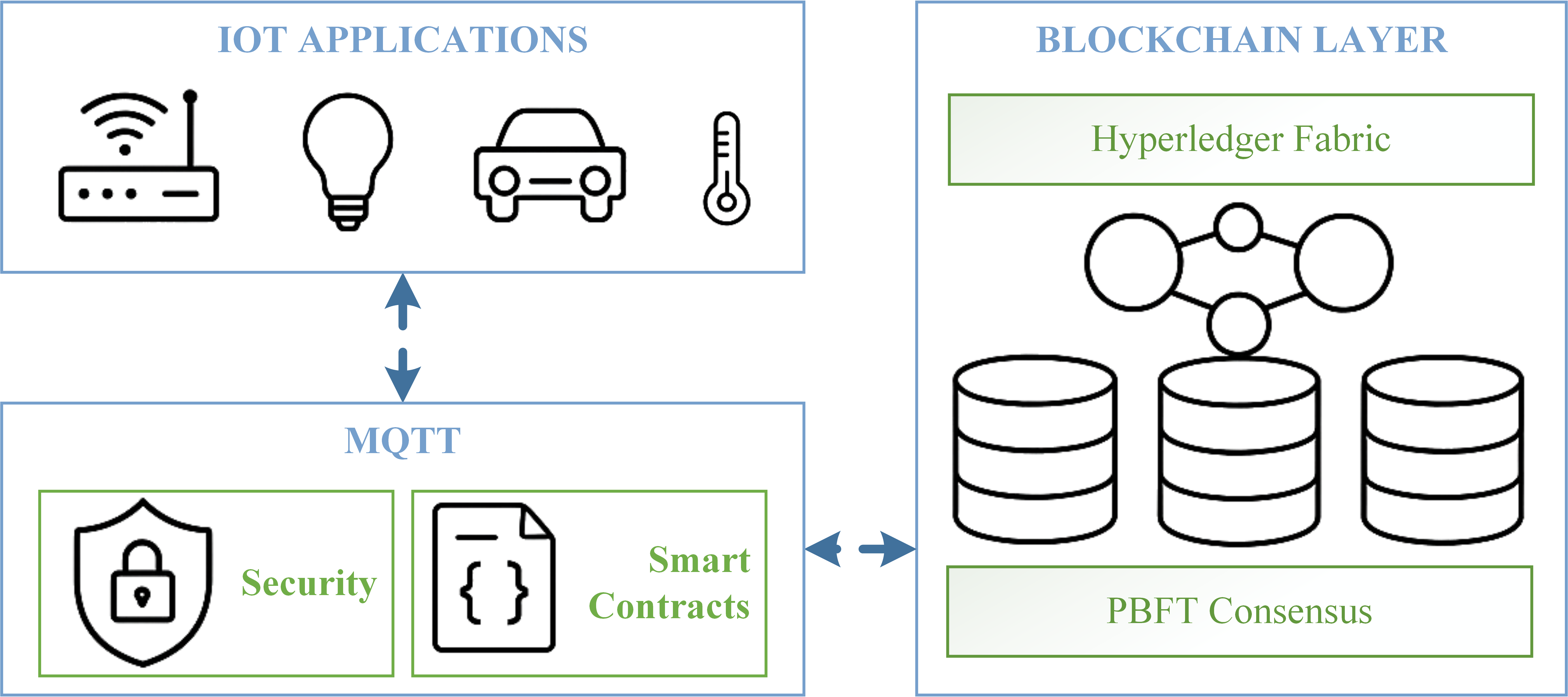
Traditional social work case management systems face critical challenges including data silos, security vulnerabilities, and insufficient inter-agency collaboration, limiting service efficiency and compromising client privacy protection. This study addresses these challenges by developing and evaluating a novel technological framework that integrates blockchain consortium networks with Internet of Things (IoT) devices to establish multi-party trust mechanisms and enhance service delivery. The research contribution is a comprehensive four-layer system architecture featuring 28 smart contracts, decentralized trust mechanisms, and privacy-preserving technologies including homomorphic encryption and differential privacy for social work applications. The methodology employed a mixed-methods approach involving system design and development, followed by a six-month pilot implementation across three social work institutions in Taiwan with 249 participants. Data collection encompassed quantitative performance metrics from system logs and IoT sensors, alongside qualitative feedback through interviews and focus groups. The blockchain network achieved 850 transactions per second with 99.2% system availability, significantly outperforming industry standards. Results demonstrated substantial operational improvements: 37.1% reduction in case processing time, 87.3% increase in service efficiency, and 26-fold increase in inter-agency collaboration frequency. The blockchain-based trust mechanism increased inter-agency data sharing willingness from 61.3% to 84.6%, while maintaining 100% anonymization coverage with 91.3% analytical accuracy. Cost-benefit analysis revealed a 2.8-year payback period with 41.2% return on investment. This research demonstrates the feasibility and effectiveness of blockchain-IoT integration in social work, providing a practical framework for digital transformation while ensuring data security and privacy protection in sensitive social service environments.
References
M. A. Saberi, H. Mcheick, and M. Adda, “From Data Silos to Health Records Without Borders: A Systematic Survey on Patient-Centered Data Interoperability,” Information, vol. 16, no. 2, p. 106, 2025, https://doi.org/10.3390/info16020106.
L. Komna and S. Mpungose, “Investigating the impact of digital transformation in the public sector: A case study of the State Information Technology Agency (SITA), South Africa,” International Journal of Business Ecosystem & Strategy, vol. 6, no. 4, pp. 218–234, 2024, https://doi.org/10.47741/ijbes.v6i4.610.
Q. Razi, R. Piyush, A. Chakrabarti, A. Singh, V. Hassija and G. S. S. Chalapathi, "Enhancing Data Privacy: A Comprehensive Survey of Privacy-Enabling Technologies," in IEEE Access, vol. 13, pp. 40354-40385, 2025, https://doi.org/10.1109/ACCESS.2025.3546618.
V. Wylde, N. Rawindaran, J. Lawrence, R. Balasubramanian, E. Prakash, A. Jayal, and J. Platts, “Cybersecurity, data privacy and blockchain: A review,” SN Computer Science, vol. 3, no. 2, p. 127, 2022, https://doi.org/10.1007/s42979-022-01020-4.
S. Prabowo et al., "Privacy-Preserving Tools and Technologies: Government Adoption and Challenges," in IEEE Access, vol. 13, pp. 33904-33934, 2025, https://doi.org/10.1109/ACCESS.2025.3540878.
M. H. P. Rizi and S. A. H. Seno, “A systematic review of technologies and solutions to improve security and privacy protection of citizens in the smart city,” Internet of Things, vol. 20, p. 100584, 2022, https://doi.org/10.1016/j.iot.2022.100584.
S. de Bell, S. Bell, Z. Zhelev, A. Bethel, J. T. Coon, J. Coon, and R. Anderson, “Factors influencing effective data sharing between health care and social care regarding the care of older people: a qualitative evidence synthesis,” Health and Social Care Delivery Research, vol. 12, no. 12, pp. 1-87, 2024, https://doi.org/10.3310/TTWG4738.
J. Bae, S. Lee, and C. J. W. Choi, “Expansion of Digital Technology Use in the Korean Social Work Field,” Journal of Social Service Research, vol. 51, no. 3, pp. 663-677, 2025, https://doi.org/10.1080/01488376.2024.2402520.
H. Belani, P. Šolić, E. Zdravevski, and V. Trajkovik, “Internet of Things Ontologies for Well-Being, Aging and Health: A Scoping Literature Review,” Electronics, vol. 14, no. 2, p. 394, 2025, https://doi.org/10.3390/electronics14020394.
V. Della Mea, M. H. Popescu, D. Gonano, T. Petaros, I. Emili, and M. G. Fattori, “A communication infrastructure for the health and social care internet of things: Proof-of-concept study,” JMIR Medical Informatics, vol. 8, no. 2, p. e14583, 2020, https://doi.org/10.2196/14583.
S. Choi, K. Kim, C. Kamyod, and C. G. Kim, “Ethical use of web-based welfare technology for caring elderly people who live alone in Korea: a case study,” Journal of Web Engineering, vol. 21, no. 4, pp. 1239-1264, 2022, https://doi.org/10.13052/jwe1540-9589.2141.
P. Thottempudi, R. M. Konduru, H. B. Valiveti, K. Swaraja, and V. Kumar, “Digital health resilience: IoT solutions in pandemic response and future healthcare scenarios,” Discover Sustainability, vol. 6, no. 144, 2025, https://doi.org/10.1007/s43621-025-00886-7.
J. C. D. Santos, “Blockchain for Enhancing Transparency and Accountability in Public Sector Governance,” in Enhancing Public Sector Accountability and Services Through Digital Innovation, pp. 73-128, 2025, https://doi.org/10.4018/979-8-3693-9251-5.ch003.
D. Bhumichai, C. Smiliotopoulos, R. Benton, G. Kambourakis, and D. Damopoulos, “The convergence of artificial intelligence and blockchain: The state of play and the road ahead,” Information, vol. 15, no. 5, p. 268, 2024, https://doi.org/10.3390/info15050268.
M. Thanasi-Boçe and J. Hoxha, “Blockchain for Sustainable Development: A Systematic Review,” Sustainability, vol. 17, no. 11, p. 4848, 2025, https://doi.org/10.3390/su17114848.
Y. Saidu, S. M. Shuhidan, D. A. Aliyu, I. A. Aziz, and S. Adamu, “Convergence of Blockchain, IoT, and AI for Enhanced Traceability Systems: A Comprehensive Review,” IEEE Access, vol. 13, pp. 78541-78559, 2025, https://doi.org/10.1109/ACCESS.2025.3342689.
T. Kukman and S. Gričar, “Blockchain for Quality: Advancing Security, Efficiency, and Transparency in Financial Systems,” FinTech, vol. 4, no. 1, p. 7, 2025, https://doi.org/10.3390/fintech4010007.
C. A. Marino and C. Diaz Paz, “Smart Contracts and Shared Platforms in Sustainable Health Care: Systematic Review,” JMIR Medical Informatics, vol. 13, p. e58575, 2025. https://doi.org/10.2196/58575.
L. K. Tong, H. L. Tam, and A. M. Mao, “A Bibliometric Review of Person-Centered Care Research 2010–2024,” Healthcare, vol. 13, no. 11, p. 1267, May 2025, https://doi.org/10.3390/healthcare13111267.
T. C. Lin, L. L. Hwang, H. D. Dai, and Y. C. Sang, “Daily care information system requirements: professional service-driven service blueprint approach,” Applied Clinical Informatics, vol. 12, no. 04, pp. 960-968, 2021, https://doi.org/10.1055/s-0041-1736222.
T. L. Chen, Y. H. Feng, S. L. Kao, J. W. Lu, and C. H. Loh, “Impact of integrated health care on elderly population: A systematic review of Taiwan’s experience,” Archives of Gerontology and Geriatrics, vol. 102, p. 104746, 2022, https://doi.org/10.1016/j.archger.2022.104746.
J. C. D. Santos, “Blockchain for Enhancing Transparency and Accountability in Public Sector Governance,” in Enhancing Public Sector Accountability and Services Through Digital Innovation, pp. 73-128, 2025, https://doi.org/10.4018/979-8-3693-9251-5.ch003.
R. Shevchuk, I. Lishchynskyy, M. Ciura, M. Lyzun, R. Kozak, and M. Kasianchuk, “Application of Blockchain Technology in Emergency Management Systems: A Bibliometric Analysis,” Applied Sciences, vol. 15, no. 10, p. 5405, 2025, https://doi.org/10.3390/app15105405.
B. Dziundziuk and V. Dziundziuk, “Methodology for integrating blockchain into digital governance systems: analysis of challenges, benefits, and opportunities for society,” Science and Public Policy, vol. scaf022, 2025, https://doi.org/10.1093/scipol/scaf022.
A. P. Rodriguez Müller, J. Martin Bosch, and L. Tangi, “An overview of the expected public values arising from blockchain adoption in the European public sector,” International Journal of Public Sector Management, vol. 38, no. 1, pp. 53-76, 2025, https://doi.org/10.1108/IJPSM-12-2023-0363.
M. Thanasi-Boçe and J. Hoxha, “Blockchain for Sustainable Development: A Systematic Review,” Sustainability, vol. 17, no. 11, p. 4848, 2025, https://doi.org/10.3390/su17114848.
F. O. Martínez-Ríos, J. A. Marmolejo-Saucedo, and G. Abascal-Olascoaga, “A New Protocol Based on Blockchain Technology for Transparent Operation of Corporate Social Responsibility,” in Strategy, Power and CSR: Practices and Challenges in Organizational Management, pp. 205-233, 2020, https://doi.org/10.1108/978-1-83867-973-620201012.
V. G. Venkatesh, K. Kang, B. Wang, R. Y. Zhong, and A. Zhang, “System architecture for blockchain based transparency of supply chain social sustainability,” Robotics and Computer-Integrated Manufacturing, vol. 63, p. 101896, 2020, https://doi.org/10.1016/j.rcim.2019.101896.
A. I. Aljumah, “Investigating the impact of blockchain technology on social sustainability and the mediating role of ethics and CSR,” Sustainability, vol. 15, no. 21, p. 15510, 2023, https://doi.org/10.3390/su152115510.
P. Sarajoti, P. Chatjuthamard, S. Papangkorn, and P. Phiromswad, “CSR reporting and blockchain technology,” in Corporate Social Responsibility in the 21st Century, IntechOpen, 2023, https://doi.org/10.5772/intechopen.105512.
C. A. Marino, and C. Diaz Paz, “Smart Contracts and Shared Platforms in Sustainable Health Care: Systematic Review,” JMIR Medical Informatics, vol. 13, e58575, 2025, https://doi.org/10.2196/58575.
S. A. Baker, K. H. Thanoon, M. N. Abed, M. Almansor, T. Y. Abdulqader, and O. I. Alsaif, “A Secure and Privacy-Centric Blockchain Platform for Cloud-Based Healthcare Data Management,” in 2024 International Conference on IT Innovation and Knowledge Discovery (ITIKD), pp. 1-5, 2024, https://doi.org/10.1109/ITIKD54389.2024.11004752.
M. Munawar, T. M. Singh, C. K. K. Reddy, and S. Doss, “Blockchain for Healthcare: Safe Data Sharing in the AIoMT Era,” in Utilizing AI of Medical Things for Healthcare Security and Sustainability, M. Ouaissa, M. Ouaissa, M. Imad, J. Qurashi, and M. Farooq, Eds., Hershey, PA: IGI Global, pp. 369-400, 2025, https://doi.org/10.4018/979-8-3373-0690-2.ch012.
N. Y. Philip, J. J. P. C. Rodrigues, H. Wang, S. J. Fong, and J. Chen, “Internet of Things for In-Home Health Monitoring Systems: Current Advances, Challenges and Future Directions,” IEEE Journal on Selected Areas in Communications, vol. 39, no. 2, pp. 300-310, 2021, https://doi.org/10.1109/JSAC.2020.3042421.
V. Della Mea, M. Popescu, D. Gonano, T. Petaros, I. Emili, and M. G. Fattori, “A Communication Infrastructure for the Health and Social Care Internet of Things: Proof-of-Concept Study,” JMIR Med Inform, vol. 8, no. 2, p. e14583, 2020, https://doi.org/10.2196/14583.
S.-A. Moraru et al., “Using IoT Assistive Technologies for Older People Non-Invasive Monitoring and Living Support in Their Homes,” International Journal of Environmental Research and Public Health, vol. 19, no. 10, p. 5890, 2022, https://doi.org/10.3390/ijerph19105890.
H. Belani, P. Šolić, E. Zdravevski, and V. Trajkovik, “Internet of Things Ontologies for Well-Being, Aging and Health: A Scoping Literature Review,” Electronics, vol. 14, no. 2, p. 394, 2025, https://doi.org/10.3390/electronics14020394.
Y. Park and J. Han, “Smart Home Advancements for Health Care and Beyond: Systematic Review of Two Decades of User-Centric Innovation,” J Med Internet Res, vol. 27, e62793, 2025, https://doi.org/10.2196/62793.
M. Jovanovic et al., “Ambient Assisted Living: Scoping Review of Artificial Intelligence Models, Domains, Technology, and Concerns,” J Med Internet Res, vol. 24, no. 11, p. e36553, 2022, https://doi.org/10.2196/36553.
Z. Li and Z. Zhang, “Research and Implementation of Multi-chain Digital Wallet Based on Hash TimeLock,” in Blockchain and Trustworthy Systems, pp. 181-194, 2020, https://doi.org/10.1007/978-981-15-2777-7_15.
W. H. Delone and E. R. McLean, “The DeLone and McLean Model of Information Systems Success: A Ten-Year Update,” Journal of Management Information Systems, vol. 19, no. 4, pp. 9-30, 2003, https://doi.org/10.1080/07421222.2003.11045748.
Y. Pan, W. Wei, Y. Liu, and C. Zhu, “Hybrid consensus algorithm based on hierarchy authority,” in 2021 IEEE International Conference on Electronic Technology, Communication and Information (ICETCI), pp. 553–559, 2021, https://doi.org/10.1109/ICETCI53161.2021.9563559.
A. Bogdanov, N. Shchegoleva, V. Khvatov, J. Kiyamov, and A. Dik, “Combining PBFT and Raft for Scalable and Fault-Tolerant Distributed Consensus,” Physics of Particles and Nuclei, vol. 55, no. 3, pp. 418-420, 2024, https://doi.org/10.1134/S1063779624030225.
A. S. Isravel, D. P. and J. P. M. Dhas, “Quorum-based Tier Approach: Integrating PBFT and PoS in a Hybrid Consensus Mechanism,” in 2024 3rd International Conference on Automation, Computing and Renewable Systems (ICACRS), pp. 147-154, 2024, https://doi.org/10.1109/ICACRS62842.2024.10841565.
W. Sun et al., “An improved PBFT consensus mechanism with trust value evaluation application in the agricultural product trusted traceability system,” Journal of High Speed Networks, vol. 29, no. 4, pp. 321-336, 2023, https://doi.org/10.3233/JHS-222077.
J. Tan, S. B. Goyal, A. Singh Rajawat, T. Jan, N. Azizi, M. Prasad, “Anti-Counterfeiting and Traceability Consensus Algorithm Based on Weightage to Contributors in a Food Supply Chain of Industry 4.0,” Sustainability, vol. 15, no. 10, 7855, 2023, https://doi.org/10.3390/su15107855.
B. Shan, T. Gao, L. Song, and Y. Cui, “Grouped Byzantine Fault-Tolerant Consensus Mechanism Based on Node Behaviour Analysis,” in 2025 4th International Symposium on Computer Applications and Information Technology (ISCAIT), pp. 1890-1895, 2025, https://doi.org/10.1109/ISCAIT64916.2025.11010760.
X. Gu, T. Kang, A. Zhou, and L. Guo, “Consensus Node Group Selection and Adjustment Algorithm Based on Dual Random Selection Mechanism,” Proceedings of the 2023 9th International Conference on Communication and Information Processing (ICCIP ‘23), pp. 407-414, 2024, https://doi.org/10.1145/3638884.3638947.
N. Sun, Q. Hu, L. Yao, Improved Practical Byzantine Fault Tolerance Consensus Mechanism with Two-stage Verification. International Journal of Frontiers in Engineering Technology, vol. 4, no. 5, 2022, https://doi.org/10.25236/IJFET.2022.040512.
H. Luo, X. Yang, H. Yu, G. Sun, S. Xu, and L. Luo, “Performance Analysis of Non-ideal Wireless PBFT Networks with mmWave and Terahertz Signals,” 2023 IEEE International Conference on Metaverse Computing, Networking and Applications (MetaCom), pp. 104-108, 2023, https://doi.org/10.1109/MetaCom57706.2023.00030.
J. Tan, S. B. Goyal, A. Singh Rajawat, T. Jan, N. Azizi, and M. Prasad, “Anti-Counterfeiting and Traceability Consensus Algorithm Based on Weightage to Contributors in a Food Supply Chain of Industry 4.0,” Sustainability, vol. 15, no. 10, p. 7855, 2023, https://doi.org/10.3390/su15107855.
Z. Zhang, D. Zhu, and W. Fan, “QPBFT: Practical Byzantine Fault Tolerance Consensus Algorithm Based on Quantified-Role,” in 2020 IEEE 19th International Conference on Trust, Security and Privacy in Computing and Communications (TrustCom), pp. 991-997, 2020, https://doi.org/10.1109/TrustCom50675.2020.00132.
S. Subha, S. B. Priya, “Comparative Analysis of Supervised Machine Learning Algorithms for Evaluating the Performance Level of Students,” 2021 Fifth International Conference on I-SMAC (IoT in Social, Mobile, Analytics and Cloud) (I-SMAC), pp. 1-10, 2021, https://doi.org/10.1109/I-SMAC52330.2021.9640798.
N. Nasution, M. A. Hasan, F. Bakri Nasution, “Predicting Heart Disease Using Machine Learning: An Evaluation of Logistic Regression, Random Forest, SVM, and KNN Models on the UCI Heart Disease Dataset,” IT Journal Research and Development, vol. 9, no. 2, pp. 140–150, 2025, https://doi.org/10.25299/itjrd.2025.17941.
M. H. Ting, C. M. Chu, G. Zeng, D. Li, and G. S. Chng, “Predicting recidivism among youth offenders: Augmenting professional judgement with machine learning algorithms,” Journal of Social Work, vol. 18, no. 6, pp. 631-649, 2017, https://doi.org/10.1177/1468017317743137.
D. Mehta, “A Comparative Study of Machine Learning Algorithms for Predictive Healthcare: Applications in Diabetes Management and Breast Cancer Detection,” Saudi J Med, Vol. 10, No. 2, pp. 59-67, 2025, https://doi.org/10.36348/sjm.2025.v10i02.005.
O. A. Bukhari, A. O. Maghraby, “Using Machine Learning for Automatic Correction of Numerical Analysis Assignments Towards Sustainable Education Development,” 2022 Fifth National Conference of Saudi Computers Colleges (NCCC), pp. 47-51, 2022, https://doi.org/10.1109/NCCC57165.2022.10067409.
M. Nuwasiima, M. P. Ahonon, and C. Kadiri, “The Role of Artificial Intelligence (AI) and machine learning in social work practice,” World Journal of Advanced Research and Reviews, vol. 24, no. 01, pp. 080–097, 2024, https://doi.org/10.30574/wjarr.2024.24.1.2998.
C. S. Kumar and R. J. Sree, “Assessment of Performances of Various Machine Learning Algorithms During Automated Evaluation of Descriptive Answers,” ICTACT Journal on Soft Computing, vol. 4, no. 4, 2014, https://doi.org/10.21917/ijsc.2014.0111.
A. Goldsteen, G. Ezov, R. Shmelkin, et al., Data minimization for GDPR compliance in machine learning models, AI Ethics, Vol. 2, pp. 477–491, 2022, https://doi.org/10.1007/s43681-021-00095-8.
M. R. Juliansyah, A. Pratama, R. I. Putra, M. Y. A. Putra, and M. F. Fathurrahman, “A Performance Analysis of Hyperledger Fabric for Blockchain-Based Concert Ticketing Systems,” 2024 International Conference on Electrical Engineering and Computer Science (ICECOS), pp. 147-151, 2024, https://doi.org/10.1109/ICECOS63900.2024.10791096.
S. Ghosh and M. Dutta, “Indriya: Building a Secure and Transparent Organ Donation System with Hyperledger Fabric,” TechRxiv, 2023, https://doi.org/10.36227/techrxiv.22225999.v1.
B. I. Onyeashie, M. Abubakar, P. Leimich, S. McKeown and G. Russell, “Privacy-Preserving and Scalable Digital Evidence Management: A Hyperledger Fabric Architecture with Growth Projections for Law Enforcement,” International Conference on New Trends in Computing Sciences (ICTCS), pp. 105-112, 2025, https://doi.org/10.1109/ICTCS65341.2025.10989348.
D. Kelsey, “Benchmarking Hyperledger Fabric 2.5 Performance,” Hyperledger Foundation Blog, 2023. https://www.lfdecentralizedtrust.org/blog/2023/02/16/benchmarking-hyperledger-fabric-2-5-performance.
A. A. A. Dallaf, “Edge Computing in IoT Networks: Enhancing Efficiency, Reducing Latency, and Improving Scalability,” International Journal of Advanced Network, Monitoring and Controls, vol. 10, no. 1, pp. 103-115, 2025, https://doi.org/10.2478/ijanmc-2025-0009.
M. M. Khan, F. S. Khan, M. Nadeem, T. H. Khan, S. Haider, and D. Daas, “Scalability and Efficiency Analysis of Hyperledger Fabric and Private Ethereum in Smart Contract Execution,” Computers, vol. 14, no. 4, pp. 132, 2025, https://doi.org/10.3390/computers14400132.
A. A. Salih and Y. Wang, “BDLS as a Blockchain Finality Gadget: Improving Byzantine Fault Tolerance in Hyperledger Fabric,” IEEE Access, vol. 12, pp. 154600-154613, 2024, https://doi.org/10.1109/ACCESS.2024.3481319.
A. F. Abdulqader, S. H. Ahmed, and M. A. Khan, “Optimizing IoT Performance Through Edge Computing: Reducing Latency, Enhancing Bandwidth Efficiency, and Strengthening Security for 2025 Applications,” 2024 36th Conference of Open Innovations Association (FRUCT), pp. 145–158, 2024, https://doi.org/10.23919/FRUCT64283.2024.10749858.
K. P. B. Kanagarla, Edge Computing and Analytics for IoT Devices: Enhancing Real-Time Decision Making in Smart Environments. 2024. https://doi.org/10.2139/ssrn.5012466.
S. N., M. G., V. M., M. Shaid, S. Purushothman, and V. G. Sanjai, “Accurate Prediction and Detection of Suicidal Risk using Random Forest Algorithm,” 2024 4th International Conference on Pervasive Computing and Social Networking (ICPCSN), pp. 287–292, 2024, https://doi.org/10.1109/ICPCSN62568.2024.00053.
M. Abdulla-Hil-Kafi, M. A. Sheakh, M. A. Oishe, M. M. Islam, M. M. R. Foysal, and T. Sarwar, “Classification of Maternal Health Risk Factors Using Machine Learning Approach,” 2024 International Conference on Social and Sustainable Innovations in Technology and Engineering (SASI-ITE), pp. 1–6, 2024, https://doi.org/10.1109/SASI-ITE58663.2024.00009.
V. A. R., S. Yerra, S. N. G., Gandikota, P. Advancements in Heart Disease Prediction: A Machine Learning Approach for Early Detection and Risk Assessment. Int. J. Sci. Res. (IJSR), vol. 13, no. 10, pp. 774–780, 2024, https://www.doi.org/10.21275/SR241004171836.
T. Zhang, D. Wang, Y. Lu, Machine learning-enabled regional multi-hazards risk assessment considering social vulnerability, Scientific Reports, vol. 13, p. 13405, 2023, https://doi.org/10.1038/s41598-023-40159-9.
O. Kalaycıoğlu, S. E. Akhanlı, E. Y. Menteşe, M. Kalaycıoğlu, and S. Kalaycıoğlu, “Using machine learning algorithms to identify predictors of social vulnerability in the event of a hazard: Istanbul case study,” Nat. Hazards Earth Syst. Sci., vol. 23, pp. 2133–2156, 2023, https://doi.org/10.5194/nhess-23-2133-2023.
L. Li, M. Wang, M. Jian, “Artificial Intelligence-Assisted Case Management in Social Work Services: A Systematic Review,” Research on Social Work Practice, p. 10497315251329531, 2025, https://doi.org/10.1177/10497315251329531.
A. Ranerup, L. Svensson, “Automated decision-making, discretion and public values: a case study of two municipalities and their case management of social assistance,” European Journal of Social Work, vol. 26, no. 5, pp. 948–962, 2023, https://doi.org/10.1080/13691457.2023.2185875.
W. S. N. Wati, B. Santoso, and D. Cahyono, “Evaluation Hospital Information System Implementation Using Technology Acceptance Model to Enhance Patient Satisfaction,” SENTRALISASI, vol. 14, no. 2, pp. 49–69, 2025, https://doi.org/10.33506/sl.v14i2.4232.
N. E. Özdemir, G. Cerev, D. B. Sarıipek, and S. Tosun, “Blockchain Technology and Social Policy Transformation: A Critical Examination and Recommendations,” Sosyal Siyaset Konferansları Dergisi, no. 87, pp. 15–23, 2024, https://doi.org/10.26650/jspc.2024.87.1468729.
C. A. Marino, C. Diaz Paz, “Smart Contracts and Shared Platforms in Sustainable Health Care: Systematic Review,” JMIR Medical Informatics, vol. 13, p. e58575, 2025, https://doi.org/10.2196/58575.
P. Sharma, S. S. A. S. S. Ali, “Enhancing Pharmaceutical Supply Chains through Blockchain Technology on Hyperledger Fabric Implementation,” Journal of Angiotherapy, vol. 8, no. 9, pp. 1–7, 2024, https://doi.org/10.25163/angiotherapy.899872.
A. N. Murphy, M. A. Scotellaro, M. Carroll, and H. J. Risser, “A critical examination of Illinois’ child welfare information systems and its utility for identifying and monitoring children and youth with special health care needs for front- and back-end users,” Disability and Health Journal, vol. 17, no. 1, p. 101537, 2024, https://doi.org/10.1016/j.dhjo.2023.101537.
K.H.B. Chor et al., “Exploring Machine Learning to Support Decision-Making for Placement Stabilization and Preservation in Child Welfare,” Journal of Child and Family Studies, vol. 34, pp. 282–297, 2025, https://doi.org/10.1007/s10826-024-02993-x.
M. Goulbourne et al., “Deliberate Self-Harm Among Youth in the Child Welfare System,” JAACAP Open, 2025, https://doi.org/10.1016/j.jaacop.2025.04.002.
T. L. Quy et al., “Transforming Child Health Records: Integrating Blockchain, NFTs, and IPFS for Enhanced Medical Data Management,” in Mobile, Secure, and Programmable Networking. MSPN 2023. Lecture Notes in Computer Science, vol. 14482, 2024, https://doi.org/10.1007/978-3-031-52426-4_9.
E. Anastasopoulou, A. Tsagri, and E. Mitroyanni, “Transforming Greek Primary Education through Information Systems: Trends and Challenges,” Asian Journal of Education and Social Studies, vol. 51, no. 6, pp. 43-61, 2025, https://doi.org/10.9734/ajess/2025/v51i61978.
D. Laumann et al., “Mobile learning in the classroom – Should students bring mobile devices for learning, or should these be provided by schools?,” Educ. Inf. Technol., vol. 30, pp. 9463–9496, 2025, https://doi.org/10.1007/s10639-024-13213-w.
B. Wang, B. Jiang, D. Liu, and R. Zhu, “Early Predictive Accuracy of Machine Learning for Hemorrhagic Transformation in Acute Ischemic Stroke: Systematic Review and Meta-Analysis,” J Med Internet Res, vol. 27, p. e71654, 2025, https://doi.org/10.2196/71654.
Published
How to Cite
Issue
Section
License
Copyright (c) 2025 Yih-Chang Chen, Chia-Ching Lin

This work is licensed under a Creative Commons Attribution-ShareAlike 4.0 International License.
Authors who publish with this journal agree to the following terms:
- Authors retain copyright and grant the journal right of first publication with the work simultaneously licensed under a Creative Commons Attribution License that allows others to share the work with an acknowledgment of the work's authorship and initial publication in this journal.
- Authors are able to enter into separate, additional contractual arrangements for the non-exclusive distribution of the journal's published version of the work (e.g., post it to an institutional repository or publish it in a book), with an acknowledgment of its initial publication in this journal.
- Authors are permitted and encouraged to post their work online (e.g., in institutional repositories or on their website) prior to and during the submission process, as it can lead to productive exchanges, as well as earlier and greater citation of published work (See The Effect of Open Access).

This journal is licensed under a Creative Commons Attribution-ShareAlike 4.0 International License.