The role of islamic education to address antisocial behaviors in students
DOI:
https://doi.org/10.26555/almisbah.v13i1.12697Keywords:
Antisocial Behavior, Student Attitudes, Educational Environment, Humility (Tawadhu'), Islamic Education, Prevention, Teacher Role ModelsAbstract
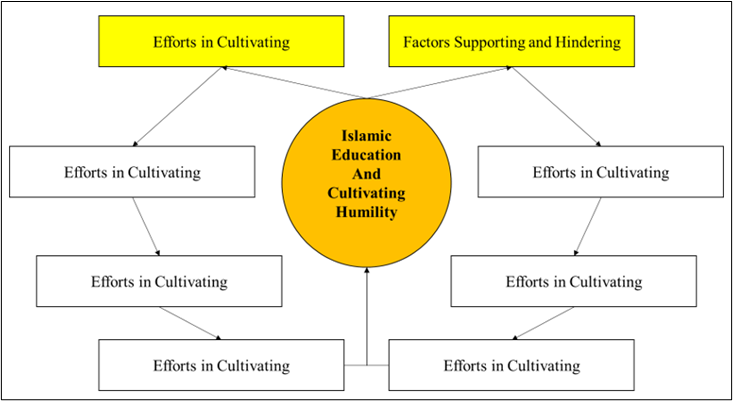
This research examines the growing concern of students displaying antisocial behaviors, such as truancy and school suspensions, which stem from their disregard for teachers' advice. The study focuses on two main aspects: the efforts of MTs Muhammadiyah Kasihan in fostering Tawadhu' (humility) among students and the factors influencing its development. Employing qualitative research methods, this study aims to gain a holistic understanding of the experiences of research subjects, including their behaviors, perceptions, motivations, and actions within a natural context. The findings reveal that the madrasah cultivates Tawadhu' through teacher role models, handshaking etiquette, and continuous guidance. The development of Tawadhu' is influenced by various factors, including the family environment, school environment, and community environment. This research underscores the significance of nurturing humility in students as a means to mitigate antisocial behaviors, highlighting the crucial role of teachers and structured guidance in educational institutions. However, the findings are limited to the specific context of MTs Muhammadiyah Kasihan and may not be universally applicable. This study contributes to the understanding of Tawadhu' cultivation and its role in addressing student behavior, emphasizing the importance of teachers and the environment in shaping students' attitudes. The insights provided can inform educational institutions and policymakers in developing strategies to foster positive student behavior.
References
Abu Faqih, K. (n.d.). Tangga Kemuliaan Menuju Tawadhu. Al-Itishom.
Adhimah, S. (2020). Peran orang tua dalam menghilangkan rasa canggung anak usia dini (studi kasus di desa karangbong rt. 06 rw. 02 Gedangan-Sidoarjo). Jurnal Pendidikan Anak, 9(1), 57–62. https://doi.org/10.21831/jpa.v9i1.31618
Adililham, A. (2023). The Role of Parents in Shaping a Child’s Personality in Islam. International Journal of Education, Vocational and Social Science, 2(03), 229–241.
Ajhuri, K. F. (2019). Psikologi Perkembangan Pendekatan Sepanjang Rentang Kehidupan (Lukman (ed.)). Penebar Media Pustaka.
Ardiansyah, A., & Cahyanto, B. (n.d.). Generative Learning Strategies To Improve Students’ Cognitive Engagement In Online Classes At Islamic School: A Systematic Review. Jurnal Pendidikan Agama Islam, 20(1), 74–89.
As’ad, A. (2007). Terjemah Ta’limul Muta'aliim, Bimbingan Bagi Penuntut Ilmu Pengetahuan. Menara Kudus.
Bachri, B. S. (2010). Meyakinkan Validitas Data Melalui Triangulasi Pada Penelitian Kualitatif. Teknologi Pendidikan, 10, 46–62.
Bahri Djamarah, S. (2000). Guru Dan Anak Didik Dalam Interaksi Edukatif. Rineka Cipta.
Bakah, W. R. (2020). Etika Murid Kepada Guru Dalam Surah Al-Kahfi Ayat 65-70 Dan Implementasinya Pada Pendidikan Modern. Jurnal Ilmiah Mahasiswa Raushan Fikr, 9(1), 93–108. https://doi.org/10.24090/jimrf.v9i1.4136
Dasopang, M. D., Lubis, A. H., & Dasopang, H. R. (2022). How do Millennial Parents Internalize Islamic Values in Their Early Childhood in the Digital Era? AL-ISHLAH: Jurnal Pendidikan. https://doi.org/10.35445/alishlah.v14i1.1062
Fadillah, D., Atmantika, Z. H., & Nuryana, Z. (2023). Strengthening spiritual and cultural approaches in managing mental health during the COVID-19 pandemic. Mental Health, Religion & Culture, 26(7), 721–723. https://doi.org/10.1080/13674676.2023.2252348
Fatimah, N. (2015). Konsep Pendidikan Dalam Al-Qur’an Menurut H. M. Quraish Shihab.
Fletcher, S. K. (2004). Religion and life meaning: Differentiating between religious beliefs and religious community in constructing life meaning. Journal of Aging Studies. https://doi.org/10.1016/j.jaging.2004.01.005
Grossmann, K., Grossmann, K. E., Fremmer-Bombik, E., Kindler, H., Scheuerer-Englisch, H., & Zimmermann, P. (2002). The uniqueness of the child-father attachment relationship: Fathers’ sensitive and challenging play as a pivotal variable in a 16-year longitudinal study. Social Development. https://doi.org/10.1111/1467-9507.00202
Grusec. (2009). The development of moral behavior and conscience from a socialization perspective. In M. Killen & J. Smetana (Eds.), Handbook of moral development. Hillsdale, NJ: Erlbaum (pp. 241-265),2005.
Hidayati, R., Rahman, A., & Zalik Nuryana, Y. (2022). Character education and the rise of mental health in Muhammadiyah Boarding School. International Journal of Public Health, 11(1), 170–178.
Hoffman, M. L., & Saltzstein, H. D. (1967). Parent discipline and the child’s moral development. Journal of Personality and Social Psychology, 5(1), 45–57. https://doi.org/10.1037/h0024189
Ikhwan, A., Biantoro, O. F., & Rohmad, A. (2019). The Role of the Family in Internalizing Islamic Values. Dinamika Ilmu. https://doi.org/10.21093/di.v19i2.1746
Koedinger, K. R., & Nathan, M. J. (2004). The Real Story behind Story Problems: Effects of Representations on Quantitative Reasoning. Journal of the Learning Sciences. https://doi.org/10.1207/s15327809jls1302_1
Maarif, M. A., Wardi, M., & Amartika, S. (2020). The Implementation Strategy of Religious Culture in Madrasah. Tarbawi: Jurnal Keilmuan Manajemen Pendidikan. https://doi.org/10.32678/tarbawi.v6i02.2962
Maghfiroh, R. (2020). Penanaman Nilai-Nilai Keagamaan Siswa SDIT KH. Abdurahman Mahmud Cirebon. Tsaqafatuna, 2, 19–7.
Mahfud, C., Rohani, I., Nuryana, Z., Baihaqi, M., & Munawir, M. (2023). Islamic education for disabilities: new model for developing Islamic parenting in Integrated Blind Orphanage of Aisyiyah. Indonesian Journal of Islam and Muslim Societies, 13(1), 115–142. https://doi.org/10.18326/ijims.v13i1.115-142
Mahfudz, M. (2022). The Role of PAI Teachers in Instilling the Spiritual Attitude of Students at SMP Ikhlasiyah Palembang. Edukasi Islami: Jurnal Pendidikan Islam, 11(02).
Malang, T. dosen F.-I. (1988). Pengantar Dasar-dasar Kependidikan. Usaha Nasional.
Malik, A. (2009). Tata Cara Merawat Balita. Gara Ilmu.
Mulyadi, E. (2018). Strategi Pengembangan Budaya Religius di Madrasah. Jurnal Kependidikan, 6(1), 1–14. https://doi.org/10.24090/jk.v6i1.1688
Murzal. (2022). Upaya Guru Dalam Penanaman Nilai Keagamaan Pada Anak di TPQ Saprul Aziz Assuja Nwi Perempung. El-Midad: Jurnal PGMI, 14, 70–79.
Nandya, A. (2010). Etika Murid Terhadap Guru (Analisa Kitab Ta’lim Muta'allim Karangan Syaikh Az-Zarnuji. Mudarrisa, 11.
Nisa, C. (2019). Implementasi Budaya Religius Dalam Meningkatkan Kedisiplinan Sisw dI MA Miftahussalam Kambeng, Slahung, Ponorogo.
Sahlan, A. (2010). Mewujudkan Budaya Religius di Sekolah. UIN-MALIKI PRESS.
Suyadi, Nuryana, Z., Sutrisno, & Baidi. (2022). Academic reform and sustainability of Islamic higher education in Indonesia. International Journal of Educational Development, 89, 102534. https://doi.org/10.1016/j.ijedudev.2021.102534
Tan, C., & Ibrahim, A. (2017). Humanism, Islamic Education, and Confucian Education. Religious Education. https://doi.org/10.1080/00344087.2016.1225247
Turkkahraman, M. (2015). Education, Teaching and School as A Social Organization. Procedia - Social and Behavioral Sciences. https://doi.org/10.1016/j.sbspro.2015.04.044
Utomo, K. B. (2018). Strategi Dan Metode Pembelajaran Pendidikan Agama Islam MI. MODELING: Jurnal Program Studi PGMI, 5(2), 145–156.
UU RI, NO.20, 2003. (2003). Undang-Undang Republik Indonesia No 20 Tentang Sistem Pendidikan Nasional. Jakarta: Direktorat Pendidikan Menengah Umum, 6.
Vesely, C. K., Brown, E. L., & Mehta, S. (2017). Developing cultural humility through experiential learning: How home visits transform early childhood preservice educators’ attitudes for engaging families. Journal of Early Childhood Teacher Education. https://doi.org/10.1080/10901027.2017.1345805
Wilson, S. M. (2006). Inside teaching: How classroom life undermines reform. Science Education, 90(2), 376–378. https://doi.org/10.1002/sce.20136
Yoon, S. Y. (2016). Principals’ Data-Driven Practice and Its Influences on Teacher Buy-in and Student Achievement in Comprehensive School Reform Models. Leadership and Policy in Schools. https://doi.org/10.1080/15700763.2016.1181187
Downloads
Published
How to Cite
Issue
Section
License
Copyright (c) 2025 Aulia Farkhan, Zalik Nuryana

This work is licensed under a Creative Commons Attribution-ShareAlike 4.0 International License.
Authors who publish with Al-Misbah agree to the following terms:
- Authors retain copyright and grant the journal right of first publication with the work simultaneously licensed under a Creative Commons Attribution License (CC BY-SA 4.0) that allows others to share the work with an acknowledgment of the work's authorship and initial publication in this journal.
- Authors are able to enter into separate, additional contractual arrangements for the non-exclusive distribution of the journal's published version of the work (e.g., post it to an institutional repository or publish it in a book), with an acknowledgment of its initial publication in this journal.
- Authors are permitted and encouraged to post their work online (e.g., in institutional repositories or on their website) prior to and during the submission process, as it can lead to productive exchanges, as well as earlier and greater citation of published work.

This work is licensed under a Creative Commons Attribution-ShareAlike 4.0 International License.