Integration of Islamic education management philosophy in a multicultural context
DOI:
https://doi.org/10.26555/almisbah.v13i1.12685Keywords:
Integration, Philosophy, Staff Management, Education, Multicultural, Islamic educationAbstract
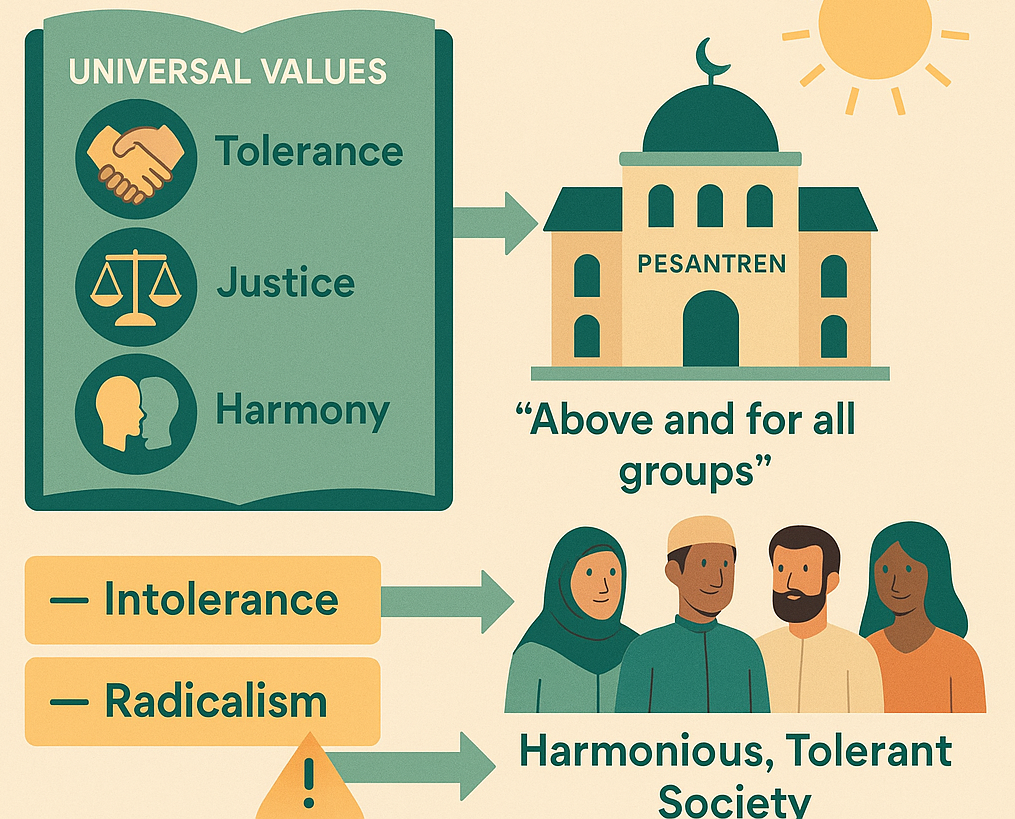
This research aims to examine the role of Islamic multicultural education in addressing the growing challenges of intolerance and radicalism in Indonesia’s modern era. The study focuses on universal values such as tolerance, justice, and harmony, as emphasized in Islamic teachings. A descriptive qualitative approach was used, involving analysis of religious literature, educational policies, and practices in modern pesantren. The findings indicate that Islamic multicultural education grounded in the principles of tawhid and inclusiveness not only promotes respect for cultural, religious, and ethnic diversity, but is also effective in preventing social conflict. Pesantren that uphold the motto “above and for all groups” serve as concrete examples of these values in practice. This concept aligns with Qur’anic principles, such as QS. Al-Hujurat:13 and QS. Al-Anbiya:107, which highlight the importance of harmony and mutual understanding. The study concludes that Islam-based multicultural education holds significant potential to foster a harmonious, tolerant, and respectful society, making it highly relevant for addressing the challenges of diversity in the modern era. Its implementation can serve as a model for a national education system oriented towards inclusiveness and social justice.
References
Alawi, H., & Maarif, M. A. (2021). ImplementasiNilai Islam Moderat Melalui Pendidikan Berbasis Multikultural. Journal of Research and Thought on Islamic Education, 4(2). https://doi.org/https://doi.org/10.24260/jrtie.v4i2.2037
Al-Hilali, M. N. et al. (2021). Integrating Tolerance and Peace Values in Islamic Schools Curriculum. International Journal of Educational Development, 23.
Anwar, K. (2021). Pancasila Village, Multicultural Education and Moderation of Diversity in Indonesia. Nazhruna: Jurnal Pendidikan Islam, 4(2), 221–234.
Baidhawy, Z. (2005). Pendidikan Agama BerwawasanMultikultural. Erlangga.
Barndsford, J. D. (2000). How People Learn: Brain, Main, Experience and School. National Academy Press.
Bashori, B. (2020). Kontribusi pendidikan islam dalam mengembangkan multikulturalisme. Toleransi: Media Ilmiah Komunikasi Umat Beragama, 12(1), 61. https://doi.org/10.24014/trs.v12i1.10638
Desky, H., & Rijal, S. (2021). Pengembangan Kerukunan Masyarakat Multikultural Melalui Pendekatan Agama. International Journal of Islamic Thought, 20. https://doi.org/10.24035/ijit.20.2021.209
Gokcekuyu, E. (n.d.). The Effects of Populism on Muslim Minorities in The Netherlands. Nazhruna: Jurnal Pendidikan Islam, 6(2). https://doi.org/https://doi.org/10.31538/nzh.v6i2.3025
Hakim, A., & et.al. (2021). Multicultural Education in Islamic Boarding Schools: A Case Study of Pesantren Gontor. Jurnal Pendidikan Islam, 12(3), 234–245.
Hasanah, U. (2020). Moderasi Islam dalam Kurikulum Pendidikan di Pesantren. Jurnal Studi Islam Dan Pendidikan, 13(1), 112–126.
Hassan, M. (2023). Yusuf al-Qaradawi’s Jurisprudence of Priorities: A Critical Assessment. American Journal of Islam and Society, 40(1-2), 77–120. https://doi.org/10.35632/ajis.v40i1-2.3190
Hilmi., M. (2015). Radikalisme Agama dan politik demokrasi di Indonesia Pasca Orde Baru. Miqot: Jurnal Ilmu-Ilmu Keislaman, 39(2), 407–425. https://doi.org/http://dx.doi.org/10.30821/miqot.v39i2.33
Husna, R., & Latifah, N. (2022). Challenges and Opportunities in Promoting Multicultural Values in Islamic Education. Islamic Studies, 15(2), 145–160.
Ichsan, Y., Sirait, S., & Arif, M. (2024). Revitalization of religious education based on dialogue, tolerance and harmony of religious people in Indonesia. 12(2).
Indrawan. (2021). Filsafat Pendidikan Islam: Pendidikan Multikultural. Tarbawy : Jurnal Pendidikan Islam, 8(2), 24–31. https://doi.org/https://doi.org/10.32923/tarbawy.v8i2.1827
IT, S., Rijal, S., & & Hudi Prasojo, Z. (2019). Sufism and Religious practices in modern lifestyle. Religió: Jurnal Studi Agama-Agama., 8(1), 1–28. https://doi.org/https://doi.org/10.15642/religio.v9i1.1231
Kawuryan, S. P. (2009). Bahan Ajar Mata Kuliah Pendidikan Multikultural. FIP Universitas Negeri Yogyakarta.
Khairudin, K. (2022). Penjaminan Mutu Pendidikan Islam Di STAI Darul Qur’an Aceh Tenggara. Bunayya: Jurnal Pendidikan Guru ….
Kusmaryani, R. E. (2005). Pendidikan Multikultural Sebagai Alternatif Penanaman Nilai Moral Dalam Keberagaman [Multicultural Education as an Alternative for Inculcating Moral Values in Diversity]. Paradigma, 1(2), 49–56. https://doi.org/https://journal.uny.ac.id/index.php/paradigma/article/view/5943
Kusnadi, M. I. F. H. (2022). Dakwah Rahmatan lil al-Alamin as Solutive Da’wah: A Study of the Study of Tafsir Science with the Approach of Sharah Hadith. Ar-Raniry: International Journal of Islamic Studies, 9(2), 102–119.
Mahfud, C. (2006). Pendidikan Multikultural. Pustaka Pelajar.
Marzuki, M., Miftahuddin, M., & Murdiono, M. (2020). Multicultural education in salaf pesantren and prevention of religious radicalism in Indonesia. Jurnal Cakrawala Pendidikan, 39(1), 12–25. https://doi.org/10.21831/cp.v39i1.22900
Muliadi, E. (12 C.E.). Urgensi Pembelajaran Pendidikan Agama islam Berbasis Multikultural di Sekolah. Jurnal Pendidikan Islam, 1(1), 55–68.
Munjiat, S. M., Rifa’i, A., Jamali, J., & Fatimah, S. (2023). Progressivism of Multicultural Islamic Education. Munaddhomah: Jurnal Manajemen Pendidikan Islam, 4(3), 572–582. https://doi.org/10.31538/munaddhomah.v4i3.509
Nurhasanah, I., & Sobandi, A. (2016). Pendidikan Multikultural Sebagai Sarana Resolusi Konflik di Indonesia. Jurnal Pendidikan Islam, 5(2), 215–232.
Qordhawy, D. Y. (1996). FIQIH PRIORITAS: Sebuah Kajian Baru Berdasarkan Al-Qyr’an dan As-Sunnah. Robbani Press.
Rahmat, A., & Arifin, Z. (2018). Implementasi Pendidikan Multikultural di Sekolah Islam. Jurnal Pendidikan Dan Kebudayaan, 23(3), 234–248.
Said, H., & Ahmed, F. (2022). Moderate Islam and Educational Leadership: A Pathway to Inclusive Education. International Journal of Islamic Educational Studies, 8(4), 312–330.
Saihu, M. (2021). Pedidikan Moderasi Beragama: Kajian Islam Wasathiyah Menurut Nurcholish Madjid. … Pendidikan Islam Dan Manajemen Pendidikan Islam.
Sanaky, H. A. S. (2016). Dinamika Perkembangan Pendidikan Islam di Indonesia. Kaukaba.
Suparlan, P. (2002). Menuju Masyarakat Indonesia yang Multikultural. Simposium Internasional Jurnal Antropologi Indonesia ke-3,.
Suprianto, M. E. (2017). Integrasi sistem informasi akademik pada enterprise resource planning pondok pesantren tipe D menggunakan service oriented architecture. etheses.uin-malang.ac.id.
Tahir, M., & Anwar, M. (2020). Incorporating Islamic Values in Multicultural Education: Challenges and Opportunities. Al-Shajarah: Journal of Islamic Thought and Civilization, 25(3), 230–250.
Tilaar, H. A. . (2004). Multikulturalisme: Tantangan-tantangan Global Masa Depan dalam Transformasi Pendidikan. Grasindo.
Winata, K. A., Solihin, I., Ruswandi, U., & Erihadiana, M. (2020). Moderasi Islam Dalam Pembelajaran PAI Melalui Model Pembelajaran Konstekstual. 3(2).
Yaqin, A. (2005). Pendidikan Multikultural. Pilar Media.
Yusuf., S. M., & Samsudin, A. R. (2021). Islamic Multicultural Education for Peace Building in Pluralistic Societies. Journal of Social Studies Education Research, 12(1), 145–165.
(2024). Konsep Islam Wasathiyah Perspektif KH. Hasyim Muzadi (Telaah Surah al-Baqarah Ayat 143). Al-Wasatiyah: Journal of Religious Moderation, 3(1), 93–109. https://doi.org/10.30631/jrm.v3i1.65
Downloads
Published
How to Cite
Issue
Section
License
Copyright (c) 2025 Zuhair Mubarrak Hazaa, Nurhalimah Nurhalimah , Yenita Anggraini, Dinda Putri , Zaini Dahlan

This work is licensed under a Creative Commons Attribution-ShareAlike 4.0 International License.
Authors who publish with Al-Misbah agree to the following terms:
- Authors retain copyright and grant the journal right of first publication with the work simultaneously licensed under a Creative Commons Attribution License (CC BY-SA 4.0) that allows others to share the work with an acknowledgment of the work's authorship and initial publication in this journal.
- Authors are able to enter into separate, additional contractual arrangements for the non-exclusive distribution of the journal's published version of the work (e.g., post it to an institutional repository or publish it in a book), with an acknowledgment of its initial publication in this journal.
- Authors are permitted and encouraged to post their work online (e.g., in institutional repositories or on their website) prior to and during the submission process, as it can lead to productive exchanges, as well as earlier and greater citation of published work.

This work is licensed under a Creative Commons Attribution-ShareAlike 4.0 International License.