Mobile 360° Panoramic Training for Commercial Kitchen Safety: Usability and Learning Outcomes
DOI:
https://doi.org/10.12928/biste.v7i4.13919Keywords:
Commercial Kitchen Safety, 360° Panoramic Training, Mobile Immersive Learning, Hazard Awareness, Virtual Reality in EducationAbstract
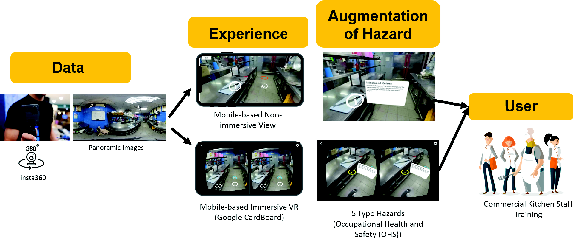
Commercial kitchens are high-risk workplaces where staff routinely face hazards such as slips, burns, lacerations, and chemical exposure. Conventional classroom-based safety training often suffers from low engagement and weak retention, limiting preparedness for dynamic, high-pressure conditions. To address this, the present study developed and evaluated a mobile 360° panoramic training platform to enhance hazard awareness in commercial kitchens. Unlike fully modeled virtual reality (VR) simulations or generic training contexts, the platform delivers authentic kitchen imagery in dual modes—immersive via Google Cardboard and non-immersive via smartphone—balancing realism, accessibility, and cost efficiency. This exploratory quantitative study involved thirty semester-one culinary students (ages 18–23) from Kolej Komuniti Bukit Beruang, Melaka, recruited through a convenience sampling approach. Participants completed pre- and post-training hazard-identification tests and the System Usability Scale (SUS). Usability ratings were consistently high across ease of use, learnability, efficiency, and satisfaction (means 4.27–4.70). Hazard-identification scores increased significantly from 29.33 to 83.67; a paired-samples t-test confirmed the improvement (p < 0.001, d = 3.46). Participant feedback highlighted realism and accessibility as strengths, though reduced interactivity compared to full VR was noted. Findings align with prior VR-based training studies in healthcare and construction, suggesting that panoramic imagery can deliver comparable learning gains at lower cost and deployment effort. Limitations include the small, short-term sample, absence of a control group, and user-reported issues such as headset discomfort and accessibility concerns. Future research should examine longitudinal retention, controlled comparisons with traditional training, and scalability across diverse settings to establish broader real-world impact.
References
S. T. Tolera and D. A. Mengistu, “Occupational hazards exposure and knowledge, attitude and practice towards meat safety amongst abattoir workers, Hawassa City, Southern Ethiopia,” Int. J. Occup. Saf. Health, vol. 11, no. 2, pp. 108–115, 2021, https://doi.org/10.3126/ijosh.v11i2.36306.
N. Haminuddin, M. Saad, and M. S. Sahrir, “Digital transformation in occupational safety education: Formulating components of virtual reality in TVET hospitality programs by using TPACK theory,” Planning Malaysia, vol. 22, 2024, https://doi.org/10.21837/pm.v22i34.1622.
J. Li and M. Pilz, “In-company training in a safety-critical industry: lessons from the aircraft industry,” J. Workplace Learn., vol. 35, no. 2, pp. 210–227, 2023, https://doi.org/10.1108/JWL-06-2022-0067.
A. Shringi, M. Arashpour, E. M. Golafshani, T. Dwyer, and P. Kalutara, “Enhancing safety training performance using extended reality: a hybrid Delphi–AHP multi-attribute analysis in a type-2 fuzzy environment,” Buildings, vol. 13, no. 3, p. 625, 2023, https://doi.org/10.3390/buildings13030625.
M. J. Burke, R. O. Salvador, K. Smith‐Crowe, S. Chan‐Serafin, A. N. Smith, and S. C. Sonesh, “The dread factor: how hazards and safety training influence learning and performance,” J. Appl. Psychol., vol. 96, no. 1, pp. 46–70, 2011, https://doi.org/10.1037/a0021838.
A. Albert and M. R. Hallowel, “Revamping occupational safety and health training: integrating andragogical principles for the adult learner,” Constr. Econ. Build., vol. 13, no. 3, pp. 128–140, 2013, https://doi.org/10.5130/AJCEB.v13i3.3178.
S. Margheritti, S. Marcucci, and M. Miglioretti, “Bridging the gaps: examining the impact of technology-based active learning in workplace safety training through a systematic literature review,” Safety, vol. 11, no. 1, p. 5, 2025, https://doi.org/10.3390/safety11010005.
D. L. Lacy, “Employee engagement and learning for the transformational leader,” Adv. Logist., Oper., Manag. Sci., pp. 133–146, 2022, https://doi.org/10.4018/978-1-7998-8239-8.ch008.
V. Holuša et al., “Virtual reality as a tool for sustainable training and education of employees in industrial enterprises,” Sustainability, vol. 15, no. 17, p. 12886, 2023, https://doi.org/10.3390/su151712886.
E. Kwegyir-Afful, T. O. Hassan, and J. Kantola, “Simulation-based assessments of fire emergency preparedness and response in virtual reality,” Int. J. Occup. Saf. Ergon., vol. 28, no. 2, pp. 1316–1330, 2021, https://doi.org/10.1080/10803548.2021.1891395.
M. Saad, M. D. H. M. Najib, and T. J. Pratt, “Valid virtual reality applications for commercial kitchen safety training,” Environ.-Behav. Proc. J., vol. 7, no. 19, pp. 403–409, 2022, https://doi.org/10.21834/ebpj.v7i19.3207.
A. Gandsas, T. Dorey, and A. Park, “Immersive live streaming of surgery using 360-degree video to head-mounted virtual reality devices: A new paradigm in surgical education,” Surg. Innov., vol. 30, no. 4, pp. 486–492, 2023, https://doi.org/10.1177/15533506231165828.
Y. Chao et al., “Using a 360° virtual reality or 2D video to learn history taking and physical examination skills for undergraduate medical students: Pilot randomized controlled trial,” JMIR Serious Games, vol. 9, no. 4, e13124, 2021, https://doi.org/10.2196/13124.
M. Ellis, R. Handy, D. K. Sleeth, L. F. Pahler, and C. Schaefer, “A pilot observational study comparing wet bulb globe temperature (WBGT) parameter measurements between three commercial kitchen configurations,” J. Student Res., vol. 10, no. 1, 2021, https://doi.org/10.47611/jsr.v10i1.1181.
A. Hamad and B. Jia, “How virtual reality technology has changed our lives: An overview of the current and potential applications and limitations,” Int. J. Environ. Res. Public Health, vol. 19, no. 18, p. 11278, 2022, https://doi.org/10.3390/ijerph191811278.
H. Cao et al., “VR interaction for efficient virtual manufacturing: Mini map for multi-user VR navigation platform,” Adv. Transdiscip. Eng., 2024, https://doi.org/10.3233/ATDE240178.
G. O. Wassif et al., “Work-related injuries and illnesses among kitchen workers at two major students’ hostels,” J. Egypt. Public Health Assoc., vol. 99, no. 1, 2024, https://doi.org/10.1186/s42506-024-00163-x.
E. d. O. Pinto et al., “A preliminary study of environmental risks through the gut matrix: Application in an industrial kitchen,” Food Sci. Technol., vol. 42, 2022, https://doi.org/10.1590/fst.12622.
Y. J. Na, J. Y. Baek, S. Y. Gwon, and K. S. Yoon, “Assessment of hygiene management practices and comparative analysis of regulatory frameworks for shared kitchens across different countries,” Foods, vol. 13, no. 6, p. 918, 2024, https://doi.org/10.3390/foods13060918.
K. Min and W. Hong, “The effect of food sustainability and the food safety climate on the job stress, job satisfaction and job commitment of kitchen staff,” Sustainability, vol. 13, no. 12, p. 6813, 2021, https://doi.org/10.3390/su13126813.
F. H. Ismail, S. Osman, and F. B. A. Rahman, “Ergonomics kitchen: A better place to work,” Int. J. Acad. Res. Bus. Soc. Sci., vol. 11, no. 13, 2020, https://doi.org/10.6007/IJARBSS/v11-i13/8501.
M. S. Alam, M. Sharma, and U. R. Salve, “Assessment of thermal comfort in a hot and humid indoor built environment of a kitchen at a university canteen,” Work, vol. 72, no. 1, pp. 189–199, 2022, https://doi.org/10.3233/WOR-205174.
S. N. Varlı et al., “Organic pollutant exposure and health effects of cooking emissions on kitchen staff in food services,” Indoor Air, vol. 32, no. 8, 2022, https://doi.org/10.1111/ina.13093.
P. Chan, T. Van Gerven, J. Dubois, and K. Bernaerts, “Design and development of a VR serious game for chemical laboratory safety,” Lect. Notes Comput. Sci., pp. 23–33, 2021, https://doi.org/10.1007/978-3-030-92182-8_3.
A. G. Nair et al., “Effectiveness of simulation-based training for manual small incision cataract surgery among novice surgeons: A randomized controlled trial,” Sci. Rep., vol. 11, no. 1, 2021, https://doi.org/10.1038/s41598-021-90410-4.
A. A. Zaman, A. Abdelaty, M. S. Yamany, F. Jacobs, and M. Marzouk, “Integrating 3D photogrammetry and game engine for construction safety training,” Built Environ. Project Asset Manag., vol. 15, no. 4, pp. 844–862, 2025, https://doi.org/10.1108/BEPAM-05-2024-0133.
G. Kazar and S. Çomu, “Developing a virtual safety training tool for scaffolding and formwork activities,” Teknik Dergi, vol. 33, no. 2, pp. 11729–11748, 2022, https://doi.org/10.18400/tekderg.711091.
P. Wang, P. Wu, J. Wang, H.-L. Chi, and X. Wang, “A critical review of the use of virtual reality in construction engineering education and training,” International journal of environmental research and public health, vol. 15, no. 6, p. 1204, 2018, https://doi.org/10.3390/ijerph15061204.
M. Jelonek, E. Fiala, T. Herrmann, J. Teizer, S. Embers, M. König, and A. Mathis, “Evaluating virtual reality simulations for construction safety training: a user study exploring learning effects, usability and user experience,” i-com, vol. 21, no. 2, pp. 269-281, 2022, https://doi.org/10.1515/icom-2022-0006.
J. Radianti, T. A. Majchrzak, J. Fromm, and I. Wohlgenannt, “A systematic review of immersive virtual reality applications for higher education: Design elements, lessons learned, and research agenda,” Comput. Educ., vol. 147, p. 103778, 2020, https://doi.org/10.1016/j.compedu.2019.103778.
S. Borsci, S. Federici, and M. Lauriola, “On the dimensionality of the System Usability Scale: a test of alternative measurement models,” Cognitive processing, vol. 10, no. 3, pp. 193-197, 2009, https://doi.org/10.1007/s10339-009-0268-9.
S. S. Man, H. Wen, and B. C. L. So, “Are virtual reality applications effective for construction safety training and education? A systematic review and meta-analysis,” Journal of safety research, vol. 88, pp. 230-243, 2021, https://doi.org/10.1016/j.jsr.2023.11.011.
R. Sacks, A. Perlman, and R. Barak, “Construction safety training using immersive virtual reality,” Constr. Manag. Econ., vol. 31, no. 9, pp. 1005–1017, 2013, https://doi.org/10.1080/01446193.2013.828844.
M. J. Burke, S. A. Sarpy, K. Smith-Crowe, S. Chan‐Serafin, R. O. Salvador and G. Islam, “Relative effectiveness of worker safety and health training methods,” Am. J. Public Health, vol. 96, no. 2, pp. 315–324, 2006, https://doi.org/10.2105/AJPH.2004.059840.
B. S. Bell and S. W. J. Kozlowski, “Active learning: Effects of core training design elements on self‐regulatory processes, learning, and adaptability,” J. Appl. Psychol., vol. 93, no. 2, pp. 296–316, 2008, https://doi.org/10.1037/0021-9010.93.2.296.
E. Chang, H. T. Kim, and B. Yoo, “Virtual reality sickness: a review of causes and measurements,” International Journal of Human–Computer Interaction, vol. 36, no. 17, pp. 1658-1682, 2020, https://doi.org/10.1080/10447318.2020.1778351.
L. Putz, F. Hofbauer, and H. Treiblmaier, “Can gamification help to improve education? Findings from a longitudinal study,” Comput. Hum. Behav., vol. 110, p. 106392, 2020, https://doi.org/10.1016/j.chb.2020.106392.
S. O. Uwakwe Udeh, A. Tobail, J. Crowe, and W. Rashwan, “Exploring the impact of gamification on employee training and development: a comprehensive literature review,” Journal of Workplace Learning, vol. 37, no. 9, pp. 206-224, 2025, https://doi.org/10.1108/JWL-05-2025-0149.
S. Brull, S. Finlayson, T. Kostelec, R. Macdonald, and D. Krenzischeck, “Using Gamification to Improve Productivity and Increase Knowledge Retention During Orientation,” JONA: J. Nurs. Adm., vol. 47, pp. 448–453, 2017, https://doi.org/10.1097/NNA.0000000000000512.
A. Schmid and M. Schoop, “Gamification of Electronic Negotiation Training: Effects on Motivation, Behaviour and Learning,” Group Decis. Negotiat., vol. 31, pp. 649–681, 2022, https://doi.org/10.1007/s10726-022-09777-y.
F. Cechella, G. Abbad, and R. Wagner, “Leveraging learning with gamification: An experimental case study with bank managers,” Comput. Human Behav. Rep., 2021, https://doi.org/10.1016/j.chbr.2020.100044.
Kolb, D. A. (2014). Experiential learning: Experience as the source of learning and development. FT press. 2014. https://books.google.co.id/books?hl=id&lr=&id=jpbeBQAAQBAJ.
E. L. Trist and K. W. Bamforth, “Some social and psychological consequences of the longwall method of coal-getting,” Human Relations, vol. 4, no. 1, pp. 3–38, 1951, https://doi.org/10.1177/001872675100400101.
Published
How to Cite
Issue
Section
License
Copyright (c) 2025 Asniyani Nur Haidar Abdullah, Mohd Khalid Mokhtar, Ikmal Faiq Albakri Mustafa Albakri, Reshmahdevi Janarthanan Nambiar, Mazni Saad, Muhammad Danial Haiqal Mohamad Najib

This work is licensed under a Creative Commons Attribution-ShareAlike 4.0 International License.
Authors who publish with this journal agree to the following terms:
- Authors retain copyright and grant the journal right of first publication with the work simultaneously licensed under a Creative Commons Attribution License that allows others to share the work with an acknowledgment of the work's authorship and initial publication in this journal.
- Authors are able to enter into separate, additional contractual arrangements for the non-exclusive distribution of the journal's published version of the work (e.g., post it to an institutional repository or publish it in a book), with an acknowledgment of its initial publication in this journal.
- Authors are permitted and encouraged to post their work online (e.g., in institutional repositories or on their website) prior to and during the submission process, as it can lead to productive exchanges, as well as earlier and greater citation of published work (See The Effect of Open Access).

This journal is licensed under a Creative Commons Attribution-ShareAlike 4.0 International License.