A simulation framework for emergency evacuation, considering navigation errors
DOI:
https://doi.org/10.12928/ijio.v6i2.11406Keywords:
Tourism industry, Simulation, Evacuation, Navigation errors, MATSimAbstract
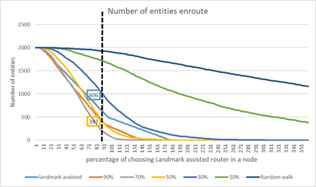
The rapidly growing tourism industry has brought forth substantial safety concerns, particularly in the context of emergency evacuations necessitated by natural and human-induced disasters. Tourists often lack the necessary orientation, information, and preparedness, rendering them vulnerable during such crises. While research has extensively explored tourist behavior and evacuation procedures independently, the intersection of these two fields remains underexamined. This study introduces a simulation model utilizing MATSim to characterize the behaviors of tourists during emergencies, highlighting navigation errors and decision-making processes. Two novel routers - “Random Walk” and “Landmark Assisted” - have been developed to better reflect tourist navigation challenges. A case study in Conegliano, Italy, demonstrates the effectiveness of these routers under two evacuation policies: predefined and undefined destinations. Results indicate significant disparities in evacuation times: optimal routes average 50 minutes, while random navigation extends this to 544 minutes. The Landmark Assisted router improves evacuation to 73 minutes, underscoring the importance of identifiable landmarks. Additionally, managing intersections further reduces evacuation times. This simulation framework serves as a decision-making tool for evaluating evacuation policies, providing insights into optimizing resource allocation and enhancing overall efficacy in emergency scenarios. Future research should focus on developing optimization algorithms for intersection management selection, reinforcing the practical applicability of this model in real-world contexts.
References
J. Villegas, C. Matyas, S. Srinivasan, I. Cahyanto, B. Thapa, and L. Pennington-Gray, “Cognitive and affective responses of Florida tourists after exposure to hurricane warning messages,” Nat. Hazards, vol. 66, no. 1, pp. 97–116, Mar. 2013, doi: 10.1007/s11069-012-0119-3.
I. Cahyanto and L. Pennington-Gray, “Communicating Hurricane Evacuation to Tourists,” J. Travel Res., vol. 54, no. 3, pp. 329–343, May 2015, doi: 10.1177/0047287513517418.
T. E. Drabek, “Disaster evacuation responses by tourists and other types of transients,” Int. J. Public Adm., vol. 22, no. 5, pp. 655–677, Jan. 1999, doi: 10.1080/01900699908525400.
L. Goeldner-Gianella, D. Grancher, Ø. Robertsen, B. Anselme, D. Brunstein, and F. Lavigne, “Perception of the risk of tsunami in a context of high-level risk assessment and management: the case of the fjord Lyngen in Norway,” Geoenvironmental Disasters, vol. 4, no. 1, p. 7, Dec. 2017, doi: 10.1186/s40677-017-0068-y.
C. Matyas, S. Srinivasan, I. Cahyanto, B. Thapa, L. Pennington-Gray, and J. Villegas, “Risk perception and evacuation decisions of Florida tourists under hurricane threats: a stated preference analysis,” Nat. Hazards, vol. 59, no. 2, pp. 871–890, Nov. 2011, doi: 10.1007/s11069-011-9801-0.
B. Balcik and B. M. Beamon, “Facility location in humanitarian relief,” Int. J. Logist. Res. Appl., vol. 11, no. 2, pp. 101–121, Apr. 2008, doi: 10.1080/13675560701561789.
A. C. Y. Li, L. Nozick, N. Xu, and R. Davidson, “Shelter location and transportation planning under hurricane conditions,” Transp. Res. Part E Logist. Transp. Rev., vol. 48, no. 4, pp. 715–729, Jul. 2012, doi: 10.1016/j.tre.2011.12.004.
P. Murali, F. Ordóñez, and M. M. Dessouky, “Facility location under demand uncertainty: Response to a large-scale bio-terror attack,” Socioecon. Plann. Sci., vol. 46, no. 1, pp. 78–87, Mar. 2012, doi: 10.1016/j.seps.2011.09.001.
H. D. Sherali, T. B. Carter, and A. G. Hobeika, “A location-allocation model and algorithm for evacuation planning under hurricane/flood conditions,” Transp. Res. Part B Methodol., vol. 25, no. 6, pp. 439–452, Dec. 1991, doi: 10.1016/0191-2615(91)90037-J.
A. Stepanov and J. M. Smith, “Multi-objective evacuation routing in transportation networks,” Eur. J. Oper. Res., vol. 198, no. 2, pp. 435–446, Oct. 2009, doi: 10.1016/j.ejor.2008.08.025.
J. Barcelö, L. Montero, L. Marqués, and C. Carmona, “Travel Time Forecasting and Dynamic Origin-Destination Estimation for Freeways Based on Bluetooth Traffic Monitoring,” Transp. Res. Rec. J. Transp. Res. Board, vol. 2175, no. 1, pp. 19–27, Jan. 2010, doi: 10.3141/2175-03.
E. Cascetta, “Estimation of trip matrices from traffic counts and survey data: A generalized least squares estimator,” Transp. Res. Part B Methodol., vol. 18, no. 4–5, pp. 289–299, Aug. 1984, doi: 10.1016/0191-2615(84)90012-2.
J. Zhao, A. Rahbee, and N. H. M. Wilson, “Estimating a Rail Passenger Trip Origin‐Destination Matrix Using Automatic Data Collection Systems,” Comput. Civ. Infrastruct. Eng., vol. 22, no. 5, pp. 376–387, Jul. 2007, doi: 10.1111/j.1467-8667.2007.00494.x.
X. Zhou and G. F. List, “An Information-Theoretic Sensor Location Model for Traffic Origin-Destination Demand Estimation Applications,” Transp. Sci., vol. 44, no. 2, pp. 254–273, May 2010, doi: 10.1287/trsc.1100.0319.
S. Kinugasa, T. Izumi, and Y. Nakatani, “Evaluation of a Support System for Large Area Tourist Evacuation Guidance: Kyoto Simulation Results,” in Lecture Notes in Geoinformation and Cartography, vol. 0, Springer, Berlin, Heidelberg, 2013, pp. 309–315, doi: 10.1007/978-3-642-33218-0_22.
S. Kinugasa, T. Izumi, and Y. Nakatani, “Evaluation of a support system for large area tourist evacuation guidance: Kyoto simulation results,” 6th Int. Conf. Soft Comput. Intell. Syst. 13th Int. Symp. Adv. Intell. Syst. SCIS/ISIS 2012, pp. 440–445, 2012, doi: 10.1109/SCIS-ISIS.2012.6505119.
N. Emori, T. Izumi, and Y. Nakatani, “A Support System for Developing Tourist Evacuation Guidance,” in Transactions on Engineering Technologies, Singapore: Springer Singapore, 2016, pp. 15–28, doi: 10.1007/978-981-10-0551-0_2.
B. Ben Moshe, Y. Hadas, and H. Levi, “Energy-Efficient Framework for Indoor and Outdoor Tracking of Public Transit Passengers Using Bluetooth-Enabled Devices,” Trid, 2014. [Online]. Available at: https://trid.trb.org/View/1288331.
A. Bensky, Wireless positioning technologies and applications. Artech House, 2016.
P. Mirowski, T. K. Ho, Saehoon Yi, and M. MacDonald, “SignalSLAM: Simultaneous localization and mapping with mixed WiFi, Bluetooth, LTE and magnetic signals,” in International Conference on Indoor Positioning and Indoor Navigation, Oct. 2013, pp. 1–10, doi: 10.1109/IPIN.2013.6817853.
Y. Yoshimura et al., “An Analysis of Visitors’ Behavior in the Louvre Museum: A Study Using Bluetooth Data,” Environ. Plan. B Plan. Des., vol. 41, no. 6, pp. 1113–1131, Dec. 2014, doi: 10.1068/b130047p.
O. E. Nahum, G. Wachtel, and Y. Hadas, “Planning Tourists Evacuation Routes with Minimal Navigation Errors,” Transp. Res. Procedia, vol. 47, pp. 235–242, Jan. 2020, doi: 10.1016/j.trpro.2020.03.094.
G. Wachtel, J.-D. Schmöcker, Y. Hadas, Y. Gao, O. E. Nahum, and B. Ben-Moshe, “Planning for tourist urban evacuation routes: A framework for improving the data collection and evacuation processes,” Environ. Plan. B Urban Anal. City Sci., vol. 48, no. 5, pp. 1108–1125, Jun. 2021, doi: 10.1177/2399808321994575.
Z. Wang and G. Jia, “Simulation-Based and Risk-Informed Assessment of the Effectiveness of Tsunami Evacuation Routes Using Agent-Based Modeling: A Case Study of Seaside, Oregon,” Int. J. Disaster Risk Sci., vol. 13, no. 1, pp. 66–86, Feb. 2022, doi: 10.1007/s13753-021-00387-x.
X. Zhao, W. Xu, Y. Ma, L. Qin, J. Zhang, and Y. Wang, “Relationships Between Evacuation Population Size, Earthquake Emergency Shelter Capacity, and Evacuation Time,” Int. J. Disaster Risk Sci., vol. 8, no. 4, pp. 457–470, Dec. 2017, doi: 10.1007/s13753-017-0157-2.
N. Shiwakoti, R. Tay, P. Stasinopoulos, and P. J. Woolley, “Likely behaviours of passengers under emergency evacuation in train station,” Saf. Sci., vol. 91, pp. 40–48, Jan. 2017, doi: 10.1016/j.ssci.2016.07.017.
O. E. Nahum, Y. Hadas, R. Rossi, M. Gastaldi, and G. Gecchele, “Network Design Model with Evacuation Constraints Under Uncertainty,” Transp. Res. Procedia, vol. 22, pp. 489–498, Jan. 2017, doi: 10.1016/j.trpro.2017.03.066.
V. Zyryanov and A. Feofilova, “Simulation of Evacuation Route Choice,” Transp. Res. Procedia, vol. 20, pp. 740–745, Jan. 2017, doi: 10.1016/j.trpro.2017.01.119.
M. N. Jat and R. A. Rafique, “Mass-Casualty Distribution for Emergency Healthcare: A Simulation Analysis,” Int. J. Disaster Risk Sci., vol. 11, no. 3, pp. 364–377, Jun. 2020, doi: 10.1007/s13753-020-00260-3.
Y. Hadas, R. Rossi, M. Gastaldi, C. Pellegrino, M. A. Zanini, and C. Modena, “Optimal Critical Infrastructure Retrofitting Model for Evacuation Planning,” Transp. Res. Procedia, vol. 10, pp. 714–724, Jan. 2015, doi: 10.1016/j.trpro.2015.09.025.
I. Miller, R. Kossik, and C. Voss, “General requirements for simulation models in waste management,” in WM’03 Conference, 2003, pp. 1–12, [Online]. Available at: http://citeseerx.ist.psu.edu/viewdoc/download?doi=10.1.1.123.8163&rep=rep1&type=pdf.
Y. Hadas and A. Laor, “Network design model with evacuation constraints,” Transp. Res. Part A Policy Pract., vol. 47, pp. 1–9, Jan. 2013, doi: 10.1016/J.TRA.2012.10.027.
L. D. Han, F. Yuan, and T. Urbanik, “What Is an Effective Evacuation Operation?,” J. Urban Plan. Dev., vol. 133, no. 1, pp. 3–8, Mar. 2007, doi: 10.1061/(ASCE)0733-9488(2007)133:1(3).
E. Bakhshian and B. Martinez-Pastor, “Evaluating human behaviour during a disaster evacuation process: A literature review,” J. Traffic Transp. Eng. (English Ed., vol. 10, no. 4, pp. 485–507, Aug. 2023, doi: 10.1016/j.jtte.2023.04.002.
M. Kinateder et al., “Social influence on route choice in a virtual reality tunnel fire,” Transp. Res. Part F Traffic Psychol. Behav., vol. 26, no. PART A, pp. 116–125, Sep. 2014, doi: 10.1016/j.trf.2014.06.003.
S. A. F. Syed Abdul Rahman, K. N. Abdul Maulud, B. Pradhan, S. N. A. Syed Mustorpha, and A. I. Che Ani, “Impact of evacuation design parameter on users’ evacuation time using a multi-agent simulation,” Ain Shams Eng. J., vol. 12, no. 2, pp. 2355–2369, Jun. 2021, doi: 10.1016/j.asej.2020.12.001.
D. Amores, E. Tanin, and M. Vasardani, “A proactive route planning approach to navigation errors,” Int. J. Geogr. Inf. Sci., vol. 35, no. 6, pp. 1094–1130, Jun. 2021, doi: 10.1080/13658816.2020.1820508.
M. Kobes, I. Helsloot, B. de Vries, and J. G. Post, “Building safety and human behaviour in fire: A literature review,” Fire Saf. J., vol. 45, no. 1, pp. 1–11, Jan. 2010, doi: 10.1016/j.firesaf.2009.08.005.
K. Liu, Y. Ma, M. Chen, K. Wang, and K. Zheng, “A survey of crowd evacuation on passenger ships: Recent advances and future challenges,” Ocean Eng., vol. 263, p. 112403, Nov. 2022, doi: 10.1016/j.oceaneng.2022.112403.
C. Chen, A. Mostafizi, H. Wang, D. Cox, and L. Cramer, “Evacuation behaviors in tsunami drills,” Nat. Hazards, vol. 112, no. 1, pp. 845–871, May 2022, doi: 10.1007/s11069-022-05208-y.
M. Haghani and M. Yazdani, “How simple behavioural modifications can influence evacuation efficiency of crowds: Part 2. Physical movement of individuals,” Transp. Res. Part C Emerg. Technol., vol. 166, p. 104762, Sep. 2024, doi: 10.1016/j.trc.2024.104762.
M. Kutz, Handbook of Transportation Engineering, 2nd ed., vol. II. 2011.
X. Ji, “Models and algorithm for stochastic shortest path problem,” Appl. Math. Comput., vol. 170, no. 1, pp. 503–514, Nov. 2005, doi: 10.1016/j.amc.2004.12.015.
A. Madkour, W. G. Aref, F. U. Rehman, M. A. Rahman, and S. Basalamah, “A Survey of Shortest-Path Algorithms,” ArXiv, pp. 1–26, 2017. [Online]. Available at: https://arxiv.org/pdf/1705.02044.
P. Jaillet, “Shortest path problems with node failures,” Networks, vol. 22, no. 6, pp. 589–605, Oct. 1992, doi: 10.1002/net.3230220607.
A. P. Riascos and J. L. Mateos, “Random walks on weighted networks: a survey of local and non-local dynamics,” J. Complex Networks, vol. 9, no. 5, Sep. 2021, doi: 10.1093/comnet/cnab032.
A. P. Riascos, D. Boyer, P. Herringer, and J. L. Mateos, “Random walks on networks with stochastic resetting,” Phys. Rev. E, vol. 101, no. 6, p. 062147, Jun. 2020, doi: 10.1103/PhysRevE.101.062147.
K. Sabashi, B. Ben-Moshe, J.-D. Schmöcker, Y. Hadas, and S. Nakao, “Simulation of tourists’ wayfinding during evacuation based on experiments in Kyoto,” Transp. Res. Procedia, vol. 62, pp. 640–647, Jan. 2022, doi: 10.1016/j.trpro.2022.02.079.
J. Liu, A. K. Singh, A. Wunderlich, K. Gramann, and C.-T. Lin, “Redesigning navigational aids using virtual global landmarks to improve spatial knowledge retrieval,” npj Sci. Learn., vol. 7, no. 1, p. 17, Jul. 2022, doi: 10.1038/s41539-022-00132-z.
S. Vaez, M. Burke, and R. Yu, “Visitors’ wayfinding strategies and navigational aids in unfamiliar urban environment,” Tour. Geogr., vol. 22, no. 4–5, pp. 832–847, Oct. 2020, doi: 10.1080/14616688.2019.1696883.
A. Wunderlich and K. Gramann, “Landmark-based navigation instructions improve incidental spatial knowledge acquisition in real-world environments,” J. Environ. Psychol., vol. 77, p. 101677, Oct. 2021, doi: 10.1016/j.jenvp.2021.101677.
M. Balmer, M. Rieser, K. Meister, D. Charypar, N. Lefebvre, and K. Nagel, MATSim-T: Architecture and Simulation Times. IGI Global Scientific Publishing, 2009, doi: 10.4018/978-1-60566-226-8.ch003.
K. W. Axhausen, The Multi-Agent Transport Simulation MATSim. Ubiquity Press, 2016, doi: 10.5334/baw.
C. Zhuge, M. Bithell, C. Shao, X. Li, and J. Gao, “An improvement in MATSim computing time for large-scale travel behaviour microsimulation,” Transportation (Amst)., vol. 48, no. 1, pp. 193–214, Feb. 2021, doi: 10.1007/s11116-019-10048-0.
A. M. Pereira, A. E. Dingil, O. Přibyl, V. Myška, J. Vorel, and M. Kříž, “An Advanced Travel Demand Synthesis Process for Creating a MATSim Activity Model: The Case of Ústí nad Labem,” Appl. Sci., vol. 12, no. 19, p. 10032, Oct. 2022, doi: 10.3390/app121910032.
H. Yang, E. Wong, H. Davis, and J. Y. J. Chow, “A co-simulation system that integrates MATSim with a set of external fleet simulations,” Simul. Model. Pract. Theory, vol. 134, p. 102957, Jul. 2024, doi: 10.1016/j.simpat.2024.102957.
D. Alvarez Castro, A. Ford, P. James, R. Palacín, and D. Ziemke, “A MATSim model methodology to generate cycling-focused transport scenarios in England,” J. Urban Mobil., vol. 5, p. 100078, Jun. 2024, doi: 10.1016/j.urbmob.2024.100078.
A. Ficara, M. Fazio, A. Celesti, and M. Villari, “Design and Analysis of a MATSim Scenario from Open Data: The Case of Messina,” Authorea Preprints. Authorea, pp. 1–10, Sep. 05, 2024, doi: 10.36227/techrxiv.171436065.55682185/v3.
T. H. Cormen, C. E. Leiserson, R. L. Rivest, and C. Stein, Introduction to Algrithms, 3rd Edition (The MIT Press), 3rd ed. 2009.
G. Kootstra, “Selection of Landmarks for Visual Landmark Navigation,” Order A J. Theory Ordered Sets Its Appl., no. September, pp. 1–73, 2002, [Online]. Available at: http://www.ai.rug.nl/nl/afstuderen/msc-theses/msc-thesis-gert-kootstra-2002.pdf.
M. A. Zanini, C. Pellegrino, R. Rossi, M. Gastaldi, and C. Modena, “A probabilistic approach in estimating optimal evacuation scenarios for seismic emergency management,”.
O. E. Nahum, Y. Hadas, M. Zanini, C. Pellegrino, R. Rossi, and M. Gastaldi, “Stochastic Multi-Objective Evacuation Model Under Managed and Unmanaged policies,” Transp. Res. Procedia, vol. 27, pp. 728–735, Jan. 2017, doi: 10.1016/j.trpro.2017.12.156.
S. Santarelli, G. Bernardini, E. Quagliarini, and M. D’Orazio, “New Indices for the Existing City-Centers Streets Network Reliability and Availability Assessment in Earthquake Emergency,” Int. J. Archit. Herit., vol. 12, no. 2, pp. 153–168, Feb. 2018, doi: 10.1080/15583058.2017.1328543.
H. Mousa et al., “The Role of Urban Farming in Revitalizing Cities for Climate Change Adaptation and Attaining Sustainable Development: Case of the City of Conegliano, Italy,” in Green Buildings and Renewable Energy, Springer, Cham, 2020, pp. 545–577, doi: 10.1007/978-3-030-30841-4_40.
Downloads
Published
How to Cite
Issue
Section
License
Copyright (c) 2025 Oren E. Nahum, Omri Mayost

This work is licensed under a Creative Commons Attribution-ShareAlike 4.0 International License.
License and Copyright Agreement
In submitting the manuscript to the journal, the authors certify that:
- They are authorized by their co-authors to enter into these arrangements.
- The work described has not been formally published before, except in the form of an abstract or as part of a published lecture, review, thesis, or overlay journal. Please also carefully read the International Journal of Industrial Optimization (IJIO) Author Guidelines at http://journal2.uad.ac.id/index.php/ijio/about/submissions#onlineSubmissions
- That it is not under consideration for publication elsewhere,
- That its publication has been approved by all the author(s) and by the responsible authorities tacitly or explicitly of the institutes where the work has been carried out.
- They secure the right to reproduce any material that has already been published or copyrighted elsewhere.
- They agree to the following license and copyright agreement.
Copyright
Authors who publish with the International Journal of Industrial Optimization (IJIO) agree to the following terms:
- Authors retain copyright and grant the journal right of first publication with the work simultaneously licensed under a Creative Commons Attribution License (CC BY-SA 4.0) that allows others to share the work with an acknowledgment of the work's authorship and initial publication in this journal.
- Authors are able to enter into separate, additional contractual arrangements for the non-exclusive distribution of the journal's published version of the work (e.g., post it to an institutional repository or publish it in a book), with an acknowledgment of its initial publication in this journal.
- Authors are permitted and encouraged to post their work online (e.g., in institutional repositories or on their website) prior to and during the submission process, as it can lead to productive exchanges, as well as earlier and greater citation of published work.

1.png)