Transformation of islamic religious education learning through religious literacy assessment instruments
DOI:
https://doi.org/10.26555/almisbah.v13i2.14274Keywords:
Islamic education, assessment instruments, Religious literacy, Transformation educationAbstract
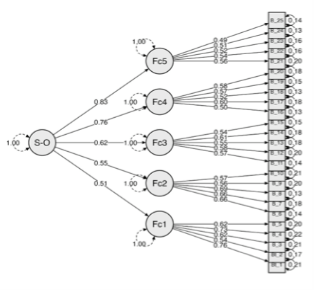
This study aims to assess the quality of the religious literacy assessment instrument and describe the religious literacy of elementary school students in IRE. This type of research is quantitative research with an instrument development approach using the Mardapi development model. The instrument is in the form of 25 multilevel multiple-choice questions, validated by three experts, and piloted on 233 students from nine elementary schools in the Special Region of Yogyakarta selected through a stratified random sampling technique. These schools represent high, medium, and low categories, so the results reflect the diversity of student ability levels. The analysis shows that the instrument is categorized as suitable for use, with high validity (0.85) and high reliability (0.80). The instrument is also assessed to meet scientific standards through Confirmatory Factor Analysis (CFA), so it is able to measure religious literacy objectively and comprehensively. The measurement results show that the level of religious literacy of students is still low, namely 33.00%. This finding provides important insights for IRE teachers to develop more meaningful and transformative learning evaluations. In addition, the instruments developed can be a reference for other schools in developing comprehensive evaluations, while also building a religious, tolerant, and critical generation in facing the challenges of the times.
References
Achadah, A., Laksana, S. D., Triyuliasari, A., Chandra, A. T. N., & Zukhrufin, F. K. (2025). The Impact of Contextual Learning and Learning Interest in Prayer Material on Islamic Education Subjects. Al-Hayat: Journal of Islamic Education, 9(1), 231–243. https://doi.org/10.35723/ajie.v9i1.124
Adi Kistoro, H. C., Latipah, E., & Burhan, N. M. (2023). Probing Experiential Learning Approach in Islamic Religious Education. Jurnal Pendidikan Islam, 9(2), 157–168. https://doi.org/10.15575/jpi.v9i2.24374
Aji Sofanudin, dkk. (2020). Literasi Keagamaan dan Karakter Peserta Didik. DIVA Press. https://books.google.co.id/books?id=tc4LEAAAQBAJ
Al Otaiba, S., Baker, K., Lan, P., Allor, J., Rivas, B., Yovanoff, P., & Kamata, A. (2019). Elementary teacher’s knowledge of response to intervention implementation: a preliminary factor analysis. Annals of Dyslexia, 69(1), 34–53. https://doi.org/10.1007/s11881-018-00171-5
Ardila, A., Bertolucci, P. H., Braga, L. W., Castro-Caldas, A., Judd, T., Kosmidis, M. H., Matute, E., Nitrini, R., Ostrosky-Solis, F., & Rosselli, M. (2010). Illiteracy: The Neuropsychology of Cognition Without Reading. Archives of Clinical Neuropsychology, 25(8), 689–712. https://doi.org/10.1093/arclin/acq079
Azizah, Udin Supriadi, & Muhamad Parhan. (2025). Implementasi Program Literasi dalam Pembelajaran IRE di Sekolah. Tadbir: Jurnal Manajemen Pendidikan Islam, 13(1), 187–206. https://doi.org/10.30603/tjmpi.v13i1.5971
Cai, L., Chung, S. W., & Lee, T. (2023). Incremental Model Fit Assessment in the Case of Categorical Data: Tucker–Lewis Index for Item Response Theory Modeling. Prevention Science, 24(3), 455–466. https://doi.org/10.1007/s11121-021-01253-4
Hajaroh, M., Dwiningrum, S. I. A., & Rukiyati, R. (2023). Development of the Theoretical Construction Model of Muslim Religious Character with Confirmatory Factor Analysis to Develop a Measurement Scale. International Journal of Islamic Thought, 23(1). https://doi.org/10.24035/ijit.23.2023.257
Hariyanto. (2025). Buddhist Epistemology and Critical Thinking: Ethical, Cognitive, and Pedagogical Insights for Interdisciplinary Education. Human Arenas. https://doi.org/10.1007/s42087-025-00508-8
Hastuty, A., Maswati, M., Saharuddin, M., Sukri, A. M., & Halik, A. (2025). Artificial intelligence: A review of the philosophy of Islamic educational science. Journal of Research in Instructional, 5(1), 90–102. https://doi.org/10.30862/jri.v5i1.573
Ismail, I. (2024). Menggali Peran Filsafat Pendidikan Dalam Membentuk Pemikiran Kritis Di Era Teknologi. JUPEIS : Jurnal Pendidikan Dan Ilmu Sosial, 3(1), 27–34. https://doi.org/10.57218/jupeis.Vol3.Iss1.969
Levkov, N., Santa, M., & Kitanovikj, B. (2024). Exploring opportunities and challenges in promoting interethnic tolerance as a social good through virtual influencers. Global Knowledge, Memory and Communication. https://doi.org/10.1108/GKMC-01-2024-0033
Mardapi, D. (2017). Pengukuran, penilaian, dan evaluasi pendidikan [Educational measurement, assessment and evaluation]. Parama Publishing.
Moslimany, R., Otaibi, A., & Shaikh, F. (2024). Designing a holistic curriculum: Challenges and opportunities in islamic education. Journal on Islamic Studies, 1(1), 52–73. https://doi.org/10.35335/beztg009
Mukmin, M., & Nuraini, N. (2024). Integrasi Penilaian Tes dan Non-Tes dalam Pendidikan Agama Islam: Menuju Evaluasi Holistik untuk Pembelajaran Berkelanjutan. Journal of Instructional and Development Researches, 4(5), 370–379. https://doi.org/10.53621/jider.v4i5.384
Muryati, M., & Hariyanti, H. (2024). Mengembangkan Keterampilan Literasi Agama: Kontribusi Guru IRE dalam Pengenalan Al-Qur’an kepada Siswa Kelas I Sekolah Dasar. Jurnal Inovasi Pendidikan, 2(2), 108–122. https://doi.org/10.60132/jip.v2i2.301
Pardo, R., & Calvo, F. (2004). The Cognitive Dimension of Public Perceptions of Science: Methodological Issues. Public Understanding of Science, 13(3), 203–227. https://doi.org/10.1177/0963662504045002
Retnawati, H. (2016). Validitas dan Reliabilitas Karakteristik Butir. Parama Publishing.
Sholihah, S. A., & Khoiriyah, K. (2024). Literasi Keagamaan sebagai Pondasi Pengembangan Karakter Religius Siswa. Al-Fikri: Jurnal Studi Dan Penelitian Pendidikan Islam, 7(2), 19. https://doi.org/10.30659/jspi.7.2.19-39
Sugiarto, & Farid, A. (2023). Literasi Digital Sebagai Jalan Penguatan Pendidikan Karakter Di Era Society 5.0. Cetta: Jurnal Ilmu Pendidikan, 6(3), 580–597. https://doi.org/10.37329/cetta.v6i3.2603
Yachina, N. (2015a). The Problem of Spiritual and Moral Formation of Personality. Procedia - Social and Behavioral Sciences, 197, 1575–1579. https://doi.org/10.1016/j.sbspro.2015.07.113
Yachina, N. (2015b). The Problem of Spiritual and Moral Formation of Personality. Procedia - Social and Behavioral Sciences, 197, 1575–1579. https://doi.org/10.1016/j.sbspro.2015.07.113
Zullig, K. J., Koopman, T. M., Patton, J. M., & Ubbes, V. A. (2010). School Climate: Historical Review, Instrument Development, and School Assessment. Journal of Psychoeducational Assessment, 28(2), 139–152. https://doi.org/10.1177/0734282909344205
Downloads
Published
How to Cite
Issue
Section
License
Copyright (c) 2025 Nur Anisyah Rachmaningtyas, Eko Wahyunanto Prihono, Fajar Naqsyahbandi

This work is licensed under a Creative Commons Attribution-ShareAlike 4.0 International License.
Authors who publish with Al-Misbah agree to the following terms:
- Authors retain copyright and grant the journal right of first publication with the work simultaneously licensed under a Creative Commons Attribution License (CC BY-SA 4.0) that allows others to share the work with an acknowledgment of the work's authorship and initial publication in this journal.
- Authors are able to enter into separate, additional contractual arrangements for the non-exclusive distribution of the journal's published version of the work (e.g., post it to an institutional repository or publish it in a book), with an acknowledgment of its initial publication in this journal.
- Authors are permitted and encouraged to post their work online (e.g., in institutional repositories or on their website) prior to and during the submission process, as it can lead to productive exchanges, as well as earlier and greater citation of published work.

This work is licensed under a Creative Commons Attribution-ShareAlike 4.0 International License.