The influence of digital literacy on student engagement and academic achievement
DOI:
https://doi.org/10.26555/almisbah.v13i2.13621Keywords:
Digital Literacy, Academic Achievement, Student Engagement, Learning, Educational PsychologyAbstract
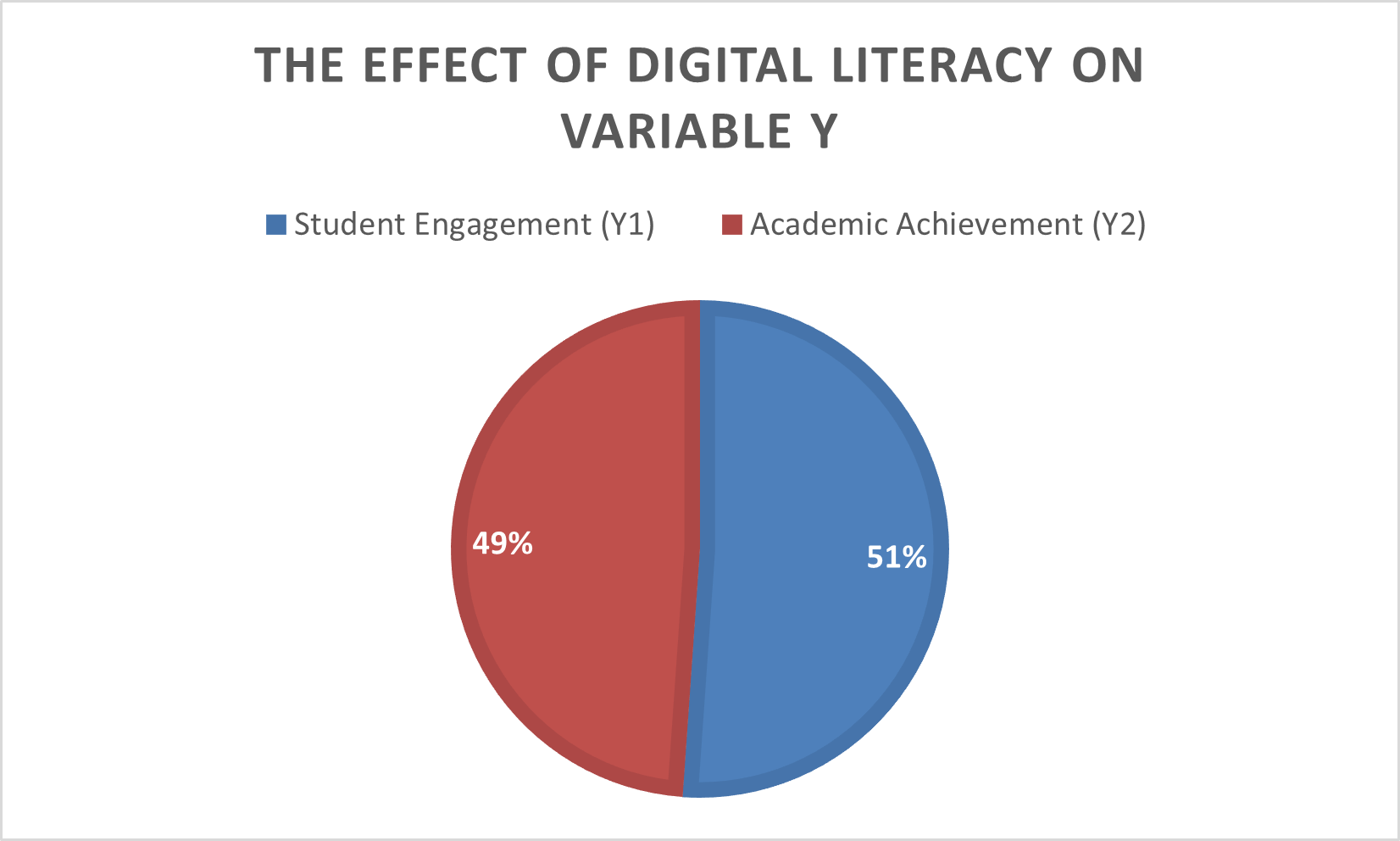
The development of digital technology has brought about major changes in the world of education, making digital literacy an important skill for students to adapt in the era of globalization. Students' ability to access, understand, and utilize digital information critically and ethically is believed to increase their engagement and academic achievement. This study aims to analyze the effect of digital literacy on student engagement and academic achievement at SMAIT Al-Multazam and identify the contribution of digital literacy in increasing student participation in learning and academic achievement. The method used was quantitative descriptive with a population of 118 students, data collection through Likert-scale online questionnaires, and statistical analysis using SPSS 24. The results showed that digital literacy significantly affected student engagement by 55.3% and academic achievement by 52.9%, with normally distributed data and linear relationships between variables and a statistically significant t-test. The implications of this study emphasize the importance of integrating digital literacy in the learning process to increase student engagement and academic achievement in the digital era.
References
Abbas, Q., Hussain, S., & Rasool, S. (2019). Digital Literacy Effect on the Academic Performance of Students at Higher Education Level in Pakistan. Global Social Sciences Review, IV(I), 108–116. https://doi.org/10.31703/gssr.2019(iv-i).14
Anisa, A., Magfirah, N., & Thahir, R. (2020). Peranan Self Efficacy dan Self Regulated Learning Terhadap Prestasi Akademik Mahasiswa. Biodik, 7(2), 63–70. https://doi.org/10.22437/bio.v7i2.12824
Burhanuddin, H. (2014). Rekonstruksi Sistem Pembelajaran Pendidikan Agama Islam Di Sekolah. Jurnal Muaddib, 04(02), 71–92.
Chen, F. (2025). The relationship between digital literacy and college students’ academic achievement: the chain mediating role of learning adaptation and online self-regulated learning. Frontiers in Psychology, 16(July). https://doi.org/10.3389/fpsyg.2025.1590649
Galugu, N. S., & Baharudin. (2017). Hubungan Antara Dukungan Sosial, Motivasi Berprestasi dan Keterlibatan Siswa Di Sekolah. Journal of Islamic Education Management, 3(2), 53–64.
Hidayati, S., & Nurgiansah, T. H. (2023). Pengaruh Literasi Digital Terhadap Prestasi Siswa. JLEB: Journal of Law, Education and Business, 1(1), 5–9. https://doi.org/10.57235/jleb.v1i1.801
Holm, P. (2024). Impact of digital literacy on academic achievement: Evidence from an online anatomy and physiology course. E-Learning and Digital Media, 0(0), 1–17. https://doi.org/10.1177/20427530241232489
Ibrahim, M., Riana, R., & Soraya, S. (2024). Evaluasi Keterlibatan Siswa dalam Lingkungan Pembelajaran Daring: Tinjauan Sistematis Literatur. Jurnal Ulul Albab, 28(2), 112. https://doi.org/10.31764/jua.v28i2.26058
Jaya, F., & Nurqamarani, A. S. (2023). Understanding Student Engagement in Hybrid Learning : An Analysis Impact Digital Literacy and Academic Self-Efficacy. Jurnal Kependidikan: Jurnal Hasil Penelitian Dan Kajian Kepustakaan Di Bidang Pendidikan, Pengajaran Dan Pembelajaran, 9(3), 833. https://doi.org/10.33394/jk.v9i3.7947
Jazuli, N., Sudarmiatin, S., & Wardana, W. (2023). International Education Trend issues. International Education Trend Issues, 1(2), 58–65.
Lenggono, B., & Yuzarion, Y. (2020). Motivasi berprestasi pada siswa SMA dalam perspektif Islam. Jurnal Psikologi Terapan Dan Pendidikan, 2(1), 31. https://doi.org/10.26555/jptp.v2i1.17056
Luthans, K. W., Luthans, B. C., & Palmer, N. F. (2016). A positive approach to management education: The relationship between academic PsyCap and student engagement. Journal of Management Development, 35(9), 1098–1118. https://doi.org/10.1108/JMD-06-2015-0091
Mukaromah, D., Sugiyo, & Mulawarman. (2018). Indonesian Journal of Guidance and Counseling: Theory and Application Keterlibatan Siswa dalam Pembelajaran ditinjau dari Efikasi Diri dan Self Regu-lated Learning Devy Mukaromah Sugiyo, dan Mulawarman. Indonesian Journal of Guidance and Counseling: Theory And Application, 7(2), 14–19.
Nassar, S., Khattab, S. (2024). The Effect of Digital Literacy on the Academic Performance of Islamic University Students in Gaza During COVID-19. In: Khoury, R.E., Nasrallah, N. (eds) Intelligent Systems, Business, and Innovation Research. Studies in Systems, Decision and Control, vol 489. Springer, Cham. https://doi.org/10.1007/978-3-031-36895-0_81
Nurramdhani, M., Normansyah, A. D., & Sukarliana, L. (2023). Pengaruh Literasi Digital Terhadap Hasil Belajar Peserta Didik Pada Mata Pelajaran PPKn (Penelitian Survei di SMA Negeri 2 Sumedang). Jurnal Pendidikan West Science, 1(07), 379–384. https://doi.org/10.58812/jpdws.v1i07.482
Of, I., Literacy, D., On, S., Engagement, S., & State, K. (2022). Impact of digital literacy skills on students’ engagement and academic performance in senior secondary school s in chikun local government, kaduna state, nigeria.
Pala, Ş. M., & Başıbüyük, A. (2023). The Predictive Effect of Digital Literacy, Self-Control and Motivation on the Academic Achievement in the Science, Technology and Society Learning Area. Technology, Knowledge and Learning, 28(1), 369–385. https://doi.org/10.1007/s10758-021-09538-x
Raharjo, B. (2009). Konsep pendidikan al ghozali. Suhuf, 719483(0271), 183–189.
Saputro, M., Yudi, A., & Dona, F. (2018). Faktor-Faktor yang Mempengaruhi Prestasi Belajar (Studi Korelasi Pada Mahasiswa Pendidikan Matematika IKIP PGRI Pontianak). Jurnal Pendidikan Informatika Dan Sains, 4(2), 233–246.
Setiawan, H. (2024). Pengaruh Literasi Digital dan Modal Sosial Terhadap Prestasi Belajar Siswa di Sekolah Vokasi. Jurnal Kependidikan, 13(1), 427–432.
Setyaningsih, R., Abdullah, A., Prihantoro, E., & Hustinawaty, H. (2019). Model Penguatan Literasi Digital Melalui Pemanfaatan E-Learning. Jurnal ASPIKOM, 3(6), 1200. https://doi.org/10.24329/aspikom.v3i6.333
Shopova, T. (2014). Digital literacy of students and its improvement at the university. Journal on Efficiency and Responsibility in Education and Science, 7(2), 26–32. https://doi.org/10.7160/eriesj.2014.070201
Shuhidan, S. M., Aida, W., Yahaya, W., Hashim, H., & Baharudin, M. F. (2022). ICIS2022Penang. Environment-Behaviour Proceedings Journal, 7(SI10), 135–139. https://doi.org/10.21834/ebpj.v7iSI10.4114
Ulum, B. (2024). Analisis faktor-faktor yang mempengaruhi prestasi akademik siswa dalam mata pelajaran pendidikan agama islam di smp nu bahrul ulum Pipit Andriyani. 1, 246–253.
Widowati, A., Siswanto, I., & Wakid, M. (2023). Factors Affecting Students’ Academic Performance: Self Efficacy, Digital Literacy, and Academic Engagement Effects. International Journal of Instruction, 16(4), 885–898. https://doi.org/10.29333/iji.2023.16449a
Yudha, D. K., Irawan, I., & Khuntari, D. (2023). Pengaruh Literasi Digital Terhadap Prestasi Belajar Pada Siswa SMP Pusaka Bangsa Karawang. Jurnal Ilmiah Manajemen Informasi Dan Komunikasi, 7(1), 17–28. https://doi.org/10.56873/jimik.v7i1.261
Downloads
Published
How to Cite
Issue
Section
License
Copyright (c) 2025 Rahma Ramadhania Novianti , Fitriah M. Suud

This work is licensed under a Creative Commons Attribution-ShareAlike 4.0 International License.
Authors who publish with Al-Misbah agree to the following terms:
- Authors retain copyright and grant the journal right of first publication with the work simultaneously licensed under a Creative Commons Attribution License (CC BY-SA 4.0) that allows others to share the work with an acknowledgment of the work's authorship and initial publication in this journal.
- Authors are able to enter into separate, additional contractual arrangements for the non-exclusive distribution of the journal's published version of the work (e.g., post it to an institutional repository or publish it in a book), with an acknowledgment of its initial publication in this journal.
- Authors are permitted and encouraged to post their work online (e.g., in institutional repositories or on their website) prior to and during the submission process, as it can lead to productive exchanges, as well as earlier and greater citation of published work.

This work is licensed under a Creative Commons Attribution-ShareAlike 4.0 International License.