Optimization of learning outcomes of moral beliefs through joyful learning genially for students
DOI:
https://doi.org/10.26555/almisbah.v13i2.13602Keywords:
Joyful learning, Genially media, Learning outcomes, Islamic educationAbstract
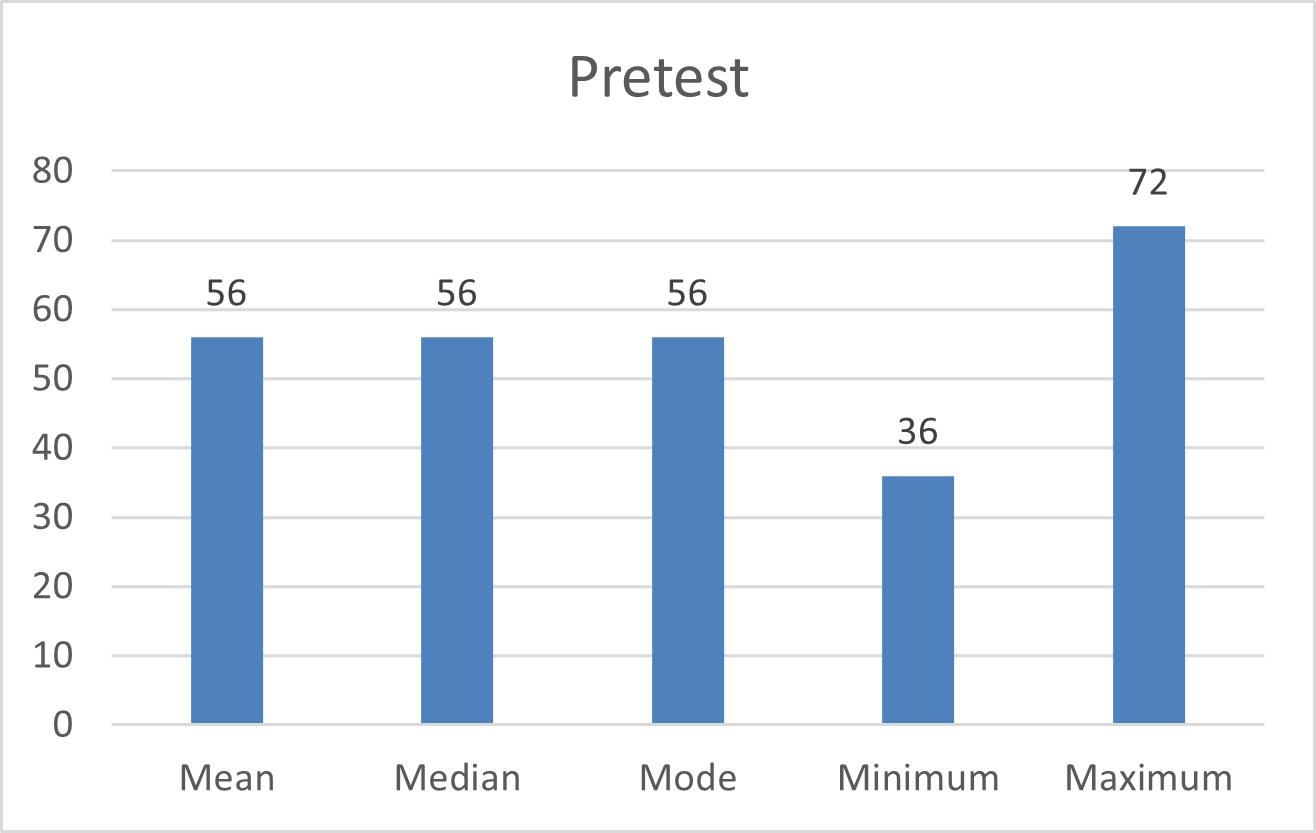
This research is based on the results of the researcher's observations which show that the learning process in grade VII MTs Al Anwar, Cirebon Regency still applies conventional learning methods with less varied media use. The purpose of this research is to find out the optimization of learning outcomes of Akidah Akhlak through Joyful Learning Genially of MTs Al Anwar students in Cirebon Regency. This research was carried out with a quantitative approach through an experimental method, using the One Group Pretest-Posttest research design as the research design. Data was obtained by carrying out tests to evaluate student learning outcomes and documentation. Data analysis in this study was carried out using the Paired Sample T-Test, the results showed that: (1) The learning outcomes of students with an average score before the implementation of Akidah Akhlak learning through Joyful Learning Genially were 56.00. (2) The learning outcomes of students with an average score after implementing Akidah Akhlak learning through Joyful Learning Genially are 86.38. (3) The results of the hypothesis test were obtained with the value of sig. of 0.000 < 0.05, then the H₀ hypothesis is rejected and Hₐ is accepted. The results of the hypothesis test analysis showed significant differences so that it can be concluded that there is an optimization of learning outcomes of Akidah Akhlak through Joyful Learning Genially for MTs Al Anwar Students in Cirebon Regency.
References
Ahmad Susanto. (2016). Teori Belajar & Pembelajaran di Sekolah Dasar. Prenadamedia Group.
Alamsyah, E., & Ahwa, D. F. (2020). Implementasi Metode Joyfull Learning pada Pembelajaran Pendidikan Agama Islam di Sekolah Menengah Pertama Alam Banyuwangi Islamic School. AL-ADABIYAH: Jurnal Pendidikan Agama Islam, 1(1), 59–76. https://doi.org/10.35719/adabiyah.v1i1.12
Alza Nabiel Zamzami, & Raharjo Raharjo. (2024). Penggunaan Platform Genially dan Pengaruhnya Terhadap Hasil Belajar Mata Pelajaran PAI Di SMK Negeri 2 Semarang. Jurnal Budi Pekerti Agama Islam, 2(3), 31–42. https://doi.org/10.61132/jbpai.v2i3.294
Castillo-Cuesta, L. (2022). Gamification and EFL learning with Genially: A study on motivation and engagement. Education and Information Technologies, 27, 2345–2359.
Dadang Kahmat, A. M. dkk. (2019). Beragama dan Pendidikan yang Mencerahkan: Perspektif Multidisiplin dalam Orientasi Harishun. UPT Uhamka Press.
Hermawan, E. (2022). Buku Ajar Penelitian Kuantitatif. In Buku Ajar. Eureka Media Aksara.
Indonesia, K. A. R. (2014). Buku Guru Akidah Akhlak. Kementerian Agama.
Irfan, M., & Fajri, A. L. (2024). Development of Learning Media Using Genially to Increase Student Learning Interest at Smk Muhammadiyah 2 Kuningan in Basic Graphic Design Subjects. Journal of Social Science, 5(4), 1187–1196. https://doi.org/10.46799/jss.v5i4.892
Juniarti, N., Bahari, Y., & Riva’ie, W. (2016). Faktor Penyebab Menurunnya Hasil Belajar Siswa Pada Pembelajaran Sosiologi Di Sma. Laboratorium Penelitian Dan Pengembangan FARMAKA TROPIS Fakultas Farmasi Universitas Mualawarman, Samarinda, Kalimantan Timur, April, 2.
Magdalena, I., Islami, N. F., Rasid, E. A., & Diasty, N. T. (2020). Tiga ranah taksonomi bloom dalam pendidikan. EDISI, 2(1), 132–139.
Marinda, L. (2020). Teori Perkembangan Kognitif Jean Piaget Dan Problematikanya Pada Anak Usia Sekolah Dasar. An-Nisa’ : Jurnal Kajian Perempuan Dan Keislaman, 13(1), 116–152. https://doi.org/10.35719/annisa.v13i1.26
Moto, M. M. (2019). Pengaruh Penggunaan Media Pembelajaran dalam Dunia Pendidikan. Indonesian Journal of Primary Education, 3(1), 20–28. https://doi.org/10.17509/ijpe.v3i1.16060
Novita Sari, N., Maulidiyah, M., & Rahmawati, N. (2023). Gamification in Islamic education: Effectiveness of Genially-based media to enhance students’ motivation and critical thinking. Journal of Islamic Education Research, 5(2), 112–113.
Oktaviani, D. F., & Lisnawati, S. (2023). Pengaruh Metode Joyfull Learning Berbasis Teams Games Tournament Akhlak Di Mts Persatuan Ummat Islam ( Pui ) Kota Bogor. Idarah Tarbawiyah: Journal of Management in Islamic Education, 4(2), 141–156. https://doi.org/10.32832/idarah.v4i2.14445
Praharsini, A., & Ahsani, E. L. (2023). Pembelajaran Joyfull Learning Dengan Puzzle Game Berbasis Eksperimen: Meningkatkan Minat Belajar Siswa Mata Pelajaran Ipa. Fashluna, 4(1), 25–39. https://doi.org/10.47625/fashluna.v4i1.440
Saleh & Syahruddin, D. (2023). Media Pembelajaran. Eureka Media Aksara.
Santoso, S. (2014). Statistik Parametrik Konsep dan Aplikasi dengan SPP. PT. Elex Media Komputerindo.
Sitepu, E. N. (2021). Media Pembelajaran Berbasis Digital. Mahesa, 1(1), 242–248. https://doi.org/10.34007/ppd.v1i1.195
Situmorang, E. G. (2024). Pengaruh Metode Joyfull Learning Berbasis Ice Breaking Terhadap Hasil Belajar Ipa Upt Sd Negeri 105385 Kotasan Kecamatan Galang T . a 2023 / 2024 the Influence of the Joyful Learning Method Based on Ice Breaking on the Science Learning Outcomes of Class V. 3(2), 1–7.
Subagia, I. W., & Wiratma, I. G. L. (2016). Profil penilaian hasil belajar siswa berdasarkan kurikulum 2013. JPI (Jurnal Pendidikan Indonesia), 5(1), 39–55.
Sufiani, S. (2017). Efektivitas Pembelajaran Aqidah Akhlak Berbasis Manajemen Kelas. Al-Ta’dib, 10(2).
Sugiyono. (2013). Metode penelitian pendidikan pendekatan kuantitatif, kualitatif dan R&D. Alfabeta.
Sugiyono. (2016). Metodologi Penelitian Kuantitatif, Kualitatif dan R & D. Alfabeta,CV.
Tugiah, T., & Asmendri, A. (2022). Belajar Agama Sangat Menyenangkan dengan Metode Joyfull Learning. Jurnal Sosial Teknologi, 2(6), 525–533. https://doi.org/10.59188/jurnalsostech.v2i6.351
Downloads
Published
How to Cite
Issue
Section
License
Copyright (c) 2025 Iis Saripah, Zahrotus Saidah, Nurul Azmi

This work is licensed under a Creative Commons Attribution-ShareAlike 4.0 International License.
Authors who publish with Al-Misbah agree to the following terms:
- Authors retain copyright and grant the journal right of first publication with the work simultaneously licensed under a Creative Commons Attribution License (CC BY-SA 4.0) that allows others to share the work with an acknowledgment of the work's authorship and initial publication in this journal.
- Authors are able to enter into separate, additional contractual arrangements for the non-exclusive distribution of the journal's published version of the work (e.g., post it to an institutional repository or publish it in a book), with an acknowledgment of its initial publication in this journal.
- Authors are permitted and encouraged to post their work online (e.g., in institutional repositories or on their website) prior to and during the submission process, as it can lead to productive exchanges, as well as earlier and greater citation of published work.

This work is licensed under a Creative Commons Attribution-ShareAlike 4.0 International License.