Forensics of Low-Quality Facial Images from CCTV Using The Generative Adversarial Network (GAN) Method
DOI:
https://doi.org/10.12928/mf.v8i1.14805Keywords:
CCTV, Digital Forensics, Generative Adversarial Network, Real-ESRGAN, GFPGANAbstract
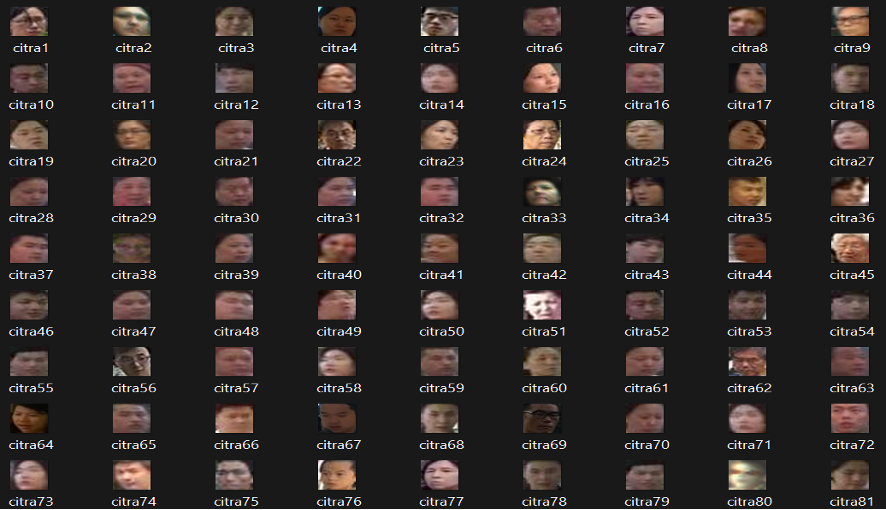
CCTV facial images often suffer from poor quality due to low resolution, motion blur, and poor illumination, complicating forensic investigation and identification. This situation necessitates more modern image restoration methods. This study proposes a Generative Adversarial Network (GAN)-based pipeline that combines two architectures, Real- ESRGAN for resolution enhancement and GFPGAN for more natural facial feature recovery. Experimental results show significant improvements in perceptual quality with a decrease in NIQE values from 12.56 to 7.81 and BRISQUE from 70.81 to 44.23, with an 82% image recovery success rate. Additional evaluations using texture entropy and gradient histograms demonstrate consistency in facial structure and edge sharpness. This study contributes by demonstrating an integrated two- stage GAN approach as an effective solution for face recovery in low-quality CCTV images, while highlighting the need for standardized forensic protocols and facial identity validation in real-world applications. Thus, this pipeline can serve as a pre-processing stage to improve image readability and has the potential to be used as a tool for forensic investigations.
References
I. E, C. Jacob, and R. R, “Facial Recognition and CCTV Integration for Enhanced Security Using Deep Learning Techniques,” in 2024 IEEE Recent Advances in Intelligent Computational Systems (RAICS), Kothamangalam, Kerala, India: IEEE, May 2024, pp. 1–5. doi: 10.1109/RAICS61201.2024.10689986.
M. Tykesson, “Effects of CCTV on Fear of Crime: a Systematic Literature Review,” Eur. J. Crim. Policy Res., Aug. 2025, doi: 10.1007/s10610-025-09633-0.
F. Brookman and H. Jones, “Capturing killers: the construction of CCTV evidence during homicide investigations,” Polic. Soc., vol. 32, no. 2, pp. 125–144, Feb. 2022, doi: 10.1080/10439463.2021.1879075.
K. S. J. Aditya, C. S. Varma, S. P. Teja, P. R. Babu, R. Kuchipudi, and T. S. Murthy, “Low Quality CCTV Image and Video Enhancement using GANs and Audio Enhancement with Equalization Algorithms,” in 2024 International Conference on Knowledge Engineering and Communication Systems (ICKECS), Chikkaballapur, India: IEEE, Apr. 2024, pp. 1–3. doi: 10.1109/ICKECS61492.2024.10616988.
Y. Han, J. Kang, S. Lee, and T. Kim, “Understanding Perceptual Quality in CCTV Images: A Benchmark Dataset and Entropy-based Insights,” presented at the Proceedings of the IEEE/CVF International Conference on Computer Vision, 2025, pp. 3412–3419. Accessed: Mar. 05, 2026. [Online]. Available: https://openaccess.thecvf.com/content/ICCV2025W/VQualA/html/Han_Understanding_Perceptual_Quality_in_CCTV_Images_A_Benchmark_Dataset_and_ICCVW_2025_paper.html
S. Powale, A. Dhanawade, S. Bagwe, S. Kawale, N. L. Chutke, and S. Chavan, “Person identification in low resolution CCTV footage using deep learning,” in 2020 2nd International Conference on Advances in Computing, Communication Control and Networking (ICACCCN), Greater Noida, India: IEEE, Dec. 2020, pp. 236–240. doi: 10.1109/ICACCCN51052.2020.9362764.
S. Fahad et al., “A Modified Singular Value Decomposition (MSVD) Approach for the Enhancement of CCTV Low-Quality Images,” IEEE Access, vol. 12, pp. 20138–20151, 2024, doi: 10.1109/ACCESS.2024.3349477.
A. Vinay, A. Lokesh, V. R. Kamath, K. N. B. Murty, and S. Natarajan, “Enhancement of Degraded CCTV Footage for Forensic Analysis,” in International Conference on Innovative Computing and Communications, vol. 1165, D. Gupta, A. Khanna, S. Bhattacharyya, A. E. Hassanien, S. Anand, and A. Jaiswal, Eds., in Advances in Intelligent Systems and Computing, vol. 1165. , Singapore: Springer Singapore, 2021, pp. 617–636. doi: 10.1007/978-981-15-5113-0_50.
X. Piao, Z. Piao, S. J. Yoo, and Y. H. Gu, “Robust sensitive-information de-identification framework based on relative-position estimation of objects in closed-circuit television videos,” Alex. Eng. J., vol. 89, pp. 172–183, Feb. 2024, doi: 10.1016/j.aej.2024.01.046.
M. Farooq, M. N. Dailey, A. Mahmood, J. Moonrinta, and M. Ekpanyapong, “Human face super-resolution on poor quality surveillance video footage,” Neural Comput. Appl., vol. 33, no. 20, pp. 13505–13523, Oct. 2021, doi: 10.1007/s00521-021-05973-0.
M. Leone, “From Fingers to Faces: Visual Semiotics and Digital Forensics,” Int. J. Semiot. Law - Rev. Int. Sémiot. Jurid., vol. 34, no. 2, pp. 579–599, Apr. 2021, doi: 10.1007/s11196-020-09766-x.
S. Aldhaheri and A. Alhuzali, “SGAN-IDS: Self-Attention-Based Generative Adversarial Network against Intrusion Detection Systems,” Sensors, vol. 23, no. 18, p. 7796, Sep. 2023, doi: 10.3390/s23187796.
H. Yang, P. Shi, D. Zhong, D. Pan, and Z. Ying, “Blind Image Quality Assessment of Natural Distorted Image Based on Generative Adversarial Networks,” IEEE Access, vol. 7, pp. 179290–179303, 2019, doi: 10.1109/ACCESS.2019.2957235.
Z. Zhu, Y. Lei, Y. Qin, C. Zhu, and Y. Zhu, “IRE: Improved Image Super-Resolution Based on Real-ESRGAN,” IEEE Access, vol. 11, pp. 45334–45348, 2023, doi: 10.1109/ACCESS.2023.3256086.
X. Zhang and J. Feng, “A Novel Blind Restoration Method for Miner Face Images Based on Improved GFP-GAN Model,” IEEE Access, vol. 12, pp. 104676–104687, 2024, doi: 10.1109/ACCESS.2024.3435351.
H. Yadav and D. S. Sisodia, “Image Restoration with Conditional Noise Diffusion: Restoring Facial Clarity and Details,” Procedia Comput. Sci., vol. 258, pp. 1159–1168, 2025, doi: 10.1016/j.procs.2025.04.350.
O. Emehin, I. Emeteveke, O. J. Adeyeye, and I. Akanbi, “Generative AI in Forensic Data Analysis: Opportunities and Ethical Implications for Cloud-Based Investigations,” Int. J. Res. Publ. Rev., vol. 5, no. 10, pp. 2941–2957, Oct. 2024, doi: 10.55248/gengpi.5.1024.2904.
C.-C. Hsu, C.-W. Lin, W.-T. Su, and G. Cheung, “SiGAN: Siamese Generative Adversarial Network for Identity-Preserving Face Hallucination,” IEEE Trans. Image Process., vol. 28, no. 12, pp. 6225–6236, Dec. 2019, doi: 10.1109/TIP.2019.2924554.
P. Burnard, “Prelude: Provocations in Creativity Research,” in International Handbook of Research in Arts Education, vol. 16, L. Bresler, Ed., in Springer International Handbook of Research in Arts Education, vol. 16. , Dordrecht: Springer Netherlands, 2007, pp. 1175–1179. doi: 10.1007/978-1-4020-3052-9_80.
A. Aakerberg, K. Nasrollahi, and T. B. Moeslund, “Real‐world super‐resolution of face‐images from surveillance cameras,” IET Image Process., vol. 16, no. 2, pp. 442–452, Feb. 2022, doi: 10.1049/ipr2.12359.
P. B S et al., “Removing/Minimising Gaussian noise from real time CCTV footages using GAN,” in 2024 First International Conference on Innovations in Communications, Electrical and Computer Engineering (ICICEC), Davangere, India: IEEE, Oct. 2024, pp. 1–8. doi: 10.1109/ICICEC62498.2024.10808611.
K. Zhang et al., “Deep Image Deblurring: A Survey,” Int. J. Comput. Vis., vol. 130, no. 9, pp. 2103–2130, Sep. 2022, doi: 10.1007/s11263-022-01633-5.
X. Wang, L. Xie, C. Dong, and Y. Shan, “Real-ESRGAN: Training Real-World Blind Super-Resolution with Pure Synthetic Data,” in 2021 IEEE/CVF International Conference on Computer Vision Workshops (ICCVW), Montreal, BC, Canada: IEEE, Oct. 2021, pp. 1905–1914. doi: 10.1109/ICCVW54120.2021.00217.
X. Wang, Y. Li, H. Zhang, and Y. Shan, “Towards Real-World Blind Face Restoration With Generative Facial Prior,” presented at the Proceedings of the IEEE/CVF Conference on Computer Vision and Pattern Recognition, 2021, pp. 9168–9178. Accessed: Mar. 05, 2026. [Online]. Available: https://openaccess.thecvf.com/content/CVPR2021/html/Wang_Towards_Real-World_Blind_Face_Restoration_With_Generative_Facial_Prior_CVPR_2021_paper.html
C. Hu et al., “RestormGAN: Restormer with generative facial prior towards real-world blind face restoration,” Comput. Electr. Eng., vol. 123, p. 110095, Apr. 2025, doi: 10.1016/j.compeleceng.2025.110095.
Downloads
Published
Issue
Section
License
Copyright (c) 2025 Muhammad Adil Kustian, Ahmad Luthfi

This work is licensed under a Creative Commons Attribution-ShareAlike 4.0 International License.
Start from 2019 issues, authors who publish with JURNAL MOBILE AND FORENSICS agree to the following terms:
- Authors retain copyright and grant the journal right of first publication with the work simultaneously licensed under a Creative Commons Attribution License (CC BY-SA 4.0) that allows others to share the work with an acknowledgment of the work's authorship and initial publication in this journal.
- Authors are able to enter into separate, additional contractual arrangements for the non-exclusive distribution of the journal's published version of the work (e.g., post it to an institutional repository or publish it in a book), with an acknowledgment of its initial publication in this journal.
- Authors are permitted and encouraged to post their work online (e.g., in institutional repositories or on their website) prior to and during the submission process, as it can lead to productive exchanges, as well as earlier and greater citation of published work.

This work is licensed under a Creative Commons Attribution-ShareAlike 4.0 International License.