Enhancing Offline Shopping Experiences With Real-Time Mobile Apps, Specifically in Batam City
DOI:
https://doi.org/10.12928/mf.v8i1.14748Keywords:
mobile application, offline-to-offline (O2O), real-time synchronization, system usability scale (SUS), short-polling architectureAbstract
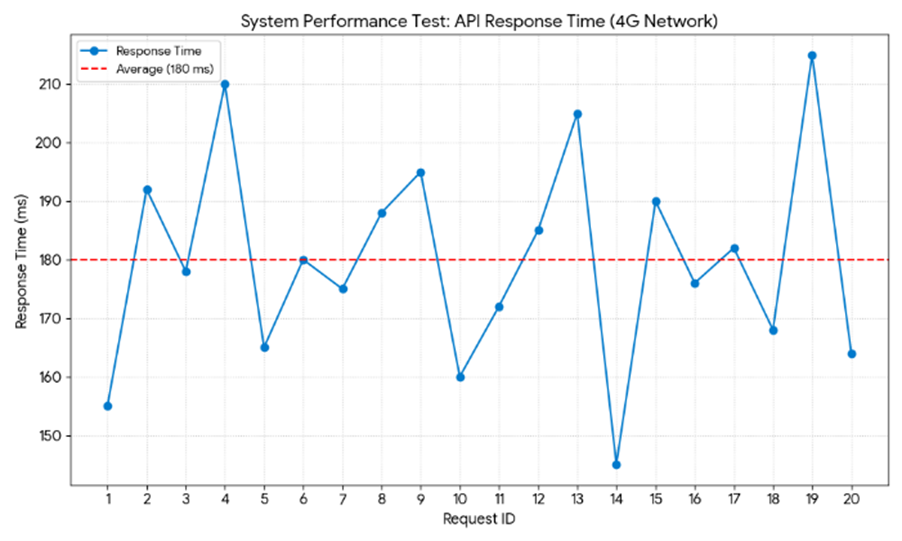
Information asymmetry in the offline retail market imposes substantial "search costs" on purchasing professionals, who frequently lack visibility into real-time product availability across physical stores. Existing solutions, such as generic store locators, fail to provide inventory context, while traditional e-commerce platforms are unable to meet immediate, same-day procurement needs due to logistical delays. This research addresses this gap by developing a Real-Time Location-Aware mobile artifact aimed at optimizing offline procurement efficiency in Batam City. Grounded in Design Science Research (DSR), the system employs a short-polling architecture implemented via Expo (React Native), Express.js, and PostgreSQL to ensure data freshness. Technical performance testing validated the system's "Near Real-Time" capabilities, achieving an average API response time of 180 ms and a stable synchronization interval of 5 seconds under 4G network conditions. Furthermore, a usability evaluation involving 40 purchasing professionals yielded an average System Usability Scale (SUS) score of 71.81, categorizing the application as "Good." These results empirically demonstrate that lightweight polling architectures can effectively mitigate cognitive load and search latency, offering a scalable software engineering solution for the "Offline-to-Offline" (O2O) retail sector.
References
F. R. Azzahra, Najamuddin Khairur Rijal, and Devita Prinanda, “Dampak Ekspor-Impor terhadap Pertumbuhan Ekonomi di Kawasan Perdagangan Bebas dan Pelabuhan Bebas (KPBPB) Batam,” NeoRespublica J. Ilmu Pemerintah., vol. 4, no. 1, pp. 69–82, Dec. 2022, doi: 10.52423/neores.v4i1.16.
N. Lestari, S. W. Hati, F. Y. Bakhroni, and B. Hadyjah, “Implementasi Perubahan Peraturan mengenai Pembebasan Bea Masuk dan Pajak Impor pada Usaha Mikro Kecil dan Menengah,” Studi Akunt. Dan Keuang. Indones., vol. 6, no. 1, p. 1, Jun. 2023, doi: 10.21632/saki.6.1.1-14.
H.-Y. Kung, X.-G. Yue, C.-H. Chen, and F.-J. Hwang, “Architecture, Technologies, and Applications of Location-Based Services,” Mob. Inf. Syst., vol. 2023, pp. 1–4, Jul. 2023, doi: 10.1155/2023/9796535.
C. Y. Gobel, B. Sennung, and S. P. Nua, “Pengembangan E-Commerce Hasil Peternakan Menggunakan Metode Location Based Service Dengan Algoritma Haversine berbasis Android,” Techno.Com, vol. 23, no. 4, pp. 864–873, Nov. 2024, doi: 10.62411/tc.v23i4.11562.
D. L. Warganegara and R. Babolian Hendijani, “Factors That Drive Actual Purchasing of Groceries through E-Commerce Platforms during COVID-19 in Indonesia,” Sustainability, vol. 14, no. 6, p. 3235, Mar. 2022, doi: 10.3390/su14063235.
Y. Cheng, B. Xie, and K. An, “Analysis of Omni-Channel Evolution Game Strategy for E-Commerce Enterprises in the Context of Online and Offline Integration,” Systems, vol. 11, no. 7, p. 321, Jun. 2023, doi: 10.3390/systems11070321.
I. Zennaro, S. Finco, M. Calzavara, and A. Persona, “Implementing E-Commerce from Logistic Perspective: Literature Review and Methodological Framework,” Sustainability, vol. 14, no. 2, p. 911, Jan. 2022, doi: 10.3390/su14020911.
B. M. Wibawa, R. Octovianisa, R. A. Miyagi, and R. R. Mardhotilah, “Pengaruh Perilaku Komplain dan Kepuasan Penanganan Komplain Terhadap Minat Pembelian Konsumen di E-Commerce,” J. Teknol. Inf. Dan Terap., vol. 6, no. 2, pp. 41–49, Dec. 2019, doi: 10.25047/jtit.v6i2.107.
N. Jain and T. F. Tan, “M-Commerce, Sales Concentration, and Inventory Management,” Manuf. Serv. Oper. Manag., vol. 24, no. 4, pp. 2256–2273, Jul. 2022, doi: 10.1287/msom.2021.1071.
M. Alesanco-Llorente, E. Reinares-Lara, J. Pelegrín-Borondo, and C. Olarte-Pascual, “Mobile-assisted showrooming behavior and the (r)evolution of retail: The moderating effect of gender on the adoption of mobile augmented reality,” Technol. Forecast. Soc. Change, vol. 191, p. 122514, Jun. 2023, doi: 10.1016/j.techfore.2023.122514.
D. Aggarwal, D. Sharma, and A. B. Saxena, “Enhancing the Online Shopping Experience of Consumers through Artificial Intelligence,” Int. J. Inf. Technol. Comput. Eng., no. 42, pp. 1–5, Feb. 2024, doi: 10.55529/ijitc.42.1.5.
J. Lee and J. Kim, “Developing a Convenience Store Product Recommendation System through Store-Based Collaborative Filtering,” Appl. Sci., vol. 13, no. 20, p. 11231, Oct. 2023, doi: 10.3390/app132011231.
X. Ren, R. J. Windle, and P. T. Evers, “Channel transparency and omnichannel retailing: The impact of sharing retail store product availability information,” J. Oper. Manag., vol. 69, no. 2, pp. 217–245, Mar. 2023, doi: 10.1002/joom.1211.
S. Aiolfi, S. Bellini, and B. Grandi, “Using mobile while shopping in-store: a new model of impulse-buying behaviour,” J. Consum. Mark., vol. 39, no. 5, pp. 432–444, Jul. 2022, doi: 10.1108/JCM-05-2020-3823.
P. Amajuoyi, L. B. Benjamin, and K. B. Adeusi, “Agile methodologies: Adapting product management to rapidly changing market conditions,” GSC Adv. Res. Rev., vol. 19, no. 2, pp. 249–267, May 2024, doi: 10.30574/gscarr.2024.19.2.0181.
M. Barbareschi, S. Barone, R. Carbone, and V. Casola, “Scrum for safety: an agile methodology for safety-critical software systems,” Softw. Qual. J., vol. 30, no. 4, pp. 1067–1088, Dec. 2022, doi: 10.1007/s11219-022-09593-2.
T. Tuunanen, R. Winter, and J. V. Brocke, “Dealing with Complexity in Design Science Research: A Methodology Using Design Echelons,” MIS Q., vol. 48, no. 2, pp. 427–458, Jun. 2024, doi: 10.25300/MISQ/2023/16700.
D. Todoli-Ferrandis, J. Silvestre-Blanes, V. Sempere-Payá, and S. Santonja-Climent, “Polling Mechanisms for Industrial IoT Applications in Long-Range Wide-Area Networks,” Future Internet, vol. 16, no. 4, p. 130, Apr. 2024, doi: 10.3390/fi16040130.
W.-H. Cheah, N. Mat Jusoh, M. M. T. Aung, A. Ab Ghani, and H. Mohd Amin Rebuan, “Mobile Technology in Medicine: Development and Validation of an Adapted System Usability Scale (SUS) Questionnaire and Modified Technology Acceptance Model (TAM) to Evaluate User Experience and Acceptability of a Mobile Application in MRI Safety Screening,” Indian J. Radiol. Imaging, vol. 33, no. 01, pp. 036–045, Jan. 2023, doi: 10.1055/s-0042-1758198.
R. Andriyani and A. O. Sari, “Penerapan Metode System Usability Scale untuk Evaluasi Sistem Informasi E-Procurement,” JoMMiT J. Multi Media Dan IT, vol. 7, no. 2, pp. 064–069, Dec. 2023, doi: 10.46961/jommit.v7i2.902.
O. Suria, “A Statistical Analysis of System Usability Scale (SUS) Evaluations in Online Learning Platform,” J. Inf. Syst. Inform., vol. 6, no. 2, pp. 992–1007, Jun. 2024, doi: 10.51519/journalisi.v6i2.750.
I. Kennedy, “Sample Size Determination in Test-Retest and Cronbach Alpha Reliability Estimates,” Br. J. Contemp. Educ., vol. 2, no. 1, pp. 17–29, Feb. 2022, doi: 10.52589/BJCE-FY266HK9.
S. R. Arifin, “System Usability Scale (SUS) implementation in Ruang Baca Virtual – UT Library,” MATRIX J. Manaj. Teknol. Dan Inform., vol. 14, no. 1, pp. 1–8, Mar. 2024, doi: 10.31940/matrix.v14i1.1-8.
Downloads
Published
Issue
Section
License
Copyright (c) 2025 Herman, Hernando, Fredian Simanjuntak

This work is licensed under a Creative Commons Attribution-ShareAlike 4.0 International License.
Start from 2019 issues, authors who publish with JURNAL MOBILE AND FORENSICS agree to the following terms:
- Authors retain copyright and grant the journal right of first publication with the work simultaneously licensed under a Creative Commons Attribution License (CC BY-SA 4.0) that allows others to share the work with an acknowledgment of the work's authorship and initial publication in this journal.
- Authors are able to enter into separate, additional contractual arrangements for the non-exclusive distribution of the journal's published version of the work (e.g., post it to an institutional repository or publish it in a book), with an acknowledgment of its initial publication in this journal.
- Authors are permitted and encouraged to post their work online (e.g., in institutional repositories or on their website) prior to and during the submission process, as it can lead to productive exchanges, as well as earlier and greater citation of published work.

This work is licensed under a Creative Commons Attribution-ShareAlike 4.0 International License.