Cluster-Based Modeling of Internal Factors and FinTech Influence on Strategy: A Case Study of Bank BNI
DOI:
https://doi.org/10.12928/mf.v7i2.14066Keywords:
Core Values (AKHLAK), Competitive Strategy, Financial Technology, Cluster Analysis, SEM-PLSAbstract
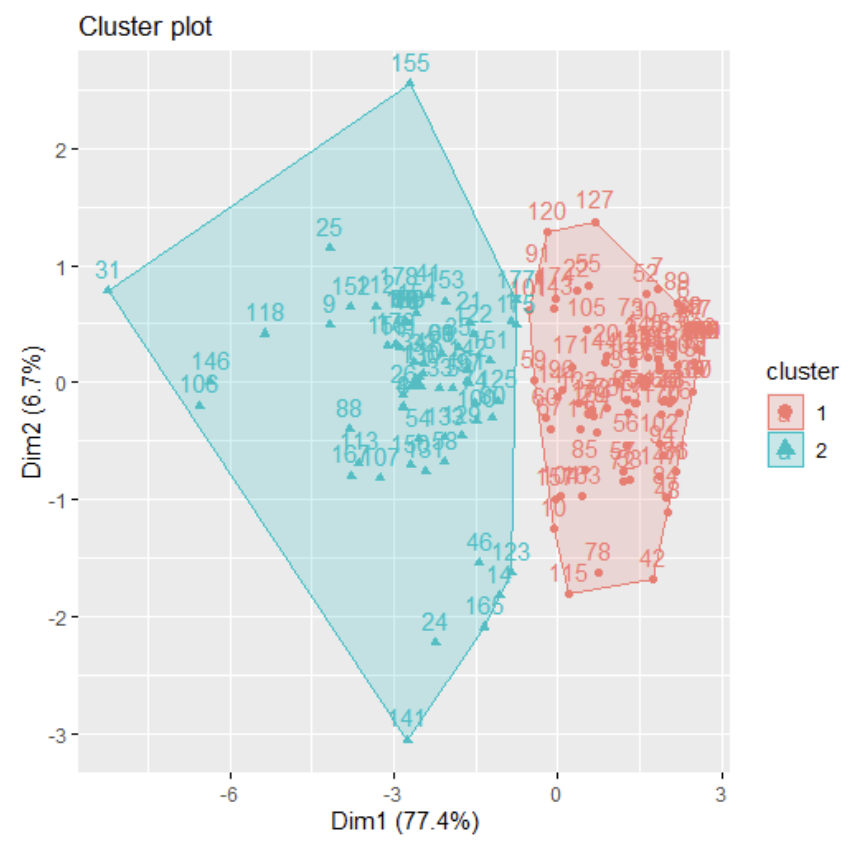
The rapid development of financial technology (FinTech) and shifting organizational dynamics have compelled banking institutions to reassess their internal capabilities and strategic positioning. This study aims to examine the influence of internal factors namely the Core Values of State-Owned Enterprises (AKHLAK), innovation culture, gratitude, employee commitment, and employee performance on the competitive strategy of Bank BNI, while also investigating the moderating role of FinTech. A quantitative research design was employed using a survey method, involving 200 employees of Bank BNI. Data were analyzed using Cluster Analysis and Structural Equation Modeling–Partial Least Squares (SEM–PLS) through WarpPLS software. The results indicate that AKHLAK core values, innovation culture, and gratitude have significant positive effects on employee commitment and performance. Furthermore, both employee commitment and performance significantly enhance the bank’s competitive strategy. FinTech was found to significantly moderate the relationship between employee-related factors and competitive strategy. In conclusion, this study presents an integrated model that highlights the strategic role of internal organizational values and behavior, enhanced by digital technology, in fostering competitive advantage within the banking sector.
References
Menteri BUMN, Surat Edaran Menteri Badan Usaha Milik Negara Nomor SE-7/MBU/07/2020 Tentang Nilai-nilai Utama (Core Values) Sumber Daya Manusia Badan Usaha Milik Negara, vol. SE-7/MBU/07/2020. 2020. Accessed: Aug. 04, 2025. [Online]. Available: https://jdih.bumn.go.id
M. Cortini, D. Converso, T. Galanti, T. Di Fiore, A. Di Domenico, and S. Fantinelli, “Gratitude at Work Works! A Mix-Method Study on Different Dimensions of Gratitude, Job Satisfaction, and Job Performance,” Sustainability, vol. 11, no. 14, p. 3902, July 2019, doi: 10.3390/su11143902.
R. A. Listiyandini, A. Nathania, D. Syahniar, L. Sonia, and R. Nadya, “Mengukur rasa syukur: Pengembangan model awal Skala Bersyukur versi Indonesia,” J. Psikol. Ulayat, vol. 2, no. 2, pp. 473–496, June 2020, doi: 10.24854/jpu39.
R. P. N. Ariyani and E. K. Sugiyanto, “Pengaruh Komitmen Afektif, Komitmen Berkelanjutan, dan Komitmen Normatif Terhadap Kinerja Karyawan (Studi Perusahaan BUMN X di Semarang),” JIMU J. Ilm. Manaj. UBHARA, vol. 2, no. 2, Sept. 2020, Accessed: Aug. 04, 2025. [Online]. Available: https://ejurnal.ubharajaya.ac.id/index.php/JIMU/article/view/2822
P. Sutrisno Saraswati, J. Tanuwijaya, and A. Wahyu Gunawan, “The Influence of HRM, Employee Engagement, and Organizational Commitment on Employee Turnover Intention,” Asian J. Eng. Soc. Health, vol. 3, no. 10, pp. 2184–2202, Oct. 2024, doi: 10.46799/ajesh.v3i10.408.
A. Nuvriasari, G. Wicaksono, and S. Sumiyarsih, “Peran orientasi pasar, orientasi kewirausahaan dan strategi bersaing terhadap peningkatan kinerja UKM,” EKUITAS J. Ekon. Dan Keuang., vol. 19, no. 2, pp. 241–259, Sept. 2018, doi: 10.24034/j25485024.y2015.v19.i2.88.
M. N. N. Naufal, A. Widyaningsih, and D. Andriana, “Pricing Strategy and Service Quality Improvement to Optimize Customer Satisfaction: a Systematic Literature Review,” Int. J. Bus. Law Educ., vol. 5, no. 2, pp. 2827–2837, Dec. 2024, doi: 10.56442/ijble.v5i2.935.
T. Andjarsari, “Pengaruh pembelajaran organisasi terhadap komitmen organisasional, kepuasan kerja dan inovasi (studi pada usaha mikro kecil dan menengah industri mitrabinaan PT Telkom Divisi Regional V Jawa Timur),” doctoral, Universitas Negeri Malang, 2012. Accessed: Aug. 04, 2025. [Online]. Available: https://repository.um.ac.id/64768/
J. Dama and I. W. J. Ogi, “Pengaruh Inovasi Terhadap dan Kreativitas Terhadap Kinerja Karyawan pada PT Bank Mandiri (Persero) Tbk. Manado,” J. EMBA J. Ris. Ekon. Manaj. Bisnis Dan Akunt., vol. 6, no. 1, Art. no. 1, Jan. 2018, doi: 10.35794/emba.v6i1.18759.
A. Pramukti, “Pengaruh motivasi, kompetensi, dan pengembangan karir terhadap komitmen organisasi dan kinerja pegawai,” Celebes Equilibrum J., vol. 1, no. 1, pp. 17–23, 2019.
N. C. Siuwandy and T. Wibowo, “Pengaruh Teknologi Finansial terhadap Strategi Perbankan: Studi Kasus Bank Ocbc Nisp,” Conf. Bus. Soc. Sci. Innov. Technol., vol. 1, no. 1, pp. 418–425, Nov. 2020.
A. Iskandar and A. Subekan, “Pengaruh Personal Knowledge, Job Procedure dan Technology terhadap Kinerja Pegawai Organisasi Publik,” JRMSI - J. Ris. Manaj. Sains Indones., vol. 9, no. 2, pp. 168–192, Sept. 2018, doi: 10.21009/JRMSI.009.2.01.
K. G. Jöreskog and D. Sörbom, LISREL 8: structural equation modeling with the SIMPLIS command language, 5. print., with Foreword and Computer exercises. Chicago, Ill: SSI Scientific Software Internat, 2002.
A. A. R. N. Solimun; Fernandes, Metode statistika multivariat: pemodelan persamaan struktural (SEM): pendekatan WarpPLS. UB Press, 2018. Accessed: Aug. 04, 2025. [Online]. Available: //digilib.walisongo.ac.id/slims/index.php?p=show_detail&id=30683
A. T. Saputra, I Wayan Bagia, and Ni Nyoman Yulianthini, “Pengaruh Kepuasan Kerja dan Loyalitas Karyawan Terhadap Kinerja Karyawan,” J. Manaj. Indones., vol. 4, no. 1, Art. no. 1, Mar. 2016, Accessed: Aug. 04, 2025. [Online]. Available: https://ejournal.undiksha.ac.id/index.php/JMI/article/view/6730
J. Park, J. Choi, and M. Yeu, “Relationship between Corporate Philanthropy and Consumer Loyalty-The Mediating Role of Gratitude, Trust and Commitment: South Korean Consumer Perspectives,” Acad. Mark. Stud. J., 2016, Accessed: Aug. 04, 2025. [Online]. Available: https://www.semanticscholar.org/paper/Relationship-between-Corporate-Philanthropy-and-of-Park-Choi/18928df5f631f4c06da1243fa5a0138e2484ddae
T. Vipraprastha, I. N. Sudja, and A. Yuesti, “The Effect of Transformational Leadership and Organizational Commitment to Employee Performance with Citizenship Organization (OCB) Behavior as Intervening Variables (At PT Sarana Arga Gemeh Amerta in Denpasar City),” Int. J. Contemp. Res. Rev., vol. 9, no. 02, pp. 20503–20518, Feb. 2018, doi: 10.15520/ijcrr/2018/9/02/435.
A. P. Field, Discovering Statistics Using SPSS. SAGE, 2005.
R. L. Gorsuch, Factor Analysis, 2nd ed. Psychology Press, 2013. doi: 10.4324/9780203781098.
L. E. Glenn and C. M. Pepper, “Reliability and Validity of the Self-Rating Scale as a Measure of Self-Criticism,” Assessment, vol. 30, no. 5, pp. 1557–1568, July 2023, doi: 10.1177/10731911221106768.
J. C. Nunnally and I. H. Bernstein, Psychometric Theory. McGraw-Hill Companies,Incorporated, 1994.
J. F. Hair, B. J. Babin, R. E. Anderson, and W. C. Black, Multivariate Data Analysis. Cengage Learning, 2022.
B. S. Everitt, S. Landau, M. Leese, and D. Stahl, Cluster Analysis. Wiley, 2011.
A. K. Jain, “Data clustering: 50 years beyond K-means,” Pattern Recognit. Lett., vol. 31, no. 8, pp. 651–666, June 2010, doi: 10.1016/j.patrec.2009.09.011.
S. F. Hussain and M. Haris, “A k-means based co-clustering (kCC) algorithm for sparse, high dimensional data,” Expert Syst. Appl., vol. 118, pp. 20–34, Mar. 2019, doi: 10.1016/j.eswa.2018.09.006.
Downloads
Published
Issue
Section
License
Copyright (c) 2025 Aisyah Aryandani, Asno Azzawagama Firdaus

This work is licensed under a Creative Commons Attribution-ShareAlike 4.0 International License.
Start from 2019 issues, authors who publish with JURNAL MOBILE AND FORENSICS agree to the following terms:
- Authors retain copyright and grant the journal right of first publication with the work simultaneously licensed under a Creative Commons Attribution License (CC BY-SA 4.0) that allows others to share the work with an acknowledgment of the work's authorship and initial publication in this journal.
- Authors are able to enter into separate, additional contractual arrangements for the non-exclusive distribution of the journal's published version of the work (e.g., post it to an institutional repository or publish it in a book), with an acknowledgment of its initial publication in this journal.
- Authors are permitted and encouraged to post their work online (e.g., in institutional repositories or on their website) prior to and during the submission process, as it can lead to productive exchanges, as well as earlier and greater citation of published work.

This work is licensed under a Creative Commons Attribution-ShareAlike 4.0 International License.