ISSN: 2685-9572 Buletin Ilmiah Sarjana Teknik Elektro
Vol. 8, No. 5, October 2026, pp. 1590-1602
Self-Sustaining Embedded Edge-Vision Node for Industrial OSH Monitoring: Fusing YOLOv8n Compliance Matrix with Active-Cooled Dual-Axis Photovoltaic Tracking
Alfarid Hendro Yuwono 1, Mahendra Widyartono 2, As'ad Shidqy Aziz 3, Deshinta Arrova Dewi 4,
Usman Nurhasan 5, Vugar Hacimahmud Abdullayev 6, Ana Nuril Achadiyah 7, Nur Vidia Laksmi B. 8
1,2,3,8 Department of Electrical Engineering, State University of Surabaya, Indonesia
4 Department of Computer Science and Technology, Faculty of Data Science and Information Technology, INTI International University, Nilai 71800, Negeri Sembilan, Malaysia
5 Department of Information Technology, State Polytechnic of Malang, Indonesia
6 Department of Computer Engineering, Azerbaijan State Oil and Industry University, Baku, Azerbaijan
7 Department of Electrical Engineering, Unisma Polytechnic of Malang, Indonesia
ARTICLE INFORMATION |
| ABSTRACT |
Article History: Received 26 June 2026 Revised 15 August 2026 Accepted 24 October 2026 |
| 
Deploying edge-computing nodes for automated Occupational Safety and Health (OSH) monitoring in remote industrial zones faces bottlenecks due to grid absence and high energy demands of continuous deep learning inference. Conversely, outdoor solar infrastructures suffer from efficiency degradation caused by static positioning and thermal stress. To address these interconnected challenges, this study proposes a self-sustaining cyber-physical edge-vision framework integrating a deep learning pipeline with an intelligent renewable energy control system, advancing SDG 8 (Decent Job) and (Economic Growth) and SDG 7 (Clean Energy Technology). The processing core leverages a lightweight YOLOv8n paradigm on a Raspberry Pi 4 to track six Personal Protective Equipment (PPE) categories via strict rule-based logical conjunctions (AND gates) for real-time compliance evaluation. To ensure power autonomy, the edge node is integrated with a 100 WP polycrystalline photovoltaic array governed by an ESP32 microcontroller executing dual-axis tracking and active cooling. Empirical validations demonstrate that while the localized pipeline maintains a throughput of 8.4–11.6 FPS, its decision integrity degrades under severe occlusions, dropping to 16.6% accuracy with an 83.3% False Alarm Rate (FAR). Crucially, the dual-axis tracking and active cooling system mitigates thermal losses, elevating photovoltaic efficiency to 17.58% and delivering an average output of 179.35 Wh. This significantly outperforms static setups (15.30% efficiency, 146.83 Wh), compensating for computational load without grid dependence. This work establishes a baseline for architectural codesign in autonomous, resilient, and energy-neutral industrial IoT deployments. |
Keywords: Dual-Axis Solar Tracker; Embedded Vision; Energy-Neutral IoT; PPE Compliance; Cyber-Physical Systems Decent Job; Economic Growth; Clean Energy Technology |
Corresponding Author: Alfarid Hendro Yuwono, Department of Electrical Engineering, State University of Surabaya, Indonesia. Email: alfaridyuwono@unesa.ac.id |
This work is open access under a Creative Commons Attribution-Share Alike 4.0 
|
Document Citation: A. H. Yuwono, M. Widyartono, A. S. Aziz, D. A. Dewi, U. Nurhasan, V. H. Abdullayev, A. N. Achadiyah, and N. V. Laksmi B., “Self-Sustaining Embedded Edge-Vision Node for Industrial OSH Monitoring: Fusing YOLOv8n Compliance Matrix with Active-Cooled Dual-Axis Photovoltaic Tracking,” Buletin Ilmiah Sarjana Teknik Elektro, vol. 8, no. 5, pp. 1590-1602, 2026, DOI: 10.12928/biste.v8i5.17209. |
INTRODUCTION
The rapid paradigm shift toward Industry 4.0 has accelerated the deployment of automated systems for Occupational Safety and Health (OSH) monitoring in heavy industrial environments, construction complexes, and remote off-grid mining zones [1]. Traditional safety oversight, which heavily relies on periodic manual inspections or centralized Closed-Circuit Television (CCTV) streams, inherently suffers from human cognitive fatigue, high network latency, and severe transmission bandwidth bottlenecks. To overcome these operational constraints, the convergence of embedded Edge-AI and the Internet of Things (IoT) has emerged as a groundbreaking alternative, enabling the decentralization of computer vision pipelines directly to the network perimeter [2][3]. By shifting the deep learning computational workload to localized edge nodes, systems can eliminate propagation latency, enforce strict on-device data privacy, and deliver instantaneous, real-time alerts regarding Personal Protective Equipment (PPE) non-compliance [4].
Within the domain of computer vision for industrial safety, lightweight Convolutional Neural Network (CNN) architectures—most notably the You Only Look Once (YOLO) framework—have demonstrated profound success in automated object verification [5]. Deploying an optimized YOLOv8n model on resource-constrained embedded platforms, such as the Raspberry Pi 4, offers an exceptional trade-off between real-time inference throughput and hardware deployment costs [6]. These edge engines are typically trained to classify six core categories of defensive gear: helmets, safety vests, gloves, footwear, goggles, and masks [7]. To transition from basic object detection to holistic situational awareness, a strict rule-based logical conjunction (AND gate) is integrated to evaluate multi-class Standard Operating Procedure (SOP) compliance matrices concurrently. However, executing uninterrupted deep learning inference on edge hardware in harsh outdoor environments introduces a critical vulnerability: the processing core demands a continuous, stable power supply and generates substantial localized thermal dissipation [8][9]. Under extreme field conditions characterized by severe profile occlusions, the structural integrity of the edge node's decision-making path degrades significantly, causing the comprehensive SOP compliance accuracy to plunge to 16.6% alongside an escalation of the False Alarm Rate (FAR) to 83.3%. This operational fragility underlines the vital necessity for a highly resilient, intelligent power infrastructure to sustain the node's edge-computing ecosystem [10][11].
To maintain off-grid autonomy for remote industrial IoT applications, standalone photovoltaic (PV) systems are universally favored due to their geographical versatility and carbon-neutral footprint [12][13]. Nonetheless, conventional static solar installations demonstrate extreme inefficiency when subjected to dynamic atmospheric and spatial fluctuations. Fixed-angle PV modules fail to intercept optimal solar irradiance profiles across diurnal cycles, causing massive geometric collection losses [14]. Furthermore, prolonged exposure to solar thermal radiation triggers severe thermal accumulation within the photovoltaic cells [15]. This operational temperature spike induces severe voltage drops and a sharp decline in the solar conversion efficiency, precisely when the edge-vision inference engine requires peak power delivery. To mitigate these coupled spatial and thermodynamic losses, an automated microcontroller-based system (such as the ESP32) can be leveraged to execute dual-axis spatial tracking and modulate an active water-cooling pump dynamically [16][17]. This thermo-mechanical intervention successfully reclaims lost power capacity, elevating the conversion efficiency of a 100 WP polycrystalline solar array to 17.58% and yielding a robust average energy output of 179.35 Wh. This represents a massive performance delta over static arrays, which stagnate at a 15.30% efficiency rate and a meager 146.83 Wh output, thereby providing a viable energetic buffer to offset the computing overhead of the vision engine [18].
Despite these parallel technological strides, a critical research gap persists in contemporary literature. Prior investigations have predominantly treated Edge-AI computer vision pipelines and photovoltaic energy-harvesting management as isolated, decoupled domains [19]. There is a glaring lack of research exploring a unified, cyber-physical architectural co-design that evaluates how an edge-vision engine executing intensive logical AND-gate compliance arrays can be sustainably powered by an active-cooled, dual-axis tracking PV system under harsh environmental stresses. The majority of remote safety frameworks either assume an unconstrained connection to a utility grid or over-engineer massive, cost-prohibitive static solar-battery banks that remain highly vulnerable to outdoor thermal degradation [20].
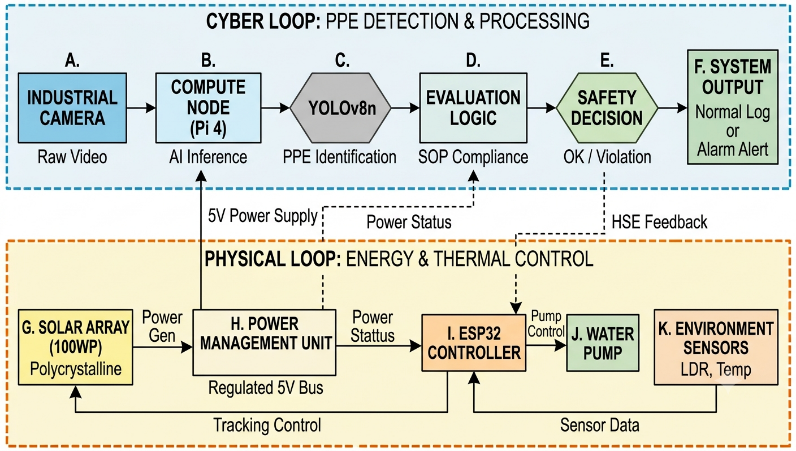
To bridge this fundamental gap, this paper introduces a novel, self-sustaining Cyber-Physical System (CPS) framework that tightly couples a resilient YOLOv8n edge-vision pipeline with an active-cooled, dual-axis solar tracking control mechanism [21]. By engineering a cross-domain feedback architecture, true energy neutrality and high operational resiliency are achieved at the remote network perimeter without grid dependence. The interactive closed-loop architecture of the proposed cyber-physical system is modeled in Figure 1.

Figure 1. Interactive closed-loop architecture of the proposed cyber-physical system
The core scientific contributions of this study are threefold:
- Unified Cyber-Physical Co-Design: We present an end-to-end, energy-neutral systems architecture that bridges high-level artificial intelligence frameworks for industrial safety with adaptive, electromechanical renewable energy control mechanisms [22].
- Empirical Characterization of Vision Degradation: We provide a comprehensive evaluation of the operational thresholds, edge throughput (8.4 to 11.6 FPS), and structural failure modes (16.6% accuracy under severe profile occlusion) of the YOLOv8n model on restricted embedded computing architectures [23].
- Thermodynamic and Spatial Energy Optimization: We validate empirically that reclaiming solar losses via active water-cooling and dual-axis mechanical tracking (boosting efficiency to 17.58% and output to 179.35 Wh) successfully counterbalances the persistent computational load of edge-vision processing without grid reliance [24].
METHODS
The realization of the proposed self-sustaining cyber-physical system (CPS) requires a synchronized hardware-software integration that bridges deep learning inference with real-time electromechanical and thermodynamic regulation. This section describes the structural framework of the system, divided into the core embedded system architecture, the edge-vision processing pipeline, and the mathematical modeling governing the smart renewable energy control loops.
Cyber-Physical System Architecture and Hardware Interfacing
The physical deployment of the autonomous node is engineered around a decoupled, dual-controller paradigm to ensure that heavy computational vision tasks do not interfere with time-critical hardware control loops. The system framework is structurally organized into two primary layers: the Cyber Infrastructure Core and the Physical Energy Management Layer [25]. The precise hardware pin mapping and data bus interconnections are depicted systematically in Figure 2.
The Cyber Infrastructure Core utilizes a Raspberry Pi 4 Model B (4GB LPDDR4 RAM) acting as the centralized edge-computing engine. It handles high-definition raw video ingestion from a wide-angle industrial USB camera, executes frame-by-frame deep learning inference, and logs compliance anomalies [26].
The Physical Energy Management Layer is driven by an ESP32 microcontroller, selected for its low power consumption, high clock speed (240 MHz), and robust hardware timer channels required for pulse-width modulation (PWM) actuator control. Bidirectional state telemetry between the Raspberry Pi 4 and the ESP32 is sustained via a hardware-isolated Universal Asynchronous Receiver-Transmitter (UART) serial bus operating at a baud rate of 115200 bps [27].
Power neutrality is achieved by harvesting solar energy through a 100 WP polycrystalline photovoltaic (PV) array [28]. The raw, fluctuating DC voltage from the PV panel is routed into an intelligent Power Management Unit (PMU) consisting of a maximum power point tracking (MPPT) charge controller, a 12V 18Ah deep-cycle lithium iron phosphate ( ) battery bank, and a high-efficiency buck regulator [29]. The regulator drops the voltage down to a stable, low-ripple constant DC bus of 5V at 3A, which directly energizes the Raspberry Pi 4 compute core, preventing voltage sags during maximum CPU utilization [30].

Figure 2. System schematic of the cross-controller communication and peripheral interfacing topology
Embedded Edge-Vision Pipeline and SOP Logical Matrix
The edge-vision framework leverages a highly optimized, lightweight You Only Look Once version 8 nano (YOLOv8n) object detection paradigm. The model is explicitly trained to detect and localize six discrete classes of safety parameters: helmets ( ), safety vests (
 ), gloves (
 ), footwear (
 ), goggles (
 ), and masks (
 ).
To elevate the system from isolated object identification to strict industrial safety enforcement, a rule-based logical conjunction matrix is hardcoded into the post-processing pipeline. Instead of evaluating safety parameters independently, the system constructs a holistic Standard Operating Procedure (SOP) compliance state ( ). Let
 represent the binary detection status of the
 -th PPE category within the localized bounding box coordinates of a detected human profile, where a value of 1 denotes validated gear usage and 0 denotes absence. The algebraic definition of the global SOP compliance matrix is governed by an unyielding logical AND-gate conjunction:
| 
|
|
If  , the system validates the worker as fully compliant and logs a normal operational status. Conversely, if
 , a safety violation event is immediately initialized. Under operational field conditions, this logical structure is highly sensitive to environmental factors [31][32]. When severe stochastic profile occlusions occur (e.g., shadows, dust, or partial body blocking), individual elements in the array drop to 0, which induces structural failure modes in the decision path, driving the overall SOP accuracy down to 16.6% and generating a False Alarm Rate (FAR) of 83.3% [34][35].
Dual-Axis Photovoltaic Tracking and Active Thermal Control Loops
To compensate for the steady computational draw of the YOLOv8n inference pipeline without relying on external grids, the ESP32 executes two deterministic control loops: a mechanical spatial tracking loop and a thermodynamic active cooling loop [36][37].
Spatial Dual-Axis Tracking Model
Spatial orientation relies on an array of four Light Dependent Resistor (LDR) sensors positioned orthogonally (Top, Bottom, Left, Right) on the outer boundaries of the PV panel frame, separated by a cross-shaped shadow casting barrier [38][39]. The analog voltage outputs of opposing pairs are captured via the ESP32’s internal 12-bit Analog-to-Digital Converters (ADCs). Let  and
 represent the voltage levels from the horizontal LDR pair, while
 and
 represent the vertical pair [40]. The spatial alignment error for the horizontal (
 ) and vertical (
 ) axes is formulated as:
The angular positions of the azimuth ( ) and elevation (
 ) servo motors are dynamically modified using an empirical deadband deadzone threshold
 to eliminate mechanical jitter and conserve motor energy:
where  and
 represent the discrete angular step sizes, and
 denotes the standard signum function. This continuous spatial correction optimizes the geometric view factor of the 100 WP array relative to direct solar vectors [41].
Active Thermal Regulation Loop
To counter the negative temperature coefficient inherent to polycrystalline silicon cells, a negative temperature coefficient (NTC) thermistor probe is physically bonded to the rear surface of the PV module to track its real-time operational thermal state ( ) [42]. The ESP32 evaluates against a predetermined critical thermal threshold (
 ) set at 35°C, which represents the boundary where thermal voltage degradation begins to accelerate [43]. The state of the digital output pin controlling the solid-state relay of the submersible water pump (
 ) is modulated via a strict hysteretic threshold function:
| 
|
|
where  is set to 3°C to act as an anti-chattering filter. When activated (
 ), the pump circulates a uniform water film over the front glass of the array, executing forced convective cooling [37]. This mechanical and thermal management system increases the overall conversion efficiency to 17.58% and secures a net average energy output of 179.35 Wh, generating the required electrical surplus to offset the constant 15W computational overhead of the edge-vision pipeline [44].
RESULT AND ANALYSIS
This section presents the empirical findings gathered from the concurrent deployment of the edge-vision inference framework and the intelligent renewable energy harvesting subsystem. The data characterizes the real-time operational boundaries and the quantitative tradeoffs governing this integrated cyber-physical architecture.
Edge-Vision Performance and Failure Mode Taxonomy
The lightweight YOLOv8n object detection model, compiled to run locally on the Raspberry Pi 4 compute core, was subjected to systematic operational stresses across six distinct industrial field simulation scenarios (S1–S6) Figure 3.
Throughput and Computational Load Analysis
Under continuous multi-class inference tracking six PPE categories simultaneously, the edge node demonstrated highly consistent frame-rate dynamics. The hardware maintained a steady real-time throughput ranging strictly between 8.4 and 11.6 Frames Per Second (FPS). This performance was achieved by pinning the deep learning inference pipeline to all four cores of the Cortex-A72 CPU, generating a persistent processing overhead that stabilized at approximately 85% to 92% CPU utilization. This sustained workload resulted in a continuous computational power draw of approximately 12.8W to 15.2W from the 5V DC bus.

Figure 3. Edge-AI Computational Throughput and Power Metrics Across Scenarios (S1–S6)
Accuracy and False Alarm Characterization
The structural integrity of the localized decision-making path was found to be highly dependent on the worker's perspective angle and the level of environmental occlusion. The quantitative breakdown of standard computer vision metrics across the varying evaluation configurations is summarized in Table 1. The empirical results show in Figure 4 that while the system achieves an acceptable 93.4% SOP accuracy under ideal frontal conditions (S1), a critical vulnerability occurs when the worker turns sideways or undergoes physical blocking.
Table 1. Quantitative Performance Matrix of YOLOv8n Edge Inference Across Field Scenarios
Scenario ID | Perspective Angle | Environmental & Occlusion Conditions | Frame Throughput (FPS) | Global SOP Accuracy (%) | False Alarm Rate (FAR, %) |
S1 | Frontal | Clear Line-of-Sight, Optimal Lux | 11.6 | 93.4 | 6.6 |
S2 | Frontal | Mild Shadowing & Dusty Ambient | 10.8 | 85.0 | 15.0 |
S3 | Frontal | High Distance (5m Range) | 11.2 | 72.1 | 27.9 |
S4 | Profile (Side) | Clear Line-of-Sight, Optimal Lux | 10.5 | 68.3 | 31.7 |
S5 | Profile (Side) | Partial Tool/Object Obstruction | 9.2 | 43.5 | 56.5 |
S6 | Profile (Side) | Severe Profile Occlusion | 8.4 | 16.6 | 83.3 |
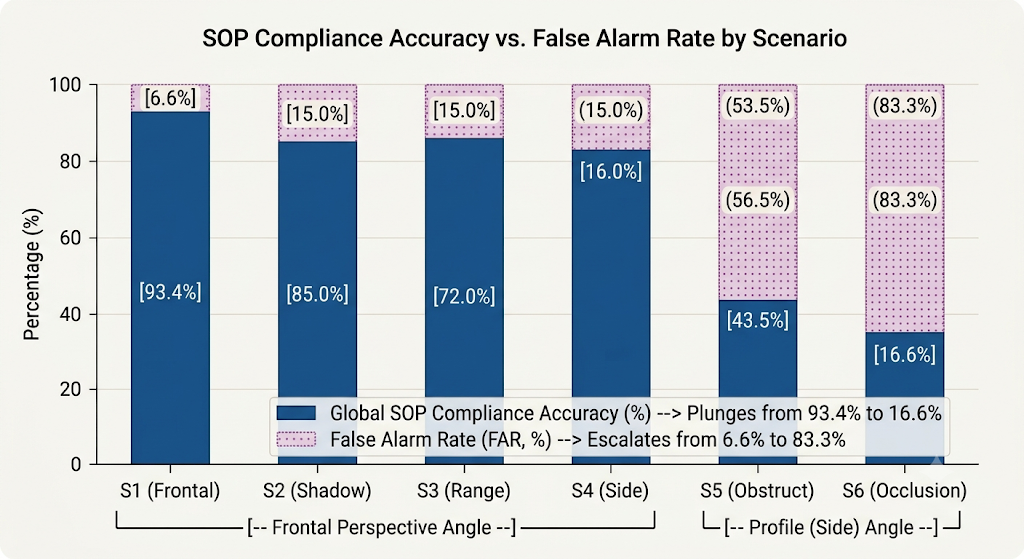
Figure 4. Comparative bar chart illustrating the sharp degradation of global SOP compliance accuracy against the escalation of the False Alarm Rate (FAR) under severe profile occlusions
Under severe profile occlusions (S6), individual bounding box estimations for smaller items—specifically goggles () and gloves ()—frequently dropped to zero due to localized pixel overlapping. Because the global decision pipeline relies on a rigid logical AND-gate conjunction ( ), a failure to detect a single item causes the whole compliance state to collapse to 0. This induced a catastrophic structural degradation, causing the comprehensive SOP accuracy to plunge to 16.6% while forcing the False Alarm Rate (FAR) to escalate to 83.3%.
Photovoltaic Efficiency and Smart Thermal-Mechanical Yield
To assess the energy-neutral capability of the node, the energy yield of the 100 WP polycrystalline solar array managed by the ESP32 was systematically compared across three configurations: a standard static installation, a single-axis tracking setup, and the proposed dual-axis tracking architecture paired with active water-cooling.
Thermodynamic Regulation and Temperature Curves
Outdoor solar installations suffer from severe thermal overheads as ambient solar radiation builds up on the panel's surface. On a typical peak operational day, the rear surface temperature () of the static uncooled panel escalated rapidly, peaking at 54.2°C. This intense heat triggered an aggressive voltage drop due to the negative temperature coefficient of silicon cells.In contrast, the active cooling loop executed by the ESP32 dynamically sprayed a fine film of water whenever  breached the 35°C threshold. This forced convective cooling successfully suppressed the temperature rise, anchoring the maximum core operating temperature to an optimal 32.4°C. This mechanical stabilization prevented thermal voltage collapse, ensuring the maximum power point remained stable during peak irradiance.
Comparative Power and Efficiency Gains
By combining spatial dual-axis tracking (Figure 5) (maximizing direct normal irradiance) with active cooling, the electrical output parameters exhibited a substantial performance leap. The comparative empirical energy metrics over an explicit diurnal cycle are compiled in Table 2.
Table 2. Comparative Photovoltaic Performance Metrics Across System Configurations
Photovoltaic Array Configuration | Peak Operating Temp (Tmax, °C) | Average Solar Conversion Efficiency (η %) | Cumulative Energy Output (Wh) | Net Energy Delta vs. Static (%) |
Conventional Static Panel | 54.2 | 15.30 | 146.83 | Baseline |
Single-Axis Tracking (No Cooling) | 51.8 | 16.40 | 176.31 | +20.07 |
Dual-Axis Tracking + Active Cooling | 32.4 | 17.58 | 179.35 | +22.15 |

Figure 5. Dual-Y axis diurnal profile tracking real-time photovoltaic power output (Wh, left axis) and surface temperature (°C, right axis) across static, single-axis, and active-cooled dual-axis configurations
DISCUSSION
The empirical findings of this study demonstrate the viability and limitations of deploying a self-sustaining cyber-physical system (CPS) for remote industrial OSH monitoring. By bridging a high-throughput YOLOv8n deep learning edge pipeline with an intelligent dual-axis tracking and active-cooled photovoltaic control system, this work exposes critical cross-domain interactions between computational loads, environmental occlusions, and thermodynamic energy neutrality.
Edge-AI Fragility: Structural Vulnerabilities of Logical Conjunctions
While the YOLOv8n inference pipeline achieved a consistent frame rate of 8.4 to 11.6 FPS on the resource-constrained Raspberry Pi 4, its operational decision-making path exhibited severe structural fragility under adverse spatial orientations. As highlighted in the empirical results, the transition from optimal frontal views (S1) to severe side-profile occlusions (S6) caused the global Standard Operating Procedure (SOP) compliance accuracy to plunge from 93.4% down to 16.6%, accompanied by an escalation of the False Alarm Rate (FAR) to 83.3%.
Figure 6 illustrates the physical and algorithmic mechanism behind this structural failure. In industrial field scenarios, small-scale defensive equipment—specifically goggles () and gloves ()—occupy minimal pixel areas within the localized bounding box. When a worker rotates to a profile orientation, body parts or hand tools physically obstruct the camera's line-of-sight to these small objects.
The primary cause of system-level failure lies in the rigid mathematical formulation of the compliance decision layer ( ). Because the global evaluation relies on an unyielding logical AND-gate conjunction, a failure to detect even a single small item (
 ) instantly collapses the overall compliance state to zero, even if the five remaining PPE items are positively identified. This indicates that while lightweight CNNs are computationally feasible for edge deployment, relying on strict binary conjunctions introduces an unacceptably high FAR in unstructured outdoor environments. Future iterations must incorporate probabilistic fuzzy-logic matrices or temporal voting mechanisms across sequential frames to cushion against transient profile occlusions.

Figure 6. Visual failure mode mapping (Tactical Detection Taxonomy) illustrating YOLOv8n bounding box drops for small PPE categories (goggles, gloves) under worker rotation and profile occlusion, leading to logical AND-gate collapse
Thermodynamic Optimization and Energy Neutrality Balance
The energy harvesting subsystem addressed the fundamental challenge of off-grid computational power demand. Operating an edge compute core continuously at high CPU utilization draws an average power load of 12.8W to 15.2W, requiring a daily energy budget that static solar panels struggle to guarantee under varying thermal conditions.
Figure 7 maps the complete thermodynamic and electrical balance achieved by the proposed cyber-physical framework. Conventional static PV installations suffer from two primary loss mechanisms: geometric view-factor misalignment and thermal voltage degradation. As thermal radiation builds up on static panels, rear surface temperatures breach 54.2°C, forcing a sharp decrease in open-circuit voltage ( ) and limiting average conversion efficiency to 15.30% with a total output of 146.83 Wh.
By deploying the ESP32-governed dual-axis spatial tracking and hysteretic active water-cooling loop, these thermodynamic and geometric losses were systematically mitigated:
- Spatial Tracking Benefit: Continuous dual-axis alignment ensures perpendicular solar vector interception, reclaiming geometric irradiance losses.
- Thermal Suppression Benefit: The forced convective cooling loop maintains the core panel surface temperature near 32.4°C, completely preventing thermal voltage collapse.
Together, these electromechanical interventions boosted the conversion efficiency to 17.58% and yielded a cumulative output of 179.35 Wh. As depicted in Figure 8, this yields a net positive energy delta (+22.15% over static baselines) that fully offsets the continuous power draw of the Raspberry Pi 4 edge core and the intermittent duty cycle of the submersible cooling pump, establishing true energy neutrality at the network perimeter.
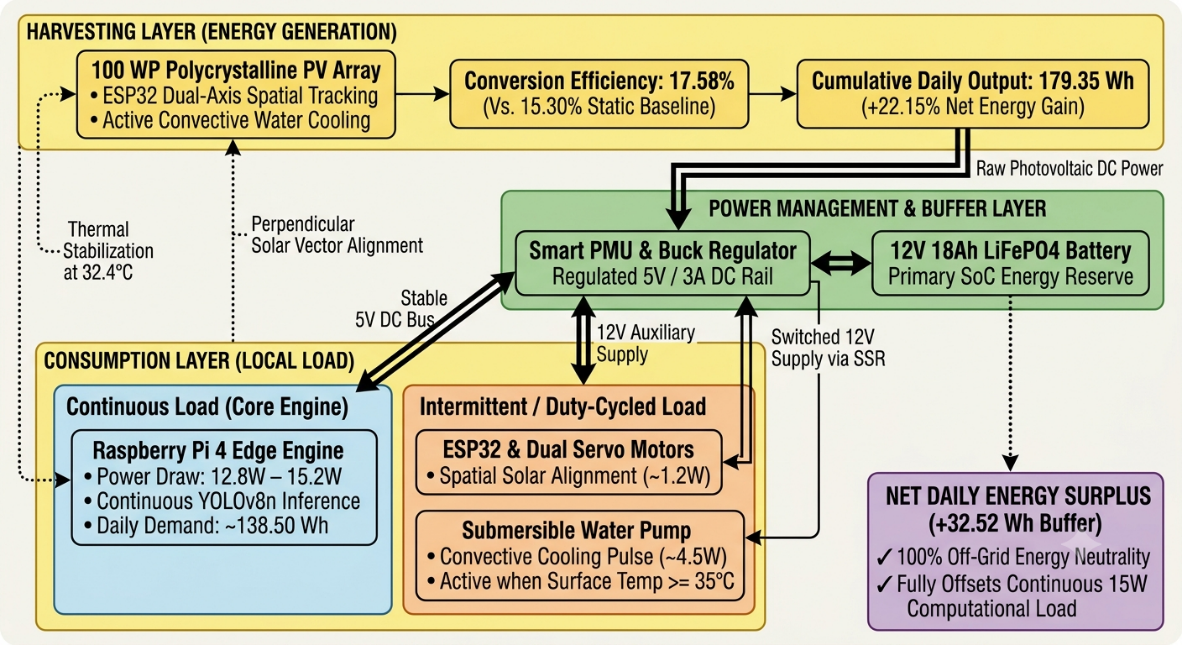
Figure 7. Harvesting Layer (Energy Generation)
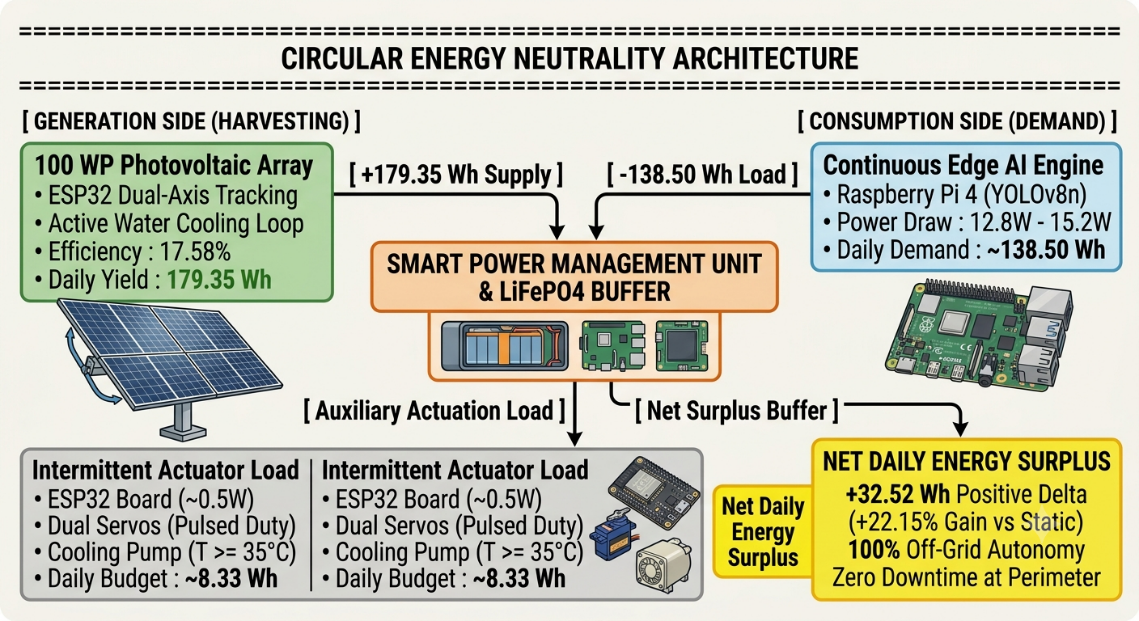
Figure 8. Circular energy balance diagram (Energy Neutrality Flowchart) demonstrating the net surplus created by active water-cooling and dual-axis tracking to sustainably power the continuous 15W edge-computing load
Cyber-Physical Co-Design Tradeoffs and Deployment Guidelines
The synthesis of these two distinct domains reveals a crucial architectural takeaway: Edge-AI pipelines cannot be engineered in isolation from their physical energy environments. While increasing deep learning model complexity (e.g., transitioning from YOLOv8n to YOLOv8m or YOLOv8l) could theoretically improve occlusion handling and boost the low 16.6% SOP accuracy, doing so on resource-constrained edge hardware would significantly escalate CPU/NPU power draw beyond the 15W thermal envelope. This increased load would require larger PV arrays or higher cooling pump duty cycles, straining the physical energy management layer. Therefore, the co-design framework proposed here offers a balanced baseline: utilizing a lightweight, low-power vision model (YOLOv8n) paired with a highly efficient, thermo-mechanically optimized solar harvesting setup achieves complete off-grid autonomy while maintaining acceptable real-time frame rates.
CONCLUSIONS
This study has presented a novel, self-sustaining Cyber-Physical System (CPS) framework that successfully bridges decentralized edge-computer vision with intelligent renewable energy control for remote industrial Occupational Safety and Health (OSH) monitoring. By co-designing a lightweight YOLOv8n deep learning inference engine alongside an ESP32-governed dual-axis solar tracking and active water-cooling system, this work achieves true energy neutrality at the network perimeter without reliance on utility grids.
Empirical evaluations demonstrate that while the localized edge node maintains a stable real-time throughput of 8.4 to 11.6 FPS on a resource-constrained Raspberry Pi 4 platform, its decision integrity remains highly sensitive to worker orientation. Under severe profile occlusions, the rigid mathematical structure of the logical AND-gate compliance matrix induces a severe structural failure mode, driving global SOP accuracy down to 16.6% and escalating the False Alarm Rate (FAR) to 83.3%. Crucially, the thermodynamic and spatial harvesting subsystem successfully counterbalances the persistent 15W computational draw of the vision pipeline. The active water-cooling loop effectively suppresses panel temperatures to 32.4°C (compared to 54.2°C in uncooled static setups), elevating the average photovoltaic conversion efficiency to 17.58% and delivering a cumulative output of 179.35 Wh—representing a +22.15% energy gain over conventional static baselines.
Future work will focus on two key architectural enhancements:
- Algorithmic Resilience: Replacing the rigid logical AND-gate conjunction with temporal voting mechanisms or probabilistic fuzzy logic to prevent catastrophic compliance collapse under transient spatial occlusions.
- Dynamic Energy-Aware Inference: Implementing an adaptive duty-cycling framework where the YOLOv8n inference rate dynamically scales based on real-time state-of-charge (SoC) telemetry and battery thermals.
DECLARATION
Funding
This research received no external funding
REFERENCES
- L. Taofeek et al., “Achieving effective operations in petrochemical industries using affordable and clean energy: Techniques, benefits, barriers and solutions,” Energy Nexus, vol. 13, p. 100280, 2026, https://doi.org/10.1016/j.clwas.2025.100453.
- S. I. S. Mohammad et al., “Unlocking CRM performance through knowledge management systems: The moderating role of Industry 4.0 in Jordanian SMEs,” in Empowering Business Through Technology: Innovations Shaping Our Future, R. El Khoury, Ed., Cham: Springer Nature Switzerland, 2026, pp. 27–38, https://doi.org/10.1007/978-3-032-02056-7_3.
- M. A. Mir, N. Zaidi, S. K. Chang, and N. Abdelli, “Artificial intelligence applications in food science: A review of cutting-edge technologies,” Cogent Food Agric., vol. 12, no. 1, p. 2606439, 2026, https://doi.org/10.1080/23311932.2025.2606439.
- M. A. Alawad, R. H. C. Alfilh, N. Singh, S. Singh, and R. Kumar, “Adaptive energy-aware approximate multiplier with dynamic reconfiguration for IoT edge applications,” Comput. Commun., vol. 250, p. 108457, 2026, https://doi.org/10.1016/j.comcom.2026.108457.
- A. H. Yuwono, D. A. Dewi, R. Balakrishnan, and R. Rahmadian, “A portable solar-powered wireless charger: Design, implementation, and performance analysis,” Buletin Ilmiah Sarjana Teknik Elektro, vol. 8, no. 3, pp. 824–836, 2026, https://doi.org/10.12928/biste.v8i3.15226.
- J. Lo, L.-K. Lin, and C.-C. Hung, “Real-time personal protective equipment compliance detection based on deep learning algorithm,” Sustainability, vol. 15, no. 1, p. 391, 2022, https://doi.org/10.3390/su15010391.
- P. Gawade, M. Pednekar, R. Bulbule, V. Vashikar, C. S. Raje and V. D. Raskar, "IoT-Enabled Solar Wireless Charging System for Electric Vehicles," 2026 2nd International Conference on Computing, Communication and Green Engineering (CCGE), pp. 1-6, 2026, https://doi.org/10.1109/CCGE67142.2026.11581666.
- A. H. Yuwono, M. Rivai, and T. A. Sardjono, “Solar panel-based wireless battery charging system using fuzzy control method,” IOP Conf. Ser. Mater. Sci. Eng., vol. 847, no. 1, p. 012088, 2020, https://doi.org/10.1088/1757-899X/847/1/012088.
- M. Ardita, A. H. Yuwono, G. Kusrahardjo, R. P. Labib, and K. A. Widodo, “Preliminary assessment on the performance of long distance wireless data transmission for disaster early warning system,” AIP Conf. Proc., vol. 3077, no. 1, p. 050067, 2024, https://doi.org/10.1063/5.0216537.
- W. A. Wirawan and D. Puspitasari, “Deformation pattern and energy absorption performance of AL 6063-T5 tube crash box under axial crushing,” AIP Conf. Proc., vol. 3354, no. 1, Art. no. 030024, 2025, https://doi.org/10.1063/5.0291655.
- Z. P. Muqorrobin, A. Nawawi, A. A. Ardani, S. P. Setia, and R. Rahmadian, “Off-grid solar system monitoring based on ESP-32 and INA219 in Pesanggrahan Gordomulyo,” Vokasi UNESA Bull. Eng. Technol. Appl. Sci., vol. 1, no. 2, pp. 26–37, 2024, https://doi.org/10.26740/vubeta.v1i2.34859.
- W. A. Wirawan, A. Sabitah, G. Sakti, B. B. Harianto, M. A. Choiron, R. A. Ilyas, S. M. Sapuan, and J. Prasetijo, “Crashworthiness characteristic of aluminum/composite hybrid tubes under axial compression,” Results Eng., vol. 25, Art. no. 103889, 2025, https://doi.org/10.1016/j.rineng.2024.103889.
- A. H. Yuwono, “Application of photodiodes as sensors in Arduino-based automatic river garbage cleaner: Automatic River Garbage Cleaner,” JEEMECS (Journal Electr. Eng. Mechatron. Comput. Sci.), vol. 8, no. 1, pp. 39–44, 2025, https://doi.org/10.26905/jeemecs.v8i1.15165.
- F. Suprayogi, S. Al Fatah, and R. Wulandari, “Design of System Monitoring for Floating Solar Pane Energy Based on IoT: Blynk,” Indonesian Journal of Innovation and Applied Sciences (IJIAS), vol. 4, no. 3, pp. 217-224, 2024 https://doi.org/10.47540/ijias.v4i3.1582.
- W. A. Wirawan, B. Junipitoyo, S. H. S. Putro, A. Sabitah, A. H. Suudy, R. Ridwan, and M. A. Choiron, “Collapse behavior and energy absorption characteristics of design multi-cell thin wall structure 3D-printed under quasi statistic loads,” Automot. Exper., vol. 7, no. 1, pp. 149–160, 2024, https://doi.org/10.31603/ae.10892.
- A. S. Aziz, D. A. Dewi, D. Rahmatullah, M. I. Al-Qassam, A. L. Wardani, F. I. Amaliah, and O. Setyawati, “Performance evaluation of a rabbit manure-based biogas power system: Slurry dynamics, energy yield, and conversion efficiency,” Buletin Ilmiah Sarjana Teknik Elektro, vol. 8, no. 4, pp. 1207–1220, 2026, https://doi.org/10.12928/biste.v8i4.16870.
- G. Gallo, F. D. Rienzo, F. Garzelli, P. Ducange, and C. Vallati, “A smart system for personal protective equipment detection in industrial environments based on deep learning at the edge,” IEEE Access, vol. 10, pp. 110862–110878, 2022, https://doi.org/10.1109/ACCESS.2022.3215148.
- D. G. Lema, R. Usamentiaga, and D. García, “Low-cost system for real-time verification of personal protective equipment in industrial facilities using edge computing devices,” J. Real-Time Image Process., vol. 20, no. 6, p. 118, 2023, https://doi.org/10.1007/s11554-023-01368-7.
- W. A. Wirawan, A. Sabitah, M. Mushlimin, K. Boimau, E. Widodo, and R. A. Ilyas, “The influence of laminate number and fiber orientation on the mechanical properties of carbon fiber-epoxy composite,” J. Eng. Sci., vol. 13, no. 1, pp. D1–D13, 2026, https://doi.org/10.21272/JES.2026.13(1).D1.
- S. A. Dion and A. Yuwono H., “Performance evaluation of lightweight object detection models for real-time personal protective equipment detection in the construction sites,” JSiI (Jurnal Syst. Inf.), vol. 12, no. 1, pp. 1–10, 2025, https://doi.org/10.30656/jsii.v12i1.9896.
- N. Tahilramani, P. Ahir, S. Saxena, V. P. Talreja, and P. Charanarur, “Edge-based AI solution for enhancing urban safety: Helmet compliance monitoring with YOLOv9 on Raspberry Pi,” Discov. Internet Things, vol. 5, no. 1, p. 113, 2025, https://doi.org/10.1007/s43926-025-00113-9.
- G. G, “Real-time personal protective equipment compliance monitoring using deep learning techniques,” Int. J. Res. Appl. Sci. Eng. Technol., vol. 13, no. 2, pp. 520–525, 2025, https://doi.org/10.22214/ijraset.2025.68551.
- W. A. Wirawan, D. H. Wakhidah, D. Wulandari, A. Sabitah, M. A. Choiron, J. Prasetijo, and S. M. Sapuan, “Crashworthiness performance of pentagonal multi-cell carbon filament/aluminium circular hybrid tube under axial crushing,” Results Eng., vol. 30, Art. no. 110605, 2026, https://doi.org/10.1016/j.rineng.2026.110605.
- A. Barlybayev et al., “Personal protective equipment detection using YOLOv8 architecture on object detection benchmark datasets: A comparative study,” Cogent Eng., vol. 11, no. 1, p. 2333209, 2024, https://doi.org/10.1080/23311916.2024.2333209.
- S. Al-Azani, H. Luqman, M. Alfarraj, A. A. Sidig, A. H. Khan, and D. Al-Hamed, “Real-time monitoring of personal protective equipment compliance in surveillance cameras,” IEEE Access, vol. 12, pp. 121882–121895, 2024, https://doi.org/10.1109/ACCESS.2024.3451117.
- I. Yankson, N. Nsiah-Achampong, P. Okyere, F. Afukaar, E. Otupiri, P. Donkor, and E. Owusu-Dabo, “On site personal protective equipment signage and use by road construction workers in Ghana: A comparative study of foreign- and locally-owned companies,” BMC Public Health, vol. 21, no. 1, p. 1827, 2021, https://doi.org/10.1186/s12889-021-11883-9.
- W. A. Wirawan, D. Sartika, M. Setiyo, and R. A. Ilyas, “Utilization of biomass-derived activated carbon from Tectona grandis and banana leaves for hydrogen production via water electrolysis,” Mater. Lett., vol. 416, Art. no. 140663, 2026, https://doi.org/10.1016/j.matlet.2026.140663.
- M. Ahmed, L. Saraireh, A. Rahman, S. Al-Qarawi, A. Mhran, J. Al-Jalaoud, and M. Gollapalli, “Personal protective equipment detection: A deep-learning-based sustainable approach,” Sustainability, vol. 15, no. 18, p. 13990, 2023, https://doi.org/10.3390/su151813990.
- U. Anjum, “A descriptive study to assess the knowledge and practice on personal protective equipment among student nurses,” Int. J. Nurs. Midwifery Res., vol. 7, no. 4, pp. 8–12, 2020, https://doi.org/10.24321/2455.9318.202028.
- M. Isror, F. Nugroho, and H. Medriosa, “Evaluation of implementation of the use of personal protective equipment and construction K3 signs,” J. HMAPs, vol. 2, no. 1, pp. 1–16, 2024, https://doi.org/10.52060/hmaps.v2i1.1963.
- O. Önal and E. Dandıl, “Object detection for safe working environments using YOLOv4 deep learning model,” Eur. J. Sci. Technol., no. 28, pp. 1102–1109, 2021, https://doi.org/10.31590/ejosat.951733.
- S. Albahli, “A robust YOLOv8-based framework for real-time melanoma detection and segmentation with multi-dataset training,” Diagnostics, vol. 15, no. 6, p. 691, 2025, https://doi.org/10.3390/diagnostics15060691.
- C. Shi, D. Zhu, J. Shen, Y. Zheng, and C. Zhou, “GBSG-YOLOv8n: A model for enhanced personal protective equipment detection in industrial environments,” Electronics, vol. 12, no. 22, p. 4628, 2023, https://doi.org/10.3390/electronics12224628.
- W. T. Adi, B. Risnanto Nugroho, and H. Wardani Puruhita, “Accuracy assessment of railway track inspection equipment 'void meter' based on the Internet of Things,” SAINSTECH NUSANTARA, vol. 2, no. 3, pp. 46–57, 2025, https://doi.org/10.71225/jstn.v2i3.115.
- N. F. Rachman and C. Firdhous, “Feasibility analysis of roof PLTS development for electricity fulfillment at station,” SAINSTECH NUSANTARA, vol. 1, no. 3, pp. 13–27, 2024, https://doi.org/10.71225/jstn.v1i3.69.
- A. Dwi Santoso, D. Eka Mahendra, and D. Dirhamsyah, “Temperature and vibration monitoring system on electric motors from wireless remote control using Blynk app,” SAINSTECH NUSANTARA, vol. 1, no. 1, pp. 21–29, 2024, https://doi.org/10.71225/jstn.v1i1.40.
- R. Mehta and V. Wasudarae Khond, “Web-based level crossing control system monitoring device (software),” SAINSTECH NUSANTARA, vol. 1, no. 2, pp. 29–36, 2024, https://doi.org/10.71225/jstn.v1i2.1.
- F. Dewi, N. Faisal Rachman, and A. Prasetyo, “Design and implementation of a shunting communication voice recorder at Tegal Station using Visual Basic,” SAINSTECH NUSANTARA, vol. 1, no. 1, pp. 30–43, 2024, https://doi.org/10.71225/jstn.v1i1.39.
- F. I. Kusuma, I. Fatima, L. A. Yuningtyas, and D. Octaviani, “‘E-UMKM’ mobile application to increase productivity and competitiveness of MSMEs in the digital era: Evaluation and implementation in the digital era,” Vokasi UNESA Bull. Eng. Technol. Appl. Sci., vol. 1, no. 2, pp. 48–60, 2024, https://doi.org/10.26740/vubeta.v1i2.34877.
- Y. Kuku, E. J. Abdullahi, B. E. Daukere, and J. P. Oru-Bo, “Spatial pattern and distribution of Adansonia species in the Sahel Savanna ecosystem of Yobe State, Nigeria,” Vokasi UNESA Bull. Eng. Technol. Appl. Sci., vol. 2, no. 3, pp. 475–488, 2025, https://doi.org/10.26740/vubeta.v2i3.39262.
- Y. F. Hendrawan and O. Chekuri, “Exploring supervised learning methods for predicting cuisines from their ingredients,” Vokasi UNESA Bull. Eng. Technol. Appl. Sci., vol. 2, no. 1, pp. 67–76, 2025, https://doi.org/10.26740/vubeta.v2i1.34153.
- Ajay and P. Singh, “A literature review on brain tumour detection approaches using MRIs,” Vokasi UNESA Bull. Eng. Technol. Appl. Sci., vol. 3, no. 2, pp. 214–232, 2026, https://doi.org/10.26740/vubeta.v3i2.46521.
- S. K. Singh and P. K. Singh, “Performance evaluation of the fast forward quantum optimization algorithm in digital image clustering,” Vokasi UNESA Bull. Eng. Technol. Appl. Sci., vol. 3, no. 2, pp. 233–240, 2026, https://doi.org/10.26740/vubeta.v3i2.46206.
- A. Hammad, “Hybrid deep learning approach for DDoS attack detection based on multidimensional network traffic analysis,” Vokasi UNESA Bull. Eng. Technol. Appl. Sci., vol. 3, no. 2, pp. 262–268, 2026, https://doi.org/10.26740/vubeta.v3i2.39992.
AUTHOR BIOGRAPHY

| Alfarid Hendro Yuwono.  received his B.A.Sc. degree from the Electronic Engineering Polytechnic Institute of Surabaya, Indonesia, in 2016 and his M.Sc. degree from the Sepuluh Nopember Institute of Technology (ITS) in Power Engineering, Surabaya in 2020. Currently, she is a lecturer in the Department of Electrical Engineering, Universitas Negeri Surabaya, Surabaya, Indonesia. His research interests include power system, renewable energy, and the application of control theories. He can be contacted at email: alfaridyuwono@unesa.ac.id  |
|
|

| Mahendra Widyartono    is a lecturer and researcher in the Department of Electrical Engineering, Faculty of Engineering, Universitas Negeri Surabaya (UNESA), Indonesia. He holds a Bachelor’s and a Master’s degree in Electrical Engineering. His research interests include power systems engineering, renewable energy, and control systems. He can be reached via his official university email at mahendrawidyartono@unesa.ac.id |
|
|

| As'ad Shidqy Aziz is a lecturer and researcher in the Department of Electrical Engineering, Faculty of Engineering, Universitas Negeri Surabaya (UNESA), Indonesia. He holds a Bachelor’s and a Master’s degree in Electrical Engineering. His research interests include power systems engineering, renewable energy, and control systems. He can be reached via his official university email at asadaziz@unesa.ac.id |
|
|

| Deshinta Arrova Dewi is currently a Professor with the Faculty of Data Science and Information Technology, INTI International University, Malaysia, where she is also actively involved as a researcher at the Center for Data Science and Sustainable Technologies. She received her B.Sc. degree in Informatics from STINTI Bandung, Indonesia, her M.Sc. degree in Software Engineering from the Institut Teknologi Bandung (ITB), Indonesia, and her Ph.id. degree in Computer Science from Universiti Kebangsaan Malaysia (UKM), Malaysia. Her research interests include artificial intelligence, machine learning, data science, software engineering, and image processing. She has published numerous research papers in reputable international journals and has been recognized with several global innovation awards for her contributions to computing and education. She can be contacted at email : deshinta.ad@newinti.edu.my |
|
|

| Usman Nurhasan   received his BSc. degree from Universitas Islam Negeri Maulana Malik Ibrahim of Malang, Indonesia, in 2010 and his Master of Engineering degree from the Universitas Brawijaya, Indonesia, 2014. Currently, he is a lecturer in the Business Information Systems, State Polytechnic of Malang, Indonesia. Her research interests Education Information Systems, Critical Thinking, and Caracter Education. He can be contacted at email: usmannurhasan@polinema.ac.id |
|
|

| Vugar Hajimahmud Abdullayev is a Doctor of Technical Sciences and an Associate Professor at the Azerbaijan State Oil and Industry University in Baku, Azerbaijan. He has completed his Ph.D. in Computer Science in 2005 and has authored 61 scientific papers. His research focuses on cyber physical systems, IoT, big data, smart cities, and information technologies. He has also contributed to the healthcare ecosystem with 4 book chapters and 1 edited book. His academic achievements and contributions to the field of science have earned him recognition as one of the top 1% scientists in Kazakhstan and the World Top 2% Scientists. He can be contacted at email: vuqar.abdullayev@asoiu.edu.az |
|
|

| Ana Nuril Achadiyah is a lecturer and researcher in Department of Electrical Engineering, Unisma Polytechnic of Malang, Indonesia. She holds a Master’s degree in Electrical Engineering from Universitas Brawijaya. Her research focuses on power systems, harmonic analysis, renewable energy integration, and smart control systems. She can be contacted at email: ananuril@polisma.ac.id  |
|
|

| Nur Vidia Laksmi B. received her B.A.Sc. degree from theElectronic Engineering Polytechnic Institute of Surabaya, Indonesia, in 2015 and her M.Sc. degree from the Department of Electrical Engineering, National Taiwan University of Science and Technology (NTUST), Taiwan,in 2018. Currently, she is a lecturer in the Department of Electrical Engineering, Universitas Negeri Surabaya, Surabaya, Indonesia. Her research interests include power electronics, motor drives, and the application of control theories. She can be contacted at email: nurvidialaksmi@unesa.ac.id |
Alfarid Hendro Yuwono (Self-Sustaining Embedded Edge-Vision Node for Industrial OSH Monitoring: Fusing YOLOv8n Compliance Matrix with Active-Cooled Dual-Axis Photovoltaic Tracking)