ISSN: 2685-9572 Buletin Ilmiah Sarjana Teknik Elektro
Vol. 8, No. 5, October 2026, pp. 1603-1643
Wearable Sensor-Based Sport Activity Recognition Using Machine Learning Classification Techniques
Safaa Albasri, Ammar Ali Sahrab
Electrical Engineering Department, Mustansiriyah University, P.O.BOX (46049) Bab Al-Muadham, Baghdad, Iraq
ARTICLE INFORMATION |
| ABSTRACT |
Article History: Received 22 May 2026 Revised 16 July 2026 Accepted 26 October 2026 |
| 
Sport activity recognition using wearable sensors is important for monitoring human movement and supporting sport-performance analysis. This study presents a machine-learning framework for recognizing basketball, soccer, and volleyball activities using wearable sensor data collected from 23 subjects. Sensors were placed on the right arm and right leg to record accelerometer, gyroscope, linear acceleration, and temperature signals representing upper- and lower-body movements. Several supervised machine-learning classifiers were evaluated using cross-validation and standard classification metrics. The results showed that Support Vector Machine (SVM) achieved the best overall performance, with an accuracy of 84.796%, macro-precision of 0.84827, macro-recall of 0.84796, and macro-F1 score of 0.84795. K-Nearest Neighbors (KNN) achieved the second-highest accuracy of 81.344%, followed by the Ensemble classifier with 78.180%. The findings indicate that SVM is more effective in separating the partially overlapping and nonlinear motion patterns associated with the selected sport activities. Beyond classifier comparison, the study demonstrates the effectiveness of dual-location multimodal wearable sensing and comprehensive model evaluation for distinguishing sport activities with partially overlapping movement patterns. |
Keywords: Sport Activity Recognition; Wearable Sensors; Machine Learning Classification; Support Vector Machine (SVM); Sensor Data Fusion |
Corresponding Author: Safaa Albasri, Electrical Engineering Department, Mustansiriyah University, P.O.BOX (46049) Bab Al-Muadham, Baghdad, Iraq. Email: asafaa@uomustansiriyah.edu.iq |
This work is open access under a Creative Commons Attribution-Share Alike 4.0 
|
Document Citation: S. Albasri, A. A. Sahrab, “Wearable Sensor-Based Sport Activity Recognition Using Machine Learning Classification Techniques,” Buletin Ilmiah Sarjana Teknik Elektro, vol. 8, no. 5, pp. 1603-1643, 2026, DOI: 10.12928/biste.v8i5.16855. |
INTRODUCTION
Originally intended as a narrow research area focused on detecting basic movements, the Human Activity Recognition (HAR) is now now seen as mandatory research area in many applications related to human behaviour understanding and intelligent monitoring systems [1]. It has been expanded to healthcare monitoring, rehabilitation support, elderly care, smart homes, fitness monitoring and tracking, gaming systems, human–robot interaction and sport performance analysis, thus spreading its importance in both academia and real-time applications [2] and [3]. In recent years, as smart devices, smartphones and wearable sensors have become more prevalent in everyday life, it is now possible to gather human motion data continuously and at low cost. They should be able to cope with the growing complexity of human actions, in particular when these actions occur in uncontrolled and dynamic environments [4]. The differences in body movement, sensor position, user behavior, velocity of motion and similarity of the activities provide a very high challenge, necessitating reliable classification solutions. Besides that, human motion is typically nonlinear, time-varying and varies significantly among individuals, which makes the design of a precise recognition system more challenging [5].
Wearable sensor technology has emerged as one of the most useful technologies for capturing and analysing human motion, as it allows movement signals to be captured without hampering the user while performing activities [6]. Most of these sensors are small, inexpensive, portable, and can be attached to various parts of the body, such as the arm, leg, wrist, waist, or chest. Wearable devices are becoming more user-friendly for real-time activity recognition systems with the state of the art regarding miniaturized sensors and mobile computing. These devices allow for collection and processing of various motion signals, which are able to provide the ground truth of the physical activity being performed by the subject. As a result, wearable sensors play a vital role in sport applications, since sport activities are typically characterized by fast, repetitive and complex body movements that are difficult to be described solely based on visual observation [7]. In this sense, the recognition of the sport activity of a human body by sensors can be useful to the evaluation of training, tracking of performance, prevention of sport injuries and automatic monitoring of sport activities. Sport activities recognition is regarded as a specific and challenging task of HAR since its objective is to recognize various sport movements from sensor signal acquired during physical activities [8]. Sport activities typically involve greater movement intensity, quick body transitions and repeated movement patterns when compared to more basic activities such as walking, sitting and standing. There can also be several sport activities with the same movements, particularly when suddenly changing direction, arm swinging or running and jumping. Hence, various problems such as similarity in activity patterns, effect of sensor placement, variation among subjects, noise generated during data collection and selection of appropriate machine learning algorithms arise. The recognition of sport activity is a complex classification problem, where an effective framework for sensor data acquisition, signal interpretation and classifier evaluation should be built in order to address these issues [9].
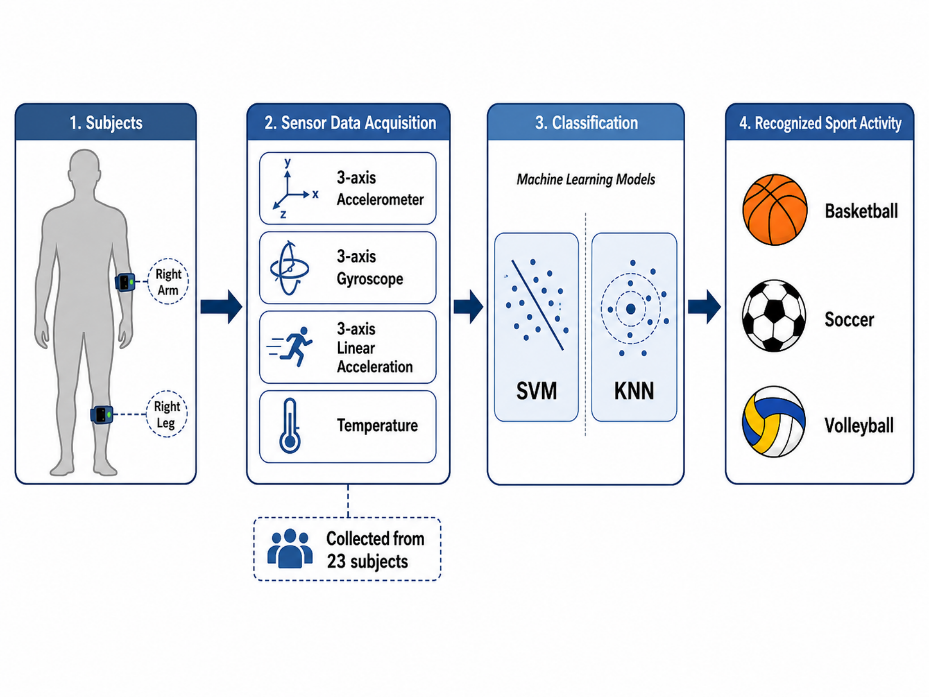
Typical wearable-based activity recognitions are based on sensor types such as accelerometers, gyroscopes, magnetometers, and linear acceleration sensors [10]. Of these sensors, the accelerometer is one of the most popular sensors available since it can measure acceleration in three physical directions, X, Y and Z. Useful to detect orientation-related information, vibration, position changes and body movement. But the accelerometer can measure the effects of gravity, and so may affect the interpretation of actual motion. The linear acceleration sensor can thus be used for sensor signal processing to remove the effect of gravity, giving more accurate information about the dynamic motion of the body. Besides, the gyroscope can be employed to determine the angular velocity and orientation alteration, which can help to model the rotational motion of the arm and leg in sport activity [11]. The mixing of these different sensor types can increase the description of the performed motion and yield more input data for machine learning models. However, while wearable sensors are very helpful in gathering movement data, the raw data from the sensor is generally not enough to determine the activity performed. Typically, these signals are contaminated by noise, the position of the body, differences in subjects and the type of activity itself. Thus, these collected sensor data needs to be classified into meaningful activity labels that can be achieved through machine learning techniques [12]. Supervised machine learning approaches are widely used in activity recognition, as they are able to learn from examples with known classes, and then classify new, unseen examples. In such problems, the classifier is trained on sensor readings whose activities are known, and once it is trained, it can classify new motion patterns based on the learned decision boundaries. This proves the applicability of machine learning to sport activity recognition using wearable sensors, particularly if the activities to be recognized are known beforehand [13]. In supervised machine learning, Support Vector Machine (SVM) and K-Nearest Neighbors (KNN) are some of the simple yet performing classification algorithms utilized in classification problems [14] and [15]. The SVM principle is that there should be an optimal hyperplane that divides different classes as far as possible. This capability allows SVM to work well in problems that involve classes that need to be separated from each other fairly well, particularly if there are many features or when the separation boundary for the classes is not obvious. Non-linear classification problems can also be handled by SVM, which employ kernel functions to map the original data to a higher-dimensional space for classification. Alternatively, KNN is a non-parametric method which classifies a new sample on the basis of the nearest training samples. The accuracy of KNN is influenced by the noisy data and distribution of samples in the training set, which is dependent on K and the distance between samples [16]. Although both SVM and KNN are effective classifiers, their effectiveness in sport activity recognition still depend on the characteristics of the dataset collected and the similarity between classes of the sport activity to be considered. Basketball, soccer and volleyball could have common movement behaviors like running, jumping, running toward and away, sudden stops and direction changes. The same motion patterns shared by these might cause classification confusion, especially if the sensor data are recorded from restricted body positions. Besides that, the recognition accuracy is greatly influenced by the amount of participants, position of the sensors, quality of the recorded signals and the separation capability of the chosen classifier. In such a case, it is essential to compare various machine learning models and select the most suitable one for the gathered dataset of wearable-sensors that could achieve better classification accuracy [17]. In order to solve these problems, this paper proposes an approach of using machine learning classification algorithms to recognize sport activities with wearable sensors. The sport activities that are proposed for the study are basketball, soccer and volleyball. The dataset is obtained from 23 subjects with wearable sensor placed on right arm and right leg. Collected data consist of signals coming from an accelerometer, gyroscope, linear accelerator and temperature sensors during activity performance. The three data points from each sensor were captured under different orientations to represent the body motion in various directions. Once the data were collected, two classification methods, Support Vector Machines (SVM) and KNN, were used to classify the sport activities and assess their accuracy to recognize the performed movements. The accuracy was used for the evaluation of the classifiers, as well as the confusion matrix analysis which compared the predicted labels with the actual activity labels. This paper has three main stages presented as the general framework. In the first phase named the sensor data acquisition level, the wearable sensors capture the movements indications from the body during the chosen sport actions. The second stage is the classification stage, which takes the data collected as input into the machine learning models, such as SVM and KNN. The third stage is the output stage, in which the system is trained to predict the label of the activity being shown, in this case basketball, soccer, or volleyball. This classification framework is represented in the model structure shown in Figure 1 given the data from a set of input sensors, the selected classification algorithms classify the data and output a final sport activity label. This systematic organization enables the wearable sensor data that is collected to be transformed into meaningful activity classes and offers a simple and practical recognition system. This work presents a study to understand the capability of wearable sensors in sport activity recognition, and a comparative study of the sport activity classification result of both SVM and KNN model over the collected dataset. The results obtained confirmed that SVM would achieve higher classification accuracy than KNN, which implies that SVM is more appropriate in order to classify the considered sport activity classes in this study. This demonstrates the feasibility of using wearable sensors for the reliable and cost-effective recognition of sport activity. For future works, more machine learning and deep learning models and more feature extraction methods could be used to further enhance recognition performance, and a larger number of participants and more body positions in the experiments can be included.
Accordingly, the present study is motivated by the need to evaluate how complementary upper- and lower-body sensing influences the recognition of closely related sport activities within a unified experimental setting.
The scientific contribution of this study extends beyond a direct comparison of machine learning classifiers. First, an independently collected wearable-sensor dataset was developed from 23 subjects performing three sport activities with partially overlapping movement patterns, namely basketball, soccer, and volleyball. Second, the proposed framework combines complementary upper- and lower-body motion information through sensors positioned on the right arm and right leg. Third, multimodal signals, including accelerometer, gyroscope, linear acceleration, and temperature measurements, are integrated to provide a more comprehensive representation of sport movements. Fourth, the study evaluates not only classification accuracy but also class-wise and model-level behaviour through macro-precision, macro-recall, macro-F1 score, ROC-AUC analysis, cross-validation, feature importance, dimensionality-reduction visualization, learning curves, and sensor-group ablation. Therefore, the main contribution is the development and systematic validation of a practical, multisensor, and application-oriented framework for distinguishing sport activities that exhibit similar and overlapping motion characteristics.
The present study does not claim the development of a new machine learning algorithm. Its contribution lies in the design and systematic evaluation of a dual-location, multimodal wearable-sensor framework for distinguishing sport activities with partially overlapping movement characteristics. The framework integrates upper- and lower-body measurements collected from the right arm and right leg and evaluates the effects of classifier selection and sensor-group contribution using a consistent experimental protocol. Nevertheless, the limited participant population means that the findings should be interpreted as an application-oriented baseline that requires broader validation rather than as a universally generalizable recognition solution.
Recent deep learning and Transformer-based activity-recognition models have demonstrated strong capabilities in learning temporal and cross-sensor representations directly from wearable signals. However, their reported performance is commonly obtained using different datasets, activity definitions, sensor configurations, sampling rates, data-windowing procedures, and subject-dependent or subject-independent validation protocols. Consequently, numerical results reported across separate studies cannot be treated as direct performance baselines for the present dataset. This study does not claim that traditional classifiers are universally preferable to deep learning architectures for high-velocity sport activities. Instead, established classifiers were deliberately selected to provide a transparent, computationally tractable, and reproducible baseline for the collected dataset of 23 subjects. Given the limited dataset size, using higher-capacity deep architectures could also increase the risk of overfitting without providing a methodologically fair comparison. The present framework therefore focuses on examining classifier behaviour and multimodal dual-location sensing under a unified evaluation protocol, while direct comparison with deep learning models is reserved for future investigation using a larger dataset and identical validation conditions.
The novelty of this study does not lie in proposing a new machine learning classifier, but in developing and comprehensively evaluating a practical wearable-sensor-based sport activity recognition framework using an independently collected dataset. The study integrates motion information acquired from two complementary body locations, namely the right arm and right leg, using accelerometer, gyroscope, linear acceleration, and temperature measurements. Unlike many existing studies that primarily focus on general daily activities or public benchmark datasets, this work investigates the recognition of three sport activities with partially overlapping motion characteristics. Moreover, the experimental analysis extends beyond a basic comparison of SVM and KNN by including several peer classifiers and a comprehensive evaluation based on cross-validation, macro-precision, macro-recall, macro-F1 score, ROC-AUC, feature importance, dimensionality-reduction visualization, learning-curve analysis, and sensor-group ablation. These elements provide an application-oriented contribution and a detailed assessment of the effectiveness and limitations of conventional machine learning models for wearable sport activity recognition. The main scientific contribution of this work is not the introduction of a new classifier, but the development and comprehensive validation of a dual-location, multimodal wearable-sensor framework for recognizing sport activities with similar movement characteristics.
Although wearable-sensor-based human activity recognition has been widely investigated, several limitations remain in the context of sport-specific recognition. Most previous studies focus primarily on daily living activities, public benchmark datasets, or highly complex deep learning architectures. Comparatively less attention has been given to distinguishing sport activities that share similar movement components, such as running, jumping, rapid direction changes, and repetitive arm and leg motions. In addition, many studies rely on a single sensor location or evaluate overall accuracy without investigating the complementary contribution of upper- and lower-body sensing. Therefore, a practical gap remains in the systematic evaluation of a dual-location, multimodal wearable-sensor framework for recognizing sport activities with overlapping motion characteristics. This study addresses this gap by using independently collected data from the right arm and right leg of 23 subjects performing basketball, soccer, and volleyball activities. Accelerometer, gyroscope, linear acceleration, and temperature signals are combined, while several machine learning classifiers are evaluated using cross-validation, class-wise metrics, ROC-AUC, feature-importance analysis, dimensionality-reduction visualization, learning curves, and sensor-group ablation. The study consequently provides an application-oriented assessment of how sensor location, multimodal sensing, and classifier selection influence sport activity recognition performance. Accordingly, the research gap addressed in this work is not the general absence of wearable activity recognition studies, but the limited systematic investigation of dual-location multimodal sensing for distinguishing sport activities with strongly overlapping movement patterns.
The present study does not claim the development of a new machine learning classifier. Instead, it introduces a structured, application-oriented recognition pipeline specifically designed for sport activities with overlapping movement characteristics. The framework integrates complementary upper- and lower-body information collected from wearable sensors positioned on the right arm and right leg. It combines accelerometer, gyroscope, linear acceleration, and temperature measurements and systematically examines how sensor location, multimodal information, and classifier selection affect recognition performance. In addition to benchmarking several established classifiers, the framework includes cross-validation, class-wise performance analysis, feature importance, dimensionality-reduction visualization, learning-curve assessment, and sensor-group ablation. Therefore, the scientific contribution lies in the integrated design and comprehensive validation of the dual-location multi-sensor recognition pipeline rather than in the introduction of a new classification algorithm. The contribution of this study should therefore be viewed as the development and systematic validation of a dual-location, multimodal wearable-sensor pipeline for sport activity recognition, rather than the proposal of a new classifier. The results provide empirical evidence regarding the complementary role of arm and leg sensing, the usefulness of multimodal wearable measurements, and the suitability of different classifiers for sport activities with overlapping movement patterns.
Figure 1. The proposed wearable-sensor-based sport activity recognition framework
LITERATURE SURVEY
In recent years, the research on human activity recognition (HAR) and sport activity recognition (SAR) has been progressing steadily toward the use of inertial sensors, wearable and/or smartphone-based, with Machine Learning and Deep Learning methods. This is crucial since sport activities are typically performed repeatedly, quickly, and often similar to each other, as compared to the simple daily activity recognition. One notable work was presented by Bodhe et al. (2024) [18] who created a system for the classification of outdoor activities based on measurements of inertial sensors measured through a smartphone. They used a CNN+Fuzzy C-Means+LSTM model to classify various physical activities and obtained high classification accuracy on the MotionSense and WISDM datasets. This study is highly related to the current work because it confirms that inertial sensor data can be effectively used to recognize physical and sport-like activities.
Barua et al. (2024) [19] focused on one of the main practical problems in sensor-based activity recognition, which is the effect of sensor orientation and placement. Their study used a single smartphone accelerometer and evaluated simple heuristic features with a 1D-CNN–LSTM model. The work showed that activity recognition accuracy can be affected when the same activity is recorded from different sensor positions, such as the hand, pocket, or backpack. This is important for the present study because the wearable sensors are placed on the right arm and right leg, and therefore sensor location plays a major role in the quality of the collected sport activity data.
In another direction, Yao et al. (2024) [20] proposed a large-kernel CNN design with structural re-parameterization for sensor-based HAR. Their work aimed to improve feature extraction from sensor signals by increasing the receptive field of the CNN while keeping the model efficient. The method showed that deep feature learning can provide stronger activity separation than conventional handcrafted feature-based models. Tian et al. (2024) [21] also addressed complex activity recognition using wearable motion sensors. They introduced a model based on Spatial LSTM and deep residual CNN to better learn temporal and spatial dependencies from wearable sensor data. Their work is relevant to sport activity recognition because activities such as basketball, soccer, and volleyball require the model to understand both body movement sequence and sensor-based motion variation.
Park et al. (2024) [22] investigated the problem of labelled data shortage in sensor-based HAR by proposing a Multiclass Autoencoder-based Active Learning (MAAL) approach. Their method selected more informative samples for labelling and improved both accuracy and F1-score during active learning rounds. This contribution is important because collecting labelled wearable sensor data is usually costly and time-consuming, especially when several subjects and activities are involved. Khan et al. (2025) [23] proposed a transition-aware HAR framework using an ensemble deep learning model based on 1D-CNN and LSTM. Their work focused on recognising postural transitions and dynamic activities using wearable sensor data and achieved strong classification accuracy. This study is useful for the current work because sport activities normally include transitions between movement states, such as running, stopping, jumping, and changing direction.
Recently, Li et al. (2025) [24] proposed HARMamba, a lightweight wearable-sensor-based HAR model built on a bidirectional Mamba architecture. The model was designed to reduce computational and memory requirements while maintaining high recognition performance on several public datasets. This is an important direction because wearable sensor systems should ideally be lightweight enough for real-time and mobile use. Tokas et al. (2025) [25] developed X-LiteHAR, a lightweight and explainable hybrid deep learning model for wearable sensor-based HAR. Their method combined signal enhancement and hybrid CNN-LSTM feature learning to improve recognition under noisy wearable sensor conditions. This work is relevant because explainability and low computational cost are important for practical sport monitoring systems.
More recently, Zhang and Oh (2026) [26] proposed FusionProtoNet, an interpretable deep learning framework for human activity recognition in smart sport using wearable devices. Their model used placement-aware sensor fusion, temporal modelling, and prototype-based reasoning to improve both accuracy and interpretability. This study is directly related to the current paper because it focuses on smart sport and wearable devices, which are the same general direction of the present work. Vuong et al. (2026) [27] proposed MLConvTrans, a multi-level convolutional transformer for wearable sensor-based HAR. They used a modified convolutional feature extractor coupled with transformer-based long-term dependency modelling in their model and tested it on multiple public datasets. The paper illustrates the recent shift from traditional classifiers to hybrid deep learning/transformer classifiers to enhance the accuracy of the recognition. Based on the reviewed studies, the field of wearable-sensor-based activity recognition has matured from basic classification models using inertial sensors to the more complex deep learning, active learning, lightweight architectures and interpretable systems. The latest trend in the literature is to use accelerometer, gyroscope and other motion-related signals to accurately recognize human activities and with good generalisation. Most existing studies, however, concentrate on general daily activities or benchmark data sets, and not many studies are directed towards sport activity recognition with a simple setup of wearable sensors, and traditional classifiers like SVM and KNN. Therefore, the present work provides a practical contribution by collecting wearable sensor data from subjects and classifying three sport activities, namely basketball, soccer, and volleyball, using SVM and KNN. The reviewed studies summarized in Table 1 support the importance of sensor placement, activity similarity, classifier selection, and performance evaluation in building a reliable sport activity recognition system. Recent developments in wearable activity recognition have increasingly focused on Transformer-based temporal modelling and self-supervised representation learning. These approaches can capture complex temporal dependencies and learn useful sensor representations with reduced dependence on extensively labelled data. Although they are outside the experimental scope of the present study, they represent promising directions for extending the proposed framework using larger and more diverse wearable-sensor datasets.
Table 1. Summary of key literature on wearable-sensor-based human and sport activity recognition.
Authors | Contribution / Focus | Methodology | Findings / Relevance |
Bodhe et al. (2024) [18] | Outdoor activity classification using smartphone inertial sensors. | CNN-FCM-LSTM model using MotionSense and WISDM datasets. | Achieved high accuracy and confirmed the usefulness of inertial sensor data for physical activity recognition. |
Barua et al. (2024) [19] | Analysis of sensor orientation and placement problems in HAR. | Heuristic features with 1D-CNN-LSTM using single accelerometer data. | Showed that sensor position strongly affects recognition accuracy; relevant to arm/leg sensor placement. |
Yao et al. (2024) [20] | Improved sensor-based HAR through large receptive field feature extraction. | Large-kernel CNN with structural re-parameterization. | Enhanced activity feature learning and improved classification capability. |
Tian et al. (2024) [21] | Complex HAR using wearable motion sensors. | Spatial LSTM with deep residual CNN. | Improved learning of temporal and spatial movement dependencies from wearable signals. |
Park et al. (2024) [22] | Reduction of labelling effort in sensor-based HAR. | Multiclass Autoencoder-based Active Learning (MAAL). | Improved accuracy and F1-score by selecting informative samples for annotation. |
Khan et al. (2025) [23] | Transition-aware HAR using wearable sensors. | Ensemble 1D-CNN and LSTM framework. | Achieved strong accuracy for transitional and dynamic activities; relevant to sport movement transitions. |
Li et al. (2025) [24] | Lightweight wearable sensor HAR for efficient real-time use. | Bidirectional Mamba-based HARMamba architecture. | Reduced computational complexity while maintaining high F1-scores on multiple datasets. |
Tokas et al. (2025) [25] | Lightweight and explainable HAR using wearable sensors. | X-LiteHAR with signal enhancement and CNN-LSTM learning. | Improved robustness under noisy wearable signals and supported explainable recognition. |
Zhang and Oh (2026) [26] | Interpretable HAR in smart sport using wearable devices. | FusionProtoNet with placement-aware fusion and prototype reasoning. | Achieved high accuracy and interpretability; directly related to smart sport applications. |
Vuong et al. (2026) [27] | Advanced wearable-sensor HAR using hybrid transformer learning. | MLConvTrans combining multi-level CNN and transformer encoder. | Improved recognition performance across several HAR datasets with efficient feature modelling. |
SPORT ACTIVITY RECOGNITION MODELLING USING WEARABLE SENSORS
In this section, a machine-learning-based sport activity recognition model is presented with the objective of classifying different sport movements using wearable sensor data. Recognition of sport activities is not a simple task because the movement of the human body during sport exercises is usually fast, repeated, and highly affected by each subject performs the activity. In addition to that, several activities may include similar movement patterns, such as running, sudden stopping, jumping, arm movement, and leg acceleration. These factors make the classification process more challenging, especially when the system depends on wearable sensors attached to limited body locations. Therefore, an effective recognition framework is required to collect motion data, process sensor information, and classify the activity into the correct sport class [28].
The proposed model in this work depends on wearable sensors placed on the body to capture the movement signals during the sport activities performed. The use of wearable sensors is suitable for this application because these sensors are small, low-cost, and able to collect data while the subject performs the activity naturally without strong restriction. The sensors are located on the right arm and right leg, since these body parts have direct contact with sport activities, particularly in basketball, soccer and volleyball. The arm motion can give valuable throwing, swinging, balancing and upper body information and the leg motion can offer valuable running, kicking, jumping and direction change information. So, the readings from both the Arm and Leg sensors provide a more accurate indication of the activity performed. The signals measured in the sensor data acquisition stage consist of a number of types of measured signals, which are the accelerometer, gyroscope, linear acceleration and temperature data. The accelerometer measures the acceleration of the body along the 3 physical axes X, Y and Z. This is important because most sport activities have very obvious patterns of acceleration which can be useful to the classifier in distinguishing between different movements. The Gyroscope is used to detect the angular velocity and change of orientation of the body, which is useful for describing the rotational movements during sport performance. The linear acceleration sensor removes the effect of gravity from the acceleration and the removed gravity effect is beneficial when representing the actual dynamic motion of the subject. The temperature is also measured as an auxiliary sensor measurement when the activity is recorded. A multi-sensor description of the human movement is provided together by these signals. The classification process is done after collecting raw sensor data, applying supervised machine learning algorithms. In this paper, two widely used classification techniques, called Support Vector Machine (SVM) and K-Nearest Neighbors (KNN) are employed. The SVM classifier is based on searching for an appropriate separation boundary between the classes of activities. It's useful when the data collected from the sensor has various types of movements and they need to be differentiated into distinct classes. KNN, however, classifies the new activity sample by the most similar examples in the training set in the feature space. KNN is easy to use and straightforward, but it can be affected by noise, the distribution of the data and the number of neighbors chosen. Hence, it is beneficial to compare SVM and KNN so as to decide which one is most appropriate for the collected wearable sensor dataset [29]. The entire process of the proposed sport activity recognition model is demonstrated in Figure 2. The framework starts with the subject wearing sensors on his/her right arm and right leg. Next, the three-axis accelerometer, three-axis gyroscope, three-axis linear acceleration and temperature data are stored in the sensor data acquisition stage. These signals are the data to be fed to the system, which have been recorded. Collected data then goes into the classification stage where SVM and KNN classifiers are trained and tested for the recognition of the activity class. In the end, the output section gets the recognized sport activity from one of three classes: basketball, soccer or volleyball. This structure provides a transparent and structured overview of the potential to map on to meaningful sport activity labels from data gathered through wearable sensors. The recognition of the proposed model is performed by comparing the predicted labels with the labels of the activity. The performance of each model to classify the sport categories is presented using the confusion matrix. Moreover, accuracy is considered as primary performance metric to compare SVM and KNN in this regard. The performance results yielded obtained suggested that in this study, SVM outperforms KNN. This shows SVM's greater ability to distinguish the movement patterns from basketball, soccer, and volleyball from the sensor data. The major drawback of the KNN model, though simple and useful, was that it did not perform too accurately due to the possibility of similar samples and overlapping motion patterns being present in the sport activities. The results of the proposed wearable-sensor-based recognition framework can be viewed as a viable solution for sport activity recognition. The model illustrates that an effective way to get information for the different sport activities is with the help of motion sensors mounted on the body. Numerous improvements can be made to this system, such as increased number of subjects, more sensor positions on the body, a larger number of data points, and advanced feature extraction or deep learning methods. These improvements can enhance the accuracy of the recognition model, as well as its reliability and suitability for real sport monitoring applications [30].
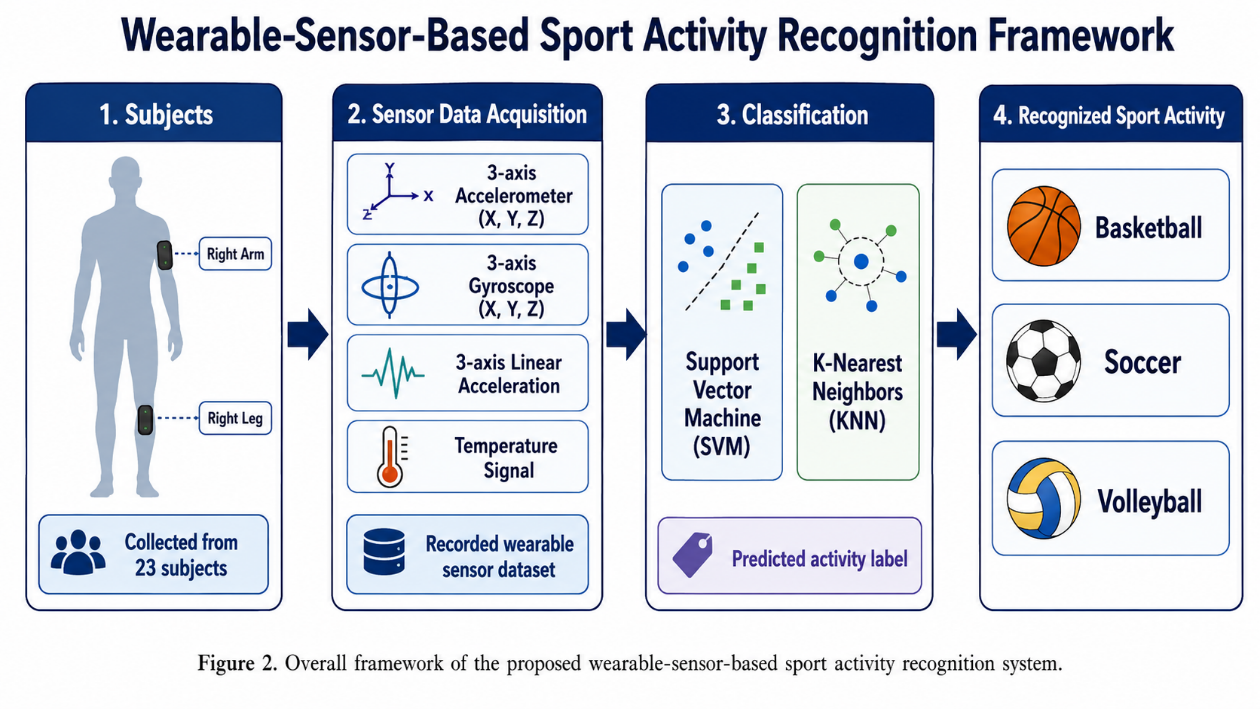
Figure 2. Proposed framework for sport activity recognition using wearable sensor data and machine learning classifiers
SYSTEM AND DATA ACQUISITION SETUP
The following section outlines the procedure of setting up the system and collecting the data employed for building the proposed wearable-sensor-based sport activity recognition model and evaluating the model. The present work is based on body-mounted wearable sensors that have the ability to gather motion-related signals directly from the subject during sport performance, unlike vision-based recognition systems that rely on image processing and cameras. This configuration is useful because sport activities typically contain rapid and frequent body movements, which can be better translated via the acceleration signal, angular velocity signal, linear motion signal. The system configuration was thus designed to capture the body's response for three specific sports in order to provide the input data for the machine learning classification models for these sports. The suggested recognition system was designed for basketball, soccer and volleyball, three sport activities. These activities have been chosen as they have different movement patterns but also there may be some similar movement behaviours between these activities such as running, jumping, arm and leg movement, sudden changes of direction. This makes the classification task more difficult and provides a suitable case to test the capability of wearable sensors and machine learning algorithms to differentiate between sport classes. The entire system relies on three key phases: Positioning of the wearable sensors, sensor data collection, and classification of activities. The recording of motion signals corresponds to the second stage, and the classification of the acquired data with machine learning models to the third stage [31]-[35].
Wearable Sensor Setup
The wearable sensor system was designed to capture the motion data on the human body while performing the activities. The sensors were mounted on the right arm and right leg of the subject in this work. The two positions were chosen because the arm and the leg are very active with the chosen sport activities. The right arm may be used to mimic throwing, passing, and balancing the body and the right leg may be used to mimic running, jumping, and stopping movements in basketball. The leg movement is more prominent in soccer due to kicking, running and changing direction, and the arm movement can also provide information about the body's balance. In volleyball, both arm and leg movements are important as it involves jumping, serving, receiving, and hand-based motion. Thus, coupled with a sensor on the arm and leg, the activity that is being performed is better described than with just one body position. The sensor system is made up of measurements of accelerometer, gyroscope, linear acceleration and temperature. The body acceleration is measured along three axes on the accelerometer – the X axis, the Y axis, and the Z axis. The significance of these readings is that they show the strength and direction of the body movement during the activity. The gyroscope records angular velocity, which helps in describing rotational movements and orientation changes. Very helpful with the subject swinging and turning, jumping or transitioning to sudden movement. The linear acceleration sensor outputs acceleration by subtracting the gravity component and is more appropriate to represent the real dynamic motion of the body. Another measurement taken during the data acquisition process was the temperature signal. The collection of these measurements creates a multi-sensor dataset which can describe sport movement from various physical aspects [36]-[38].
Data Collection Environment
Data was gathered from the 23 students in the engineering college. In the data collection phase, each subject executed the sports activity selected, while the sensors on body movements recorded the associated movement signals. Basketball, soccer, and volleyball were selected as activities for this work and a class label was given for each activity for supervised classification later. Data were collected from both the upper body and lower body, using the right arm and right leg, to gain insight in both upper and lower body movement responses. This configuration makes it easier to analyze the data for sport activity recognition since many sport actions can't be described correctly using a single body segment. Data acquisition process aimed to measure raw sensor data with natural sport motion. The data received from each sensor was logged with corresponding axes, particularly for the accelerometer, gyroscope and linear acceleration sensors. Given that sensors measure in three dimensions, the system is able to capture the changes in movements along those different directions. This is because sport activities do not involve only forward and backward movements – there are vertical, horizontal and rotational movements as well. Players might, for instance, be required to repeat arm and body movements in volleyball, jump and change direction in basketball, or accelerate and move in strong directions in soccer. So, the three-axis sensor data will be a richer representation of the activity pattern.
Data Acquisition and Structure
The obtained data set includes sensor measurements when the three sport activities are performed. The input data consist of three-axis accelerometer readings, three-axis gyroscope readings, three-axis linear acceleration readings and temperature readings. These signals describe the behaviour of the subject in relation to movement when performing an activity. The output of the dataset is the sport activity label, and the activities are categorized into three classes: basketball, soccer, and volleyball. In this architecture the sensor measurements are provided as inputs and the activity label is provided as output of classification. The sampling rate of the sensor data was chosen to meet the requirements of capturing the movements of the body during sport activity. The recorded samples are the time variation of the body movement for each activity. The time-series quality of the sensor data is crucial when describing the movement pattern as sport movements are dynamic and can change rapidly. The recorded sensor data have a unique waveform, which varies with the movement performed, while different signal behaviour is observed for each activity depending on the body action. The different variations contain the primary information that is employed by the classification algorithms to classify the activity classes. The data collected are organised in a structured format for supervised machine learning before applying the classification models. This is a structure where each observation is accompanied by input features from the sensors and an activity label. The input matrix is the values of the sensors recorded and the output vector is the class labels of sport activities. With this we let the classifiers learn the relationship between the sensor readings and the action carried out. The primary aim of this step is to transform the raw data obtained from the wearable sensors into a format suitable for machine learning algorithms to recognize the activities [39][40].
Classification Model Setup
Two supervised machine learning algorithms, namely Support Vector Machine (SVM) and K-Nearest Neighbors (KNN) have been used to develop the classification stage. We chose these two algorithms because they are frequently used in classification problems and have been shown to be useful for activity recognition problems that involve sensors. The principle of SVM is to search for the optimum decision boundary between the classes of activities. It has a very good capacity to classify data if the classes have distinctive patterns in the feature space. KNN, however, categorizes a new sample as being in the same category as the training sample that is most similar to it. This makes KNN a simple method and easy to implement, but the accuracy of the method decreases due to noise and overlap in the pattern of activities in the data. The two classification models were trained and tested with the collected wearable sensor data. The models were used to predict the recorded samples to one of the three sport activities. Each model was then trained and each made predictions of activity labels, which were compared to the actual activity labels. Each of these classifiers was tested for recognition using this comparison. The confusion matrix is used to demonstrate the number of correctly classified sample and the number of misclassified samples between three activity classes. Moreover, the main measure for evaluating the performance of SVM and KNN was the classification accuracy [41].
Performance Evaluation Setup
The performance evaluation was conducted by comparing the predicted class label with actual activity label. The confusion matrix was used because it provides a clear indication of the sport class classification behaviour. Displays the correct classifications on the diagonal and the misclassifications off the diagonal. This can be helpful in determining which sport activities are easier to identify and which sport activities might be misidentified. The problem of confusion can occur in sport activity recognition when two or more activities have similar movement pattern, particularly when the body is moving, running, jumping or making fast transitions between activities. Accuracy was also used to evaluate the overall performance of the classifiers. It is the percentage of samples correctly classified over the number of samples. The SVM model in this work was found to be more effective in terms of recognition performance as compared to the KNN model. This means that the SVM was better suited to separate the patterns of basketball, soccer and volleyball, as measured by the sensor. The KNN model also gave a simple classification solution, however due to its reduced performance it can be inferred that the collected sport activity data might have overlapping movement patterns which are less easily classified by a distance-based model.
DUAL-LOCATION MULTISENSOR EVALUATION FRAMEWORK
In the proposed methodology, a wearable-sensor based sport activity recognition system is designed by using supervised machine learning classification and body-mounted sensor data acquisition. The main goal of the proposed framework is to classify different sport activities based on the motion patterns collected from wearable sensors placed on the human body. The proposed method does not rely on camera-based recognition systems, which can be influenced by the lighting conditions, viewing angle, background complexity and privacy concerns. This means that the system is more practical to use for sport activity monitoring, particularly in an open, dynamic environment. The proposed approach is to recognize three sport activities: basketball, soccer and volleyball. The activities were chosen because they involve various types of movement behaviour, and because they have some common body motion patterns. For example, basketball could have arm movements, jumping, running, and balancing the body. Soccer is very linked to leg movement, running, kicking and changing direction. There is repetition in the arms in volleyball, jumping and movement in the body for serving and receiving. Hence, a classification model is needed that is able to classify different movement patterns that are similar and overlapping based on the sensor-based information. In the process of achieving this goal, the methodology was divided into three major phases: acquisition of sensor data using wearable sensors, classification through machine learning with SVM and KNN, and evaluation of results by calculating accuracy and confusion matrix analysis. The distinctive element of the developed framework is the integration of complementary motion information from two body locations rather than the use of an individual classifier. Upper-body and lower-body signals are jointly represented using measurements acquired from the right arm and right leg. This arrangement is intended to capture arm-dominant, leg-dominant, and combined movement patterns occurring in basketball, soccer, and volleyball. The resulting multisensor representation is subsequently evaluated using multiple machine learning models to determine the most suitable classifier and to investigate the contribution of the different sensor groups. Rather than proposing a new classification algorithm, this study employs established machine learning models within a unified dual-location multisensor evaluation framework to investigate the effects of sensor placement, multimodal signal representation, and classifier selection on sport activity recognition performance.
Wearable Sensor-Based Data Representation
The first stage involves obtaining the data by attaching wearable sensors to the right arm and right leg of the subject. The two body regions are chosen because they are highly active in the chosen sport activities. The right arm provides valuable clues to upper-body motion such as throwing, swinging, serving and balancing. The right leg is useful for assessing movement of the lower body like running, jumping, stopping and kicking. Thus, the two locations of the sensor can provide a more comprehensive description of sport activity being performed when combined. The data measured by the sensor in this work consists of three-axis accelerometer data, three-axis gyroscope data, three-axis linear acceleration data and temperature data. Accelerometer readings represent the acceleration of body motion on the X, Y and Z planes. The results from the gyroscope are the changes in orientation and angular velocity during the activity. The linear acceleration readings show body acceleration with the effect of gravity removed, providing a better indication of the actual body action. The temperature signal is taken during data acquisition as an extra recorded measurement. The measurements are presented as features that are fed to the classification model and the activity labels are the output classes of the system. For each of the samples recorded the input feature vector may be described as shown in the Equation (1):
| 
| (1) |
where  is the input feature vector of the
 -th recorded sample,
 ,
 , and
 are the accelerometer readings along the three axes,
 ,
 , and
 are the gyroscope readings along the three axes,
 ,
 , and
 are the linear acceleration readings, and
 is the recorded temperature signal. Each row of the dataset represents one synchronized sensor observation acquired at a sampling rate of 24 Hz. Equation (1) therefore defines a sample-level input vector rather than a statistical feature vector extracted from a temporal segment. The vector contains the three accelerometer axes, three gyroscope axes, three linear-acceleration axes, and the temperature measurement recorded at the corresponding sampling instant. Missing observations were treated by linear interpolation followed by nearest-value completion, and each sensor channel was smoothed using a five-sample moving-average filter, corresponding to approximately 0.208 s. The resulting sensor observations were then supplied directly to the classification models. No temporal segmentation, overlapping-window procedure, or window-level statistical feature extraction was employed in the present implementation. Therefore, a temporal window length and overlap percentage are not applicable to the reported classification pipeline. Accordingly, the index of the input vector denotes an individual synchronized sampling instant rather than an extracted temporal window. The corresponding target output is represented as shown in Equation (2):
| 
| (2) |
where  is the actual activity label associated with the input sample. This formulation provides the basis for supervised learning, where the classifier learns the relationship between the wearable sensor readings and the corresponding sport activity class.
SVM-Based Activity Classification
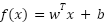
During the first classification stage, Support Vector Machine (SVM) is used as a supervised learning model to classify the wearable sensor data into the three sport activity classes. SVM is suitable for this type of problem because it attempts to find the best decision boundary that separates the classes with the maximum possible margin. This is important in sport activity recognition because some movement patterns may be close to each other, especially when the activities contain similar body transitions, such as jumping, running, and sudden direction changes. The general decision function of SVM can be written as present in Equation (3):
| 
| (3) |
where  is the input sensor feature vector,
 is the weight vector, and
 is the bias term. For nonlinear classification cases, the input data can be mapped into a higher-dimensional feature space using a kernel function. The Radial Basis Function (RBF) kernel is commonly used because it can model nonlinear relationships between sensor readings and activity classes. The RBF kernel can be expressed as in Equation (4):
| 
| (4) |
where  and
 are two input samples,
 is the kernel parameter, and
 represents the squared distance between the two samples. The SVM optimization objective is to maximize the separation margin while minimizing classification errors. The optimization problem can be expressed as depicts in Equation (5):
| 
| (5) |
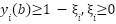
Subject to Equation (6):
| 
| (6) |
where  is the regularization parameter,
 represents the slack variable, and
 is the number of training samples. The regularization parameter controls the balance between maximizing the margin and reducing the classification error. In this work, SVM is applied to classify the sport activities based on the extracted wearable sensor features. Its performance is then compared with KNN to determine which classifier is more suitable for the collected dataset. The accuracy is used as the main quantitative evaluation metric. It is defined as the ratio between the number of correctly classified samples and the total number of samples. The accuracy can be written as described in Equation (7):
| 
| (7) |
where  is the number of true positive samples,
 is the number of true negative samples,
 is the number of false positive samples, and
 is the number of false negative samples. In this work, the results obtained showed that SVM achieved better recognition performance than KNN. This indicates that SVM was more suitable for separating the sensor-based movement patterns of the selected sport activities.
Implementation Workflow
The complete implementation workflow of the proposed wearable-sensor-based sport activity recognition system follows a structured process that starts from sensor data collection and ends with performance evaluation. The raw data are collected from wearable sensors placed on the right arm and right leg of the subjects. Afterwards, the sensors' readings are concatenated into an input feature matrix. The target labels are based on the sport activity that is performed (basketball, soccer, or volleyball). Then, classification models are applied, with SVM and KNN trained and tested on the gathered data. Finally, evaluation about classification results is performed by accuracy and confusion matrix analysis. The procedure for the implementation is given as a summary of the overall process, which is not necessarily followed sequentially, in Table 2. A general overview of the proposed methodology, such as data collection, feature preparation, model training, testing, and comparative evaluation, is presented in this table. The methodology is made more transparent, repeatable and applicable to similar wearable-sensor based activity recognition systems by this group.
Table 2. Workflow summary of the proposed wearable-sensor-based sport activity recognition system
Step | Process Stage | Description / Function |
1 | Subject Preparation | Subjects perform the selected sport activities while wearing sensors on the right arm and right leg. |
2 | Activity Selection | Three sport activities are considered: basketball, soccer, and volleyball. |
3 | Sensor Placement | Wearable sensors are fixed on the right arm and right leg to capture upper-body and lower-body movement. |
4 | Data Acquisition | Accelerometer, gyroscope, linear acceleration, and temperature signals are recorded during activity performance. |
5 | Feature Representation | Sensor readings are arranged as input features, including three-axis acceleration, angular velocity, linear acceleration, and temperature. |
6 | Target Definition | Each recorded sample is assigned to one of three labels: basketball, soccer, or volleyball. |
7 | Data Structuring | The input feature matrix and output label vector are prepared for supervised machine learning classification. |
8 | SVM Classification | SVM is trained and tested to classify the wearable sensor samples based on optimal class separation. |
9 | KNN Classification | KNN is trained and tested by classifying each sample according to the nearest training samples. |
10 | Performance Evaluation | Accuracy and confusion matrix analysis are used to compare the predicted labels with the actual labels. |
11 | Comparative Analysis | The classification performance of SVM and KNN is compared to identify the more suitable model. |
12 | Result Interpretation | The obtained results are analyzed to determine the effectiveness of wearable sensors for sport activity recognition. |
PARAMETER SETTINGS AND CLASSIFICATION CONFIGURATION
In this section the complete parameter and classification configuration that was used in the proposed sport activity recognition system that uses wearable sensors is presented. Defining these settings is crucial to increase transparency, reproducibility and enable fair comparison of the machine learning models applied. The configuration consists primarily of the sensor acquisition settings, activity class definition, input feature representation, classifier set-up, and evaluation criteria as the proposed work is based on classification and not regression or optimisation control. These settings provide the complete methodological basis for classifying the selected sport activities using wearable sensor data [42]-[50].
Sensor-Based Input Configuration
The performance of any wearable-sensor-based recognition system is highly dependent on the quality and structure of the collected input data. In this work, the sensor readings were collected from the right arm and right leg of the subject because these two body positions are directly involved in the selected sport activities. The right arm provides useful information about upper-body movement, such as swinging, throwing, serving, and balancing, while the right leg provides important information about lower-body movement, such as running, kicking, jumping, and stopping. Therefore, the use of these two sensor locations gives the system a better description of the performed activity. The input data used in the proposed recognition system consist of the following sensor measurements:
- Accelerometer: used to measure body acceleration along the X, Y, and Z axes.
- Gyroscope: used to measure angular velocity and orientation-related movement along the X, Y, and Z axes.
- Linear acceleration: used to represent body acceleration after reducing the effect of gravity along the X, Y, and Z axes.
- Temperature: used as an additional recorded signal during the activity acquisition process.
These measurements form the input feature set used by the classification models. The three-axis sensor readings are important because sport activities are not performed in one direction only. Instead, basketball, soccer, and volleyball include horizontal, vertical, forward, backward, and rotational movements. Therefore, recording the sensor response along different axes gives the classifier more information about the movement pattern. Table 3 presents the main sensor and data acquisition configuration used in this work.
Table 3. Sensor and data acquisition configuration used in the proposed sport activity recognition system
Parameter | Setting | Description |
Number of subjects | 23 subjects | Data were collected from subjects performing the selected sport activities. |
Sensor locations | Right arm and right leg | These locations capture upper-body and lower-body movement during sport performance. |
Activity classes | Basketball, Soccer, Volleyball | Three sport activities are considered as the target classification classes. |
Accelerometer axes | X, Y, and Z | Records body acceleration in three directions. |
Gyroscope axes | X, Y, and Z | Records angular velocity and orientation-related movement. |
Linear acceleration axes | X, Y, and Z | Records dynamic acceleration after reducing gravity influence. |
Additional signal | Temperature | Included as an extra sensor measurement during data acquisition. |
Data type | Time-series sensor readings | Sensor values are recorded during activity performance over time. |
Learning type | Supervised classification | Each recorded sample is associated with a known activity label. |
Classification Model Configuration
The classification stage of the proposed system is based on two supervised machine learning algorithms: Support Vector Machine (SVM) and K-Nearest Neighbors (KNN). The selection of traditional machine learning classifiers was deliberate and consistent with the scope and scale of the collected dataset. The study was designed to establish a transparent and reproducible performance benchmark using data acquired from a relatively limited participant population rather than to develop a data-intensive deep learning architecture. Conventional classifiers generally involve fewer trainable parameters and a lower tuning burden, making them suitable for evaluating the discriminative information contained in the available wearable sensor measurements without introducing the additional architectural complexity of deep neural networks. The selected models also represent different learning principles: nonlinear margin-based classification through SVM, instance-based classification through KNN, tree-based and ensemble learning, probabilistic classification through Naïve Bayes, and linear discrimination through LDA. This selection enables a broad assessment of classifier behaviour under a consistent experimental protocol. It is not intended to suggest that traditional classifiers are universally superior to deep learning models. Rather, the obtained results provide a reproducible baseline for subsequent comparisons with lightweight CNN, recurrent, and transformer-based architectures when a larger and more diverse dataset becomes available. The models were chosen since they are frequently utilized in activity recognition and activity classification problems and they give an easy comparison between margin-based and distance-based classification approaches. The SVM model will attempt to classify the sport classes with an optimal decision boundary and the KNN model will classify the new sample by the training sample that is closest to it. The main component of the SVM classifier is based on the decision boundary between the activity classes. Parameters that are important for the performance of SVM are the type of kernel, the regularization parameter and the kernel scale. The following parameters affect the SVM's separating ability of similar sensor patterns. The selection of SVM settings is crucial to gain better classification performance as sport activities can be overlapping and involve similar movements. The main parameters of KNN classifier are number of nearest neighbours and distance function. The number of neighbors controls how many training samples are used to classify a new sample. If the value of (K) is too small, the model may be sensitive to noise. If the value of (K) is too large, the model may lose important local details in the data. Therefore, the KNN configuration must be selected carefully to obtain stable classification results. Table 4 presents the classification configuration used in the proposed system. The RBF-SVM classifier was implemented with a fixed box-constraint parameter of  . The kernel scale was specified as automatic and was therefore estimated from the training data using MATLAB’s internal heuristic rather than being manually assigned or optimized. Consequently, was data-dependent and was not defined as a single fixed user-selected value before model training. Multiclass classification was implemented using a one-versus-one error-correcting output-codes structure. No automated hyperparameter optimization was performed.
Table 4. Classification configuration for SVM and KNN models
Classifier | Main Parameter | Configuration Role | Description |
SVM | Kernel function | RBF | Used to separate the sport activity classes in the feature space. |
SVM | Regularization parameter (C) |  : 1
| Balances between margin maximization and misclassification reduction. |
SVM | Kernel scale (\gamma) | Automatic, data-dependent | Affects the flexibility of the decision boundary for nonlinear sensor patterns. |
KNN | Number of neighbors (K) | Controls voting size | Determines how many nearest samples are used to classify a new activity sample. |
KNN | Distance metric | Measures sample similarity | Calculates the distance between testing and training samples. |
KNN | Majority voting | One-versus-one ECOC | Assigns the new sample to the activity class with the highest vote among neighbors. |
Classifier | Main Parameter | Not applied | Description |
Data Preprocessing, Model Configuration, and Validation Protocol
The recorded numerical sensor channels were used directly as the input feature representation, while the subject identifier and activity label were excluded from the predictor matrix. No handcrafted statistical, frequency-domain, or time–frequency feature extraction was applied before classifier training. ReliefF was used only as a post-training feature-importance analysis method and was not employed to select or remove features from the classification input. Undefined activity labels were excluded, while missing sensor values were treated using linear interpolation followed by nearest-neighbour filling. Any remaining undefined numerical values were replaced by zero. A moving-average filter with a window length of five samples was then applied to reduce short-term fluctuations in the recorded signals. For reproducibility, the MATLAB random-number generator was initialized using a fixed seed of 2026. The dataset was divided using a class-stratified holdout partition, with 70% of the observations assigned to model training and the remaining 30% reserved as an independent testing subset. After partitioning, each feature was normalized using Z-score standardization. The mean and standard deviation were estimated exclusively from the training subset and subsequently applied to both the training and testing data to prevent information leakage. The performance metrics reported for the holdout evaluation were calculated using predictions generated for the independent testing subset. The multiclass SVM classifier was implemented using an error-correcting output-code structure with one-versus-one coding. Its binary learners used a radial basis function kernel, an automatically determined kernel scale. The KNN classifier was configured with five nearest neighbours, Euclidean distance, and majority voting. The Ensemble classifier used bagged decision trees with 100 learning cycles, whereas the LDA classifier used a linear discriminant function. The Decision Tree and Naïve Bayes classifiers were implemented using their standard MATLAB configurations. No separate automated hyperparameter-optimization procedure was performed; instead, the reported fixed configurations were applied consistently to provide a transparent and reproducible comparison among the classifiers. In addition to the 70/30 holdout evaluation, stratified five-fold cross-validation was conducted for SVM and KNN. During each fold, four subsets were used for training, and the remaining subset was used for validation. The same classifier configurations were retained across all folds, and preprocessing parameters were estimated using only the training observations of each fold. Fold-level accuracies were then calculated and summarized to assess whether the relative performance of the classifiers remained stable across different data partitions as depicts in Table 5. All experiments were implemented in MATLAB R2023b using the Statistics and Machine Learning Toolbox on a computer equipped with an Intel Core i5-10300H processor and 16 GB of RAM. To ensure reproducibility, the MATLAB random-number generator was initialized using a fixed seed of 2026, and the same preprocessing, data-partitioning, and classifier configurations were consistently applied throughout the experiments.
Table 5. Preprocessing, classification, and validation settings
Component | Applied configuration |
Input representation | Direct numerical wearable-sensor channels |
Feature extraction | No handcrafted feature extraction |
Missing-data treatment | Linear interpolation, nearest filling, then zero for remaining missing values |
Signal smoothing | Five-sample moving average |
Feature normalization | Z-score using training-set statistics only |
Random seed | 2026 |
Holdout partition | Stratified 70% training and 30% testing |
SVM | RBF kernel, automatic kernel scale, one-versus-one ECOC |
KNN | Five neighbors, Euclidean distance, majority voting |
Ensemble | Bagged decision trees, 100 learning cycles |
Decision Tree | Standard MATLAB configuration |
Naïve Bayes | Standard MATLAB configuration |
LDA | Linear discriminant function |
Hyperparameter tuning | No automated optimization; fixed configurations |
Cross-validation | Stratified five-fold cross-validation |
RESULTS AND ANALYSIS
This section presents the obtained results of the proposed wearable-sensor-based sport activity recognition system and analyses the performance of the applied machine learning classifiers. The main objective of the experimental evaluation is to classify three sport activities, namely basketball, soccer, and volleyball, using motion data collected from wearable sensors. The collected dataset was obtained from 23 subjects using sensors placed on the right arm and right leg of the body. Recordings of the signals include: linear acceleration, temperature, accelerometer, gyroscope. The classifications of these signals were used as input data for the classification models and the sport activity labels were used as the target output. Two supervised machine learning classifiers were used and evaluated: Support Vector Machine (SVM) and K-Nearest Neighbors (KNN). The evaluation was done by comparing the activity labels predicted from the pipeline to the ground-truth labels. The main evaluation tools used in the analysis were the confusion matrix and classification accuracy. The accuracy value is an overall indicator of accuracy, and the detailed information in the confusion matrix shows the correct and incorrect classifications for each sport activity. The structure of the discussion is intended to demonstrate the effectiveness of the sensor data from wearable sensors on sport activity recognition and to select the best performing classifier for the data set collected in the sport domain.
Baseline Classification Framework and Experimental Setup
The overall classification framework consists of 3 main phases – input sensor data, machine learning classifier, and recognized sport activity output. In the first phase the wearable sensors capture the body movement signals from the right arm and right leg during the chosen sport activities. These sensor signals are the motion pattern associated with each activity and include signals of acceleration, angular velocity, linear acceleration and temperature. The recorded data is further processed in the second stage by applying the classifiers of machine learning techniques such as SVM and KNN. The third stage of the system generates the identified activity label, basketball, soccer, or volleyball. This study is conducted on 23 students of the engineering college. In the data collection process, each subject engaged in the selected sport activities and the motion signals were captured from the wearable sensors. Basketball, soccer, and volleyball were the activities to be considered. Such activities were chosen as they are all related to a variety of different types of movement and have certain common characteristics of movement. For instance, basketball and volleyball could both involve jumping and arm motion, and soccer and basketball could both involve running and quick direction changes. This similarity will make this classification problem more difficult and will provide a proper example to test the performance of SVM and KNN. All the sensors in this system are Accelerometer, Gyroscope, Linear acceleration and Temperature. The accelerometer and linear accelerometer measure motion in the three physical axes (X, Y, and Z). The primary difference between them is the fact that accelerometer measures the effect of gravity as well, whereas linear acceleration sensor only measure the acceleration without the gravity component. The gyroscope measure an orientation change and angular movement which are essential when describing rotational movement during activity performance. Data was recorded at 24 Hz. The input features for classification models are the recorded signals. The recorded sensor wave form gives a clear representation of the body movement changes during sport activity performance. A typical example of the soccer activity data recorded by the sensor is displayed in Figure 3. The individual colors of the waveform are the different sensor axis components of the recorded signals. The accelerometer, gyroscope and linear acceleration sensors each give a reading in the three different directions (X, Y and Z) so the waveform has some variations of the signal which describe the way the subject is moving. As demonstrated in the waveform example, the dynamic behaviour of the sensor signals is very important for sport activity recognition. When the subject is performing soccer movements, acceleration and angular velocity changes are created in the leg and body motion. These changes are manifested as a variation in the recorded waveform. So, the classifier is able to differentiate soccer from basketball and volleyball based on such variations. It shows that wearable sensor signals can be used to gain useful information about the sport activity, particularly for sports where the sensor is placed on a body part that is directly merged in the movement.
Figure 3. Waveform example
Baseline Performance of SVM and KNN
The results of the classification obtained were compared with both SVM and KNN models and it was found that the SVM model is better than KNN model. The SVM classifier got an average accuracy of 70.9% and the KNN classifier obtained an accuracy of 60.9%. This difference suggests that SVM was more effective at distinguishing the movement patterns of the three sports, basketball, soccer, and volleyball, captured by the sensors. The better performance achieved by the SVM is due to its ability to build an efficient decision border between the classes of activity, particularly when the behavior of the sensor is partially overlapped and/or nonlinear. The confusion matrix for SVM classifier is shown in Figure 4. The result demonstrated that SVM performed better in the classification of the activity classes considered. This indicates that the SVM model was able to learn a more suitable separation structure from the recorded sensor data. One advantage of SVM over a straight distance-based classifier is the ability of SVM to deal with activity classes which are closer together in the feature space. This suggests SVM to be a better choice in the present dataset, especially because of some sport movements having similar signal pattern. The confusion matrix of the KNN Classifier is shown in Figure 5. The classification accuracy from the KNN model was less than that of SVM. While KNN is easy to use and useful for simple classification problems, its performance may be significantly affected by the distance between samples. However, in the present work, the lower accuracy of KNN indicates that there are some samples which are close to each other in the feature space of the various activities. This may cause misclassifications if the acceleration or angular velocity of the basketball, soccer, and volleyball are similar in nature. Thus, it is concluded that KNN is not as robust with the collected wearable sensor dataset as compared to SVM.
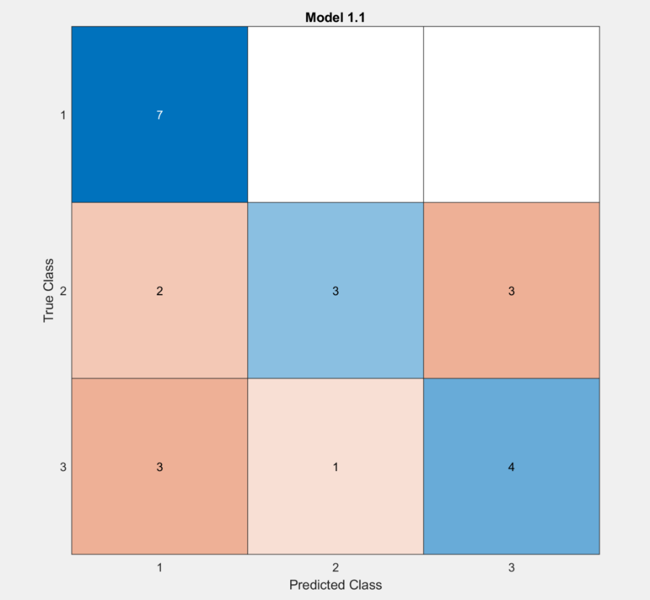
Figure 4. Confutation Matrix – SVM
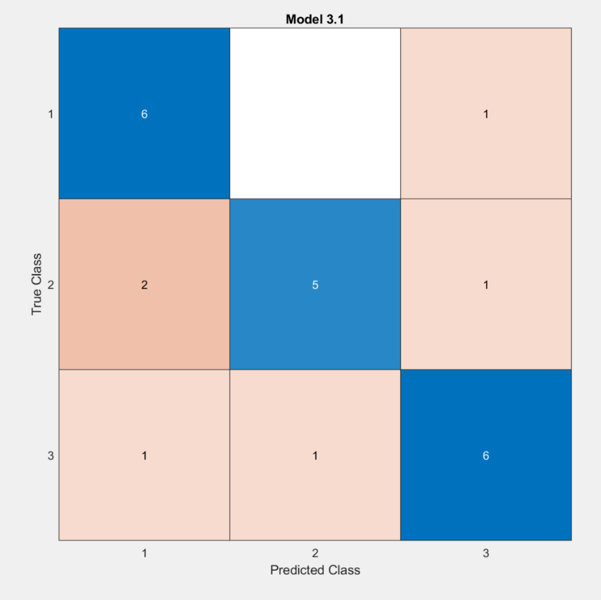
Figure 5. Confutation Matrix – KNN
Discussion of Baseline Recognition Results
The validation results of SVM and KNN clearly reveal that it is crucial to select a proper classifier for wearable-sensor sport activity recognition. SVM model yielded an accuracy of 70.9% which is superior to the KNN model, which gave an accuracy of 60.9%. The results obtained from SVM and KNN clearly indicate that the selection of the classifier directly affects the performance of wearable-sensor-based sport activity recognition. The accuracy of SVM model was 70.9% which is better than KNN model with 60.9% accuracy. This improvement is because the structure of SVM is better than that of KNN in the current data set, considering the decision-boundary based structure. The result also shows that the movement information present in the sensor signals collected can be used to classify the sport activities and the quality of the classification varies depending on the model's capacity to discriminate between similar motions. The performance of KNN is relatively low, which can be understood due to the similarity between some sport activities and possible overlap in the sensor reading. For instance, basketball and volleyball can involve jumping, arm action, and/or running, and basketball and soccer can involve running, and quick changes in body movement. Being based on samples nearby, KNN can vote wrongly if there are overlaps between the classes and may also lead to a decrease in accuracy. Conversely, SVM tries to look for an optimal separating boundary, and is therefore more stable when the activities are not perfectly separable. The results also demonstrate the significance of wearable sensors for the recognition of sport activities. Useful information about body motion from various directions are present from accelerometer, gyroscope and linear acceleration readings. Sensors placed on the right arm and right leg aid in the capture of upper body and lower body movement. This is important because not all the activities require the same body parts to the same degree. In soccer it is more about leg movements; in volleyball it relies heavily on arm and jumping movement; and in basketball it relies on upper and lower body movements. So, the chosen sensor placements are appropriate in discriminating between the activities. Last but not least, the results obtained indicate that wearable sensors can be a practical and affordable solution for the recognition of sport activity. The classification results also demonstrate that the SVM has better recognition ability than KNN for the collected data set. The accuracy achieved, however, still shows that there is a need for improvement. For better performance, more number of subjects, more number of samples, more number of body sensor positions, feature extraction techniques, and testing more advanced machine learning (ML) or deep learning (DL) models were used as shown in Table 6.
The comparative results in Table 5 summarize the accuracy difference between the two models. It can be observed that SVM outperformed KNN by 13 percentage points. This improvement reflects the stronger ability of SVM to handle the collected sensor data and classify the three sport activities more accurately. Therefore, SVM can be considered the more suitable classifier in this paper.
Table 6. Accuracy comparison between SVM and KNN classifiers
Classifier | Accuracy | Performance Interpretation |
SVM | 70.9% | Achieved the best classification performance and showed better ability to separate sport activity patterns. |
KNN | 60.9% | Provided lower accuracy and showed less robustness when dealing with overlapping movement patterns. |
Extended Classification Framework and Experimental Setup
The proposed sport activity recognition system with wearable sensor devices has an extended classification framework that will enable a more comprehensive assessment of the data obtained from the sensors and the machine learning models applied. The framework has a general structure of four phases: wearable sensor data acquisition, signal preparation, machine learning classification and extended performance evaluation. The first stage involves capturing the signals of movements that the right arm and right leg create when participating in the chosen sports. These signals are the physical activities of the subject in activity performance, such as accelerometer, gyroscope, linear acceleration and temperature. In the second stage, the recorded data are arranged and prepared as input features for the classification models. In the third stage, the activity recognition process is performed using several machine learning classifiers, including SVM, KNN, Ensemble, Decision Tree, Naïve Bayes, and LDA. In the final stage, the results are evaluated using accuracy, macro-precision, macro-recall, macro-F1 score, confusion matrix, normalized confusion matrix, ROC-AUC curves, cross-validation, learning curve, feature importance, and sensor-group ablation analysis. The dataset used in this work was collected from 23 subjects at the engineering college. During the data collection process, each subject performed three sport activities, namely basketball, soccer, and volleyball. These activities were selected because they contain different motion characteristics, but at the same time they may share several similar movement patterns. For example, basketball and volleyball may include jumping and repeated arm movement, while basketball and soccer may both include running and sudden direction changes. This similarity makes it more difficult to classify and is a requirement for having an accurate evaluation framework to ensure that each classifier is able to accurately separate the activity classes. In the experiment, three-axis accelerometer, three-axis gyroscope, three-axis linear acceleration and temperature signals are used as a sensor system. The accelerometer and linear acceleration sensors measure motion along the X, Y, and Z axis, the gyroscope measures angular motion and the orientation of the body. During data acquisition sampling rate was 24 Hz that is appropriate for the temporal representation of body motion during the performance of sport activity. As an example, the wearable sensor signal in soccer activity is shown in Figure 6.
The waveform shows the dynamic response of the sensor signals as a function of time and each curve is one axis from the recorded right arm measurements. The figure contains accelerometer, gyroscope and linear acceleration signals measured along the X, Y and Z axes. As can be seen in the image the wave has multiple variations of amplitude and oscillation behaviour, that can be attributed to a rapid and repetitive movement during the soccer activity. The body movement has continuous changes in acceleration and angular velocity due to the fact that soccer is a running game, body balance, direction change or leg dominant motion. These changes are evident from the waveform and can be used for the recognition model. The importance of Figure 6 is that it demonstrates the time-varying nature of the recorded wearable sensor data before the classification stage. The activity signal does not appear as a fixed or static pattern; instead, it changes continuously according to the performed movement. This confirms that sport activity recognition depends strongly on the dynamic behaviour of the sensor readings. The high variations in some sensor axes indicate the presence of sudden movement transitions, while the lower-amplitude components provide additional information about smaller body adjustments during activity performance. Therefore, the classifier does not depend on a single sensor value, but rather on the combined behaviour of multiple sensor channels that represent the movement pattern of the subject. Based on this waveform representation, the extended classification framework uses the recorded sensor features to distinguish soccer from basketball and volleyball. The waveform in Figure 6 supports the main idea of the proposed work, which is that wearable sensors can capture meaningful movement characteristics during sport activities. These characteristics are then used by machine learning classifiers to learn the relationship between sensor behaviour and the corresponding activity label. Therefore, Figure 6 provides an important visual validation of the data acquisition stage and shows that the collected sensor signals contain sufficient dynamic information to support the classification task. This makes the proposed wearable-sensor-based system suitable for sport activity recognition and provides a strong basis for the extended evaluation with peer machine learning classifiers.
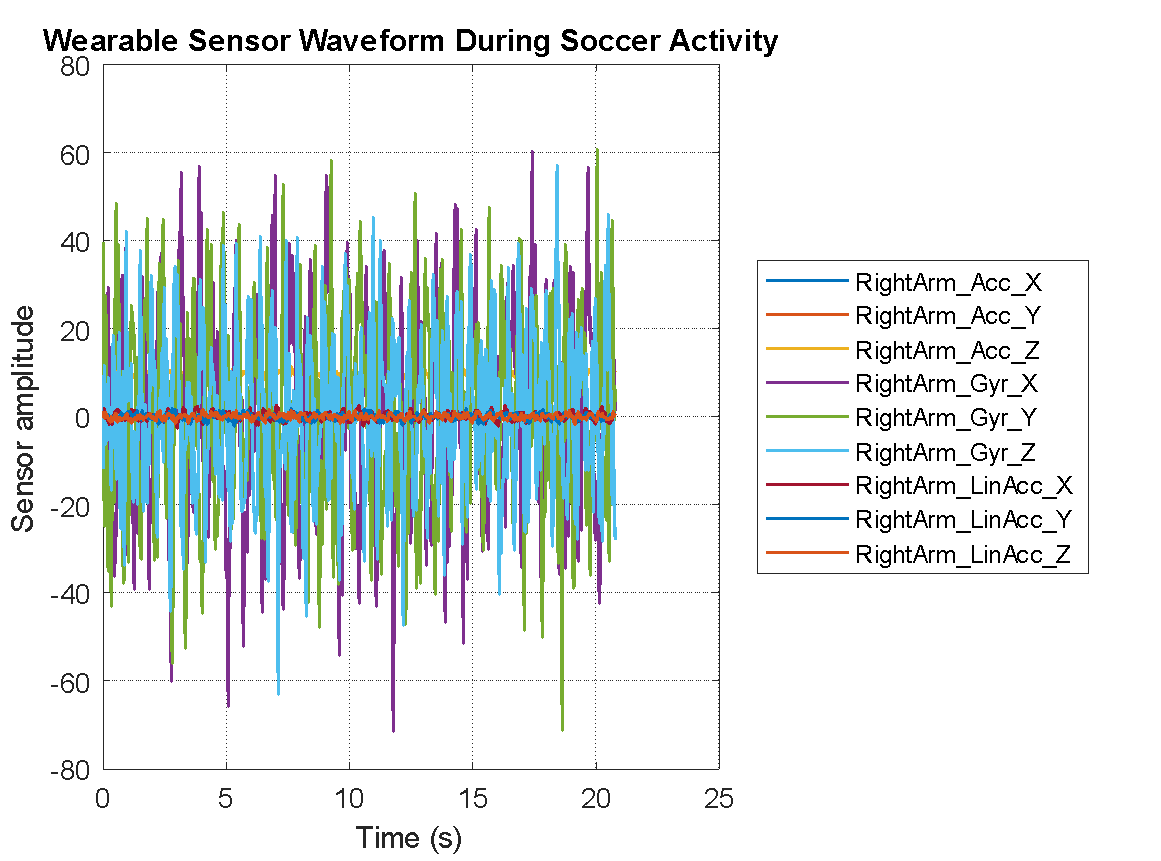
Figure 6. Wearable sensor waveform recorded during soccer activity
Extended Performance of SVM and KNN with Other Peers
To give a wider and more reliable demarcation of the proposed wearable-sensor based sport activity recognition system, the original SVM and KNN classifiers were compared to other peer machine learning models such as Ensemble, Decision Tree, Naïve Bayes and Linear Discriminant Analysis (LDA) which gave the extended classification results. The validation of the recognition framework was also reinforced and it was verified if the superiority of SVM is maintained when the system is validated with other classification methods. Several evaluation indicators, such as accuracy, macro-precision, macro-recall, macro-F1 score, confusion matrices, normalized confusion matrices, ROC-AUC curves, cross-validation accuracy, feature importance, learning curve, PCA, t-SNE, and sensor group ablation analysis were used for comparison. The obtained extended results showed that the SVM classifier achieved the highest overall performance among all evaluated models, with an accuracy of 84.796%, macro-precision of 0.84827, macro-recall of 0.84796, and macro-F1 score of 0.84795. The KNN classifier ranked second with an accuracy of 81.344%, macro-precision of 0.81734, macro-recall of 0.81344, and macro-F1 score of 0.81417. The Ensemble classifier also achieved acceptable performance with an accuracy of 78.180%, while Decision Tree and Naïve Bayes showed moderate performance with accuracies of 64.926% and 64.677%, respectively. The lowest performance was obtained by LDA, with an accuracy of 45.635%. These results indicate that nonlinear and flexible classifiers, especially SVM and KNN, are more suitable for recognizing the wearable-sensor-based movement patterns of basketball, soccer, and volleyball. The confusion matrix of the Decision Tree classification model is shown in Figure 7, with a good number of soccer samples correctly classified, but with more confusion between basketball and volleyball. This behavior suggests that the individual tree-based decision rules were not able to completely distinguish between the overlapped movement patterns of these two activities, particularly when considering basketball and volleyball, which can both involve jumping, swinging of the arms and repeated body movement. The confusion matrix of the Ensemble model has been given in Figure 8 which has better classification performance over the single Decision Tree because it is a combination of several weak learners which offer more stable decision. The Ensemble classifier succeeded, though, at showing better performance in soccer and volleyball classes, and there was still confusion between the basketball and volleyball classes, revealing the fact that ensemble learning enhances recognition behaviour, but also shows weak performance for the current wearable sensor feature space compared to SVM. The confusion matrix of the KNN model is presented in Figure 9, which gave the second best performance among all the models analysed. The soccer samples are well recognized, and the basketball and volleyball samples are recognized fairly well; some misclassifications are still observed between the basketball and volleyball samples because the KNN recognition method is based on the distance in the feature space between the samples. If the similarity of the movements between different activities brings samples from different classes into close proximity, KNN can classify a sample into the wrong class. The confusion matrix of the LDA classifier, performing the worst classification among all the classifiers, is shown in Figure 10. The generally high misclassifications particularly for basketball, as well as high dimensionality of the data, suggests that the linear decision structure of LDA was inappropriate for the non-linear and overlapping nature of wearable sensor data. The confusion matrix of Naïve Bayes is shown in Figure 11, where it is seen that the Naïve Bayes classifier could moderately well classify the soccer and basketball images and had a better classification rate for soccer images than volleyball images. The confusion between basketball and volleyball was, however, not a problem, as most of the time the input features of the Naïve Bayes classifiers are conditionally independent, whereas the signals provided by wearable sensors, like acceleration, angular velocity, and linear acceleration, are naturally correlated for body movement. The SVM classifier had the highest classification accuracy across all the classes and the confusion matrix is shown in Figure 12. The matrix indicates that SVM was able to correctly classify a large proportion of the samples from the three classes of sport activities, particularly soccer and volleyball, and minimize the off-diagonal misclassification values. This indicates that SVM was able to generate a good nonlinear decision boundary in the wearable sensor feature space and outperformed the other peer classifiers for separation of basketball, soccer, and volleyball. The comparison of the five-fold cross validation accuracy between SVM and KNN is shown in Figure 13. The result indicates that SVM had consistently higher accuracy across the validation folds, thus the superiority was not limited to only one train-test combination but was stable across several repeated train-test combinations. The feature importance of the wearable sensor features is shown in Figure 14, based on ReliefF. It can be observed that not every sensor channel works equally during the classification process and some of the time-related features and gyroscope features were more influential in the recognition decision. This means that the spin and temporal characteristics are significant for discriminating between the sport activities selected. The learning curve analysis of SVM and KNN with different training data size is presented in the Figure 15. The curve shows that the classification accuracy increases with the number of training data, the SVM curve shows that the accuracy is higher than the KNN curve throughout the training percentages. This is an indication that the more data that is added to the data set, the better recognition performance can be achieved and the fewer uncertainties in classification. The comparison of precision at macro level, recall at macro level, and F1 score at macro level between the classifiers evaluated is shown in Figure 16. The results indicate that SVM had the highest macro value followed by KNN and Ensemble and SVM not only obtained the highest accuracy but also gave a more balanced accuracy on all the three activity classes. Figure 17 to Figure 22 show the normalized confusion matrices of the Decision Tree, Ensemble, KNN, LDA, Naïve Bayes, and SVM classifiers, respectively. These figures provide a more accurate percentage representation of the recognition behaviour by class. The normalized results indicate that the Decision Tree framework made 56.1% for basketball, 76.1% for soccer and 62.5% for volleyball, while the Ensemble did the same with 68.6%, 89.9% and 76.1%, respectively. KNN outperformed LDA for the basketball, soccer and volleyball classes with 79.8%, 88.7% and 75.5% respectively, while LDA performed poorly, particularly on the basketball class (18.7%). Naïve Bayes got 48.1% accuracy in basketball, 83.8% in soccer and 62.2% in volleyball. SVM, on the other hand, obtained the highest normalized recognition rates (80.3% for basketball, 92.5% for soccer, and 81.6% for volleyball). The results obtained by normalization further substantiate that SVM models delivers most balanced class-wise recognition among the models tested. Figure 23 shows the PCA projection of the wearables sensor feature space for the three sport activities. From the PCA plot one can see that there is a degree of overlap between the classes in the 2-D projection that is evident, which is why some classifiers, such as LDA, Decision Tree and Naïve Bayes achieved higher misclassification rates. Though the PCA is a linear projection method, it is also indicative of the fact that there is some (but not all) overlap in the movement patterns between the three sports, despite the fact that they are not necessarily linearly separable. Figure 24 is a comparison of the accuracy between the two classifiers: KNN and SVM, based on the original classification results, which were reported as 70.9% and 60.9% respectively. This is the baseline comparison, and it corroborates the same trend observed in the longer evaluation – SVM is better than KNN. Figure 25 displays the one versus all ROC curves of the Decision Tree classifier with moderate discrimination ability, with better separation between classes for the case of soccer than basketball and volleyball. The one-vs-all ROC curves of the Ensemble classifier are shown in Figure 26, with the AUC values of 0.877, 0.967 and 0.910 for basketball, soccer and volleyball, respectively, indicating that ensemble learning achieved higher AUC values than a single Decision Tree. The one-vs-all ROC curves of the KNN classifier are presented in Figure 27, with KNN having good AUC scores of 0.898, 0.976, and 0.931 for basketball, soccer, and volleyball, respectively. The values indicate that the activities are well separable using KNN in the ROC analysis but there may be cases where the two activities are close in the feature space that may affect the final decision of the classification. The ROC curves of the LDA classifiers are shown in Figure 28, and the AUC values are 0.548 for basketball, 0.717 for soccer and 0.689 for volleyball. As for the above linear classification, these values are to prove the separability is weak and support the previous observation. The ROC curves for the Naïve Bayes classier are presented in Figure 29, and the values of AUC for basketball, soccer and volleyball are calculated as 0.742, 0.943 and 0.817 respectively, which show that the classification results are acceptable for soccer, but not so good for basketball and volleyball. The results of the SVM classifier are shown in the ROC curves in Figure 30, which yielded highest AUC values 0.924, 0.985 and 0.945 for the basketball, soccer and volleyball categories respectively. The high AUC values further support the fact that SVM has the best separation capabilities between the different sport activities and thus additionally supports its use as a best classifier in this study. The ablation study of sensor group using SVM and KNN is shown in Figure 31. The results indicate that the use of all sensors led to the highest accuracy of the two classifiers, indicating that the combination of accelerometer, gyroscope, linear acceleration and temperature signals contain more information about the motion than a single group of sensors. The motion sensors-only group had good results too, and the temperature-only group had the worst results, showing that for sport activity discrimination, temperature is not enough. Lastly, the t-SNE visualization of the separability of the features extracted from the wearables for basketball, soccer, and volleyball is shown in Figure 32. t-SNE has greater power to reveal local nonlinear structures in high-dimensional data than PCA. As expected, due to the similarity of the sport activities, there are multiple local clusters and some overlap between the clusters defining the activity classes, indicating that the sensor data contain some useable discriminative structures.
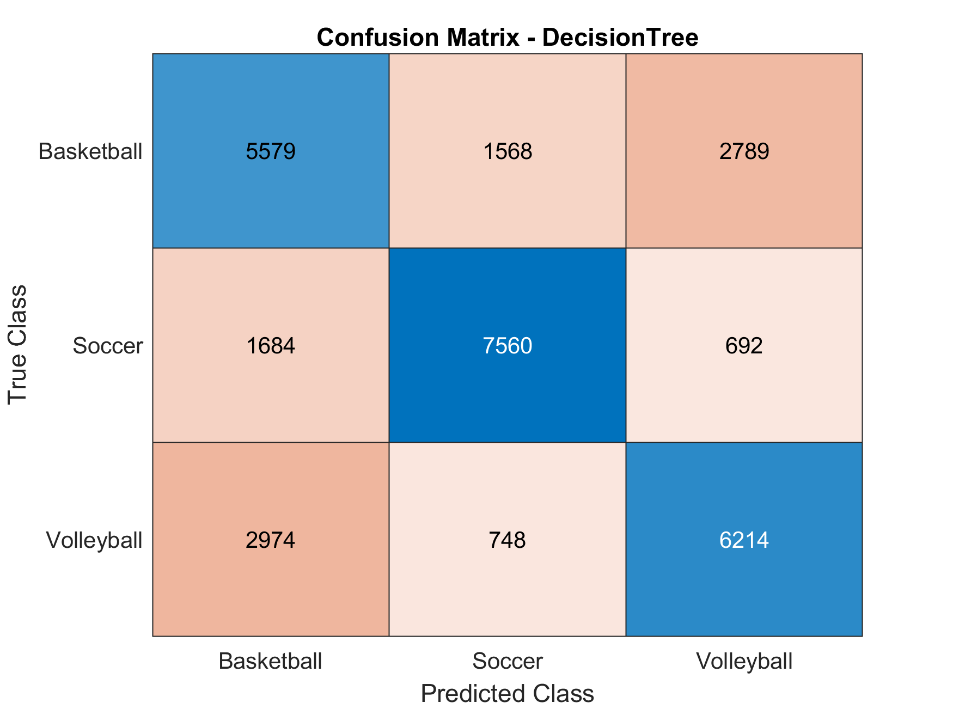
Figure 7. Confusion matrix of the Decision Tree classifier for sport activity recognition
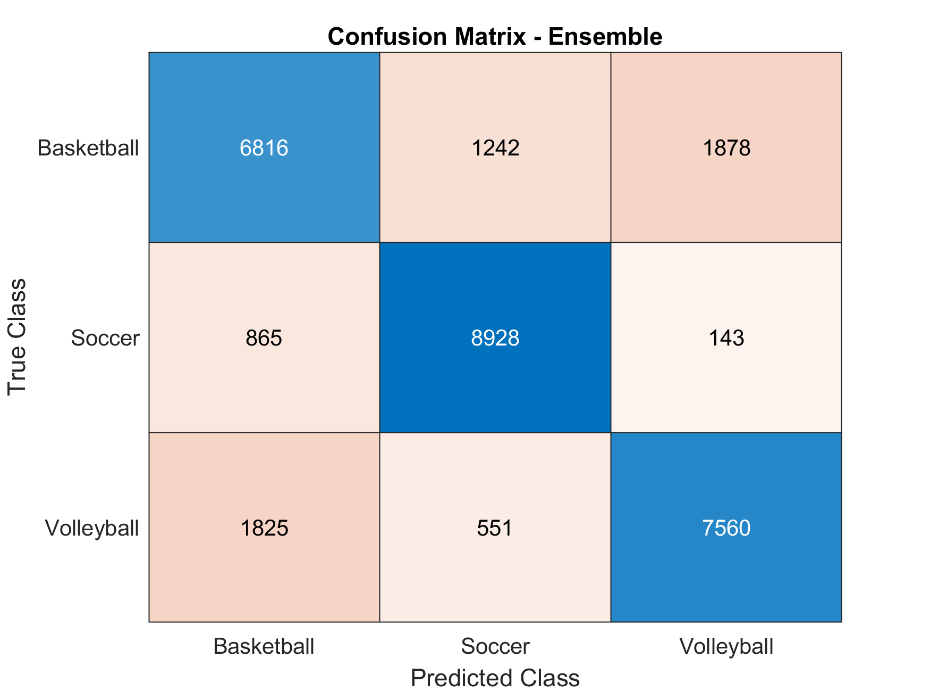
Figure 8. Confusion matrix of the Ensemble classifier for sport activity recognition
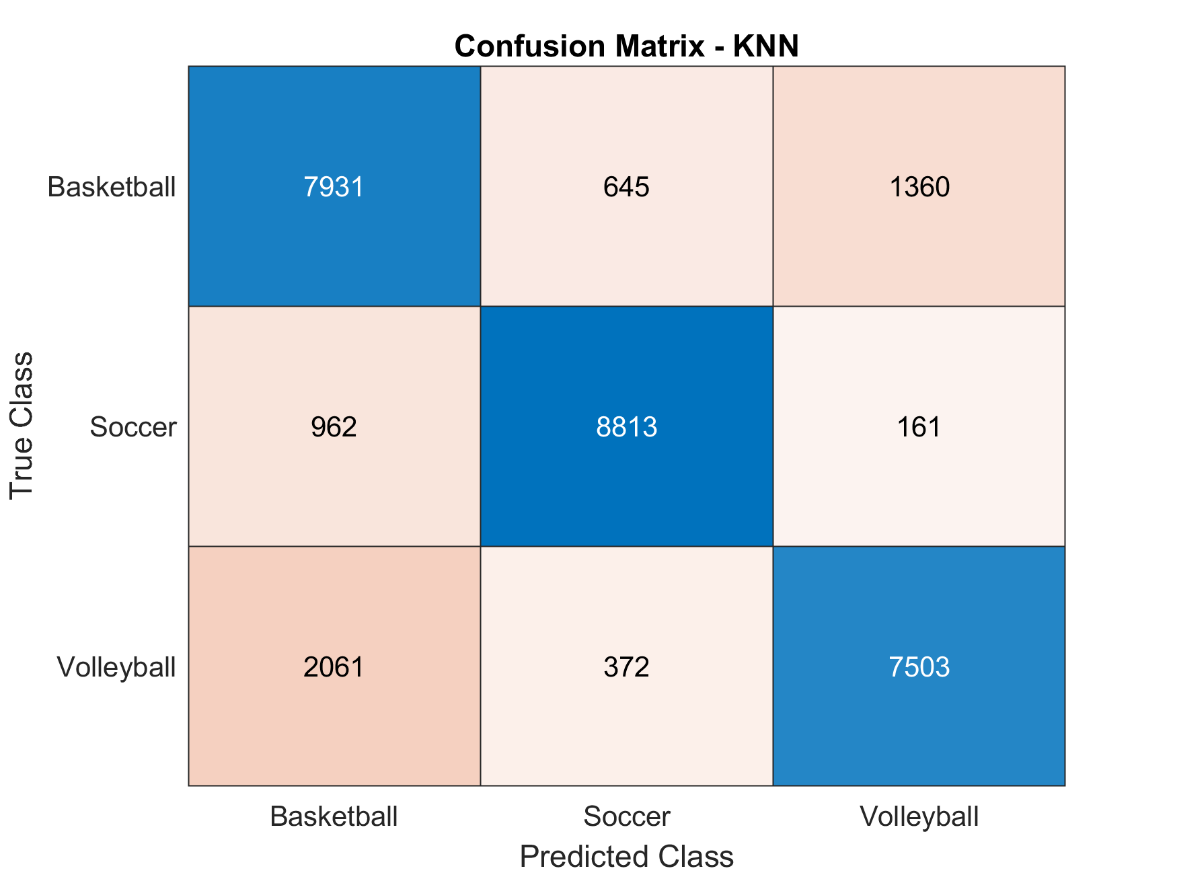
Figure 9. Confusion matrix of the KNN classifier for sport activity recognition
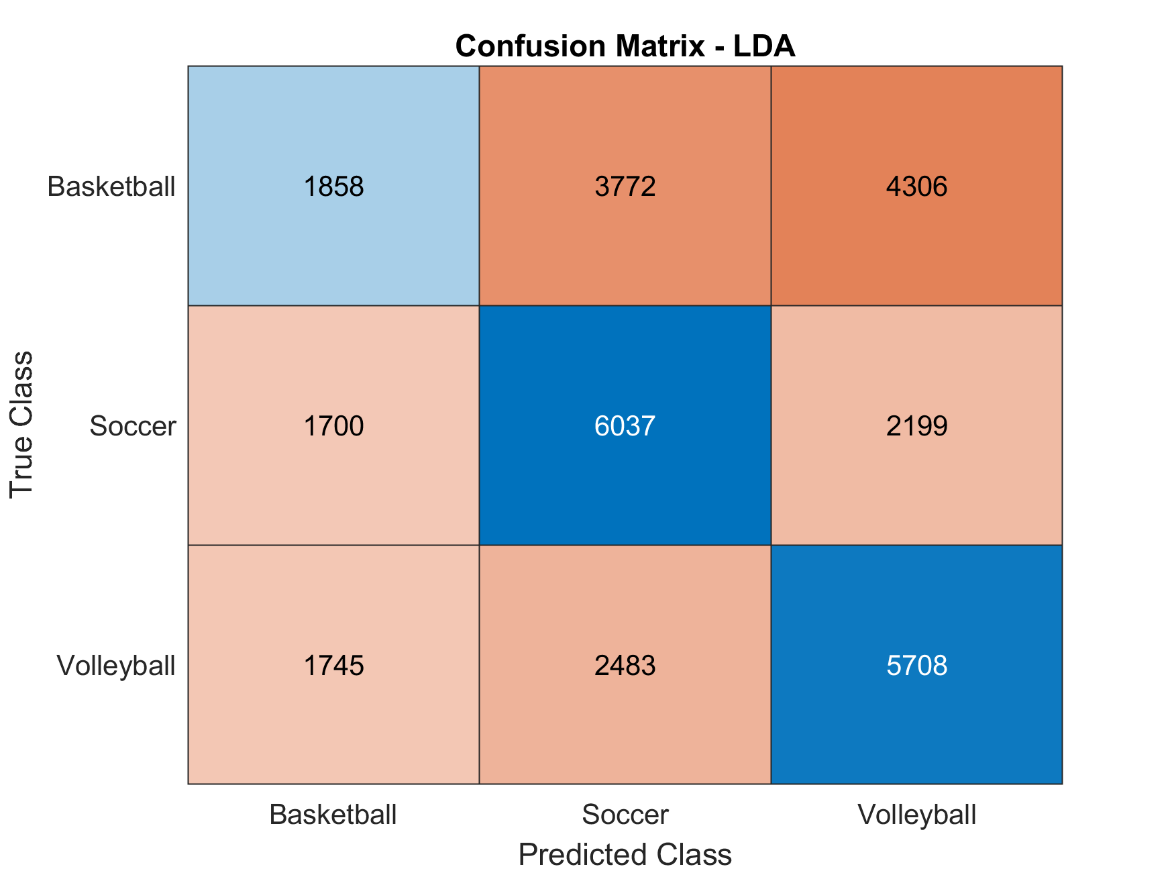
Figure 10. Confusion matrix of the LDA classifier for sport activity recognition
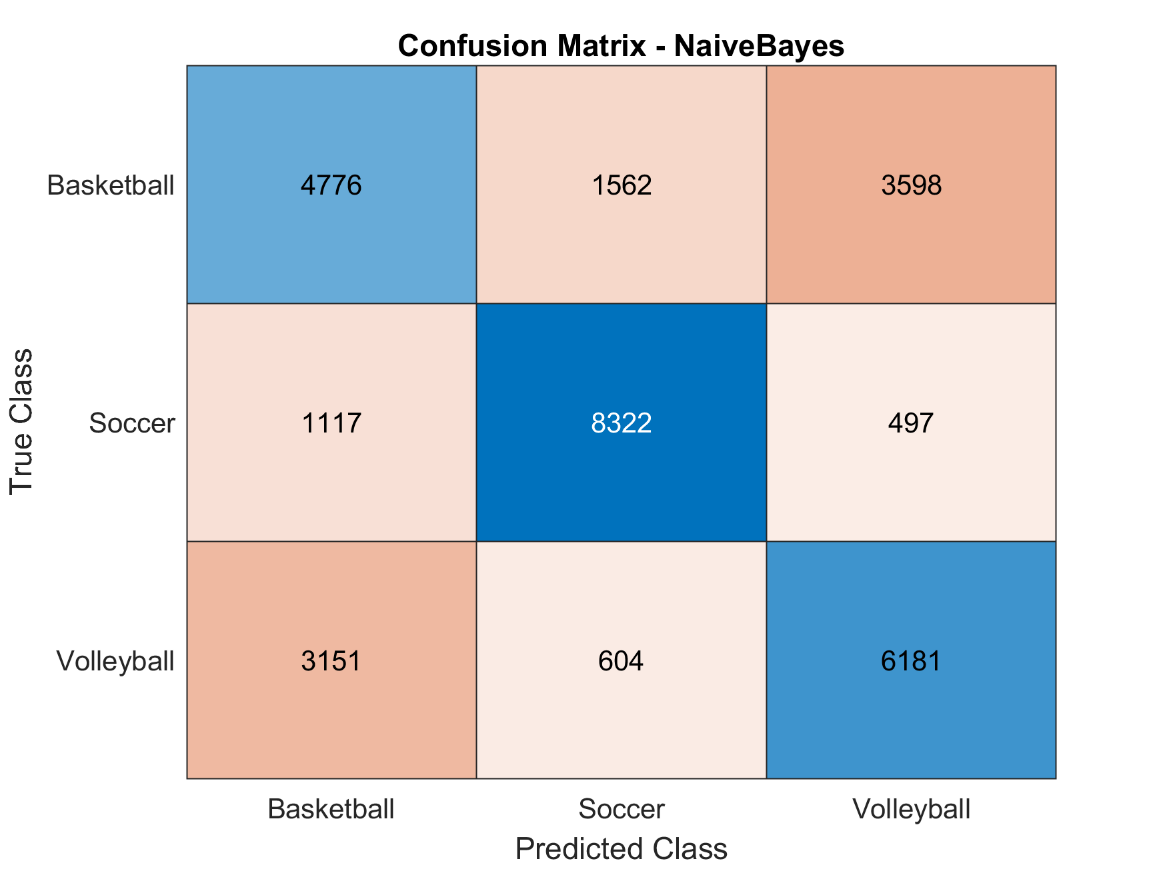
Figure 11. Confusion matrix of the Naïve Bayes classifier for sport activity recognition
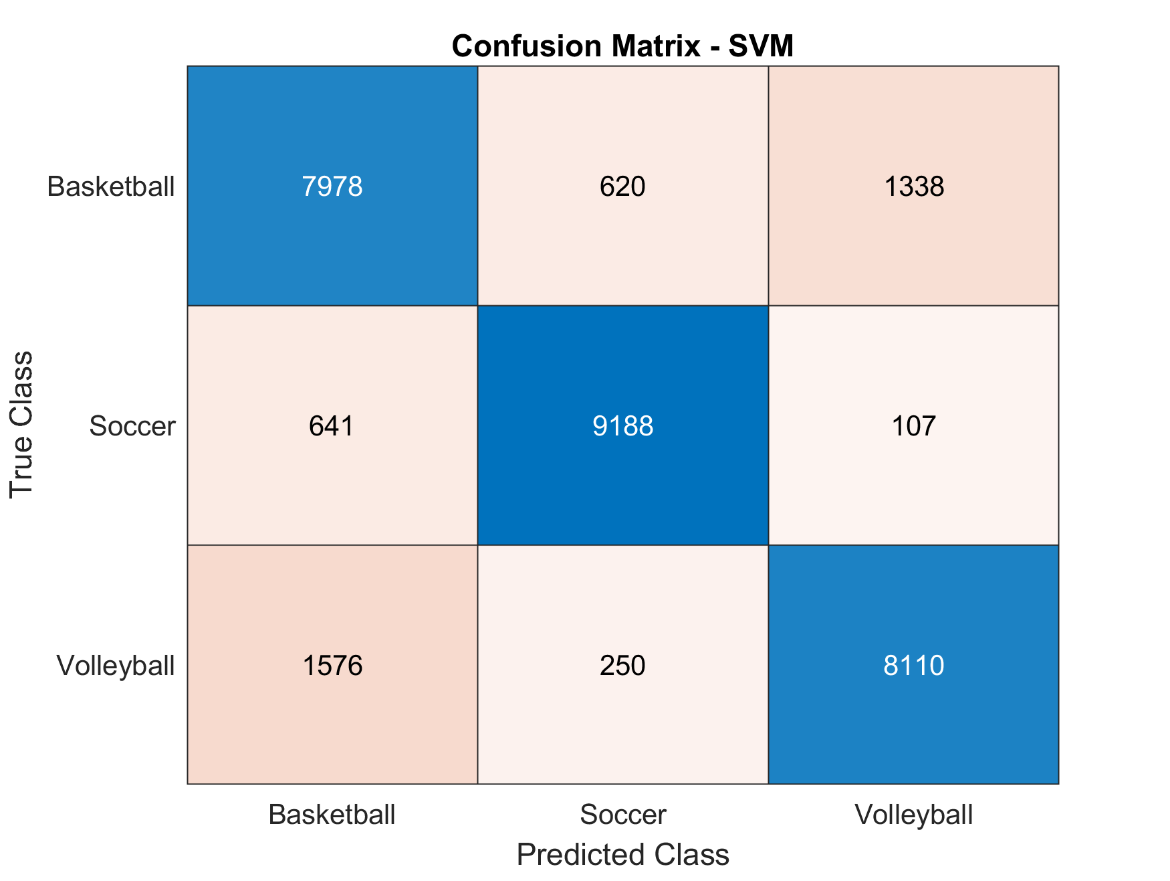
Figure 12. Confusion matrix of the SVM classifier for sport activity recognition
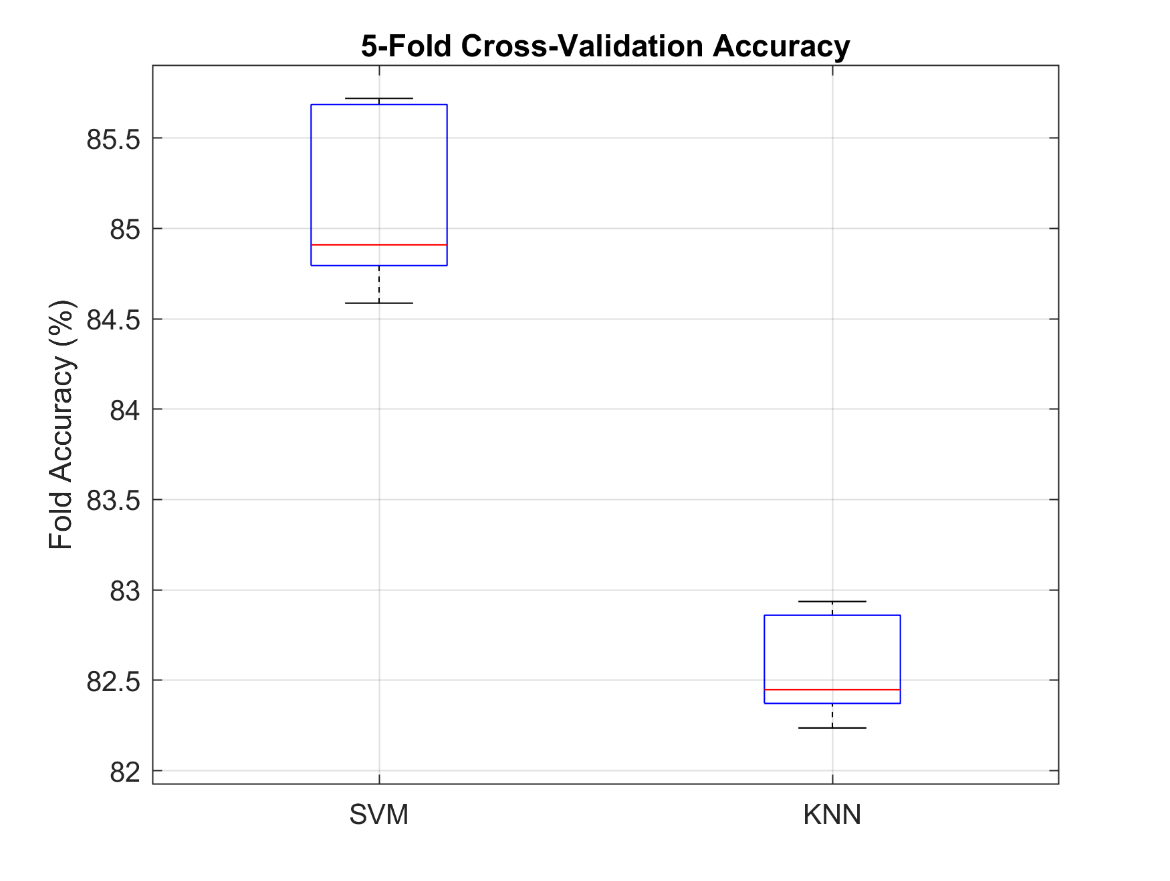
Figure 13. Five-fold cross-validation accuracy comparison between SVM and KNN classifiers
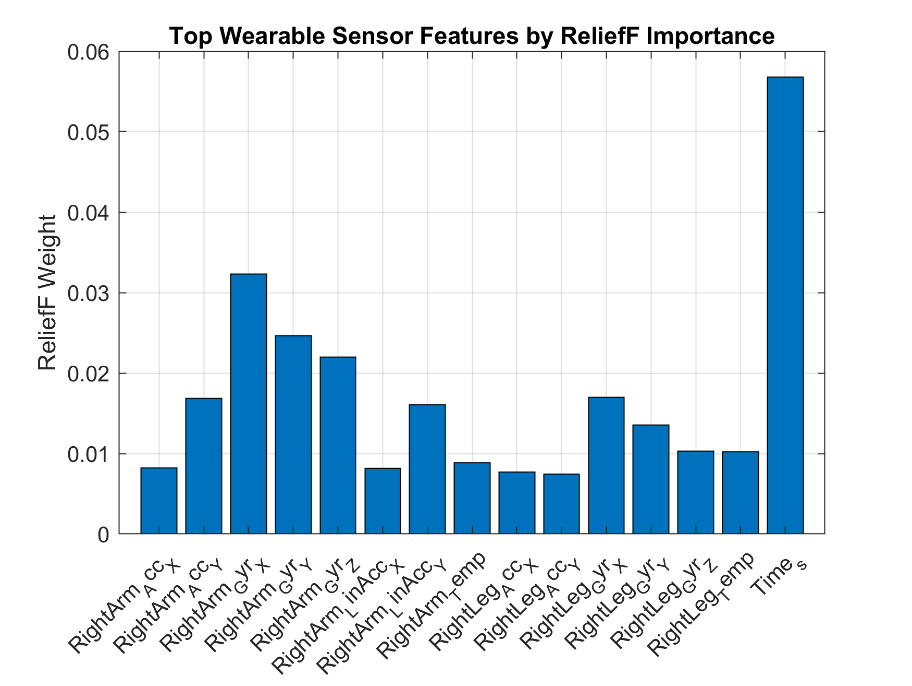
Figure 14. ReliefF-based importance ranking of wearable sensor features
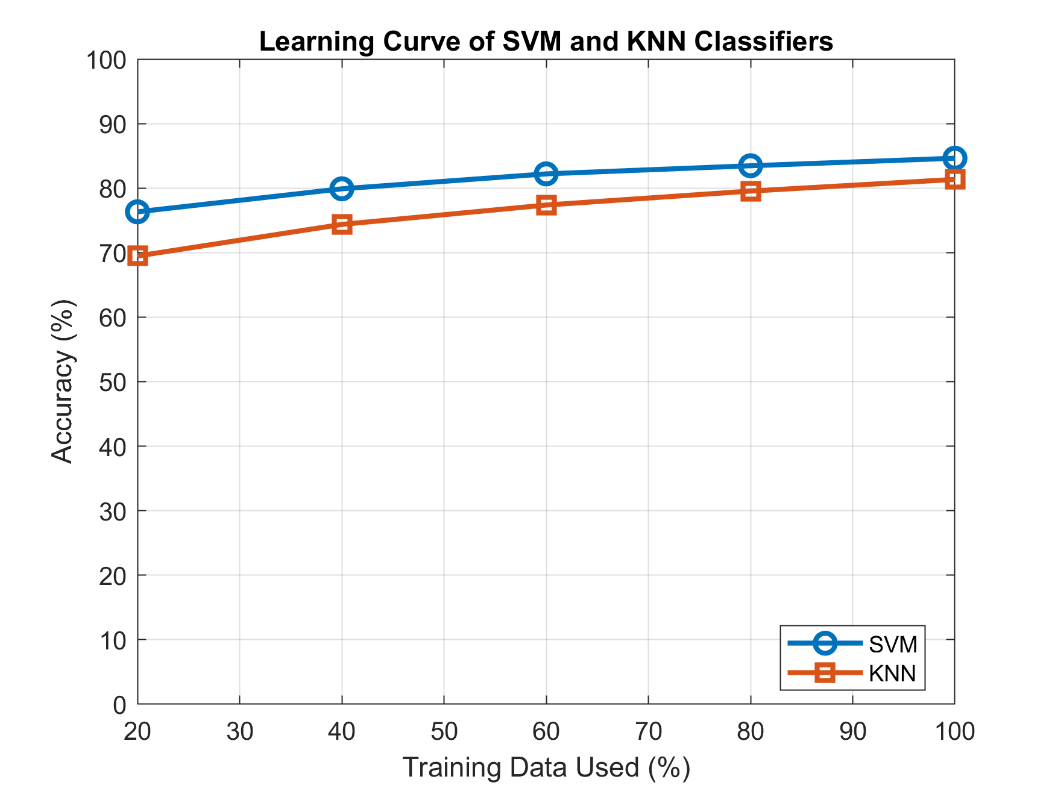
Figure 15. Learning curve analysis of SVM and KNN classifiers using different training data sizes
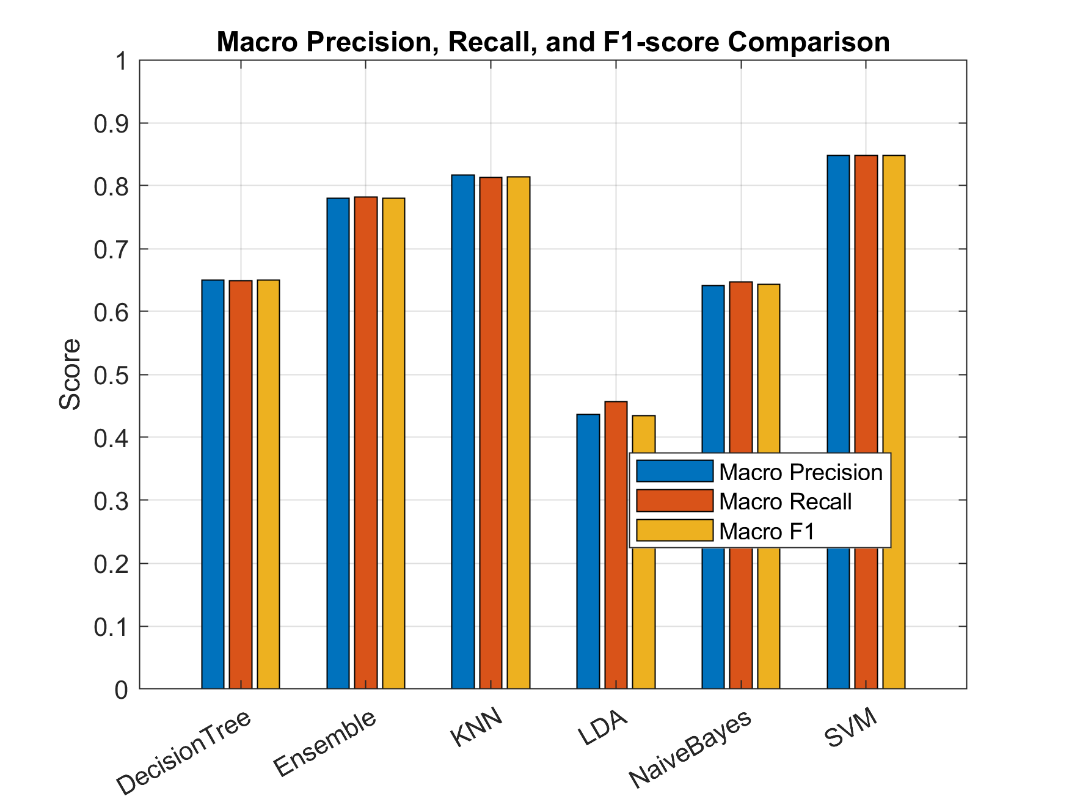
Figure 16. Macro precision, recall, and F1-score comparison among the evaluated machine learning classifiers
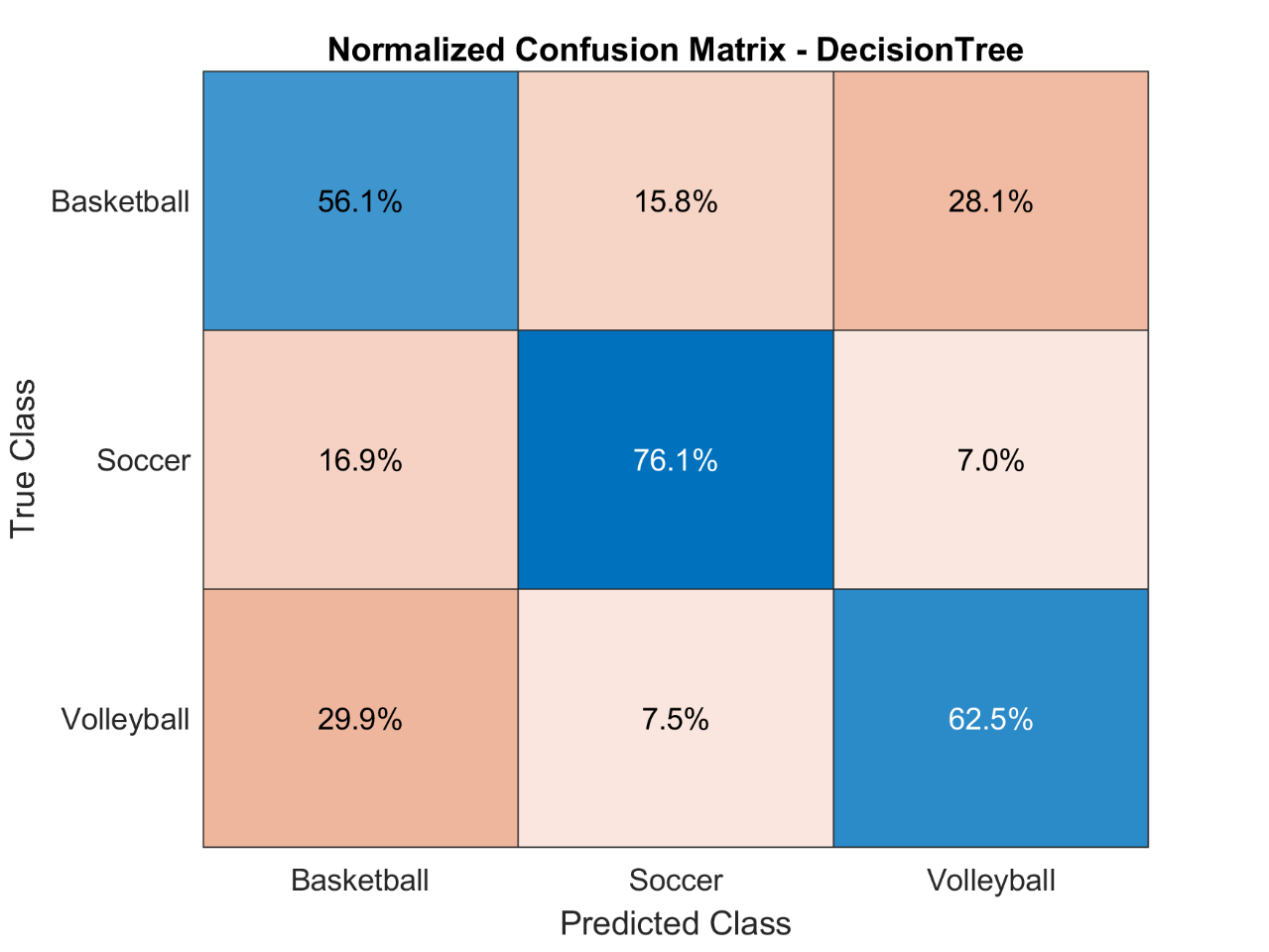
Figure 17. Normalized confusion matrix of the Decision Tree classifier
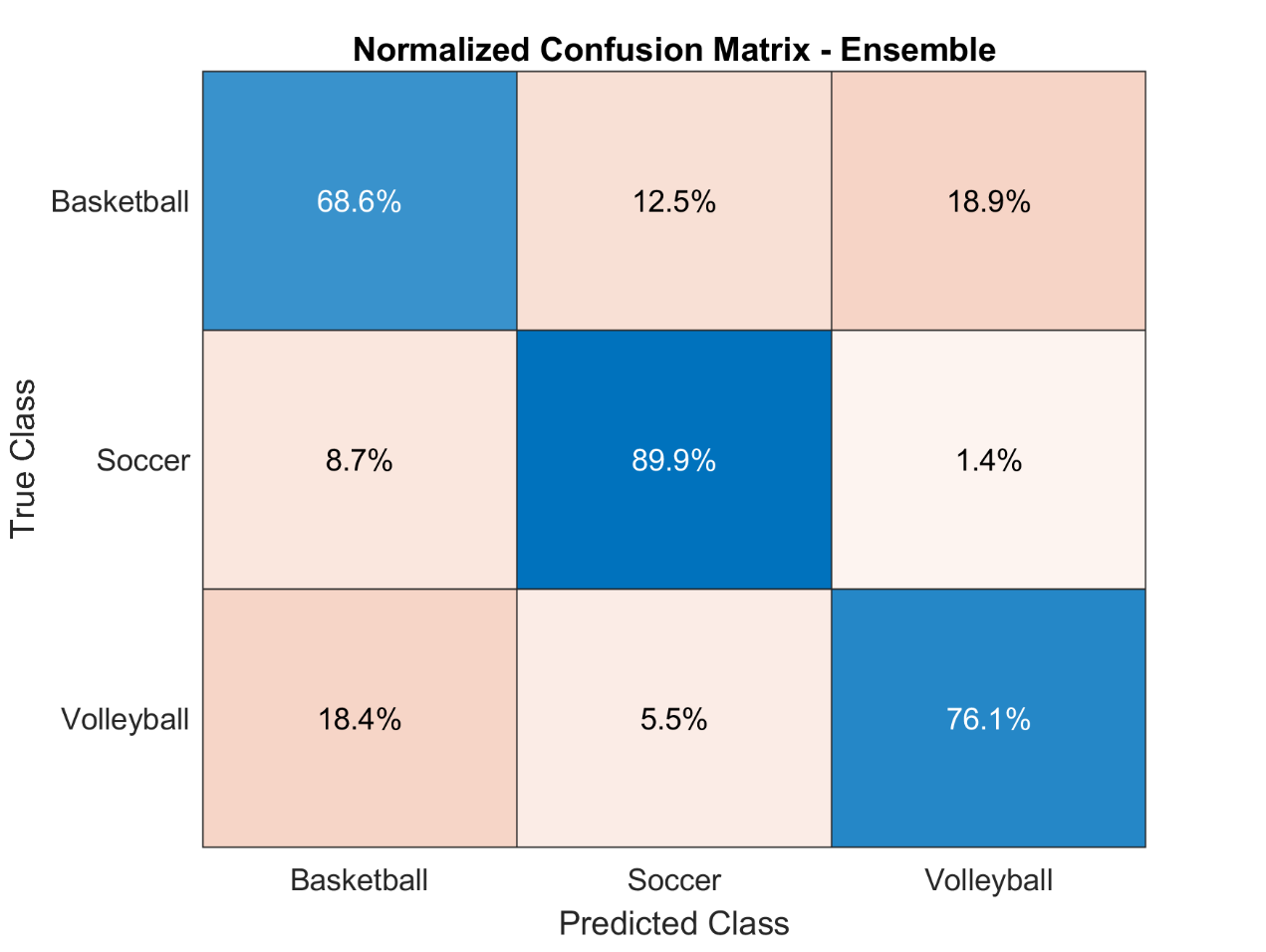
Figure 18. Normalized confusion matrix of the Ensemble classifier
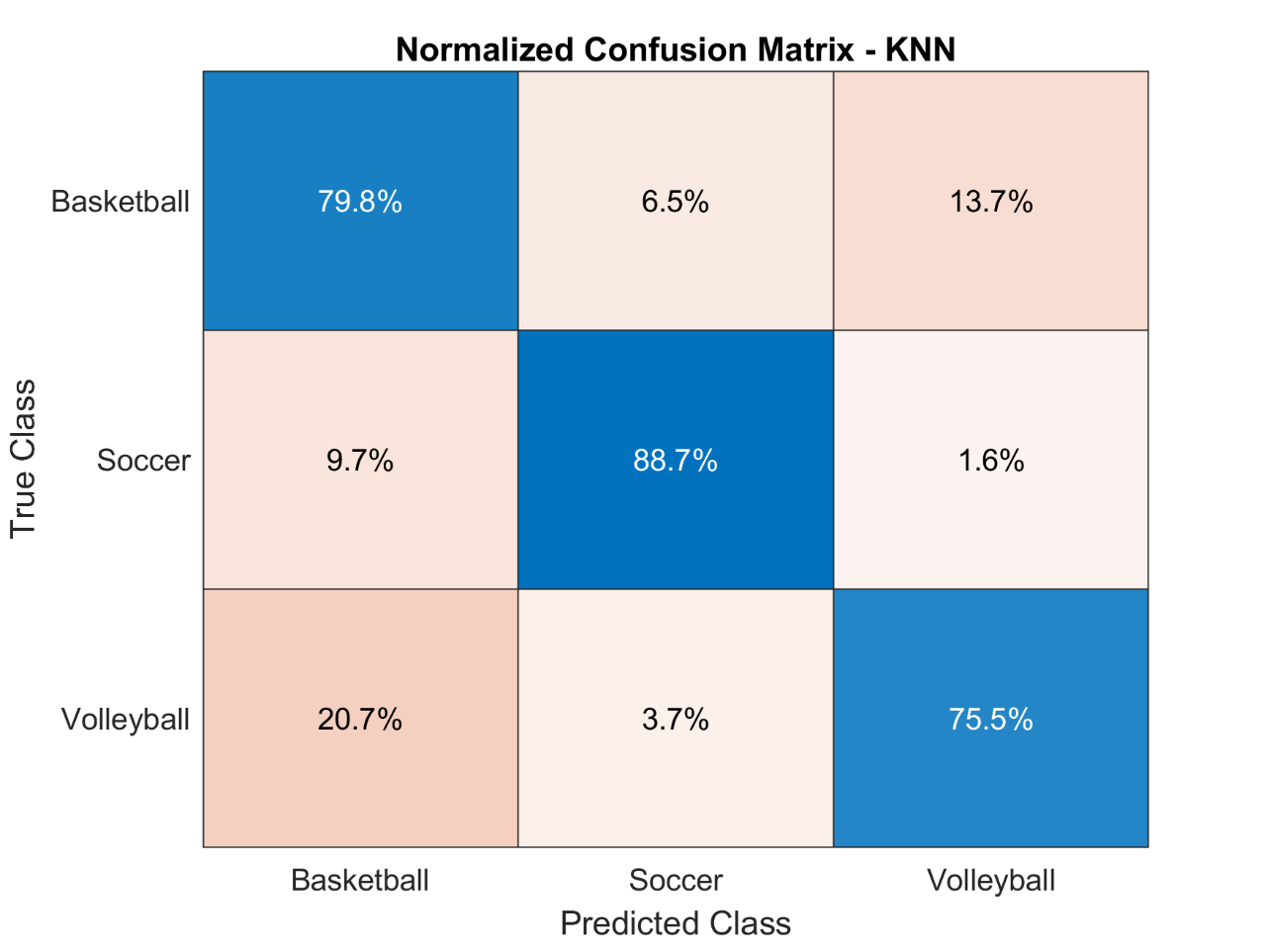
Figure 19. Normalized confusion matrix of the KNN classifier
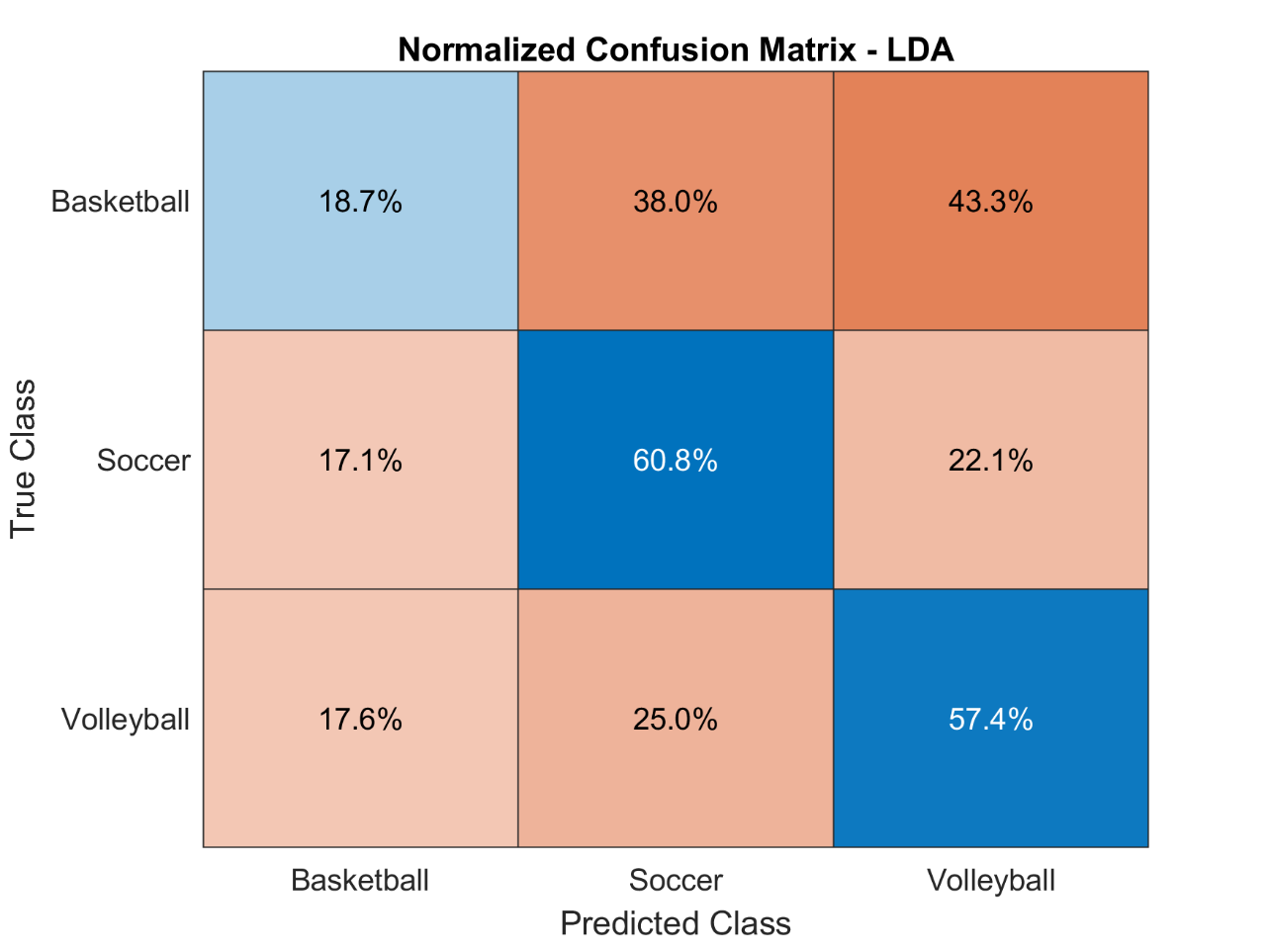
Figure 20. Normalized confusion matrix of the LDA classifier
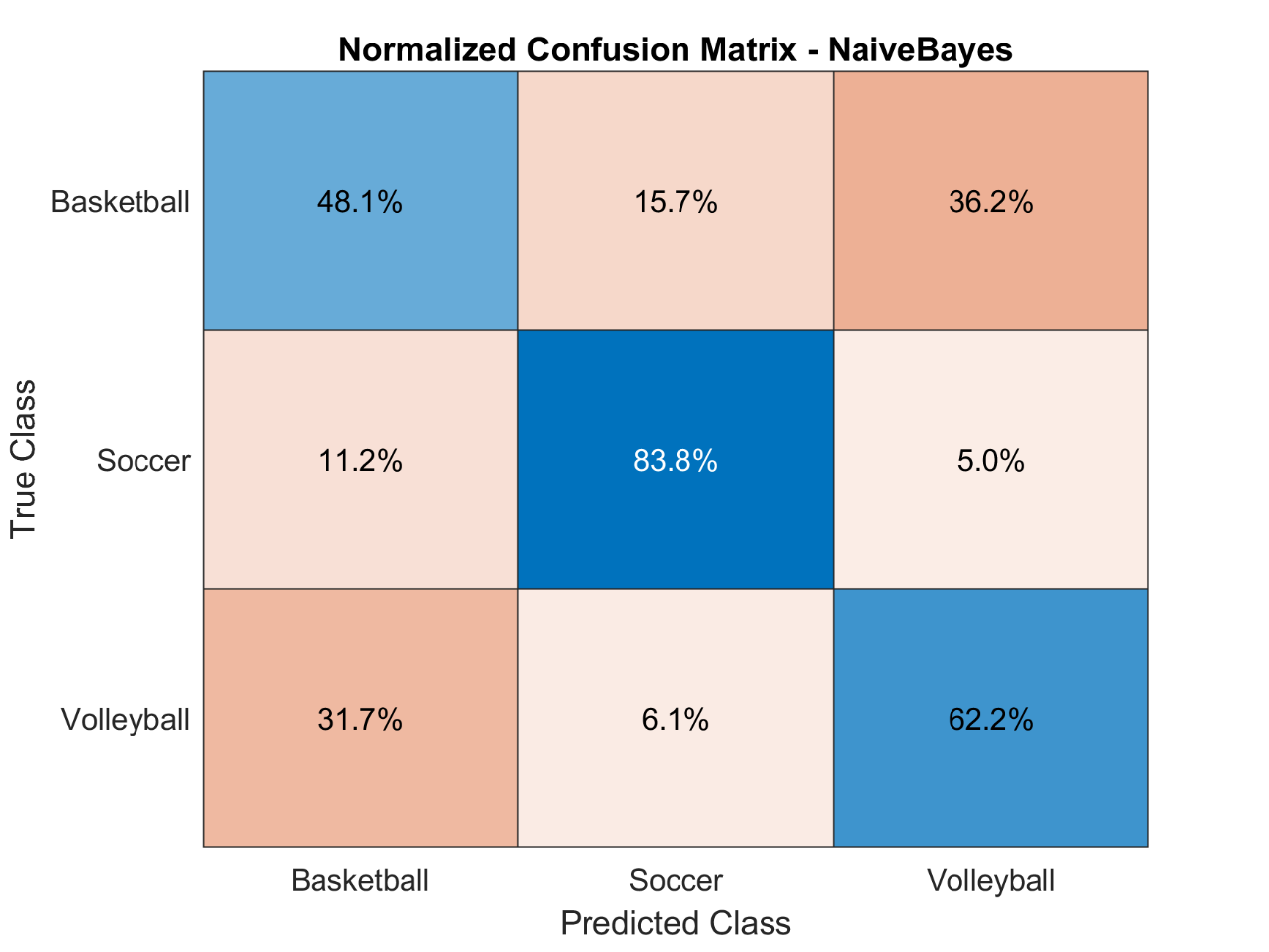
Figure 21. Normalized confusion matrix of the Naïve Bayes classifier
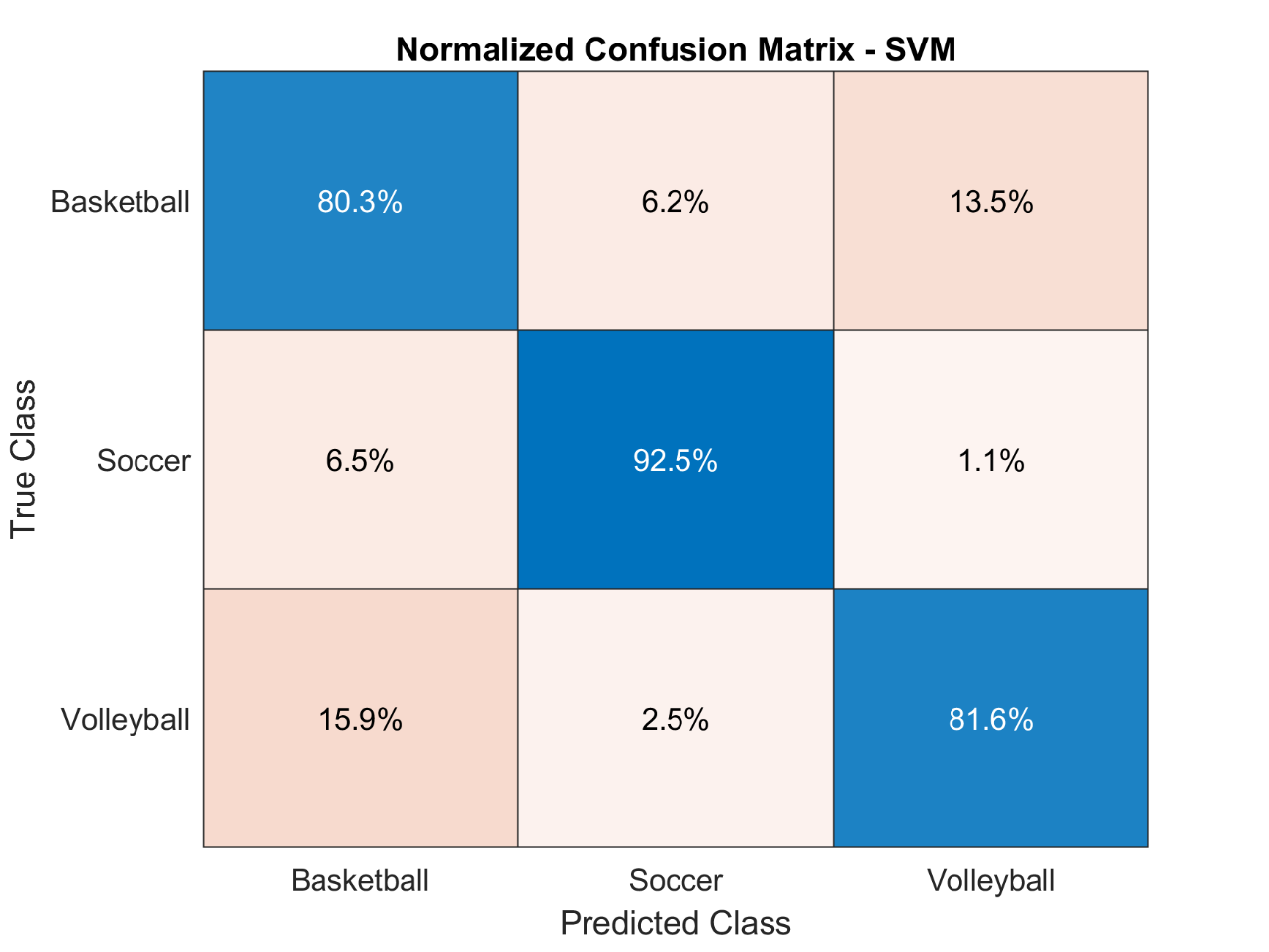
Figure 22. Normalized confusion matrix of the SVM classifier
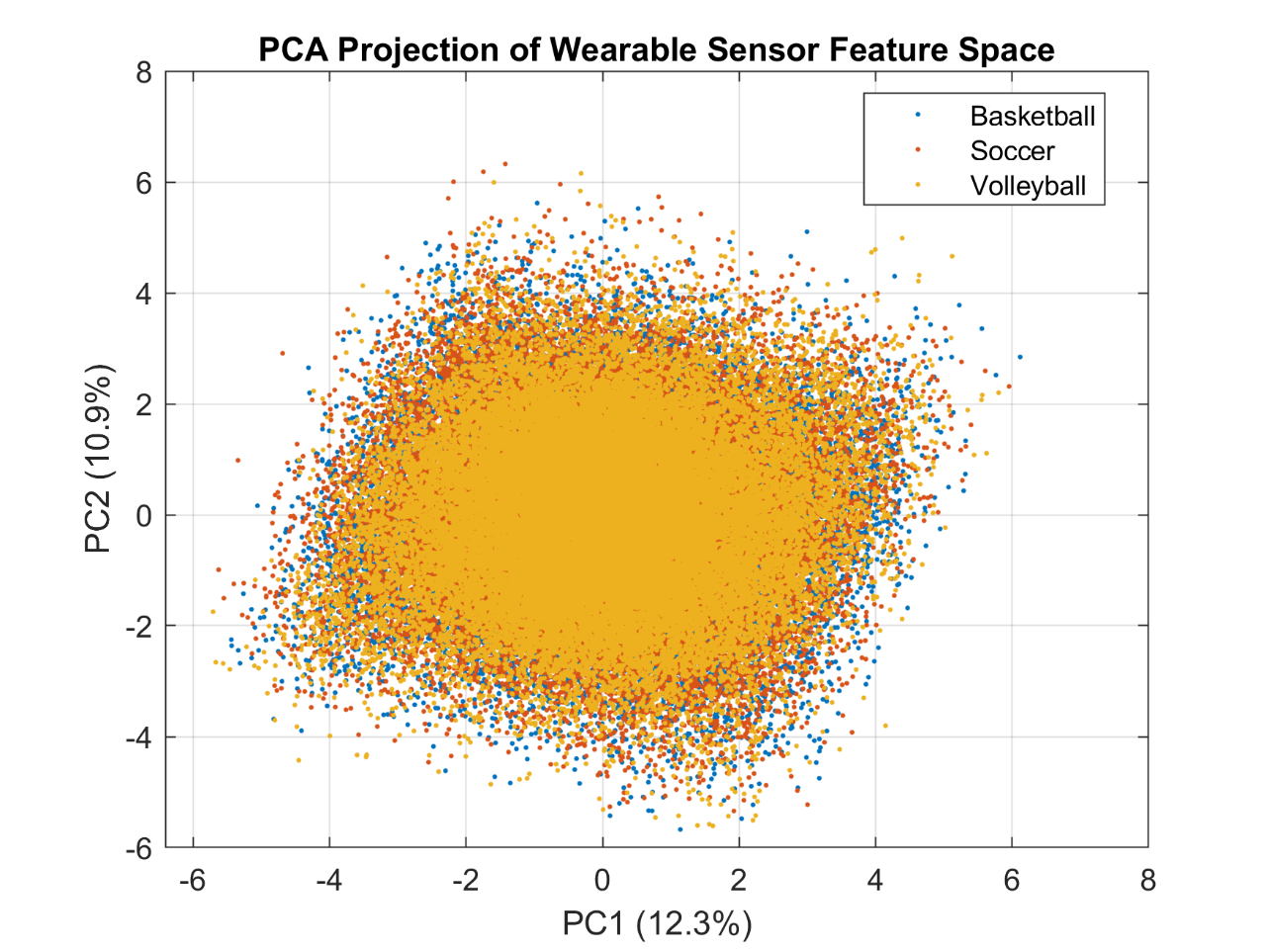
Figure 23. PCA projection of the wearable sensor feature space for the three sport activity classes
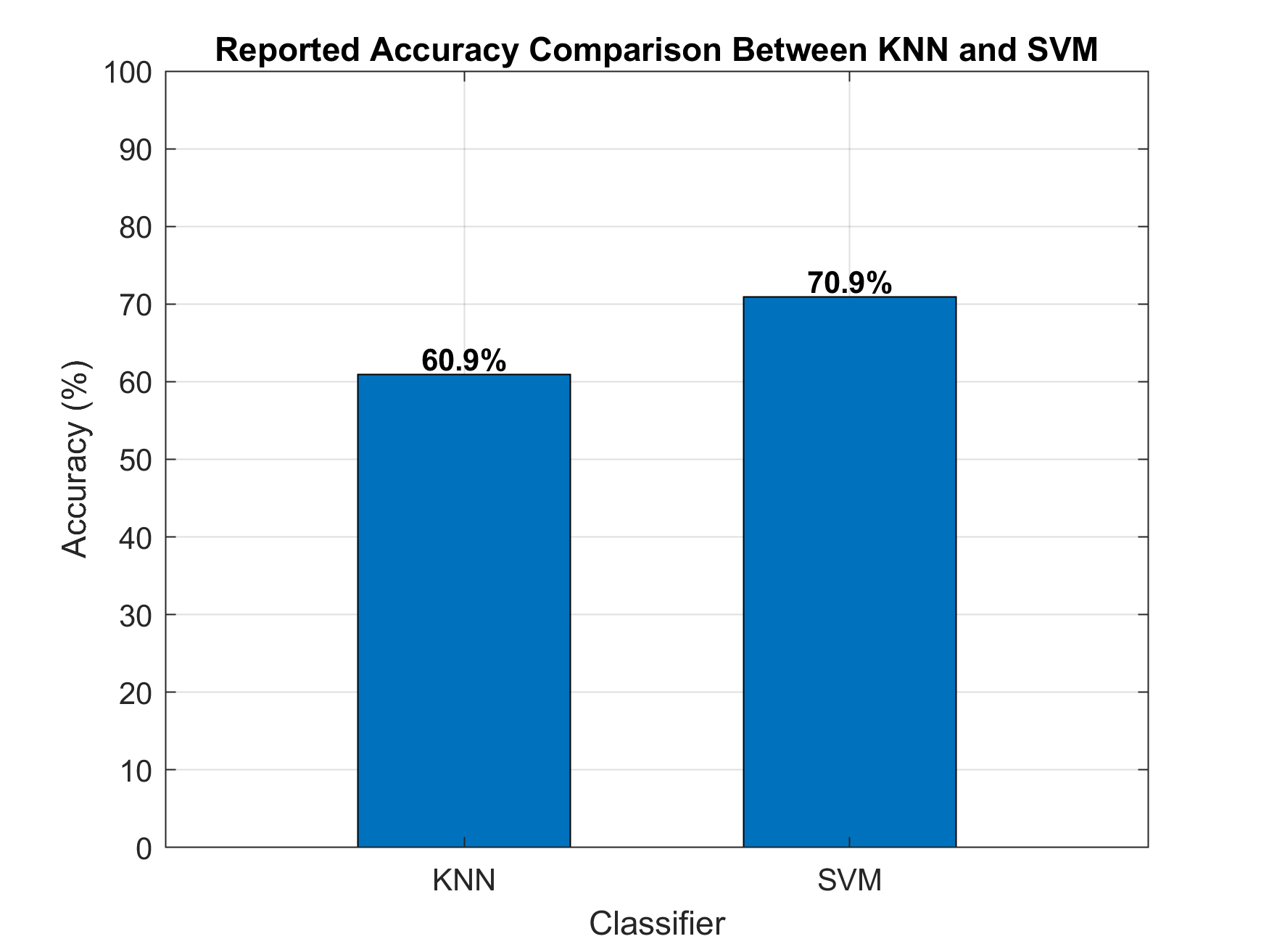
Figure 24. Reported accuracy comparison between KNN and SVM classifiers
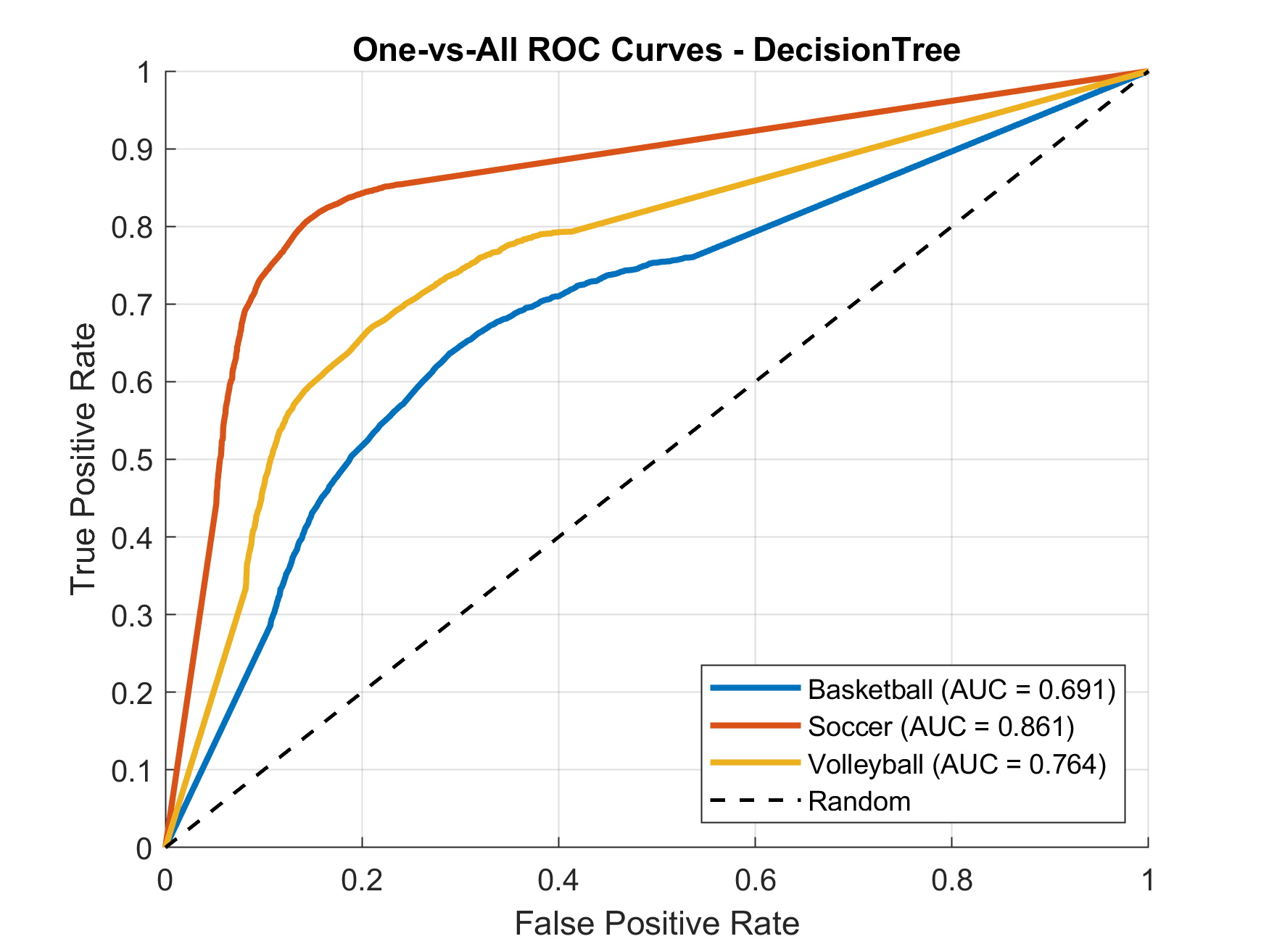
Figure 25. One-vs-all ROC curves of the Decision Tree classifier for basketball, soccer, and volleyball recognition
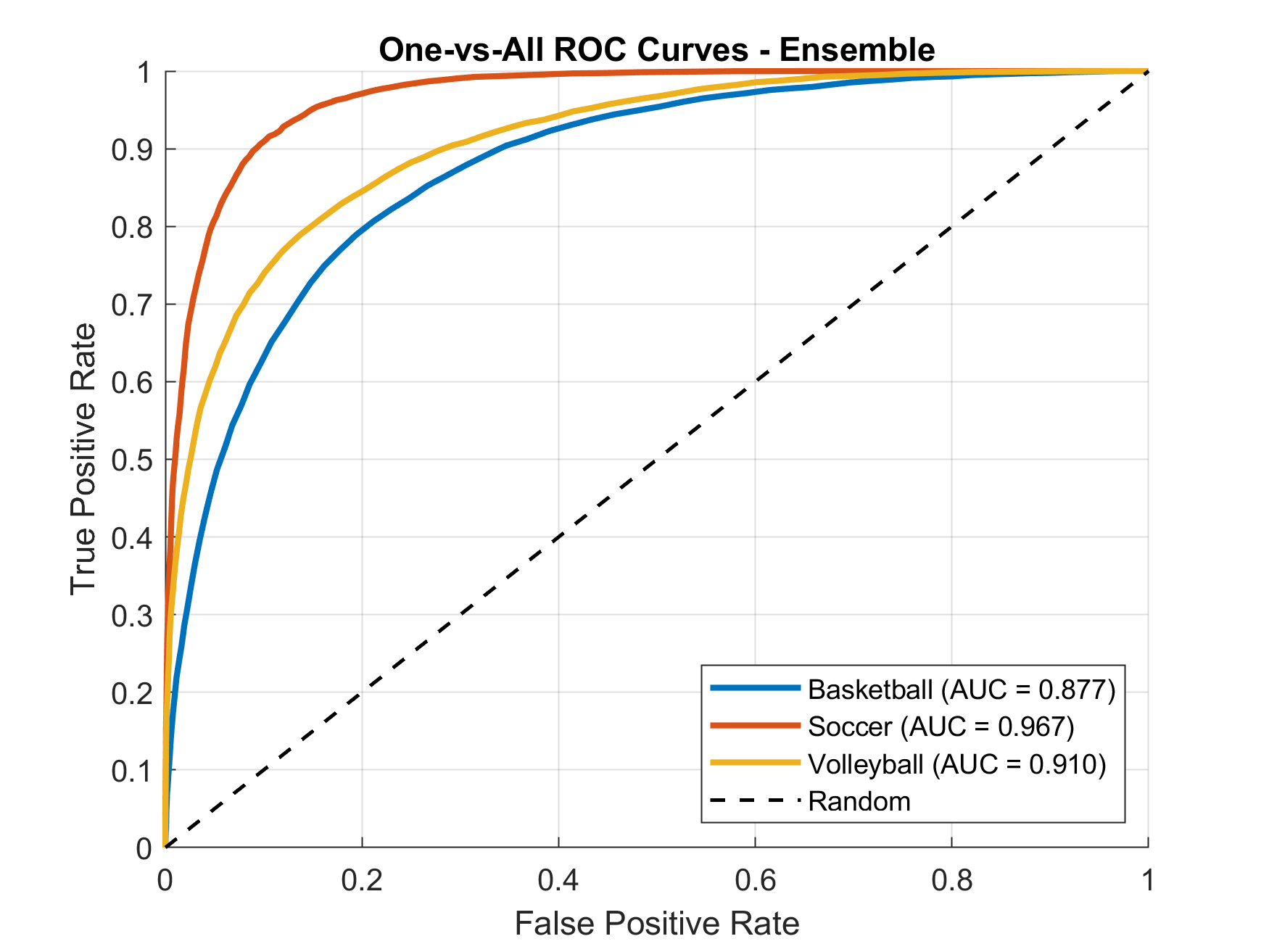
Figure 26. One-vs-all ROC curves of the Ensemble classifier for basketball, soccer, and volleyball recognition
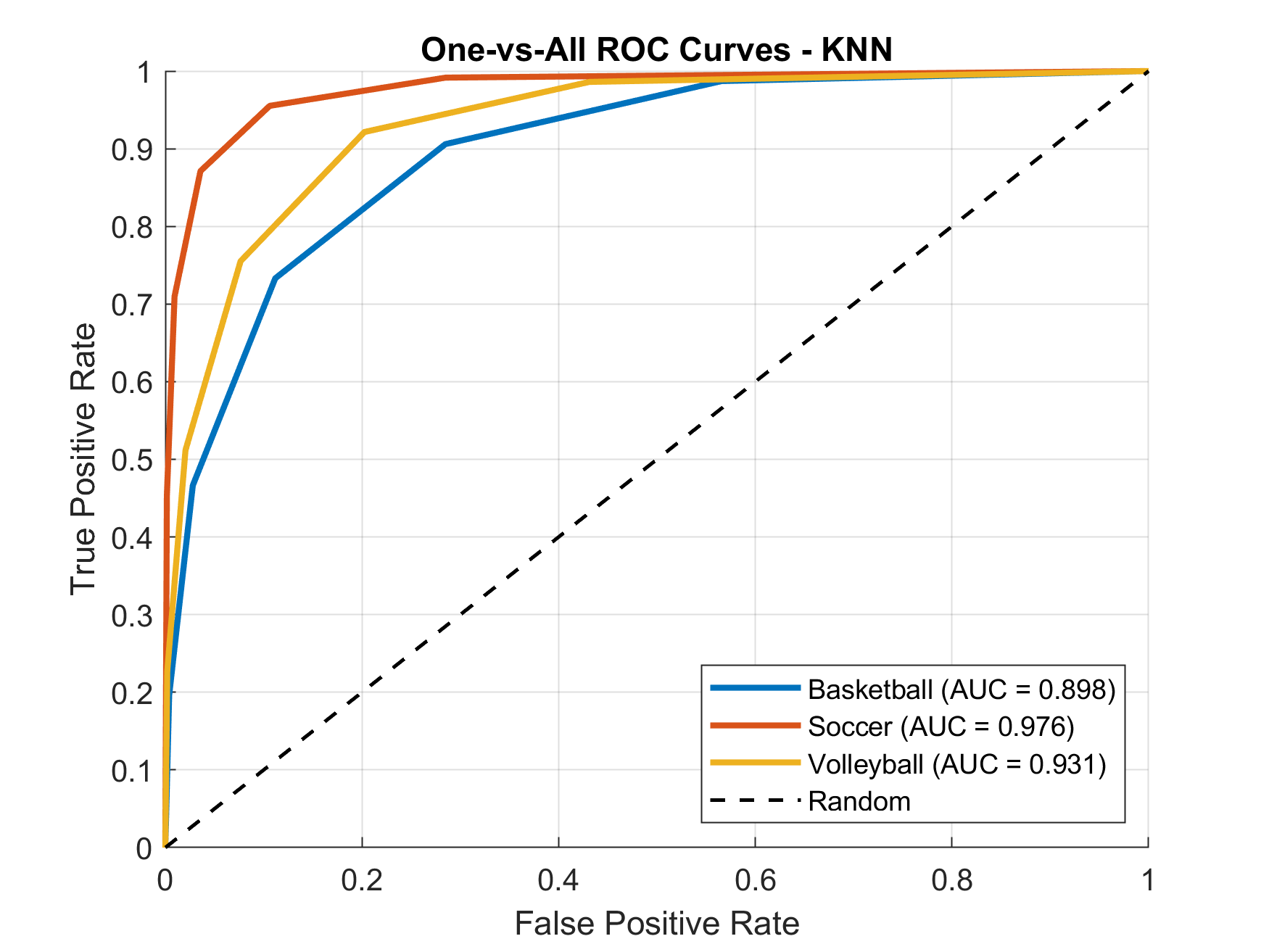
Figure 27. One-vs-all ROC curves of the KNN classifier for basketball, soccer, and volleyball recognition
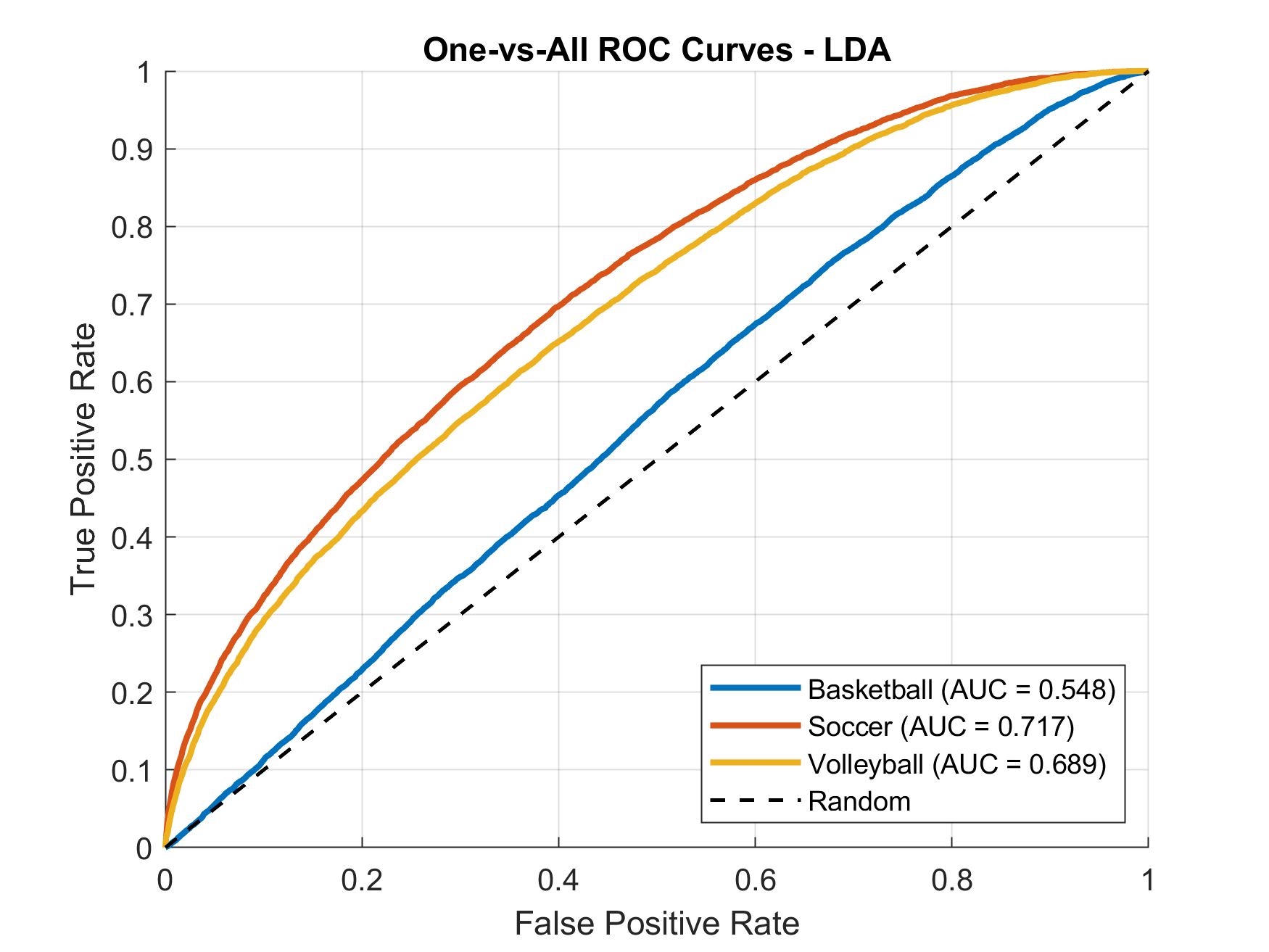
Figure 28. One-vs-all ROC curves of the LDA classifier for basketball, soccer, and volleyball recognition
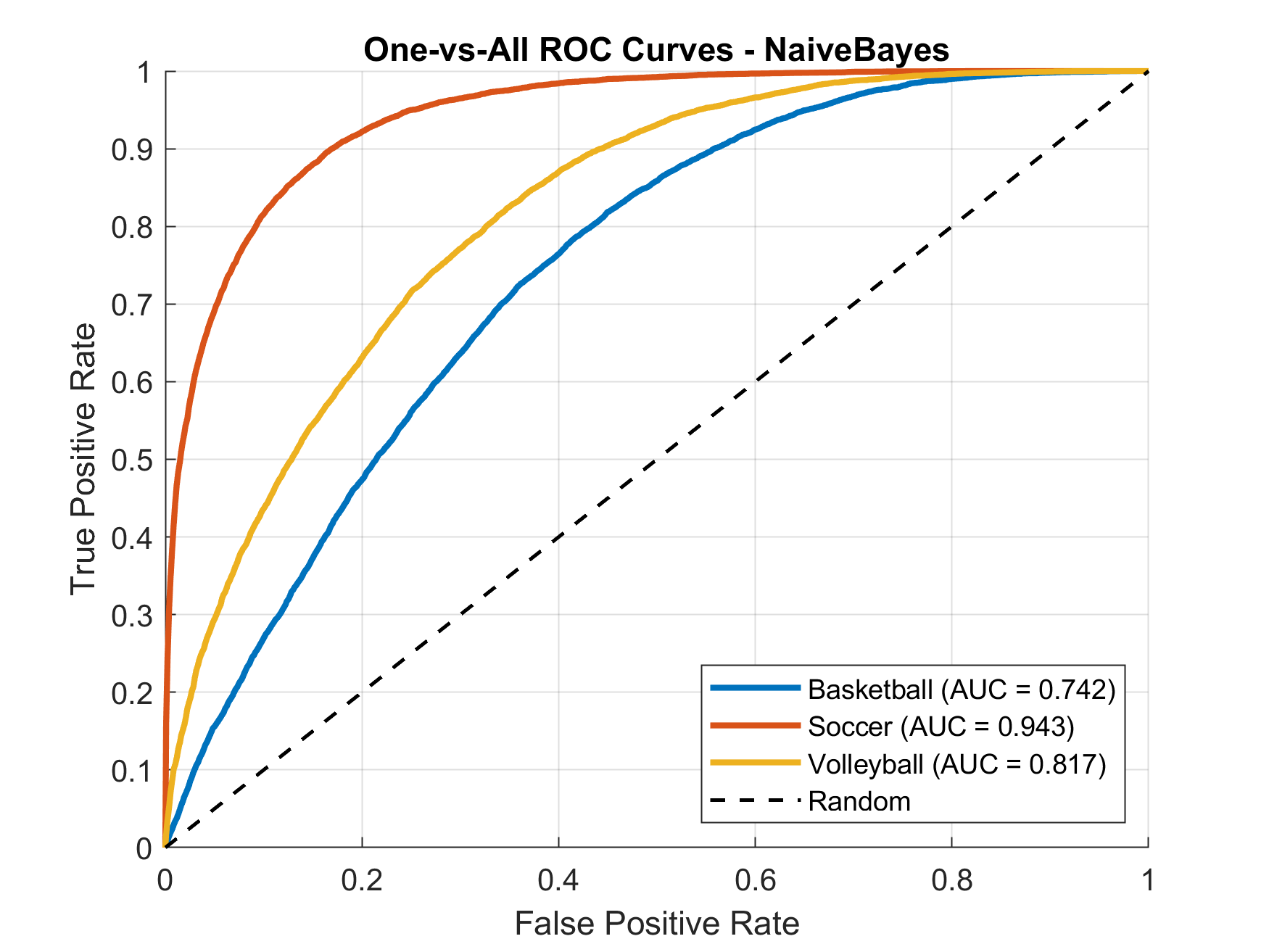
Figure 29. One-vs-all ROC curves of the Naïve Bayes classifier for basketball, soccer, and volleyball recognition
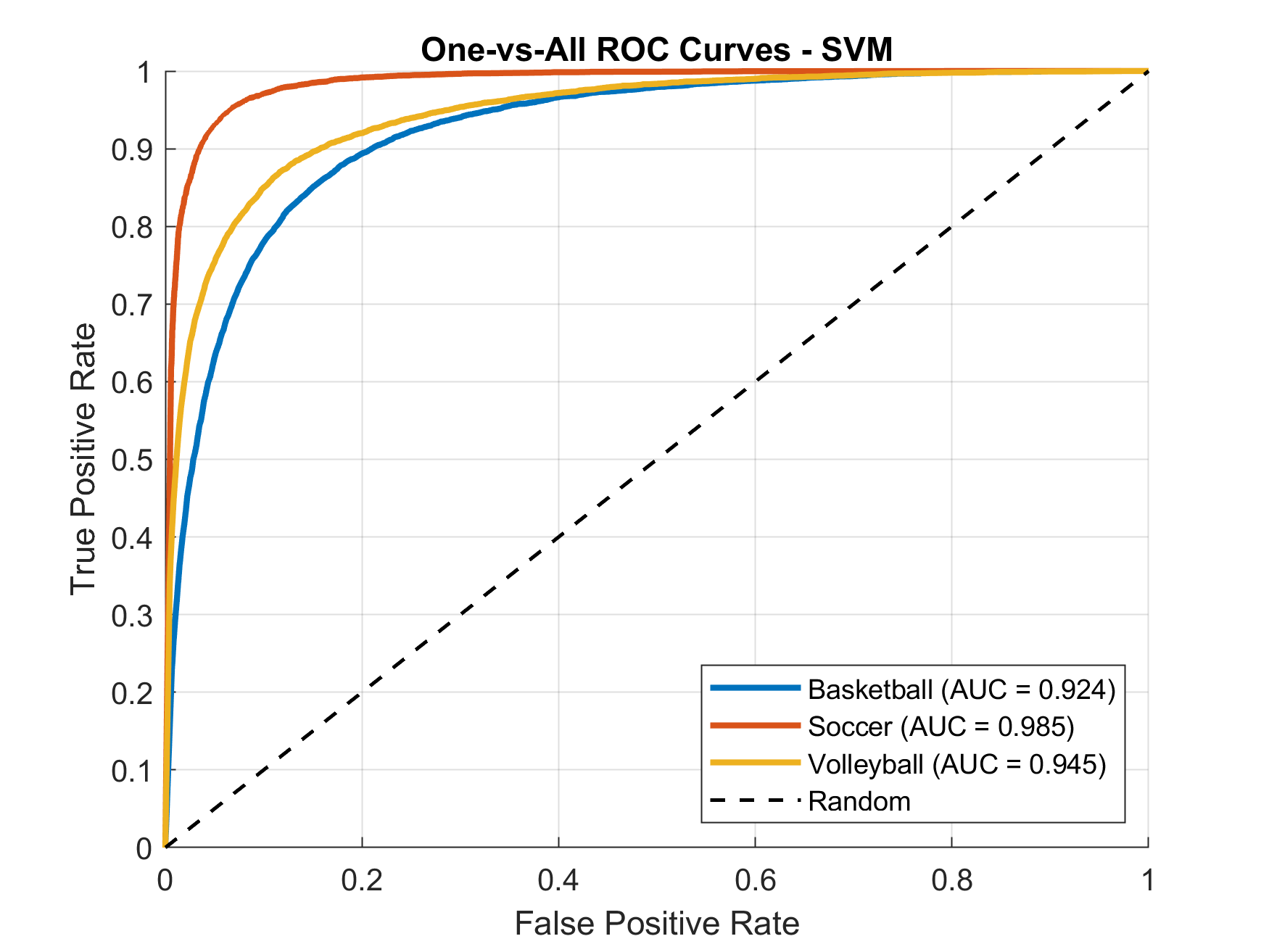
Figure 30. One-vs-all ROC curves of the SVM classifier for basketball, soccer, and volleyball recognition
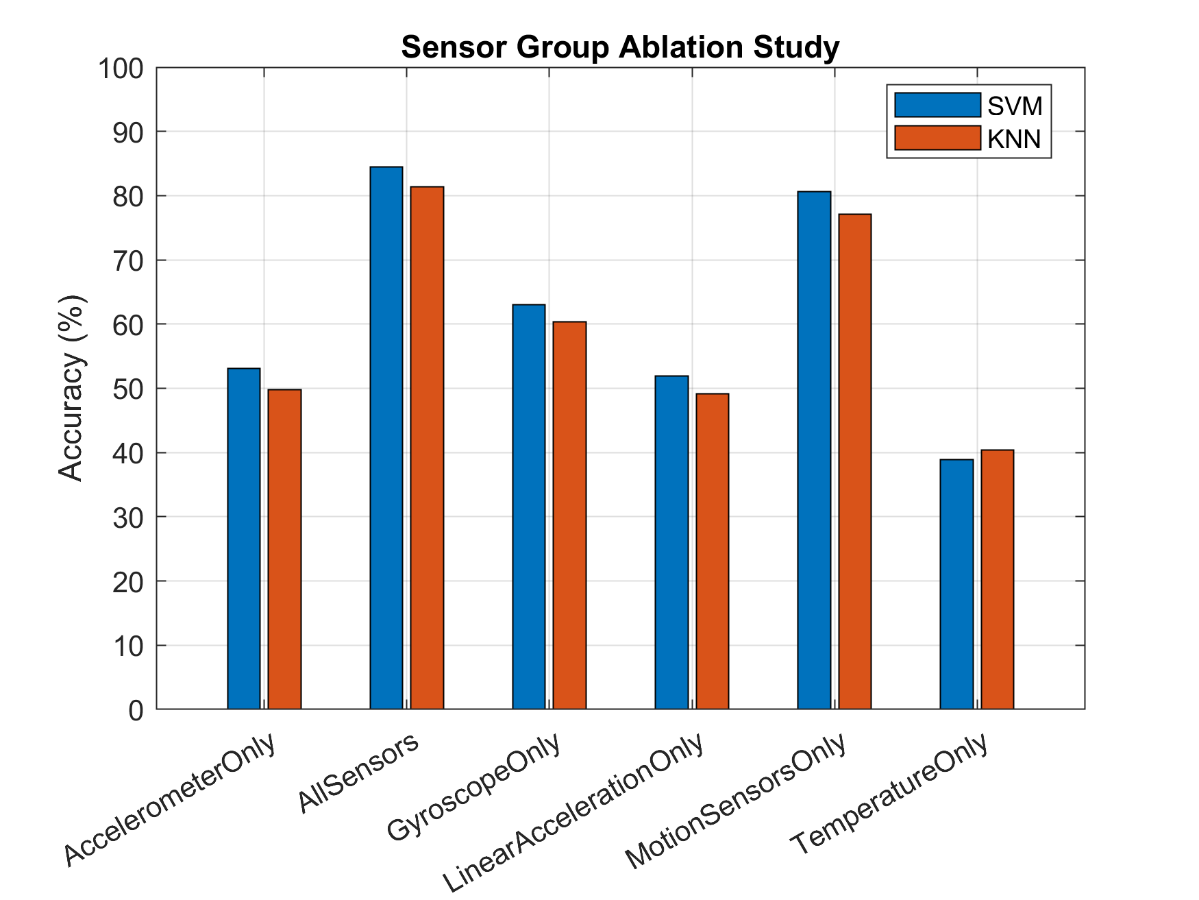
Figure 31. Sensor group ablation study showing the contribution of different wearable sensor groups using SVM and KNN classifiers
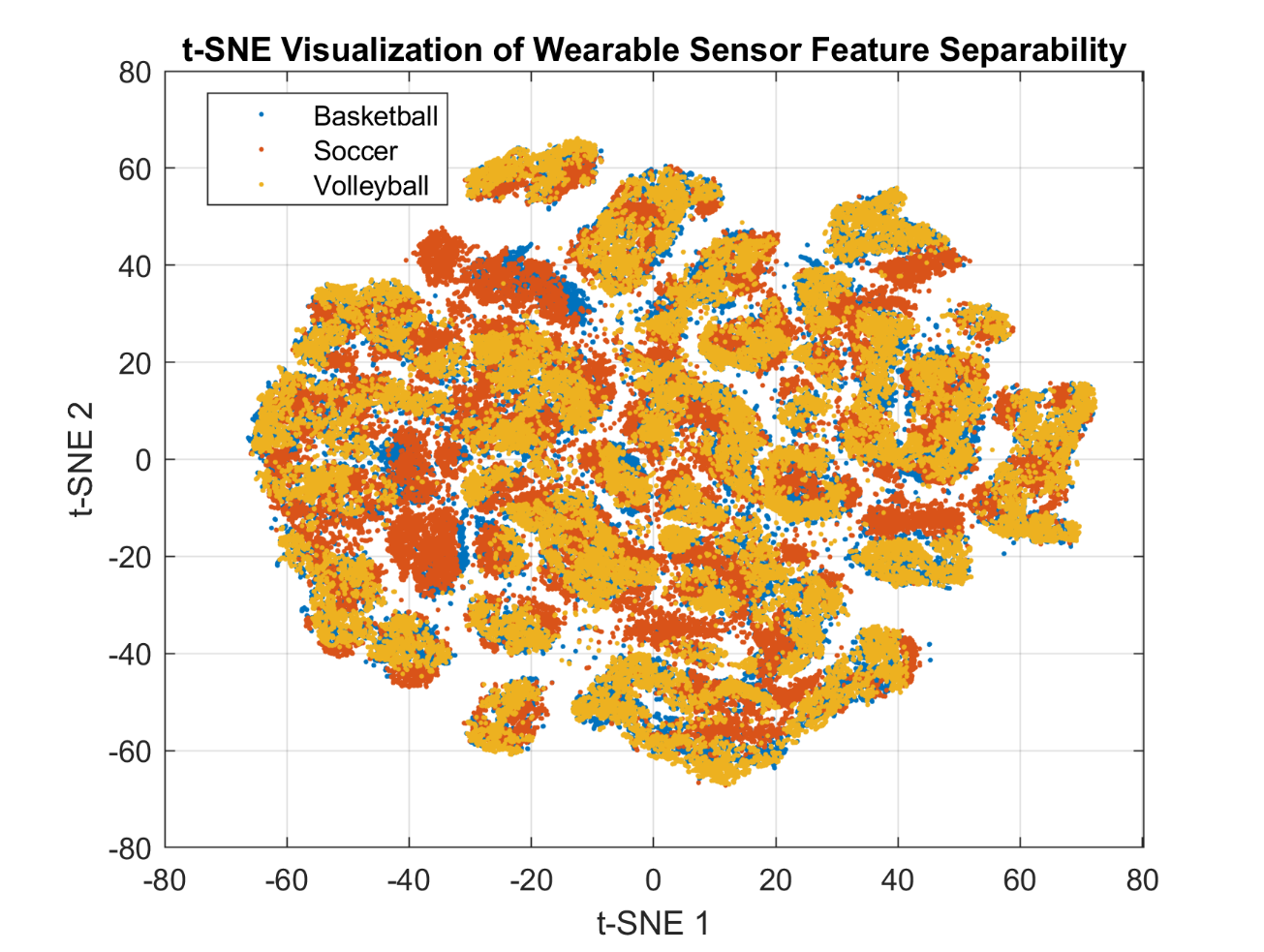
Figure 32. t-SNE visualization of wearable sensor feature separability for basketball, soccer, and volleyball activities
Discussion of Extended Recognition Results
The extended recognition results provide a clearer and stronger evaluation of the proposed wearable-sensor-based sport activity recognition system. Unlike the initial comparison, which was limited to SVM and KNN only, the developed evaluation includes additional peer classifiers, namely Ensemble, Decision Tree, Naïve Bayes, and LDA. This wider comparison is important because it shows how different machine learning models behave when they are applied to the same wearable sensor dataset. The comparison also confirms that the classification performance is highly affected by the ability of each model to separate the movement patterns of basketball, soccer, and volleyball. Since these activities share some similar motion behaviours, such as running, jumping, arm movement, body balance, and sudden direction changes, the selection of a suitable classifier becomes a major factor in improving the recognition accuracy as shown in Table 7.
Table 7. Computed model performance summary.
Model | Accuracy (%) | Macro Precision | Macro Recall | Macro F1-score |
SVM | 84.796 | 0.84827 | 0.84796 | 0.84795 |
KNN | 81.344 | 0.81734 | 0.81344 | 0.81417 |
Ensemble | 78.180 | 0.77961 | 0.78180 | 0.78009 |
Decision Tree | 64.926 | 0.65047 | 0.64926 | 0.64979 |
Naive Bayes | 64.677 | 0.64102 | 0.64677 | 0.64327 |
LDA | 45.635 | 0.43629 | 0.45635 | 0.43415 |
The overall accuracy of the SVM classifier, as shown in Table 7, was found to be 84.796%, macro-precision 0.84827, macro-recall 0.84796 and macro-F1 score 0.84795. The results showed SVM to be the best model separating the three sport movements based on the sensor data. The SVM achieves the good performance due to its capacity to create a nonlinear decision boundary for the activity classes, particularly in recordings of a complex and overlapping behavior of the recorded wearable sensor. This is suitable for the current dataset because basketball, soccer, and volleyball may produce partially similar accelerometer, gyroscope, and linear acceleration patterns during repeated and fast body movements. Although SVM achieved the highest accuracy of 84.796% and a macro-F1 score of 0.84795, this performance should be interpreted as a reliable baseline rather than a state-of-the-art result. Direct numerical comparison with recent wearable activity-recognition studies is not always straightforward because reported performance can be affected by differences in activity definitions, participant populations, sensor locations, sensing modalities, sampling frequencies, feature representations, and validation protocols. The present study addresses three sport activities with partially overlapping movement patterns using an independently collected dataset and conventional machine learning classifiers. Therefore, the obtained accuracy demonstrates the feasibility of the developed recognition pipeline under the current experimental conditions, while also indicating considerable room for improvement through larger and more diverse datasets, advanced temporal feature learning, lightweight deep learning models, subject-independent testing, and external cross-dataset validation. The KNN classifier achieved the second-best performance, with an accuracy of 81.344%, macro-precision of 0.81734, macro-recall of 0.81344, and macro-F1 score of 0.81417. Although KNN performed well, it remained lower than SVM by 3.452 percentage points in accuracy. This difference indicates that KNN was able to classify many activity samples correctly, but its distance-based voting mechanism was more affected by the overlap between activity classes. When samples from basketball, soccer, and volleyball are close to each other in the feature space, KNN may assign the new sample to the wrong class. Therefore, KNN can be considered a strong classifier in this work, but it is still less stable than SVM for the developed wearable sensor dataset. The Ensemble classifier achieved an accuracy of 78.180%, which places it after SVM and KNN. Its macro-precision, macro-recall, and macro-F1 score were 0.77961, 0.78180, and 0.78009, respectively. It proves that ensemble learning enhances the classification behavior as multi-learning gives a more stable decision than single learning, using Decision Tree model. Still, the Ensemble classifier is less accurate than SVM and KNN, indicating that the sensor feature space may need more than just tree-based decision combinations, but more nonlinear separation ability. Despite this, the results indicate that ensemble-based learning may be beneficial as a peer model for wearable-sensor-based activity recognition. Moderate recognition performance was achieved for Decision Tree and Naïve Bayes. The Decision Tree classifier got the highest accuracy score of 64.926% and the highest macro-F1 score of 0.64979, and Naïve Bayes got 64.677% accuracy score and 0.64327 macro-F1 score. Both models struggled to capture the overlapping movement patterns of the sport activities selected, with these close results signaling problems in doing so. The Decision Tree model relies on the sequential splitting of the rules from the given data, which can be insufficient in the case of the sensor data having nonlinear patterns with a high degree of variation. Likewise, Naïve Bayes makes the assumption that the input features are independent; the measurements taken from the wearables are intrinsically correlated. For example, when running, jumping or rotating the body suddenly during running, the signals of the accelerometer, gyroscope and linear acceleration may change. This is due to the reason that Naïve Bayes cannot achieve the same level of performance as SVM, KNN or Ensemble. The performance of LDA was the poorest with 45.635% accuracy, 0.43629 macro-precision, 0.45635 macro-recall and 0.43415 macro-F1 score. The low result shows that the linear assumption of LDA is not suited for the present sports activity recognition task. The wearable sensor data for basketball, soccer and volleyball have nonlinear patterns and class distributions that are overlapping in nature, and which can't be effectively separated by using a purely linear decision boundary. Hence, the low performance of LDA justifies the use of nonlinear and/or flexible classifiers for this kind of applications. The differences among the classifiers can be explained by the structure of the wearable-sensor feature space rather than by their numerical rankings alone. The PCA and t-SNE visualizations revealed partially overlapping and locally nonlinear activity clusters, particularly for basketball and volleyball, which share jumping, arm-swinging, and repeated whole-body movements. Under these conditions, the RBF-based SVM can construct nonlinear separation boundaries and maximize the margin between neighbouring classes, which explains its comparatively balanced class-wise recognition. KNN also performed well, but its local voting mechanism becomes less reliable when samples belonging to different activities occupy nearby regions of the feature space. The Ensemble model improved upon the individual Decision Tree by reducing model variance; however, tree-based partitions remained less effective than the nonlinear SVM boundary for representing the continuous and correlated variations of the inertial signals. The lower performances of Naïve Bayes and LDA can similarly be related to their assumptions of conditional feature independence and linear class separation, respectively, which are not fully consistent with the correlated and nonlinear nature of multimodal body-motion measurements. The sensor analyses further indicate that the recognition performance was produced by complementary information across the sensing modalities rather than by one isolated channel. The all-sensor configuration achieved the highest performance for both SVM and KNN, while the motion-sensor-only configuration also retained useful discriminative capability. In contrast, the temperature-only configuration produced the weakest result, indicating that temperature acts mainly as an auxiliary measurement and cannot independently represent rapid sport movements. The ReliefF analysis additionally assigned greater importance to several gyroscope and time-related measurements, suggesting that rotational motion and temporal signal variation are particularly informative for distinguishing the selected activities. Accelerometer and linear-acceleration measurements remain complementary because they describe total and gravity-compensated translational motion. Collectively, these findings support multimodal sensor fusion but also suggest that a reduced implementation may prioritize inertial motion channels when computational or energy constraints are important. Nevertheless, the present ablation analysis evaluates sensing modalities rather than separately quantifying the contribution of the arm and leg locations; location-specific ablation should therefore be investigated in future work. Recent deep learning and Transformer-based HAR methods can learn complex temporal and cross-sensor dependencies more directly than conventional classifiers. However, their reported performance is commonly obtained using different datasets, activity classes, sensor configurations, and validation protocols; therefore, a direct numerical comparison with the present results would not be methodologically fair. The SVM performance reported in this study should consequently be interpreted as a transparent conventional machine learning baseline for future controlled comparisons with lightweight deep learning and Transformer-based models using the same dataset and evaluation protocol. Although the obtained results demonstrate the feasibility of wearable-sensor-based sport activity recognition, the practical applicability of the framework should be interpreted cautiously. The present evaluation was conducted using a relatively limited dataset collected from 23 subjects under the current sensor configuration and experimental protocol. Therefore, the findings provide preliminary evidence of the framework’s potential rather than confirmation of its readiness for real-world deployment. Further validation involving larger and more diverse participant populations, unseen subjects, different sensor placements, external datasets, and realistic sport environments is required before firm conclusions regarding practical applicability can be established. Although expanding the dataset requires a new data-acquisition campaign and is beyond the scope of the current revision, the present findings provide an application-oriented baseline for subsequent larger-scale studies. The methodological rationale has been clarified, and the experimental discussion has been expanded to interpret classifier behavior, feature-space overlap, sensor-group contribution, and the limitations affecting generalizability. Future validation will involve a larger and more diverse participant population, additional sport activities, and subject-independent evaluation. The present work is designed as a data-driven sport activity classification study rather than a biomechanical investigation of movement forces. The wearable system records accelerometer, gyroscope, linear acceleration, and temperature measurements at a sampling rate of 24 Hz. No force plates, pressure sensors, or dedicated force transducers were employed; therefore, transient impact-force magnitudes were not directly measured. Similarly, the current classification framework uses the recorded sensor channels as input features and does not perform a sport-specific frequency-domain characterization. References to the limitations of visual observation are intended only to motivate the use of objective wearable sensing. Detailed spectral analysis and direct force measurement require higher-rate sensing and additional biomechanical instrumentation and are therefore reserved for future work. The wearable sensor data were acquired at a sampling rate of 24 Hz, corresponding to a Nyquist frequency of 12 Hz. Therefore, the recorded signals were used to represent lower-frequency gross body-motion patterns for activity-level classification rather than to resolve high-frequency impact transients or micro-vibrations. The present study does not provide biomechanical analysis of landing impacts, collision forces, or other rapid transient events. Such analysis would require sensors with substantially higher sampling rates and appropriate anti-aliasing procedures. Accordingly, the reported classification results should be interpreted within the bandwidth and experimental conditions of the acquired signals. The 24 Hz sampling rate limits the ability of the current dataset to represent high-frequency movement components associated with impact, landing, or abrupt contact events.
FUTURE INSIGHTS
Based on the extended recognition results obtained in this work, several future research directions can be followed to improve the accuracy, robustness, and practical applicability of the proposed wearable-sensor-based sport activity recognition system. Although the developed evaluation showed that SVM achieved the best overall performance compared with KNN, Ensemble, Decision Tree, Naïve Bayes, and LDA, the recognition problem still has room for further improvement because sport activities usually contain nonlinear, overlapping, and subject-dependent movement patterns. Therefore, future work should focus not only on improving the classification accuracy, but also on increasing the generalization ability of the system under different users, sensor placements, and real sport conditions.
The first important direction is to increase the size and diversity of the collected dataset by involving more subjects, more repetitions, and more recording sessions for each sport activity. The present system is based on basketball, soccer, and volleyball activities collected from a limited number of subjects. A larger and more diverse dataset would allow the classifiers to learn wider movement variations and reduce the effect of subject-specific behaviour. This is particularly important because different users may perform the same activity with different speed, motion intensity, body posture, and movement style. Therefore, increasing the dataset size can improve the stability of the model when it is tested on unseen users.
Another important future direction is to extend the number of recognized sport activities. The current work focuses on three sport activities, namely basketball, soccer, and volleyball. Future studies can include additional activities such as running, tennis, handball, cycling, walking, jumping, and gym exercises. Increasing the number of activity classes would make the recognition framework more useful for real sport monitoring applications. However, it would also make the classification problem more challenging because more activities may share similar motion patterns. Therefore, future work should evaluate the proposed framework under more complex multi-class conditions.
The sensor placement strategy can also be improved in future work. In the current system, wearable sensors are placed on the right arm and right leg, which are useful locations for capturing upper-body and lower-body movements. However, the extended results and sensor-group analysis indicate that the classification performance depends strongly on the quality and contribution of the recorded sensor channels. Therefore, additional sensor locations such as the waist, chest, wrist, ankle, left arm, and left leg can be investigated. These additional placements may provide a more complete representation of body motion and may reduce confusion between activities that share similar movement patterns, especially basketball and volleyball.
Future work can also focus on advanced feature extraction and feature selection techniques. The developed analysis showed that not all sensor features contribute equally to the recognition task. Therefore, statistical features, time-domain features, frequency-domain features, and time-frequency features can be extracted from the raw sensor signals to improve the discriminative ability of the input data. In addition, feature selection methods such as ReliefF, principal component analysis, mutual information, and wrapper-based selection can be applied to identify the most effective sensor features. This would help reduce computational cost and improve the interpretability of the recognition system.
The use of more advanced machine learning and deep learning models represents another promising direction. Although SVM achieved the best performance in the current extended evaluation, deep learning models may provide better recognition accuracy when larger datasets are available. Models such as Convolutional Neural Networks (CNN), Long Short-Term Memory (LSTM), Gated Recurrent Unit (GRU), CNN-LSTM, Temporal Convolutional Networks, and lightweight transformer-based models can be used to learn spatial and temporal movement patterns directly from wearable sensor signals. These models may capture complex nonlinear dependencies between accelerometer, gyroscope, and linear acceleration channels more effectively than conventional classifiers.
Another useful direction is to perform subject-independent validation. In the current work, the classification models were evaluated using the available data split and cross-validation analysis. However, for stronger real-world validation, future work can apply leave-one-subject-out validation, where the model is trained on several subjects and tested on a completely unseen subject. This type of validation is more difficult, but it provides stronger evidence about the real generalization capability of the system. It can also help determine whether the model is learning general sport activity patterns or only subject-specific movement behaviours.
Real-time implementation is also an important future step. The current system is mainly evaluated in an offline classification setting. A real-time version can be implemented on a smartphone, smartwatch, or embedded wearable platform to recognize sport activities directly during performance. This would make the system more practical for sport training, coaching support, rehabilitation, fitness monitoring, and athlete performance analysis. In this direction, lightweight models should be considered to reduce computational load, power consumption, and response delay.
Future work can also investigate sensor fusion strategies at different levels. In the present work, the sensor readings are used together as input features. However, more advanced fusion methods can be developed, such as feature-level fusion, decision-level fusion, and attention-based fusion. These methods may improve the ability of the model to combine information from accelerometer, gyroscope, linear acceleration, and temperature signals more effectively. This is especially important because different sport activities may depend on different sensor channels and body movements.
Another future improvement is to include uncertainty analysis and robustness testing. Wearable sensor signals can be affected by noise, sensor displacement, loose attachment, different sampling conditions, and motion artifacts. Therefore, future work should test the proposed system under noisy conditions, different sensor orientations, and different placement variations. This would provide stronger evidence about the robustness of the model and its suitability for practical sport environments.
Finally, future studies can include a more detailed comparison with recent lightweight and explainable deep learning models. Since the current extended results show that SVM is the strongest classifier among the evaluated traditional models, the next step is to compare it with modern wearable-sensor-based architectures. Moreover, explainable artificial intelligence techniques can be applied to identify which sensor channels and time segments contribute most to the final classification decision. Collectively, these future directions can strengthen the proposed recognition framework and support the development of a more accurate, reliable, real-time, and interpretable wearable-sensor-based sport activity recognition system.
CONCLUSION
The proposed wearable-sensor-based sport activity recognition system demonstrates strong potential for recognizing and classifying physical sport movements using body-mounted sensor data and machine learning techniques. The system was developed to classify three sport activities, namely basketball, soccer, and volleyball, based on motion signals collected from wearable sensors placed on the right arm and right leg. The collected signals, including accelerometer, gyroscope, linear acceleration, and temperature measurements, provide useful information about both upper-body and lower-body movement patterns during sport activity performance. The initial results confirmed that SVM outperformed KNN, achieving an accuracy of 70.9% compared with 60.9%, which indicated the better ability of SVM to separate the sensor-based patterns of the selected activities. To further strengthen the experimental validation, an extended MATLAB-based evaluation was conducted using additional peer classifiers, including Ensemble, Decision Tree, Naïve Bayes, and LDA, together with several evaluation indicators such as accuracy, macro-precision, macro-recall, macro-F1 score, confusion matrices, normalized confusion matrices, ROC-AUC analysis, cross-validation, learning curve, feature importance, PCA, t-SNE, and sensor group ablation. The developed results showed that SVM achieved the highest overall performance with an accuracy of 84.796%, macro-precision of 0.84827, macro-recall of 0.84796, and macro-F1 score of 0.84795, followed by KNN with 81.344% accuracy and Ensemble with 78.180% accuracy. In contrast, Decision Tree, Naïve Bayes, and LDA showed lower performance, confirming that simpler or linear models are less suitable for handling nonlinear and overlapping wearable sensor patterns. These findings confirm that SVM is the most effective classifier for the proposed recognition system because of its ability to construct a strong decision boundary between activity classes, especially when the recorded movements share similar characteristics such as running, jumping, arm swinging, and sudden direction changes. The extended analysis also showed that using multiple sensor types provides richer movement information than relying on a single sensor group, while feature-space visualizations confirmed that the activity classes contain useful but partially overlapping structures. Finally, this work confirms the feasibility of using wearable sensors as a practical, low-cost, and effective solution for automatic sport activity recognition. Although the achieved results are promising, the performance of the system can still be improved by increasing the dataset size, involving more subjects, adding more sport activities, using additional sensor locations, applying advanced feature extraction techniques, and testing deep learning models for real-time and more robust recognition. The achieved accuracy should be regarded as an encouraging baseline under the current experimental setting rather than as state-of-the-art performance. External and cross-dataset validation is also required before the framework can be considered generalizable across different wearable-sensor configurations and participant populations. Despite the encouraging classification performance, the present study has several limitations. The dataset was collected from 23 subjects and included only three sport activity classes, which may restrict the generalizability of the obtained results to larger and more diverse populations. Furthermore, the study focused mainly on conventional machine learning classifiers and did not investigate more advanced temporal deep learning architectures. Future work will therefore expand the dataset by including more participants, additional sport activities, multiple sensor locations, and longer recording sessions. Subject-independent validation and lightweight deep learning models will also be investigated to assess the robustness of the framework under more realistic and diverse conditions. The present study is limited by the relatively small participant population of 23 subjects. Although the collected data were sufficient for evaluating the comparative behaviour of the selected classifiers, the reported performance may partly reflect movement characteristics specific to the participating subjects. Therefore, the results should not be interpreted as evidence of universal generalization across wider populations, different age groups, skill levels, or movement styles. Future work should include a larger and more diverse cohort and employ subject-independent evaluation, such as leave-one-subject-out validation, to provide stronger evidence of generalization to previously unseen users. Despite the encouraging results, the limited number of participants restricts the generalizability of the findings, and broader subject-independent validation is required. Accordingly, the proposed framework should be regarded as a preliminary proof of concept whose practical applicability requires further large-scale, subject-independent, and real-world validation. An additional limitation is that the classification framework was evaluated only using the independently collected sport activity dataset, and no external public benchmark dataset was employed. Consequently, the reported results demonstrate performance under the current sensor configuration and experimental conditions but do not establish cross-dataset generalizability. Direct external validation is also affected by differences among available datasets in terms of sensor placement, sensing modalities, sampling frequency, activity definitions, and participant characteristics. Nevertheless, future work should evaluate the developed pipeline using compatible public wearable-sensor datasets and conduct cross-dataset experiments to determine its robustness and transferability across different data-acquisition environments. Future work will extend the present study by collecting larger and more diverse datasets, incorporating additional sport activities, and evaluating advanced recognition models, including lightweight deep learning and Transformer-based architecture under consistent subject-independent validation protocols.
DECLARATION
Author Contribution
All authors contributed equally to the main contributor to this paper. All authors read and approved the final paper.
Conflicts of Interest
The authors declare no conflict of interest.
REFERENCES
- H. A. Imran, Q. Riaz, M. Hussain, H. Tahir, andR. Arshad, “Smart-wearable sensors and CNN-BiGRU model: A powerful combination for human activity recognition,” IEEE Sens. J., vol. 24, no. 2, pp. 1963–1974, 2024, https://doi.org/10.1109/JSEN.2023.3338264.
- S. Wang, Y. Sun, Y. Sha, G. Yang, D. Cheng, L. Zhang, H. Wu, and A. Song, “Robust human activity recognition via wearable sensors using dynamic Gaussian kernel learning,” IEEE Sens. J., vol. 24, no. 6, pp. 8265–8280, 2024, https://doi.org/10.1109/JSEN.2024.3355704.
- Y. Albadawi and T. Shanableh, “Hand-crafted features with a simple deep learning architecture for sensor-based human activity recognition,” IEEE Sens. J., vol. 24, no. 17, pp. 28300–28313, 2024, https://doi.org/10.1109/JSEN.2024.3422272.
- Q. Teng, Y. Tang, and G. Hu, “Large receptive field attention: An innovation in decomposing large-kernel convolution for sensor-based activity recognition,” IEEE Sens. J., vol. 24, no. 8, pp. 13488–13499, 2024, https://doi.org/10.1109/JSEN.2024.3364187.
- X. Yu and M. A. A. Al-qaness, “Human activity recognition using deep residual convolutional network based on wearable sensors,” IEEE J. Biomed. Health Inform., vol. 29, no. 3, pp. 1950–1958, 2025, https://doi.org/10.1109/JBHI.2024.3510860.
- I. Kim, J. Lim, and J. Lee, “Human activity recognition via temporal fusion contrastive learning,” IEEE Access, vol. 12, pp. 20854–20866, 2024, https://doi.org/10.1109/ACCESS.2024.3357143.
- A. S. M. Miah, Y. S. Hwang, and J. Shin, “Sensor-based human activity recognition based on multi-stream time-varying features with ECA-Net dimensionality reduction,” IEEE Access, vol. 12, pp. 151649–151668, 2024, https://doi.org/10.1109/ACCESS.2024.3473828.
- N. A. Choudhury and B. Soni, “KNEE-HAR: A ConvLSTM-based lightweight hybrid deep learning model for human activity recognition with knee abnormalities using raw physiological sensor data,” IEEE Sens. J., vol. 25, no. 7, pp. 12399–12406, 2025, https://doi.org/10.1109/JSEN.2025.3540903.
- P. Lalwani and G. Ramasamy, “Human activity recognition using a multi-branched CNN-BiLSTM-BiGRU model,” Appl. Soft Comput., vol. 154, p. 111344, 2024, https://doi.org/10.1016/j.asoc.2024.111344.
- J. Liang, L. Zhang, C. Bu, G. Yang, H. Wu, and A. Song, “Plug-and-play multi-dimensional attention module for accurate human activity recognition,” Comput. Netw., vol. 244, p. 110338, 2024, https://doi.org/10.1016/j.comnet.2024.110338.
- M. H. Khan, H. Shafiq, M. S. Farid, and M. Grzegorzek, “Encoding human activities using multimodal wearable sensory data,” Expert Syst. Appl., vol. 261, p. 125564, 2025, https://doi.org/10.1016/j.eswa.2024.125564.
- A. Dahal, S. Moulik, and R. Mukherjee, “Stack-HAR: Complex human activity recognition with stacking-based ensemble learning framework,” IEEE Sens. J., vol. 25, no. 9, pp. 16373–16380, 2025, https://doi.org/10.1109/JSEN.2025.3549311.
- X. Zhou, J. Yuan, L. Fan, X. Niu, K. Zha, and X. Liu, “MSMFT: Multi-stream multimodal factorized transformer for human activity recognition,” IEEE Sens. J., vol. 25, no. 6, pp. 10402–10416, 2025, https://doi.org/10.1109/JSEN.2025.3529889.
- Z. Chen, H. Zou, L. Wang, B. Wang, F. Zhang, S. Ma, et al., “Eff-WHAR: A lightweight design for efficient wearable sensor-based human activity recognition,” IEEE Sens. J., vol. 25, no. 2, pp. 3935–3948, 2025, https://doi.org/10.1109/JSEN.2024.3509961.
- I. Charabi, M. B. Abidine, B. Fergani, and M. Oussalah, “DeepF-SVM: A new hybrid deep learning model for enhanced sensor-based human activity recognition,” Cluster Comput., vol. 28, p. 910, 2025, https://doi.org/10.1007/s10586-025-05636-y.
- X. Long, P. Wang, F. Gu, C. Chen, and S. Guo, “Accurate and efficient human activity recognition through semi-supervised deep learning,” IEEE Sens. J., vol. 25, no. 12, pp. 23105–23116, 2025, https://doi.org/10.1109/JSEN.2025.3561418.
- M. Refat, M. Hossain, M. Islam, et al., “A hybrid LSTM CNN model with efficient channel attention for enhanced human activity recognition using wearable sensors,” Discov. Appl. Sci., vol. 8, p. 113, 2026, https://doi.org/10.1007/s42452-025-07896-0.
- R. Bodhe, S. Sivakumar, G. Sakarkar, F. H. Juwono, and C. Apriono, “Outdoor activity classification using smartphone based inertial sensor measurements,” Multimed. Tools Appl., vol. 83, pp. 76963–76989, 2024, https://doi.org/10.1007/s11042-024-18599-w.
- A. Barua, X. Jiang, and D. Fuller, “The effectiveness of simple heuristic features in sensor orientation and placement problems in human activity recognition using a single smartphone accelerometer,” BioMed. Eng. OnLine, vol. 23, p. 21, 2024, https://doi.org/10.1186/s12938-024-01213-3.
- M. Yao, L. Zhang, D. Cheng, L. Qin, X. Liu, Z. Fu, H. Wu, and A. Song, “Revisiting large-kernel CNN design via structural re-parameterization for sensor-based human activity recognition,” IEEE Sens. J., vol. 24, no. 8, pp. 12863–12876, 2024, https://doi.org/10.1109/JSEN.2024.3371462.
- Y. Tian, D. Hettiarachchi, H. Yu, and S. Kamijo, “Complex human activity recognition based on spatial LSTM and deep residual convolutional network using wearable motion sensors,” IEEE Sens. J., vol. 24, no. 14, pp. 23183–23196, 2024, https://doi.org/10.1109/JSEN.2024.3404777.
- H. Park, G. H. Lee, J. Han, and J. K. Choi, “Multiclass autoencoder-based active learning for sensor-based human activity recognition,” Future Gener. Comput. Syst., vol. 151, pp. 71–84, 2024, https://doi.org/10.1016/j.future.2023.09.029.
- S. I. Khan, H. Dawood, M. A. Khan, G. F. Issa, A. Hussain, M. M. Alnfiai, and K. M. Adnan, “Transition-aware human activity recognition using an ensemble deep learning framework,” Comput. Human Behav., vol. 162, p. 108435, 2025, https://doi.org/10.1016/j.chb.2024.108435.
- S. Li, T. Zhu, F. Duan, L. Chen, H. Ning, C. Nugent, and Y. Wan, “HARMamba: Efficient and lightweight wearable sensor human activity recognition based on bidirectional Mamba,” IEEE Internet Things J., vol. 12, no. 3, pp. 2373–2384, 2025, https://doi.org/10.1109/JIOT.2024.3463405.
- P. Tokas, V. B. Semwal, and S. Jain, “A lightweight and explainable hybrid deep learning model for wearable sensor-based human activity recognition,” IEEE Sens. J., vol. 25, no. 12, pp. 22618–22628, 2025, https://doi.org/10.1109/JSEN.2025.3564045.
- J. Zhang and S.-S. Oh, “An interpretable deep learning framework for human activity recognition in smart sport using wearable devices,” Int. J. Comput. Intell. Syst., vol. 19, p. 170, 2026, https://doi.org/10.1007/s44196-026-01196-0.
- T. H. Vuong, T. Doan, and A. Takasu, “MLConvTrans: Multi-level convolutional transformer for wearable sensor based human activity recognition,” Neural Process. Lett., vol. 58, p. 40, 2026, https://doi.org/10.1007/s11063-026-11854-1.
- H. Zhang and L. Xu, “Multi-STMT: Multi-level network for human activity recognition based on wearable sensors,” IEEE Trans. Instrum. Meas., vol. 73, pp. 1–12, 2024, https://doi.org/10.1109/TIM.2024.3365155.
- S. B. Yussif, N. Xie, Y. Yang, Y. Huang, G. Wang, and Z. Du, “EGTCN: An efficient graph and temporal convolution network for sensor-based human activity recognition in federated learning,” IEEE Sens. J., vol. 24, no. 21, pp. 34892–34906, 2024, https://doi.org/10.1109/JSEN.2024.3446290.
- J. Yu, L. Zhang, D. Cheng, C. Bu, H. Wu, and A. Song, “RepMobile: A MobileNet-like network with structural reparameterization for sensor-based human activity recognition,” IEEE Sens. J., vol. 24, no. 15, pp. 24224–24237, 2024, https://doi.org/10.1109/JSEN.2024.3412736.
- V. Bijalwan, A. M. Khan, H. Baek, S. Jeon, and Y. Kim, “Interpretable human activity recognition with temporal convolutional networks and model-agnostic explanations,” IEEE Sens. J., vol. 24, no. 17, pp. 27607–27617, 2024, https://doi.org/10.1109/JSEN.2024.3418496.
- T. Meena and K. Sarawadekar, “An eXplainable self-attention-based spatial–temporal analysis for human activity recognition,” IEEE Sens. J., vol. 24, no. 1, pp. 635–644, 2024, https://doi.org/10.1109/JSEN.2023.3335449.
- Y. Zhu, H. Luo, R. Chen, and F. Zhao, “DiamondNet: A neural-network-based heterogeneous sensor attentive fusion for human activity recognition,” IEEE Trans. Neural Netw. Learn. Syst., vol. 35, no. 11, pp. 15321–15331, 2024, https://doi.org/10.1109/TNNLS.2023.3285547.
- Y. Zhou, J. Xie, X. Zhang, W. Wu, and S. Kwong, “Energy-efficient and interpretable multisensor human activity recognition via deep fused lasso net,” IEEE Trans. Emerg. Topics Comput. Intell., vol. 8, no. 5, pp. 3576–3588, 2024, https://doi.org/10.1109/TETCI.2024.3430008.
- N. A. Choudhury, S. Singh, and B. Soni, “An efficient ensemble framework for human gait recognition using CNN-LSTM with extra tree classifier and smartphone sensors in real-world environment,” IEEE Sens. Lett., vol. 8, no. 9, pp. 1–4, 2024, https://doi.org/10.1109/LSENS.2024.3435719.
- M. A. A. Al-qaness, A. Dahou, N. T. Trouba, M. Abd Elaziz, and A. M. Helmi, “TCN-Inception: Temporal convolutional network and Inception modules for sensor-based human activity recognition,” Future Gener. Comput. Syst., vol. 160, pp. 375–388, 2024, https://doi.org/10.1016/j.future.2024.06.016.
- K. Liu, C. Gao, B. Li, and W. Liu, “Human activity recognition through deep learning: Leveraging unique and common feature fusion in wearable multi-sensor systems,” Appl. Soft Comput., vol. 151, p. 111146, 2024, https://doi.org/10.1016/j.asoc.2023.111146.
- Y.-C. Lai, Y.-C. Kan, K.-C. Hsu, and H.-C. Lin, “Multiple inputs modeling of hybrid convolutional neural networks for human activity recognition,” Biomed. Signal Process. Control, vol. 92, p. 106034, 2024, https://doi.org/10.1016/j.bspc.2024.106034.
- Z. Yang, K. Li, and Z. Huang, “MFCANN: A feature diversification framework based on local and global attention for human activity recognition,” Eng. Appl. Artif. Intell., vol. 133, p. 108110, 2024, https://doi.org/10.1016/j.engappai.2024.108110.
- A. Trotta, F. Montori, L. Ciabattini, G. Billi, L. Bononi, and M. Di Felice, “Edge human activity recognition using federated learning on constrained devices,” Pervasive Mobile Comput., vol. 104, p. 101972, 2024, https://doi.org/10.1016/j.pmcj.2024.101972.
- A. Vettoruzzo, M.-R. Bouguelia, and T. Rögnvaldsson, “Efficient few-shot human activity recognition via meta-learning and data augmentation,” Neural Comput. Appl., vol. 37, no. 23, pp. 19461–19477, 2025, https://doi.org/10.1007/s00521-025-11408-x.
- P. Krishnaleela and R. Meena Prakash, “CNN-SLSTM framework for human activity recognition using wearable sensor data,” Neural Comput. Appl., vol. 37, no. 23, pp. 19501–19522, 2025, https://doi.org/10.1007/s00521-025-11410-3.
- D.-A. Nguyen, C. Pham, and N.-A. Le-Khac, “Virtual Fusion with Contrastive Learning for Single-Sensor-Based Activity Recognition,” IEEE Sens. J., vol. 24, no. 15, pp. 24786–24798, 2024, https://doi.org/10.1109/JSEN.2024.3412397.
- S. Ur Rehman, A. Ali, A. Mehmood Khan, and C. Okpala, “Human Activity Recognition: A Comparative Study of Validation Methods and Impact of Feature Extraction in Wearable Sensors,” Algorithms, vol. 17, no. 12, p. 556, 2024, https://doi.org/10.3390/a17120556.
- S. Farrokhi, W. Dargie, and C. Poellabauer, “Human Activity Recognition Based on Wireless Electrocardiogram and Inertial Sensors,” IEEE Sens. J., vol. 24, no. 5, pp. 6490–6499, 2024, https://doi.org/10.1109/JSEN.2023.3338748.
- N. Gaud, M. Rathore, and U. Suman, “MHCNLS-HAR: Multi-Headed CNN-LSTM Based Human Activity Recognition Leveraging a Novel Wearable Edge Device for Elderly Health Care,” IEEE Sens. J., vol. 24, no. 21, pp. 35394–35405, 2024, https://doi.org/10.1109/JSEN.2024.3450499.
- P. Guo and M. Nakayama, “Towards User-Generalizable Wearable-Sensor-Based Human Activity Recognition: A Multi-Task Contrastive Learning Approach,” Sensors, vol. 25, no. 22, p. 6988, 2025, https://doi.org/10.3390/s25226988.
- S.-U. Kim and J.-Y. Kim, “Improving Human Activity Recognition Through 1D-ResNet: A Wearable Wristband for 14 Workout Movements,” Processes, vol. 13, no. 1, p. 207, 2025, https://doi.org/10.3390/pr13010207.
- E. El-Adawi, E. Essa, M. Handosa, and S. Elmougy, “Wireless Body Area Sensor Networks Based Human Activity Recognition Using Deep Learning,” Sci. Rep., vol. 14, p. 2702, 2024, https://doi.org/10.1038/s41598-024-53069-1.
- B. Jaishankar, D. Sobya, V. Porkodi, and V. Govindaraj, “Wearable Sensor Network-Driven Human Activity Recognition via Philippine Eagle Optimized Statistics-Infused Neural Network,” Int. J. Commun. Syst., vol. 38, no. 16, p. e70260, 2025, https://doi.org/10.1002/dac.70260.
Safaa Albasri (Wearable Sensor-Based Sport Activity Recognition Using Machine Learning Classification Techniques)