ISSN: 2685-9572 Buletin Ilmiah Sarjana Teknik Elektro
Vol. 8, No. 4, August 2026, pp. 1168-1179
Intelligent Tutoring Systems for Adaptive and Personalized Learning in Vocational Education: A Systematic Literature Review
Asyraf Rahmat Hidayatulloh 1, Rina Harimurti 1, Yeni Anistyasari 1, Widi Aribowo 2
1 Master Program of Information Technology Education, Faculty of Engineering,
Universitas Negeri Surabaya, Indonesia
2 Department of Electrical Engineering, Faculty of Vocational Studies, Universitas Negeri Surabaya
ARTICLE INFORMATION |
| ABSTRACT |
Article History: Received 27 March 2026 Revised 29 May 2026 Accepted 18 August 2026 |
| 
Rapid advances in Artificial Intelligence (AI) have driven the growth of Intelligent Learning Systems (ITS) that support adaptive and personalized learning, however, the implementation of ITS in vocational education remains limited and has not been fully integrated into real-world, competency-based training environments. The research contribution of this study is threefold: a comprehensive synthesis of recent AI-based ITS research, a quantified account of the persistent research gap in vocational-education applications, and a conceptual framework for implementing ITS in vocational settings that integrates competency-based content, dual cognitive-psychomotor student modelling, and simulation-based pedagogy. This study applies a Systematic Literature Review guided by the PRISMA protocol. From 300 articles identified across major scientific databases, a staged process of screening, eligibility assessment, and quality assessment yielded 30 articles published between 2019 and 2025 for final analysis. The findings show a sharp increase in ITS publications, with 46.7% published in 2025 alone, driven largely by the adoption of generative AI and large language models. By research type, 50% were systematic reviews, 23.3% empirical studies, 13.3% technology-development studies, and 13.3% conceptual studies. Most studies (63.3%) were conducted in general education contexts, while only 6.7% specifically addressed vocational or workforce-based education, confirming a clear and persistent research gap. ITS was found to effectively support adaptive learning through dynamic content adjustment, personalized learning pathways, real-time feedback, and data-driven performance prediction enabled by the integration of Learning Analytics and Educational Data Mining. AI-based ITS holds substantial potential to enhance learning effectiveness, but further empirical research is needed to validates its implementation in vocational education, particularly through the conceptual framework proposed in this study. |
Keywords: Systematic Literature Review; PRISMA; Intelligent Tutoring System; Artificial Intelligence in Education; Learning Analytics; Educational Data Mining; Vocational Education |
Corresponding Author: Rina Harimurti, Universitas Negeri Surabaya, Ketintang, Gayungan, Surabaya, Jawa Timur 60231. Email: rinaharimurti@unesa.ac.id |
This work is open access under a Creative Commons Attribution-Share Alike 4.0 
|
Document Citation: A. R. Hidayatulloh, R. Harimurti, Y. Anistyasari, and W. Aribowo, “Intelligent Tutoring Systems for Adaptive and Personalized Learning in Vocational Education: A Systematic Literature Review,” Buletin Ilmiah Sarjana Teknik Elektro, vol. 8, no. 4, pp. 1168-1179, 2026, DOI: 10.12928/biste.v8i4.16270. |
INTRODUCTION
Over the past few decades, the rapid development of digital technology has significantly transformed many aspects of human life, including education [1][2]. This transformation affects not only how information is communicated but also how the learning process is designed and delivered [3]. Artificial Intelligence (AI) is one of the key technologies driving this change [4][5]. Enabling computer systems to support human cognitive tasks such as reading, analyzing, and drawing conclusions from data [6]. In education, AI has enabled the development of more flexible, interactive, and student-centered learning systems [7]-[9].
The application of AI in education commonly referred to as Artifiicial Intelligence in Education (AIED) continues to grow in line with the inscreasing demand for flexible, technology based learning [10][11]. AIED focused on leveraging AI to improve learning efficiency through data analysis, personalization, and process automation [12]-[14]. As a result, AI functions not merely as supporting tool but as acore component in the development of intelligent learning systems [15][16]. One of the main advantages of AIED is its ability to understand student learning behaviors in greater depth [17][18] This allows the system to provide a more personalized learning experience tailored to the characteristics of each student [19]. In this context, AI not only serves as an auxiliary tool but also as a key component in the development of intelligent learning systems [20].
One concrete implementations of AI in education is the Intelligent Tutoring System (ITS) [21]. ITS is a computer-based learning system designed to deliver automated tutoring that resembles interaction with a human tutor [22], capable of providing direct feedback, identifying student errors, and adjusting learning materials to each student's level of understanding [23]. Unlike conventional, one-way learning systems, ITS adapts the learning process based on data obtained from student interactions [24]-[26], allowing each student to learn at their own pace and enabling timely, specific feedback [27][28].
An ITS is generally built from four interconnected components: (1) the domain model, which represents the structure of the learning materials [29], (2) The student model, which captures student’s abilities, knowledge, and characteristics [30][31] (3) The pedagogical model, which determines the most suitable teaching strategy based on the students' conditions [32]. And (4) the user interface, which mediates interaction between students and the system [33].
The adaptive capability of ITS is closely tied to the concepts of personalized learning and adaptive learning [34]. Personalized learning refers to an educational approach tailored to the needs, interests, and abilities of individual students [35]. While adaptive learning relies on the system’s ability strategies based on students performance [36]-[38]. Together, these two concepts from the theoritical foundation for ITS development.
In practice, ITS relies on data-driven approaches to understand student learning behavior, particularly Learning Analytics (LA) [39][40]. LA involves collecting, measuring, and analyzing data related to students' learning activities such as study time, interaction frequency, task completion rates, and error patterns to gain deeper insight into learning progress [41]-[43]. Beside LA, another important approach in the development of ITS is Educational Data Mining (EDM) [44]. EDM focuses on the process of discovering patterns or hidden information from learning data using data analysis techniques and artificial intelligence algorithms [45]. EDM, meanwhile, focuses on discovering hidden patterns in learning data using data analysis and AI algorithms, enabling the system to predict learning performance, identify difficulties, and generate more accurate recommendations [46]. When combined, LA and EDM allow ITS to deliver a more personalized and adaptive learning experince [47].
Although research on ITS has grown rapidly [48], most studies still focus on its application in the context of general education, such as primary and higher education. Research specifically discussing the implementation of ITS in vocational education is still relatively limited [49]. However, vocational education has characteristics that differ from general education, as it places more emphasis on mastering practical skills and technical competencies relevant to the workforce [50]. Therefore, a more adaptive and contextual learning approach is needed to support the learning process in vocational education [51].
The limitations of research on the application of ITS in vocational education indicate a research gap that needs to be further examined. Moreover, the development of AI, LA, and EDM technologies provides opportunities to develop more advanced and effective learning systems [52]. Therefore, it is important to conduct a comprehensive study on the development of ITS research and its potential application in supporting adaptive and personalized learning in vocational education [53].
The research contributions of this study are as follows: (1) it presents a comprehensive synthesis of AI-based ITS research published between 2019 and 2025, (2) it identifies the dominant AI techniques used in ITS including machine learning, deep learning, and natural language processing, and their respective roles, (3) it examines how the integration of LA and EDM supports data-driven learning, (4) it reveals a significant and persistent research gap in the application of ITS within vocational education, and (5) its proposes a conceptual framework for implementating ITS in vocational education to support adaptive and personalized learning, distinguishing it from existing general purpose ITS architectures.
This study is expected to contribute to the advancement of educational technology knowledge, particularly regarding the use of AI to build more flexible, individualized, and relevant learning systems, and to serve as a a reference for researchers and education practitioners in developing and implementing AI-based learning technologies in vocational education.
METHODS
Research Design
This study adopts a Systematic Literature Review (SLR) approach to comprehensively examine the development and implementation of AI-based Intelligent Tutoring Systems (ITS) in supporting and personalized learning. The SLR method was selected because it offers a structured, transparent, and replicable procedure for synthesizing findings from prior research, allowing for a broader understanding of patterns, approaches, and impacts within the field [54]. This study follows the PRISMA (Preferred Reporting Items for Systematic Reviews and Meta-Analyses) guidelines [55] to ensure transparency and methodological rigor at every stage of the review process.
- Research Procedure
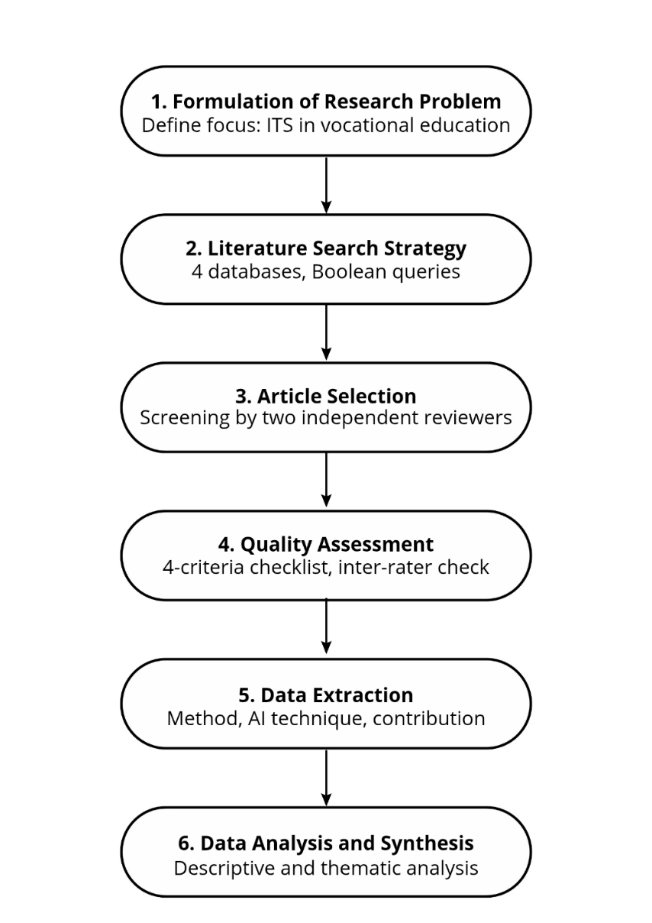
The research procedure consists of five interconnected stages: (1) formulation of the research problem and questions, (2) determination of the literature search strategy, (3) article selection, (4) data extraction, and (5) data analysis and synthesis. Figure 1 presents the flowchart summarizing these stages.
Figure 1. Flowchart of the Six-Stage Research Procedure
Formulation of the Problem and Research Questions
The research focus was defined around the application of ITS in adaptive and personalized learning, with specific attention to vocational education contexts.
Literature Search Strategy
Search terms included “Intelligent Tutoring System,” “Artificial Intelligence,” “Adaptive Learning,” “Personalized Learning,” “Learning Analytics,” and “Educational Data Mining.” Searches were conducted in Scopus, IEEE Xplore, ScienceDirect, and Google Scholar, selected for their strong coverage of educational technology and AI literature. Boolean operators (AND, OR) were used to combine terms, for example: (“Intelligent Tutoring System”) AND (“Artificial Intelligence”) AND (“Adaptive Learning” OR “Personalized Learning”) AND (“Learning Analytics” OR “Educational Data Mining”). The search was restricted to articles published between 2019 and 2025 to capture the most recent developments in the field.
Article Selection
Articles were screened in stages first by title and abstract, then by full text against the inclusion and exclusion criteria below. To reduce selection bias, screening was independently conducted by two reviewers, disagreements were resolved through discussion, and where consensus could not be reached, a third reviewer was consulted. Inclusion criteria:
- Discuses Intelligent Tutoring Systems in an educational context
- Involves the use of Artificial Intelligence
- Addresses adaptive of personalized learning
- Published as a scientific article (journal of peer-reviewed proceedings)
- Published between 2019-2025 Exclusion criteria: not relevant to the ITS topic, non-academic sources, full text not available
Quality Assessment
Each full-text article that passed the eligibility screening was appraised using a quality assessment checklist covering four criteria, each scored on 3-point scale: (0 = not met, 1 = partially met, 2 = fully met). The four criteria were: (1) clarity of research objectives, (2) appropriateness of the methodology, (3) validity of reported findings, and (4) relevance to IT in vocational education. Two reviewers scored each article independently, and inter-rater agreement was checked, and discrepancies were resolved through discussion. Articles scoring below 4 out of a maximum of 8 were flagged for exclusion or required justified retention. The complete quality assessment results for all 30 included studies are presented in Table 1.
Table 1. Quality Assessment of Selected Studies
No. | Author’s, Year | Purpose | Methods | Validity | Vocational Relevance | Total |
| Yuce. et al. (2019) | 2 | 2 | 2 | 1 | 7 |
| Yang & Zhang. (2019) | 2 | 2 | 1 | 1 | 6 |
| Beyyoudh. et al. (2019) | 2 | 1 | 1 | 1 | 5 |
| Kochmar, et al. (2020) | 2 | 2 | 2 | 1 | 7 |
| Paladines & Ramfrez (2020) | 2 | 2 | 2 | 1 | 7 |
| Castro-Schez. et al. (2021) | 2 | 2 | 2 | 1 | 7 |
| Guo. et al. (2021) | 2 | 2 | 2 | 1 | 7 |
| Le & Jia. (2022) | 2 | 2 | 2 | 1 | 7 |
| Ashwin. et al. (2023) | 2 | 2 | 2 | 1 | 7 |
| Chevalere. et al. (2023) | 2 | 2 | 2 | 1 | 7 |
| Lin, Huang & Lu (2023) | 2 | 2 | 2 | 1 | 7 |
| Son (2024) | 2 | 2 | 2 | 1 | 7 |
| Spitzer. et al. (2024) | 2 | 2 | 2 | 1 | 7 |
| Sychev (2024) | 2 | 1 | 1 | 1 | 5 |
| Ilic. et al. (2024) | 2 | 2 | 2 | 1 | 7 |
| Gomes (2024) | 2 | 1 | 1 | 1 | 5 |
| Letourneau. et al. (2025) | 2 | 2 | 2 | 1 | 7 |
| Latif, Liu & Zhai (2025) | 2 | 2 | 2 | 1 | 7 |
| Marquez-Carpintero. et al. (2025) | 2 | 2 | 1 | 1 | 6 |
| carvalho. et al. (2025) | 2 | 2 | 2 | 1 | 7 |
| Bai. et al. (2025) | 2 | 2 | 2 | 1 | 7 |
| Huang, Xu & Liu (2025) | 2 | 2 | 2 | 1 | 7 |
| Arnau-Gonzalez. et al. (2025) | 2 | 2 | 2 | 1 | 7 |
| Feng. et al. (2025) | 2 | 1 | 1 | 1 | 5 |
| Prasetya. et al. (2025) | 2 | 2 | 2 | 2 | 8 |
| Rodrigues. et al. (2025) | 2 | 2 | 2 | 1 | 7 |
| Akhter (2025) | 2 | 2 | 1 | 1 | 6 |
| Villegas-Ch. et al. (2025) | 2 | 2 | 2 | 1 | 7 |
| Naayini (2025) | 2 | 1 | 1 | 1 | 5 |
| Georgia Tech. et al. (2025) | 2 | 2 | 2 | 2 | 8 |
Data Extraction
Key information was extracted from each included article, including research method, AI technique used, database source, and contribution to adaptive/personalized learning research.
Data Analysis and Synthesis
Extracted data were analyzed using descriptive and thematic approaches. Descriptive analysis grouped articles by characteristic such as publication year, AI approach, and research focus. Thematic analysis examined recurring themes, including the implementation of adaptive and personalized learning and the integration of LA and EDM. Together, these approaches provide both a quantitative overview of research trends and a qualitative understanding of conceptual developments in AI-based ITS. The complete article selection process, following the PRISMA flow (identification, screening, eligibility, and inclusion), is presented in Figure 2. From an initial 300 articles, a stepwise selection process yielded 30 articles for final analysis.
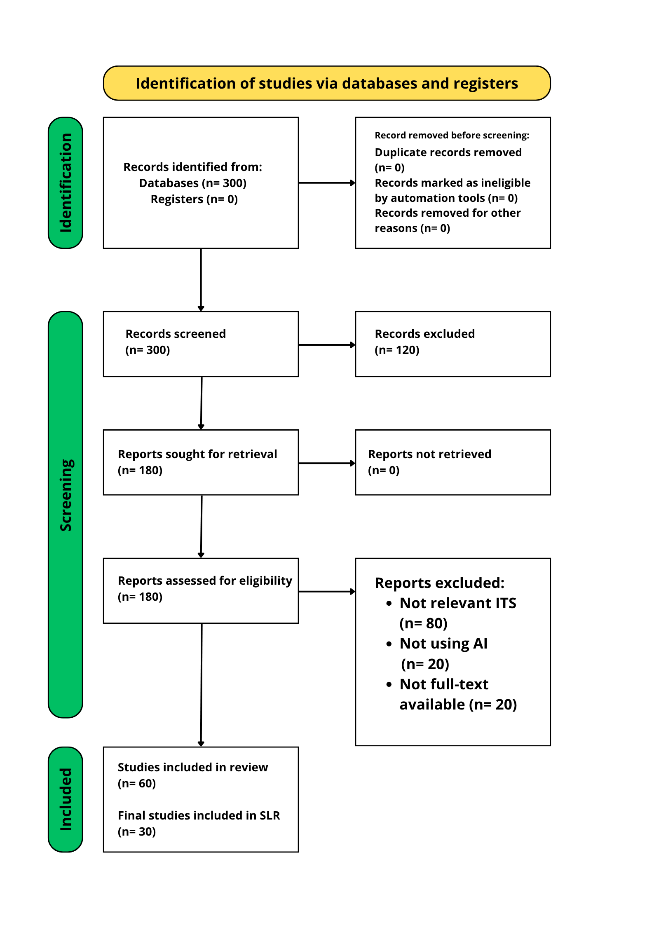
Figure 2. PRISMA flow diagram of the article process in Systematic Literature Review (SLR)
Validation and Reliability
The validity of this study was supported through three measures: (1) the use of high-quality, credible databases (Scopus, IEEE Xplore, ScienceDirect, Google Scholar), (2) consistent application of inclusion/exclusion criteria and the quality assessment checklist described above, and (3) independent screening and scoring by two reviewers, with inter-rater agreement checked at each stage to minimize selection bias. These measures collectively support the reliability and reproducibility of the review process.
RESULT AND DISCUSSION
Study Selection Results
Based on the literature search process using several scientific databases, a total of 300 articles relevant to the research keywords were obtained. After removing duplicates and screening titles/abstracts, 120 articles were excluded, leaving 180 articles. A thorough evaluation of the full text was then conducted against the inclusion and exclusion criteria, 120 articles were excluded at this stage (80 not relevant to ITS, 20 not using AI, 20 without full text access), resulting in 60 articles retained for quality assessment. Using the four criterion checklist described in the Methods section (Table 2), each of the 60 articles was scored independently by two reviewers, 30 articles scoring above the retention threshold and most relevant to the research focus were selected as the final sample for analysis in this study.
Characteristic of Selected Studies
The characteristics of the 30 selected studies indicate that ITS development in recent years has been dominated by increasingly diverse and complex AI-based approaches. Most research focuses on adaptive learning systems utilizing machine learning, deep learning, natural language processing, and reinforcement learning, and almost all studies integrate data-driven approaches particularly learning analytics and EDM to better understand student learning behavior. The characteristics of the selected studies were analyzed based on publication year, research type, and research focus. Publication year of 30 selected studies, the largest share was published in 2025, with 14 studies (46.7%), followed by 2024 with 5 studies (16.7%) and 2019 and 2023 each 3 studies (10%). The years 2020 and 2021 each contributed 2 studies (6.7%), while 2022 contributed 1 study (3.3%). This distribution reflects the accelerating research interest in ITS in line with advances in generative AI and large language models since 2023.
Research types systematic review and meta analyses dominate the field, accounting for 15 studies (50%), followed by empirical or case studies with 7 studies (23.3%). Technology development studies (system design and implementation) account for 4 studies (13.3%), and conceptual of framework based studies account for 4 studies (13.3%). This distribution suggests that while literature synthesis remains the dominant mode of inquiry, a substantial share of research (36.6%) is now grounded in empirical validation or system development rather than synthesis alone. Research focus the majority of studies (19 studies, 63.3%) are conducted in general education contexts. Meanwhile, 7 studies (23.3%) focus specifically on STEM education, and 2 studies (6.7%) fall into other specialized contexts (e.g., multilingual learners, language teaching). Notably, only 2 studies (6.7%) Prasetya et al. (2025) [56] specifically address vocational or workforce based education, confirming a significant and persistent research gap in this area.
Trends in Intelligent Tutoring System Research
The analysis results show that research related to ITS has experienced a significant increase since 2018 [57]. This increase reflects the growing attention of researchers toward the utilization of AI in education, particularly in adaptive and personalized learning systems. Before that period, research on ITS tended to be limited and more focused on basic concepts and system models [58]. However, alongside advances in computing technology and the availability of large amounts of data, ITS research has evolved toward more complex and adaptive implementations [59].
This trend is also driven by supporting technologies such as machine learning, deep learning, and natural language processing, which enable learning systems to better understand user needs [60]. The near tripling of publications in 2025 compared to 2024 in this sample coincides with the rapid mainstream adoption of large language models 6 of the 14 studies published in 2025 explicitly incorporate LLM or generative AI components, compared to none before 2023. This suggests that generative AI has become a distinct new wave within ITS research, layered on top of the earlier machine learning based wave.
nevertheless, the distribution of research is still dominated by general education contexts, while vocational education remains represented by only 2 of 30 studies (6.7%). Compared to earlier reviews of the ITS [61]. Which also reported general education dominance without specifically quantifying the vocational gap, this study provides a more direct quantification of that gap and confirms it persists even in the most recent literature (2025).
AI Techniques Used in ITS
Based on the analysis, the AI technologies most widely used in ITS development include machine learning, deep learning, natural language processing, and reinforcement learning [62][63]. These technologies are used to model students' learning behaviors through interaction data analysis, generate learning recommendations aligned with students' ability, and improve the quality of human-system interaction. Among the 30 studies, natural language processing and generative AI approaches are increasingly prominent in the 2024-2025, reflecting a shift from purely rule-based or statistical models toward conversational, LLM-driven tutoring interfaces such as GPTtutor [20] and generative pre-trained models for language teaching [23].
Role of Learning Analytic and Educational Data Mining
The results show that the utilization of LA and EDM plays an important role in improving ITS performance [64]. LA is used to continuously monitor students' learning activities, such as interaction frequency, study time, and task completion rates, allowing both the system and educators to more accurately understand learning progress over time. EDM, meanwhile, focuses on mining to uncover learning data to uncover patterns that are not immediately visible. Through this approach, the system can identify difficulties and error patterns, and predict future learning performance based on historical data [65]. By combining LA and EDM, ITS becomes better equipped to support data-driven learning through more precise, adaptive, and individualized interventions. This combination is particularly relevant for vocational education, where performance data often includes both cognitive indicators (knowledge tests) and psychomotor indicators (skill execution) a dual data structure not yet addressed by the general education oriented LA/EDM models reviewed in this study.
ITS for Adaptive and Personalized Learning
Most of the reviewed studies shows that ITS is highly effective in supporting adaptive learning and personalized learning, evidenced by system's ability to adjust learning materials to each student's level of understanding and needs [66]. ITS also commonly provides automatic, real-time feedback and dynamically adjust material difficulty, helping create a more flexible, interactive, and student centered learning experience.
However, this effectiveness has almost exclusively been demonstrated in general education settings [67]. Compared to the broader ITS literature including reviews with a similar scope, such as Rodrigues et al. [26] in engineering education and Ashwin et al. [8] on movement based IT’S the present study finds that even domain specific ITS reviews rarely extend into vocational or workforce based training contexts. The one exception identified in this sample, the XR-enhanced ITS for industrial skill training (wood-pallet repair and forklift operation), demonstrates that adaptive, feedback driven ITS principles are transferable to psychomotor, workplace based skills but such applications remain rare (2 of 30 studies) relative to the volume of general education ITS research.
Strengths and limitations of the reviewed evidence. The strength of the current evidence base lies in its methodological diversity combining meta analyses [21], large sample empirical studies [12], and system development papers [22][23] which together provide converging evidence that ITS improves learning outcomes across multiple designs. Its main limitation is generalizability, because 63.3% of studies are set in general education and only 6.7% in vocational contexts, conclusions about ITS effectiveness for skill-based, competency-driven vocational learning remain largely extrapolated rather than directly evidenced.
Conceptual Framework for ITS in Vocational Education
To address this research gap, this study proposes a conceptual framework for implementing an AI-based intelligent tutoring system in vocational education, illustrated in Figure 3.
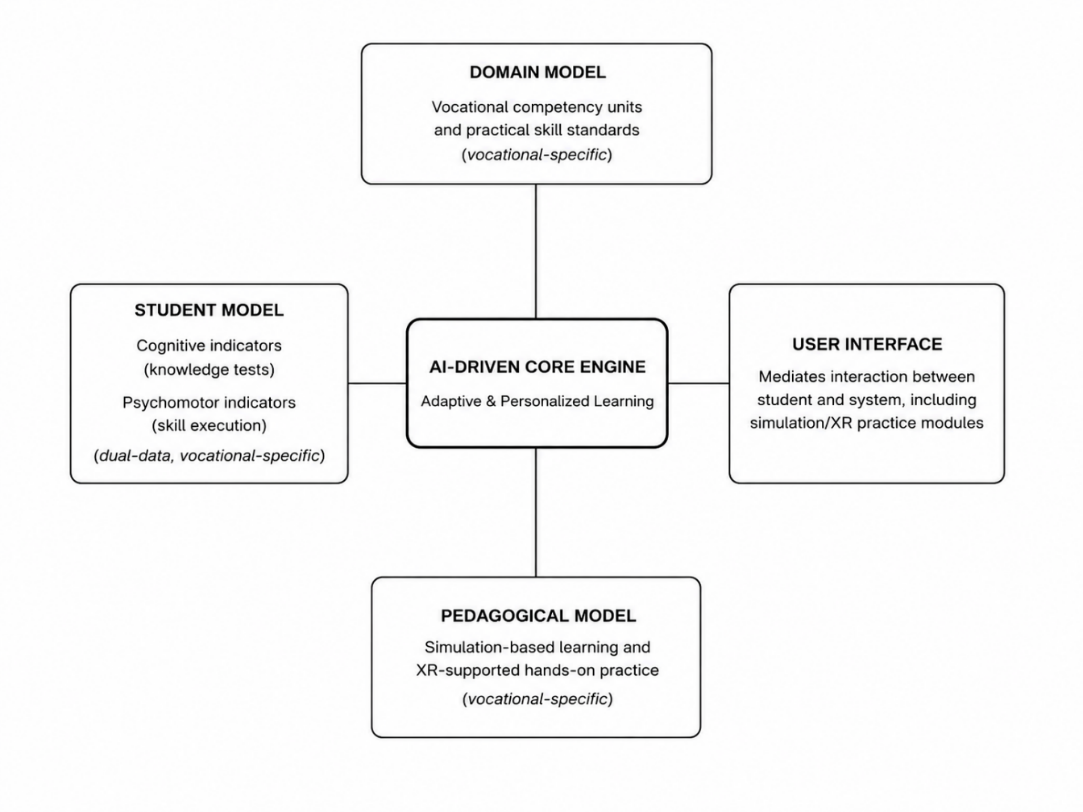
Figure 3. Conceptual Framework of an AI-Based Intelligent Tutoring System for Vocational Education
This framework consists of four interconnected components, the domain model, student model, pedagogical model, and a user interface, supported by an AI-driven core system. What distinguishes this framework from conventional general-education ITS architectures [61] and [62] is threefold: (1) the domain model is structured around vocational competency units and practical skill standards rather than declarative subject content, (2) the student model captures both cognitive and psychomotor performance indicators, following the dual-data structure identified in section 3,5 rather than test scores alone, and (3) the pedagogical model explicitly incorporates simulation-based learning and hands-on practice modules, informed by the XR-based industrial training approach identified in this review [30], rather than purely text or exercise based instruction.
In terms of implementation fasibility, this framework could be piloted in a vocational high school (SMK) settings using a quasi-experimental pretest-posttest design, following the methodological precedent already demonstrated for ITS in Indonesian vocational contexts, with LA/EDM components used to track both knowledge acquisition and hands on skill progression. Future empirical validation of this framework rather than further conceptual elaboration represents the most direct way to close the research gap identified in this study.
Table 2. Characteristic of Selected Studies
No. | Author’s | Year | Research Type | AI Approach | Research Focus |
| Yuce. et al. | 2019 | Empirical/case study | Structural equation modeling | General education |
| Yang & Zhang. | 2019 | Systematic review | Robotics-based ITS | General education |
| Beyyoudh. et al. | 2019 | Conceptual/framework | Serious games, workflow adaptation | General education |
| Kochmar, et al. | 2020 | Technology development | Machine learning feedback | General education |
| Paladines & Ramfrez | 2020 | Systematic review | NLP dialogue systems | STEM education |
| Castro-Schez. et al. | 2021 | Empirical/case study | Predictive parsing algorithm | STEM education |
| Guo. et al. | 2021 | Systematic review | Scientometric/bibliometric | General education |
| Le & Jia. | 2022 | Technology development | Learner-autonomy adaptive engine | General education |
| Ashwin. et al. | 2023 | Systematic review | Computer vision (body movement) | Other |
| Chevalere. et al. | 2023 | Empirical/case study | Path analysis, appraisal modeling | General education |
| Lin, Huang & Lu | 2023 | Systematic review | Sustainability-oriented AI/ITS | General education |
| Son | 2024 | Systematic review | Mixed AI techniques (2003-2023) | STEM education |
| Spitzer. et al. | 2024 | Empirical/case study | Psychological network analysis | STEM education |
| Sychev | 2024 | Conceptual/framework | Cognitive modeling language | General education |
| Ilic. et al. | 2024 | Systematic review | Mixed AI techniques | STEM education |
| Gomes | 2024 | Conceptual/framework | Narrative synthesis | General education |
| Letourneau. et al. | 2025 | Systematic review | Quasi-experimental synthesis | General education |
| Latif, Liu & Zhai | 2025 | Systematic review | Robotics & ITS classification | General education |
| Marquez-Carpintero. et al. | 2025 | Systematic review | Large language models | General education |
| Carvalho. et al. | 2025 | Systematic review | Multiple-intelligence modeling | General education |
| Bai. et al. | 2025 | Empirical/case study | GPT-based tutoring | General education |
| Huang, Xu & Liu | 2025 | Systematic review | Meta analysis | General education |
| Arnau-Gonzalez. et al. | 2025 | Technology development | Conversational agent framework | General education |
| Feng. et al. | 2025 | Technology development | Generative pre-trained model | Other (language teaching) |
| Prasetya. et al. | 2025 | Systematic review | Bibliometric analysis | Vocational education |
| Rodrigues. et al. | 2025 | Systematic review | Mixed AI techniques | STEM education |
| Akhter | 2025 | Systematic review | Mixed AI techniques | General education |
| Villegas-Ch. et al. | 2025 | Empirical/case study | Deep learning, NLP | STEM education |
| Naayini | 2025 | Conceptual/framework | Narrative synthesis | General education |
| Georgia Tech. et al. | 2025 | Empirical/case study | Extended Reality (XR) + AI tutoring | Vocational education |
CONCLUSIONS
This systematic literature review examined 30 studies published between 2019 and 2025 on the development and implementation of AI-based Intelligent Tutoring Systems (ITS) for adaptive and personalized learning. The findings show that ITS research has grown rapidly since 2018, driven by advances in machine learning, deep learning, natural language processing, and most recently generative AI and large language models, which accounted for a sharp rise in publications during 2024-2025. Learning Analytics and Educational Data Mining were found to play a central role in enabling ITS to monitor learning behavior, predict performance, and deliver data-driven, individualized feedback.
Despite this growth, the review confirms a significant and persistent research gap: only 2 of the 30 studies (6.7%) specifically address ITS in vocational or workforce-based education, even in the most recent literature. Existing ITS models remain oriented toward general academic content and cognitive assessment, with limited attention to the competency-based, practice-oriented, and psychomotor demands characteristic of vocational learning.
This contributes to the ITS literature in two ways: first, by quantifying the vocational-education gap across recent AI-driven ITS research rather than noting it only qualitatively, as in prior reviews [61][62], and second, by proposing a conceptual framework that extends conventional ITS architecture with a competency-based domain model, a dual cognitive-psychomotor student model, and simulation-based pedagogical strategies informed by emerging XR-enhanced tutoring approaches.
This study has several limitations. First, the review is limited to 30 articles selected through a defined search and quality-assessment procedure, which may not capture all relevant work, particularly non-English publications or industry technical reports. Second, the proposed conceptual framework has not yet been empirically validated or piloted in an actual vocational learning environment. Third, because only two included studies directly addressed vocational contexts, conclusions about ITS effectiveness for skill-based learning remain largely extrapolated from general-education evidence rather than directly demonstrated.
Future research should prioritize empirical validation of the proposed framework through pilot implementation in vocational high schools (SMK) or technical training centers, using quasi-experimental deisgn to measure both cognitive and psychomotor learning outcomes. Further work is also needed to develop and validate LA/EDM models capable of processing psychomotor performance data (e.g., from simulation or XR-based practice), which current general-education-oriented models do not adequately support. Finally, longitudinal studies tracking skill retention and workplace performance after ITS-supported vocational training would help establish the real-world impact of this approach beyond immediate learning gains.
REFERENCES
- E. G. Popkova, P. De Bernardi, Y. G. Tyurina, and B. S. Sergi, “A theory of digital technology advancement to address the grand challenges of sustainable development,” Technol. Soc., vol. 68, p. 101831, 2022, https://doi.org/10.1016/j.techsoc.2021.101831.
- H. Zangana, A. K. Mohammed, M. Omar, F. M. Mustafa, and A. V. Vitianingsih, “Adaptive Resonance Theory-Based Approach for Robust and Efficient Face Recognition,” Vokasi Unesa Bull. Eng. Technol. Appl. Sci., vol. 2, no. 3, pp. 602–618, 2025, https://doi.org/10.26740/vubeta.v2i3.38709.
- J. M. Dubinsky and A. A. Hamid, “The neuroscience of active learning and direct instruction,” Neurosci. Biobehav. Rev., vol. 163, p. 105737, 2024, https://doi.org/10.1016/j.neubiorev.2024.105737.
- M. Madanchian and H. Taherdoost, “Results in Engineering The impact of artificial intelligence on research efficiency,” Results Eng., vol. 26, p. 104743, 2025, https://doi.org/10.1016/j.rineng.2025.104743.
- M. I. Abubakar, A. Ore-Ofe, A. Umar, I. Ibrahim, L. A. Olugbenga, and A. A. Abiola, “Design Of an Enterprise Network Terminal Security Solution,” Vokasi Unesa Bull. Eng. Technol. Appl. Sci., vol. 2, no. 3, pp. 412–427, 2025, https://doi.org/10.26740/vubeta.v2i3.39105.
- H. Li, Q. Li, Z. Xu, and X. Ye, “Digital technologies,” J. Digit. Econ., vol. 3, pp. 240–248, 2024, https://doi.org/10.1016/j.jdec.2025.02.001.
- W. F. Yu, “AI as a co-creator and a design material: Transforming the design process,” Des. Stud., vol. 97, p. 101303, 2025, https://doi.org/10.1016/j.destud.2025.101303.
- R. Hussein, Inaam Salman Aboud, and Rasha Majid Hassoon, “Password Authentication Using Modify Multi-Connect Architecture Associative Memory,” Vokasi Unesa Bull. Eng. Technol. Appl. Sci., vol. 2, no. 2 SE-Article, pp. 333–341, Jun. 2025, https://doi.org/10.26740/vubeta.v2i2.38218.
- L. Chen, P. Chen and Z. Lin, "Artificial Intelligence in Education: A Review," in IEEE Access, vol. 8, pp. 75264-75278, 2020, https://doi.org/10.1109/ACCESS.2020.2988510.
- E. Ukwandu, O. Omisade, K. Jones, S. Thorne, and M. Castle, “The future of teaching and learning in the context of emerging artificial intelligence technologies,” Futures, vol. 171, no. May 2024, p. 103616, 2025, https://doi.org/10.1016/j.futures.2025.103616.
- A. Haleem, M. Javaid, M. A. Qadri, and R. Suman, “Understanding the role of digital technologies in education: A review,” Sustain. Oper. Comput., vol. 3, pp. 275–285, 2022, https://doi.org/10.1016/j.susoc.2022.05.004.
- T. Kabudi, I. Pappas, and D. H. Olsen, “Computers and Education : Arti fi cial Intelligence AI-enabled adaptive learning systems : A systematic mapping of the literature,” Comput. Educ. Artif. Intell., vol. 2, p. 100017, 2021, https://doi.org/10.1016/j.caeai.2021.100017.
- A. Konstantinidis, “An integrative review of the literature on factors influencing student well-being in the learning environment,” Int. J. Educ. Res. Open, vol. 7, p. 100384, 2024, https://doi.org/10.1016/j.ijedro.2024.100384.
- F. F. Mvondo, J. F. Wounba, and G. E. Nkeng, “Development of an AHP-Based Multi-criteria Decision Model for prioritizing Road-Related Infrastructure in Cameroon: Case Studies of Bogo-Guirvidig and Bingambo-Grandzambi projects,” Vokasi Unesa Bull. Eng. Technol. Appl. Sci., vol. 3, no. 1, pp. 129–152, 2026, https://doi.org/10.26740/vubeta.v3i1.42330.
- S. Wang, F. Wang, Z. Zhu, J. Wang, T. Tran, and Z. Du, “Artificial intelligence in education : A systematic literature review,” Expert Syst. Appl., vol. 252, p. 124167, 2024, https://doi.org/10.1016/j.eswa.2024.124167.
- A. Fortuna et al., “Artificial intelligence in personalized learning: A global systematic review of current advancements and shaping future opportunities,” Soc. Sci. Humanit. Open, vol. 12, p. 102114, 2025, https://doi.org/10.1016/j.ssaho.2025.102114.
- J. Li and E. Xue, “Dynamic Interaction between Student Learning Behaviour and Learning Environment: Meta-Analysis of Student Engagement and Its Influencing Factors.,” Behav. Sci. (Basel, Switzerland), vol. 13, no. 1, Jan. 2023, https://doi.org/10.3390/bs13010059.
- E. du Plooy, D. Casteleijn, and D. Franzsen, “Personalized adaptive learning in higher education: A scoping review of key characteristics and impact on academic performance and engagement,” Heliyon, vol. 10, no. 21, p. e39630, 2024, https://doi.org/10.1016/j.heliyon.2024.e39630.
- F. Naseer, M. N. Khan, M. Tahir, A. Addas, and S. M. H. Aejaz, “Integrating deep learning techniques for personalized learning pathways in higher education,” Heliyon, vol. 10, no. 11, p. e32628, 2024, https://doi.org/10.1016/j.heliyon.2024.e32628.
- Yang, J., Shi, G, W. Zhu and Y. Sun, “Intelligent technologies in smart education: a comprehensive review of transformative pillars and their impact on teaching and learning methods,” Humanities and Social Sciences Communications, vol. 12, no. 1, p. 1239, 2025, https://doi.org/10.1057/s41599-025-05444-0.
- X. Huang, W. Xu, and R. Liu, “Effects of Intelligent Tutoring Systems on Educational Outcomes:,” Int. J. Distance Educ. Technol., vol. 23, no. 1, 2025, https://doi.org/10.4018/IJDET.368420.
- T. Matos, W. Santos, E. Zdravevski, P. Jorge, I. Miguel, and F. Madeira, “A systematic review of artificial intelligence applications in education : Emerging trends and challenges,” Decis. Anal. J., vol. 15, p. 100571, 2025, https://doi.org/10.1016/j.dajour.2025.100571.
- N. Muhamad Dah, M. S. A. Mat Noor, M. Z. Kamarudin, and S. S. Syed Abdul Azziz, “The impacts of open inquiry on students’ learning in science: A systematic literature review,” Educ. Res. Rev., vol. 43, p. 100601, 2024, https://doi.org/10.1016/j.edurev.2024.100601.
- A. S. C. de Souza and L. Debs, “Concepts, innovative technologies, learning approaches and trend topics in education 4.0: A scoping literature review,” Soc. Sci. Humanit. Open, vol. 9, p. 100902, 2024, https://doi.org/10.1016/j.ssaho.2024.100902.
- S. Salih, O. Husain, M. Hamdan, and S. Abdelsalam, “Results in Engineering Transforming education with AI : A systematic review of ChatGPT ’ s role in learning , academic practices , and institutional adoption,” Results Eng., vol. 25, p. 103837, 2025, https://doi.org/10.1016/j.rineng.2024.103837.
- G. Hwang, H. Sung, S. Chang, and X. Huang, “Computers and Education : Arti fi cial Intelligence A fuzzy expert system-based adaptive learning approach to improving students ’ learning performances by considering affective and cognitive factors,” Comput. Educ. Artif. Intell., vol. 1, p. 100003, 2020, https://doi.org/10.1016/j.caeai.2020.100003.
- K. Englmeier, “The Design of Self-Paced Learning for Structured Learning Environments,” Procedia Comput. Sci., vol. 256, pp. 71–77, 2025, https://doi.org/10.1016/j.procs.2025.02.097.
- Q. Zhang and L. Fiorella, “Effects of self-explaining feedback on learning from problem-solving errors,” Contemp. Educ. Psychol., vol. 79, p. 102326, 2024, https://doi.org/10.1016/j.cedpsych.2024.102326.
- N. Zakharova, S. Frumina, L. Lobuteva, and S. Alwaely, “The specifics of integrating distance learning technologies with traditional classroom instruction: How to design educational curricula in modern education?,” Heliyon, vol. 10, no. 20, p. e38740, 2024, https://doi.org/10.1016/j.heliyon.2024.e38740.
- A. Barta, L. A. Fodor, B. Tamas, and I. Szamoskozi, “The development of students critical thinking abilities and dispositions through the concept mapping learning method – A meta-analysis,” Educ. Res. Rev., vol. 37, p. 100481, 2022, https://doi.org/10.1016/j.edurev.2022.100481.
- Z. Zhan, T. Shen, and J. Wang, “Predicting Student Performance Based on Knowledge Characteristics and Learning Ability,” IEEE Access, vol. 13, pp. 26105–26115, 2025, https://doi.org/10.1109/ACCESS.2025.3538700.
- A. Zahid and A. Nawab, “Teaching strategies influencing learning strategies: Exploration of teaching and learning practices in a higher education context in Pakistan,” Soc. Sci. Humanit. Open, vol. 11, p. 101442, 2025, https://doi.org/10.1016/j.ssaho.2025.101442.
- Á. Hernández-García, C. Cuenca-Enrique, L. Del-Río-Carazo, and S. Iglesias-Pradas, “Exploring the relationship between LMS interactions and academic performance: A Learning Cycle approach,” Comput. Human Behav., vol. 155, p. 108183, 2024, https://doi.org/10.1016/j.chb.2024.108183.
- Y. Zhu, “A knowledge graph and BiLSTM-CRF-enabled intelligent adaptive learning model and its potential application,” Alexandria Eng. J., vol. 91, pp. 305–320, 2024, https://doi.org/10.1016/j.aej.2024.02.011.
- T. Ingkavara, P. Panjaburee, N. Srisawasdi, and S. Sajjapanroj, “Computers and Education : Artificial Intelligence The use of a personalized learning approach to implementing self-regulated online learning,” Comput. Educ. Artif. Intell., vol. 3, p. 100086, 2022, https://doi.org/10.1016/j.caeai.2022.100086.
- K. M. Bach, S. I. Hofer, and S. Bichler, “Adaptive learning, instruction, and teaching in schools: Unraveling context, sources, implementation, and goals in a systematic review,” Learn. Individ. Differ., vol. 124, p. 102781, 2025, https://doi.org/10.1016/j.lindif.2025.102781.
- H. Zhang, J. Yang, and Z. Liu, “Effect of teachers’ teaching strategies on students’ learning engagement: moderated mediation model.,” Front. Psychol., vol. 15, p. 1475048, 2024, https://doi.org/10.3389/fpsyg.2024.1475048.
- J. M. Cordero and M. Gil-Izquierdo, “The effect of teaching strategies on student achievement: An analysis using TALIS-PISA-link,” J. Policy Model., vol. 40, no. 6, pp. 1313–1331, 2018, https://doi.org/10.1016/j.jpolmod.2018.04.003.
- A. Gorbunova, K. A. Adamovich, A. Savelyev, and J. Costley, “Behavior patterns characterize students’ choices and relate to cognitive load and performance in learner-controlled environments,” Internet High. Educ., vol. 69, p. 101073, 2026, https://doi.org/10.1016/j.iheduc.2025.101073.
- A. Palanci, R. Meryem, and Y. Zeynep, “Learning analytics in distance education : A systematic review study,” Education and Information Technologies, pp. 22629–22650, 2024, https://doi.org/10.1007/s10639-024-12737-5.
- M. Sailer, R. Maier, S. Berger, T. Kastorff, and K. Stegmann, “Learning activities in technology-enhanced learning: A systematic review of meta-analyses and second-order meta-analysis in higher education,” Learn. Individ. Differ., vol. 112, p. 102446, 2024, https://doi.org/10.1016/j.lindif.2024.102446.
- M. Tulis, “Error management behavior in classrooms: Teachers’ responses to student mistakes,” Teach. Teach. Educ., vol. 33, pp. 56–68, 2013, https://doi.org/10.1016/j.tate.2013.02.003.
- A. Fuchs, A. Radkowitsch, and D. Sommerhoff, “Using learning progress monitoring to promote academic performance? A meta-analysis of the effectiveness,” Educ. Res. Rev., vol. 46, p. 100648, 2025, https://doi.org/10.1016/j.edurev.2024.100648.
- F. Daryanes, D. Darmadi, K. Fikri, and I. Sayuti, “Heliyon The development of articulate storyline interactive learning media based on case methods to train student ’ s problem-solving ability,” Heliyon, vol. 9, no. 4, p. e15082, 2023, https://doi.org/10.1016/j.heliyon.2023.e15082.
- I. H. Sarker, “Machine Learning: Algorithms, Real-World Applications and Research Directions.,” SN Comput. Sci., vol. 2, no. 3, p. 160, 2021, https://doi.org/10.1007/s42979-021-00592-x.
- S. Boujmiraz, H. Darhmaoui, and A. Drissi el maliani, “Predicting student performance: A comprehensive review of machine learning, deep learning, and explainable AI approaches,” Comput. Educ. Artif. Intell., vol. 10, p. 100548, 2026, https://doi.org/10.1016/j.caeai.2026.100548.
- M. Sailer, M. Ninaus, S. E. Huber, E. Bauer, and S. Greiff, “The End is the Beginning is the End: The closed-loop learning analytics framework,” Comput. Human Behav., vol. 158, p. 108305, 2024, https://doi.org/10.1016/j.chb.2024.108305.
- A. C. Jeng, I. J. Sibley, and T. L. Bale, “A global perspective on AI innovation and effective use in the research lab,” Neuroscience, vol. 560, pp. 106–108, 2024, https://doi.org/10.1016/j.neuroscience.2024.09.034.
- A. Bhutoria, “Personalized education and Artificial Intelligence in the United States, China, and India: A systematic review using a Human-In-The-Loop model,” Comput. Educ. Artif. Intell., vol. 3, p. 100068, 2022, https://doi.org/10.1016/j.caeai.2022.100068.
- L. Fauziyah et al., “MethodsX Vocational education phenomena research method,” MethodsX, vol. 8, no. August, p. 101537, 2021, https://doi.org/10.1016/j.mex.2021.101537.
- T. Held and M. Mejeh, “Students’ motivational trajectories in vocational education: Effects of a self-regulated learning environment,” Heliyon, vol. 10, no. 8, p. e29526, 2024, https://doi.org/10.1016/j.heliyon.2024.e29526.
- A. Starostina, V. Bugrov, V. Kravchenko, and G. Gatto, “International Journal of Educational Development Entrepreneurial university : Exploring its essence , phases of development , and operating mechanism during wartime in Ukraine,” Int. J. Educ. Dev., vol. 103, p. 102895, 2023, https://doi.org/10.1016/j.ijedudev.2023.102895.
- X. Wang and K. Cao, “Personalized learning effect evaluation model for vocational education with cloud computing technology,” Syst. Soft Comput., vol. 7, p. 200264, 2025, https://doi.org/10.1016/j.sasc.2025.200264.
- O. Díaz, M. Genero, J. P. Contell, and M. Piattini, “Adding relevance to rigor : Assessing the contributions of SLRs in Software Engineering through Citation Context Analysis,” Comput. Sci. Rev., vol. 53, p. 100649, 2024, https://doi.org/10.1016/j.cosrev.2024.100649.
- M. J. Page et al., “The PRISMA 2020 statement : An updated guideline for reporting systematic reviews Asbj ø rn Hr o,” bmj, vol. 372, 2021, https://doi.org/10.1016/j.ijsu.2021.105906.
- B. Montreuil, “Intelligent tutoring platform for improving psychomotor skills in STEM workforce education: XR-enhanced ITP,” Interact. Learn. Environ., 2025, https://doi.org/10.1080/10494820.2025.2556760.
- N. Salari, M. Beiromvand, A. Hosseinian-far, J. Habibi, and F. Babajani, “Computers in Human Behavior Reports Impacts of generative artificial intelligence on the future of labor market : A systematic review,” Comput. Hum. Behav. Reports, vol. 18, 2024, p. 100652, 2025, https://doi.org/10.1016/j.chbr.2025.100652.
- K. Ofosu-Ampong, “Artificial intelligence research: A review on dominant themes, methods, frameworks and future research directions,” Telemat. Informatics Reports, vol. 14, p. 100127, 2024, https://doi.org/10.1016/j.teler.2024.100127.
- M. Golec, E. S. Hatay, S. S. Gill, and R. Buyya, “Artificial Intelligence (AI): Foundations, trends and future directions,” Telemat. Informatics Reports, vol. 20, p. 100265, 2025, https://doi.org/10.1016/j.teler.2025.100265.
- Y. K. Dwivedi, A. Sharma, N. P. Rana, M. Giannakis, P. Goel, and V. Dutot, “Technological Forecasting & Social Change Social Change : Research topics , trends , and future directions,” Technol. Forecast. Soc. Chang., vol. 192, p. 122579, 2023, https://doi.org/10.1016/j.techfore.2023.122579.
- L. Guo, D. Wang, F. Gu, Y. Li, Y. Wang, and R. Zhou, “Evolution and trends in intelligent tutoring systems research: a multidisciplinary and scientometric view,” Asia Pacific Education Review, vol. 22, no. 3, pp. 441-461 2021, https://doi.org/10.1007/s12564-021-09697-7.
- L. Environments, C. C. Lin, A. Y. Q. Huang, and O. H. T. Lu, “Artificial intelligence in intelligent tutoring systems toward sustainable education : a systematic review,” Smart Learn. Environ., Smart learning environments, vol. 10, no. 1, p. 41, 2023, https://doi.org/10.1186/s40561-023-00260-y.
- J. Paladines, J.; Ramírez, “A Systematic Literature Review of Intelligent Tutoring Systems With Dialogue in Natural Language,” IEEE Access, vol. 8, 2020, https://doi.org/10.1109/ACCESS.2020.3021383.
- O. Sychev, “Educational models for cognition: Methodology of modeling intellectual skills for intelligent tutoring systems,” Cogn. Syst. Res., vol. 87, p. 101261, 2024, https://doi.org/10.1016/j.cogsys.2024.101261.
- P. Naayini, “AI and the Future of Education: Advancing Personalized Learning and Intelligent Tutoring Systems,” Front. Educ. Innov. Res., vol. 1, no. 1, pp. 29–39, 2025, https://doi.org/10.62762/FEIR.2025.332098.
- G. R. I. Conference, E. The, E. Of, I. Tutoring, S. For, and M. Learnerssecondary, “1 st Global Research and Innovation Conference 2025 , AI in the Classroom : Evaluating The Effectiveness of Intelligent Tutoring Systems for Multilingual,” pp. 532–563, 2025, https://doi.org/10.63125/gcq1qr39.
- Villegas-Ch, W., Buenano-Fernandez, D., Navarro, A. M., & Mera-Navarrete, A. (2025). Adaptive intelligent tutoring systems for STEM education: analysis of the learning impact and effectiveness of personalized feedback: W. Villegas-Ch et al. Smart Learning Environments, vol. 12, no. 1, p. 41, 2025, https://doi.org/10.1186/s40561-025-00389-y.
Asyraf Rahmat Hidayatulloh (Intelligent Tutoring Systems for Adaptive and Personalized Learning in Vocational Education: A Systematic Literature Review)