Buletin Ilmiah Sarjana Teknik Elektro ISSN: 2685-9572
Vol. 8, No. 5, October 2026, pp. 1544-1559
Behavioral Intention to Use MSWaMS Artificial Intelligence (AI) Robot for Students: Blackbox Test and TAM Analysis
Muchlas 1, Efa Wakhidatus Solikhah 2, Afrizal Mayub 3, Riky Dwi Puriyanto 4, Nuryono Satya Widodo 5, Faisal Fajri Rahani 6, Haris Imam Karim Fathurrahman 7, Fahmizal 8, Atikah Surriani 9
1 Department of Electrical Engineering Vocational Education, Faculty of Teacher Training and Education,
Universitas Ahmad Dahlan, Indonesia
2 Department of Management, Faculty of Economics and Business, Universitas Ahmad Dahlan, Indonesia
3 Graduate School of Science Education, Faculty of Teaching and Education, Universitas Bengkulu, Indonesia
4,5,7 Department of Electrical Engineering, Faculty of Industrial Technology, Universitas Ahmad Dahlan, Indonesia
6 Department of Informatics, Faculty of Industrial Technology, Universitas Ahmad Dahlan, Indonesia
8,9 Department of Electrical and Informatics Engineering, Vocational College, Universitas Gadjah Mada, Yogyakarta, Indonesia
ARTICLE INFORMATION |
| ABSTRACT |
Article History: Received 27 March 2026 Revised 21 May 2026 Accepted 20 October 2026 |
| 
The integration of artificial intelligence (AI) and robotics technologies in education has increasingly expanded in response to the demand for interactive, adaptive, and technology-enhanced learning environments. However, previous studies have predominantly focused on either the technical performance of educational robots or users’ behavioral acceptance independently, with limited studies integrating both perspectives within a unified evaluation framework. This study aims to evaluate the technical functionality and student acceptance of the AI-based MSWaMS (Mobile Smart Waste Management System) robot developed to support waste-sorting education through visual detection, object recognition, and an integrated control system. The research contribution of this study lies in combining robot functional validation through Black-box Testing and behavioral analysis using the Technology Acceptance Model (TAM). Functional evaluation was conducted on several key components, including the motion system, proximity sensors, waste classification mechanisms, automatic lid systems, and information displays. The results demonstrated a high functional success rate ranging from 95% to 100%, with only minor limitations identified in waste classification accuracy and side-lid mechanisms. SmartPLS analysis revealed that usability significantly influences perceived ease of use and perceived usefulness, which subsequently affect students’ attitudes and behavioral intentions toward using the robot. These findings suggest that technical reliability contributes to positive user perceptions and supports the adoption of AI-based educational robots in creating more interactive and sustainable learning environments. |
Keywords: Educational Robot; IoT; MSWaMS; Technological Innovation; Waste Management |
Corresponding Author: Efa Wakhidatus Solikhah, Department of Management, Faculty of Economics and Business, Universitas Ahmad Dahlan, Indonesia. efa.solikhah@mgm.uad.ac.id |
This work is open access under a Creative Commons Attribution-Share Alike 4.0 
|
Document Citation: M. Muchlas, E. W. Solikhah, A. Mayub, R. D. Puriyanto, N. S. Widodo, F. F. Rahani, H. I. K. Fathurrahman, F. Fahmizal, and A. Surriani, “Behavioral Intention to Use MSWaMS Artificial Intelligence (AI) Robot for Students: Blackbox Test and TAM Analysis”, Buletin Ilmiah Sarjana Teknik Elektro, vol. 8, no. 5, pp. 1544-1559, 2026, DOI: 10.12928/biste.v8i5.16261. |
INTRODUCTION
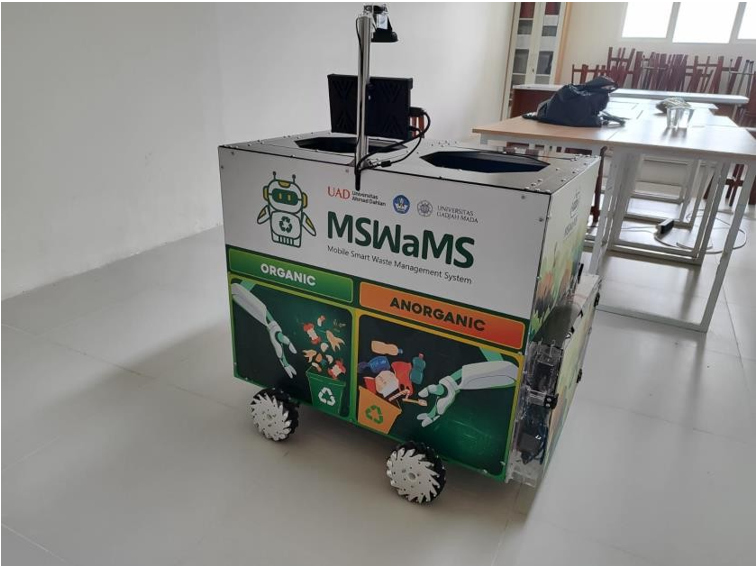
The development of artificial intelligence and robotics technology in Industrial Revolution 5.0 era has opened up significant opportunities for creating more interactive, contextual, and adaptive learning media for students [1]. One innovation designed for educational purposes while simultaneously supporting environmental literacy is the MSWaMS (Mobile Smart Waste Management System) Robot in Figure 1, an AI-based waste sorting robot capable of automatically detecting and classifying organic and inorganic waste [2][3]. This robot is expected to improve students' skills and awareness of the importance of waste management from an early age through a more practical, fun, and technology-based learning approach [4].
Figure 1. Trash Robot Design
While educational robotics technology has high potential, its successful implementation is largely determined by two key factors: system reliability and user acceptance. Technically, the robot must undergo a comprehensive functional evaluation process to ensure that every component, from the proximity sensor and motion system to the actuator, display screen, and AI camera module, functions as designed [5][6]. Based on functional test results, the MSWaMS was tested using the black-box method and demonstrated a high success rate for almost all features, between 95% and 100%, with some minor failures in the object detection function and the side-closing mechanism [7]. These results confirm that the robot has sufficient technical performance for further testing in a real-world user environment, namely students.
In addition to technical aspects, understanding how students accept and intend to use robotics technology is crucial in the context of educational technology adoption [8]. User acceptance is influenced by Perceived Ease of Use, Perceived Usefulness, Attitude Toward Using, and Behavioral Intention to Use. The Technology Acceptance Model (TAM) framework serves as the primary foundation for assessing the relationship between students' perceptions and intentions in using the MSWaMS robot [9]. Usability, as an external variable, also contributes significantly to the formation of users' initial perceptions of the robot [10]. To empirically test the causal relationship between these variables, a quantitative method using a SmartPLS-assisted structural modeling approach was used in this study.
In the educational context, the use of robots such as MSWaMS is not only intended to assist the waste sorting process, but also to improve technological literacy, ecological intelligence, and the development of environmentally conscious character [11][12]. Therefore, research on the robot's technical performance and user behavior analysis are crucial steps for implementation of more inclusive, effective, and sustainable AI-based educational robots in school environments. This research is anticipated to provide a substantial contribution toward advancing smart technology-driven educational systems while fostering the establishment of an adaptive learning ecosystem capable of addressing emerging environmental challenges in the future.
The integration of AI, computer vision, autonomous robotics, and behavioral analysis models has driven various innovations in modern environmental education systems. In recent years, research on the application of AI- and IoT-based waste sorting technology has grown in line with the increasing urgency of environmental issues and the need for more adaptive learning approaches [13]. Beyond optimizing the performance of waste segregation activities, this technological innovation also acts as an educational instrument that promotes greater student engagement, increases learning enthusiasm, and creates more meaningful learning experiences through hands-on interaction with smart technologies [14].
Previous research focusing on AI- and IoT-based waste sorting systems has shown that this technology has significant potential in environmental education, particularly in raising students' awareness of the importance of sustainable waste management [15][16]. Integrated waste sorting systems generally consist of several subsystems, such as automated sorting by intelligent robots, collection based on waste type, and processing organic waste into value-added products, such as eco-enzymes [17][18]. The organic fermentation process can be monitored in real time using IoT sensors to measure gas and pH levels, which serve as indicators of the readiness of the processed product [19]. This approach not only reflects the collaboration between digital technology and environmental systems but also aligns with sustainable development and improving the ecological literacy of the younger generation.
Recent studies published between 2022 and 2026 have demonstrated substantial progress in AI-based waste management systems, educational robotics, and human robot interaction applications. AI-assisted waste classification technologies have increasingly utilized computer vision and sensor based approaches to improve waste identification accuracy and automation capabilities. Similarly, educational robotics studies have highlighted the potential of interactive robots to increase student engagement, motivation, and experiential learning outcomes. However, most existing studies tend to focus on either technical system performance or behavioral acceptance independently, with limited efforts devoted to integrating these two perspectives within a single evaluation framework. Furthermore, limited studies have examined how the technical reliability of AI-based educational robots may influence students' acceptance and intention to continuously use the technology. Functional characteristics such as response accuracy, movement stability, detection performance, and system usability may affect students’ perceptions regarding ease of use and usefulness. Therefore, understanding both technical and behavioral dimensions simultaneously becomes essential to ensure successful implementation of educational robotics technologies within real classroom environments.
This research novelty is the integration of black-box testing based robot functional testing with student acceptance analysis using the TAM model. While most research on waste sorting robots focuses on technical aspects or waste processing, this study adds the dimension of user behavior is key component to successful adoption in educational technology [3]. This approach aligns with the concept of social robotics, which positions robots not merely as technical devices but as social interaction media capable of influencing user behavior and decisions [20]. In this study, the MSWaMS robot was assessed not only on technical aspects such as detection accuracy and motion precision, but also on how students perceived its ease of use, usefulness, attitudes, and ultimately, their intention to use it continuously.
Through this integrated approach, the study offers novel contributions to the field of intelligent technology-based learning. Functional testing ensured that the system performed according to specifications, while the TAM model provided in-depth insights into the psychological and behavioral factors that influence student acceptance of technology. Accordingly, this research not only generated an extensive assessment regarding the operational dependability of the robotic system but also established an evidence-based basis for formulating implementation strategies for AI-driven educational robots within the Indonesian educational environment.
The rapid advancement of artificial intelligence (AI) technology has triggered a substantial transformation in the paradigm of the global educational landscape. During the last two decades, the incorporation of digital technologies, robotic applications, and intelligent systems into educational practices has progressed from the use of basic instructional tools into the establishment of highly interactive, adaptive, and personalized learning environments. AI-based educational robots function not only as a medium for delivering content but also as learning agents that can interact directly with students through sensory, visual, and motor responses that mimic human behavior or real-world objects [16],[21]. The MSWaMS AI Robot is one example of such implementation, designed not only as a learning aid but also as a learning companion that facilitates students' understanding of waste sorting, environmental literacy, and ecological education. That is crucial to understand how students assess these interactive experiences and the extent to which psychological, technical, and perceptual factors predispose their intentions to use the technology sustainably.
The Technology Acceptance Model has been widely recognized as one of the most prominent theoretical models for understanding and explaining individuals’ behavioral acceptance of technology. Since its development by [22], the TAM has been used as a dominant model in thousands of studies on the adoption of information systems, digital systems, and AI- based technologies. In this model, two key constructs perceived usefulness (PU) and perceived ease of use (PEOU) are defined as psychological determinants that influence attitudes toward technology (ATT) and ultimately shape behavioral intentions to use technology (BI). PU reflects the extent to which technology is perceived to provide tangible benefits to users, while PEOU refers to discernment that the technology is easy to operate and does not require a high cognitive load [23]. The strength of the TAM lies in its simplicity, generalizability across contexts, and consistent empirical evidence in explaining how users' initial perceptions shape their final decision to use technology [24]. Within educational settings, the Technology Acceptance Model provides a framework for understanding students’ perceptions regarding instructional benefits, interaction simplicity, and user convenience associated with educational technologies, thereby making it particularly suitable for evaluating user acceptance of the MSWaMS AI Robot.
The integration of TAM into the context of AI-based educational robots is becoming increasingly relevant given that robotics technology has different physical interaction characteristics than screen-based digital systems. The user experience with a robot is highly dependent on usability, namely the extent to which the robot is able to respond accurately, consistently, and efficiently. Usability in educational robots includes not only ease of understanding instructions but also sensor reliability, detection accuracy, movement precision, response stability, and the conformity of output to user commands [25]. The MSWaMS AI Robot has been tested through a series of black-box tests that show that most of the robot's functions, ranging from multidirectional movement, the ability to detect organic and inorganic waste, real-time visual displays, automatic opening and closing mechanisms, and proximity sensors, function with a 95–100% success rate. This technical reliability conceptually supports the formation of perceived ease of use because students will feel they do not need to struggle or learn complex procedures to operate the robot. Human-Computer Interaction (HCI) literature emphasizes that system stability is a crucial prerequisite for shaping perceived ease of use, as technical barriers are typically a major source of user resistance. The research framework is shown in Figure 2.
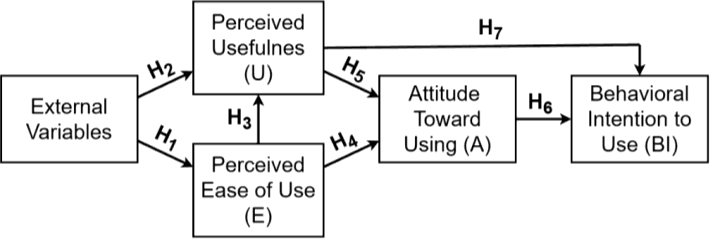
Figure 2. Research Framework
 : Usability positively influences Perceived Ease of Use
High usability supports perceived ease of use and strengthens users' perceptions of usefulness. In the context of educational robots, benefits can include increased learning interest, better knowledge retention, increased student engagement, and enhanced conceptual understanding through a multisensory approach [26]. The MSWaMS AI robot, capable of providing real-time visual and sensory feedback, has the potential to increase students' perceived usefulness because it helps them understand the waste sorting process directly through realistic simulations [27]. From a TAM perspective, perceived usefulness is the strongest determinant influencing technology adoption. Systems with good usability are more likely to be perceived as providing tangible benefits because the user experience is less disruptive and more focused on learning activities.
 : Usability positively influences Perceived Usefulness
The association between perceived ease of use and perceived usefulness represents a fundamental component within the cognitive perspective of the TAM framework. Previous studies indicate that when a technology is regarded as simple and convenient to operate, users tend to evaluate it as more beneficial, since a lower level of complexity reduces cognitive burden and facilitates a smoother interaction experience [28]. This is particularly relevant in the context of educational robots, which have mechanical and sensory complexity. When students perceive the MSWaMS AI Robot as easy to control without requiring in-depth technical understanding, they will perceive the robot as an effective educational tool [29]. Studies within the field of educational technology suggest that user-friendliness exerts an indirect yet substantial influence on perceived usefulness by creating learning experiences that are more engaging, efficient, and less associated with technological anxiety. Consequently, perceived ease of use can be considered a critical determinant in shaping users’ evaluations of the functional value and effectiveness of educational robots.
 : Perceived Ease of Use has a positive effect on Perceived Usefulness
Perceived Ease of Use is also a crucial determinant in the formation of attitudes toward technology. Attitudes are emotional and cognitive evaluations of a technology, formed based on perceptions and experiences [30]. In a learning context, students tend to have positive attitudes toward technology that is engaging and easy to use without significant difficulty. Good experiences during interactions will strengthen students' self- confidence and minimize technology anxiety, thus forming a more positive attitude toward robots. In the MSWaMS robot, ease of use in accessing features, intuitive operation, and consistent robot responses create an enjoyable learning experience that is then reflected in user attitudes.
 : Perceived Ease of Use has a positive effect on Attitude Toward Using
Perceived usefulness plays a crucial role in shaping user attitudes. Empirical literature consistently shows that perceived usefulness is the strongest determinant of attitude formation in various technological contexts, including educational robots, learning applications, digital systems, and interactive platforms [31]. If users perceive that technology significantly contributes to their learning activities, their emotional evaluation of the technology will be more positive [32]. In the MSWaMS AI Robot, students can experience direct benefits through its ability to provide concrete understanding of waste sorting and the environment. In addition to its educational benefits, the robot also provides a fun and engaging learning experience, thus strengthening positive attitudes.
 : Perceived Usefulness positively influences Attitude Toward Using
Attitude then becomes the primary determinant of behavioral intention to use technology. Within the frameworks of TAM and the theory of planned behavior, attitude is regarded as one of the most immediate psychological determinants influencing an individual’s decision to engage with a technology. Students who develop favorable perceptions toward the MSWaMS AI Robot are more likely to demonstrate stronger enthusiasm and a greater intention to maintain continued interaction with the robot over time [33]. This positive attitude also arises from the self- confidence, emotional comfort, and satisfaction felt during technology use. Enjoyable educational experiences increase intrinsic motivation and the drive to continue adopting the technology.
 : Attitude Toward Using positively influences Behavioral Intention
Apart from attitude, perceived usefulness is also considered a direct determinant influencing an individual’s behavioral intention to adopt and continue using a technology. In many TAM studies, Perceived Usefulness has been found to be the variable that most strongly influences usage intention, particularly in the context of educational technology. Individuals who consider a robotic system to deliver substantial value and practical advantages tend to demonstrate stronger intentions to continue using it, even when additional considerations such as usability factors or potential risks remain part of their evaluation process [30]. In the context of the MSWaMS AI Robot, educational benefits such as environmental understanding and hands-on experiential learning activities are the primary reasons users re-adopt the technology.
 : Perceived Usefulness has a positive effect on Behavioral Intention
METHODS
This research as shown in Figure 3 employed a quantitative methodology using a causal research approach to examine the effects of the Technology Acceptance Model constructs on students’ behavioral intentions toward the utilization of the Artificial Intelligence (AI)-based MSWaMS educational robot. A causal research design was adopted because the objective of this study was to investigate the cause-and-effect relationships among the variables, particularly in determining how perceived ease of use, perceived usefulness, and attitudes toward technology usage affect students’ intentions to adopt the robot as an instructional medium. Furthermore, this study integrated technical evaluation through Blackbox Testing to ensure the robot functioned according to specifications before evaluating it through user perceptions.
The MSWaMS (Mobile Smart Waste Management System) robot, the subject of this study, is equipped with several components, including ultrasonic sensors, a visual camera, an LCD display, and an automatic closing mechanism for organic and inorganic waste. Blackbox testing was conducted to assess system performance based on the correspondence between input and output without analyzing the internal code structure [34]. Each robot function was tested through different scenarios, such as waste detection and classification, information display on the LCD, sensor response to obstacles, and the mechanical behavior of the automatic closing [35]. All test results were recorded as "as expected" or "not as expected" as a basis for assessing system reliability and stability [36].
After technical testing, students were given the opportunity to interact directly with the robot before completing the research questionnaire. The research instrument was designed based on the main constructs of TAM: Perceived Ease of Use, Perceived Usefulness, Attitude Toward Using, and Behavioral Intention. All indicators were measured using a 1–5 Likert scale. Respondents were selected using a purposive sampling technique, namely participants who had observed or tried the robot directly during demonstrations [37]. The collected data were processed and examined through the application of the Partial Least Squares–Structural Equation Modeling (PLS-SEM) technique using SmartPLS. The analytical procedure was carried out through two primary phases, consisting of the assessment of the measurement model (outer model) followed by the evaluation of the structural model (inner model). Testing the outer model included evaluating the validity and reliability of the constructs [38]. In contrast, the structural model assessment was applied to examine the magnitude and direction of the relationships among variables by evaluating path coefficients, coefficient of determination ( ) values, and the statistical significance obtained from bootstrapping procedures. This analytical process offers a broader understanding of the determinants influencing students’ intentions to adopt the MSWaMS educational robot, while also identifying the relative contribution of each construct within the technology acceptance model.
By combining robot functional testing through Blackbox Testing and user behavior analysis through TAM, this study provides two perspectives: the system's technical reliability and user acceptance. This integrated approach is anticipated to deliver a thorough understanding of the technological readiness of MSWaMS as an AI-driven interactive learning platform designed to support intelligent and sustainable waste management education.
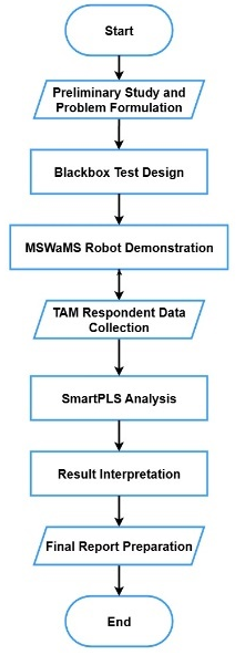
Figure 3. Research flow diagram
RESULT AND DISCUSSION
The Results and Discussion section presents research findings consisting of the results of the Blackbox Test on the functionality of the MSWaMS educational robot and an analysis of technology acceptance by students using the TAM model. Blackbox testing was conducted to ensure that each robot component including the motion system, trash detection system, display screen, trash lid mechanism, proximity sensor, and side body cover functioned according to the established design specifications. The results of this technical evaluation became the basis for assessing the reliability of the device before being analyzed from a user perspective. Furthermore, TAM analysis using SmartPLS tested the causal relationship between variables to determine the factors that influence students' interest in using robots as a learning medium. The combination of technical evaluation outcomes and users’ perceptions generated a more comprehensive understanding of both system effectiveness and the extent to which MSWaMS technology was accepted by students.
Black-box Testing (Functional Validation)
The findings obtained from the black-box testing of the MSWaMS educational robot offer a detailed assessment of the operational reliability associated with each core functionality incorporated into the system design. This testing was conducted by providing various input scenarios representing real-world usage conditions, then comparing the resulting output with predetermined specifications. Each function was tested independently to ensure that the entire system performed consistently and responsively [36]. The test data in Table 1 showed that most of the robot's functions met the feasibility criteria, with some components requiring further adjustment to achieve optimal performance.
Table 1. Results of Blackbox Test
ID | Parent Function | Test Cases | Validity Percentage | Functional Status | Information |
F1 | Motion | Moves in all directions. Moves to avoid obstacles. | 100% | Pass | All motion test scenarios were successful. |
F2 | Trash Detection | Camera 1 detects organics; Camera 2 detects inorganic. | 95% | Minor Fail | 5% of test cases failed (e.g., misclassified objects). |
F3 | Display Screen | Displays the type of waste detected. | 100% | Pass | The display was successful and accurate according to the input data. |
F4 | Trash Can Lid | Camera 1 for organics, Camera 2 for inorganic. | 100% | Pass | The lid mechanism functioned perfectly according to the test scenarios. |
F5 | Proximity Sensor | Detects obstacles. | 100% | Pass | All obstacle detection test scenarios were successful. |
F6 | Side Body Lid | Monitors and collects waste. | 98% | Minor Fail | 2% of test cases failed (e.g., the lid did not close/open properly). |
In the F1 (Motion) function, all test scenarios demonstrated a 100% success rate, including movement in all directions and obstacle avoidance. These results demonstrate that the robot's navigation system functioned stably and responsively to environmental changes. The F2 (Trash Detection) function achieved 95% success, with minor failures related to misclassification in a small number of cases. Nevertheless, this accuracy rate is considered good for a visual camera-based system and indicates that the detection algorithm works effectively in most scenarios.
The F3 (Display) function achieved 100% validity, indicating that all information displayed on the LCD screen matched the sensor and camera detection results. The F4 (Trash Bin Lid) function also demonstrated excellent performance with a 100% success rate for both organic and inorganic lids. This confirms that the automatic lid mechanism is able to respond accurately and consistently to waste types. The F5 (Distance Sensor) function again achieved 100% performance, demonstrating that the ultrasonic sensor is capable of accurately and stably detecting objects around the robot.
Function F6 (Side Body Close) had a 98% success rate, with minor failures related to delays or imperfections in the opening and closing process. Although categorized as a minor fail, this performance still indicates that the function works well overall and only requires mechanical refinement to achieve full accuracy. Cumulatively, the average functional validity of all components reached 98.83%, which indicates that the MSWaMS robot is already in the very suitable category for use in educational demonstrations and further research.
The functional validity graph in Figure 4 presented reinforces the findings in the table by demonstrating a very high level of performance consistency for each function. Stable performance across most components confirms that the system design is working as intended and requires only minor refinements to achieve maximum performance. Thus, the Blackbox Test results provide a strong foundation that the MSWaMS robot is ready for use as a smart technology-based learning tool, while also demonstrating its significant potential for further development in AI-based education and waste management systems.
Next, the average validity of the Blackbox test was calculated to obtain a comprehensive overview of the functional success rate of each major component of the MSWaMS robot during testing using various scenarios [7]. Each function, from the locomotion system, waste detection, display, trash can lid, proximity sensor, and side body cover, was assessed based on a success rate, indicating the function's consistency in meeting design specifications. This approach provides an objective indicator of the stability and reliability of system performance, while ensuring that the robot can effectively perform core operations without significant disruption in most test cases.
The calculation results in Figure 5 show that the function validity percentage is 98.83%. This figure represents a very high success rate, indicating that the majority of the robot's functions worked optimally during testing, with only minor failures found in trash detection and the side body cover. Through this calculation, it can be concluded that the MSWaMS robot has stable performance and is worthy of proceeding to the next evaluation stage, both in user testing and more complex system integration.
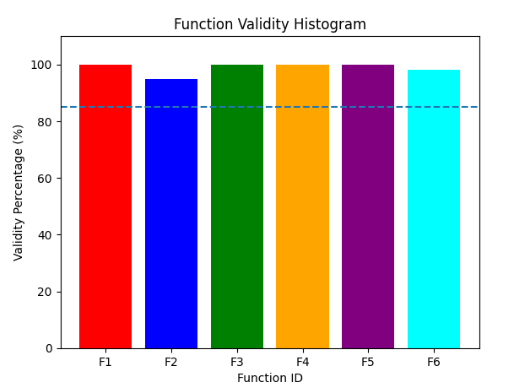
Figure 4. Function validity graph
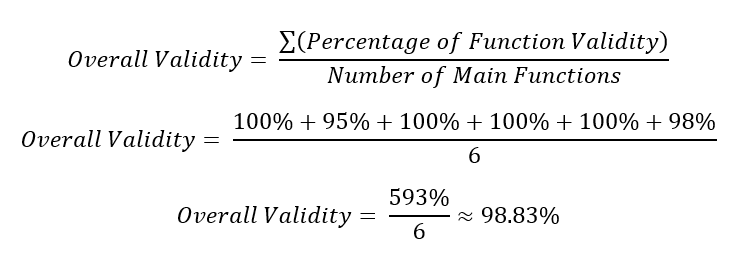
Figure 5. Calculation of the average Functional Validity
SmartPLS
The SmartPLS analysis conducted in this research was initiated through validity and reliability assessments to verify that the questionnaire instrument measured the constructs within the TAM framework with both accuracy and consistency. This stage is crucial because the quality of the data obtained from respondents will determine the accuracy of the structural analysis results, particularly when assessing the influence of variable on the acceptance of the MSWaMS educational robot. SmartPLS 4.0 was employed as the main analytical instrument because of its capability to process models containing reflective indicators and to simultaneously assess construct adequacy using multiple statistical parameters commonly applied in PLS-SEM studies.
In the convergent validity test, each indicator's factor loading value assess to ensure that it accurately represented the latent variable being measured. Generally speaking, indicators with a loading value below 0.4 were eliminated from the model as they were deemed to contribute insufficiently to explaining the construct, while values above 0.7 indicated a strong and reliable indicator. Referring to the criteria proposed by [39] and [40], all indicators in this study were declared valid because they had loading factor values above 0.5. Therefore, all items in the questionnaire were retained, and the model could proceed to the next stage of analysis.
After validity was confirmed, the next is ensure construct reliability to assess the level of consistency between indicators within each variable. Reliability testing used measures such as Cronbach's Alpha and Composite Reliability, which generally require values above 0.7 to indicate good reliability. The success of all indicators in meeting validity and reliability criteria indicates that the research instrument has met data quality standards, thus ensuring the reliability of the structural model estimation results [41]. This initial stage also ensures that the relationships between variables in the TAM model can be analyzed more accurately without being influenced by instrument weaknesses.
The validity assessment (Table 2) demonstrated satisfactory results, as all variables achieved loading factor values exceeding the minimum threshold of 0.50, indicating that the measurement items met the required validity criteria and were therefore retained for subsequent analyses. Reliability evaluation was further conducted through the examination of composite reliability values generated in SmartPLS 4.0. A construct is generally considered reliable when the composite reliability value surpasses 0.70 and the Cronbach’s alpha coefficient exceeds the recommended threshold of 0.60, reflecting a strong level of internal consistency among the indicators [40].
The reliability assessment (Table 3) of the research instrument indicated that all constructs achieved reliability coefficients of ≥ 0.70, demonstrating an acceptable level of internal consistency across the measurement items. Furthermore, the Average Variance Extracted (AVE) values for all constructs exceeded the recommended threshold of 0.50, confirming adequate convergent validity. These findings suggest that the measurement instrument satisfied the established reliability and validity requirements, allowing the dataset to be used for further model evaluation procedures.
Table 2. Final Results of Validity Test
Variable | Item | Loadin Factor | Information |
| UB1 | 0.894 | Valid |
Usability (UB) | UB2 | 0.865 | Valid |
| UB3 | 0.817 | Valid |
| PU1 | 0.905 | Valid |
Perceived Usefulness (PU) | PU2 | 0.885 | Valid |
| PU3 | 0.652 | Valid |
| PEOU1 | 0.961 | Valid |
Perceived Ease of Use (PEOU) | PEOU 2 | 0.941 | Valid |
| PEOU 3 | 0.962 | Valid |
| ATU1 | 0.741 | Valid |
Attitude Toward Using (ATU) | ATU 2 | 0.881 | Valid |
| ATU 3 | 0.914 | Valid |
| BI1 | 0.962 | Valid |
Behavioral Intention to Use (BI) | BI2 | 0.988 | Valid |
| BI3 | 0.973 | Valid |
Acceptable Limits |
| > 0.5 | Accepted |
Table 3. Reliability Test Results
Variable | Item | Construct Reliability | AVE |
| UB1 |
|
|
Usability (UB) | UB2 | 0.894 | 0.738 |
| UB3 |
|
|
| PU1 |
|
|
Perceived Usefulness (PU) | PU2 | 0.860 | 0.676 |
| PU3 |
|
|
| PEOU1 |
|
|
Perceived Ease of Use (PEOU) | PEOU 2 | 0.969 | 0.911 |
| PEOU 3 |
|
|
| ATU1 |
|
|
Attitude Toward Using (ATU) | ATU 2 | 0.885 | 0.721 |
| ATU 3 |
|
|
| BI1 |
|
|
Behavioral Intention to Use (BI) | BI2 | 0.982 | 0.949 |
| BI3 |
|
|
Within SmartPLS, the estimation of latent variable score components is derived through the integration of both the inner and outer model assessments, where the outer model evaluates the associations between indicators and their respective constructs. Subsequently, structural model analysis was performed to investigate the relationships among the proposed constructs. The outcomes of the structural model evaluation in this study are presented in Figure 6.
Moreover, the decision regarding hypothesis acceptance or rejection was determined based on the significance probability values obtained from the analysis, using a significance threshold of α = 5% (0.05) [38]. The findings of this study are summarized and presented in Table 4.
The results of the path coefficient analysis in the table show that most of the relationships between variables in the research model are significant and accepted, indicated by a T-Statistic value above 1.96 and a p-value <0.05. Usability (UB) is proven to have a significant effect on Perceived Ease of Use (PEOU) and Perceived Usefulness (PU), so that the better the level of usability, the easier and more useful the technology is perceived by users. PEOU also has a strong influence on Attitude Toward Using (ATU), but is not significant on PU so the hypothesis is rejected. Perceived Usefulness (PU) has a significant effect both on ATU and directly on Behavioral Intention (BI), indicating that perceived usefulness is important in shaping attitudes and intentions to use technology. In addition, ATU has a significant influence on BI, which confirms that positive user attitudes are the main determining factors in shaping intentions to use MSWaMS AI Robot. Thus, the research model shows that usability, perceived ease of use, and perceived usefulness play an important role in driving students' attitudes and intentions to use AI technology.
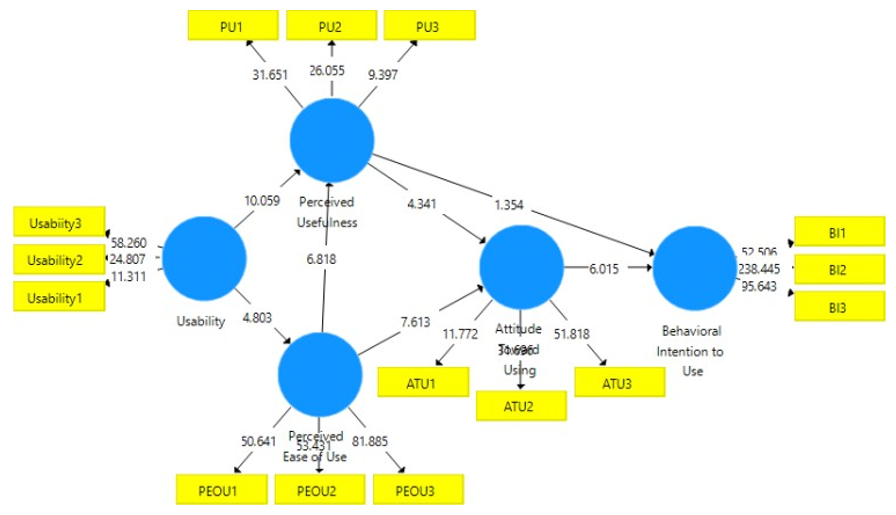
Figure 6. SmartPLS 4.0 Structural Model
Table 4. Path Model Significance Test Results
Variable | Original Sample (O) | Sample average (M) | Standard Deviation (STDEV) | T-Statistic (|O/STDEV) | P | Information |
UB→PEOU | 0.417 | 0.427 | 0.087 | 4.803 | 0.000 | Accepted |
UB→PU | 0.767 | 0.773 | 0.040 | 19.363 | 0.000 | Accepted |
PEOU→PU | 0.388 | 0.380 | 0.057 | 6.818 | 0.000 | Accepted |
PEOU→ATU | 0.660 | 0.658 | 0.058 | 11.468 | 0.004 | Accepted |
PU→ATU | 0.320 | 0.316 | 0.074 | 4.341 | 0.000 | Accepted |
ATU→BI | 0.575 | 0.581 | 0.096 | 6.015 | 0.000 | Accepted |
PU→BI | 0.330 | 0.326 | 0.098 | 3.370 | 0.0001 | Accepted |
Discussion
The Positive Influence of Usability on Perceived Ease of Use
The findings of this study demonstrate that usability exerts a positive effect on perceived ease of use. This suggests that higher levels of system usability within the MSWaMS robot contribute to greater user convenience in understanding, learning, and operating the system effectively. Reliable functionality, accurate sensor responses, and clear information displays contribute to a more intuitive user experience. In this context, usability encompasses not only technical ease but also experiential ease, such as how the robot displays trash detection results or how the closing mechanism operates without the need for additional instructions [42]. This phenomenon aligns with the concept of usability in other interactive technologies, such as chatbots, which can enhance perceived ease of use when designed to provide quick responses, clear interfaces, and efficient interactions. Just as responsive chatbots can reduce users' cognitive load, consistent performance of the MSWaMS robot contributes to users’ perceptions that the technology is simple and convenient to operate, including for students who have limited or no previous experience with such systems.
The results obtained in this study are consistent with previous investigations on interactive technologies, which highlight that user experience plays a critical role in developing favorable perceptions toward intelligent systems. Research by [26] shows that the higher the usability of a robot in terms of sensor function reliability, detection accuracy, and visual output clarity the greater the perceived ease of use by students. This occurs because an easy-to-use system reduces cognitive and technical barriers, allowing users to feel more confident interacting with the technology. Comparable to studies on chatbot technology that emphasize the significance of system design and operational reliability in strengthening user trust, the MSWaMS robot also requires a simple and intuitive operational structure to develop stronger perceptions of usability among users.
The Positive Influence of Usability on Perceived Usefulness
The findings of this research reveal that usability exerts a positive and statistically significant effect on perceived usefulness. It’s means that easier and more comfortable the MSWaMS robot is to use, the greater the students' perception that it provides tangible benefits in the learning process and waste management activities. High usability is evident in the reliability of the sensors, the accuracy of waste sorting, the clear information display, and the consistent system response, which allows students to perceive time efficiency and ease in understanding technology-based waste management concepts [43]. When a technology can be used without difficulty, users tend to perceive it as genuinely helpful, increasing productivity, and enriching the learning experience. This aligns with the TAM theory, where ease of use is often a key predictor of perceived usefulness because positive experiences during initial interactions foster confidence that the technology will provide long- term benefits.
This result is consistent with findings reported in earlier studies within the domains of educational technology and automated system applications. For example, [44] on the use of digital assistants in education showed that a smooth and uncomplicated user experience fosters the perception that the technology can enhance the effectiveness and overall quality of the learning process. In the context of MSWaMS, the high level of usability as proven through the results of the Blackbox Test makes this robot considered useful not only as an automatic waste sorting tool, but also as an interactive and effective educational medium in increasing environmental awareness among students.
The Positive Influence of Perceived Ease of Use on Perceived Usefulness
The results of the study indicate that Perceived Ease of Use positively influences Perceived Usefulness, meaning the easier the MSWaMS robot is to operate, the greater the students' belief that it provides tangible benefits in the learning process. Ease of use, such as intuitive navigation, fast sensor response, and clear information displays, reduces technical barriers and reduces students' cognitive load when interacting with the robot [45]. When students do not have to struggle to understand how the system works, they can focus more on the robot's educational function: understanding the waste sorting process, recognizing waste types, and increasing environmental awareness through hands-on experience. Thus, the perception that the robot is easy to use automatically increases the belief that the robot is truly useful as an efficient learning tool and helps them understand the concept of technology-based waste management.
This finding is consistent with numerous previous studies examining the adoption of educational technologies and the implementation of automated systems in learning environments. [46] in a study of the use of educational robots in schools, which showed that the easier the robot is to understand and control, the higher the students' perception that the robot is beneficial in supporting the learning process. Furthermore, ease of operation in AI-based learning platforms significantly increases perceived usefulness because users feel the technology helps them learn faster and more effectively. The consistency of these findings reinforces that Perceived Ease of Use is a crucial element in assessing the benefits of technology, including the MSWaMS educational robot.
The Positive Influence of Perceived Ease of Use on Attitude Toward Using
The results demonstrate that perceived ease of use has a positive effect on attitude toward using the technology. This indicates that greater ease in operating the MSWaMS robot contributes to the development of more favorable student attitudes toward its application within learning activities. When students perceive that the robot can be operated without difficulty, from menu navigation, sensor use, to understanding the waste sorting workflow, they will have a pleasant and frustration-free interaction experience [47]. This ease of use creates confidence and comfort in using the technology, leading to a higher level of acceptance. Consequently, students’ perceptions regarding the ease of operating the MSWaMS robot play a crucial role in developing favorable attitudes toward AI-driven learning technologies, since users generally show stronger acceptance and preference for systems that minimize both technical complexity and cognitive demands.
This finding is consistent with numerous earlier studies concerning the adoption of AI-driven technologies and their application within educational settings. Research conducted by [48] states that ease of use is an important predictor of user attitudes because a simpler experience increases liking and acceptance of the technology. Furthermore, this study also shows that in the context of educational robot use, perceived ease of operation increases students' positive attitudes because they perceive the technology as friendly and enjoyable to learn. Therefore, the consistency of these findings strengthens that perceived ease of use not only increases confidence in the robot's benefits, but also plays a key role in shaping students' positive attitudes towards the use of the MSWaMS robot as an educational medium.
The Positive Influence of Perceived Usefulness on Attitude Toward Using
The results of the study indicate that Perceived Usefulness has a positive and significant effect on Attitude Toward Using. This means that the greater the benefits students perceive from using the MSWaMS robot, the more positive their attitudes toward the technology. When students perceive that the robot can improve their understanding of waste management, enrich the interactive learning experience, and help them identify waste types more quickly and accurately, they develop a more accepting and enthusiastic attitude toward using the robot [49]. This perceived usefulness fosters the belief that the robot functions not only as an automatic waste sorting tool but also as an educational tool that adds value to learning activities. Accordingly, perceived usefulness serves as a key determinant in the formation of positive attitudes, as users are generally more inclined to develop favorable perceptions toward technologies that improve the effectiveness and efficiency of their learning experiences.
This finding is consistent with previous research emphasizing the central role of perceived usefulness in influencing attitudes toward technology. Perceived usefulness is a key predictor of attitude formation because users will prefer and accept technology that they perceive improves performance or learning outcomes. Research by [31], also shows that across various educational technology contexts, perceived usefulness consistently exerts a strong influence on positive user attitudes, as perceived benefits foster motivation and preference for using the technology. Furthermore, this study also indicates that students who perceive significant benefits from using robots are more open, enthusiastic, and supportive of the technology's implementation in their learning environments. The consistency of these findings further strengthens the argument that perceived usefulness functions as a crucial factor in influencing the development of positive student attitudes toward the use of MSWaMS robots.
The Positive Influence of Attitude Toward Using on Behavioral Intention to Use
When students perceive the experience of interacting with robots as enjoyable, easy to understand, and capable of supporting their learning activities, they develop a more accepting and open attitude toward the continued use of the technology. This positive attitude stems not only from the robot's functional benefits but also from the perception that the technology is relevant to their learning needs and provides a more modern and engaging experience [50]. By developing a favorable attitude, students feel more confident and motivated to continue using the robot in the future. This indicates that positive attitudes act as a significant psychological basis for sustaining usage intentions, as individuals generally demonstrate stronger intentions to adopt and continue using technologies that they perceive as beneficial, engaging, and easily integrated into their learning activities.
This finding is consistent with numerous prior studies demonstrating that attitude toward use serves as a major predictor of behavioral intention within technology acceptance frameworks such as TAM. Research by [51] explains that a favorable attitude creates an internal drive that strengthens interest and preference for continued use of the technology in daily activities. This study also found that students with positive attitudes toward robots have a higher intention to engage in robotics-based learning activities. The consistency of these findings further reinforces the results of this study, indicating that students’ favorable attitudes toward the MSWaMS robot significantly enhance their intention to continuously adopt it as an educational tool and as a supporting medium for waste management activities.
The Positive Influence of Perceived Usefulness on Behavioral Intention to Use
The findings of this study reveal that perceived usefulness has a positive and statistically significant effect on behavioral intention to use, indicating that users’ perceptions of the benefits provided by the technology serve as a crucial factor in influencing students’ intentions to continue utilizing educational robots such as MSWaMS. When users perceive that technology provides tangible benefits, whether in the form of improved conceptual understanding, efficiency in learning activities, or support for waste identification and management, they will develop an internal drive to utilize the technology continuously [52]. The perception that robots can improve learning performance creates a belief that the technology is worth using, so that intention to use arises not from coercion but from a cognitive evaluation that the robot provides substantial added value. Thus, these findings confirm that the greater the level of perceived usefulness, the stronger the students' intention to use the technology in learning contexts and other practical activities.
These research findings align with research conducted by [53], which states that perceived usefulness is a powerful driver of user motivation to adopt technology because users are more likely to show greater interest in systems that improve their work performance. This alignment with previous research findings strengthens the argument that perceived usefulness not only increases initial acceptance of the MSWaMS robot but is also a key determinant in shaping long-term usage intentions. Thus, Perceived Usefulness remains a key variable bridging technology acceptance with its continued use in educational settings.
CONCLUSIONS
The results show that MSWaMS educational robot demonstrates an excellent level of functionality based on the Blackbox Test results, with system validity exceeding 98% and only minor errors identified in a limited number of sensor functions. Furthermore, analysis using the Technology Acceptance Model (TAM) through SmartPLS reveals that perceived ease of use and perceived usefulness play important roles in shaping students’ attitudes and behavioral intentions to use the MSWaMS robot as a learning medium. Usability is confirmed as a strong predictor of both perceived ease of use and perceived usefulness, which subsequently contribute to students’ positive attitudes and intentions to continue using the robot for smart technology based educational waste management.
However, among all structural relationships examined, the influence of perceived usefulness on attitude toward using is identified as the weakest effect, although it remains positive and significant. This relatively smaller influence indicates that once students reach a basic level of familiarity and confidence in operating the MSWaMS robot, ease of use becomes a baseline expectation rather than a key determinant of attitude formation. In contrast, students’ attitudes are more strongly shaped by perceived usefulness, particularly the robot’s ability to enhance learning effectiveness, improve understanding of waste management concepts, and deliver meaningful educational value. Overall, these findings confirm that while ease of use reduces technical barriers, the integration of reliable technical performance and strong perceived benefits constitutes the main foundation for increasing the adoption and sustained use of educational AI robots in educational environments.
DECLARATION
Acknowledgement
The author would like to thank DPPM-DIRJEN KEMDIKTISAINTEK for the financial support to this consortium research in 2025 with contract number: 030/C3/DT.05.00/RIKUB/2025 and 002/RIKUB/LPPM.UAD/IX/2025. In addition, the team would like to thank LPPM Universitas Ahmad Dahlan for their support in carrying out this activity.
REFERENCES
- E. W. Solikhah, H. M. Asih, F. H. Astuti, I. Ghazali, and E. B. Mohammad, “Industry 4.0 readiness trends: A bibliometric and visualization analysis,” Int. J. Robot. Control Syst., vol. 4, no. 1, pp. 105–124, 2024, https://doi.org/10.31763/ijrcs.v4i1.1247.
- T. Ali, M. Irfan, A. S. Alwadie, and A. Glowacz, “IoT-based smart waste bin monitoring and municipal solid waste management system for smart cities,” Arab. J. Sci. Eng., vol. 45, no. 12, pp. 10185–10198, 2020, https://doi.org/10.1007/s13369-020-04637-w.
- M. Z. M. Z. Harith, M. A. Hossain, I. Ahmedy, M. Y. I. Idris, T. K. Soon, and R. M. Noor, “Prototype development of IoT based smart waste management system for smart city,” IOP Conf. Ser. Mater. Sci. Eng., vol. 884, no. 1, p. 012051, 2020, https://doi.org/10.1088/1757-899X/884/1/012051.
- E. Longo, F. A. Sahin, A. E. C. Redondi, P. Bolzan, M. Bianchini, and S. Maffei, “A 5G-enabled smart waste management system for university campus,” Sensors, vol. 21, no. 24, p. 8278, 2021, https://doi.org/10.3390/s21248278.
- B. Fang et al., “Artificial intelligence for waste management in smart cities: A review,” Environ. Chem. Lett., vol. 21, no. 4, pp. 1959–1989, 2023, https://doi.org/10.1007/s10311-023-01604-3.
- A. Henaien, H. Ben Elhadj, and L. Chaari Fourati, “A sustainable smart IoT-based solid waste management system,” Future Gener. Comput. Syst., vol. 157, pp. 587–602, 2024, https://doi.org/10.1016/j.future.2024.03.056.
- Z. Aghababaeyan, M. Abdellatif, L. Briand, R. S, and M. Bagherzadeh, “Black-box testing of deep neural networks through test case diversity,” IEEE Trans. Softw. Eng., vol. 49, no. 5, pp. 3182–3204, 2023, https://doi.org/10.1109/TSE.2023.3243522.
- M. A. Bakar, N. Razali, M. Wook, M. N. Ismail, and T. Sembok, “Exploring and developing an industrial automation acceptance model in the manufacturing sector towards adoption of Industry 4.0,” Manuf. Technol., vol. 21, no. 4, pp. 434–446, 2021, https://doi.org/10.21062/mft.2021.055.
- N. Marangunić and A. Granić, “Technology acceptance model: A literature review from 1986 to 2013,” Univers. Access Inf. Soc., vol. 14, no. 1, pp. 81–95, 2015, https://doi.org/10.1007/s10209-014-0348-1.
- A. Granić and N. Marangunić, “Technology acceptance model in educational context: A systematic literature review,” Br. J. Educ. Technol., vol. 50, no. 5, pp. 2572–2593, 2019, https://doi.org/10.1111/bjet.12864.
- I. Sosunova and J. Porras, “IoT-enabled smart waste management systems for smart cities: A systematic review,” IEEE Access, vol. 10, pp. 73326–73363, 2022, https://doi.org/10.1109/ACCESS.2022.3188308.
- K. Ahmed, M. K. Dubey, A. Kumar, and S. Dubey, “Artificial intelligence and IoT driven system architecture for municipality waste management in smart cities: A review,” Measurement: Sensors, vol. 36, p. 101395, 2024, https://doi.org/10.1016/j.measen.2024.101395.
- A. Chauhan, S. K. Jakhar, and C. Chauhan, “The interplay of circular economy with industry 4.0 enabled smart city drivers of healthcare waste disposal,” J. Clean. Prod., vol. 279, p. 123854, 2021, https://doi.org/10.1016/j.jclepro.2020.123854.
- A. Hamdan and E. S. Aldhaen, Eds., Artificial Intelligence and Transforming Digital Marketing, vol. 487. Cham: Springer Nature Switzerland, 2024, https://doi.org/10.1007/978-3-031-35828-9.
- T. M. Adila, W. S. Bintang, R. B. Ikhsan, and M. Fahlevi, “Instagram as information in developing purchase intentions: The role of social e-WOM and brand attitude,” in 2020 Int. Conf. Inf. Manage. Technol. (ICIMTech), pp. 427–431, 2020, https://doi.org/10.1109/ICIMTech50083.2020.9211151.
- Z. Wang, H. Li, and X. Zhang, “Construction waste recycling robot for nails and screws: Computer vision technology and neural network approach,” Autom. Constr., vol. 97, pp. 220–228, 2019, https://doi.org/10.1016/j.autcon.2018.11.009.
- Y. Hasanah, “Eco enzyme and its benefits for organic rice production and disinfectant,” J. Saintech Transf., vol. 3, no. 2, pp. 119–128, 2021, https://doi.org/10.32734/jst.v3i2.4519.
- Z. Liu, T. S. P. De Souza, B. Holland, F. Dunshea, C. Barrow, and H. A. R. Suleria, “Valorization of food waste to produce value-added products based on its bioactive compounds,” Processes, vol. 11, no. 3, p. 840, 2023, https://doi.org/10.3390/pr11030840.
- Kavya, M. Vashisht, B. Jain, and S. Shrivastava, “Transforming waste into wealth: A review on microbial conversion of organic municipal wastes to value-added products,” Discov. Environ., vol. 2, no. 1, p. 112, 2024, https://doi.org/10.1007/s44274-024-00144-z.
- T. Ali, M. Irfan, A. S. Alwadie, and A. Glowacz, “IoT-based smart waste bin monitoring and municipal solid waste management system for smart cities,” Arab. J. Sci. Eng., vol. 45, no. 12, pp. 10185–10198, 2020, https://doi.org/10.1007/s13369-020-04637-w.
- R. D. Puriyanto, H. I. K. Fathurrahman, F. F. Rahani, E. W. Solikhah, and Z. B. Musa, “Implementation of fuzzy Kalman filter in indoor localization using ultra-wideband sensor,” Int. J. Robot. Control Syst., vol. 5, no. 6, pp. 3047–3063, 2025, https://doi.org/10.31763/ijrcs.v5i6.2028.
- H. G. Musa, I. Fatmawati, N. Nuryakin, and M. Suyanto, “Marketing research trends using technology acceptance model (TAM): A comprehensive review of researches (2002–2022),” Cogent Bus. Manag., vol. 11, no. 1, p. 2329375, 2024, https://doi.org/10.1080/23311975.2024.2329375.
- F. D. Davis, “Perceived usefulness, perceived ease of use, and user acceptance of information technology,” MIS Q., vol. 13, no. 3, pp. 319–340, 1989, https://doi.org/10.2307/249008.
- N. Al-Qaysi, N. Mohamad-Nordin, and M. Al-Emran, “Employing the technology acceptance model in social media: A systematic review,” Educ. Inf. Technol., vol. 25, no. 6, pp. 4961–5002, 2020, https://doi.org/10.1007/s10639-020-10197-1.
- P. Weichbroth, “Usability of mobile applications: A systematic literature study,” IEEE Access, vol. 8, pp. 55563–55577, 2020, https://doi.org/10.1109/ACCESS.2020.2981892.
- J. Lu, M. Schmidt, M. Lee, and R. Huang, “Usability research in educational technology: A state-of-the-art systematic review,” Educ. Technol. Res. Dev., vol. 70, no. 6, pp. 1951–1992, 2022, https://doi.org/10.1007/s11423-022-10152-6.
- A. Lakhouit, “Revolutionizing urban solid waste management with AI and IoT: A review of smart solutions for waste collection, sorting, and recycling,” Results Eng., vol. 25, p. 104018, 2025, https://doi.org/10.1016/j.rineng.2025.104018.
- F. Caffaro, M. Micheletti Cremasco, M. Roccato, and E. Cavallo, “Drivers of farmers’ intention to adopt technological innovations in Italy: The role of information sources, perceived usefulness, and perceived ease of use,” J. Rural Stud., vol. 76, pp. 264–271, 2020, https://doi.org/10.1016/j.jrurstud.2020.04.028.
- V. Thangavel, “Sustainable development of effective smart waste management practices by AI & ML techniques in higher educational institutions,” Int. J. Adv. Eng. Manag., vol. 6, no. 11, pp. 563–581, 2024, https://doi.org/10.2139/ssrn.4940193.
- L. Chen and A. K. Aklikokou, “Determinants of E-government adoption: Testing the mediating effects of perceived usefulness and perceived ease of use,” Int. J. Public Adm., vol. 43, no. 10, pp. 850–865, 2020, https://doi.org/10.1080/01900692.2019.1660989.
- M. Liesa-Orús, C. Latorre-Cosculluela, V. Sierra-Sánchez, and S. Vázquez-Toledo, “Links between ease of use, perceived usefulness and attitudes towards technology in older people in university: A structural equation modelling approach,” Educ. Inf. Technol., vol. 28, no. 3, pp. 2419–2436, 2023, https://doi.org/10.1007/s10639-022-11292-1.
- M. A. Algerafi, Y. Zhou, H. Alfadda, and T. T. Wijaya, “Understanding the factors influencing higher education students’ intention to adopt artificial intelligence-based robots,” IEEE Access, vol. 11, pp. 99752–99764, 2023, https://doi.org/10.1109/ACCESS.2023.3314499.
- W. M. Al-Rahmi, N. Yahaya, M. M. Alamri, I. Y. Alyoussef, A. M. Al-Rahmi, and Y. B. Kamin, “Integrating innovation diffusion theory with technology acceptance model: Supporting students’ attitude towards using a massive open online courses (MOOCs) systems,” Interact. Learn. Environ., vol. 29, no. 8, pp. 1380–1392, 2021, https://doi.org/10.1080/10494820.2019.1629599.
- O. Loyola-Gonzalez, “Black-box vs. white-box: Understanding their advantages and weaknesses from a practical point of view,” IEEE Access, vol. 7, pp. 154096–154113, 2019, https://doi.org/10.1109/ACCESS.2019.2949286.
- S. J. Oh, B. Schiele, and M. Fritz, “Towards reverse-engineering black-box neural networks,” in Explainable AI: Interpreting, Explaining and Visualizing Deep Learning, pp. 121–144, 2019, https://doi.org/10.1007/978-3-030-28954-6_7.
- T. Byun, S. Rayadurgam, and M. P. E. Heimdahl, “Black-box testing of deep neural networks,” in 2021 IEEE 32nd Int. Symp. Softw. Rel. Eng. (ISSRE), pp. 309–320, 2021, https://doi.org/10.1109/ISSRE52982.2021.00041.
- J. F. Molina-Azorin, “Mixed methods research: An opportunity to improve our studies and our research skills,” Eur. J. Manag. Bus. Econ., vol. 25, no. 2, pp. 37–38, 2016, https://doi.org/10.1016/j.redeen.2016.05.001.
- J. Hair and A. Alamer, “Partial Least Squares Structural Equation Modeling (PLS-SEM) in second language and education research: Guidelines using an applied example,” Res. Methods Appl. Linguist., vol. 1, no. 3, p. 100027, 2022, https://doi.org/10.1016/j.rmal.2022.100027.
- R. B. Bouncken, W. Czakon, and F. Schmitt, “Purposeful sampling and saturation in qualitative research methodologies: Recommendations and review,” Rev. Manag. Sci., vol. 20, no. 2, pp. 579–615, 2026, https://doi.org/10.1007/s11846-025-00881-2.
- N. AL-Fadhali, “An AMOS-SEM approach to evaluating stakeholders' influence on construction project delivery performance,” Eng. Constr. Archit. Manag., vol. 31, no. 2, pp. 638–661, 2024, https://doi.org/10.1108/ECAM-09-2021-0780.
- L. Sunarya, F. Hidayat, R. Hidayanti, A. Khanza, M. Z. Firli, and M. F. Kamil, “Assessing the impact of skills involvement, and development on graduate marketability,” in 2024 3rd Int. Conf. Creative Communication and Innovative Technology (ICCIT), pp. 1–6, 2024, https://doi.org/10.1109/ICCIT62134.2024.10701163.
- A. I. Gunesekera, Y. Bao, and M. Kibelloh, “The role of usability on e-learning user interactions and satisfaction: A literature review,” J. Syst. Inf. Technol., vol. 21, no. 3, pp. 368–394, 2019, https://doi.org/10.1108/JSIT-02-2019-0024.
- Z. Chi and Z. Liu, “User experience and usability design centered smart application design to waste sorting for citizens living in smart city in China,” in Int. Conf. Human-Computer Interaction, Springer, pp. 62–81, 2020, https://doi.org/10.1007/978-3-030-49757-6_5.
- P. Vlachogianni and N. Tselios, “Perceived usability evaluation of educational technology using the System Usability Scale (SUS): A systematic review,” J. Res. Technol. Educ., vol. 54, no. 3, pp. 392–409, 2022, https://doi.org/10.1080/15391523.2020.1867938.
- A. Tahar, H. A. Riyadh, H. Sofyani, and W. E. Purnomo, “Perceived ease of use, perceived usefulness, perceived security and intention to use e-filing: The role of technology readiness,” J. Asian Finance Econ. Bus., vol. 7, no. 9, pp. 537–547, 2020, https://doi.org/10.13106/jafeb.2020.vol7.no9.537.
- X. Chen, L. Jiang, Z. Zhou, and D. Li, “Impact of perceived ease of use and perceived usefulness of humanoid robots on students’ intention to use,” Acta Psychol., vol. 258, p. 105217, 2025, https://doi.org/10.1016/j.actpsy.2025.105217.
- N. Nuryakin, N. L. P. Rakotoarizaka, and H. G. Musa, “The effect of perceived usefulness and perceived easy to use on student satisfaction the mediating role of attitude to use online learning,” APMBA Asia Pac. Manag. Bus. Appl., vol. 11, no. 3, pp. 323–336, 2023, https://doi.org/10.21776/ub.apmba.2023.011.03.5.
- H. Tennakoon, J. M. Hansen, G. Saridakis, M. Samaratunga, and J. W. Hansen, “Drivers and barriers of social sustainable development and growth of online higher education: The roles of perceived ease of use and perceived usefulness,” Sustainability, vol. 15, no. 10, p. 8319, 2023, https://doi.org/10.3390/su15108319.
- D. I. Prastiawan, S. Aisjah, and R. Rofiaty, “The effect of perceived usefulness, perceived ease of use, and social influence on the use of mobile banking through the mediation of attitude toward use,” APMBA Asia Pac. Manag. Bus. Appl., vol. 9, no. 3, pp. 243–260, 2021, https://doi.org/10.21776/ub.apmba.2021.009.03.4.
- P. Wiprayoga, S. Gede, and G. Suasana, “The role of attitude toward using mediates the influence of perceived usefulness and perceived ease of use on behavioral intention to use,” Russ. J. Agric. Socio-Econ. Sci., vol. 140, no. 8, pp. 53–68, 2023, https://doi.org/10.18551/rjoas.2023-08.06.
- Y. Kwak, J.-W. Ahn, and Y. H. Seo, “Influence of AI ethics awareness, attitude, anxiety, and self-efficacy on nursing students’ behavioral intentions,” BMC Nurs., vol. 21, no. 1, p. 267, 2022, https://doi.org/10.1186/s12912-022-01048-0.
- A. A. Panergayo, “Students’ behavioral intention to use learning management system: The mediating role of perceived usefulness and ease of use,” Int. J. Inf. Educ. Technol., vol. 11, no. 11, pp. 538–545, 2021, https://doi.org/10.18178/ijiet.2021.11.11.1562.
- E. Unal and A. M. Uzun, “Understanding university students’ behavioral intention to use Edmodo through the lens of an extended technology acceptance model,” Br. J. Educ. Technol., vol. 52, no. 2, pp. 619–637, 2021, https://doi.org/10.1111/bjet.13046.
Muchlas (Behavioral Intention to Use MSWaMS Artificial Intelligence (AI) Robot for Students: Blackbox Test and TAM Analysis)