ISSN: 2685-9572 Buletin Ilmiah Sarjana Teknik Elektro
Vol. 8, No. 2, April 2026, pp. 548-560
Digitizing Waste Management Using the Internet of Things: Research Opportunities
Windi Auliana 1, Qurtubi 2, Haswika 3, Kongkidakhon Worasan 4, Mohammad A. Shbool 5,6
1 Department of Industrial Engineering, Institut Teknologi Kalimantan, East Kalimantan, Indonesia
2 Department of Industrial Engineering, Universitas Islam Indonesia, Yogyakarta, Indonesia
3 Department of Agricultural Industrial Technology, Politeknik Negeri Tanah Laut, South Kalimantan, Indonesia
4 Faculty of Business Administration and Accountancy, Khon Kaen University, Khon Kaen, Thailand
5 Department of Industrial Engineering, The University of Jordan, Amman, Jordan
6 Department of Industrial Engineering, American University of Bahrain, Riffa, Bahrain
ARTICLE INFORMATION |
| ABSTRACT |
Article History: Received 24 December 2025 Revised 19 April 2026 Accepted 06 May 2026 |
| 
This study proposes an integrative multi-layered framework to address fragmentation in industrial waste management. The increasing volume of industrial waste creates an urgent need for a more precise, adaptive, and sustainable control system, as current practices often lack sufficient integration to ensure full environmental accountability. A critical gap exists in the lack of integration between real-time technical data and strategic governance, which hinders "intelligent compliance" in industrial settings. This research aims to identify trends, thematic scope, and research opportunities in IoT-based production waste control. The specific contribution of this study is the proposal of an integrative multi-layered framework that synchronizes monitoring, intelligent analytics, and blockchain-based accountability. The method was a PRISMA-based systematic review, search queries including 'IoT', 'Industrial Waste', and 'Blockchain' were applied to the Scopus database. 37 high-impact articles were selected based on three criteria: (1) industrial waste focus, (2) integration of Industry 4.0 pillars (AI, Blockchain, or 5G), and (3) publication within 2020–2025. Focusing on current system maturity over historical protocol evolution, this period reflects the state-of-the-art technological convergence. A rigorous Scopus screening narrowed 147 publications to 37 articles, enabling targeted qualitative synthesis. The results categorize IoT roles into thematic clusters: monitoring, process optimization, and circular economy integration. While promising, challenges such as data interoperability and security costs remain significant. This framework provides a blueprint for automated compliance. Future research should validate this model through cross-industry case studies. Study limitations include the reliance on a single database and the rapidly evolving nature of IoT technologies. |
Keywords: Environmental Management; Industrial Waste; IoT |
Corresponding Author: Qurtubi, Department of Industrial Engineering, Universitas Islam Indonesia, Yogyakarta, Indonesia. Email: qurtubi@uii.ac.id |
This work is open access under a Creative Commons Attribution-Share Alike 4.0 
|
Document Citation: W. Auliana, Q. Qurtubi, H. Haswika, K. Worasan, and M. A. Shbool, “Digitizing Waste Management Using the Internet of Things: Research Opportunities,” Buletin Ilmiah Sarjana Teknik Elektro, vol. 8, no. 2, pp. 548-560, 2026, DOI: 10.12928/biste.v8i2.15696. |
- INTRODUCTION
Rapid economic growth has intensified pressure on environmental quality, leading to increased waste generation and stricter pollution and emission regulations, particularly in industrial production systems [1]. Industrial waste management presents significant challenges due to its complex chemical composition, hazardous substances, and large volumes of production by-products. However, many existing waste management systems remain unable to accurately identify waste characteristics, types, and quantities in a timely manner, limiting the effectiveness of treatment and control strategies [2]. Each year, millions of tons of industrial and municipal waste are released into the environment [3][4], while the effectiveness of current waste management policies remains uncertain [5][6]. Without appropriate monitoring and treatment, waste accumulation can lead to environmental pollution and uneven load distribution at collection points, resulting in operational inefficiencies [7]-[9].
To address these challenges, continuous and adaptive monitoring systems capable of detecting changes in waste characteristics in real time are required [10]-[12]. Internet of Things (IoT) technology provides a promising approach by enabling real-time sensing, data transmission, and automated analysis of waste-related parameters. IoT technology offers an effective solution by enabling real-time data acquisition, anomaly detection, and early identification of hazardous discharges [13]-[15]. This review performs a cross-layer analysis, examining how integrating the perception, network, and application layers within IoT architectures can support a holistic industrial waste monitoring and management system. Sensor-based data can be integrated with routing systems and optimization algorithms to enable faster decision-making and prevent system overloads that may increase environmental risk [16][17]. Through its perception, network, and application layers, IoT supports integrated waste monitoring, predictive analysis, and more efficient operational control, thereby reducing environmental risks and management costs [18]-[20]. As a result, IoT has become increasingly important for monitoring, predicting, and optimizing waste management processes in support of sustainable treatment and recycling practices [21]-[23]. In addition, standalone IoT systems offer opportunities to improve monitoring efficiency across sectors, including agriculture, environment, and regional governance [24].
Recent studies increasingly demonstrate the role of IoT and smart technologies in advancing waste management and sustainability across multiple sectors. Existing studies generally focus on three main themes: real-time environmental monitoring, integration of artificial intelligence for predictive analysis, and sector-specific smart waste management applications [25]. For example, Rai & Kundu [22] emphasize the role of IoT and AI in predicting and recycling agroindustrial waste, while Ali & Jabeen [26] and Sun [27] develop IoT/NB-IoT-based systems for real-time water quality monitoring. Other studies explore energy-efficient and autonomous IoT solutions, such as solar-powered monitoring systems and edge-processing architectures by Mejia-Herrera et al. [28], as well as wastewater sludge treatment through bioleaching by Giwa et al. [29]. In healthcare, AI–IoT frameworks have been applied to improve hazardous waste management in hospitals [30], while industrial studies investigate waste-derived materials and energy recovery to support circular economy initiatives [31]-[33]. Additional applications include automated drying processes [34] and real-time effluent monitoring using machine learning techniques [35] to systematically monitor IPE operations. Real-time machine learning models such as CNNs, KNNs, and LSTMs for monitoring and prediction. Meanwhile, Wang et al. [36] integrated IoT in a circular economy model to optimize material flow, and Zarid [37] expanded HACCP using IoT, AI, and Blockchain to reduce resource consumption and waste.
Despite the growing body of literature, the application of IoT in waste management remains largely fragmented and sector-specific, with limited efforts to integrate monitoring, intelligent analytics, and control mechanisms into a unified methodological framework. Most existing review studies primarily focus on municipal solid waste or smart city waste collection systems, while relatively few studies systematically analyze IoT implementation for industrial waste management. In this study, an integrative methodological framework refers to a structured approach that combines sensing technologies, communication networks, data analytics, and decision-support mechanisms into a coherent system for industrial waste monitoring and management. Developing an integrated framework is important to enable coordinated monitoring, data processing, and decision-making across multiple stages of industrial waste management, thereby improving environmental control and operational efficiency.
To address this gap, a systematic literature review following the PRISMA guidelines is conducted. This method is chosen to ensure a rigorous and transparent mapping of the current landscape, enabling the identification of specific research opportunities that a standard narrative review might overlook. Consequently, a systematic literature review is required to confirm this research gap and to identify opportunities to develop an integrative IoT-based framework for effective production waste control. The research contribution of this paper is to provide a comprehensive and systematic mapping of IoT implementation specifically for industrial waste, clarify the requirements for an integrated framework, and establish a roadmap for shifting from reactive monitoring to proactive industrial waste management
- METHODS
A systematic literature review was conducted to identify, evaluate, and synthesize existing studies related to IoT-based industrial waste monitoring. This method enables the identification of research trends, technological approaches, and implementation patterns across different industrial sectors. The overall research methodology applied in this study is illustrated in Figure 1, which summarizes the stages of article identification, screening, eligibility assessment, and subsequent bibliometric analysis.
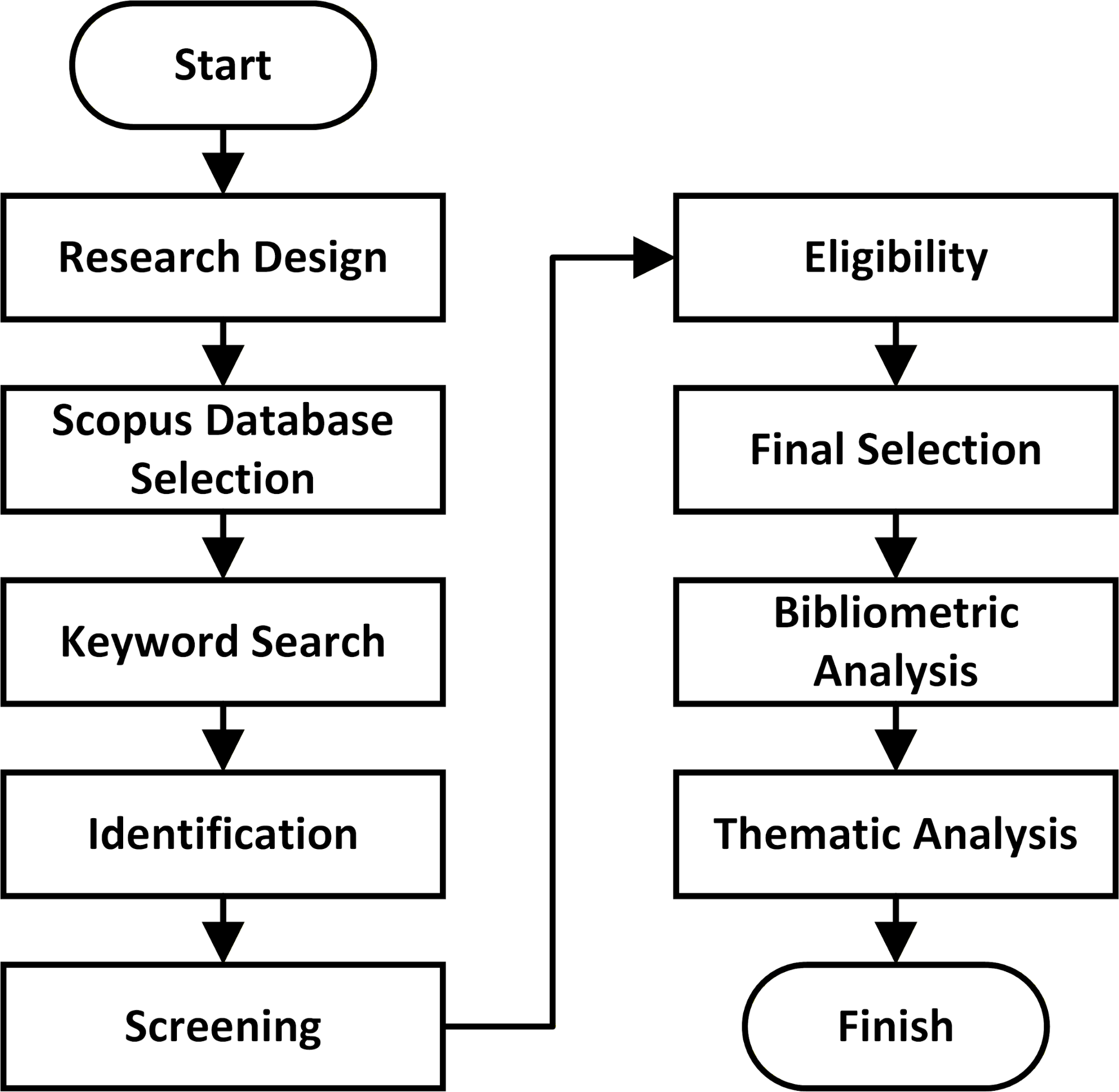
Figure 1. Research Methodology Flowchart
- Identification
This study conducted a systematic literature review (SLR) using a Scopus database search 2020–2025 with the query strings TITLE-ABS-KEY ("IoT" AND "industrial waste") OR TITLE-ABS-KEY ("IoT" AND "environmental management system"), resulting in 147 initial articles. Scopus was selected because it provides extensive coverage of peer-reviewed journals across engineering, environmental science, and technology fields relevant to IoT and waste management research. These keywords were selected to capture IoT applications in industrial waste management, while technical components such as sensors, microcontrollers, big data, and cloud computing are typically embedded within IoT-based systems. A bibliometric analysis was conducted using VOSviewer software to identify relationships among keywords and research themes. The analysis focused on keyword co-occurrence mapping to reveal dominant topics and thematic clusters within the selected literature.
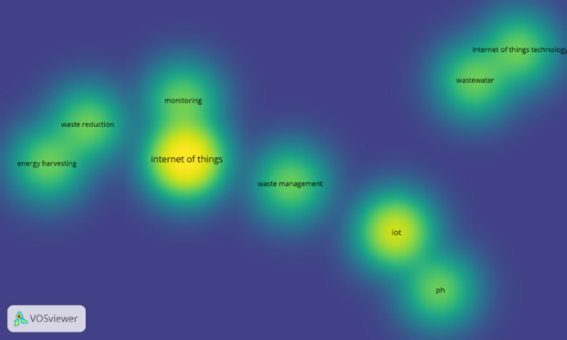
Figure 2 shows the network of keyword interconnectedness, while the density visualization emphasizes the most frequently occurring terms and the close relationships between topics, such as "internet of things", "IoT", "monitoring", "waste management", and "wastewater treatment". These findings show that the research focuses on the use of IoT for environmental monitoring and digital waste management. To explore the relationships among terms in more detail and identify trends in the research topic, the collected articles were then bibliometrically analyzed using VOSviewer. Although the dataset consists of 37 selected articles, the visualization still provides an indicative overview of the thematic relationships within the retrieved literature, as shown in Figure 3. The visualization reveals several keyword clusters centered on IoT applications, environmental monitoring, and waste management systems. These clusters indicate that current research primarily focuses on IoT-based monitoring technologies and on digital approaches to improving the efficiency of industrial waste management.
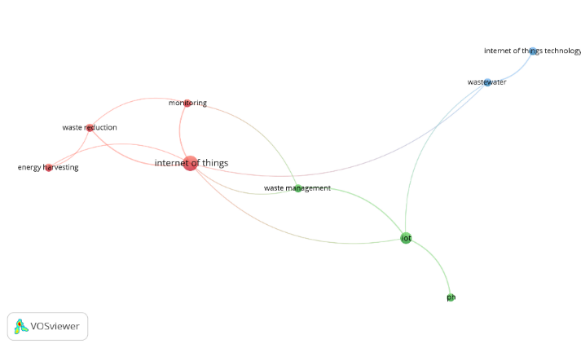
Figure 2. Network Visualization
Figure 3. VoS Density Visualization
- Screening
The article search results have been processed and filtered using the PRISMA method, resulting in 53 relevant English-language journal articles. Selection is based on inclusion-exclusion criteria, including peer-reviewed English-language journal articles that discuss IoT-based monitoring or management of industrial waste. Articles were excluded if they were review papers, duplicate records, policy-oriented studies without technical implementation, or studies focusing solely on municipal waste without an industrial context. From this stage, 41 articles remain for further examination at the eligibility stage.
- Eligibility Requirements
The article search results were processed and filtered using the PRISMA method as shown in Figure 3. Initially, 147 articles were identified using the keywords "IoT", "Industrial Waste", and "Environmental Management System". During the identification stage, 94 records were excluded because they were not scientific articles (e.g., news or non-peer-reviewed sources), leaving 53 articles for the screening stage. Selection was carried out based on the following criteria:
- Articles excluded (n=12): These articles did not pass the screening stage because the titles and abstracts were not relevant to the core research objectives.
- Articles not retrieved/excluded (n=4): After the initial screening, 2 articles could not be accessed in full-text, and 2 articles were retracted.
Consequently, 37 articles met the eligibility criteria and were determined as the final set used for further analysis in this study. The screening and eligibility assessment were conducted by the researcher, and uncertain cases were resolved through careful full-text review to ensure relevance to the study objectives. The flow of the article selection procedure is shown in detail in Figure 4.

Figure 4. Article selection procedure
- Research Frequency by Country
The distribution of research by country shows that studies on the integration of IoT in waste control are conducted in various regions with diverse industry characteristics. Some countries are more actively publishing research on this topic, especially those that have a strong focus on digital transformation and sustainability [38]. The distribution shows that China and India are the leading contributors, reflecting strong research activity related to digital transformation and industrial sustainability in these countries. Meanwhile, other countries also contributed through more specific studies that take into account their respective environmental and industrial contexts [22]. The distribution of research across countries is summarized in Table 1.
Table 1. Frequency of research on IoT in the control of state production waste
No | Country | Author | Total |
1 | Morocco | Shirley [37] | 1 |
2 | China | Sun [27], Giwa et al. [29], Zhang et al. [32], Yu et al. [33], Botelho et al. [34] Wang et al. [36], Siddique [38], Zhang et al. [39] | 8 |
3 | Bangladesh | Mridha et al. [35] | 1 |
4 | India | Ponni et al. [12], Dhariwal & Kumar [20], Rai & Kundu [22], Ali & Jabben [26], Dhariwal et al. [40], Pujar et al. [41], Sreenivasan et al. [42] | 7 |
5 | Vietnam | Kumar et al. [30] | 1 |
6 | Colombia | Mejia-Herrera et al [28] | 1 |
7 | United States | Mohamed et al. [19] | 1 |
8 | Canada | Khan et al. [17], Clegg et al. [43] | 2 |
9 | Spain | Aragones et al. [15] | 1 |
10 | German | Solano et al. [14], Khan & Ali [23] | 2 |
11 | Finland | Martikkala et al. [9] | 1 |
12 | Egypt | Saleem et al. [8] | 1 |
13 | Hong Kong | Kang et al. [6] | 1 |
14 | Indonesia | Fatimah et al. [44], Kampilong et al. [45] | 2 |
15 | Singapore | Guo et al. [24] | 1 |
16 | Poland | Stuart [46] | 1 |
17 | Vietnam | Phan et al. [47] | 1 |
18 | Estonia | Vafei et al. [48] | 1 |
19 | South Africa | Atofarati et al. [49] | 1 |
20 | Oman | Yarubi, et al. [5] | 1 |
21 | Bulgaria | Atanasov et al. [50] | 1 |
Total | 37 |
- Industry Implementation Summary
Various industry sectors are now leveraging IoT technology to improve efficiency, service quality, and data-driven decision-making. Each sector leverages IoT with different approaches and goals, tailoring its approach to its operational needs and challenges [36]. The industrial sectors implementing IoT-based waste monitoring are summarized in Table 2. The analysis indicates that the environmental sector dominates IoT implementation in waste monitoring research, followed by manufacturing applications, highlighting the strong focus on sustainability and environmental management.
Table 2. Industrial Application Summary
No | Industry Case | References | Total |
1 | Food | [22],[34],[37] | 3 |
2 | Manufacturing | [15],[27],[32],[33],[35],[36],[41],[42] | 8 |
3 | Construction | [6],[45] | 2 |
4 | Health | [19],[30] | 3 |
5 | Environment | [4],[8],[9],[12],[14],[17],[20],[23],[29],[39],[40],[41],[43],[44],[47],[48],[50] | 17 |
6 | Security System | [28] | 1 |
7 | Agriculture | [24],[46] | 2 |
8 | Mining | [38] | 1 |
Total | 37 |
- Publication Time Distribution
Temporal distribution analysis of the 37 eligible articles shows a progressive growth trend in IoT research on industrial waste control during 2020–2025. Publications began appearing in 2020 and experienced a significant surge in 2024–2025, representing the highest research output period. This trend indicates increasing research attention toward IoT-based solutions for environmental monitoring, production efficiency, and industrial sustainability. The temporal distribution of publications is presented in Table 3. These 37 eligible articles form the dataset used for the subsequent thematic and analytical discussion presented in the Results section.
Table 3. Number of Articles by Year of Publication
No | Year | References | Total |
1 | 2020 | [4],[41],[44] | 3 |
2 | 2022 | [6],[8],[14],[15],[23] | 5 |
3 | 2023 | [9],[42],[46],[47] | 4 |
4 | 2024 | [12],[17],[19],[20],[22],[24],[28],[39],[40] | 9 |
5 | 2025 | [2],[27],[29],[30],[32],[33],[34],[35],[36],[37],[38],[43],[45],[48],[49],[50] | 16 |
Total | 37 |
- RESULT AND DISCUSSION
This section presents findings from a literature review on IoT in the production waste control. As a foundational context, Figure 4 illustrates a significant surge in scholarly attention, showing a consistent upward trajectory in publication volume over the last decade. To ensure analytical clarity, this study explicitly distinguishes between 'Research Results' and 'Findings'. 'Research Results' refer to the objective, synthesized data extracted directly from the literature, such as the categorical distribution of IoT technologies and performance metrics presented in the tables. Conversely, 'Findings' represent the broader intellectual insights, thematic patterns, and paradigm shifts derived from the critical analysis of these results. The analysis focuses on five main aspects: research objectives, synthesized findings from previous studies, research results related to environmental management, the use of IoT in monitoring and control systems, and research opportunities for further development.
- Taxonomy of IoT-Based Waste Management Research
To provide a structured overview, the study systematically classified the reviewed articles into an integrated taxonomy (Table 4), based on their main contributions. This classification is organized into three main dimensions: research objectives, technological approaches, and research outcomes. To ensure transparency in this categorization, each study was evaluated based on three specific criteria: (1) Technological Architecture, identifying the specific IoT layers used; (2) Industrial Application, distinguishing between manufacturing or environmental sectors; and (3) Functional Outcome, focusing on the primary benefit, such as operational efficiency or compliance. Each study was assigned to the most dominant category to ensure consistency and avoid overlap. The distribution of the reviewed studies showed that most focused on IoT-based environmental monitoring and AI-based predictions [8],[12],[26][27],[35],[41]. In contrast, fewer studies have addressed system-level integration and decision-making mechanisms [6],[17]. This pattern shows a tendency towards component-level development rather than fully integrated systems. Table 4 presents a detailed classification of the reviewed studies.
This taxonomy highlights that the majority of studies are concentrated in the domains of monitoring and prediction, which is supported by IoT sensing and AI-based analytics. Meanwhile, relatively limited attention is paid to integrated decision-making systems and large-scale implementation. This imbalance suggests that current research is still fragmented, with limited integration across layers of technology. As a result, there is a strong need for an integrative approach that connects sensing, communication, analytics, and decision-making into a unified IoT-based waste management framework.
Table 4. Taxonomy of IoT-Based Waste Management Research
Dimension | Category | Description | Reference |
Objective | Environmental Monitoring | Monitoring water quality and pollution | [8],[26],[41] |
Objective | AI-Based Prediction | Waste classification and anomaly detection | [12],[22],[30] |
Technology | IoT Monitoring Systems | Sensor-based real-time data acquisition | [19],[39] |
Technology | IoT + AI Integration | Intelligent and predictive systems | [36] |
Technology | Energy-Efficient IoT | Low-power and energy harvesting systems | [15],[28],[32] |
Outcome | Process Optimization | Improving efficiency in waste treatment | [17],[34] |
Outcome | Circular Economy Applications | Resource recovery and sustainable materials | [29],[33] |
Outcome | Smart Infrastructure | Integration with smart systems and governance | [6] |
- IoT-Based System Performance Analysis
The study evaluates key performance metrics in IoT-based waste management systems (Table 5), focusing on latency, energy efficiency, and model accuracy. Edge-based architectures, particularly those using LoRa and NB-IoT, generally achieve near-real-time performance with low latency [15],[28]. In contrast, cloud-based systems experience higher delays due to centralized data transmission and processing, suggesting a trade-off between responsiveness and computing capabilities [8],[14]. Energy efficiency is an important concern, with many studies adopting low-power devices and energy-harvesting solutions, such as solar and waste heat-based systems, to support continuous monitoring [15],[28],[32]. AI-based models, including CNNs, KNNs, and LSTMs, demonstrate strong performance in classification and prediction tasks, supporting the shift towards predictive waste management [5],[27],[35].
However, the lack of standardized evaluation metrics limited comparisons between studies. Overall, current systems perform well individually, but integrated optimization across latency, energy, and intelligence remains a major challenge. Compared to previous systematic reviews, such as the work by Fatimah et al. [44], which primarily focused on the operational circular economy approach for smart waste management in specific regional contexts, this study offers a more holistic integration by incorporating AI and Blockchain as critical governance layers across broader industrial scales. Furthermore, while Khan and Ali [23] addressed the facilitating frameworks for adopting smart waste management in developing countries, our findings extend this by identifying a specific 'energy-efficiency paradox' in blockchain integration and the necessity of interoperability with industrial legacy systems—nuances that are often overlooked in earlier literature. This comparison underscores that the current research does not merely replicate existing monitoring models but proposes a multi-layered framework that balances technical feasibility with long-term strategic and policy sustainability.
Table 5. Performance Metrics of IoT-Based Waste Management System
Metric | Description | Total | References |
Latency | System response time | 2 | [8],[14] |
Energy Consumption | Power efficiency of IoT devices | 3 | [15],[28],[32] |
Accuracy | AI/ML model performance | 3 | [12],[27],[35] |
System Reliability | Stability and consistency of monitoring | 1 | [19] |
- Research Opportunities
The literature analysis reveals research opportunities categorized into two distinct clusters based on the initial keyword searches, reflecting their divergent strategic priorities. While the "Industrial Waste" cluster focuses on operational and technical optimization at the waste-stream level, the "Environmental Management System (EMS)" cluster emphasizes systemic governance and the integration of IoT into broader corporate frameworks. Regarding the first group, "IoT" and "Industrial Waste" [29],[19], as well as IoT–AI integration for predictive systems [32]. Moreover, optimizing waste management via circular economy principles [9], and establishing standardized policy frameworks [37] represent pivotal areas for further investigation. A synthesis of these opportunities is detailed in Table 6.
Table 6. Theme of IoT Research Opportunities in Industrial Waste
Opportunities | Total | References |
IoT technology and sensors for environmental and waste monitoring | 6 | [12],[19],[26],[29],[40],[41] |
IoT–AI integration for prediction, automation, and adaptive decisions | 8 | [6],[14],[17],[28],[30],[32],[39] |
Optimization of waste management and IoT-based circular economy | 3 | [9],[44] |
IoT system policies, standards, and sustainability | 1 | [37] |
Regarding the second thematic group, "IoT" and "Environmental Management System", shows more diverse opportunities, including smart waste management, which emphasizes operational efficiency through real-time data. Additionally, IoT for smart agriculture integration [24] and the synergy of IoT–Blockchain [43], [48] provide a robust framework for ensuring data integrity and supply chain transparency. Significant potential also exists in refining advanced EMS technologies [42] and complex decision modeling [45] to transform these technical data points into strategic management insights. A summary of these research opportunities is presented in Table 7.
Table 7. Theme of IoT Research Opportunities in the Environmental Management System
Opportunities | Total | References |
Smart waste management and circular economy | 2 | [23] |
IoT for smart agriculture and food security | 1 | [24] |
IoT and blockchain in supply chain and logistics | 2 | [43],[48],[50] |
Low energy technology and eco-friendly sensors | 4 | [2],[46],[47] |
Advanced technologies (AI, blockchain, big data) for EMS | 1 | [42] |
Modeling of complex results (ISM, Fuzzy, MCDM) | 1 | [45] |
The research opportunities identified in Table 6 and Table 7 reveal an evolutionary shift from rudimentary data monitoring toward autonomous, intelligence-driven ecosystems. The thematic distribution exposes a critical imbalance; the high concentration of studies on IoT-AI integration (n=8), contrasted with the scarcity of policy-oriented research (n=1), suggests that while technological maturity is accelerating, the governance structures required to manage these innovations remain underdeveloped. This prevalence of IoT-AI research implies a critical limitation in current systems, which remain 'data-rich but insight-poor'; the industry is hitting a bottleneck where human-led analysis can no longer keep pace with the velocity of industrial waste, necessitating a shift from passive monitoring to prescriptive, autonomous action. This transition facilitates automated ESG reporting through verifiable data, yet a dichotomy between theory and practice remains. Despite mature sensor innovations, 'strategic fragmentation' persists from a lack of unified decision models and legacy system interoperability. Additionally, Blockchain integration faces an 'energy-efficiency paradox,' where high computational demands may undermine sustainable monitoring goals.
While IoT applications in environmental and industrial waste management have made significant technical progress, several critical challenges persist that limit widespread adoption. Current research often overlooks technical interoperability with industrial legacy systems, sensor durability of sensors in corrosive environments, and the security risks associated with data privacy in open networks. Consequently, future research will shift from basic monitoring to the hybrid integration of intelligent systems. This integration synthesizes AI-driven predictive analytics with blockchain technology to enhance transparency across circular-economy supply chains. In parallel, establishing robust decision models and policy standards remains essential to ensure that these innovations overcome technical barriers while remaining energy-efficient and economically viable.
Ultimately, this transition signifies a paradigm shift from reactive to proactive macro-level management. This momentum is clearly reflected in the accelerating scholarly interest, which reached a significant peak of 16 publications in 2025 (see Figure 5).
A critical synthesis of the current literature reveals a pronounced dichotomy between theoretical IoT capabilities and their practical industrial feasibility. While existing studies demonstrate significant maturity in sensor-level innovations for data acquisition, a notable 'strategic fragmentation' persists, characterized by a lack of unified decision-making models that can adapt to fluctuating industrial regulations. Furthermore, a contradiction emerges regarding the integration of Blockchain; although widely championed for enhancing data accountability, its substantial computational demands often trigger an 'energy-efficiency paradox' that undermines the fundamental goal of sustainable monitoring. Unlike municipal waste research, which emphasizes social participation, the industrial sector faces distinct bottlenecks, particularly concerning the physical durability of sensors in corrosive environments and the technical interoperability of new IoT layers with aging legacy infrastructures.
In summary, this study underscores a pivotal evolution in industrial waste management, moving from isolated digital monitoring toward a cohesive, intelligent, and transparent ecosystem. The fragmented distribution of research across the identified themes provides empirical evidence for the 'integration gap' stated earlier; while individual layers, such as AI or sensing, are maturing, they lack a unified structure. By addressing the primary research questions, this synthesis demonstrates that the synergy between IoT, AI, and Blockchain is the definitive answer to transforming raw data into actionable governance. The significance of this research lies in its ability to bridge the gap between theoretical IoT capabilities and practical industrial requirements through an integrative framework. By identifying the critical interplay between AI-driven analytics, Blockchain-secured transparency, and standardized regulatory compliance, this study provides a foundational roadmap for future scholars and practitioners. Ultimately, the transition toward these highly integrated systems is not merely a technological upgrade but a fundamental requirement for achieving a truly sustainable and accountable circular economy in the digital era.
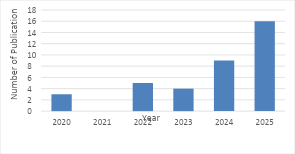
Figure 5. Publication Trend in IoT-Enabled Waste and Wastewater Management Research (2020–2025)
- Proposed Integrative IoT Framework
To address the challenges in fragmented industrial waste management, this study proposes an integrative IoT framework as illustrated in Figure 6. This architecture consists of three main layers that interact with each other. First, the Perception Layer is responsible for identifying and collecting waste parameters through various smart sensors. The data is then passed to the Network and Computing Layer, where Edge Computing provides rapid responses to field data anomalies, while Cloud Analytics provides the infrastructure for long-term predictive analysis.

Figure 6. Article selection procedure
The distinguishing element of this framework is the integration of Blockchain technology at the Application and Control Layer. Blockchain serves as an immutable digital ledger, guaranteeing that reported industrial waste data is valid and transparent to all stakeholders. The synergy between Cloud-based analytics and Blockchain security enables the creation of a control system that is not only intelligent but also accountable in supporting the circular economy ecosystem.
To bridge the gap between fragmented research findings and practical application, this study proposes an Integrative IoT Framework, as visualized in Figure 6. This framework serves as the synthesis of the systematic review results, providing a structured roadmap for industrial implementation.
- Main Findings: The architecture identifies three critical layers: the Perception Layer for data acquisition, the Network and Computing Layer for real-time edge processing and cloud analytics, and the Application/Control Layer. A defining element of this finding is the integration of Blockchain technology, which ensures data security and transparency—addressing the trust deficit identified in current literature.
- Comparison with Other Studies: While existing models like Fatimah et al. [44] prioritize circular economy operations, our framework enhances this by adding an immutable digital ledger. Furthermore, unlike the general adoption frameworks by Khan and Ali [23], this proposed model offers a specific technical solution to the 'transparency gap' between technical data and stakeholder reporting.
- Implications and Explanation: The implication of this synergy is the creation of a 'Control-by-Accountability' system. By leveraging cloud-based AI and blockchain, industries can not only optimize waste control but also generate verifiable reports that support sustainable leadership goals [45] and regulatory compliance.
- Strengths and Limitations: The strength of this framework lies in its holistic nature, linking low-level sensors to high-level governance. However, it is limited by its current theoretical stage; the scalability of the Edge-to-Blockchain communication under high-frequency industrial data traffic remains a subject for future empirical validation.
- CONCLUSIONS
This study addresses a research gap by providing an integrative framework for applying IoT in industrial waste management. The findings answer the research questions by confirming that IoT plays a strategic role in improving monitoring accuracy and supporting data-driven decision-making for sustainable industrial practices. This study contributes to theory by synthesizing existing research and highlighting the need for an integrated framework that connects monitoring, intelligent analytics, and decision-making systems for waste management. Such frameworks require further methodological development beyond mere conceptualization, including efficient predictive algorithms, energy-efficient sensors, and secure data interoperability models, potentially supported by IoT–Blockchain integration. These findings indicate that IoT has the potential to transform conventional waste management into a more intelligent, data-driven, and sustainable system, contributing to broader environmental and industrial sustainability goals.
Therefore, future research should prioritize developing an integrative IoT framework that combines sensor-based data collection, intelligent analytics, and decision-support mechanisms for waste management. Such integration could deliver practical benefits to industry, including improved environmental monitoring, operational efficiency, and regulatory compliance. However, challenges remain in technological integration, data governance, and regulatory frameworks. Although technological development in IoT-based monitoring and intelligent systems is rapidly advancing, the literature review indicates that regulatory frameworks, policy standards, and governance models remain relatively underexplored. These findings contribute new insights into the current research landscape and highlight opportunities for future studies to develop and validate integrative IoT-based management systems. This review is also limited by the use of a single database and the selection of specific keywords. Overall, advancing integrative IoT systems is essential for enabling more sustainable environmental management and industrial transformation
Acknowledgement
We acknowledge Institut Teknologi Kalimantan, Universitas Islam Indonesia, Politeknik Negeri Tanah Laut, Khon Kaen University, The University of Jordan, and American University of Bahrain for supporting this study.
Author Contribution
All authors contributed equally to the main contributor to this paper. All authors read and approved the final
paper.
Funding
This research received no external funding.
Conflicts of Interest
The authors declare no conflict of interest.
AI Statement
During the preparation of this work, the author(s) used ChatGPT and Grammarly to assist in language editing and improving the readability of the manuscript.
REFERENCES
- J. Prata, C. L. Simões, and R. Simoes, “Improvements to Municipal Solid Waste Collection Systems Using Real-Time Monitoring,” Sustainability, vol. 17, no. 4, p. 1405, 2025, https://doi.org/10.3390/su17041405.
- P. Campana, R. Censi, A. M. Tarola, and R. Ruggieri, “Artificial Intelligence and Digital Twins for Sustainable Waste Management: A Bibliometric and Thematic Review,” Applied Sciences, vol. 15, no. 11, p. 6337, 2025, https://doi.org/10.3390/app15116337.
- S. Nurgaliyeva, M. Amangali, Z. Basheyeva, N. Kashkimbayeva, and D. Amantayev, “Design and evaluation of an intelligent waste monitoring system based on RGIS integration for smart cities,” Eastern-European Journal of Enterprise Technologies, vol. 4, no. 9 (136), pp. 70–78, Aug. 2025, https://doi.org/10.15587/1729-4061.2025.337033.
- I. Papamichael et al., “Mobilisation of textile waste to recover high added value products and energy for the transition to circular economy,” Environ. Res., vol. 242, p. 117716, 2024, https://doi.org/10.1016/j.envres.2023.117716.
- K. S. Al Yarubi, S. O. F. Khairy, S. M. E. Hossain, and G. Hayder, “Internet of Things-Driven Waste Management: Paving the Way for Sustainable Smart Cities,” Processes, vol. 13, no. 4, p. 1140, 2025, https://doi.org/10.3390/pr13041140.
- K. Kang, S. Besklubova, Y. Dai, and R. Y. Zhong, “Building demolition waste management through smart BIM: A case study in Hong Kong,” Waste Management, vol. 143, pp. 69–83, 2022, https://doi.org/10.1016/j.wasman.2022.02.027.
- A. R. Dhruba et al., “IoT-Based Water Quality Assessment System for Industrial Waste WaterHealthcare Perspective,” J. Healthc. Eng., vol. 2022, pp. 1–13, 2022, https://doi.org/10.1155/2022/3769965.
- R. M. M. Salem, M. S. Saraya, and A. M. T. Ali-Eldin, “An Industrial Cloud-Based IoT System for Real-Time Monitoring and Controlling of Wastewater,” IEEE Access, vol. 10, pp. 6528–6540, 2022, https://doi.org/10.1109/ACCESS.2022.3141977.
- A. Martikkala, B. Mayanti, P. Helo, A. Lobov, and I. F. Ituarte, “Smart textile waste collection system – Dynamic route optimization with IoT,” J. Environ. Manage., vol. 335, p. 117548, 2023, https://doi.org/10.1016/j.jenvman.2023.117548.
- P. G. C. Nayanathara Thathsarani Pilapitiya and A. S. Ratnayake, “The world of plastic waste: A review,” Cleaner Materials, vol. 11, p. 100220, 2024, https://doi.org/10.1016/j.clema.2024.100220.
- R. R. Srivastava, D. K. Rajak, S. Ilyas, H. Kim, and P. Pathak, “Challenges, Regulations, and Case Studies on Sustainable Management of Industrial Waste,” Minerals, vol. 13, no. 1, p. 51, 2022, https://doi.org/10.3390/min13010051.
- R. Ponni, R. Sharmila, T. Jayasankar, and C. Perumal, “Enhancing Environmental Sustainability: Extreme Learning Machine Approach to Industrial Waste Management,” Journal of Environmental Nanotechnology, vol. 13, no. 2, pp. 220–228, 2024, https://doi.org/10.13074/jent.2024.06.242595.
- A. D. Artha, H. Nurasa, and C. Candradewini, “Recognizing and Detecting the Effectiveness of Policy Implementation Waste Management in Indonesia,” Jurnal Public Policy, vol. 9, no. 3, p. 201, 2023, https://doi.org/10.35308/jpp.v9i3.7656.
- F. Solano, S. Krause, and C. Wollgens, “An Internet-of-Things Enabled Smart System for Wastewater Monitoring,” IEEE Access, vol. 10, pp. 4666–4685, 2022, https://doi.org/10.1109/ACCESS.2022.3140391.
- R. Aragones, R. N. Alegret, J. Oliver, and C. Ferrer, “Autonomous Battery-Less Vibration IIoT Powered by Waste Heat for Chemical Plants Using NB-IoT,” IEEE Sens. J., vol. 22, no. 15, pp. 15448–15456, 2022, https://doi.org/10.1109/JSEN.2022.3184267.
- L. Guezouli, L. Guezouli, M. B. E. Djeghaba, and A. Bentahrour, “IoT and AI for Real-time Water Monitoring and Leak Detection,” Journal of Renewable Energies, vol. 27, no. 2, 2024, https://doi.org/10.54966/jreen.v27i2.1210.
- S. Khan, B. Ali, A. A. K. Alharbi, S. Alotaibi, and M. Alkhathami, “Efficient IoT-Assisted Waste Collection for Urban Smart Cities,” Sensors, vol. 24, no. 10, p. 3167, 2024, https://doi.org/10.3390/s24103167.
- L. E. Brown et al., “Integrating sensor data and machine learning to advance the science and management of river carbon emissions,” Crit. Rev. Environ. Sci. Technol., vol. 55, no. 9, pp. 600–623, 2025, https://doi.org/10.1080/10643389.2024.2429912.
- N. H. Mohamed, S. Khan, and S. Jagtap, “Waste 4.0: transforming medical waste management through digitalization and automated segregation,” Discover Sustainability, vol. 5, no. 1, p. 353, 2024, https://doi.org/10.1007/s43621-024-00593-9.
- N. Dhariwal and V. Kumar, “Cr3+doped α-Fe2O3 nanoparticles for photodegradation of organic pollutants with their disinfection efficacy,” Surfaces and Interfaces, vol. 55, p. 105357, 2024, https://doi.org/10.1016/j.surfin.2024.105357.
- A. Addas, M. N. Khan, and F. Naseer, “Waste management 2.0 leveraging internet of things for an efficient and eco-friendly smart city solution,” PLoS One, vol. 19, no. 7, p. e0307608, 2024, https://doi.org/10.1371/journal.pone.0307608.
- A. Rai and K. Kundu, “Agro-industrial waste management employing benefits of artificial intelligence,” Environmental Science and Pollution Research, vol. 31, no. 22, pp. 33148–33154, 2024, https://doi.org/10.1007/s11356-024-33526-0.
- F. Khan and Y. Ali, “A Facilitating Framework for A Developing Country to Adopt Smart Waste Management in the Context of Circular Economy,” Environmental Science and Pollution Research, vol. 29, no. 18, pp. 26336–26351, 2022, https://doi.org/10.1007/s11356-021-17573-5.
- X. Guo, L. Wang, Z. Jin, and C. Lee, “A Multifunctional Hydrogel with Multimodal Self-Powered Sensing Capability and Stable Direct Current Output for Outdoor Plant Monitoring Systems,” Nanomicro Lett., vol. 17, no. 1, p. 76, 2025, https://doi.org/10.1007/s40820-024-01587-y.
- A. Lakhouit, “Revolutionizing urban solid waste management with AI and IoT: A review of smart solutions for waste collection, sorting, and recycling,” Results in Engineering, vol. 25, p. 104018, 2025, https://doi.org/10.1016/j.rineng.2025.104018.
- M. M. Ali and M. Jabeen, “IoT Based Monitoring and Control of Water Parameters,” International Journal of Electrical and Electronics Engineering, vol. 7, no. 8, pp. 1–3, 2020, https://doi.org/10.14445/23488379/IJEEE-V7I8P101.
- X. Sun, “Optimizing Industrial Water Pollution Warning Mechanism Using Narrowband IoT Technology,” International Journal of Agricultural and Environmental Information Systems, vol. 16, no. 1, pp. 1–17, 2025, https://doi.org/10.4018/IJAEIS.389739.
- M. Mejia-Herrera, J. Botero-Valencia, J. Ortega, and R. Hernández-García, “Development of a Solar-Powered Edge Processing Perimeter Alert System with AI and LoRa/LoRaWAN Integration for Drone Detection and Enhanced Security,” Drones, vol. 9, no. 1, p. 43, 2025, https://doi.org/10.3390/drones9010043.
- A. S. Giwa et al., “Advancing resource recovery from sewage sludge with IoT-based bioleaching and anaerobic digestion techniques,” J. Environ. Chem. Eng., vol. 13, no. 3, p. 116293, 2025, https://doi.org/10.1016/j.jece.2025.116293.
- A. K. Kumar, Y. Ali, R. R. Kumar, M. H. Assaf, and S. Ilyas, “Artificial Intelligent and Internet of Things framework for sustainable hazardous waste management in hospitals,” Waste Management, vol. 203, p. 114816, 2025, https://doi.org/10.1016/j.wasman.2025.114816.
- I. Papamichael et al., “Mobilisation of textile waste to recover high added value products and energy for the transition to circular economy,” Environ. Res., vol. 242, p. 117716, 2024, https://doi.org/10.1016/j.envres.2023.117716.
- S.-P. Zhang, Y.-L. Wang, P. Huang, W.-J. Tang, T.-X. Gong, and X.-S. Zhang, “Mechanical-thermal hybrid rotational nanogenerator applied for self-powered sensing node,” Nano Energy, vol. 136, p. 110756, 2025, https://doi.org/10.1016/j.nanoen.2025.110756.
- Z. Yu, C. Zhu, T. Lu, T. Meng, Y. Liu, and L. Mo, “Impact of high-magnesium limestone combined with ion doping on the mineralogical characteristics and properties of cement clinker,” Constr. Build. Mater., vol. 482, p. 141606, 2025, https://doi.org/10.1016/j.conbuildmat.2025.141606.
- V. R. Botelho, M. L. Monte, R. D. Pereira Filho, and L. A. de A. Pinto, “Internet of Things (IoT): Operational automation in experimental and computational analyses of hop residues drying,” J. Food Eng., vol. 401, p. 112662, 2025, https://doi.org/10.1016/j.jfoodeng.2025.112662.
- Md. J. H. Mridha et al., “A Real-Time ETP Outlet Monitoring Framework Leveraging Environmental IoT, Colorimetry, and Learning Theory,” IEEE Access, vol. 13, pp. 98729–98746, 2025, https://doi.org/10.1109/ACCESS.2025.3576826.
- G. Wang, C. Yang, J. Yan, J. Guo, Y. Wang, and T. B. Alsaedi, “An IoT-Enabled Secured Approach for Industrial Supply Chain Systems With Variational Autoencoders,” IEEE Internet Things J., vol. 12, no. 19, pp. 39447–39456, 2025, https://doi.org/10.1109/JIOT.2025.3576257.
- M. Zarid, “The Green HACCP Approach: Advancing Food Safety and Sustainability,” Sustainability, vol. 17, no. 17, p. 7834, 2025, https://doi.org/10.3390/su17177834.
- A. Siddique, Z. Tan, W. Rashid, and H. Ahmad, “Sustainable Water-Related Hazards Assessment in Open Pit-to-Underground Mining Transitions: An IDRR and MCDM Approach at Sijiaying Iron Mine, China,” Water (Basel)., vol. 17, no. 9, p. 1354, 2025, https://doi.org/10.3390/w17091354.
- W. Zhang, F. Ma, M. Ren, and F. Yang, “Application with Internet of things technology in the municipal industrial wastewater treatment based on membrane bioreactor process,” Appl. Water Sci., vol. 11, no. 3, p. 52, 2021, https://doi.org/10.1007/s13201-021-01375-8.
- N. Dhariwal et al., “Synergistic photocatalytic breakdown of azo dyes coupled with H2 generation via Cr-doped α-Fe2O3 nanoparticles,” Sci. Rep., vol. 14, no. 1, p. 19916, 2024, https://doi.org/10.1038/s41598-024-65672-3.
- P. M. Pujar, H. H. Kenchannavar, R. M. Kulkarni, and U. P. Kulkarni, “Real-time water quality monitoring through Internet of Things and ANOVA-based analysis: a case study on river Krishna,” Appl. Water Sci., vol. 10, no. 1, p. 22, 2020, https://doi.org/10.1007/s13201-019-1111-9.
- A. Sreenivasan, S. Ma, P. Nedungadi, V. R. Sreedharan, and R. R. Raman, “Interpretive Structural Modeling: Research Trends, Linkages to Sustainable Development Goals, and Impact of COVID-19,” Sustainability, vol. 15, no. 5, p. 4195, 2023, https://doi.org/10.3390/su15054195.
- C. Clegg, J. Mei, A. U. Fuensanta, T. Ibn-Mohammed, and V. Pecunia, “Evaluating lead-based vs. lead-free perovskites for environmentally sustainable indoor photovoltaics,” Materials Science and Engineering: R: Reports, vol. 166, p. 101037, 2025, https://doi.org/10.1016/j.mser.2025.101037.
- Y. A. Fatimah, K. Govindan, R. Murniningsih, and A. Setiawan, “Industry 4.0 based sustainable circular economy approach for smart waste management system to achieve sustainable development goals: A case study of Indonesia,” J. Clean. Prod., vol. 269, p. 122263, 2020, https://doi.org/10.1016/j.jclepro.2020.122263.
- J. K. Kampilong, W. Karauwan, M. Suatan, T. C. Merentek, and S. R. N. Korua, “Sustainable leadership innovation capability (SLIC): Enhancing organizational sustainability performance in the construction industry,” Sustainable Futures, vol. 10, p. 101016, 2025, https://doi.org/10.1016/j.sftr.2025.101016.
- M. Sira, “Potential of Advanced Technologies for Environmental Management Systems,” Management Systems in Production Engineering, vol. 32, no. 1, pp. 33–44, 2024, https://doi.org/10.2478/mspe-2024-0004.
- V. H. Phan, D. P. H. Pham, T. V. Pham, K. N. Qureshi, and C. Pham-Quoc, “An IoT System and MODIS Images Enable Smart Environmental Management for Mekong Delta,” Future Internet, vol. 15, no. 7, p. 245, 2023, https://doi.org/10.3390/fi15070245.
- P. Vafaei et al., “Graphene/TiO2 Heterostructure Integrated with a Micro-Lightplate for Low-Power NO2 Gas Detection,” Sensors, vol. 25, no. 2, p. 382, 2025, https://doi.org/10.3390/s25020382.
- E. O. Atofarati, V. O. Adogbeji, and C. C. Enweremadu, “Sustainable smart waste management solutions for rapidly urbanizing African Cities,” Util. Policy, vol. 95, p. 101961, 2025, https://doi.org/10.1016/j.jup.2025.101961.
- N. Atanasov, B. Atanasov, and G. Atanasova, “Flexible Rectenna on an Eco-Friendly Substrate for Application in Next-Generation IoT Devices,” Applied Sciences, vol. 15, no. 11, p. 6303, 2025, https://doi.org/10.3390/app15116303.
Windi Auliana Digitizing Waste Management Using the Internet of Things: Research Opportunities)