ISSN: 2685-9572 Buletin Ilmiah Sarjana Teknik Elektro
Vol. 7, No. 4, December 2025, pp. 1031-1044
Implementation of East Javanese Local Culture in Graphic Design Elements in Students’ Final Projects: A Literature Review
Asidigisianti Surya Patria 1, Abdul Hafidz 2, Bayu Dwi Nurwicaksono 1, Ayusta Lukita Wardani 3,
Arieviana Ayu Laksmi 1, Yudiyanto Tri Kurniawan 4, Henny Hidayanti 4, Mochammad Abdul Machfud 5, Rizal Sofyana Fatahillah 1, Junaini Binti Kasdan 6, Hong Tangkin 7, Bahalwan Apriyansyah 8,
Hanny Chandra Pratama 9, David Nugroho 10
1 Graphic Design Study Program, Faculty of Vocational Studies, Universitas Negeri Surabaya, Indonesia
2 Sports Coaching Study Program, Faculty of Vocational Studies, Universitas Negeri Surabaya, Indonesia
3 Electrical Engineering Study Program, Faculty of Vocational Studies, Universitas Negeri Surabaya, Indonesia
4 Regional Research Agency of East Java Province, Indonesia
5 Media Production Study Program, Faculty of Vocational Studies, Universitas Negeri Surabaya, Indonesia
6 Institut Alam & Tamadun Melayu (Atma), Universiti Kebangsaan Malaysia, Malaysia
7 Faculty of Business and Tourism, Phnom Penh International University, Cambodia
8 Doctoral School of the University of Szczecin, Poland
9 Department of Architectural and Design Intelligence, School of Architecture, Art, and Design,
King Mongkut's Institute of Technology Lat Krabang, Thailand
10 Department of Integrated Science, Faculty of Science, Khon Kaen University, Thailand
ARTICLE INFORMATION |
| ABSTRACT |
Article History: Received 10 October 2025 Revised 20 December 2025 Accepted 02 January 2026 |
| 
The background of this research departs from the challenges of globalization that cause visual homogenization and erode local cultural identity. Graphic design is a strategic medium in bridging tradition with modernity, by adapting cultural elements such as batik motifs, Javanese script typography, to cultural icons Reog and Karapan Sapi. This study aims to analyze the integration of East Java local wisdom values in contemporary graphic design through a literature study approach and descriptive qualitative analysis. The research method was carried out by reviewing 215 articles selected using the PRISMA protocol until there were 15 relevant main sources. The results of the study show that there are four main trends in graphic design based on local wisdom, namely the symbolization of performance culture and language (30%), culinary branding and local products (29%), the revitalization of cultural narratives on digital platforms (22%), and the abstraction of traditional crafts into visual assets (18%). The value of the interconnectedness between keywords shows that graphic design is now strongly integrated with interactive technology, education, and the creative economy. In conclusion, the application of East Java's local wisdom in graphic design not only strengthens the region's visual identity but also opens up opportunities for sustainable creative economy innovation. |
Keywords: Graphic Design; Local Wisdom; East Javanese Culture; Literature Reviews; Final Project |
Corresponding Author: Asidigisianti Surya Patria, Universitas Negeri Surabaya, Kampus Unesa 1 Ketintang Surabaya, Indonesia. Email: asidigisiantipatria@unesa.ac.id |
This work is licensed under a Creative Commons Attribution-Share Alike 4.0 
|
Document Citation: A. S. Patria, A. Hafidz, B. D. Nurwicaksono, A. L. Wardani, A. A. Laksmi, Y. T. Kurniawan, H. Hidayanti, M. A. Machfud, R. S. Fatahillah, J. B. Kasdan, H. Tangkin, B. Apriyansyah, H. C. Pratama, and D. Nugroho, “Title,” Buletin Ilmiah Sarjana Teknik Elektro, vol. 7, no. 4, pp. 1031-1044, 2025, DOI: 10.12928/biste.v7i4.14932. |
- INTRODUCTION
Indonesia has a huge wealth of cultural data, including ethnicity, customs, and distinctive visual artifacts. However, in the era of digital globalization, this local cultural richness faces significant challenges due to information overload and cultural homogenization [1]. The rapid flow of global visual culture channeled through digital platforms and the entertainment industry threatens to erode local uniqueness, creating a uniform visual landscape dominated by Western or East Asian minimalist design aesthetics [2][3]. As time accelerates, a perception has emerged among young people that traditional culture is outdated, stagnant, and unappealing. Their preferences tend to shift toward global trends perceived as more modern and relevant. This situation demands radical innovation in the way we introduce and communicate culture [4][5]. Graphic design, as a universal visual language in the digital age, has emerged as the most strategic medium to bridge this gap. It holds immense potential to translate the noble values and aesthetics of East Javanese heritage into a format that is engaging, dynamic, and easily digestible for contemporary audiences [6][7].
One of the main challenges in contemporary visual design practice is the phenomenon of visual homogenization [8]. The dominance of global design trends that prioritize minimalist corporate aesthetics, especially those rooted in Western and East Asian styles, has shaped a uniform visual landscape in different parts of the world. Many brands, products, and local tourism campaigns adopt this international style in the hope of appearing modern and classy [9][10]. However, this choice often comes at the expense of distinctive local identity, resulting in generic visual representations and losing the value of cultural uniqueness [11][12]. These problems show a gap in the study of design and visual computing. Although various studies have affirmed the importance of culture in social contexts and visual communication, there is still a lack of a systematic framework that addresses how traditional visual data can be extracted, digitized, and conceptually reapplied into graphic design and contemporary digital media [13][14]. Elements such as the Gajah Mada batik algorithm, Madura carved geometry, or Old Javanese script typography are often only used superficially without a mature conceptual process. As a result, local content tends to be marginalized and fails to build strong connectivity in the context of Human-Computer Interaction (HCI), especially for modern users who expect dynamic and relevant interfaces [15][16].
In this context, informatics design has a strategic role as an approach to bridge tradition and modernity. This approach does not just make cultural elements as visual ornaments, but places them as visual systems that need to be deconstructed and reinterpreted [17]. The process includes an understanding of visual syntax, symbolic meaning, and aesthetic logic, which is then recoded into modern visual media to remain contextual and functional [18][19]. Studies have shown that culture-based graphic design is effective in strengthening a nation's visual identity [20]. In the realm of urban culture and nation branding, the use of local iconography has been proven to be able to increase the sense of belonging of the community while strengthening the image of a region at the global level [21][22]. In Indonesia, the success of several local brands that consistently incorporate traditional elements into their visual identity demonstrates that a locally wisdom-based approach is not only culturally relevant but also commercially competitive [23]. Designs rooted in local values can be a strategic differentiator in the midst of a saturated global market, as well as serve as a means of cultural diplomacy that subtly introduces Indonesia's rich heritage to the international world [24][25]. Two cultural assets that have great potential in this context are the ever-growing creative industry of comics and the wealth of traditional cuisine [26]. Comics have evolved from mere children's entertainment to a complex and strategic narrative medium in visual communication. Its popularity among the younger generation, both in print and digital form, such as webtoons, makes comics an effective channel to convey cultural values, messages, and stories. The success of a comic depends heavily on the power of its graphic design, which includes panel layout, illustration style, color selection, and typography in building an immersive atmosphere, emotion, and storyline [27][28].
The process of cultural integration in graphic design demands a deep and systematic approach. Such integration cannot be done just by sticking to traditional motifs, but requires thorough research, deconstruction, and reinterpretation. For example, designers don't just copy batik patterns, but understand the philosophy behind them and translate them into a coherent graphic system, from color palettes, layout compositions, to illustration styles. The bold lines on the Madura carvings can inspire strong logo design, while the dynamics of Reog's performances can be translated into expressive visual compositions for music festival promotional media [29]. The development of digital technology is increasingly opening up opportunities for the revitalization of local culture. East Java's cultural heritage can be re-presented through digital illustrations, animations, the application of augmented reality on product packaging, and interactive filters on social media. Through this approach, culture is no longer positioned as an artifact of the past, but rather as a living and ever-evolving source of inspiration [30][31]. Therefore, this study aims to examine the application of East Java local wisdom in graphic design products and identify aesthetic elements and local cultural values used in the design process.
- METHODS
This study applies a Design Informatics approach that combines Systematic Literature Review (SLR) with bibliometric analysis. This methodology was chosen to ensure data reproducibility and objectively map the visual computing landscape. The research protocol follows the guidelines of Preferred Reporting Items for Systematic Reviews and Meta-Analyses (PRISMA) to ensure transparency in the selection of data sources [32][33]. Data Collection and Search Strategy The data collection process is carried out through the search of the main indexed databases, namely Scopus, IEEE Xplore, and Google Scholar (via Publish or Perish software). Search keywords are compiled using Boolean operators: ("East Java Local Wisdom" OR "Traditional Culture") AND ("Graphic Design" OR "Visual Informatics" OR "UI/UX") AND ("Digital Preservation"). The search is limited to literature published in the last five years (2020-2025) to guarantee the up-to-date nature of technology data and design trends, in accordance with IEEE reference standards [34].
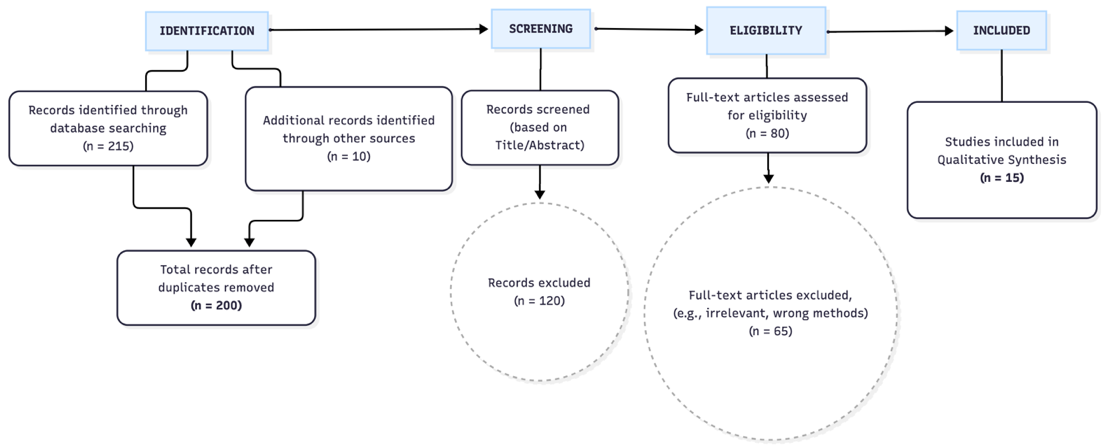
Figure 1 is a total of 215 articles were successfully identified from various databases in the early stages of the research. At this stage, a keyword network analysis was carried out using VOSviewer software to map topic clusters and identify dominant trends in the field of design informatics [35]. Furthermore, at the screening stage, as many as 120 articles were eliminated because their titles and abstracts were considered irrelevant to the focus of the research. The next stage is the feasibility test, in which 80 articles are analyzed through full-text review. At this stage, the exclusion criterion is applied to articles that do not discuss the technical implementation of the design, only review sociological aspects without visual relevance, or do not provide full-text access. After all these stages were passed, as many as 15 main articles were selected to be synthesized qualitatively. This number is determined as a representative sample through purposive sampling techniques, because these articles present specific and relevant data, such as discussion of pattern algorithms, branding case studies, and the development of narrative media that are in line with the research objectives [36][37].
Figure 1. PRISMA Diagram
- RESULT AND DISCUSSION
- Co-occurrence Keywords of Graphic Design by Database Scopus
Computational mapping of keyword networks from the Scopus database (Figure 2) reveals a significant paradigm shift in graphic design research. The visualization shows a strong clustering between graphic design, engineering education, and interactive technology. As detailed in Table 1, the most frequent keywords were "Students" (20.7%) and "Teaching" (12.2%). From an informatics perspective, this dominance shows that current research does not only focus on aesthetics alone, but on the design of instructional systems and competency development within the engineering environment.
The network structure in Figure 2 shows that "Graphic Design" (Link Strength: 67) acts as an application node connected to "Human-Computer Interaction (HCI)" and "E-Learning." This confirms that modern graphic design has evolved into a sub-discipline of visual informatics, which underpins the development of user interfaces (UIs) and digital interactions. In contrast to traditional art research, the emergence of "Engineering Education" (9.0%) indicates that visual literacy is now integrated into the technical curriculum to improve the usability and accessibility of information systems [38]-[43].
Thus, both visually and quantitatively, this analysis shows that graphic design today no longer stands as a single discipline, but rather becomes an integral part of technology-based learning systems that support innovation in the fields of interactive learning and human-computer interaction.
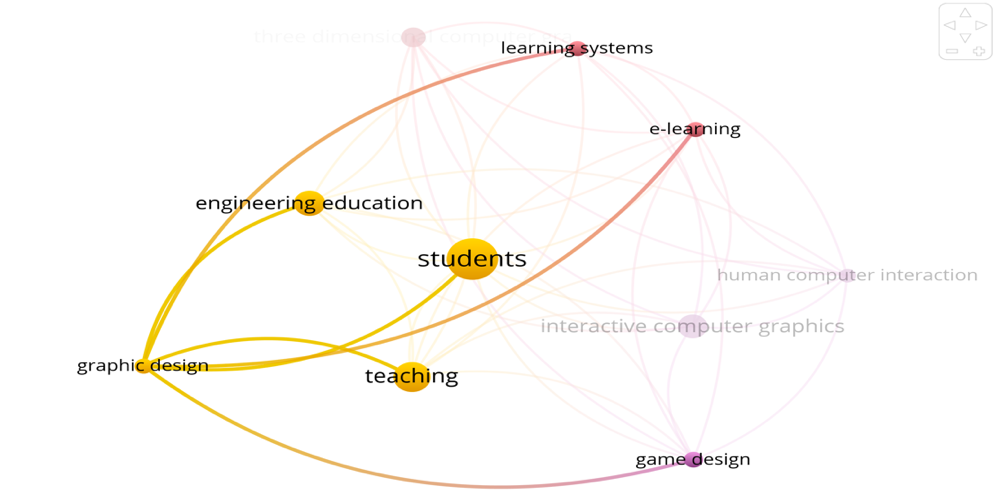
Figure 2. Connected Keywords by Database Scopus
Table 1. Keywords of Graphic Design Trends by Database Scopus
Keyword | Occurrences | TP | % | NCP | TC | C/P | C/CP | h | g | Total link strength |
Students | 358 | 358 | 20.7% | 4500 | 5370 | 15.0 | 1.19 | 54 | 82 | 1090 |
Teaching | 211 | 211 | 12.2% | 2100 | 2532 | 12.0 | 1.21 | 38 | 55 | 762 |
Engineering Education | 155 | 155 | 9.0% | 1800 | 2170 | 14.0 | 1.21 | 35 | 48 | 607 |
Interactive Computer Graphics | 154 | 154 | 8.9% | 1500 | 1848 | 12.0 | 1.23 | 34 | 45 | 580 |
E-Learning | 68 | 68 | 3.9% | 800 | 1088 | 16.0 | 1.36 | 22 | 30 | 334 |
Learning Systems | 65 | 65 | 3.8% | 700 | 975 | 15.0 | 1.39 | 21 | 29 | 296 |
Human Computer Interaction | 65 | 65 | 3.8% | 650 | 780 | 12.0 | 1.20 | 20 | 28 | 264 |
Graphic Design | 64 | 64 | 3.7% | 150 | 192 | 3.0 | 1.28 | 8 | 12 | 67 |
- Identification of Graphic Design Products Based on Local Wisdom in East Java
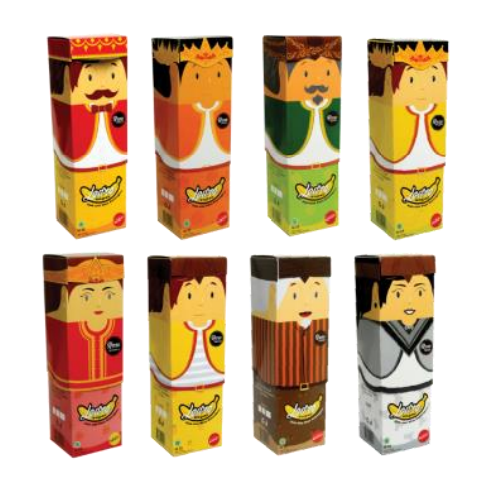
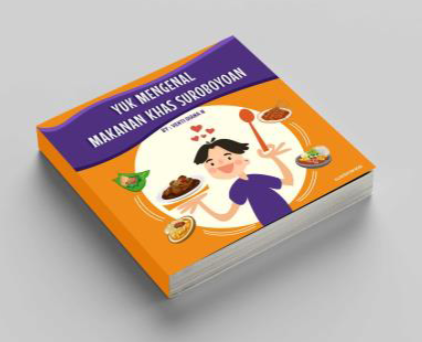
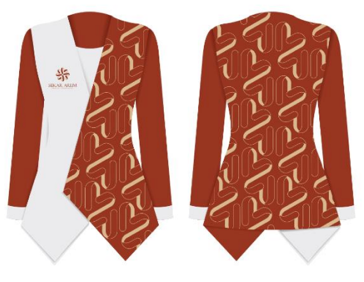
The implementation of East Javanese local wisdom into modern media is not understood as just the addition of visual ornaments, but as a process of transformation of visual syntax that is structured and conceptual. Figure 3 shows six case studies that represent the transformation process in various design contexts. In the aspect of packaging algorithms, the designs of "Ledre Super" (Figure 3(a)) and "Pure Batik" (Figure 3(e)) show the application of geometric abstraction as a strategy to modernize traditional patterns so that they are in harmony and compatible with modern branding systems [44]. Furthermore, in the realm of narrative visualization, the book "Surabaya Food" (Figure 3(b)) and the catalog "Damar Kurung" (Figure 3(f)) show the process of converting folklore that was originally verbal into structured visual data, where the semantic meaning is still maintained through a digital illustration approach [45]. Meanwhile, in the context of visual identity systems, the Potehi Museum logo (Figure 3(c)) represents a high-level simplification of complex cultural artifacts into scalable vector assets, thus meeting the needs of cross-media reproduction in a digital environment [46].
- Co-occurrence of Graphic Design in Students’ Final Projects
Tabel 2 selanjutnya mengategorikan tugas akhir mahasiswa sebagai titik data eksperimental. Analisis mengungkapkan adanya pergeseran teknologi: proyek-proyek terdahulu (2018) berfokus pada motif statis (misalnya, Melinda Marta), sedangkan proyek terbaru (2020-2024) memanfaatkan media interaktif seperti Animasi 2D (Patricia A.W.), Buku Visual Interaktif (Ayu F.C.), dan Film Dokumenter (Ade Y.S.). Tren ini mengonfirmasi bahwa pelestarian kearifan lokal semakin bergantung pada media digital dinamis daripada format cetak statis.
Table 2. Graphic Design of Students’ Final Projects
Author Name | Final Project Title | Graphic Design Products | Universities / Resources | Year |
Melinda Marta | Contemporary Batik Motif Design Inspired by Reog Ponorogo Art [47] | Batik Motif Design | Repositories Univ. Kristen Petra | 2018 |
Ahmad Irfani Hakim A. | Design of Illustration Book of Folklore Legend of Raden Ayu Putri (Terung Village, Sidoarjo) [48] | Illustration Books | DESKOVI: Art & Design Journal (Univ. Maarif Hasyim Latif) | 2021 |
Umul Fadlillah | Designing the Illustration Book "Sakera Against Corona" (Educational Media in Pasuruan Regency) [49] | Illustration Books | E-Journal JDKV (Unesa) | 2022 |
Ade Yusup Surandi, et al. | Documentary film design of Bathara Katong and Reog Ponorogo [50] | Film Documents | Cipta Journal (Univ. Indraprasta PGRI) | 2024 |
Elsa Graciana Nugraeni | Redesigning the Visual Identity of MSMEs Nagari Kopi Mojokerto [51] | Visual Identity (Branding) | Equivalent: Journal of Social Scientific Engineering | 2022 |
- Reflected Cultural Values
The close relationship between local wisdom and visual communication design in the development of the creative industry. Cultural elements such as traditional dances, local cuisine, comics, mosque ornaments, regional dialects, and weaving serve as primary sources of inspiration for designers creating works that are both relevant to cultural identity and possess modern appeal. Traditional dances play a crucial role in shaping visual identities and promotional strategies, demonstrating how movement, color, and cultural symbols can translate into a strong brand image. Traditional cuisine also features prominently in branding and packaging design, demonstrating the immense potential of local snacks and foods as creative economic attractions that can be positioned in a modern way without losing their cultural value [52].
Comics are an effective medium for bridging culture and the digital world, while also playing a role in cultural education. This confirms that visualizing local stories can strengthen people's sense of identity through a medium popular among young people. Mosque ornaments serve as a source of inspiration for patterns and textures widely applied in religious-themed product designs, reflecting a blend of spiritual values and contemporary aesthetics. Meanwhile, local dialects enrich typography and slogans in visual communication design, creating a sense of familiarity and strengthening the regional image in promotional strategies. Weaving, as a traditional handicraft, also influences the creation of patterns and packaging designs, signifying the continuity between cultural heritage and modern design innovation [53].
The interconnectedness of modern design elements is also evident in how visual identities support promotion and tourism, packaging design strengthens the image of MSMEs and creative industry products, and digital platforms serve as a primary platform for the dissemination of creative content and social media [54][55]. Branding and promotion play a crucial role in driving tourism and expanding the market for culturally based creative products. Patterns and textures not only enhance packaging but also enrich illustrations and visual content, while typography and slogans reinforce communication messages across various platforms, including comics and social media [56].
Overall, this data demonstrates that local wisdom is not only a source of visual inspiration but also a strategic foundation for building a sustainable design ecosystem. Through the synergy between tradition and innovation, designers can elevate cultural values into creative competitiveness that strengthens national identity while opening up new economic opportunities in the digital era.
- Relevance to Contemporary Design Trends
This study extracted 178 visual data points (coded instances) from the identified artifacts. As shown in Table 3, the data indicate four dominant trends. The highest frequency was Performative & Verbal Cultural Symbolization (30%), followed strictly by Culinary & Local Product Branding (29%). This quantification makes it clear that designers prioritize elements that have "performative" value (dance, language) and "commercial" feasibility (food). The revitalization of Cultural Narratives (22%) through digital platforms (webtoons/apps) demonstrates a growing effort to digitize intangible heritage, ensuring its relevance for digital-native users.
Table 3, "Percentage of Graphic Design Trends Based on Local Wisdom in East Java," the data were likely obtained through content analysis, and a thematic survey of various graphic design works that highlight the values of East Javanese local wisdom. Data collection was conducted through analysis of existing graphic design works, such as posters, logos, product packaging, and social media content created by local designers [57]. Furthermore, visual documentation from various design exhibitions, competitions, and digital portfolios featuring local cultural elements was also an important source in the trend identification process. Additional data may have been obtained through interviews or questionnaires with designers to determine thematic trends, sources of inspiration, and how they adapt cultural values into modern visual forms [58].
Table 3. Percentage of Graphic Design Trends Based on Local Wisdom in East Java
Trends Name | Brief Description | Total Value | Trends Percentage |
Symbolization of Performative & Verbal Culture | Transformation of dance and language into visual assets like logos, slogans, and social media content. | 54 | 30% |
Culinary & Local Product Branding | Utilization of traditional food and SME products as the main pillar for branding and packaging design. | 52 | 29% |
Revitalization of Cultural Narratives on Digital Platforms | Adaptation of folklore and comics into digital formats for education and entertainment. | 40 | 22% |
Abstraction of Craftsmanship into Visual Assets | Processing of ornaments and weaving into digital patterns or textures for decorative elements. | 32 | 18% |
Total | 178 | 99%* |
*The total percentage is not 100% due to the rounding of decimal figures
During the analysis phase, researchers likely applied thematic coding methods to group findings based on the visual elements, symbols, and themes that emerged in the works. The analysis revealed four main categories of local wisdom-based graphic design trends: Symbolization of Performative & Verbal Culture, Culinary & Local Product Branding, Revitalization of Cultural Narratives on Digital Platforms, and Abstraction of Craftsmanship into Visual Assets [59][60]. The frequency of occurrence (Total Value) of each category was calculated from the 178 analyzed findings, then converted into a percentage to illustrate the level of dominance of each trend.
The calculation results show that Symbolization of Performative & Verbal Culture accounted for 54 findings, or approximately 30 percent, making it the most dominant trend in local wisdom-based graphic design. Culinary & Local Product Branding came in second with 52 findings, or 29 percent, demonstrating the strong role of culinary products and MSMEs in shaping regional visual identity [61][62]. The Revitalization of Cultural Narratives on Digital Platforms trend recorded 40 findings, or 22 percent, indicating efforts to adapt folktales, legends, and folklore into digital formats for educational and entertainment purposes [63]. Meanwhile, Abstraction of Craftsmanship into Visual Assets, with 32 findings, or 18 percent, demonstrates how traditional handicraft elements, such as woven motifs or ornaments, are reworked into digital decorative elements [64].
Overall, the data demonstrates a strong tendency among designers in East Java to integrate local cultural elements into contemporary design practices. The trend toward performative and verbal cultural symbolization underscores the shift in cultural expression toward more modern forms of visual communication, while the branding of local culinary and product products reflects the synergy between design and the regional creative economy. The adaptation of cultural narratives to digital platforms demonstrates efforts to preserve traditional values through new media, while the abstraction of handicrafts indicates the transformation of material culture into a more universal digital aesthetic. The total trend percentage reached 99 percent, reflecting the dominance of these four main categories in the local wisdom-based graphic design landscape in East Java [65]-[67]. Furthermore, the visual results of these various cultural elements ultimately flow into broader applications such as Tourism, SME Products, the Creative Industry, Social Media Content, and Cultural Education. This means that local wisdom does not stop at the stage of artistic exploration but becomes an integral part of the regional creative industry ecosystem.
This study establishes that the integration of local wisdom in East Java has shifted from the preservation of manual crafts to digital asset management. Sankey's diagram (Figure 4) visualizes this flow; cultural inputs (Dance, Food, Folklore) are processed through design methods to generate outputs in Tourism Branding and Digital Content. This confirms that local wisdom serves as a re-coded database of "visual DNA" for the creative economy. In contrast to pure ethnographic studies that view culture as a static heritage, this study is in line with the Design Informatics framework [68][69]. While previous works have focused on the meaning of symbols, this study measures the application of such symbols in digital systems. These results refute the assumption that traditional culture is fading; on the contrary, these findings match the results of Arroyo (2021), who stated that culture is evolving into new digital formats (AR, UI/UX, and Motion Graphics) [70].
Implications for Engineering and Industry. For Engineering Education, these findings imply that the curriculum should combine "Cultural Semantics" with "Technical Competence." Students need the skills to digitize artifacts (using vector tools or 3D modeling) and implement them in the context of HCI [71][72]. For the Creative Industry, the dominance of "Culinary Branding" (29%) shows that Micro, Small and Medium Enterprises (MSMEs) are the main adopters of this "Visual Local Wisdom" strategy to compete in the global market. Strengths and Limitations The strength of this research lies in the use of bibliometric and quantitative trend analysis to map cultural design, offering a more objective perspective than subjective art criticism. However, there are limitations: the study relies on secondary data (existing literature and portfolios) and does not include user testing to measure the effectiveness of this design on the audience. Future research should use empirical testing (e.g., eye-tracking or A/B testing) to validate whether these culture-charged interface designs actually improve user engagement compared to generic global designs [73].
| 
|
(a) Mock-up ledre super (Source: Ilham, 2019) | (b) Illustrated book of traditional foods from Surabaya (Source: Novitasari et al., 2021) |

| 
|
(c) The final logo of the Potehi Wayang Museum (Source: Sultan et al., 2020) | (d) Batik Uniform (Source: Fadilah et al., 2023) |

| 
|
(e) Batik Murni in Madiun (Source: Maharani et al., 2025) | (f) Photography of damar kurung from Gresik (Source: Christie et al., 2021) |
Figure 3. Graphic Design Products Based on Local Wisdom in East Java
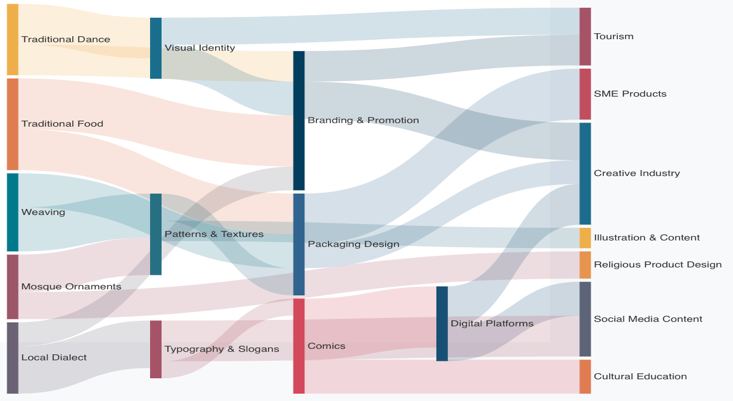
Figure 4. Sankey Diagram for Relationships Between Design Elements and East Javanese Local Wisdom
- CONCLUSIONS
The trend of graphic design research based on local wisdom in East Java has undergone a significant shift from mere aesthetic exploration to multidisciplinary integration between culture, digital technology, and the creative economy. The process of integrating local cultural values into design is not only limited to adapting traditional motifs or symbols, but also requires a deep philosophical understanding to be reinterpreted contextually through various visual media such as digital illustrations, animation, augmented reality, and interactive product packaging. Based on literature analysis and work studies, the dominant trends include performative and verbal cultural symbolization (30%), culinary branding and local products (29%), revitalization of cultural narratives on digital platforms (22%), and abstraction of traditional crafts into visual assets (18%). These results show that graphic design plays a strategic role in preserving culture while strengthening regional identity through contemporary media. The application of East Javanese cultural values in design not only enriches visual aesthetics but also opens up innovation opportunities for the development of creative industries based on local heritage. Thus, the future direction of research needs to emphasize collaboration between design education, cultural communities, and the industrial sector so that local wisdom is not only preserved but also actualized in the form of modern design that is globally competitive.
ACKNOWLEDGEMENT
This research was financially supported by the Regional Research Agency (Badan Riset dan Inovasi Daerah/BRIDA) of East Java Province, in collaboration with the Faculty of Vocational Studies, Universitas Negeri Surabaya (Unesa). The authors would like to express their sincere gratitude for the valuable support and partnership that made this study possible.
REFERENCES
- H. Habeeb and A. A. R. M. Hamid, “Exploring the relationship between identity orientation and symptoms of depression among third culture kids college students,” International Journal of Instruction, vol. 14, no. 3, pp. 999–1010, 2021, https://doi.org/10.29333/iji.2021.14358a.
- F. Li and Y. Wang, “Research on multiple teaching models of Chinese culture integration in English translation course based on web technology,” Applied Mathematics and Nonlinear Sciences, vol. 9, no. 1, 2024, https://doi.org/10.2478/amns-2024-0101.
- H. Santosa, A. Yudono, and M. S. Adhitama, “The digital management system of the tangible culture heritage for enhancing historic building governance in Malang, Indonesia,” in IOP Conference Series: Earth and Environmental Science, 2021, https://doi.org/10.1088/1755-1315/738/1/012056.
- A. I. Viswamohan and C. M. Wilkinson, “Stardom in contemporary Hindi cinema: Celebrity and fame in globalized times,” 2020, https://doi.org/10.1007/978-981-15-0191-3.
- D. P. Danilaev and N. N. Malivanov, “Technological education and engineering pedagogy,” Obrazovanie i Nauka, vol. 22, no. 3, pp. 55–82, 2020, https://doi.org/10.17853/1994-5639-2020-3-55-82.
- H. Santosa, A. Yudono, and M. S. Adhitama, “The digital management system of the tangible culture heritage for enhancing historic building governance in Malang, Indonesia,” in IOP Conference Series: Earth and Environmental Science, 2021,https://doi.org/10.1088/1755-1315/738/1/012056.
- I. I. Addaviqi and A. Prapanca, “Metabharata game based on Javanese Wayang art using Unity,” Vokasi Unesa Bulletin of Engineering, Technology and Applied Science, pp. 38-45, 2024, https://doi.org/10.26740/vubeta.v1i1.34034.
- C. Wagner. Visualizations of urban space: Digital age, aesthetics, and politics. Routledge. 2022, https://doi.org/10.4324/9781003314943.
- Aliyu Musa Kid, M. Z. Ahmed, Abdulkadir Hamidu Alkali, Jafaru Usman, and Aisha Hassan Abdalla Hashim, “Real-time energy demand forecasting and adaptive demand response optimization for IoT-enabled smart grids,” Vokasi Unesa Bulletin of Engineering, Technology and Applied Science, vol. 2, no. 2, pp. 366–375, 2025, https://doi.org/10.26740/vubeta.v2i2.36818.
- G. Oise, C. Nwabuokei, R. Igbunu, and P. Ejenarhome, “Revisiting parasitic computing: ethical and technical dimensions in resource optimization,” Vokasi Unesa Bulletin of Engineering, Technology and Applied Science, vol. 2, no. 3, pp. 376–386, 2025, https://doi.org/10.26740/vubeta.v2i3.38786.
- N. A. Salim, M. Zaibi, M. Brantasari, M. Ikhsan, and A. Aslindah, “Islamic boarding school leadership innovation: from traditional to modernization of education,” Munaddhomah, vol. 5, no. 4, pp. 447–460, 2024, https://doi.org/10.31538/munaddhomah.v5i4.1392.
- I. Ikaputra and D. T. Widyastuti, “Marginalized modern architectural heritage in Indonesia: The case of transformator huisje (gardu listrik) architecture of the Nederlandsche Indisch era,” Frontiers of Architectural Research, vol. 14, no. 3, pp. 596–613, 2025, https://doi.org/10.1016/j.foar.2024.10.005.
- C. Xu, Y. Huang, and B. J. Dewancker, “Art inheritance: An education course on traditional pattern morphological generation in architecture design based on digital sculpturism,” Sustainability (Switzerland), vol. 12, no. 9, 2020, https://doi.org/10.3390/su12093752.
- W. R. Williams, “Examining Studio Ghibli’s animated films: a study of students’ viewing paths and creative projects,” Journal of Adolescent and Adult Literacy, vol. 63, no. 6, pp. 639–650, 2020, https://doi.org/10.1002/jaal.1043.
- P. U. Pramesti, M. I. Hasan, and M. Ramandhika, “Locality values in thermal comfort embodied in traditional Indonesian houses: A literature review,” in IOP Conference Series: Earth and Environmental Science, vol. 894, no. 1, p. 012009, 2021, https://doi.org/10.1088/1755-1315/894/1/012009.
- Y. Rahmawati and P. C. Taylor, “Integrating STEM and local wisdom in science education in Indonesia: A cultural synergy,” Cult Stud Sci Educ, vol. 15, pp. 275–291, 2020, https://doi.org/10.1007/s11422-019-09936-y.
- F. Brunetti, D. T. Matt, A. Bonfanti, A. de Longhi, G. Pedrini, and G. Orzes, “Digital transformation challenges: strategies emerging from a multi-stakeholder approach,” TQM Journal, vol. 32, no. 4, pp. 697–724, 2020, https://doi.org/10.1108/TQM-12-2019-0309.
- S. Chrétien-Ichikawa and K. Pawlik. Creative industries and digital transformation in China. 2022. https://doi.org/10.1007/978-981-19-3049-2.
- S. C. Rea, “Teaching and confronting digital extremism: contexts, challenges and opportunities,” Information and Learning Science, vol. 123, no. 1–2, pp. 7–25, 2022, https://doi.org/10.1108/ILS-08-2021-0065.
- Patria, A. S., Kristiana, N., Martadi, M., Anggalih, N. N., Carreca, I. N., Laksmi, A. A., & Nurcahyanie, Y. D. “Introduction Indonesian culture for early age children through wooden educational toys,” Multidisciplinary Science Journal, vol. 7, no. 12, pp. 2025574-2025574. 2025, https://doi.org/10.31893/multiscience.2025574.
- J. Wilson, On the capabilities of hip hop-inspired design research: An annotated syllabus, 2021. https://doi.org/10.4324/9780429355875-16.
- Z. Chu, “Effects of digital media integrated reciprocal teaching on students’ reading ability and motivation,” Revista de Cercetare si Interventie Sociala, vol. 73, pp. 299–311, 2021, https://doi.org/10.33788/rcis.73.19.
- M. M. Mansour, A. M. Lafta, A. M. Salman, and H. S. Salman, “Exploring the impact of AI and IoT on production efficiency, quality precision, and environmental sustainability in manufacturing,” Vokasi Unesa Bulletin of Engineering, Technology and Applied Science, vol. 2, no. 2, pp. 342–355, 2025, https://doi.org/10.26740/vubeta.v2i2.38200.
- I. İ. Budakoǧlu, Ö. Coşkun, and V. Ozeke, “e-PBL with multimedia animations: a design-based research,” BMC Med Educ, vol. 23, no. 1, 2023, https://doi.org/10.1186/s12909-023-04298-x.
- S. Ratna, S. Saide, H. Herzavina, and D. Muwardi, “A preliminary model analysis of knowledge management design: spiritual leadership on knowledge worker productivity,” Technol Anal Strateg Manag, vol. 35, no. 3, pp. 270–285, 2023, https://doi.org/10.1080/09537325.2021.1973665.
- V. Bagnolo, R. Argiolas, and S. Cera, “Digital Translations of Paper Architectures; Traduzioni digitali di architetture di carta,” Disegno, vol. 2022, no. 10, pp. 95–106, 2022, https://doi.org/10.26375/disegno.10.2022.11.
- H. Habiddin, M. Ashar, A. Hamdan, and K. R. Nasir, “Digital comic media for teaching secondary school science,” International Journal of Interactive Mobile Technologies, vol. 16, no. 3, pp. 159–166, 2022, https://doi.org/10.3991/IJIM.V16I03.28967.
- R. Sharma and V. Kukreja, “Deciphering emotions in comics: analysis of emotion classification of comic characters via attention-based deep learning models,” Multimed Tools Appl, pp. 1-33, 2025, https://doi.org/10.1007/s11042-025-21017-4.
- J. Lyu, Q. Xu, C. Hu, and M. Chen, “Digital empowerment: the sustainable development of Chengdu lacquerware’s colors and decorations,” Applied Sciences (Switzerland), vol. 15, no. 9, 2025, https://doi.org/10.3390/app15095065.
- S. J. Marshall, “Augmented reality’s application in education and training,” Springer Handbook of Augmented Reality, pp. 335-353, 2023. https://doi.org/10.1007/978-3-030-67822-7_13.
- A. Ohlei, T. Schumacher, and M. Herczeg, “An Augmented Reality Tour Creator for Museums with Dynamic Asset Collections,” In International Conference on Augmented Reality, Virtual Reality and Computer Graphics, pp. 15-31, 2020, https://doi.org/10.1007/978-3-030-58468-9_2.
- A. K. Peters et al., “Sustainability in Computing Education: A Systematic Literature Review,” ACM Transactions on Computing Education, vol. 24, no. 1, 2024, https://doi.org/10.1145/3639060.
- U. Hasanah, “Key definitions of STEM education: Literature review,” Interdisciplinary Journal of Environmental and Science Education, vol. 16, no. 3, p. e2217, 2020, https://doi.org/10.29333/ijese/8336.
- L. Terán, J. Pincay, I. Wallimann-Helmer, and E. Portmann, “A Literature Review on Digital Ethics from a Humanistic and Sustainable Perspective,” in ACM International Conference Proceeding Series, pp. 57–64, 2021, https://doi.org/10.1145/3494193.3494295.
- M. S. Rana, M. N. Nobi, B. Murali, and A. H. Sung, “Deepfake Detection: A Systematic Literature Review,” IEEE Access, vol. 10, pp. 25494–25513, 2022, https://doi.org/10.1109/ACCESS.2022.3154404.
- F. C. Carletto, L. O. Ferriani, and D. A. Silva, “Sustainability in food service: A systematic review,” Waste Management and Research, vol. 41, no. 2, pp. 285–302, 2023, https://doi.org/10.1177/0734242X221122604.
- A. S. Khalid, G. Farid, and K. Mahmood, “Sustainable development challenges in libraries: A systematic literature review (2000–2020),” Journal of Academic Librarianship, vol. 47, no. 3, 2021, https://doi.org/10.1016/j.acalib.2021.102347.
- X. Wu, “Design of Taijiquan multimedia distance teaching system based on ASP technology,” In EAI International Conference, BigIoT-EDU, pp. 146-155, 2023, https://doi.org/10.1007/978-3-031-23947-2_16.
- F. Tang, “An Empirical Analysis of Interactive Advertising Design Teaching Based on Web3D,” IEEE Explore, pp. 564–567, 2020, https://doi.org/10.1109/ICICTA51737.2020.00124.
- X. Yuan, “Design and implementation of art teaching system based on B/S structure,” in ACM International Conference Proceeding Series, pp. 316–323, 2022, https://doi.org/10.1145/3568739.3568793.
- R. van Beek et al., “Guidelines to support the design, selection and appraisal of multimedia teaching aids for microbiology education,” Microb Biotechnol, vol. 17, no. 8, 2024, https://doi.org/10.1111/1751-7915.14553.
- X. Meng, S. Wang, and L. Wang, “Design of Multimedia Teaching Software Based on Distributed Network Architecture,” International Journal of High Speed Electronics and Systems, vol. 34, no. 1, 2025, https://doi.org/10.1142/S0129156425401305.
- S. Cao and H. Wang, “Research on the Design of Web Platform for Distance PE Teaching,” In Proceeding of the 2024 International Conference on Artificial Intelligence and Future Education, pp. 78–82, 2024, https://doi.org/10.1145/3708394.3708409.
- K. Fibrianto, S. Hastuti, H. Harijono, E. S. Murtini, and A. Akbar, “Textural optimization of Ledre: Indonesian crepes-like snack,” Advances in Food Science, Sustainable Agriculture and Agroindustrial Engineering (AFSSAAE), pp. 11-18, 2023, https://afssaae.ub.ac.id/index.php/afssaae/article/view/1832.
- A. Christianna, “Preservation of Damar Kurung through jewelry design,” Productum: Jurnal Desain Produk (Pengetahuan dan Perancangan Produk), vol. 3, no. 7, pp. 247-254, 2020, https://doi.org/10.24821/productum.v3i7.3343.
- S. A. Masruroh, “Wayang Potehi at Hong San Kiong Temple in Gudo, Jombang, Indonesia: An effort to preserve the culture and religious moderation,” Walisongo: Jurnal Penelitian Sosial Keagamaan, vol. 31, no. 2, pp. 259-282, 2023, https://doi.org/10.21580/ws.31.2.19429.
- G. Atmadiredja, D. K. Marjanto, I. Ulumuddin, and U. Sudrajat, “Preservation of Reog Ponorogo in Contemporary Society,” In Proceedings of the International Conference on Multidisciplinary Studies (ICoMSi 2023), vol. 829, p. 229, 2024, https://doi.org/10.2991/978-2-38476-228-6_19.
- Y. Choi, J. Han, J. Park, S. Lee, J. Choi, J. E. Sung, and S. Choi, “Illustration Design to Derive Storytelling for the Elderly in South Korea:(Traditional folklore of Heungbu and Nolbu),” Archives of Design Research, vol. 35, no. 2, pp. 155-165, 2022, https://doi.org/10.15187/adr.2022.05.35.2.155.
- M. Iskandar and S. Nurusholih, “Designing Visual Assets Illustration of Covid-19 Prevention Socialization for Children Aged 7-12 Years,” In Proceeding International Conference on Information Technology, Multimedia, Architecture, Design, and E-Business, vol. 1, pp. 443-451, 2020, https://eprosiding.idbbali.ac.id/index.php/imade/article/view/456.
- E. D. Pramesti, “Reog Ponorogo Museum with Historical Approach in Sampung Ponorogo Village,” TAMA: Journal of Visual Arts, vol. 2, no. 2, 2024, https://doi.org/10.61405/w6xj5559.
- S. Sutrisno, S. Supartono, D. Hadayanti, and A. Bahar, “Rebranding MSME Products as a visual identity in increasing brand awareness through SWOT Analysis,” Jurnal Ekonomi, vol. 12, no. 01, pp. 1322-1326, https://ejournal.seaninstitute.or.id/index.php/Ekonomi/article/view/1365.
- M. Martadi and M. B. T. Sampurno, “Culturally sustaining pedagogy through Banyuwangi arts in elementary education,” Harmonia: Journal of Arts Research and Education, vol. 25, no. 1, pp. 44–58, 2025, https://doi.org/10.15294/harmonia.v25i1.17020.
- M. Boucher, M. Alkadi, B. Bach, and W. Aigner, “Instructional comics for self-paced learning of data visualization tools and concepts,” Computer Graphics Forum, vol. 44, no. 3, 2025, https://doi.org/10.1111/cgf.70130.
- P. B. Saptono et al., “Flourishing MSMEs: The role of innovation, creative compliance, and tax incentives,” Journal of Risk and Financial Management, vol. 17, no. 12, 2024, https://doi.org/10.3390/jrfm17120532.
- S. Noviarto and P. L. Samputra, “MSME’s sustainable economic behavior for struggling poverty: Agency theory vs. bounded rationality theory,” in IOP Conference Series: Earth and Environmental Science, vol. 716, no. 1, p. 012120, 2021, https://doi.org/10.1088/1755-1315/716/1/012120.
- Y. Wang et al., “Serving the National Cultural Strategy: Promoting the Creative Development of Cultural Resources in Libraries, Archives, and Museums,” Journal of Agricultural Library and Information Science, vol. 34, no. 12, pp. 4-32, 2022, https://doi.org/10.13998/j.cnki.issn1002-1248.22-0900.
- J. A. Sudarmanto, “Exploring the intersection of Al and creativity in the local Indonesian graphic designers’ perspective,” Journal of Graphic Engineering and Design, vol. 16, no. 2, pp. 27–35, 2025, https://doi.org/10.24867/JGED-2025-2-027.
- V. Fabelina, I. B. Tuhenay, and Christian, “The Influence of TikTok as a marketing tool for MSMEs on public buyer interest,” in Proceedings of the International Conference on Electrical Engineering and Informatics, pp. 158–163, 2024, https://doi.org/10.1109/ICELTICs62730.2024.10776124.
- L. Zhang et al., “BANG: Dividing 3D assets via generative exploded dynamics,” ACM Trans Graph, vol. 44, no. 4, 2025, https://doi.org/10.1145/3730840.
- M. Hammou et al., “Huldra: A framework for collecting crowdsourced feedback on multimedia assets,” In Proceedings of the 13th ACM Multimedia Systems Conference, pp. 203-209 2022, https://doi.org/10.1145/3524273.3532887.
- S. Naritomi and K. Yanai, "Pop’n Food: 3D Food Model Estimation System from a Single Image," 2021 IEEE 4th International Conference on Multimedia Information Processing and Retrieval (MIPR), pp. 223-226, 2021, https://doi.org/10.1109/MIPR51284.2021.00041.
- F. C. Carletto, L. O. Ferriani, and D. A. Silva, “Sustainability in food service: A systematic review,” Waste Management and Research, vol. 41, no. 2, pp. 285–302, 2023, https://doi.org/10.1177/0734242X221122604.
- H. Tian and Y. Rugwongwan, “Research progress, hotspots, and trend analysis of emotional design based on bibliometrics,” Pak J Life Soc Sci, vol. 22, no. 2, pp. 5016–5028, 2024, https://doi.org/10.57239/PJLSS-2024-22.2.00373.
- H. Zhao, Y. Wang, Y. Zou, and Y. Zhou, “Preserving traditional handicrafts: a novel surface flattening algorithm of 3d curved patterns for cylindrical porcelain,” Journal on Computing and Cultural Heritage, vol. 18, no. 3, 2025, https://doi.org/10.1145/3737678.
- A. S. Nanang et al., “The Impact of Online Purchasing on Healthy Food Consumption in East Java, Indonesia,” Research on World Agricultural Economy, vol. 6, no. 1, pp. 423–434, 2025, https://doi.org/10.36956/rwae.v6i1.1443.
- M. A. Cheema, M. Hanif, O. Albalawi, E. E. Mahmoud, and M. Nabi, “Evaluating water-related health risks in East and Central Asian Islamic Nations using predictive models (2020–2030),” Sci Rep, vol. 14, no. 1, 2024, https://doi.org/10.1038/s41598-024-67775-3.
- M. A. Y. Asiri, C. Liu, X. Liu, and E. Sumarliah, “How foreign direct investment and other Belt and Road Initiative aspects shape sustainable economic development in Middle East Nations,” Journal of Industrial Integration and Management, vol. 8, no. 3, pp. 387–412, 2023, https://doi.org/10.1142/S2424862223500161.
- E. Freedman. Artificial intelligence and playable media. Routledge. 2022. https://doi.org/10.4324/9781003225072.
- A. Dewdney and K. Sluis. The networked image in post-digital culture. London and New York: Routledge. 2022. https://doi.org/10.4324/9781003095019.
- M. C. Arroyo, “The emergence of a visual culture from software portability in an architectural education context,” IEEE 1st International Conference on Advanced Learning Technologies on Education & Research (ICALTER), pp. 1-4, 2021, https://doi.org/10.1109/ICALTER54105.2021.9675131.
- J. M. Cruz, N. Bruhis, N. N. Kellam, and S. Jayasuriya, “Students’ implicit epistemologies when working at the intersection of engineering and the arts,” Int J STEM Educ, vol. 8, no. 1, 2021, https://doi.org/10.1186/s40594-021-00289-w.
- N. A. Streitz and S. I. Konomi, Distributed, Ambient and Pervasive Interactions. Smart Living, Learning, Well-being and Health, Art and Creativity: 10th International Conference, DAPI 2022, Held as Part of the 24th HCI International Conference, HCII 2022, Virtual Event, June 26–July 1, 2022, Proceedings, Part II, vol. 13326, 2022, https://doi.org/10.1007/978-3-031-05431-0.
- C. Stephanidis, M. Antona, S. Ntoa, and G. Salvendy, HCI International 2025 Posters: 27th International Conference on Human-Computer Interaction, HCII 2025, Gothenburg, Sweden, June 22–27, 2025, Proceedings, Part VIII, vol. 2529, 2025, https://doi.org/10.1007/978-3-031-94171-9.
AUTHOR BIOGRAPHY

| Dr. Asidigisianti Surya Patria, a teaching staff member at Universitas Negeri Surabaya. Her prominent works include the development of teaching materials for Graphic Design Courses, while her research interests and focus are mostly on graphic design as a vocation. Email: asidigisiantipatria@unesa.ac.id  0009-0009-6216-6130 0009-0009-6216-6130
|
|
|

| Dr. Abdul Hafidz is an academic affiliated with Universitas Negeri Surabaya (Unesa) whose published work focuses on physical education sciences, sport performance, and exercise physiology. His Google Scholar profile reflects contributions aimed at advancing understanding in the discipline of physical activity and human movement within the Indonesian higher-education context. Email: abdulhafidz@unesa.ac.id 0000-0002-1171-2367 |
|
|

| Bayu Dwi Nurwicaksono is a lecturer at Universitas Negeri Surabaya whose research and publications focus on scientific writing, oral traditions, and literacy in Indonesian language contexts. His Google Scholar profile shows work aimed at improving academic writing skills and preserving cultural heritage through literate practices within Indonesian communities. Email: bayunurwicaksono@unesa.ac.id |
|
|

| Ayusta Lukita Wardani is a researcher whose work spans renewable energy systems and embedded monitoring technologies, notably contributing to studies like "Desain Pembangkit Listrik Tenaga Surya Off-Grid dan Monitoring Berbasis Node-RED. Her Google Scholar profile reflects a focus on solar power generation, off-grid applications, and IoT-based monitoring in the Indonesian context. Email: ayustawardani@unesa.ac.id 0000-0003-2512-3974 |
|
|

| Arieviana Ayu Laksmi is a researcher whose work focuses on design and creative technologies, as exemplified by her study on graphic designers’ perceptions of using the Canva application in the creative industry and commercial world. Email: arievianalaksmi@unesa.ac.id |
|
|

| Yudiyanto Tri Kurniawan is an academic whose work centres on rural development and poverty-reduction strategies in Indonesia, particularly exploring community empowerment institutions and their role in mitigating household vulnerability in rural areas through field-based research on social policy frameworks. Email: yudi.balitbang@gmail.com |
|
|

| Henny Hidayanti is a researcher affiliated with the Badan Penelitian dan Pengembangan Provinsi Jawa Timur (East Java Research and Development Agency). Her work primarily spans public health topics, as reflected in her publications such as the study on occupational safety and health (K3) and the use of personal protective equipment in diesel workshops. She maintains a presence on Google Scholar and focuses on improving community health and workplace safety in local Indonesian contexts. Email: henny.hidayanti1702@gmail.com |
|
|

| Mochammad Abdul Machfud is a researcher whose work delves into digital sociology and cultural studies, particularly examining sexuality in online Indonesian communities through netnographic methods. His profile on Google Scholar showcases contributions that explore how digital platforms and cyber-culture influence identity and social relations in Indonesia Email: mochammadmachfud@unesa.ac.id  0009-0002-7194-8248 0009-0002-7194-8248
|
|
|

| Rizal Sofyana Fatahillah is a graphic design academic and educator at Universitas Negeri Surabaya with research interests spanning graphic design, visual communication, and socio-cultural aspects of design and education. His publications indexed on Google Scholar reflect contributions to both design theory and practice, demonstrating engagement with interdisciplinary perspectives that bridge art, culture, and pedagogy. Email: rizalfatahillah@unesa.ac.id 0009-0002-4500-7620 |
|
|

| Dr. Junaini Binti Kasdan’s first diploma was obtained from Airlangga University, Surabaya, in the field of Indonesian Language and Literature with a specialization in Philology. Before working in the academic field, she worked as a Language Design Officer at the Language and Library Council, Malaysia (1996-2012), which enabled her to master the fields of Terminology and Lexicology. In 2012, she was employed at Universiti Malaysia Perlis (UniMAP) as Senior Lecturer at the International Language Center and Deputy Director, Center for Corporate Development and Quality Management (PUSPEK), before choosing to continue her career at the Institute of Malay Nature and Culture (ATMA), Universiti Kebangsaan Malaysia (UKM) in 2015 until now. The focus of her research is in Applied Linguistics, especially Terminology, Lexicology, Morphosemantics, Semantics, Geolinguistics, Corpus Linguistics, Teaching Malay to Foreign Speakers, and Philology. Email: junaini@ukm.edu.my 0000-0002-4988-1801 |
|
|

| Dr. Hong Tangkin is a researcher whose academic interests focus on performance measurement, business management, and small and medium-sized enterprises (SMEs). His scholarly works examine the relationship between performance metrics, profitability, and managerial decision-making, particularly within SMEs in developing economies. His publications, indexed in Google Scholar, contribute to applied research in management and business performance analysis. Email: hong.tangkin@ppiu.edu.kh |
|
|

| Bahalwan Apriyansyah is an academic researcher studying for a doctoral degree in the School of the University of Szczecin, Poland, whose work focuses on cultural branding, marketing strategy, and business performance. His publications indexed on Google Scholar demonstrate contributions to understanding how cultural identity and branding practices influence market outcomes and competitive advantage. His research outputs reflect interdisciplinary engagement with marketing theory and applied business strategy in both academic and practical contexts. bahalwan. Email: apriyansyah@phd.usz.edu.pl 0000-0002-0805-4957 |
|
|

| Dr. Hanny Chandra Pratama is a researcher affiliated with King Mongkut's Institute of Technology, Ladkrabang (KMITL), Thailand. His academic work, as indexed in Google Scholar, focuses on applied technology and interdisciplinary research, contributing to the development of innovative approaches in higher education and technological advancement. He is actively engaged in scholarly publications and international academic collaboration. Email: hanny.pr@kmitl.ac.th 0009-0002-5452-3416 |
|
|

| Dr. David Nugroho is a multidisciplinary researcher whose scholarly work includes studies on fermentation science and food biotechnology, particularly focusing on traditional Indonesian fermented products such as terasi (shrimp paste), as well as broader food science topics published in international journals; his contributions reflect engagement with both the biochemical and cultural dimensions of food fermentation within the Southeast Asian context. Email: david@kku.ac.th 0000-0002-5628-9283 |
Asidigisianti Surya Patria (Implementation of East Javanese Local Culture in Graphic Design Elements in Student’s Final Projects: A Literature Review)