ISSN: 2685-9572 Buletin Ilmiah Sarjana Teknik Elektro
Vol. 7, No. 4, December 2025, pp. 1057-1068
Mobile 360° Panoramic Training for Commercial Kitchen Safety: Usability and Learning Outcomes
Asniyani Nur Haidar Abdullah 1, Mohd Khalid Mokhtar 1, Ikmal Faiq Albakri Mustafa Albakri 1, Reshmahdevi Janarthanan Nambiar 1, Mazni Saad 2, Muhammad Danial Haiqal Mohamad Najib 3
1 Pervasive Computing & Educational Technology, Department of Media Interactive, Fakulti Teknologi Maklumat dan Komunikasi, Universiti Teknikal Malaysia Melaka, Melaka, Malaysia
2 Kulliyyah of Sustainable Tourism and Contemporary Languages, International Islamic University Malaysia,
Muar 84600, Malaysia
3 Todak Holding Sdn Bhd, Lake Point Residence, Cyberjaya, Dengkil, Selangor, Malaysia
ARTICLE INFORMATION |
| ABSTRACT |
Article History: Received 08 June 2025 Revised 19 October 2025 Accepted 08 January 2026 |
| 
Commercial kitchens are high-risk workplaces where staff routinely face hazards such as slips, burns, lacerations, and chemical exposure. Conventional classroom-based safety training often suffers from low engagement and weak retention, limiting preparedness for dynamic, high-pressure conditions. To address this, the present study developed and evaluated a mobile 360° panoramic training platform to enhance hazard awareness in commercial kitchens. Unlike fully modeled virtual reality (VR) simulations or generic training contexts, the platform delivers authentic kitchen imagery in dual modes—immersive via Google Cardboard and non-immersive via smartphone—balancing realism, accessibility, and cost efficiency. This exploratory quantitative study involved thirty semester-one culinary students (ages 18–23) from Kolej Komuniti Bukit Beruang, Melaka, recruited through a convenience sampling approach. Participants completed pre- and post-training hazard-identification tests and the System Usability Scale (SUS). Usability ratings were consistently high across ease of use, learnability, efficiency, and satisfaction (means 4.27–4.70). Hazard-identification scores increased significantly from 29.33 to 83.67; a paired-samples t-test confirmed the improvement (p < 0.001, d = 3.46). Participant feedback highlighted realism and accessibility as strengths, though reduced interactivity compared to full VR was noted. Findings align with prior VR-based training studies in healthcare and construction, suggesting that panoramic imagery can deliver comparable learning gains at lower cost and deployment effort. Limitations include the small, short-term sample, absence of a control group, and user-reported issues such as headset discomfort and accessibility concerns. Future research should examine longitudinal retention, controlled comparisons with traditional training, and scalability across diverse settings to establish broader real-world impact. |
Keywords: Commercial Kitchen Safety; 360° Panoramic Training; Mobile Immersive Learning; Hazard Awareness; Virtual Reality in Education |
Corresponding Author: Mohd Khalid Mokhtar, Pervasive Computing & Educational Technology, Department of Media Interactive, Fakulti Teknologi Maklumat dan Komunikasi, Universiti Teknikal Malaysia Melaka, Melaka, Malaysia. Email: khalid.mokhtar@utem.edu.my |
This work is open access under a Creative Commons Attribution-Share Alike 4.0 
|
Document Citation: A. N. H. Abdullah, M. K. Mokhtar, I. F. A. M. Albakri, R. J. Nambiar, M. Saad, and M. D. H. M. Najib, “Mobile 360° Panoramic Training for Commercial Kitchen Safety: Usability and Learning Outcomes,” Buletin Ilmiah Sarjana Teknik Elektro, vol. 7, no. 4, pp. 1057-1068, 2025, DOI: 10.12928/biste.v7i4.13919. |
- INTRODUCTION
The food service industry, particularly commercial kitchens, is inherently hazardous. Workers are routinely exposed to thermal burns, lacerations, slips and falls, and chemical risks. These dangers are intensified by the dynamic and high-pressure nature of kitchens, where sharp tools, heated surfaces, and rapid movements converge in confined spaces. Experience alone does not guarantee safety; in fact, repeated exposure can foster complacency, increasing accident likelihood [1][2]. Recent reports suggest that nearly 60% of kitchen staff sustain work-related injuries annually, with slips and falls accounting for approximately 30%, burns for 25%, and cuts for 20% [3][4]. Such figures underscore the urgency of developing more effective training solutions to safeguard employees in this sector.
Although safety protocols and classroom-based instruction are widely implemented, their effectiveness is often questioned. Conventional methods typically rely on lectures, posters, or induction sessions that provide theoretical guidance but fail to simulate dynamic kitchen hazards. Studies show that these passive approaches lead to low engagement and rapid knowledge decay, limiting the translation of safety knowledge into workplace practice [5]–[8]. Consequently, a significant gap persists between formal safety training and practical hazard recognition in real-world contexts. Emerging immersive technologies have demonstrated potential to bridge this gap. Virtual Reality (VR) enables learners to practice hazard recognition and emergency responses in realistic yet controlled environments, improving engagement, retention, and hazard awareness [9][10]. However, fully modeled VR systems developed with 3D modeling or photogrammetry often require costly hardware such as HTC Vive or Oculus Rift, alongside high-performance computers, which makes them impractical for small businesses or community-level training programs [9].
As a more cost-effective alternative, 360° panoramic VR leverages omnidirectional cameras to deliver immersive visual experiences using consumer-grade devices. Recent studies in medical education, construction, and gastronomy demonstrate that 360° VR can enhance hazard recognition and user engagement at a fraction of the cost of high-end VR [11]–[14]. Yet, panoramic VR also presents limitations: interactivity is reduced compared to fully modeled environments, depth cues are weaker, and prolonged use may trigger motion sickness in some learners [15]. Moreover, while Augmented Reality (AR) and Mixed Reality (MR) offer interactive overlays and advanced spatial immersion, they typically depend on expensive headsets such as Microsoft HoloLens or Magic Leap, with complex setup requirements that hinder scalability [16]. Accordingly, 360° VR provides a pragmatic balance between realism, affordability, and accessibility, making it a suitable modality for safety training in resource-constrained educational and workplace contexts.
To address this research gap, the present study developed a mobile-based 360° panoramic training platform specifically tailored to commercial kitchen safety. High-resolution imagery was captured using the Insta360 ONE X2, chosen for its portability and affordability compared to alternatives such as GoPro Max or Ricoh Theta Z1 [17], and integrated into Unity3D, selected for its cross-platform compatibility, lightweight performance on mobile devices, and scalability [18]. The system supports both immersive mode via Google Cardboard and non-immersive mode via smartphones, thereby enhancing inclusivity while maintaining engagement.
The research contribution of this paper is the development and empirical evaluation of a mobile-based 360° panoramic immersive training platform for commercial kitchen safety. Unlike prior studies that focused on generic training contexts or relied on costly VR systems, this study introduces a dual-mode delivery system, integrates affordable Unity3D and Insta360 technologies, and provides systematic evidence on usability, learning effectiveness, and user preferences. This contribution demonstrates the feasibility of deploying affordable immersive solutions for hazard-awareness training in commercial kitchens, laying the groundwork for scalable and cost-effective adoption in both educational and industry settings.
- RELATED WORK
- Limitations of Traditional Training Approaches
Conventional safety training in commercial kitchens typically relies on classroom lectures, posters, or short induction sessions. While these methods are widely adopted, their effectiveness remains limited because they lack realism, interactivity, and engagement. Burke et al. [5] and Albert and Hallowel [6] found that passive instruction often fails to produce durable behavioral change, with safety knowledge decaying rapidly if not reinforced in context. Similarly, Li and Pilz [3] observed that static teaching methods lead to weak hazard recognition in high-risk environments, while Gao and Pisharody [16] reported that learners exposed only to lecture-based safety training demonstrate lower retention compared to those trained with active, participatory approaches. These shortcomings highlight the need for more engaging and experiential learning methods capable of preparing workers for the dynamic and hazardous realities of commercial kitchens.
- Immersive Learning in High-Risk Environments
The growing interest in immersive learning technologies, particularly VR, stems from their ability to simulate hazardous conditions in controlled environments. In construction and healthcare, VR-based training has demonstrated improved hazard recognition, decision-making, and engagement compared to traditional methods [9][10]. VR environments enable experiential practice, repeated exposure, and immediate feedback, all of which strengthen hazard awareness and safety behavior [4]. However, the evidence is mixed. While some studies highlight significant gains in learning outcomes, others report limitations where 360° VR applications failed to sustain engagement or transfer skills effectively to real-world tasks [15]. The reduced interactivity and limited spatial cues of panoramic VR, combined with potential motion sickness or headset fatigue, may constrain its effectiveness in high-risk environments that require complex decision-making. Furthermore, many evaluations rely on small, homogenous samples—often university students—conducted in laboratory settings [11][12]. Few studies incorporate longitudinal follow-up to assess whether improvements in hazard awareness persist beyond immediate post-tests, raising concerns about long-term effectiveness. These gaps emphasize the need for critical, context-specific evaluations of immersive learning platforms.
- Safety Awareness in Industrial Kitchens
Safety awareness in kitchen environments involves recognition of hazards such as burns from hot surfaces, lacerations from sharp tools, slips and falls on wet floors, and chemical exposure from cleaning agents [17][18]. Broader occupational concerns in kitchens also include ergonomic strain, psychological stress, and hygiene practices [18]–[21]. However, while such factors are important, they are not directly addressed through VR-based training. Ergonomic and hygiene issues, for example, often require systemic or policy-level interventions rather than immersive simulation [14]. By contrast, visible and spatially situated hazards—such as slippery floors, hot cooking stations, or chemical storage areas—are well-suited to panoramic VR representation. Focusing on these hazards aligns the training modality with risks that can be realistically simulated, thereby enhancing both relevance and effectiveness.
At the same time, prior VR-based training studies reveal important limitations that inform the present work. Many employed small or convenience samples (often fewer than 20 participants), limiting generalizability [22][23]. Others focused only on short-term outcomes, with little evidence of long-term behavioral change or hazard retention [24]. Moreover, several relied on fully immersive VR setups that, while effective, are resource-intensive and impractical for small-scale deployment [25]. These limitations highlight the need for scalable, context-specific, and longitudinally validated solutions—a gap that the current study addresses through mobile-based 360° panoramic VR, tested with a larger sample and designed for practical adoption in food service training contexts.
- VR Modalities for Kitchen Safety Training
Different VR modalities offer distinct trade-offs in immersion, interactivity, and cost. Fully modeled VR environments, developed using photogrammetry or 3D modeling, allow for high interactivity but demand expensive hardware such as Oculus Rift or HTC Vive, alongside powerful computers [26][27]. These requirements limit feasibility for small businesses or educational institutions with constrained resources. In contrast, 360° panoramic VR relies on consumer-grade omnidirectional cameras and smartphones paired with low-cost viewers such as Google Cardboard, offering accessibility and scalability at significantly lower cost [13]. Although more affordable, 360° VR inherently provides lower interactivity and weaker depth perception compared to fully modeled VR. AR and MR offer interactive overlays and enhanced spatial immersion but depend on costly headsets such as Microsoft HoloLens or Magic Leap, coupled with complex setup and maintenance, further restricting large-scale adoption [13].
- Gaps and Positioning of the Present Study
The reviewed literature highlights both the potential and the limitations of immersive learning. While VR has been shown to improve hazard recognition in several industries, conflicting evidence demonstrates that 360° VR may underperform when engagement is low or when skill transfer is weak. Furthermore, prior VR-based kitchen safety studies have often been constrained by small, non-representative samples, short-term designs, or a lack of longitudinal data [11][12],[14]. These limitations reduce generalizability and obscure the long-term impact of VR-based interventions. To address these issues, the present study develops and evaluates a mobile-based 360° panoramic training platform specifically tailored to commercial kitchen hazards. By focusing on high-frequency risks (slips, burns, cuts, chemical exposure), employing affordable consumer technology (Insta360 ONE X2, Unity3D, Google Cardboard), and testing with a representative group of culinary trainees, this work extends prior research. It also contributes by systematically examining usability and learning outcomes, thereby addressing shortcomings in prior studies and advancing evidence for scalable, low-cost immersive training in high-risk kitchen environments.
- METHODS
This section details the methodology employed for developing and evaluating the mobile-based 360° panoramic immersive learning platform for enhancing kitchen safety awareness. It covers the project's development management, the system's architectural framework, preliminary study insights, and the approach to usability evaluation.
- Development Management
The development of the mobile-based 360° panoramic immersive learning platform adopted the Agile methodology, which emphasizes iterative development and continuous user feedback. A total of four sprints were conducted, each lasting two weeks; in Agile practice, a sprint refers to a fixed development cycle in which selected features are designed, implemented, and evaluated. After each sprint, culinary students tested the prototype and provided structured feedback on usability, interactivity, and hazard recognition, ensuring the system evolved in alignment with learner needs.
Sprint planning, backlog management, and progress monitoring were managed using Trello, which enabled clear task allocation and efficient workflow tracking. This iterative process provided greater flexibility than traditional Waterfall approaches, allowing rapid refinement of features based on user feedback. The outcome was a development process that ensured both technical feasibility and educational relevance.
Participants for the usability and learning evaluation were 30 semester-one culinary students (aged 18–23) from Kolej Komuniti Bukit Beruang, Melaka, selected through convenience sampling. This group was chosen because novice trainees are at particularly high risk of occupational hazards, making them an appropriate target audience for safety-awareness interventions. However, the sample’s limited size and specificity restrict the generalizability of findings to broader populations, such as experienced staff or trainees in other culinary contexts. The choice of 360° panoramic VR was guided by its balance of realism, affordability, and accessibility. Unlike fully interactive VR, which requires high-end headsets (e.g., Oculus Rift, HTC Vive) and complex 3D modelling, panoramic VR can be deployed on widely available smartphones using low-cost viewers such as Google Cardboard. Similarly, while AR offers interactivity, its reliance on specialized devices such as Microsoft HoloLens limits scalability in resource-constrained training environments.
Nevertheless, panoramic VR also has inherent limitations that must be acknowledged. It provides restricted interactivity compared to 3D-modeled VR, depth cues are weaker, and prolonged headset use may cause motion sickness or discomfort for some learners. These constraints were considered in the study design and represent important factors for interpreting the results and for guiding future improvements. The development of the mobile-based 360° panoramic immersive learning platform adopted the Agile model, which emphasizes flexibility and iterative improvement. A total of four sprints were conducted, each lasting two weeks; in Agile practice, a sprint refers to a short, fixed cycle in which defined features are planned, implemented, and tested. After each sprint, culinary students provided structured feedback on usability, interactivity, and hazard recognition, which was then integrated into subsequent iterations.
- System Framework
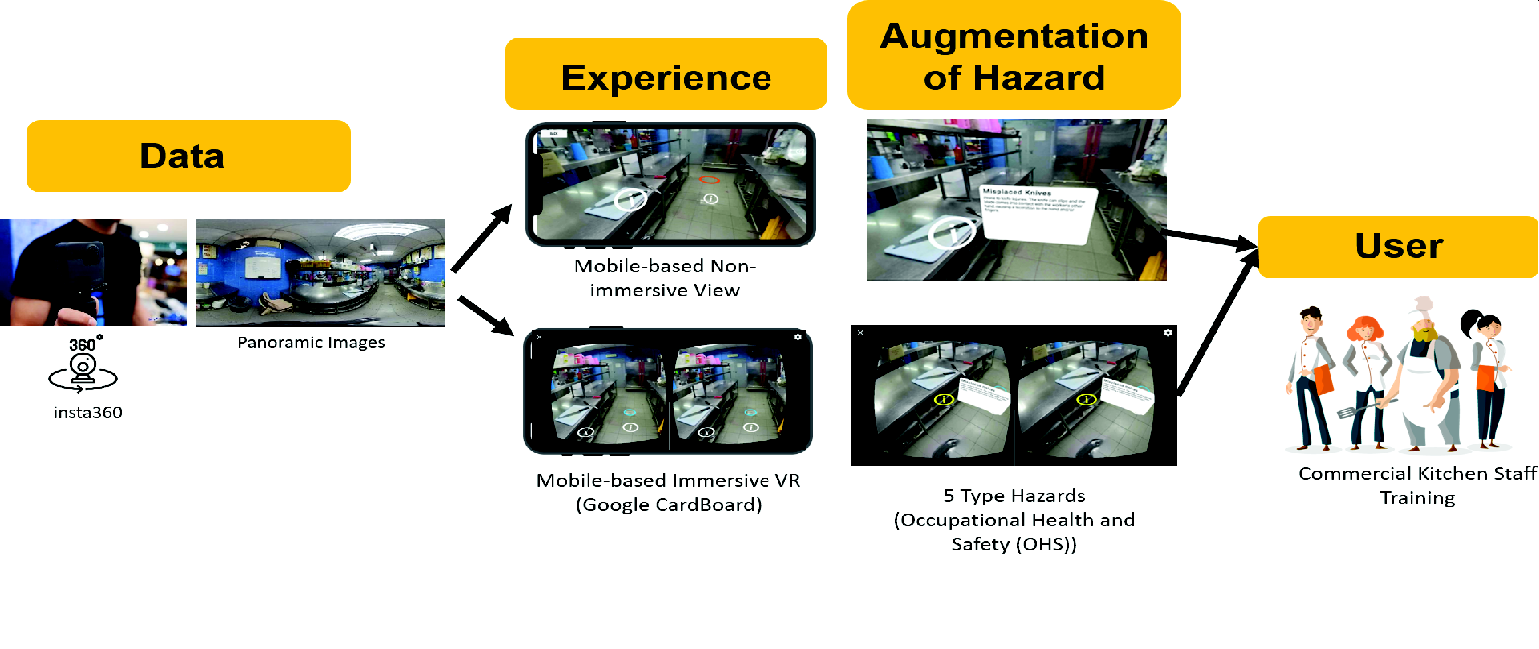
The system framework is illustrated in Figure 1, which integrates four key modules: data acquisition, experience generation, hazard augmentation, and user interaction. In the data acquisition module, panoramic images were captured using the Insta360 ONE X2, chosen for its 5.7K resolution, portability in confined kitchen spaces, and affordability compared with alternatives such as GoPro Max or Ricoh Theta Z1. These high-quality images served as the foundation for creating realistic and scalable training environments.
The experience generation module was developed in Unity3D, selected for its cross-platform compatibility and lightweight performance on mobile devices. Two delivery modes were implemented: a non-immersive mobile view, where users navigated 360° kitchen environments via smartphone, and an immersive VR mode using Google Cardboard, which offered an affordable entry point into virtual reality. This dual-mode design ensured both accessibility and engagement, accommodating learners with different hardware availability and comfort levels.
The hazard augmentation module enriched the panoramic scenes with multimodal cues to enhance safety awareness. Hazards such as slips, burns, cuts, and chemical exposure were emphasized using pop-up text labels, color-coded overlays (e.g., red for burns, blue for slips, yellow for cuts, and green for chemical hazards), and audio prompts that reinforced critical warnings. Finally, the user interaction module allowed students to explore the augmented kitchen, practice hazard recognition, and receive immediate feedback, thereby promoting experiential learning. By combining immersive imagery with hazard-specific augmentation, the framework bridged the gap between theoretical instruction and real-world hazard awareness in a cost-effective and scalable manner.
Figure 1. System Framework
- Preliminary Study
A preliminary study was conducted to evaluate the feasibility of the mobile-based 360° panoramic immersive learning platform before full deployment. The study involved 30 culinary students (aged 18–23) from Kolej Komuniti Bukit Beruang, Melaka, selected through convenience sampling. The prototype was tested in both immersive mode (Google Cardboard) and non-immersive mode (mobile view), allowing comparison of engagement and accessibility across delivery formats. During testing, participants highlighted several design issues, including complex navigation menus, limited interactivity, and occasional latency in VR mode. These flaws were addressed by simplifying the user interface, optimizing Unity3D performance, and adding interactive hazard markers with clear prompts. The refinements improved usability and prepared the system for the large-scale evaluation phase.
To assess face validity, expert feedback adapted from [11] was summarized in Table 1. In addition, three domain experts (two professional chefs and one occupational safety trainer) provided input on hazard realism, task relevance, and instructional value, using a 5-point Likert scale (1 = Strongly Agree, 5 = Strongly Disagree). While most aspects received favorable median scores (1), “Realism” scored lower (median 2), reflecting known limitations in depth perception and interactivity in early VR implementations. Although these results were consistent with [11], reliance on prior validation introduces possible contextual bias due to different settings and user groups. Moreover, the absence of a control group using traditional training limits comparative validity, and confounding factors such as prior VR exposure or individual learning preferences may have influenced responses. Despite these constraints, the preliminary study provided valuable insights that guided refinements and justified progression to a larger-scale usability evaluation.
Table 1. Preliminary Study Face Validity Statement and Median Scores from Expert in [11]
No. | Face Validity Statement | Median Scores (Range) Expert |
1 | Useful for teaching kitchen SOP | 1 (1–2) |
2 | Useful for teaching kitchen hazards | 1 (1–2) |
3 | Realism of the simulator to simulate a kitchen surround provide hazard measurements | 2 (1–3) |
4 | Ability to test hazard identification skills | 1 (1–2) |
5 | Overall relevance as a practice format | 1 (1–2) |
6 | The simulator experience was interesting | 1 (1–2) |
- Usability Evaluation
A total of 30 participants were recruited for the usability and effectiveness evaluation. All were semester-one culinary students from Kolej Komuniti Bukit Beruang, Melaka, selected through convenience sampling to represent novice trainees with relevant exposure to kitchen environments. These 30 participants also completed the System Usability Scale (SUS), ensuring consistency between the training intervention and usability assessment.
The SUS is a widely adopted instrument for evaluating technology usability due to its simplicity, reliability, and comparability across studies (Brooke, 1986). It consists of 10 items rated on a five-point Likert scale (1 = Strongly Disagree, 5 = Strongly Agree). In this study, the SUS was administered immediately after participants completed the hazard-identification training session, allowing for the capture of holistic, post-training perceptions of the platform’s usability. Descriptive statistical analysis, including calculation of means and standard deviations, was applied to summarize user responses. The final SUS score was calculated using the standard formula:
| 
| (1) |
This yields a score from 0 to 100, where higher values indicate better usability. The grading scale used in this study is presented in Table 2, ranging from “Awful” (<51) to “Excellent” (>80.3). The use of SUS over alternatives such as UMUX or QUIS was justified by its ease of administration, established benchmarks, and widespread adoption in VR and educational technology research. As SUS is a self-reported tool, inter-rater reliability was not applicable; instead, methodological consistency in administration and scoring was maintained to ensure validity. However, it should be acknowledged that SUS is susceptible to subjective bias and lacks granularity in diagnosing specific usability issues, which future studies could address by complementing SUS with qualitative feedback or task-based performance metrics.
Table 2. SUS Score Grading Scale
SUS Score | Grade | Adjective Rating |
>80.3 | A | Excellent |
69-80.3 | B | Good |
68 | C | Okay |
51-67 | D | Poor |
<51 | F | Awful |
- RESULT AND DISCUSSION
This section presents the findings from the usability evaluation and learning effectiveness assessment of the mobile-based 360° panoramic immersive learning platform. The discussion interprets these results in the context of enhancing safety hazard awareness in industrial kitchens.
- Usability Evaluation
The evaluation of the mobile-based 360° panoramic immersive learning platform revealed strong performance across key usability dimensions, including ease of use, learnability, efficiency, and satisfaction. Table 3 presents the detailed questionnaire results, while Table 2 provides the SUS grading scale used to interpret overall usability scores. All ease-of-use items scored a mean of 4.47 or higher. Notably, users found the hazard identification and feedback mechanisms particularly user-friendly (Mean = 4.70). Learnability was also positively rated, with mean scores of 4.43 and 4.63. The reverse-coded item “I needed to learn a lot of things before I could effectively use this application” (Mean = 4.63) confirms that participants found the application intuitive. Efficiency was likewise strong, with seamless integration of panoramic and VR features (Mean = 4.60) and high user confidence across interfaces (Mean = 4.50). Satisfaction, while slightly lower (Means = 4.27–4.53), indicated general acceptance and suggested opportunities for enhancement through gamification and personalized feedback.
Table 3 shows that the mean scores across all categories—ease of use, learnability, efficiency, and satisfaction—were consistently above 4.2 on a 5-point scale. This indicates that participants not only adapted quickly to the system but also perceived the hazard-augmented panoramic environment as practical and engaging. The narrow standard deviations (0.53–0.68) further suggest stable user responses across the sample, reinforcing the robustness of these findings. Compared with VR training studies in healthcare and construction that typically report mean usability scores between 3.8 and 4.2 the present system demonstrates superior usability, highlighting the value of optimizing lightweight, mobile-first VR platforms [28][29].
The SUS results provided additional validation of the platform’s usability. Out of 30 participants, 25 rated the platform as “Excellent” (SUS > 80.3) and 5 rated it as “Good” (69–80.3), with no lower ratings reported. The overall SUS mean score was 83.5, positioning the system within the “Excellent” category (Table 2). Table 2 illustrates how the platform’s SUS scores clustered exclusively within the top two grading brackets, with 83.3% rated “Excellent” and the remaining 16.7% “Good.” This distribution confirms both strong overall usability and consistency across participants. By contrast, comparable VR training systems in educational and industrial safety contexts have reported average SUS scores between 70 and 80, with some participants rating them as merely “Okay” [30][31]. The present results therefore represent a substantial advancement in achieving broad user acceptance.
Table 3. Usability Questionnaire Results for the Immersive Learning Platform
Question | Categories of Usability Goal | N | Minimum | Maximum | Mean | Std. Deviation |
I found the application unnecessarily complex. | Ease of Use | 30 | 2 | 5 | 4.50 | 0.68 |
I think I would not need assistance to use this application. | Ease of Use | 30 | 3 | 5 | 4.47 | 0.57 |
I felt there was too much consistency between different application features (e.g., 360° panoramic, tutorials, and quizzes). | Ease of Use | 30 | 3 | 5 | 4.53 | 0.57 |
I found the hazard identification and feedback mechanisms cumbersome to use. | Ease of Use | 30 | 3 | 5 | 4.70 | 0.53 |
I thought the application was easy to use. | Learnability | 30 | 3 | 5 | 4.43 | 0.57 |
I needed to learn a lot of things before I could effectively use this application. | Learnability | 30 | 3 | 5 | 4.63 | 0.56 |
I found the 360° panoramic and VR interfaces well integrated and intuitive. | Efficiency | 30 | 3 | 5 | 4.60 | 0.56 |
I felt confident interacting with the application’s various interfaces. | Efficiency | 30 | 3 | 5 | 4.50 | 0.57 |
I think I would like to use this application frequently. | Satisfaction | 30 | 3 | 5 | 4.27 | 0.58 |
I believe most users would learn to use this application very quickly. | Satisfaction | 30 | 3 | 5 | 4.53 | 0.57 |
- Learning Effectiveness
The platform yielded substantial improvements in learning outcomes. The mean pre-test score was 29.33, while the post-test average rose sharply to 83.67, reflecting a gain of 54.34 points. The score distribution also narrowed considerably, shifting from a wide pre-test range of 0–70 to a more concentrated 60–100 range post-test. This not only demonstrates individual improvements but also suggests standardized skill acquisition, a critical outcome for safety training where consistent competency is essential. Figure 2 illustrates this contrast in score distributions, with the pre-test results showing large variability and multiple low-performing outliers, whereas the post-test distribution was compressed toward higher performance levels. The narrowing spread provides evidence that the intervention not only raised mean performance but also reduced disparities among learners, which is critical for occupational safety contexts that demand uniform competency standards.
A paired-samples t-test confirmed that the observed improvement was statistically significant, t(29) = 41.33, p < 0.001. The mean difference was 41.33 (SD = 11.96), with a 95% confidence interval [37.05, 45.61]. The effect size was very large (d = 3.46), exceeding Cohen’s conventional threshold for a “large” effect (d = 0.8). Comparable VR training interventions in construction safety reported effect sizes between 0.9 and 1.4 [32][33], suggesting that the present study’s observed effect was exceptionally strong. However, this unusually high outcome may partly reflect low baseline pre-test scores and novelty-driven motivation among novice learners, highlighting the importance of future replication with a control group.
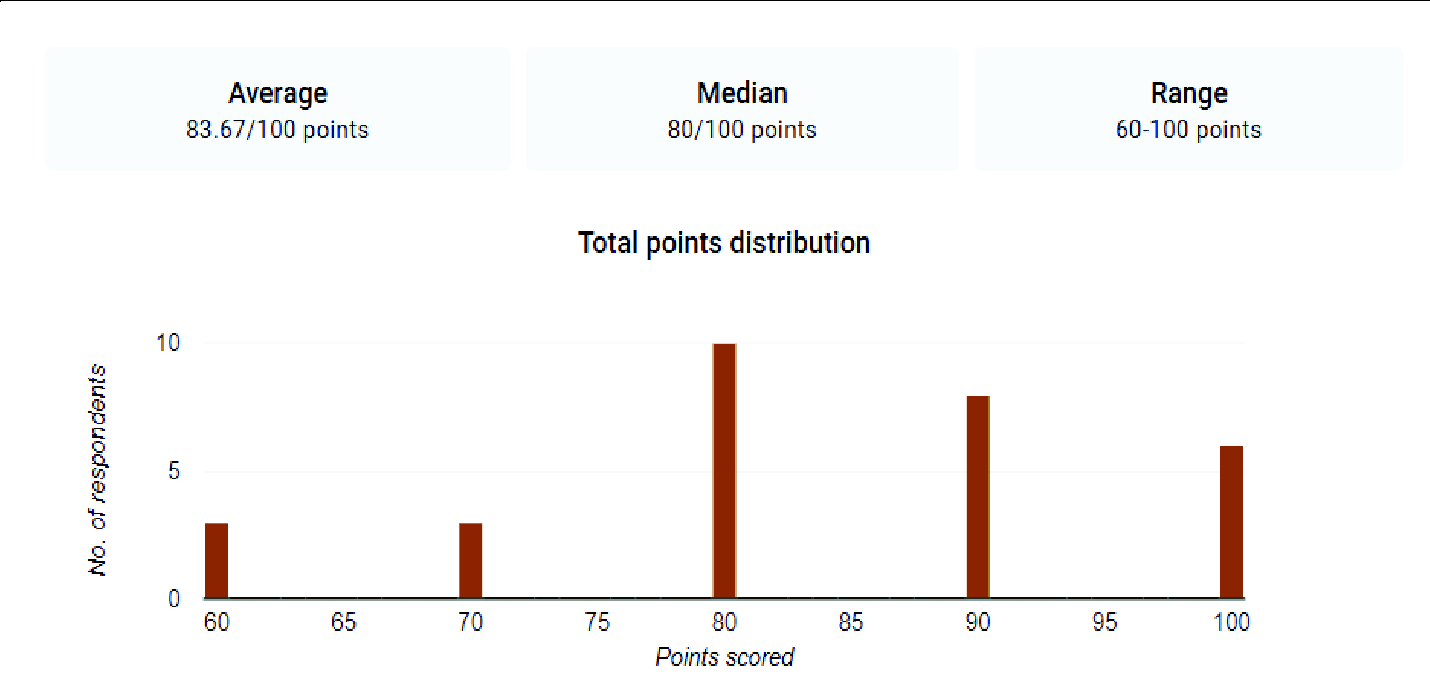
Figure 2. Comparison of hazard identification scores between (a) pre-test and (b) post-test assessments following 360° immersive safety training
- User Preferences for Modalities
User preference analysis further highlighted the value of immersive learning. A majority of participants (73.3%) preferred the immersive VR mode, citing higher engagement and realism, while 26.7% opted for the non-immersive mobile mode. Figure 3 illustrates this distribution, showing that while immersive VR dominated, a meaningful proportion of learners still preferred the mobile mode. This reflects trade-offs between experiential depth and comfort, as participants who selected mobile often reported reduced motion sickness risk and easier accessibility. The preference for non-immersive access was primarily linked to headset discomfort, risk of motion sickness, and greater accessibility for learners without VR hardware. To strengthen the non-immersive mode, additional interactive features could be incorporated, such as clickable hotspots, guided navigation, and hazard-specific pop-up prompts. These enhancements would improve engagement and compensate for the reduced sense of presence compared to immersive VR
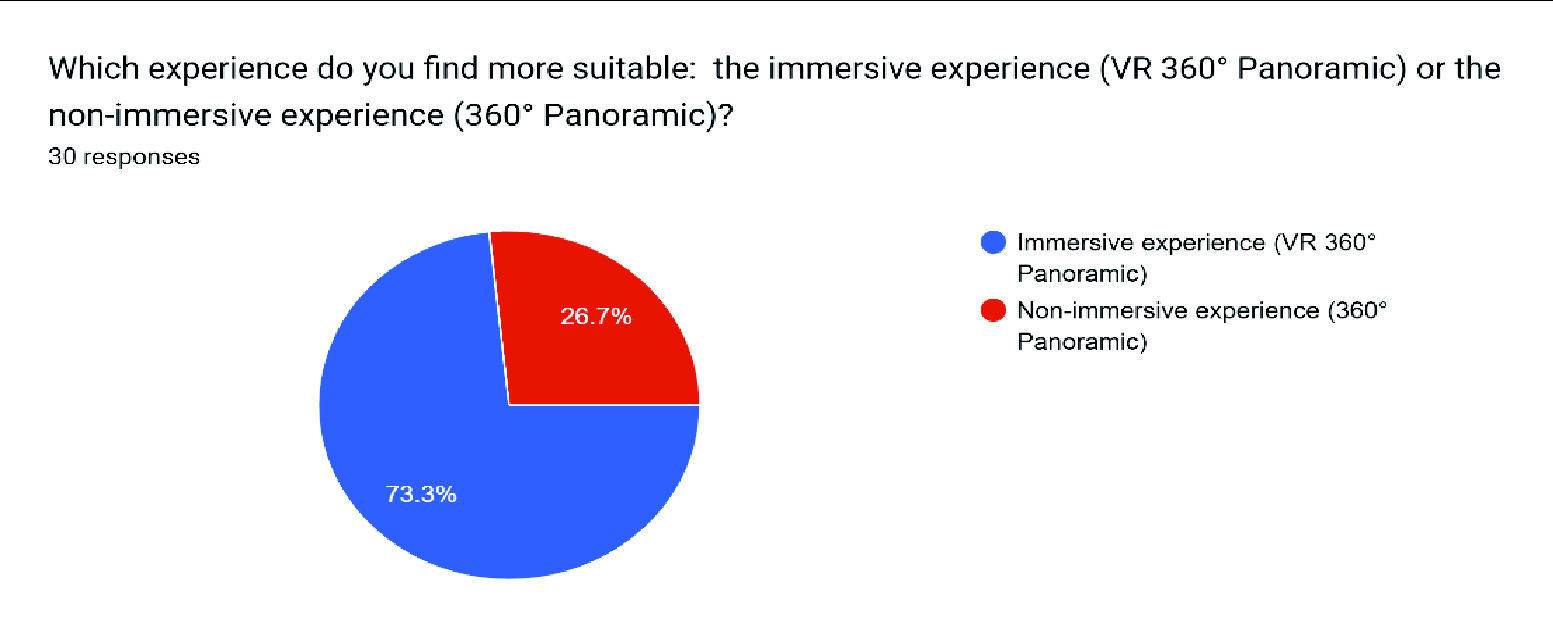
Figure 3. Immersive and Non-Immersive Comparison Testing User Preference Distribution
- Discussion and Implications
The study demonstrated that the 360° panoramic immersive learning platform achieved high usability, significant learning effectiveness, and strong learner engagement. The mean SUS score of 83.5 placed the system within the “Excellent” category, reflecting intuitive UI design, efficient navigation, and minimal latency. Learning outcomes improved markedly, with hazard identification scores rising from a pre-test mean of 29.33 to a post-test mean of 83.67, representing a gain of 54.34 points and a very large effect size (d = 3.46). User preferences further highlighted the platform’s capacity to engage learners, with 73.3% favoring immersive VR, while 26.7% preferred the non-immersive mobile option due to comfort and accessibility.
Compared with prior VR training studies in healthcare and construction, which typically report SUS scores between 70 and 80 [28][29], the present system demonstrated substantially higher usability. The learning gains also exceeded those of conventional classroom-based safety training, which usually achieve 15–25 point improvements [34][35], and surpassed VR-based safety interventions in construction reporting 30–40 point gains [33]. While immersive VR was strongly preferred, the 26.7% opting for mobile mode aligns with prior studies that noted persistent barriers such as motion sickness and headset discomfort [36]. However, it should be noted that many of the studies referenced [37]-[41] examined fully interactive VR, whereas the present platform used 360° panoramic imagery, limiting the direct comparability of interactivity outcomes.
The strong usability ratings demonstrate the effectiveness of adopting a lightweight, mobile-first VR design that prioritizes accessibility without compromising performance. The large learning gains suggest that immersive exposure to authentic hazard environments significantly strengthens hazard recognition compared with text- or lecture-based instruction. These findings align with experiential learning theory [42][43], where learners benefit from situated, hands-on experiences, and with socio-technical theory, which highlights how technological design (e.g., panoramic imagery, hazard augmentations) interacts with human engagement (e.g., immersion, comfort, accessibility) to shape learning outcomes. The dual-mode delivery underscores the importance of inclusivity: immersive VR provides experiential depth, while non-immersive mobile access broadens reach in contexts where hardware or comfort are constraints.
The main strengths of this study include its low-cost scalability, high usability ratings, and substantial learning effectiveness, achieved using widely available smartphones and affordable headsets. Nonetheless, several limitations must be acknowledged. First, reliance on SUS as a self-reported measure may have introduced novelty or social desirability bias, potentially inflating usability perceptions. Second, the absence of a control group receiving traditional training restricts claims that the platform outperforms established methods. Third, the very large effect size (d = 3.46) exceeds typical benchmarks for educational interventions (0.8–1.5; Cohen, 1988) and may reflect low baseline pre-test scores or heightened novelty-driven motivation, raising questions of generalizability. Fourth, the platform’s reliance on 360° panoramic VR limits interactivity compared with fully immersive VR, making advanced gamification features only partially feasible. Finally, the study measured only short-term learning gains, leaving long-term knowledge retention unverified. Future work should therefore incorporate delayed post-tests, comparative trials with traditional training, and a cost-benefit analysis that weighs development and scalability challenges against immersion depth.
- CONCLUSION AND FUTURE WORKS
This study demonstrated the effectiveness of a mobile-based 360° panoramic immersive learning platform in enhancing hazard identification and usability for safety training in commercial kitchens. The results showed a 54.34-point improvement in hazard identification scores (from 29.33 to 83.67, p < 0.001, d = 3.46) and high usability outcomes, with an average SUS score of 83.5 (“Excellent”) and 25 of 30 participants rating usability at the highest level. These findings highlight the platform’s capacity to deliver significant learning gains and user satisfaction using cost-effective technologies such as smartphones and low-cost VR headsets.
Theoretically, this research contributes to experiential learning theory by demonstrating how immersive hazard exposure strengthens recognition skills, and to socio-technical theory by showing how the interplay between technology design (360° panoramic VR, hazard augmentation) and human engagement (immersion, accessibility, comfort) shapes learning outcomes. This dual contribution advances the understanding of how low-cost immersive platforms can integrate pedagogical and technical factors to optimize workplace safety training.
However, several limitations must be acknowledged. The absence of a control group restricts direct comparisons with conventional training, while reliance on self-reported usability measures may introduce novelty or social desirability bias. The very large effect size may reflect low baseline knowledge and requires replication. Moreover, the study measured only short-term outcomes, leaving long-term retention unverified, and did not evaluate scalability in real-world deployment, including hardware costs, technical support, and adaptability across diverse kitchen layouts.
Future research should address these gaps by: (i) conducting comparative trials with traditional training methods under controlled conditions; (ii) implementing longitudinal studies with follow-up assessments at 1, 3, and 6 months to evaluate knowledge retention; (iii) testing gamified features tailored for 360° media (e.g., interactive hotspots, adaptive hazard prompts) with clear metrics such as engagement rates, completion times, and safety task performance; (iv) expanding trials to diverse demographics, including novice employees, experienced chefs, and small business operators; and (v) performing cost-benefit analyses to assess return on investment in different training contexts.
In summary, this study provides empirical evidence that mobile-based 360° panoramic VR training can improve safety awareness in commercial kitchens while remaining affordable and accessible. It contributes new knowledge by positioning 360° VR as a viable middle ground between conventional classroom instruction and resource-intensive VR, offering a scalable framework for occupational safety education. This work also lays the groundwork for researchers to build upon by exploring comparative effectiveness, long-term retention, gamification strategies, and deployment at scale. It is hoped that this study motivates future collaborations between researchers, educators, and industry stakeholders to refine and expand the adoption of low-cost immersive learning technologies in workplace safety.
DECLARATION
Author Contribution
All authors contributed equally to the main contributor to this paper. All authors read and approved the final paper.
Funding
There is no publication fees for this journal.
Acknowledgement
Thanks are extended to Fakulti Teknologi Maklumat Dan Komunikasi (FTMK), Universiti Teknikal Malaysia Melaka (UTeM), for their technical support and research resources. Appreciation is also given to the Centre for Research and Innovation Management (CRIM), UTeM, for funding this research through the PJP Perspektif 2024 grant. And gratitude also expresses to the Ministry of Higher Education, Malaysia (KPT), for supporting this study through the Fundamental Research Grant Scheme Exploratory Research Consortium (FRGS-EC) FRGS-EC/1/2024/ICT09/UTEM/03/2.
Conflicts of Interest
The authors declare no conflict of interest.
REFERENCES
- S. T. Tolera and D. A. Mengistu, “Occupational hazards exposure and knowledge, attitude and practice towards meat safety amongst abattoir workers, Hawassa City, Southern Ethiopia,” Int. J. Occup. Saf. Health, vol. 11, no. 2, pp. 108–115, 2021, https://doi.org/10.3126/ijosh.v11i2.36306.
- N. Haminuddin, M. Saad, and M. S. Sahrir, “Digital transformation in occupational safety education: Formulating components of virtual reality in TVET hospitality programs by using TPACK theory,” Planning Malaysia, vol. 22, 2024, https://doi.org/10.21837/pm.v22i34.1622.
- J. Li and M. Pilz, “In-company training in a safety-critical industry: lessons from the aircraft industry,” J. Workplace Learn., vol. 35, no. 2, pp. 210–227, 2023, https://doi.org/10.1108/JWL-06-2022-0067.
- A. Shringi, M. Arashpour, E. M. Golafshani, T. Dwyer, and P. Kalutara, “Enhancing safety training performance using extended reality: a hybrid Delphi–AHP multi-attribute analysis in a type-2 fuzzy environment,” Buildings, vol. 13, no. 3, p. 625, 2023, https://doi.org/10.3390/buildings13030625.
- M. J. Burke, R. O. Salvador, K. Smith‐Crowe, S. Chan‐Serafin, A. N. Smith, and S. C. Sonesh, “The dread factor: how hazards and safety training influence learning and performance,” J. Appl. Psychol., vol. 96, no. 1, pp. 46–70, 2011, https://doi.org/10.1037/a0021838.
- A. Albert and M. R. Hallowel, “Revamping occupational safety and health training: integrating andragogical principles for the adult learner,” Constr. Econ. Build., vol. 13, no. 3, pp. 128–140, 2013, https://doi.org/10.5130/AJCEB.v13i3.3178.
- S. Margheritti, S. Marcucci, and M. Miglioretti, “Bridging the gaps: examining the impact of technology-based active learning in workplace safety training through a systematic literature review,” Safety, vol. 11, no. 1, p. 5, 2025, https://doi.org/10.3390/safety11010005.
- D. L. Lacy, “Employee engagement and learning for the transformational leader,” Adv. Logist., Oper., Manag. Sci., pp. 133–146, 2022, https://doi.org/10.4018/978-1-7998-8239-8.ch008.
- V. Holuša et al., “Virtual reality as a tool for sustainable training and education of employees in industrial enterprises,” Sustainability, vol. 15, no. 17, p. 12886, 2023, https://doi.org/10.3390/su151712886.
- E. Kwegyir-Afful, T. O. Hassan, and J. Kantola, “Simulation-based assessments of fire emergency preparedness and response in virtual reality,” Int. J. Occup. Saf. Ergon., vol. 28, no. 2, pp. 1316–1330, 2021, https://doi.org/10.1080/10803548.2021.1891395.
- M. Saad, M. D. H. M. Najib, and T. J. Pratt, “Valid virtual reality applications for commercial kitchen safety training,” Environ.-Behav. Proc. J., vol. 7, no. 19, pp. 403–409, 2022, https://doi.org/10.21834/ebpj.v7i19.3207.
- A. Gandsas, T. Dorey, and A. Park, “Immersive live streaming of surgery using 360-degree video to head-mounted virtual reality devices: A new paradigm in surgical education,” Surg. Innov., vol. 30, no. 4, pp. 486–492, 2023, https://doi.org/10.1177/15533506231165828.
- Y. Chao et al., “Using a 360° virtual reality or 2D video to learn history taking and physical examination skills for undergraduate medical students: Pilot randomized controlled trial,” JMIR Serious Games, vol. 9, no. 4, e13124, 2021, https://doi.org/10.2196/13124.
- M. Ellis, R. Handy, D. K. Sleeth, L. F. Pahler, and C. Schaefer, “A pilot observational study comparing wet bulb globe temperature (WBGT) parameter measurements between three commercial kitchen configurations,” J. Student Res., vol. 10, no. 1, 2021, https://doi.org/10.47611/jsr.v10i1.1181.
- A. Hamad and B. Jia, “How virtual reality technology has changed our lives: An overview of the current and potential applications and limitations,” Int. J. Environ. Res. Public Health, vol. 19, no. 18, p. 11278, 2022, https://doi.org/10.3390/ijerph191811278.
- H. Cao et al., “VR interaction for efficient virtual manufacturing: Mini map for multi-user VR navigation platform,” Adv. Transdiscip. Eng., 2024, https://doi.org/10.3233/ATDE240178.
- G. O. Wassif et al., “Work-related injuries and illnesses among kitchen workers at two major students’ hostels,” J. Egypt. Public Health Assoc., vol. 99, no. 1, 2024, https://doi.org/10.1186/s42506-024-00163-x.
- E. d. O. Pinto et al., “A preliminary study of environmental risks through the gut matrix: Application in an industrial kitchen,” Food Sci. Technol., vol. 42, 2022, https://doi.org/10.1590/fst.12622.
- Y. J. Na, J. Y. Baek, S. Y. Gwon, and K. S. Yoon, “Assessment of hygiene management practices and comparative analysis of regulatory frameworks for shared kitchens across different countries,” Foods, vol. 13, no. 6, p. 918, 2024, https://doi.org/10.3390/foods13060918.
- K. Min and W. Hong, “The effect of food sustainability and the food safety climate on the job stress, job satisfaction and job commitment of kitchen staff,” Sustainability, vol. 13, no. 12, p. 6813, 2021, https://doi.org/10.3390/su13126813.
- F. H. Ismail, S. Osman, and F. B. A. Rahman, “Ergonomics kitchen: A better place to work,” Int. J. Acad. Res. Bus. Soc. Sci., vol. 11, no. 13, 2020, https://doi.org/10.6007/IJARBSS/v11-i13/8501.
- M. S. Alam, M. Sharma, and U. R. Salve, “Assessment of thermal comfort in a hot and humid indoor built environment of a kitchen at a university canteen,” Work, vol. 72, no. 1, pp. 189–199, 2022, https://doi.org/10.3233/WOR-205174.
- S. N. Varlı et al., “Organic pollutant exposure and health effects of cooking emissions on kitchen staff in food services,” Indoor Air, vol. 32, no. 8, 2022, https://doi.org/10.1111/ina.13093.
- P. Chan, T. Van Gerven, J. Dubois, and K. Bernaerts, “Design and development of a VR serious game for chemical laboratory safety,” Lect. Notes Comput. Sci., pp. 23–33, 2021, https://doi.org/10.1007/978-3-030-92182-8_3.
- A. G. Nair et al., “Effectiveness of simulation-based training for manual small incision cataract surgery among novice surgeons: A randomized controlled trial,” Sci. Rep., vol. 11, no. 1, 2021, https://doi.org/10.1038/s41598-021-90410-4.
- A. A. Zaman, A. Abdelaty, M. S. Yamany, F. Jacobs, and M. Marzouk, “Integrating 3D photogrammetry and game engine for construction safety training,” Built Environ. Project Asset Manag., vol. 15, no. 4, pp. 844–862, 2025, https://doi.org/10.1108/BEPAM-05-2024-0133.
- G. Kazar and S. Çomu, “Developing a virtual safety training tool for scaffolding and formwork activities,” Teknik Dergi, vol. 33, no. 2, pp. 11729–11748, 2022, https://doi.org/10.18400/tekderg.711091.
- P. Wang, P. Wu, J. Wang, H.-L. Chi, and X. Wang, “A critical review of the use of virtual reality in construction engineering education and training,” International journal of environmental research and public health, vol. 15, no. 6, p. 1204, 2018, https://doi.org/10.3390/ijerph15061204.
- M. Jelonek, E. Fiala, T. Herrmann, J. Teizer, S. Embers, M. König, and A. Mathis, “Evaluating virtual reality simulations for construction safety training: a user study exploring learning effects, usability and user experience,” i-com, vol. 21, no. 2, pp. 269-281, 2022, https://doi.org/10.1515/icom-2022-0006.
- J. Radianti, T. A. Majchrzak, J. Fromm, and I. Wohlgenannt, “A systematic review of immersive virtual reality applications for higher education: Design elements, lessons learned, and research agenda,” Comput. Educ., vol. 147, p. 103778, 2020, https://doi.org/10.1016/j.compedu.2019.103778.
- S. Borsci, S. Federici, and M. Lauriola, “On the dimensionality of the System Usability Scale: a test of alternative measurement models,” Cognitive processing, vol. 10, no. 3, pp. 193-197, 2009, https://doi.org/10.1007/s10339-009-0268-9.
- S. S. Man, H. Wen, and B. C. L. So, “Are virtual reality applications effective for construction safety training and education? A systematic review and meta-analysis,” Journal of safety research, vol. 88, pp. 230-243, 2021, https://doi.org/10.1016/j.jsr.2023.11.011.
- R. Sacks, A. Perlman, and R. Barak, “Construction safety training using immersive virtual reality,” Constr. Manag. Econ., vol. 31, no. 9, pp. 1005–1017, 2013, https://doi.org/10.1080/01446193.2013.828844.
- M. J. Burke, S. A. Sarpy, K. Smith-Crowe, S. Chan‐Serafin, R. O. Salvador and G. Islam, “Relative effectiveness of worker safety and health training methods,” Am. J. Public Health, vol. 96, no. 2, pp. 315–324, 2006, https://doi.org/10.2105/AJPH.2004.059840.
- B. S. Bell and S. W. J. Kozlowski, “Active learning: Effects of core training design elements on self‐regulatory processes, learning, and adaptability,” J. Appl. Psychol., vol. 93, no. 2, pp. 296–316, 2008, https://doi.org/10.1037/0021-9010.93.2.296.
- E. Chang, H. T. Kim, and B. Yoo, “Virtual reality sickness: a review of causes and measurements,” International Journal of Human–Computer Interaction, vol. 36, no. 17, pp. 1658-1682, 2020, https://doi.org/10.1080/10447318.2020.1778351.
- L. Putz, F. Hofbauer, and H. Treiblmaier, “Can gamification help to improve education? Findings from a longitudinal study,” Comput. Hum. Behav., vol. 110, p. 106392, 2020, https://doi.org/10.1016/j.chb.2020.106392.
- S. O. Uwakwe Udeh, A. Tobail, J. Crowe, and W. Rashwan, “Exploring the impact of gamification on employee training and development: a comprehensive literature review,” Journal of Workplace Learning, vol. 37, no. 9, pp. 206-224, 2025, https://doi.org/10.1108/JWL-05-2025-0149.
- S. Brull, S. Finlayson, T. Kostelec, R. Macdonald, and D. Krenzischeck, “Using Gamification to Improve Productivity and Increase Knowledge Retention During Orientation,” JONA: J. Nurs. Adm., vol. 47, pp. 448–453, 2017, https://doi.org/10.1097/NNA.0000000000000512.
- A. Schmid and M. Schoop, “Gamification of Electronic Negotiation Training: Effects on Motivation, Behaviour and Learning,” Group Decis. Negotiat., vol. 31, pp. 649–681, 2022, https://doi.org/10.1007/s10726-022-09777-y.
- F. Cechella, G. Abbad, and R. Wagner, “Leveraging learning with gamification: An experimental case study with bank managers,” Comput. Human Behav. Rep., 2021, https://doi.org/10.1016/j.chbr.2020.100044.
- Kolb, D. A. (2014). Experiential learning: Experience as the source of learning and development. FT press. 2014. https://books.google.co.id/books?hl=id&lr=&id=jpbeBQAAQBAJ.
- E. L. Trist and K. W. Bamforth, “Some social and psychological consequences of the longwall method of coal-getting,” Human Relations, vol. 4, no. 1, pp. 3–38, 1951, https://doi.org/10.1177/001872675100400101.
AUTHOR BIOGRAPHY
Asniyani Nur Haidar Binti Abdullah received her diploma in Computer Science (Multimedia) as a fast-track student from Universiti Teknologi Malaysia, Kuala Lumpur, in 2011. She then earned her B.Sc. in Computer Science (Graphic and Multimedia Software) and her Master of Philosophy (Computer Science), both from Universiti Teknologi Malaysia, Johor Bahru, in 2015 and 2017, respectively. Her research interests include graphic, machine learning, virtual reality, deep learning, computer vision, and data science. Email: asniyani@utem.edu.my Researcher Website: Asniyani Nur Haidar Abdullah - Google Scholar |
|
Mohd Khalid Bin Mokhtar received his Diploma in Computer Science, majoring in Multimedia, from Universiti Teknologi Malaysia (UTM) in 2006. He continued his studies at the same university and obtained a Bachelor's degree in Computer Science, specializing in Computer Graphics and Multimedia, in 2008. He later pursued a Master’s degree by research, which he completed in 2017. His main areas of expertise include computer graphics, visualization, augmented reality (AR), virtual reality (VR), and simulation. Currently, his research focuses on human-computer interaction (HCI). Email: khalid.mokhtar@utem.edu.my Researcher Website: Mohd Khalid Mokhtar - Scopus |
|
Ikmal Faiq Albakri Mustafa Albakri obtained his Diploma in Computer Science (Multimedia) through a fast-track programme at Universiti Teknologi Malaysia, Kuala Lumpur, in 2013. He subsequently obtained a Bachelor of Science in Computer Science (Graphic and Multimedia Software) in 2017, followed by a Master of Philosophy in Computer Science in 2021, both from Universiti Teknologi Malaysia, Johor Bahru. His research interests lie in the areas of 3D animation, extended reality, virtual production, and human-computer interaction (HCI). Email: ikmalfaiq@utem.edu.my Researcher Website: Ikmal Faiq Albakri Mustafa Albakri - Google Scholar |
|
Reshmahdevi Janarthanan Nambiar holds a Bachelor of Computer Science (Hons.), specializing in Software Engineering, from Multimedia University (MMU). She is currently pursuing a Master of Computer Science, with a specialization in Multimedia Computing, and is expected to graduate in 2025. Email: m032320002@student.utem.edu.my Researcher Website: none |
|
Mazni Saad is an academic researcher from International Islamic University Malaysia. The author has contributed to research in topics: Tourism & Medicine. The author has an hindex of 6, co-authored 40 publications. Previous affiliations of Mazni Saad include International Islamic University, Islamabad & University of Selangor. Email: maznisaad@iium.edu.my Researcher Website: Mazni Saad - Google Scholar |
|
Muhammad Danial Haiqal Mohamad Najib A co-author of academic papers on virtual reality applications for kitchen safety training, currently work with Todak Holding Sdn Bhd. Email: danialhaiqal98@gmail.com |
Asniyani Nur Haidar Abdullah (Mobile 360° Panoramic Training for Commercial Kitchen Safety: Usability and Learning Outcomes)