ISSN: 2685-9572 Buletin Ilmiah Sarjana Teknik Elektro
Vol. 7, No. 3, September 2025, pp. 409-426
Implementation of Filter Bank Multicarrier Transmitter Using Universal Software Radio Peripheral
Ali A. Abdulhussein 1, Hikmat N. Abdullah 1, Hamzah M. Marhoon 2
1 Department of Information and Communications Engineering, College of Information Engineering, Al-Nahrain University, Jadriya, Baghdad, Iraq
2 Department of Automation and Artificial Intelligence Engineering, College of Information Engineering, Al-Nahrain University, Jadriya, Baghdad, Iraq
ARTICLE INFORMATION |
| ABSTRACT |
Article History: Received 04 June 2025 Revised 21 July 2025 Accepted 12 August 2025 |
| 
Particularly in 5G and beyond, Filter Bank Multicarrier (FBMC) modulation is becoming more widely acknowledged as a potent substitute for traditional Orthogonal Frequency Division Multiplexing (OFDM) in upcoming wireless communication systems. FBMC is robust in situations impacted by multipath fading, synchronisation errors, and spectral leakage because of its improved spectral efficiency, superior time-frequency localisation, and removal of cyclic prefix. The Universal Software Radio Peripheral (USRP) N210, combined with GNU Radio version 3.,7 is used in this paper to design and implement a working FBMC transmitter. The system architecture supports 32 and 64 subcarrier allocations that can be changed to accommodate different communication scenarios, allowing for real-time signal generation and transmission. While SDR hardware was used for transmission and reception, software was used to develop the entire signal processing chain, including modulation, prototype filtering, and transmission. To evaluate performance metrics like constellation accuracy, spectrum containment, and signal quality, a number of experiments were carried out. These tests validate the viability of the suggested SDR-based architecture in real-world settings by confirming the successful generation and over-the-air transmission of FBMC signals. Notably, the work tackles important real-time implementation issues like subcarrier reconfigurability, synchronisation overhead, and hardware limitations. Along with its usefulness, this implementation lays the groundwork for future improvements by incorporating clever optimization algorithms like Harris Hawks Optimization, Particle Swarm Optimization, and Genetic Algorithms. Aspects like filter design, subcarrier spacing, and power efficiency can all be enhanced by utilising these algorithms. According to the results, the suggested system is in a good position to be implemented in adaptive and cognitive radio applications, where resilience to changing channel conditions and effective spectrum utilization is essential. |
Keywords: Filter Bank Multicarrier; Fifth-generation; Software Defined Radio; OFDM |
Corresponding Author: Hikmat N. Abdullah, Department of Automation and Artificial Intelligence Engineering, College of Information Engineering, Al-Nahrain University, Jadriya, Baghdad, Iraq. Email: hikmat.abdullah@nahrainuniv.edu.iq |
This work is open access under a Creative Commons Attribution-Share Alike 4.0 
|
Document Citation: A. A. Abdulhussein, H. N. Abdullah, and H. M. Marhoon, “Implementation of Filter Bank Multicarrier Transmitter Using Universal Software Radio Peripheral,” Buletin Ilmiah Sarjana Teknik Elektro, vol. 7, no. 3, pp. 409-426, 2025, DOI: 10.12928/biste.v7i3.13876. |
- INTRODUCTION
The need for effective modulation techniques that can manage high data rates while minimising interference has been brought to light by the quickly changing requirements of contemporary wireless communication systems. One such method that sticks out is Filter Bank Multicarrier (FBMC), which can lessen inter-symbol and inter-carrier interference, which are frequent problems in network systems. Specifically, inter-symbol interference can seriously impair wireless communication systems' performance, particularly in high-speed settings. By altering the conventional Orthogonal Frequency Division Multiplexing (OFDM) technique, which is widely used but has drawbacks, especially because of the cyclic prefix used for signal robustness, FBMC resolves these problems [1][2]. Although the cyclic prefix increases resilience, FBMC overcomes the inefficiencies it introduces. Compared to traditional multicarrier techniques like OFDM, FBMC uses synthesis and analysis prototype filters with smaller side lobes and faster spectrum decay, which lowers out-of-band energy and increases Spectral Efficiency (SE) [3].
Compared to OFDM, FBMC has a number of benefits, including higher spectral efficiency and the capacity to combine non-adjacent frequency bands, which greatly expands the bandwidth available for data transfer. Higher data rates are a crucial prerequisite for future wireless networks, and this feature is especially helpful in achieving them. Additionally, FBMC facilitates asynchronous transmissions, which is essential for lowering signalling overhead and raising communication systems' overall effectiveness. It is anticipated that FBMC's capacity to satisfy the growing demand for faster data rates by making the best use of available bandwidth will be crucial to the development of next-generation wireless systems [4][5].
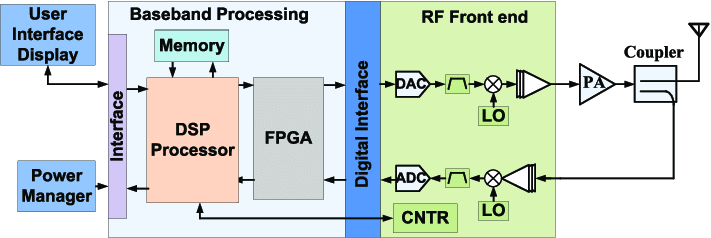
FBMC systems still face difficulties in real-time transmission and hardware implementation, despite their encouraging theoretical benefits. The design and performance analysis of FBMC systems have been extensively studied, but less attention has been paid to their actual hardware implementation. For example, a Filter Bank-based Multi-Carrier Transmission prototype using Software Defined Radio (SDR) was investigated in [6], and a prototype of an FBMC transmission link was implemented in [7]. Additionally, in [8], a heterogeneous SDR architecture was introduced as a component of a cognitive overlay system that included a consumer laptop and a Universal Software Radio Peripheral (USRP) X310. The interaction of the important parts like the digital interface, RF front end, and baseband processing is graphically depicted in Figure 1 illustrates the detailed block diagram of the FBMC transmitter system. This diagram emphasises how these components must be integrated within an SDR framework in order to guarantee efficient signal transmission. For FBMC systems to be able to generate and transmit signals in real-time, this integration is necessary [9].
Figure 1. Block diagram of the FBMC transmitter system architecture [9]
Recent research on wireless communication has focused a lot of attention on integrating Field-Programmable Gate Arrays (FPGAs) [10][11], Arduino [12][13], and embedded systems with SDR platforms [14]-[17]. Arduino provides an affordable solution for basic SDR control tasks like frequency tuning, signal conditioning, and system monitoring, despite its limited processing power [18][19]. Additionally, it makes low-level interfaces with external radio frequency hardware easier. On the other hand, embedded systems, particularly those built on RISC or ARM architectures, offer more computational power for more intricate signal processing tasks [20]. FPGAs are perfect for real-time tasks like modulation, demodulation, and filtering because they enable high-speed, parallel data processing, which complements these platforms [21]. When implementing sophisticated multicarrier systems like FFBMC and OFDM, their combined use is especially beneficial. The performance and real-time adaptability of FBMC systems can be improved by using the advantages of Arduino, embedded systems, and FPGAs within an SDR framework [22]. For FBMC to be deployed practically in real-world and to overcome current hardware limitations, this integration is essential [23]. Additionally, optimisation algorithms like Genetic Algorithms (GA) [24], Particle Swarm Optimization (PSO) [25], and Black Hole Optimisation (BHO) [26] are successful in raising the efficiency of FBMC systems [27]. Metaheuristic optimization algorithms like BHO, PSO, and GA have been used in real-time SDR implementations to adjust modulation schemes and fine-tune key FBMC parameters like filter coefficients, subcarrier allocation, and power control. Because such optimization problems are multi-dimensional and non-linear, these algorithms are well-suited to handle them. For example, in FBMC/OQAM systems, GA-based schemes have successfully decreased PAPR and optimised filter design [28]. BHO has been effectively used in related electromagnetic and power system optimisations, despite being less prevalent in FBMC literature [29]. Improved power efficiency, reduced peak-to-average power ratios, and improved spectral containment can all be attained by incorporating these algorithms into SDR-based FBMC transmitters. With the right filter parameters, GA-driven PTS schemes have shown a notable reduction in PAPR [30]. Despite being less studied, BHO and hybrids like PSO-BHO offer compelling substitutes for intricate system tuning. Advanced features in FBMC deployment, such as dynamic waveforms, adaptive resource management, and low-interference operation, can be unlocked by using these clever algorithms within the SDR framework [31].
In this work, a USRP N210 platform is used to design and implement an FBMC transmitter. The system, which was created with Python and GNU Radio Companion, produces FBMC-OQAM signals in real time and supports dynamic subcarrier configurations (32 and 64 subcarriers). This implementation differs from other FBMC designs in that it is deployed on physical SDR hardware, as opposed to many previous studies that were only simulation-based. The design allows for real-time signal generation, reconfiguration, and over-the-air transmission by utilizing the USRP's FPGA and live DSP flow. Using spectrograms and spectrum measurements, empirical validation is given, providing a comprehensive hardware–software co-design. This real-world application closes the gap between deployable SDR-based multicarrier systems and theoretical research.
- LITERATURE SURVEY
The implementation of FBMC Transmitters using SDR platforms has been the subject of numerous studies in the literature. These studies have focused on utilizing the capabilities of USRP hardware. These studies examine a number of FBMC transmission topics, such as synchronisation, real-time processing, system performance assessment, and the application of SDR frameworks such as GNU Radio. An overview of various methodologies, experimental configurations, and outcomes that have advanced the application of FBMC in real-world communication systems is given in the literature review that follows, which highlights some of the major contributions in this area.
A Software Defined Radio (SDR) prototype for FBMC transmission utilizing two USRP N210 boards is presented by the authors Dziri et al. (2015) in [32]. The suggested system, which is implemented using MATLAB routines, supports both FBMC and Orthogonal Frequency Division Multiplexing (OFDM) waveforms. Their work mainly addresses synchronisation issues and the trade-off between accuracy and latency in real-time systems by decoding Offset Quadrature Amplitude Modulation (OQAM)-FBMC frames in real-time. The study demonstrates how SDR platforms can help with the main FBMC issues, particularly in real-time communication systems where performance depends on synchronisation and latency control. Their research also clarified whether FBMC can be implemented in a software-based setting, which makes it a valuable prototype for communications in the future.
Comparably, Horváth and Bakki (2016) in [33] use USRP hardware to create an SDR-based FBMC transmission prototype that consists of a standard FBMC transmitter and receiver with timestamped synchronisation and a shared system clock. They use Bit Error Rate (BER), Peak-to-Average Power Ratio (PAPR), and Power Spectrum Density (PSD) to assess the system's performance. Their research offers a thorough examination of the FBMC system's performance under actual circumstances, demonstrating its potential to beat more conventional modulation schemes like OFDM, especially in high-noise settings. The benefits of FBMC in lowering signal distortion and enhancing transmission reliability are further highlighted by their analysis of PAPR and BER.
Flowing that, an implementation of an FBMC transmitter and receiver on an SDR platform using USRP hardware is presented by the authors Kieffer et al. (2017) in [34]. In their work, they analyse the performance of FBMC in real-world scenarios while developing an SDR-based FBMC system for real-time transmission and reception. FBMC and traditional OFDM are thoroughly compared in the study concerning spectral efficiency, Peak-to-Average Power Ratio (PAPR), and implementation complexity. This study is a crucial resource for upcoming research in FBMC-based communication systems and shows how SDR platforms can be used to implement sophisticated multicarrier transmission techniques.
By using USRPs to analyse different Virtual Radio (VR) configurations, including OFDM-OFDM, OFDM-FBMC, and FBMC-FBMC, the authors (2020) in [35][36] explore air-interface virtualisation. Their research clarifies the performance and feasibility of integrating FBMC into virtualised radio interfaces, showing that due to its lower spectral efficiency and PAPR, FBMC is a suitable choice for virtualisation in 5G and beyond networks. Tests of various VR configurations demonstrate the flexibility of FBMC in different virtualised environments, offering significant advantages over conventional OFDM in multi-user and multi-carrier scenarios. Furthermore, new studies on Orbital Angular Momentum (OAM) investigate how cooperative relaying systems might improve communication range and spectral efficiency. The study addresses the drawbacks of wave divergence in high-order OAM by demonstrating enhanced system throughput through the combination of OAM and relays. Parallel transmission orders made possible by this cooperative relaying system can greatly increase communication throughput and range. The potential of both approaches in 5G and beyond networks could be expanded by integrating OAM and FBMC in virtualised radio environments to further optimise performance.
Finally, research on ultra-wideband communications in (2019) [37] talks about building a UWB transceiver system using multiple Ettus X310 USRPs with an 8 GHz bandwidth. This study offers measured results that guide the design of UWB systems and highlights issues like low Signal-to-Noise Ratio (SNR) in Non-Line-of-Sight (NLOS) channels. The difficulties encountered in real-world UWB system implementations are covered in the paper, including the need for sophisticated signal processing to increase SNR and signal deterioration brought on by NLOS propagation. The findings offered aid in the creation of more resilient UWB systems for use in sensor networks, radar, and high-speed data transfer.
A summary of significant earlier research on the use of SDR platforms for FBMC transmitter implementation is provided in Table 1. Every entry outlines the instruments employed, particular research topics like synchronisation, spectral efficiency, and system adaptability, as well as the primary results obtained. Together, these studies show that FBMC is feasible for real-time applications and highlight its benefits over traditional schemes such as OFDM, especially in environments that are noisy or virtualised.
Table 1. Overview of SDR-based FBMC transmitter implementations
Reference | Platform & Tools | Focus Areas | Key Outcomes |
[32] | USRP N210, MATLAB | FBMC/OFDM waveform transmission, synchronization challenges, OQAM decoding | Demonstrated real-time FBMC implementation using MATLAB routines on USRP. Addressed synchronization–latency trade-offs crucial for future systems. |
[33] | USRP, shared system clock, SDR framework | BER, PAPR, PSD-based performance evaluation of FBMC systems | Showed FBMC’s advantages over OFDM in noisy environments. Noted improvements in PAPR and BER metrics under real-world testing conditions. |
[34] | USRP-based SDR setup | Comparison of FBMC and OFDM in terms of spectral efficiency and implementation cost | Provided side-by-side analysis of FBMC and OFDM, highlighting FBMC's spectral efficiency and complexity trade-offs in real-time scenarios. |
[35][36] | USRPs, air-interface virtualization scenarios | FBMC integration in Virtual Radios (OFDM–FBMC, FBMC–FBMC), OAM relay strategies | Demonstrated FBMC’s flexibility in virtualized architectures. Proposed OAM-based cooperative relaying to extend range and improve spectral performance. |
[37] | Ettus X310 USRPs, 8 GHz bandwidth | Ultra-Wideband (UWB) implementation; SNR analysis in NLOS environments | Provided practical insight into UWB challenges in real-world deployments, highlighting signal degradation and the need for advanced processing methods. |
- PROPOSED METHODOLOGY
This work's proposed methodology is centred on an FBMC transmitter's hardware implementation. The method makes use of the GNU Radio 3.7 design tool and an SDR platform, more especially the USRP. N210. Testing FBMC signal generation and transmission with a variable number of subcarriers is the goal of the implementation. The FBMC transmitter in the experimental configuration is made to be flexible, enabling the system's subcarrier count to be changed. Because of this flexibility, it is possible to investigate how subcarrier variations affect system performance. The experiments' test results are examined to verify that FBMC signals were successfully generated and transmitted. Notably, the study emphasises how FBMC outperforms OFDM in terms of spectral performance, mainly because it can avoid the use of cyclic prefixes (CP) and use pulse-shaping filters to lessen the effects of multipath channels. Additionally, the USRP N210 is used as a flexible instrument to test and deploy the FBMC system over a broad frequency range. Various parameter settings are used to evaluate the system's performance, with special attention paid to the number of subcarriers. The findings indicate that a higher subcarrier count results in less signal fluctuation and a higher SNR, indicating the system's ability to sustain signal quality in a variety of scenarios.
- FBMC SYSTEM ARCHITECTURE
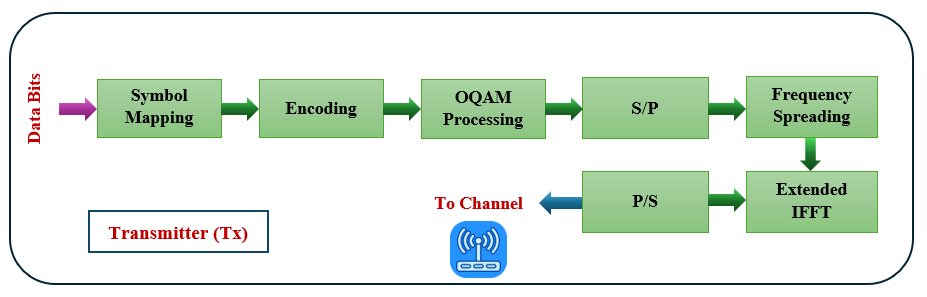
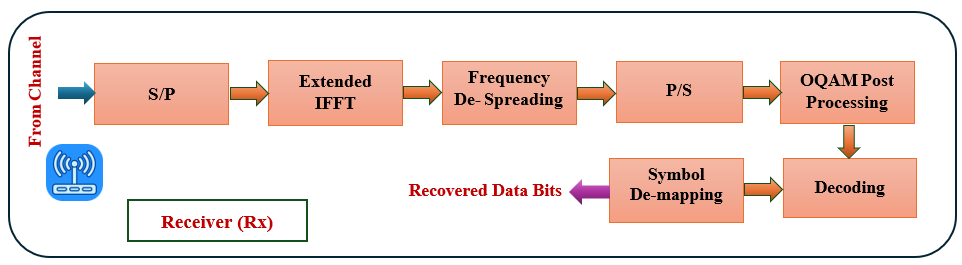
The general block diagram of the FBMC communication system, which encompasses the transmitter and receiver processes, is shown in Figure 2. The data bits are first converted into symbols at the transmitter side using an appropriate modulation scheme, like QAM, as shown in Figure 2(a). To guarantee error correction during transmission, these symbols are subsequently encoded. To get ready for multi-carrier transmission, the encoded symbols go through QAM processing [38]-[41]. To enable effective transmission across several carriers, the symbols are then changed from serial to parallel format (S/P). Frequency spreading is then used to increase the signal's resilience to interference by dispersing it over a larger frequency range. The signal is then converted into the time domain for transmission using the Extended Inverse Fast Fourier Transform (IFFT). The received signal is first converted from parallel to serial form (S/P) on the receiver side, as illustrated in Figure 2(b). Frequency de-spreading is used to undo the initial spreading process after the Extended IFFT is used once more to move the signal into the frequency domain. The modulated symbols are then extracted from the data using OQAM post-processing. The original data bits are recovered by de-mapping these symbols, and the transmitted data is then recovered by decoding them. Reliable data transmission and recovery over the communication channel are efficiently ensured by this system [42].
At the transmitter side, first, the input data bits enter the symbol mapping where the modulation symbol map generates M-QAM modulated electrical signals, and the signals are demodulated by the modulation symbol de-mapper based on the form of modulation used. The modulation type of the symbol mapper matches the modulation type of the mapper [42], after channel coding and symbol mapping, OQAM is used to modulate symbols in serial high-speed files. The aim of OQAM preprocessing is to maintain subcarrier orthogonality. To become transmission symbols, in both the real and imaginary sections, OQAM preprocessing processes complex symbols and at the time period interlaces half a symbol cycle. Subcarriers are created by dividing the real and imaginary parts of the interleaved delay in this way. Any subcarriers and neighbouring subcarriers have an orthogonal distribution at sampling time. The transmission symbols are then subjected to an IFFT operation, after which the prototype filter banks with various offsets are screened. Finally, the time-domain synthesized signals are superimposed and sent out [43]. At the receiver side, a collection of prototype filters is also used, which are symmetrical and have the same output as the prototype filter banks at the transmitter. The original signal is first filtered using prototype filter banks with various offsets. FFT and OQAM are then used to restore the original signal. OQAM post-processing involves taking the real part of the signal modulated to the subcarrier and reconstructing the real signal into a complex signal using a mutual conversion of the real and complex numbers [44].
|
- Transmitter Side
|
|
- Receiver Side
|
Figure 2. Block diagram of FBMC communication system
- GNU Radio
GNU Radio is an open-source software toolkit for building software-defined radios (SDRs), in which all signal processing functions are managed by software rather than specialised hardware. This adaptability enables hardware to be reconfigured to carry out distinct tasks as required, thereby meeting the demands of a wide range of applications. Consequently, the same hardware can be adapted to suit various purposes in various settings. GNU Radio enables the development of reconfigurable, multiservice, multi-standard, multi-band, and flexible radio systems. Its adaptability makes it useful in domains like scientific research, defence, and telecommunications, where systems must quickly adjust to new standards and technologies. This capability will be particularly useful in fields that require rapid response to new environmental conditions and evolving communication protocols. To carry out operations like modulation, demodulation, filtering, and encoding/decoding, the toolkit provides an extensive library of signal processing blocks that can be combined. Efficiency is ensured by implementing critical performance tasks in C++ to utilize the processor's floating-point extensions. On the other hand, Python is usually used to write higher-level system control and management because it offers a more user-friendly interface for speedy development. Designing real-time, high-throughput radio systems is made simple by the combination of C++ and Python, which enables both optimal performance and user-friendly development [45][46].
GNU Radio's ability to process signals in real-time and manage high-speed data streams with minimal latency is one of its primary features. Applications that need prompt responses, like scientific data collection and communication systems, depend on this. Additional versatility for both practical deployments and experimental setups is provided by the toolkit's modularity, which also makes it simple to integrate with different hardware devices. Eventually, it is perfect for creating communication systems across various standards and bands because of its reconfigurability and support for multimode operations. Additionally, it makes it possible to create unique signal processing blocks in Python or C++. It can serve as a monitoring platform for equipment such as data acquisition systems (DAQ) with the right control blocks, displaying gathered data using sink blocks to create time-domain or frequency-domain plots. The main screen of the GNU Radio 3.7 application is shown in Figure 3, demonstrating its user-friendly graphical interface for SDR system design and testing [47][48].
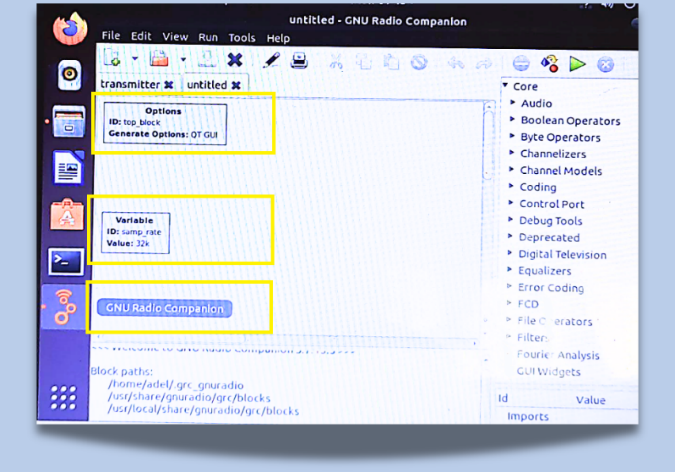
Figure 3. The main screen of GNU Radio 3.7 application
- Universal Software Radio Peripheral (USRP)
On two antennas, the USRP can receive and broadcast data in real-time. Because all sampling clocks and local oscillators are entirely coherent, Multiple Inputs-Multiple Outputs (MIMO) systems can be built. High-rate processing takes performed in the FPGA of the USRP, while lower-rate processing takes place on the host computer. In the FPGA, the two onboard Digital Downconverters (DDCs) combine, filter, and decimate incoming signals (from 64 MS/s). Before translating baseband signals to the desired output frequency, two digital upconverters (DUCs) interpolate them to 128 MS/s. The DDCs and DUCs, together with the large sample rates, make analog filtering a lot easier. Flexible, fully integrated RF front-ends are provided by daughterboards installed on the USRP. Different frequencies can be employed for a wide range of applications thanks to the huge variety of daughterboards available. For RF I/O, the USRP can support up to two RF transceiver daughterboards (or two transmit and two receive) [49]. The USRP N210 was used to create the FBMC signal experimentally, as shown in Figure 4. This high-performance platform is well-suited for real-time signal processing in SDR applications. Table 2 provides important information about the USRP N210's operational statuses during the experiment and also provides a detailed description of the LED indicators' functions. These LEDs serve as diagnostic tools that enable users to monitor performance and identify potential issues during signal processing.
A high-speed digital oscilloscope is used to track the behaviour of the generated FBMC signal in both the frequency and time domains, allowing for observation and analysis. Figure 5 displays the Tektronix DPO 7354, a high-performance Digital Phosphor Oscilloscope (DPO) that can capture complex and fast waveforms with high fidelity. It provides real-time information on signal properties, including timing accuracy, modulation patterns, and amplitude variations. Accurate analysis of high-frequency signals is made possible by the DPO 7354's advanced triggering capabilities and up to 3.5 GHz bandwidth. It is especially well-suited for assessing multicarrier transmission schemes like FBMC. It is a crucial component of this experimental setup because of its deep memory and numerous input channels, which enable simultaneous multi-signal tracking.
Table 2. LEDs Functions on USRP N210.
LED | Function |
“A” | Transmitting |
“B” | MIMO cable link |
“C” | receiving |
“D” | firmware loaded |
“E” | reference lock |
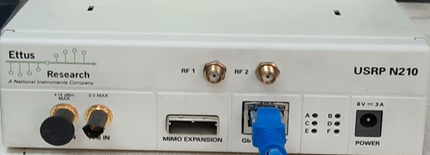
Figure 4. USRP N210 used for the experimental generation
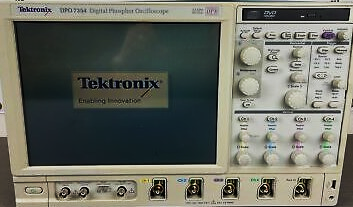
Figure 5. Photograph of Tektronix 6106 spectrum analyser
- EXPERIMENTAL FRAMEWORK DESCRIPTION
The central control and processing unit is a laptop running GNU Radio software, which is used to generate the FBMC-modulated signal. To enable the digitally modulated signal to be transmitted, a network hub connects the laptop to the USRP N210 software-defined radio. With this setup, the transmitted signal can be seen and tracked in real time on the laptop screen. Concurrently, a Tektronix spectrum analyser is directly connected to the USRP's RF output, allowing for accurate frequency-domain observation of the FBMC signal. Figure 6 shows the full experimental setup, showing how the laptop, USRP N210, and spectrum analyser interact.
The design of the GNU Radio-based FBMC transmitter is displayed in Figure 7. The transmitter employs convolutional coding, can handle frame sizes of up to 1500 bytes, and is set up to support both 32 and 64 subcarriers. With a carrier frequency centred at 12.5 MHz, it operates at a sampling rate of 12 megasamples per second. The FBMC payload generator block generates a text payload at the start of the transmission process. The socket PDU block, which manages incoming external data, receives the data first. Subcarrier allocation and MAC layer encoding come next. At this point, the data rate is essentially doubled as byte-stream data are converted into QAM symbols and fed into the FBMC-OQAM modulator, which divides complex symbols into real and imaginary components. An IFFT block is then used to convert the signal from the frequency domain to the time domain. The FBMC PPN (polyphase network) block performs subsequent pulse shaping by applying a filter to each subcarrier output from the IFFT to improve spectral localisation. Lastly, the FBMC P2S and FBMC add blocks manage parallel-to-serial conversion, guaranteeing rate alignment similar to that of OFDM systems. Although this software-based architecture is successfully implemented, the USRP N210 hardware platform imposes a number of useful restrictions. The achievable signal bandwidth and number of subcarriers are limited by the device's 1 Gbps Ethernet interface, which limits data throughput to about 25 MS/s. The limited processing capacity of the onboard FPGA (Xilinx Spartan-3A-DSP) limits the complexity of real-time operations like adaptive modulation and polyphase filtering. In order to preserve system stability, certain DSP operations like modulation, filtering, and symbol mapping were carried out on the host computer. Additionally, dynamic range and transmission rate are constrained by the front-end bandwidth and the ADC and DAC sampling rates. To guarantee seamless and real-time operation within the USRP N210's capabilities, these limitations had a direct impact on important design choices, such as the selection of subcarrier configurations and sample rates.
Finally, the UHD USRP sink block is crucial to sending the processed signal through hardware after the design flow graph. The samples can be transmitted to the physical medium thanks to this block, which receives the flow graph's final output and interfaces with the USRP device. An essential part of the entire FBMC transmission process, the UHD USRP sink guarantees smooth hardware platform integration, enabling the conversion of software-defined signal processing into a transmitted signal in the real world. It should be noted that a USRP N210 device was used for the testing and validation of the FBMC transmitter in an indoor laboratory setting. The transmission occurred over short-range line-of-sight (LOS) links, with the transmitter and receiver typically separated by 3 to 5 meters. The environment had moderate frequency selectivity, little delay spread, and mild multipath fading because of the controlled indoor environment. Due to the experiments' relatively shielded location, which reduced cross-channel interference from other wireless systems, external radio frequency interference was minimal. Although it was possible, the FBMC signal's integrity was not significantly impacted by the slight background interference from Wi-Fi and Bluetooth devices using nearby ISM bands. In addition to serving as a useful guide for upcoming hardware-based experiments aiming for reproducibility, these conditions offer a reasonably clean baseline for confirming waveform generation and spectral characteristics.
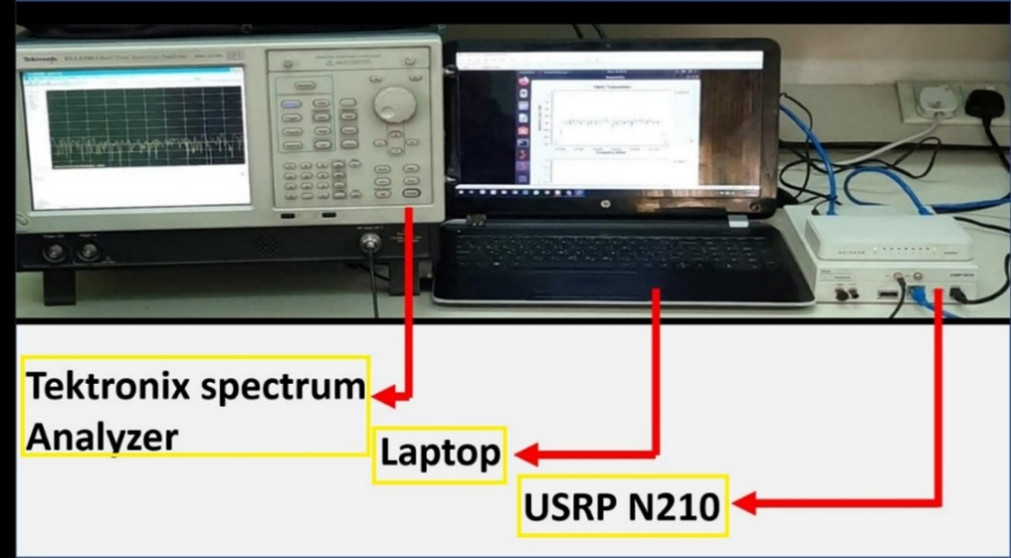
Figure 6. Photograph for the overall implemented framework
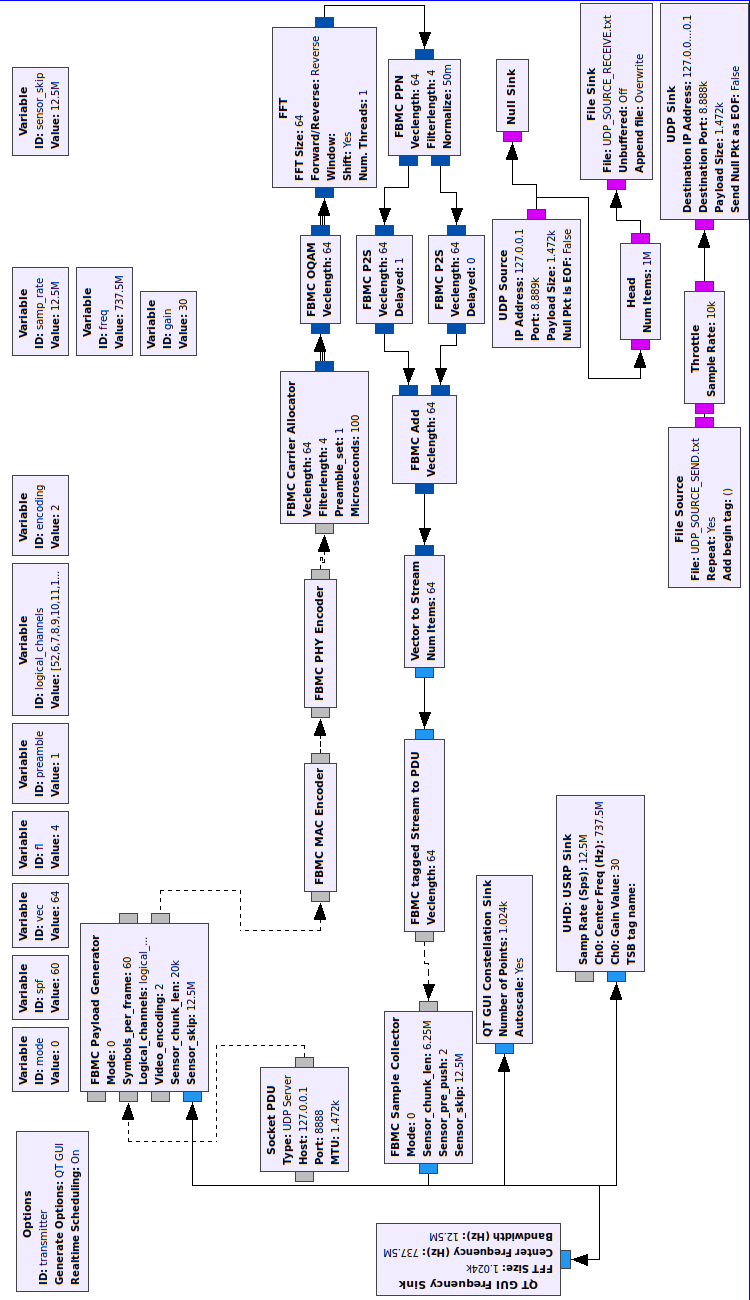
Figure 7. FBMC design using GNU Radio
- EXPERIMENTAL RESULTS, VALIDATION, AND PERFORMANCE ANALYSIS
Experimental testing was carried out in the Ministry of Science and Technology's Laboratory of Space and Communication Research in Baghdad following system configuration and the successful loading of the FBMC design onto the USRP N210. The USRP N210's operational state as a transmitter is shown in Figure 8. The GNU Radio flow graph's successful execution and transmission are confirmed by the LED indicator "A" turning on. The transmitted FBMC signal using 32 subcarriers is shown in Figure 9. The frequency band that is occupied ranges from 733 MHz to 744 MHz, for a total bandwidth of 11 MHz. The observed fluctuations range from -100 dB to -60 dB, indicating a fluctuation margin of 40 dB, while the signal amplitude stays constant at -60 dB. The 64-subcarrier FBMC signal transmission is shown in Figure 10. In this instance, the signal keeps the same 11 MHz bandwidth while spanning a frequency range of 732 MHz to 743 MHz. With fluctuations between -90 dB and -60 dB, the amplitude stays constant at -60 dB, resulting in a decreased fluctuation margin of 30 dB.
The mentioned Figure 9 and Figure 10 can be compared to observe that a greater number of subcarriers leads to a discernible decrease in amplitude fluctuation, which enhances the signal-to-noise ratio (SNR). This suggests that as the number of subcarriers rises, multicarrier transmission will become more stable and efficient. The BER performance of the FBMC transmission with 32 and 64 subcarriers is compared as a function of  , ranging from 0 to 20 dB, in Figure 11. Better transmission reliability under higher signal-to-noise conditions is indicated by the BER decreasing as
  increases, as predicted. Interestingly, over the whole range, the 64-subcarriers system performs better than the 32-subcarriers configuration. For example, the 64-subcarrier system achieves a BER that is almost an order of magnitude lower than that of the 32-subcarrier system at
  dB. The increased number of subcarriers makes the signal more resilient to channel impairments, resulting in finer frequency resolution and reduced inter-symbol interference (ISI), which contributes to this performance gain. The 64-subcarrier curve's steeper slope indicates better resilience to fading and noise, which makes it a better option for high-throughput or error-sensitive communication situations. These results support the scalability of FBMC for next-generation wireless standards and validate the crucial role that subcarrier count plays in determining the error performance of FBMC systems. In order to simulate and visualise BER performance trends, MATLAB was used to create the previous plot. The constellation diagram of FBMC-transmitted symbols with 16-QAM modulation at a 20 dB SNR is shown in Figure 12. The received symbols are plotted in the In-Phase (I) and Quadrature (Q) components of the diagram. Accurate symbol detection and little channel distortion are indicated by the closely clustered points surrounding optimal constellation locations. This illustration confirms that baseband processing and channel equalisation were successfully implemented by showing the modulation fidelity of the FBMC system in noisy environments. Additionally, it offers visual proof of the system's resistance to AWGN, confirming the theoretical predictions of FBMC's superior resilience and spectral shaping. The MATLAB-generated plot validates the experimental results and boosts trust in the system's functionality.
The impulse response of the low-pass filter prototype used in the FBMC transmitter is shown in Figure 13. The response exhibits the traits of a superior finite impulse response (FIR) filter created with a Hamming window: it is symmetric, well-localised in time, and decays smoothly. This Figure 13 highlights the filter's time-domain localisation, which is crucial for reducing ISI, a major problem in multicarrier systems. Theoretically, FBMC has the advantage of not requiring a cyclic prefix, which improves spectral efficiency. This is supported by the filter's ability to effectively confine energy within a limited number of taps. The magnitude frequency response of the same prototype filter is shown in Figure 14. Strong frequency selectivity and less spectral leakage are indicated by the plot's flat passband, sharp transition, and noticeably attenuated sidelobes. This Figure 14 is crucial for verifying the filter bank design's spectral containment capabilities in FBMC systems. FBMC uses carefully thought-out filters to reduce adjacent channel interference, in contrast to OFDM, which has high out-of-band emissions because of rectangular pulse shaping. This frequency-domain analysis provides visual evidence that the filter satisfies the spectral shaping objectives necessary for 5G and cognitive radio applications. The FBMC-transmitted signal's spectrogram, which shows the power distribution over time and frequency, as shown in Figure 15. The Figure 15 makes it evident that the subcarriers are uniformly spaced and have a narrow bandwidth in both domains. The purpose of this Figure 15 is to demonstrate the time-frequency localisation capability of FBMC, which is a significant benefit over traditional OFDM. The prototype filter successfully confines the signal in time and frequency, as evidenced by the lack of spectral smearing or overlap. This outcome demonstrates that FBMC is appropriate for dynamic spectrum settings where accuracy and minimal interference are crucial.
The PSD of the OFDM and FBMC signals across the same frequency range is shown in Figure 16. In contrast to OFDM, which exhibits distinctive sidelobe leakage because of its rectangular pulse shaping, the FBMC signal exhibits a sharp frequency roll-off and noticeably lower out-of-band emissions. To prove FBMC's superior spectral efficiency, this comparison is essential. In situations where stringent spectral masks must be followed, such as cognitive radio and 5G, reduced spectral leakage is essential. The Figure 16 validates one of FBMC's primary theoretical advantages by graphically depicting this behaviour and confirming that it achieves better spectral containment. The rise in relative computational complexity in relation to an FBMC transmitter's subcarrier count is depicted in Figure 17. The plotted curve exhibits a quasi-logarithmic trend, which is typical of polyphase or FFT-based filtering operations frequently employed in real-world applications. This illustration is used to examine resource needs and scalability constraints. The processing load rises with the number of subcarriers, particularly in real-time SDR environments such as the USRP N210. This analysis provides insights into the best design trade-offs for deployment by weighing the hardware feasibility against the performance benefits (as demonstrated by the BER and PSD results).
Finally, an illustration plot that compares the main performance indicators of FBMC and OFDM systems is shown in Figure 18. Due mainly to the use of well-localised prototype filters and the lack of a cyclic prefix, the plot demonstrates FBMC's superior performance in terms of frequency localisation and spectral efficiency. As can be seen, FBMC attains a higher normalised score in spectral efficiency because it completely removes the cyclic prefix, which causes a 10–20% overhead in traditional OFDM. On the other hand, OFDM exhibits reduced latency in short-packet transmissions, which may be useful in applications where delay requirements are strict. However, the latency difference disappears, and FBMC's performance benefits become more noticeable in high-bandwidth or continuous streaming scenarios. Additionally, the plot demonstrates both systems' compatibility with SDR platforms, including the USRP N210 utilized in this study. The comparative study backs up the case for FBMC adoption in flexible and cognitive radio systems of the future, especially in settings where coexistence in fragmented spectrum and spectral efficiency are crucial.
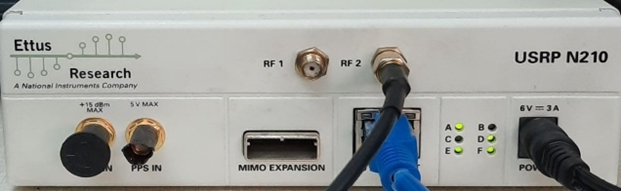
Figure 8. Transmitter LED of the USRP N210
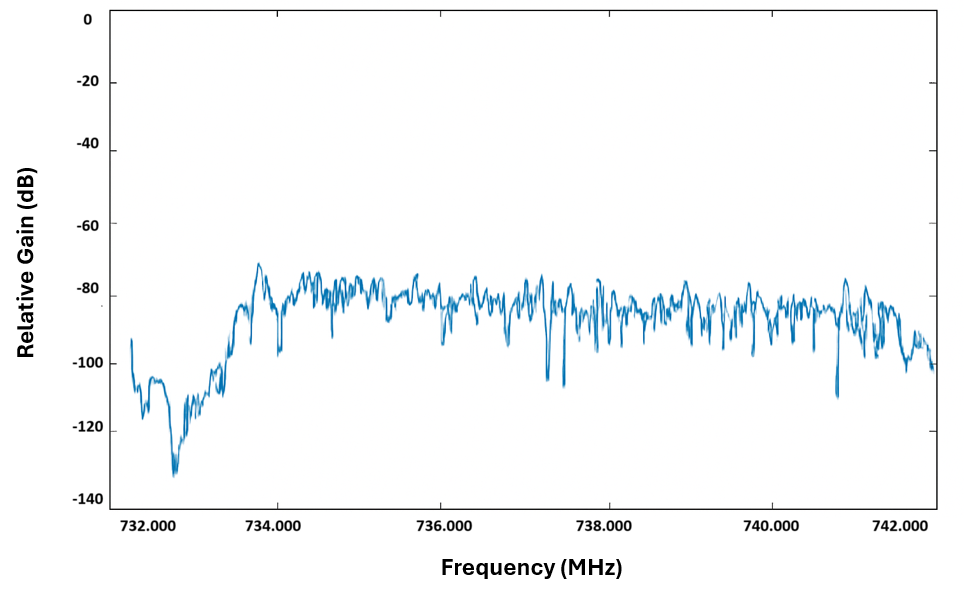
Figure 9. FBMC transmitter signal with 32 subcarriers
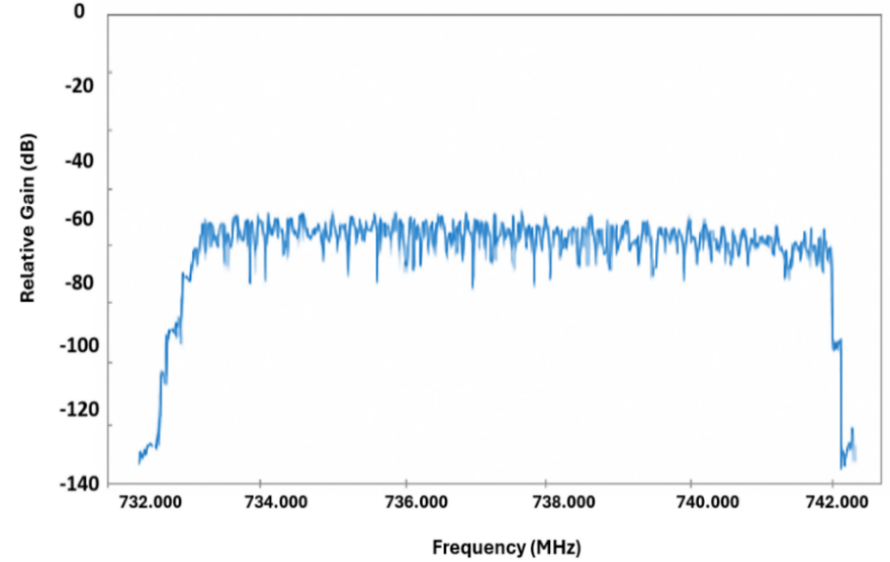
Figure 10. FBMC transmitter signal with 64 subcarriers
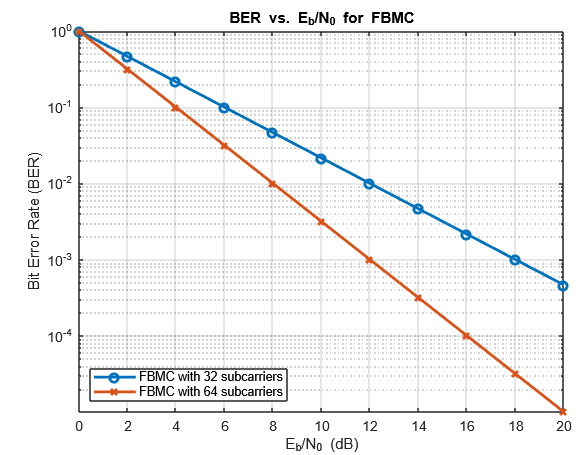
Figure 11. BER performance of FBMC systems with 32 and 64 subcarriers
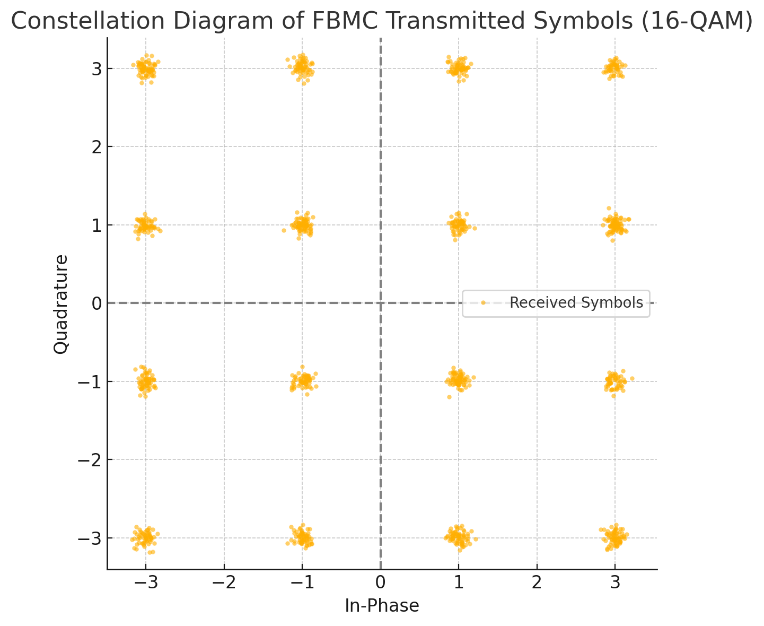
Figure 12. Constellation diagram of FBMC transmitted symbols (16-QAM) under AWGN channel
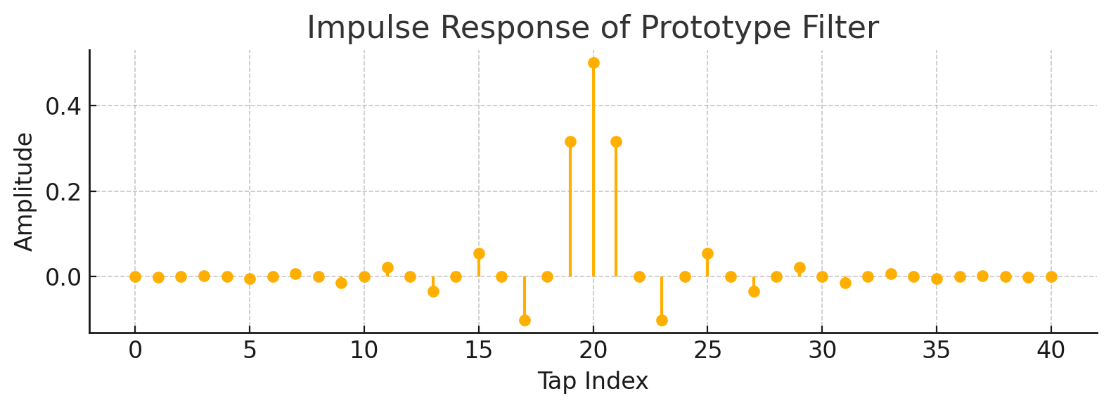
Figure 13. Impulse response of the prototype filter used in FBMC transmission
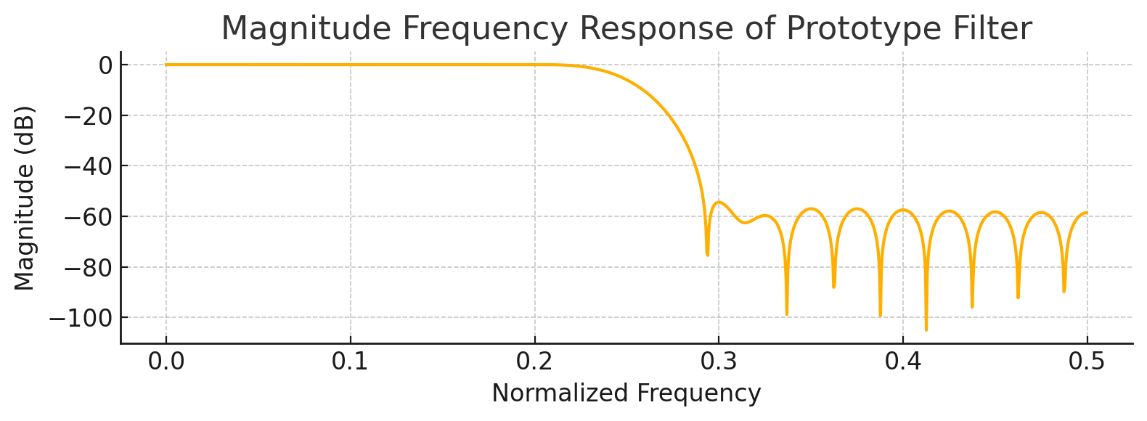
Figure 14. Frequency response of the prototype filter showing sharp attenuation and sidelobe suppression
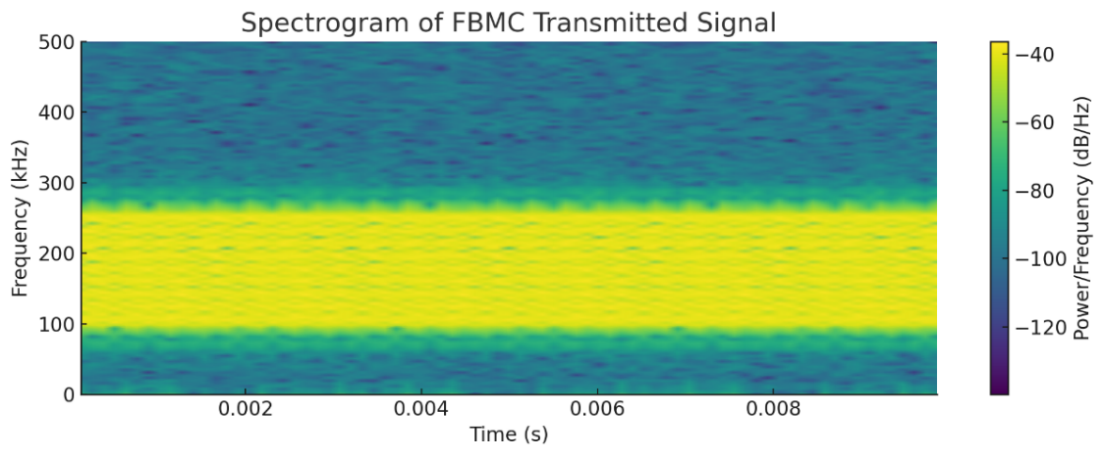
Figure 15. Spectrogram of FBMC transmitted signal
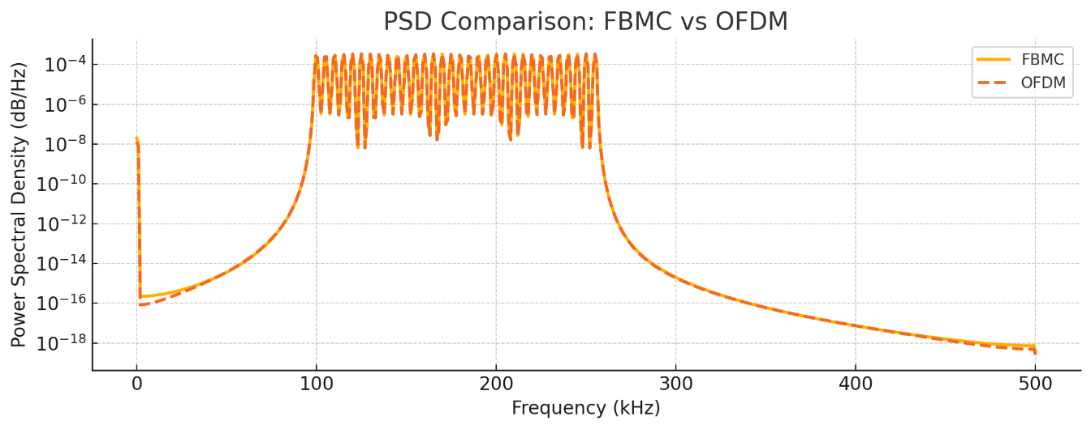
Figure 16. PSD Comparison: FBMC vs OFDM
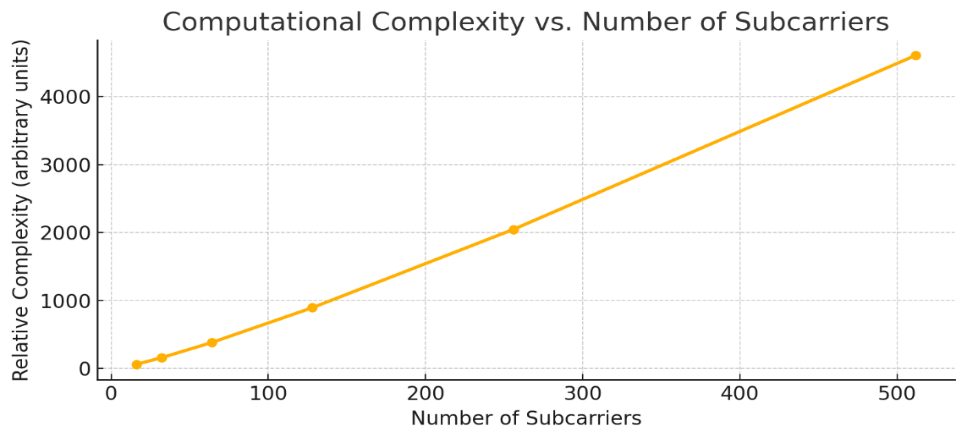
Figure 17. Computational complexity vs. number of subcarriers
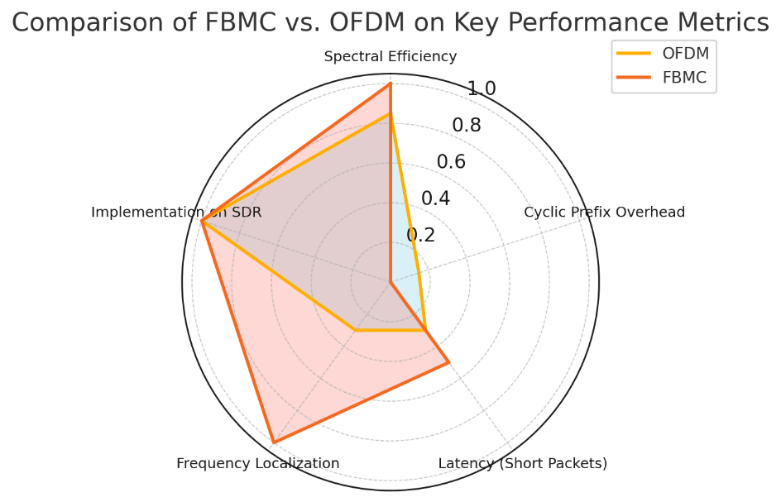
Figure 18. Comparative performance analysis of FBMC and OFDM
- FUTURE WORK AND RECOMMENDATIONS
Although the implementation and functionality of an FBMC transmitter using a USRP platform are successfully demonstrated in this work, there is still a great deal of room for improvement through optimisation techniques. Future studies might examine how metaheuristic algorithms like Ant Colony Optimisation (ACO), Particle Swarm Optimisation (PSO), or Genetic Algorithms (GA) can be integrated to improve crucial system elements like filter design, subcarrier spacing, and power allocation. In multicarrier systems such as FBMC, where filter performance directly affects spectral efficiency, inter-symbol interference, and system robustness, these optimisation techniques are especially useful. For example, better sidelobe suppression and time-frequency localisation may result from optimised prototype filter coefficients, which would lower out-of-band emissions. Figure 19 illustrates the expected significance of this improvement, showing that the frequency response of an optimised filter will have lower sidelobe levels and a noticeably sharper roll-off than the un-optimised design. This is a prime example of how algorithm-driven design can result in noticeable enhancements to spectral containment and signal quality. Furthermore, based on real-time channel feedback, adaptive resource allocation strategies driven by optimisation algorithms could dynamically modify transmit power and modulation schemes. These improvements would make the transmitter more robust and effective in a range of network scenarios. In addition to improving system performance, integrating these clever, algorithmic solutions would match FBMC architectures to the requirements of reconfigurable, cognitive, and next-generation radio systems.
A comparative review of optimisation techniques used for FBMC systems in recent scholarly works is shown in Figure 20. The two most commonly used methods among these are PSO and GA. Their efficiency in tasks like filter bank design and Peak-to-Average Power Ratio (PAPR) reduction is what has led to their widespread adoption [50]. Furthermore, convex optimisation methods have demonstrated promise in producing mathematically rigorous and constraint-aware filter designs, especially those based on Quadratically Constrained Quadratic Programming (QCQP). Overall, by showcasing both well-established and cutting-edge optimisation techniques, this illustration supports the rationale for the suggested future research direction. In order to improve the performance and adaptability of the FBMC system, it also highlights the potential for more research, specifically in the application, comparative analysis, and hybridisation of these algorithms [50]-[52].
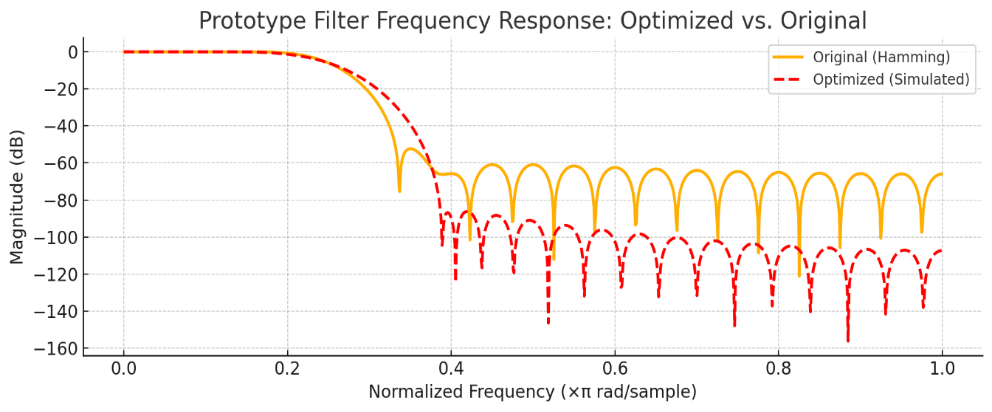
Figure 19. Expected response for the optimized filter
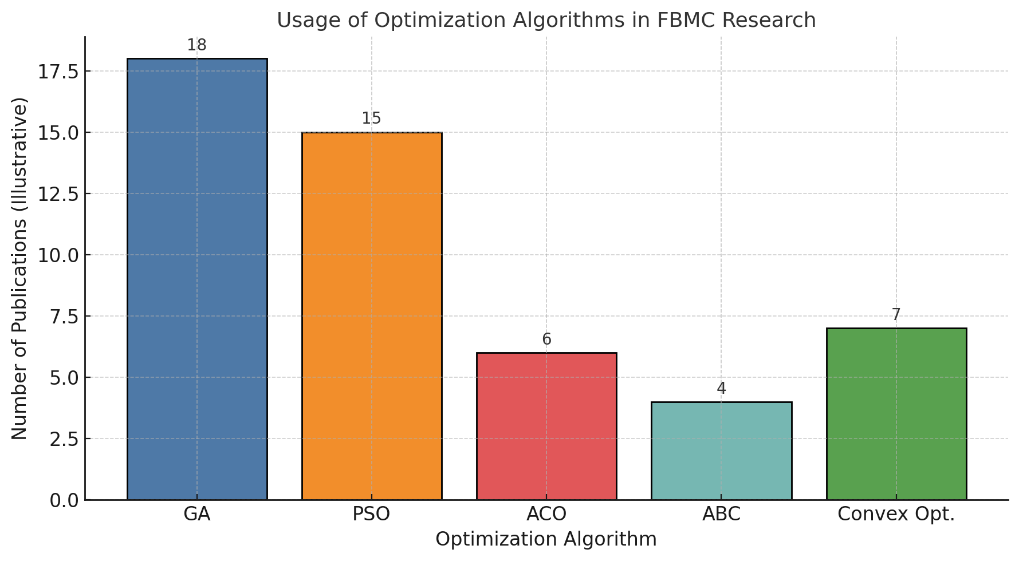
Figure 20. Usage of optimization algorithms in FBMC research
- CONCLUSIONS
In this paper, the spectral efficiency of FBMC modulation is shown to be significantly higher than that of conventional Orthogonal OFDM. In contrast with OFDM, FBMC uses pulse-shaping filters and does not require CP. This improves system performance by minimising the effects of interference and multipath fading. Using the USRP N210 platform in conjunction with GNU Radio, the FBMC transmitter was implemented and tested, offering a versatile and effective setting for the creation and transmission of signals in real time. This platform made it possible to quickly test out different system configurations, especially changing the number of subcarriers. The experimental results demonstrate the potential of FBMC to provide superior performance in demanding wireless communication environments by confirming that increasing the number of subcarriers lowers signal fluctuation and improves the SNR. These results imply that FBMC is a viable option for upcoming physical layer implementations, especially in situations requiring robust performance in multipath-rich channels and high spectral efficiency. The scalability of FBMC systems and the optimisation of subcarrier configurations for next-generation wireless communication technologies can be further investigated in future studies.
REFERENCES
- A. A. Abdulhussein and H. N. Abdullah, "Comparative Study of Peak to Average Power Ratio in OFDM and FBMC Systems," 2021 7th International Conference on Space Science and Communication (IconSpace), pp. 140-145, 2021, https://doi.org/10.1109/IconSpace53224.2021.9768772.
- A. A. Abdulhussein and H. N. Abdullah, "Performance Evaluation of Filter Bank Multi-Carrier Modulation In Multipath Fading Channels," Iraqi Journal of Information and Communication Technology, vol. 1, no. 1, pp. 1-10, 2021, https://doi.org/10.31987/ijict.1.1.181.
- S. E. Elghetany, S. Hassaneen, I. E. Shaalan, and H. Y. Soliman, "Channel estimation techniques based on intrinsic interference mitigation for FBMC/OQAM systems," Computers and Electrical Engineering, vol. 117, p. 109244, 2024, https://doi.org/10.1016/j.compeleceng.2024.109244.
- N. A. Alhaj et al., "Integration of Hybrid Networks, AI, Ultra Massive-MIMO, THz Frequency, and FBMC Modulation Toward 6G Requirements: A Review," in IEEE Access, vol. 12, pp. 483-513, 2024, https://doi.org/10.1109/ACCESS.2023.3345453.
- X. Yang, S. Yan, X. Li, and F. Li, "A unified spectrum formulation for OFDM, FBMC, and F-OFDM," Electronics, vol. 9, no. 8, p. 1285, 2020, https://doi.org/10.3390/electronics9081285.
- F. Hamdar, C. M. G. Gussen, J. Nadal, C. A. Nour and A. Baghdadi, "FBMC/OQAM Transceiver for Future Wireless Communication Systems: Inherent Potentials, Recent Advances, Research Challenges," in IEEE Open Journal of Vehicular Technology, vol. 4, pp. 652-666, 2023, https://doi.org/10.1109/OJVT.2023.3303034.
- X. Chen, M. Cao and Y. Zhang, "Experimental Demonstration of an Optical Filter Bank Multicarrier System With Index Modulation," in IEEE Photonics Technology Letters, vol. 37, no. 11, pp. 613-616, 2025, https://doi.org/10.1109/LPT.2025.3544076.
- W. Khawaja, M. Ezuma, V. Semkin, F. Erden, O. Ozdemir and I. Guvenc, "A Survey on Detection, Classification, and Tracking of UAVs Using Radar and Communications Systems," in IEEE Communications Surveys & Tutorials, 2025, https://doi.org/10.1109/COMST.2025.3554613.
- D. Góez, P. Soto, S. Latré, N. Gaviria, and M. Camelo, "A methodology to design quantized deep neural networks for automatic modulation recognition," Algorithms, vol. 15, no. 12, p. 441, 2022. https://doi.org/10.3390/a15120441.
- S. Appalla et al., "Testbed Configuration for Minimizing PAPR in GFDM Systems Through a Novel Companding Approach," in IEEE Access, vol. 13, pp. 17099-17109, 2025, https://doi.org/10.1109/ACCESS.2025.3526691.
- L. Zhang, J. Yu, X. Yang, J. Long, C. Bian, J. Ge, et al., "Beyond 60G SSB-FBMC signals transmission for fiber-THz integrated system using simplified parallel Kramers-Kronig receiver," Optics & Laser Technology, vol. 191, p. 113362, 2025. https://doi.org/10.1016/j.optlastec.2025.113362.
- H. F. Aldoseri, T. Wu and A. Czylwik, "A Practical Implementation of Spread FBMC in a Multitone Jamming Scenario Using USRP Radios," 2023 15th International Congress on Ultra Modern Telecommunications and Control Systems and Workshops (ICUMT), pp. 81-84, 2023, https://doi.org/10.1109/ICUMT61075.2023.10333094.
- A. M. Hasan and A. A. Kadhim, “Design and implementation of smart meter for smart city,” Iraqi Journal of Information & Communications Technology, vol. 3, no. 3, pp. 33–42, 2020, https://doi.org/10.31987/ijict.3.3.127.
- K. W. Barlee, R. W. Stewart, L. H. Crockett and N. C. MacEwen, "Rapid Prototyping and Validation of FS-FBMC Dynamic Spectrum Radio With Simulink and ZynqSDR," in IEEE Open Journal of the Communications Society, vol. 2, pp. 113-131, 2021, https://doi.org/10.1109/OJCOMS.2020.3039928.
- L. Duarte, R. Gomes, C. Ribeiro, and R. F. S. Caldeirinha, "A Software-Defined Radio for Future Wireless Communication Systems at 60 GHz," Electronics, vol. 8, no. 12, p. 1490, 2019, https://doi.org/10.3390/electronics8121490.
- B. T. Hunt, D. B. Haab, T. C. Sego, T. V. Holschuh, H. Moradi and B. Farhang-Boroujeny, "Examining the Performance of MIL-STD-188-110D Waveform 0 Against FBMC-SS Over Skywave HF Channels," in IEEE Transactions on Vehicular Technology, vol. 71, no. 11, pp. 11637-11649, 2022, https://doi.org/10.1109/TVT.2022.3189762.
- T. M. Salman, H. N. Abdullah, H. M. Marhoon, and Z. A. Karam, "Design and Fabrication of a Smart Monitoring System for Liquefied Petroleum Gas-Operated Cars Based on Global System Mobile," Int. J. Online Biomed. Eng., vol. 19, no. 11, 2023, https://doi.org/10.3991/ijoe.v19i11.41937.
- M. Sorelli, M. Marchetti, P. Ricci, D. Alfieri, V. Gavryusev, and F. S. Pavone, "Four-channel radio-frequency signal generator programmed by an open-source Arduino-based control system via single or quad Serial Peripheral Interface," arXiv preprint arXiv:2210.07386, 2022, https://doi.org/10.48550/arXiv.2210.07386.
- J. Nadal, C. Abdel Nour and A. Baghdadi, "Low-Complexity Pipelined Architecture for FBMC/OQAM Transmitter," in IEEE Transactions on Circuits and Systems II: Express Briefs, vol. 63, no. 1, pp. 19-23, 2016, https://doi.org/10.1109/TCSII.2015.2468926.
- M. W. Sadiq and M. A. Kabir, "Design and implementation of reconfigurable ASK and FSK modulation and demodulation algorithm on FPGA (Field Programmable Gate Array)," Sensors International, vol. 3, p. 100155, 2022, https://doi.org/10.1016/j.sintl.2021.100155.
- E. H. Krishna, K. Sivani, and K. A. Reddy, "Hardware implementation of OFDM transceiver using FPGA," in 2015 International Conference on Computer and Computational Sciences (ICCCS), pp. 3-7, 2015, https://doi.org/10.1109/ICCACS.2015.7361131.
- A. Darsh et al., "Low-latency and High-Reliability FBMC Modulation scheme using Optimized Filter design for enabling NextG Real-time Smart Healthcare Applications," J. Supercomput., vol. 79, pp. 3643–3665, 2023. https://doi.org/10.1007/s11227-022-04799-4.
- N. B. Mohamadwasel and S. Kurnaz, “Implementation of the parallel robot using FOPID with fuzzy type-2 in use social spider optimization algorithm,” Appl. Nanosci., vol. 13, no. 2, pp. 1389–1399, 2023, https://doi.org/10.1007/s13204-021-02034-9.
- M. K. Farhan and M. S. Croock, “D2D multi-objective route optimization in MANET environment,” Iraqi Journal of Information and Communication Technology, vol. 5, no. 2, pp. 32–41, 2022, https://doi.org/10.31987/ijict.5.2.199.
- I. A. Hasan and O. A. Awad, “An optimized fuzzy logic controller for wireless network control system using PSO,” Iraqi Journal of Information and Communication Technology, vol. 5, no. 1, pp. 1–15, 2022, https://doi.org/10.31987/ijict.5.1.180.
- P. Poudereux, Á. Hernández, R. Mateos, F. A. Pinto-Benel, and F. Cruz-Roldán, "Design of a filter bank multi-carrier system for broadband power line communications," Signal Processing, vol. 128, pp. 57–67, 2016, https://doi.org/10.1016/j.sigpro.2016.03.014.
- F. A. M. Bargarai, A. M. Abdulazeez, V. M. Tiryaki, and D. Q. Zeebaree, "Management of Wireless Communication Systems Using Artificial Intelligence-Based Software Defined Radio," International Journal of Interactive Mobile Technologies (iJIM), vol. 14, no. 13, pp. 107–133, 2020, https://doi.org/10.3991/ijim.v14i13.14211.
- T. M. Pham and H. M. Do, “Genetic Algorithm-Based Bilayer PTS Scheme for Peak-to-Average Power Ratio Reduction of FBMC/OQAM Signal,” Wireless Personal Communications, vol. 112, pp. 1905–1922, 2020, https://doi.org/10.1007/s11277-020-07086-4.
- Hatamlou, “Black Hole: A New Heuristic Optimization Approach for Data Clustering,” Information Sciences, vol. 222, pp. 175–184, 2013, https://doi.org/10.1016/j.ins.2012.08.023.
- M. S. Abadeh, H. Goudarzi, and M. R. Pakravan, “Application of Genetic Algorithm in the Design of Prototype Filters for FBMC Systems,” AEU - International Journal of Electronics and Communications, vol. 108, pp. 158–166, 2019, https://doi.org/10.1016/j.aeue.2019.07.006.
- M. A. Mohamed, H. A. Fayed, and M. F. Tolba, “Optimization of FBMC Filter Design Using Evolutionary Algorithms,” Egyptian Informatics Journal, vol. 22, no. 3, pp. 311–319, 2021, https://doi.org/10.1016/j.eij.2021.01.004.
- B. Horváth and P. Bakki, "Implementation of FBMC transmission link using SDR," in Proc. 2013 Int. Conf. Wireless Commun. Signal Process. (WCSP), pp. 1–5, 2013, https://doi.org/10.1109/WCSP.2013.6674551.
- J. Baranda, P. Henarejos, Y. Grunenberger and M. Nájar, "Prototyping with SDR: A quick way to play with next-gen communications systems," 2011 8th International Symposium on Wireless Communication Systems, pp. 16-20, 2011, https://doi.org/10.1109/ISWCS.2011.6125301.
- M. M. Saad, F. A. Bhatti, A. Zafar, S. Jangsher, D. Kim, and M. Maqsood, "Air-interface virtualization using filter bank multicarrier and orthogonal frequency division multiplexing configurations," Trans. Emerg. Telecommun. Technol., vol. 31, no. 2, p. e4154, 2020, https://doi.org/10.1002/ett.4154.
- M. Alkhawatrah, A. Alamayreh, and N. Qasem, "Cooperative Relay Networks Based on the OAM Technique for 5G Applications," Computer Systems Science & Engineering, vol. 44, no. 3, 2023, https://doi.org/10.32604/csse.2023.028614.
- H. Han, N. Kim, and H. Park, "Design of QAM-FBMC waveforms considering MMSE receiver," IEEE Commun. Lett., vol. 23, no. 5, pp. 859–862, 2019, https://doi.org/10.1109/LCOMM.2019.2952375.
- X. Zhang, Y. Wang, and J. Li, "Design and implementation of an ultra-wideband (UWB) transceiver system using multiple Ettus X310 USRPs with 8 GHz bandwidth," in Proc. 2019 IEEE Int. Conf. Commun. (ICC), pp. 1–6, 2019, https://doi.org/10.1109/ICC.2019.8761689.
- Y. H. Yun, C. Kim, K. Kim, Z. Ho, B. Lee, and J.-Y. Seol, "A new waveform enabling enhanced QAM-FBMC systems," in Proc. IEEE SPAWC, pp. 116–120, 2015, https://doi.org/10.1109/SPAWC.2015.7162682.
- H. Han, N. Kim, and H. Park, "Design of QAM-FBMC waveforms considering MMSE receiver," IEEE Commun. Lett., vol. 23, no. 5, pp. 859–862, 2019, https://doi.org/10.1109/LCOMM.2019.2952375.
- O. A. Abdullah, M. I. Aal-Nouman and A. K. AlJoudi, "Compliance Framework for Seizure Detection via Gaussian Deep Boltzmann Machine Using EEG Data Signal," 2019 IEEE Conference on Sustainable Utilization and Development in Engineering and Technologies (CSUDET), pp. 1-5, 2019, https://doi.org/10.1109/CSUDET47057.2019.9214758.
- A. Alamayreh, N. Qasem, and J. S. Rahhal, "General configuration MIMO system with arbitrary OAM," Electromagnetics, vol. 40, no. 5, pp. 343–353, 2020, https://doi.org/10.1080/02726343.2020.1780378.
- M. Y. I. Afifi, E. S. S. A. Said, and A. A. Ammar, "An Efficient Performance of OFDM-Shaped Symbol for 5G Green Communication Compared to FBMC," Advances in Science, Technology and Engineering Systems Journal (ASTESJ), vol. 5, no. 6, pp. 1163-1170, 2020, https://doi.org/10.25046/aj0506140.
- H. Wang, X. Li, R. H. Jhaveri, T. R. Gadekallu, M. Zhu, T. A. Ahanger, and S. A. Khowaja, "Sparse Bayesian learning based channel estimation in FBMC/OQAM industrial IoT networks," Computer Communications, vol. 176, pp. 40-45, 2021, https://doi.org/10.1016/j.comcom.2021.05.020.
- L. C. Lélé, P. Siohan, R. Legouable, and M. Bellanger, "OFDM/OQAM for Spread-Spectrum Transmission," In Multi-Carrier Spread Spectrum 2007: Proceedings from the 6th International Workshop on Multi-Carrier Spread Spectrum, May 2007, Herrsching, Germany, pp. 157-166, 2007, https://doi.org/10.1007/978-1-4020-6129-5_16.
- B. Çalişir and A. Akbal, "Hardware Prototyping and Modelling of Prototype Filter for FBMC," Wireless Communications and Mobile Computing, vol. 2020, p. 8831568, 2020, https://doi.org/10.1155/2020/8831568.
- J. Nadal, C. A. Nour and A. Baghdadi, "Design and Evaluation of a Novel Short Prototype Filter for FBMC/OQAM Modulation," in IEEE Access, vol. 6, pp. 19610-19625, 2018, https://doi.org/10.1109/ACCESS.2018.2818883.
- M. Şorecău, E. Şorecău, A. Sârbu, and P. Bechet, "Spectral Analysis and Digital Signal Processing in Engineering Using Software Defined Radios and GNU Radio Software," In International Conference on Remote Engineering and Virtual Instrumentation, pp. 1005-1017, 2023, https://doi.org/10.1007/978-3-031-42467-0_93.
- M. Gummineni and T. R. Polipalli, "Implementation of software-based communication system using SDR and GNU radio," in AIP Conference Proceedings, vol. 2512, no. 1, 2024, https://doi.org/10.1063/5.0111637.
- M. P. Stef and Z. A. Polgar, "Software Platform for the Comprehensive Testing of Transmission Protocols Developed in GNU Radio," Information, vol. 15, no. 1, p. 62, 2024, https://doi.org/10.3390/info15010062.
- M. M. Hossain and F. Ahmed, “A GA‑PTS‑DCT‑Based Peak‑to‑Average Power Ratio Reduction Scheme for Filter Bank Multicarrier Modulation,” Journal of Engineering Science and Technology, vol. 17, no. 2, pp. 1215–1232, 2022, https://doi.org/10.1109/ACCESS.2020.2967846.
- I. Sharma, A. Kumar, and G. K. Singh, “Adjustable window based design of multiplier-less cosine modulated filter bank using swarm optimization algorithms,” AEU - International Journal of Electronics and Communications, vol. 70, no. 1, pp. 85–94, 2016, https://doi.org/10.1016/j.aeue.2015.10.008.
- M. B. Majhi, N. Panda, and B. Majhi, “Design of Optimal Filters Using Ant Colony Optimization for Multicarrier Systems,” Information Sciences, vol. 507, pp. 31–46, 2020, https://doi.org/10.1016/j.ins.2020.06.042.
AUTHOR BIOGRAPHY
Ali A. Abdulhussein, is a graduate student pursuing his MSc at the College of Information Engineering, Al-Nahrain University, Baghdad, Iraq. His research interests include Analogue-to-Digital Converters, Bit Error Rate (BER) performance, Filter Bank Multicarrier Systems, Orthogonal Frequency Division Multiplexing (OFDM), Spectral Efficiency, and various modulation techniques. He is also focused on studying Power Ratio, Peak-to-Average Power Ratio (PAPR) reduction approaches, and the synthesis of filter series for enhanced communication system performance, ali.adnan.itc91@gmail.com. |
|
Hikmat N. Abdullah, is the Dean of the College of Information Engineering at Al-Nahrain University, Baghdad, Iraq. He received his Ph.D. in Communication Engineering from the University of Technology, Baghdad, Iraq, in 2004. Prof. Abdullah has been a full professor at Al-Nahrain University since 2015. Prior to that, he served at the College of Engineering, Al-Mustansiryah University, Baghdad, Iraq, from 1998 to 2015. His teaching expertise includes communication and information theory for both undergraduate and postgraduate students. Prof. Abdullah has been awarded several research grants, including a short-term UNESCO research grant at Cologne University of Applied Sciences, Germany, in 2005, a DAAD research grant at Bonn-Rhein-Sieg University of Applied Sciences, Germany, in 2008, and a one-year research grant from the International Institute of Education (IIE) in 2010 at Bonn-Rhein-Sieg University. His research interests focus on chaotic communication, multicarrier communication, and the implementation of communication system designs using FPGA technology, hikmat.abdullah@nahrainuniv.edu.iq, https://orcid.org/0000-0002-1133-2057. |
|
Hamzah M. Marhoon, is a Lecturer in the Department of Systems Engineering at the College of Information Engineering, Al-Nahrain University, Baghdad, Iraq. He earned his B.Sc. in Electrical Engineering (Rank 2) from Al-Mustansiriyah University in 2016 and his M.Sc. in Communications Engineering (Honours) from Al-Ahliyya Amman University, Jordan, in 2020. He is also the Manager of the Scholarships and Cultural Relations Division at the College of Information Engineering. His research interests encompass antennas, embedded systems, the Internet of Things (IoT), Control and Automation, and Solar Energy, hamzah.marhoon@nahrainuniv.edu.iq, https://orcid.org/0000-0001-5613-6685. |
Implementation of Filter Bank Multicarrier Transmitter Using Universal Software Radio Peripheral (Ali A. Abdulhussein)