ISSN: 2685-9572 Buletin Ilmiah Sarjana Teknik Elektro
Vol. 7, No. 3, September 2025, pp. 527-540
Microcontroller-based Prototype Model of a Solar Wireless Electric Vehicle-to-Vehicle Charging System with Real-Time Battery Voltage Monitoring
M. S. Priyadarshini 1, Mohamed Metwally Mahmoud 2, Ujjal Sur 3, Sid Ahmed El Mehdi Ardjoun 4,
Azem Hysa 5, Noureddine Bessous 6, Khaled A. Metwally 7, Noha Anwer 8
1 Department of Electrical and Electronics Engineering, K.S.R.M College of Engineering (Autonomous),
Kadapa-516005, India
2 Department of Electrical Engineering Faculty of Energy Engineering, Aswan University, Aswan 81528, Egypt
3 Department of Electrical Engineering, Faculty of Technology, University of Delhi, Delhi 110007, India
4 IRECOM Laboratory, Faculty of Electrical Engineering, Djillali Liabes University, Sidi Bel-Abbes 22000, Algeria
5 Department of Applied and Natural Sciences, Aleksander Moisiu University, Neighborhood 1, Currilave Street,
Durres, 2001, Albania
6 Electrical Engineering and Renewable Energy Laboratory (LGEERE), University of El-Oued, El-Oued 39000, Algeria
7 Soil and water sciences department, faculty of technology and development, Zagazig University, 44519, Egypt
8 Electrical Power and Machines Eng. Dept., The High Institute of Engineering and Technology, Luxor, Egypt
ARTICLE INFORMATION |
| ABSTRACT |
Article History: Received 11 April 2025 Revised 13 June 2025 Accepted 22 September 2025 |
| 
The increasing adoption of electric vehicles (EVs) necessitates sustainable and efficient charging solutions, particularly in remote areas and emergencies where conventional grid-based charging stations are inaccessible. This research presents an Arduino-based prototype model of the Solar Wireless Electric Vehicle-to-Vehicle Charging System (SWEV2VCS), integrating a TP4056 charging module, a microcontroller, and wireless power transfer (WPT) coils to facilitate efficient, autonomous charging. The system harvests solar energy through high-efficiency photovoltaic (PV) panels, which are then regulated and stored in lithium-ion batteries. The TP4056 module ensures safe and controlled charging by providing overcharge, over-discharge, and current regulations for battery protection. An Arduino-based microcontroller unit (MCU) is implemented to monitor and optimize power management, ensuring effective energy distribution and preventing inefficiencies. Wireless power transfer is achieved using electromagnetic resonance coupling, which enhances transmission efficiency over short distances. The system employs primary and secondary copper coils designed for resonant inductive coupling, enabling energy transfer between EVs without requiring a physical connection. The design and implementation include real-time battery voltage monitoring using an Arduino Nano and an I2C-based LCD display. The microcontroller measures battery voltage from an analogy pin, processes the data, and displays it on the LCD screen. The voltage sensing mechanism employs analogy-to-digital conversion (ADC) to ensure accurate readings. The LCD module provides real-time updates, enhancing user interaction and monitoring efficiency. The experimental setup verifies system functionality by continuously displaying voltage readings, facilitating better power management during wireless charging. This prototype serves as a fundamental step toward the development of automated, real-time monitoring systems in wireless EV charging applications. |
Keywords: Solar-Powered EV; Wireless Power Transfer; Microcontroller; Vehicle-to-Vehicle Charging System; Photovoltaic Energy; Sustainable Transportation |
Corresponding authors: Mohamed Metwally Mahmoud, Electrical Engineering Department, Faculty of Energy Engineering, Aswan University, Aswan 81528, Egypt Email: metwally_m@aswu.edu.eg |
This work is open access under a Creative Commons Attribution-Share Alike 4.0 
|
Citation Document: M.S. Priyadarshini, M. M. Mahmoud, U. Sur, S. A. E. M. Ardjoun, A. Hysa, K. A. Metwally, and N. Anwer “Microcontroller-based Prototype Model of a Solar Wireless Electric Vehicle-to-Vehicle Charging System with Real-Time Battery Voltage Monitoring” Buletin Ilmiah Sarjana Teknik Elektro, vol. 7, no. 3, pp. 527-540, 2025, DOI: 10.12928/biste.v7i3.13232 |
INTRODUCTION
Background
The rapid growth of electric vehicles (EVs) has fueled the demand for efficient and sustainable charging solutions. Traditional wired charging infrastructures, while effective, face challenges such as accessibility, scalability, and reliance on grid electricity [1]-[3]. In response, wireless power transfer (WPT) and solar-based charging technologies have emerged as promising alternatives, offering enhanced convenience, reduced dependence on fossil fuels, and improved sustainability [4][5]. However, existing charging infrastructures are primarily stationary, limiting their effectiveness in remote or emergencies where charging access is crucial [6]-[8]. Wireless EV charging, particularly when integrated with renewable energy sources, provides a viable solution to address these limitations. WPT technology enables seamless and contactless power transfer, reducing wear and tear on charging connectors and enhancing user convenience. When combined with photovoltaic (PV) energy harvesting, it offers an eco-friendly alternative to grid-dependent charging systems, reducing carbon footprints and promoting clean energy adoption [9]-[11]. Despite significant advancements in both WPT and solar charging, challenges remain in optimizing power transfer efficiency, ensuring system reliability, and addressing mobility constraints [12]-[14].
Literature Review
Recent research highlights advancements in solar-powered and wireless vehicle-to-vehicle (V2V) charging systems, focusing on system design, efficiency, and practical implementation challenges [15][16]. Table 1 provides a comparative overview of key studies on PV-based wireless EV charging systems, outlining their design approaches and addressed challenges. Studies have explored the architecture and performance of solar-assisted WPT systems, analyzing technical requirements, design constraints, and innovative solutions [22][23]. The combination of WPT with solar energy enables sustainable EV charging solutions that enhance operational efficiency, reduce grid dependency, and improve overall user experience. Key technological advancements include maximum power point tracking (MPPT), optimized power converters, and AI-driven charge controllers [24][25]. Future developments aim to enable dynamic wireless charging, where EVs receive continuous power while in motion, minimizing charging downtime and enhancing mobility [26]-[28]. Table 2 consolidates the comparison between conventional Plug-in charging and wireless EV Charging for different features,
Table 1. Comparison of solar-based wireless charging systems for EVs
Refs. | Approach/Design | Challenges Addressed / Key focus areas |
[17] | Energy-optimized solar-powered wireless charging system | Reducing energy losses and enhancing charging efficiency |
[18] | Practical design and implementation of energy-efficient WPT | Integration of solar energy with wireless charging |
[19] | Optimization of power transfer efficiency in solar-based WPT | Ensuring stable and efficient power transfer |
[20] | Implementation of solar-powered wireless chargers for EVs | Managing power fluctuations and extending battery life |
[21] | Scalable and reliable solar-based wireless EV charging | Expanding system scalability for larger EV fleets |
Table 2. Comparison of conventional and wireless EV charging.
Feature | Conventional plug-in charging | Wireless EV charging. |
Charging Method | Physical cable connection | Magnetic field-based power transfer. |
Convenience | Requires manual connection | Fully automated, hands-free. |
Wear and Tear | Connector degradation over time | No physical contact, and minimal wear. |
Safety | Risk of electrical shock, tripping hazard | Enhanced safety, no exposed wires. |
Charging Time | Typically, faster | May require optimization for efficiency. |
Scalability | Limited by charging station locations | Can be integrated into roads, parking lots, and mobile systems. |
Existing Methods
Stationary EV charging stations are primarily located in urban areas, leaving highways and rural areas underserved [29]. In emergency scenarios, stranded EVs often require towing to the nearest charging station, leading to delays and inefficiencies. While WPT systems provide a convenient solution for contactless charging, they are predominantly stationary and require proximity to charging pads, limiting their applicability in off-grid or emergencies [30]-[32]. Recent efforts have focused on integrating solar power into charging stations to reduce reliance on fossil fuels. However, these systems remain stationary, failing to address mobility challenges. A mobile, solar-powered WPT system could bridge this gap by providing on-demand charging in remote areas. Despite its potential, research on practical implementations remains limited, and further investigation is needed to optimize the efficiency, scalability, and viability of such solutions [33]-[35].
Research Gaps and Contributions
Despite progress in solar-powered and wireless EV charging, several critical research gaps persist. Current systems are predominantly stationary, restricting their applicability to fixed charging locations. Integrating solar energy with mobile WPT presents engineering challenges, including optimizing power transfer efficiency, minimizing weight, and ensuring real-time energy dispatch [36]-[38]. Another overlooked area is the integration of IoT-based tracking and AI-driven dispatch systems to enhance system responsiveness and efficiency. A mobile charging unit equipped with intelligent tracking and navigation can significantly reduce response times and improve service reliability for stranded EV users [39]. Additionally, user experience remains underexplored, with little research on intuitive interfaces, remote monitoring, and automated notifications to enhance system usability and adoption [40]-[42].
To address these gaps, this research proposes a novel Solar Wireless EV-to-Vehicle Charging System (SWEV2VCS), combining mobility, sustainability, and technological innovation. Unlike conventional stationary charging stations, SWEV2VCS transforms an EV into a mobile charging unit powered by solar energy and WPT technology. This system enhances emergency response capabilities by efficiently locating and navigating vehicles in need of charging assistance [43]. SWEV2VCS contributes to sustainability by reducing grid dependency and integrating PV panels for self-sustained energy harvesting. Additionally, advanced control algorithms ensure stable and efficient wireless power transfer while maintaining safety and reliability. The system's IoT-enabled tracking and AI-based dispatching optimize response times, providing stranded EV drivers with timely assistance [44][45]. By addressing mobility constraints, integrating real-time tracking and dispatch systems, and improving user experience, this research lays the foundation for a transformative shift in EV charging infrastructure. SWEV2VCS represents a significant step toward flexible, efficient, and environmentally friendly charging solutions for emergency and off-grid scenarios, contributing to the broader adoption of renewable energy in transportation [46][47].
SWEV2VCS PROPOSED
The proposed SWEV2VCS leverages a solar-powered EV equipped with PV panels to continuously store energy while serving as a mobile charging station for other EVs in need. This system is particularly valuable in remote areas where grid-based charging infrastructure is unavailable, making it ideal for off-grid and emergency scenarios. By integrating renewable energy sources, the SWEV2VCS reduces dependence on fossil fuels and enhances EV accessibility in underserved regions. The system employs WPT technology, based on electromagnetic resonance, to enable contactless energy transfer. This eliminates the need for physical connectors, increasing reliability and simplifying the charging process, particularly in environments where cable-based connections may be impractical. Resonant inductive coupling allows efficient power transmission over moderate distances with minimal energy loss, improving overall system performance. Compared to traditional roadside charging stations, the mobile WPT system offers several advantages [48]-[50]:
- Faster emergency response by enabling mobile charging assistance.
- Improved safety and durability by eliminating physical connectors.
- Increased efficiency by integrating solar energy harvesting, storage, and WPT into a single autonomous charging system.
This innovative approach to emergency EV charging enhances accessibility, sustainability, and reliability, aligning with the global transition to clean energy transportation.
System Architecture and Components
The SWEV2VCS consists of two main modules:
The Transmitting Vehicle
This EV is equipped with solar PV panels and a WPT transmitter to wirelessly charge other vehicles. Acting as a mobile charging station, it can move toward EVs requiring assistance. Advanced power management systems ensure efficient energy transfer while minimizing dependence on the electrical grid [51] [52].
The Receiver Vehicle
This is an EV in need of an emergency charge. The WPT receiver unit allows it to wirelessly obtain energy from the transmitting vehicle, eliminating the need for direct cable connections. This system significantly reduces charging time and improves accessibility in remote or congested areas. The overall framework of SWEV2VCS is designed to be energy-efficient, safe, and reliable. It employs an intelligent control system to regulate energy flow, optimizing power distribution based on solar energy availability, the changing needs of the receiver, and system status. Additionally, it incorporates protective mechanisms against power surges, overheating, and electromagnetic interference, ensuring seamless operation in diverse environmental conditions [53][54].
Working on Charging System
An autonomous system is integrated into SWEV2VCS to assist stranded EV users. The system operates as follows [55]:
- Emergency Reporting: The EV user contacts the helpline.
- GPS-Enabled Tracking: The system identifies and dispatches the nearest solar-powered rescue vehicle.
- Wireless Charging: Upon arrival, the transmitting vehicle initiates WPT, providing enough charge for the stranded EV to reach a charging station or complete its journey.
Transmitter Vehicle System
The block diagram of the transmitter system is illustrated in Figure 1. The transmitting vehicle consists of:
- Solar PV panels charge the system’s internal battery.
- WPT transmitter coil that generates an electromagnetic field.
- Power conversion circuits to regulate and optimize energy transfer.
- An Atmega microcontroller controls the energy flow and monitors system performance.
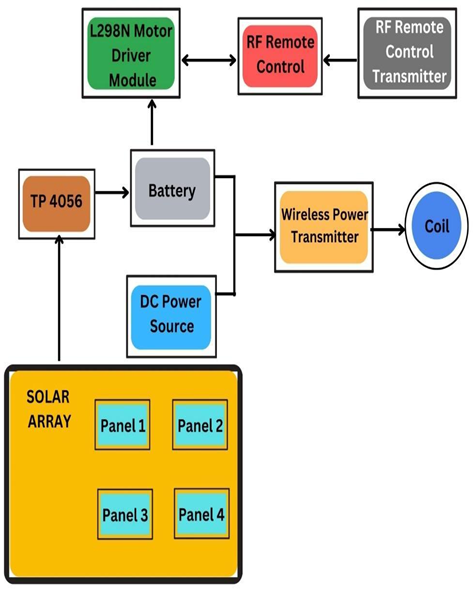
Figure 1. Block diagram depicting components related to transmitting vehicle
Receiver Vehicle System
The block diagram of the receiver system is shown in Figure 2. The receiver vehicle is equipped with:
- A WPT receiver coil that captures energy from the transmitted electromagnetic field.
- A TP4056 charging module to regulate and store the received energy.
- A voltage divider circuit to ensure a stable power supply.
- An I2C LCD module for real-time system monitoring and user feedback.
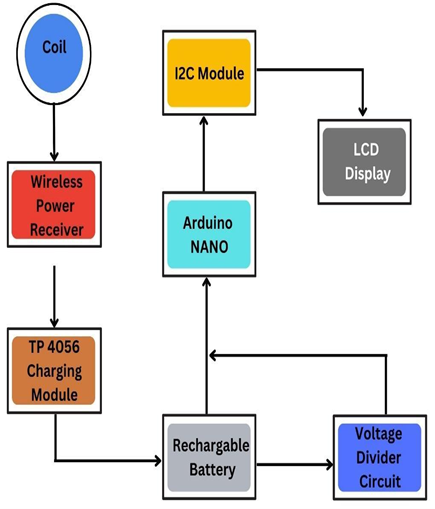
Figure 2. Block diagram depicting components related to receiving EV
Technical Implementation
Power Conversion and Storage
To maximize solar energy utilization, the SWEV2VCS uses:
- Four 6V polycrystalline solar panels are connected in series to increase voltage output.
- A TP4056 module that ensures safe and efficient battery charging.
- Lithium-ion rechargeable batteries, store energy for later use.
This configuration optimizes solar energy conversion while maintaining stable system performance.
Communication and Control System
The system features:
- Arduino Nano as the main controller, managing power flow and monitoring operations.
- Universal Asynchronous Receiver Transmitter for serial communication.
- I2C and SPI interfaces for efficient data exchange between system components.
- An LCD for real-time monitoring and user interaction.
Fundamental Equations
The SWEV2VCS system operates as follows:
Energy Harvesting:
PV panels on the transmitter vehicle harvest solar energy, converted using a Maximum Power Point Tracking (MPPT) algorithm to maximize efficiency as presented in Equation (1) [56]-[59]. Where  and
and  are voltage and current at the maximum power point.
| 
| (1) |
Energy Storage:
Harvested energy is stored in a lithium-ion battery bank, optimized for charge and discharge cycles.
Wireless Energy Transfer:
Power is wirelessly transmitted via electromagnetic resonance coupling as presented in relation (2) [60]:
| 
| (2) |
Where  is transmitted power, η is the efficiency of WPT, and
  is the input power. The coupling efficiency is determined by the coil quality factor as expressed in Equation (3) [60]:
| 
| (3) |
where k is the coupling coefficient, and  ,
,  are quality factors of the transmitter and receiver coils.
Power Regulation:
The receiver vehicle's charging module includes a voltage regulator to ensure safe and efficient power delivery as shown in Equation (4) [61]:
| 
| (4) |
where  is the regulated voltage.
Prototype Development and Implementation
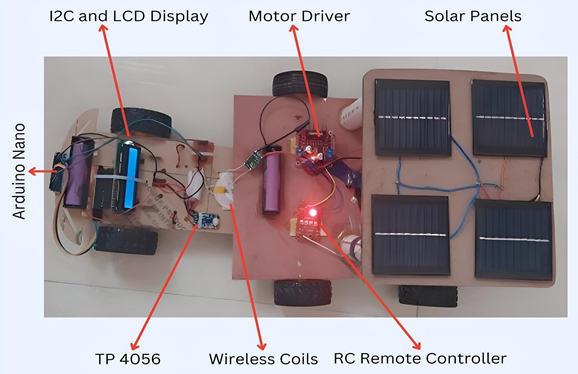
The transmitting vehicle is the core of the solar-powered wireless electric vehicle-to-vehicle charging system. It is equipped with polycrystalline solar panels optimized for maximum solar energy absorption, which is then converted into electrical energy and stored in lithium-ion rechargeable batteries. An Arduino Nano microcontroller is used to manage the energy flow and control WPT operations, ensuring reliable and safe charging performance. This vehicle enables sustainable mobility and functions as a mobile emergency charger, especially useful in off-grid environments. The different components of this prototype model along with the function of each component are listed in Table 3. The receiving vehicle, on the other hand, is equipped with a receiving coil aligned with the transmitting coil. This configuration enables efficient wireless energy transfer without physical connectors, allowing seamless battery charging while enhancing safety and reliability. A smart control system regulates the received power, ensuring optimal energy utilization and maintaining safe operating conditions. The system integrates several hardware components including. The complete hardware setup demonstrates the feasibility of a compact, mobile, solar-powered WPT system for emergency EV charging. A prototype model (Figure 3) was developed and assembled to validate the concept. Table 4 summarizes the components used and their specifications. It includes both the transmitting and receiving subsystems, which incorporate solar energy harvesting, energy storage, and wireless charging using resonant inductive coupling.
Table 3. Components of the SWEV2VCS Prototype
Component | Function in the System |
Solar Panel | Generates renewable energy to power the system |
Wireless Power Transmitter | Sends power wirelessly to the receiver |
Wireless Power Receiver | Receives energy and transfers it to the EV battery |
Arduino Nano | Controls system operations and monitoring |
LCD Display | Displays real-time charging status |
Voltage Divider Circuit | Adjusts voltage levels for safe microcontroller input |
Table 4. Prototype Components and Specifications.
Component | Specification |
PV Panel | 6V, 10W Polycrystalline |
Li-ion Battery Pack | 3.7V, 2600mAh |
MPPT Controller | Incremental Conductance |
Transmitter Coil | 100 μH Inductance, 10 cm Diameter |
Receiver Coil | 100 μH Inductance, 8 cm Diameter |
Voltage Regulator | LM7805 |
Figure 3. Prototype Model of proposed Charging System
Arduino IDE and System Programming
The Arduino Integrated Development Environment (IDE) was utilized to program the Arduino Nano, selected for its simplicity, extensive library support, and cross-platform compatibility. The developed code monitors the battery voltage in real-time and displays the output on a 16x2 LCD via an I2C interface, as shown in Figure 4. The advantages of SWEV2VCS in terms of different factors are listed in Table 5.
Table 5. Advantages of SWEV2VCS (Solar Wireless EV-to-EV Charging System).
Advantage | Description |
Sustainability | Uses solar energy, reducing dependence on the grid |
Mobility | Can be deployed for emergency roadside charging |
Ease of Use | Wireless charging eliminates the need for cables. |
Modular Design | Can be upgraded with additional features |
Scalability | Future expansion possible with AI integration |
Key components of the code and system setup:
- Wire.h for I2C communication
- LiquidCrystal_I2C.h for LCD interfacing
- The LCD's I2C address is 0x27, with dimensions 16x2
- The analog pin A0 is used to measure battery voltage
- ADC converts analog readings to digital voltage
- LCD.print() is used to display formatted voltage values
- LCD.backlight() ensures the display remains visible
This setup allows real-time voltage tracking, facilitating intelligent energy management during the wireless charging process.
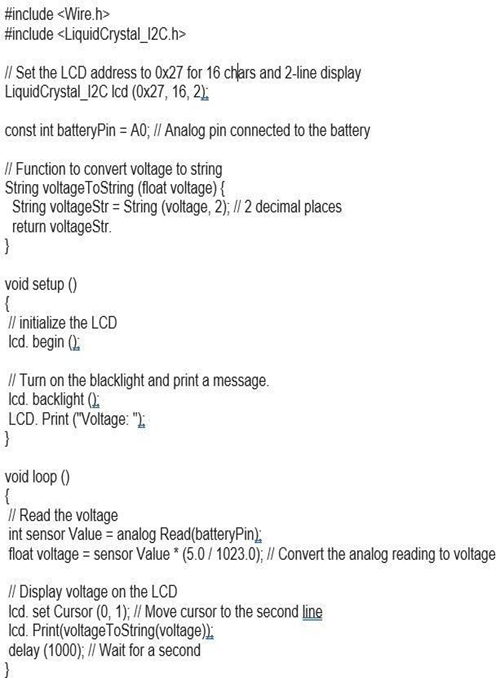
Figure 4. Code in the Arduino IDE
Output, Observations, and System Behavior
Real-Time Output: The LCD continuously displays the battery voltage, refreshing every second, and providing clear and immediate feedback during charging. Key Results:
- Real-Time Voltage Monitoring: Battery voltage is tracked every second to support responsive energy management.
- Accurate ADC Conversion: Ensures correct voltage computation, vital for safe and effective charging.
- User Interface: The LCD provides a clear visual indication of system status, making it user-friendly even for non-experts.
Prototype Observations:
- Efficient solar energy capture and stable storage.
- Reliable and effective wireless power transfer between vehicles.
- Importance of precise coil alignment for optimal energy transmission.
- Built-in safety protections (e.g., overcharge prevention) functioned as expected.
- Arduino Nano and LCD integration offered a cost-effective, accessible solution for live system monitoring.
Output Voltage Analysis and Display Optimization
Accurate monitoring of output voltage plays a vital role in managing renewable energy systems. Leveraging the Arduino Nano in conjunction with an I2C-enabled LCD, the system ensures consistent tracking and analysis of output voltage in real time. This proactive approach enables early detection of voltage fluctuations, which is critical for system reliability and component protection. The compact form factor and low power consumption of the Arduino Nano make it ideal for mobile applications, while the intuitive LCD facilitates decision-making and diagnostics.
Output on Display and Communication Efficiency
The integration of the I2C protocol alongside the Arduino Nano and LCD significantly enhances the system’s efficiency and scalability. I2C allows communication with the LCD via just two wires, simplifying connections and preserving digital pins for other peripherals. Benefits of I2C Integration:
- Simplified wiring with fewer connections.
- Improved data transfer efficiency.
- Expanded multitasking capabilities of the microcontroller.
- Scalability for adding future sensors or modules
As shown in Figure 5, this communication setup enables a streamlined interface for real-time monitoring and analysis, making it adaptable for various renewable energy and IoT applications. The challenges and suggested improvements that can be done in the future are tabulated in Table 6.
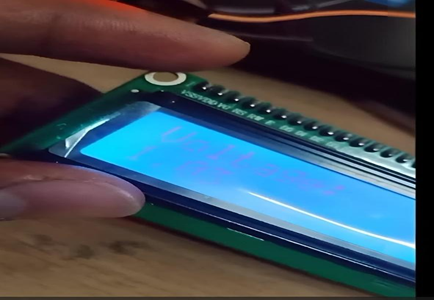
Figure 5. Output Voltage
Table 6. Challenges and future improvements
Challenge | Suggested Improvement |
Charging Time | Optimize coil design for better energy transfer |
Weather Dependency | Integrate hybrid energy sources (e.g., wind, battery storage) |
Compatibility Issues | Standardize wireless charging protocols for different EV models. |
Efficiency Losses | Enhance energy conversion rates and reduce transmission losses. |
Limited Transfer Range | Improve coil alignment and resonance tuning. |
- CONCLUSIONS
This project develops the SWEV2VCS, addressing key challenges in EV charging by integrating renewable solar energy and WPT technology into a mobile EV charging system. Unlike conventional charging stations that rely on fixed grid-based infrastructure, this system is fully mobile and self-sustaining, ensuring accessibility in both urban and remote areas. The integration of PV panels allows for continuous solar energy generation and storage, ensuring uninterrupted operation without reliance on the power grid. Additionally, WPT technology eliminates the need for physical charging connectors, improving efficiency and safety, particularly in emergencies where rapid charging is required. The system also features an intelligent monitoring interface, which provides real-time voltage analysis and charging status updates via an LCD, improving user experience and system transparency.
Future advancements will focus on optimizing coil designs to enhance energy transfer efficiency over greater distances, making the system even more practical for emergencies. Additionally, the incorporation of hybrid energy solutions, such as wind energy or high-capacity battery storage, will improve reliability in low solar irradiance conditions. AI will further refine charging response strategies, predictive energy management, and system optimization, ensuring faster and more efficient mobile charging services. The proposed work presents a comprehensive approach to the design and implementation of a wireless EV charging system integrated with real-time battery voltage monitoring. By utilizing a microcontroller-based setup (Arduino Nano), I2C LCD, and WPT coils, the system provides an effective solution for wireless energy delivery while continuously tracking battery voltage levels during charging.
DECLARATION
Author Contribution: All authors contributed equally to the main contributor to this paper. All authors read and approved the final paper.
Funding: This research received no external funding.
Conflicts of Interest: The authors declare no conflict of interest.
REFERENCES
- A. Sagar et al., "A Comprehensive Review of the Recent Development of Wireless Power Transfer Technologies for Electric Vehicle Charging Systems," in IEEE Access, vol. 11, pp. 83703-83751, 2023, https://doi.org/10.1109/ACCESS.2023.3300475.
- S. M. Arif, T. T. Lie, B. C. Seet, S. Ayyadi, and K. Jensen, “Review of electric vehicle technologies, charging methods, standards and optimization tech icle Charging Systems,” IEEE Access, vol. 11. pp. 83703–83751, 2023. https://doi.org/10.1109/ACCESS.2023.3300475.
- M. Awad et al., “A review of water electrolysis for green hydrogen generation considering PV/wind/hybrid/hydropower/geothermal/tidal and wave/biogas energy systems, economic analysis, and its application,” Alexandria Eng. J., vol. 87, no. November 2023, pp. 213–239, 2024, https://doi.org/10.1016/j.aej.2023.12.032.
- N. F. Ibrahim et al., “Operation of Grid-Connected PV System with ANN-Based MPPT and an Optimized LCL Filter Using GRG Algorithm for Enhanced Power Quality,” IEEE Access, vol. 11, pp. 106859–106876, 2023, https://doi.org/10.1109/ACCESS.2023.3317980.
- I. El Maysse et al., “Nonlinear Observer-Based Controller Design for VSC-Based HVDC Transmission Systems Under Uncertainties,” IEEE Access, vol. 11, no. November, pp. 124014–124030, 2023, https://doi.org/10.1109/ACCESS.2023.3330440.
- O. M. Kamel, A. A. Z. Diab, M. M. Mahmoud, A. S. Al-Sumaiti, and H. M. Sultan, “Performance Enhancement of an Islanded Microgrid with the Support of Electrical Vehicle and STATCOM Systems,” Energies, vol. 16, no. 4, 2023, https://doi.org/10.3390/en16041577.
- R. Kassem et al., “A Techno-Economic-Environmental Feasibility Study of Residential Solar Photovoltaic / Biomass Power Generation for Rural Electrification : A Real Case Study,” Sustain., vol. 16, no. 5, p. 2036, 2024, https://doi.org/10.3390/su16052036.
- S. Ashfaq et al., “Comparing the Role of Long Duration Energy Storage Technologies for Zero-Carbon Electricity Systems,” IEEE Access, vol. 12, no. May, pp. 73169–73186, 2024, https://doi.org/10.1109/ACCESS.2024.3397918.
- M. Venkatesan et al., “A Review of Compensation Topologies and Control Techniques of Bidirectional Wireless Power Transfer Systems for Electric Vehicle Applications,” Energies, vol. 15, no. 20. 2022, https://doi.org/10.3390/en15207816.
- N. T. Diep, N. K. Trung, and T. T. Minh, “Wireless power transfer system design for electric vehicle dynamic charging application,” Int. J. Power Electron. Drive Syst., vol. 11, no. 3, pp. 1468–1480, 2020, https://doi.org/10.11591/ijpeds.v11.i3.pp1468-1480.
- M. M. Hussein, T. H. Mohamed, M. M. Mahmoud, M. Aljohania, M. I. Mosaad, and A. M. Hassan, “Regulation of multi-area power system load frequency in presence of V2G scheme,” PLoS One, vol. 18, no. 9, p. e0291463, 2023, https://doi.org/10.1371/journal.pone.0291463.
- N. Benalia et al., “Enhancing electric vehicle charging performance through series-series topology resonance-coupled wireless power transfer,” PLoS One, vol. 19, no. 3 March, 2024, https://doi.org/10.1371/journal.pone.0300550.
- M. Venkatesan, R. Narayanamoorthi, K. M. Aboras, and A. Emara, “Efficient Bidirectional Wireless Power Transfer System Control Using Dual Phase Shift PWM Technique for Electric Vehicle Applications,” IEEE Access, vol. 12, pp. 27739–27755, 2024, https://doi.org/10.1109/ACCESS.2024.3367437.
- T. H. M. Ahmed Tawfik Hassan, Fahd A. Banakhr, Mohamed Metwally Mahmoud , Mohamed I. Mosaad, Asmaa Fawzy Rashwan, Mohamed Roshdi Mosa, Mahmoud M. Hussein, “Adaptive Load Frequency Control in Microgrids Considering PV Sources and EVs Impacts: Applications of Hybrid Sine Cosine Optimizer and Balloon Effect Identifier Algorithms,” Int. J. Robot. Control Syst., vol. 4, no. 2, pp. 941–957, 2024, https://doi.org/10.31763/ijrcs.v4i2.1448.
- M. S. Priyadarshini, A. Sravani, S. Gochhait, A. Bhatt, M. Bajaj, and M. M. Mahmoud, “IoT Platform-Based Prototype Model of an Adaptive and Intelligent Traffic Lighting System,” in 2023 4th IEEE Global Conference for Advancement in Technology, GCAT 2023, 2023, https://doi.org/10.1109/GCAT59970.2023.10353407.
- T. Wang, Y. Wu, B. Li, Q. Yu, L. Xu, and S. Guan, “Design of Electric Vehicle’s Wireless Power Transfer System Based on Deep Learning Combined With Multi-Objective Optimization,” IEEE Trans. Components, Packag. Manuf. Technol., vol. 12, no. 12, pp. 1983–1994, 2022, https://doi.org/10.1109/TCPMT.2022.3222841.
- P. Geetha and S. Usha, “Critical Review and Analysis of Solar Powered Electric Vehicle Charging Station,” Int. J. Renew. Energy Res., vol. 12, no. 1, pp. 581–600, 2022, https://doi.org/10.20508/ijrer.v12i1.12821.g8443.
- I. C. Tenllado, A. T. Cabrera, and Z. Lin, “Simultaneous Wireless Power and Data Transfer for Electric Vehicle Charging: A Review,” IEEE Trans. Transp. Electrif., vol. 10, no. 2, pp. 4542–4570, 2024, https://doi.org/10.1109/TTE.2023.3309505.
- S. A. Kashani, A. Soleimani, A. Khosravi, and M. Mirsalim, “State-of-the-Art Research on Wireless Charging of Electric Vehicles Using Solar Energy,” Energies, vol. 16, no. 1. 2023, https://doi.org/10.3390/en16010282.
- P. Meenalochini, R. A. Priya, R. Pugalenthi, and A. Jagadeeshwaran, “Energy management of grid connected PV with efficient inverter based wireless electric vehicle battery charger: A hybrid CSA-QNN technique,” J. Energy Storage, vol. 80, 2024, https://doi.org/10.1016/j.est.2023.110255.
- C. C. Mi, G. Buja, S. Y. Choi, and C. T. Rim, “Modern Advances in Wireless Power Transfer Systems for Roadway Powered Electric Vehicles,” IEEE Trans. Ind. Electron., vol. 63, no. 10, pp. 6533–6545, 2016, https://doi.org/10.1109/TIE.2016.2574993.
- A. Hashemifarzad, M. Faulstich, J. Zum Hingst, and M. Jokari, “Impact of electromobility on the future standard load profile,” Int. J. Smart Grid Clean Energy, vol. 8, no. 2, pp. 164–173, 2019, https://doi.org/10.12720/sgce.8.2.164-173.
- S. M. Arif, T. T. Lie, B. C. Seet, S. Ayyadi, and K. Jensen, “Review of electric vehicle technologies, charging methods, standards and optimization techniques,” Electronics, vol. 10, no. 16, p. 1910, 2021, https://doi.org/10.3390/electronics10161910.
- R. G. Chaple, “Development Of Solar Powered Static Wireless Charging System For Electric Vehicles,” Int. J. Res. Appl. Sci. Eng. Technol., vol. 11, no. 11, pp. 1409–1413, 2023, https://doi.org/10.22214/ijraset.2023.56759.
- H. Zhang, F. Lu, and C. Mi, “An Electric Roadway System Leveraging Dynamic Capacitive Wireless Charging: Furthering the Continuous Charging of Electric Vehicles,” IEEE Electrif. Mag., vol. 8, no. 2, pp. 52–60, 2020, https://doi.org/10.1109/MELE.2020.2985486.
- X. Wu, G. Li, and J. Zhou, “A Lightweight Secure Management Scheme for Energy Harvesting Dynamic Wireless Charging System,” IEEE Access, vol. 8, pp. 224729–224740, 2020, https://doi.org/10.1109/ACCESS.2020.3044293.
- G. Town, S. Taghizadeh, and S. Deilami, “Review of Fast Charging for Electrified Transport: Demand, Technology, Systems, and Planning,” Energies, vol. 15, no. 4. 2022, https://doi.org/10.3390/en15041276.
- P. K. Joseph and D. Elangovan, “A review on renewable energy powered wireless power transmission techniques for light electric vehicle charging applications,” J. Energy Storage, vol. 16, pp. 145–155, 2018, https://doi.org/10.1016/j.est.2017.12.019.
- N. F. Ibrahim et al., “A new adaptive MPPT technique using an improved INC algorithm supported by fuzzy self-tuning controller for a grid-linked photovoltaic system,” PLoS One, vol. 18, no. 11 November, pp. 1–22, 2023, https://doi.org/10.1371/journal.pone.0293613.
- P. P. Singh, F. Wen, I. Palu, S. Sachan, and S. Deb, “Electric Vehicles Charging Infrastructure Demand and Deployment: Challenges and Solutions,” Energies, vol. 16, no. 1. 2023, https://doi.org/10.3390/en16010007.
- G. Palani and U. Sengamalai, “A critical review on inductive wireless power transfer charging system in electric vehicle,” Energy Storage, vol. 5, no. 5. 2023, https://doi.org/10.1002/est2.407.
- X. Yin, S. Lu, Y. Wang, and Z. Du, “Wireless charging structure and efficiency analysis based on wind–solar hybrid power supply system,” Energy Reports, vol. 8, pp. 746–755, 2022, https://doi.org/10.1016/j.egyr.2022.02.015.
- N. F. Ibrahim et al., “Multiport Converter Utility Interface with a High-Frequency Link for Interfacing Clean Energy Sources (PV\Wind\Fuel Cell) and Battery to the Power System: Application of the HHA Algorithm,” Sustainability, vol. 15, no. 18, p. 13716, 2023, https://doi.org/10.3390/su151813716.
- Sneha Singh and Shreeni Kalyanshetti, “A Comparative Analysis of Traditional Roadways vs. Electric Vehicle (EV) Roads: Environmental, Infrastructure, And Technological Perspectives,” Int. Res. J. Adv. Eng. Hub, vol. 2, no. 03, pp. 450–456, 2024, https://doi.org/10.47392/irjaeh.2024.0065.
- S. Kumar, H. Paliwal, S. Vyas, S. Sekhor, V. Dave, and S. S. Rao, “Dynamic Wireless Power Transfer in Electric Vehicles,” in Journal of Physics: Conference Series, 2021, https://doi.org/10.1088/1742-6596/1854/1/012014.
- M. Awad, M. M. Mahmoud, Z. M. S. Elbarbary, L. Mohamed Ali, S. N. Fahmy, and A. I. Omar, “Design and analysis of photovoltaic/wind operations at MPPT for hydrogen production using a PEM electrolyzer: Towards innovations in green technology,” PLoS One, vol. 18, no. 7, p. e0287772, 2023, https://doi.org/10.1371/journal.pone.0287772.
- G. Palani, U. Sengamalai, P. Vishnuram, and B. Nastasi, “Challenges and Barriers of Wireless Charging Technologies for Electric Vehicles,” Energies, vol. 16, no. 5. 2023, https://doi.org/10.3390/en16052138.
- A. Ghosh, D. Gamage, A. Ukil, and A. P. Hu, “Emergency power supply enabling solar PV integration with battery storage and wireless interface,” J. R. Soc. New Zeal., 2024, https://doi.org/10.1080/03036758.2024.2314476.
- B. S. Atia et al., “Applications of Kepler Algorithm-Based Controller for DC Chopper: Towards Stabilizing Wind Driven PMSGs under Nonstandard Voltages,” Sustain. , vol. 16, no. 7, 2024, https://doi.org/10.3390/su16072952.
- M. S. Mastoi et al., “A study of charging-dispatch strategies and vehicle-to-grid technologies for electric vehicles in distribution networks,” Energy Reports, vol. 9. pp. 1777–1806, 2023, https://doi.org/10.1016/j.egyr.2022.12.139.
- R. Damaševičius, N. Bacanin, and S. Misra, “From Sensors to Safety: Internet of Emergency Services (IoES) for Emergency Response and Disaster Management,” Journal of Sensor and Actuator Networks, vol. 12, no. 3. 2023, https://doi.org/10.3390/jsan12030041.
- S. Jain, S. Jain, S. Kumar, H. Kaushik, N. Nagpal, and R. Sharma, “Design and Development of a Solar-Based Wireless Electric Vehicle Charging System,” in Lecture Notes in Electrical Engineering, pp. 481–494, 2024, https://doi.org/10.1007/978-981-99-6749-0_32.
- M. M. H. Mohamed Nasr Abdel Hamid, Fahd A. Banakhr, Tarek Hassan Mohamed, Shimaa Mohamed Ali, Mohamed Metwally Mahmoud, Mohamed I. Mosaad, Alauddin Adel Hamoodi Albla, “Adaptive Frequency Control of an Isolated Microgrids Implementing Different Recent Optimization Techniques,” Int. J. Robot. Control Syst., vol. 4, no. 3, pp. 1000–1012, 2024, https://doi.org/10.31763/ijrcs.v4i3.1432.
- D. Oladimeji, K. Gupta, N. A. Kose, K. Gundogan, L. Ge, and F. Liang, “Smart Transportation: An Overview of Technologies and Applications,” Sensors, vol. 23, no. 8. 2023, https://doi.org/10.3390/s23083880.
- A. Loni and S. Asadi, Power System Resilience: The Role of Electric Vehicles and Social Disparities in Mitigating the US Power Outages, vol. 9, no. 1,2024, https://doi.org/10.1007/s40866-024-00204-6.
- A. Hysa, M. M. Mahmoud, and A. Ewais, “An Investigation of the Output Characteristics of Photovoltaic Cells Using Iterative Techniques and MATLAB ® 2024a Software,” Control Syst. Optim. Lett., vol. 3, no. 1, pp. 46–52, 2025, https://doi.org/10.59247/csol.v3i1.174.
- A. Fayz et al., “Optimal Controller Design of Crowbar System for DFIG-based WT : Applications of Gravitational Search Algorithm,” Bul. Ilm. Sarj. Tek. Elektro, vol. 7, no. 2, pp. 122–136, 2025, https://doi.org/10.12928/biste.v7i2.13027.
- A. Khamees and H. Altınkaya, “Global Optimal Automatic Generation Control of a Multimachine Power System Using Hybrid NLMPC and Data-Driven Methods,” Appl. Sci., vol. 15, no. 4, 2025, https://doi.org/10.3390/app15041956.
- M. Chebaani, M. M. Mahmoud, A. F. Tazay, M. I. Mosaad, and N. A. Nouraldin, “Extended Kalman Filter design for sensorless sliding mode predictive control of induction motors without weighting factor: An experimental investigation,” PLoS One, vol. 18, no. 11 November, 2023, https://doi.org/10.1371/journal.pone.0293278.
- M. S. Priyadarshini, D. Krishna, M. Bhaskara Reddy, A. Bhatt, M. Bajaj, and M. M. Mahmoud, “Continuous Wavelet Transform based Visualization of Transient and Short Duration Voltage Variations,” in 2023 4th IEEE Global Conference for Advancement in Technology, GCAT 2023, 2023, https://doi.org/10.1109/GCAT59970.2023.10353457.
- T. Boutabba, I. Benlaloui, F. Mechnane, I. M. Elzein, M. Ammar, and M. M. Mahmoud, “Design of a Small Wind Turbine Emulator for Testing Power Converters Using dSPACE 1104,” Int. J. Robot. Control Syst., vol. 5, no. 2, pp. 698–712, 2025, https://doi.org/10.31763/ijrcs.v5i2.1685.
- H. Miloudi et al., “Electromagnetic Compatibility Characterization of Start-Capacitor Single-Phase Induction Motor,” IEEE Access, vol. 12, no. January, pp. 2313–2326, 2024, https://doi.org/10.1109/ACCESS.2023.3349018.
- M. M. Mahmoud, I. Benlaloui, B. Benbouya, and N. F. Ibrahim, “Investigations on Grid-Connected DFIWGs Development and Performance Analysis with the Support of Crowbar and STATCOM,” Control Syst. Optim. Lett., vol. 2, no. 2, pp. 191–197, 2024, https://doi.org/10.59247/csol.v2i2.109.
- O. M. Lamine et al., “A Combination of INC and Fuzzy Logic-Based Variable Step Size for Enhancing MPPT of PV Systems,” Int. J. Robot. Control Syst., vol. 4, no. 2, pp. 877–892, 2024, https://doi.org/10.31763/ijrcs.v4i2.1428.
- A. M. E. Abhishek Raj, Chandra Sekhar Mishra, S Ramana Kumar Joga, I. M. Elzein, Asit Mohanty, Snehalika, Mohamed Metwally Mahmoud, “Wavelet Analysis- Singular Value Decomposition Based Method for Precise Fault Localization in Power Distribution Networks Using k-NN Classifier,” Int. J. Robot. Control Syst., vol. 5, no. 1, pp. 530–554, 2025, https://doi.org/10.31763/ijrcs.v5i1.1543.
- N. F. Ibrahim, A. Alkuhayli, A. Beroual, U. Khaled, and M. M. Mahmoud, “Enhancing the Functionality of a Grid-Connected Photovoltaic System in a Distant Egyptian Region Using an Optimized Dynamic Voltage Restorer: Application of Artificial Rabbits Optimization,” Sensors, vol. 23, no. 16, 2023, https://doi.org/10.3390/s23167146.
- Y. Shanmugam et al., “Solar-powered five-leg inverter-driven quasi-dynamic charging for a slow-moving vehicle,” Front. Energy Res., vol. 11, 2023, https://doi.org/10.3389/fenrg.2023.1115262.
- D. Assessment and C. Defect, “Dynamic Assessment and Control of a Dual Star Induction Machine State Dedicated to an Electric Vehicle Under Short- Circuit Defect,” Int. J. Robot. Control Syst., vol. 4, no. 4, pp. 1731–1745, 2024, https://doi.org/10.31763/ijrcs.v4i4.1557.
- R. Moumni, K. Laroussi, I. Benlaloui, M. M. Mahmoud, and M. F. Elnaggar, “Optimizing Single-Inverter Electric Differential System for Electric Vehicle Propulsion Applications,” Int. J. Robot. Control Syst., vol. 4, no. 4, pp. 1772–1793, 2024, https://doi.org/10.31763/ijrcs.v4i4.1542.
- A. Sen, B. Sharma, D. Ranka, D. Gupta, and Y. Sharif, “Solar Wireless Electric Vehicle Charging,” Int. J. Res. Appl. Sci. Eng. Technol., vol. 11, no. 5, pp. 891–896, 2023, https://doi.org/10.22214/ijraset.2023.51693.
- M. Amjad, M. Farooq-i-Azam, Q. Ni, M. Dong, and E. A. Ansari, “Wireless charging systems for electric vehicles,” Renewable and Sustainable Energy Reviews, vol. 167. 2022, https://doi.org/10.1016/j.rser.2022.112730.
- A. A. S. Mohamed, A. A. Shaier, H. Metwally, and S. I. Selem, “Wireless charging technologies for electric vehicles: Inductive, capacitive, and magnetic gear,” IET Power Electronics. 2023, https://doi.org/10.1049/pel2.12624.
AUTHOR BIOGRAPHY

| M.S. Priyadarshini completed Bachelor of Technology in Electrical and Electronics Engineering from J.N.T.U Anantapur, Ananthapuramu and Master of Technology in Electrical Power Engineering from J.N.T.U Hyderabad, Kukatpally, Hyderabad. She completed Ph. D from J.N.T.U Anantapur, Ananthapuramu. She is presently working as Professor and Head, Department of Electrical and Electronics Engineering, K.S.R.M College of Engineering (Autonomous), Kadapa, Andhra Pradesh, India. Her subjects of expertise are Power Electronics, Power Semiconductor Drives, Power Systems, Electromagnetic Compatibility and Control systems. She has 30 publications in International Journals and Conference Proceedings and has coauthored 1 book and contributed 2 book chapters. She is an active reviewer for reputed journals. She is life member of IEI, India and Member of IEEE WIE. Her research areas of interest are Electrical Power Quality and Signal Processing applications to Power Systems. Email: priyadarshini@ksrmce.ac.in ORCID: 0000-0002-2439-1128 |
|
|

| Mohamed Metwally Mahmoud received the B.Sc., M.Sc., and Ph.D. degrees in electrical engineering from Aswan University, Egypt, in 2015, 2019, and 2022, respectively. He is currently a Professor (Assistant) at Aswan University. His research interests include optimization methods, intelligent controllers, fault ride-through capability, and power quality. He has been awarded Aswan University prizes for international publishing~2024. He is the author or coauthor of many refereed journals and conference papers. He reviews for some well-known publishers (IEEE, Springer, Wiley, Elsevier, Taylor & Francis, and Sage). Email: metwally_m@aswu.edu.eg ORCID: 0000-0002-2460-1850 |
|
|

| Ujjal Sur received the B.Tech. degree in electrical engineering from the West Bengal University of Technology, Kolkata, India, in 2013, the M.Tech. and PhD degrees in electrical engineering from the University of Calcutta, Kolkata, India, in 2016 and 2023 respectively. He is currently an Assistant Professor with the Department of Electrical Engineering, University of Delhi, New Delhi, India. He has authored or coauthored 25 research papers in international journals and conferences. His research areas include load flow study, hybrid microgrid and power system analysis. Email: ujjalsur@fot.du.ac.in ORCID: 0000-0002-1069-7791 |
|
|

| Sid Ahmed El Mehdi Ardjoun is a professor and researcher at the University of Sidi-Bel-Abbès and the IRECOM laboratory in Algeria. His research focuses on robust, intelligent, and fault-tolerant control of electrical systems, with applications in renewable energy and electric drives. He aims to optimize both the dynamic and static performance of electrical systems while enhancing their quality and energy efficiency. |
|
|

| Azem Hysa is a full-time lecturer at the "Aleksander Moisiu" University, Durres, Albania for a long time. Previously, he held the position of head of the Department of Applied Sciences. He was a member of the Ethics Council at "Aleksander Moisiu" University, Durres (2012 - 2017). Graduated and Post-Graduate at the University of Tirana. He is currently PhD Student at the Department of Physics, University of Tirana. The field of study is Theoretical Physics. |
|
|

| Noureddine Bessous works with the department of Electrical Engineering, Fac. Technology University of El Oued, El Oued, Algeria. His research interests include renewable energy systems, Fast Artificial Neural Network, Optical properties, and Electrical machines. |
|
|

| Khaled A. Metwally, PhD (agricultural engineering sciences), Zagazig, 44519, Egypt. From 2020 to now, Associate Professor of agricultural engineering in soil and water sciences department faculty of technology and development, Zagazig University, Zagazig, Egypt. Previously from 2007-2019, demonstrator, assistance lecturer and lecturer of agricultural engineering in agricultural engineering department, faculty of agriculture, Zagazig University, Zagazig, Egypt. have about 30 international research papers and articles. Reviewer in many local and international scientific publishers. |
|
|

| Noha Anwer received the M.Sc. and Ph.D degree in electrical engineering from Aswan University, Egypt. Now she works at the Electrical Power and Machines Eng. Dept., The High Institute of Engineering and Technology, Luxor, Egypt. Her research interests include renewable energy systems, and high-voltage technologies. |
M. S. Priyadarshini (Microcontroller-based Prototype Model of a Solar Wireless Electric Vehicle-to-Vehicle Charging System with Real-Time Battery Voltage Monitoring)