Developing GeoGebra 3D-assisted interactive e-worksheet for composite solids visualization
DOI:
https://doi.org/10.12928/bamme.v6i1.17292Keywords:
composite solids, interactive e-worksheet, GeoGebra, Lumi education, visualization mediaAbstract
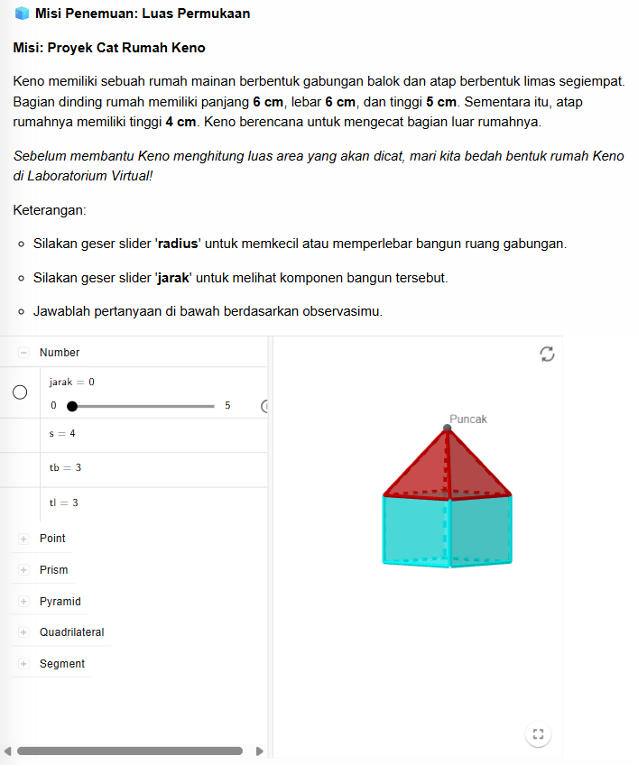
Spatial ability is crucial in geometry learning; however, students frequently experience misconceptions when visualizing intersecting 3D composite solids, a challenge conventional static materials fail to address. Therefore, this study aims to develop, validate, and evaluate the practicality of an interactive electronic student worksheetusing Lumi education integrated with GeoGebra 3D dynamic applets. Applying the ADDIE development model, the e-worksheet features independent 3D object manipulation, composite solid decomposition simulations, scaffolding trigger questions, an "anti-forget formula" reference panel, and adaptive interactive evaluations. Product validity was assessed by material and media experts, while practicality was evaluated through small-group and field tests involving 10th-grade students at SMA Negeri 1 Bambanglipuro, a public high school in Yogyakarta, using Likert-scale questionnaires analyzed via descriptive statistics. Results indicate that the e-worksheet achieved "strongly valid" and "practical" criteria. The interactive 3D manipulations effectively reduced cognitive load and resolved surface area misconceptions. This product significantly enriches innovative interactive learning references for geometry visualization. Based on these evaluations, future research is recommended to incorporate gamification elements, optimize practice question portions, and conduct comprehensive effectiveness testing on students' spatial skills.
References
Farihah, U., Halizah, P. N., & Alfarisi, S. (2025). Analisis kemampuan spasial siswa dalam menyelesaikan masalah bangun ruang sisi datar berdasarkan tingkat visualitas. Aksioma: Jurnal Program Studi Pendidikan Matematika, 14(3), 902–915. https://doi.org/10.24127/ajpm.v14i3.11588
Fitriani, Maifa, T. S., & Bete, H. (2019). Pemanfaatan software GeoGebra dalam pembelajaran matematika. Jurnal Pendidikan dan Pengabdian Masyarakat, 2(4). https://doi.org/10.29303/jppm.v2i4.1507
Istaria, F. (2021). Upaya untuk meningkatkan hasil belajar materi menghitung volume gabungan bangun ruang dengan menerapkan metode make a match pada siswa Kelas 5 SD Negeri Ngagelrejo V/400 Surabaya. Edustream: Jurnal Pendidikan Dasar, 5(1), 17–24. https://doi.org/10.26740/eds.v5n1.p17-24
Kurniawan, D. A., & Fitriyani, H. (2024). Profil kemampuan penalaran spasial siswa SMP Muhammadiyah dalam memecahkan masalah matematika ditinjau dari kemampuan matematika. AdMathEduSt, 11(2), 78–85. https://doi.org/10.12928/admathedust.v11i2.28655
Mispriatin. (2022). Upaya peningkatan hasil belajar mata pelajaran matematika materi soal-soal tentang bangun ruang gabungan melalui metode numbered heads together (NHT) pada siswa kelas VI semester II SD Negeri 2 Podorejo Kecamatan Sumbergempol Kabupaten Tulungagung tahun pelajaran 2017/2018. Jurnal Pembelajaran dan Ilmu Pendidikan, 2(4), 528–533. https://doi.org/10.28926/jpip.v2i4.604
Musriroh, R. Z., Hidayanto, E., & Rahardi, R. (2021). Penalaran spasial matematis dimensi persepsi dan visualisasi kelas VIII dalam pemecahan masalah geometri. Jurnal Pendidikan: Teori, Penelitian, dan Pengembangan, 6(11). https://www.academia.edu/download/103271709/6579.pdf
Novianti, D. I., Astawan, I. G., & Trisna, G. A. P. S. (2023). Pengembangan e-worksheet interaktif berbasis problem based learning materi gaya muatan IPA pada siswa kelas IV SD. Didaktik: Jurnal Ilmiah PGSD FKIP Universitas Mandiri, 9(2), 5398–5411. https://doi.org/https://doi.org/10.36989/didaktik.v9i2.1099
Octaviani, K. D., Indrawatiningsih, N., & Afifah, A. (2021). Kemampuan visualisasi spasial siswa dalam memecahkan masalah geometri bangun ruang sisi datar. International Journal of Progressive Mathematics Education, 1(1), 27–40. https://doi.org/10.22236/ijopme.v1i1.6583
Palelupu, D. N., & Cholik, M. (2014). Pengembangan media pembelajaran berbasis Adobe Flash CS5 pada mata diklat gambar teknik di kelas X TPM SMK Krian 1 Sidoarjo. https://www.neliti.com/publications/248822/pengembangan-media-pembelajaran-berbasis-adobe-flash-cs5-pada-matadiklat-gambar
Putri, R. O. E., & Nurul, I. U. (2018). Studi tentang kemampuan spasial siswa sekolah menengah pertama (SMP) di Mojokerto. Majamath, 1(2), 135–141. https://ejurnal.unim.ac.id/index.php/majamath/article/view/235
Rasyidah, A. U., Lestari, S. I., & Hasanah, U. (2023). Analisis pembelajaran matematika materi bangun ruang di sekolah dasar: Systematic literature review. Seminar Nasional Hasil Riset dan Pengabdian (vol. 5). Universitas PGRI Adi Buana Surabaya. https://snhrp.unipasby.ac.id/prosiding/index.php/snhrp/article/view/886
Rotang, A. S. (2025). Pengembangan media pembelajaran interaktif dalam meningkatkan hasil belajar matematika materi bangun datar di kelas VII SMP Negeri 7 Palopo. Skripsi. UIN Palopo. https://repository.uinpalopo.ac.id/id/eprint/10955/
Talu, M. I. I., Mau, S. D. I., & Momo, L. L. (2025). Penerapan Lumi H5P dalam media pembelajaran matematika pada SDK Pero menggunakan metode MDLC. Modem: Jurnal Informatika dan Sains Teknologi, 3(4), 114–124. https://doi.org/10.62951/modem.v3i4.671
Tamam, B., & Dasari, D. (2021). The use of Geogebra software in teaching mathematics. Journal of Physics: Conference Series, 1882(1), 1–6. https://doi.org/10.1088/1742-6596/1882/1/012042
Unaenah, E., Anggraini, I. A., Aprianti, I., Aini, W. N., Utami, D. C., Khoiriah, S., & Refando, A. (2020). Teori van Hiele dalam pembelajaran bangun datar. Jurnal Pendidikan dan Ilmu Sosial, 2(2). https://doi.org/10.36088/nusantara.v2i2.841
Wahidin. (2025). Pengembangan media pembelajaran visual untuk meningkatkan pemahaman konsep siswa. Jurnal Ilmiah Edukatif, 11(01), 285–295. https://journal.iaisambas.ac.id/index.php/edukatif/article/view/3720
Kurniasih, A. W., Wiyanti, D. T., & Zahid, M. Z. (2018). Visualisasi konsep matematika dalam pembelajaran menggunakan geogebra. PRISMA, 1, 797.
Yanti, N. S., Makmuri, & Hajizah, M. N. (2024). Pengembangan lembar kerja elektronik berbantuan geogebra dengan model problem based learning. Jurnal Pendidikan Matematika, 15(2), 163–172. https://doi.org/10.36709/jpm.v15i2.180
Downloads
Published
Issue
Section
License
Copyright (c) 2026 Dianis Ahmad Faizal, Afit Istiandaru

This work is licensed under a Creative Commons Attribution-ShareAlike 4.0 International License.
Authors who publish with this journal agree to the following terms:
- Authors retain copyright and grant the journal right of first publication with the work simultaneously licensed under Creative Commons Attribution License that allows others to share the work with an acknowledgement of the work's authorship and initial publication in this journal.
- Authors are able to enter into separate, additional contractual arrangements for the non-exclusive distribution of the journal's published version of the work (e.g., post it to an institutional repository or publish it in a book), with an acknowledgement of its initial publication in this journal.
- Authors are permitted and encouraged to post their work online (e.g., in institutional repositories or on their website) prior to and during the submission process, as it can lead to productive exchanges, as well as earlier and greater citation of published work (See The Effect of Open Access).