Application of Multiple Linear Regression Models for prediction of rice production yields in Central Lampung
DOI:
https://doi.org/10.12928/bamme.v5i2.14559Keywords:
National food security, Multiple linear regression, Rice productionAbstract
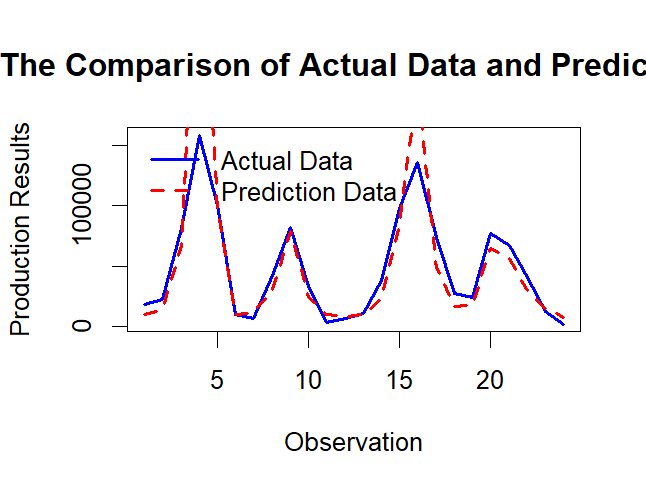
Rice production is a crucial component of agricultural sustainability and food security in Indonesia, particularly in Central Lampung. This study aims to analyze the influence of planting area and harvested area on rice production using a multiple linear regression approach. The analysis employs secondary time-series data and applies an ordinary least squares (OLS) method with a logarithmic transformation of the dependent variable to address heteroskedasticity issues. Descriptive statistics and classical assumption tests, including normality, multicollinearity, heteroskedasticity, and autocorrelation tests, were conducted to ensure model validity. The results indicate that harvested area has a statistically significant positive effect on rice production, while planting areas shows a negative but statistically insignificant effect. The regression model demonstrates strong explanatory capability with an R-squared value of 81.27% and is statistically significant based on the F-test. Model evaluation using in-sample error metrics yields a Mean Absolute Error (MAE) of 19,344.89, a Root Mean Squared Error (RMSE) of 46,738.41, and a Mean Absolute Percentage Error (MAPE) of 48.20%, indicating that the model effectively captures general production trends but has limited accuracy for precise quantitative forecasting. These findings suggest that harvested area plays a dominant role in determining rice output, while further improvements in predictive performance may be achieved by incorporating additional explanatory variables and exploring alternative modeling techniques.
References
Abdurrazak, M. A.-M., Zakaria, J., & Mapparenta. (2019). Keunggulan Komparatif Tanaman Pangan di Kabupaten Manggarai Timur.
Agusta, G. E., Dewanto, A., & Astriawati, N. (2024). Multiple Linear Regression Model for Analyzing the Determinants of Rice Production in Sumatra. 03(02), 44–57.
Ambya, Fitriani, & Bellapama, I. A. (2022). Sektor Pertanian untuk Pertumbuhan Ekonomi Regional Lampung Agriculture Sector to Support Lampung Regional Economic Growth. Journal of Food System and Agribusiness, 6(1), 102–111.
Apriyana, Y., Rejekiningrum, P., Alifia, A. D., & Ramadhani, F. (2023). The Transformation of Rice Crop Technology in Indonesia : Innovation and Sustainable Food Security. 1–14.
Elsayir, H. A. (2024). Overview on comparative methodology of classical ols and two-stage techniques in regression analysis model. Journal of Jilin University (Engineering and Technology Edition), 43(10), 245–251. Https://doi.org/10.5281/zenodo.14196326
Fitri, E., & Nugraha, S. N. (2024). Optimasi kinerja linear regression, random forest regression dan multilayer perceptron pada prediksi hasil panen. Inti Nusa Mandiri, 18(2), 210–217.
Hendrastuty, N. (2024). Penerapan Data Mining Menggunakan Algoritma K-Means Clustering Dalam Evaluasi Hasil Pembelajaran Siswa. 3, 46–56.
Herliana, S., Ratnaningtyas, S., Aina, Q., Zuraida, U., & Sutardi, A. (2025). Supply and Demand of Rice in Indonesia : A Critical Review. 8(1), 80–96.
Kaur, P., Stoltzfus, J., & Yellapu, V. (2018). Descriptive statistics.Lampung, B. P. S. (2024). No Title.
Midway, S., & White, J. W. (2025). Testing for normality in regression models : mistakes abound ( but may not matter ).
Muharram, A., Purnamasari, A. I., & Ali, I. (2023). Prediksi jumlah produksi daging unggas tahun 2023-2027 menggunakan regresi linier. JATI (Jurnal Mahasiswa Teknik Informatika), 7(6), 3093–3099.
Muharromah, O., Suarna, N., & Prihartono, W. (2023). Implementasi Algoritma Regresi Linear Berganda Untuk Prediksi Produksi Padi Di Kabupaten Cirebon. JATI (Jurnal Mahasiswa Teknik Informatika), 7(6), 3815-3820.
Nababan, Y., & Nugraha, I. (2024). Penerapan Data Mining Produksi Padi di Pulau Sumatera Menggunakan Analisis Regresi Linear. JUTIN : Jurnal Teknik Industri Terintegrasi, 7(1), 262–272.
Navianti, D. R., Ayu, P., Krisna, G., Ryanto, S. S., Transportasi, P., Bali, D., & Kangin, B. (2023). Identification of loading and unloading process time at denpasar goods terminal. 4(1), 57–66.
Rachman, R., Kusdinar, A. B., & Indrayana, D. (2024). Penerapan Regresi Linear Berganda Dalam Prediksi Dan Optimalisasi Persediaan Barang Toko Mungil. JATI (Jurnal Mahasiswa Teknik Informatika), 8(5), 10499-10506.
Santoso, A. B., Supriana, T., & Girsang, M. A. (2022). Pengaruh Curah Hujan pada Produksi Padi Gogo di Indonesia ( Precipitation Impact on Upland Rice Yield in Indonesia ). 27(4), 606–613. Https://doi.org/10.18343/jipi.27.4.606
Swarbawa, I. B. M., Wibawa, I. G. A., & Suhartana, I. K. G. (2023). Prediksi Hasil Panen Padi Di Kabupaten Jembrana Dengan Metode Linear Regression. 11(3), 671–678.
Downloads
Published
Issue
Section
License
Copyright (c) 2025 Nadia Fitri Yani, Luluk Muthoharoh, Abdy Winardi

This work is licensed under a Creative Commons Attribution-ShareAlike 4.0 International License.
Authors who publish with this journal agree to the following terms:
- Authors retain copyright and grant the journal right of first publication with the work simultaneously licensed under Creative Commons Attribution License that allows others to share the work with an acknowledgement of the work's authorship and initial publication in this journal.
- Authors are able to enter into separate, additional contractual arrangements for the non-exclusive distribution of the journal's published version of the work (e.g., post it to an institutional repository or publish it in a book), with an acknowledgement of its initial publication in this journal.
- Authors are permitted and encouraged to post their work online (e.g., in institutional repositories or on their website) prior to and during the submission process, as it can lead to productive exchanges, as well as earlier and greater citation of published work (See The Effect of Open Access).